All posts by careysipp

North Carolina’s New Hanover County Resiliency Task Force Marks First Year

Carey Sipp Carey Sipp 8/15/195:36 PM

New Hanover Resiliency Task Force Chairman Scott Whisnant thanks Executive Director Mebane Boyd for her leadership, and his “Resilient Vision Award.” 

The July 27, 2019 meeting of the New Hanover Resiliency Task Force marked the first year of the group’s work since hiring a coordinator, but the gag gifts handed out in celebration told the real story of the community building, affection, and joy experienced in the members’ work together.

Scott New Hanover County’s Chief Planning Officer, Beth Schrader, shared a draft of the strategic plan the group had been working on for a year. The Task Force reviewed highlights of a year of intense work – including helping county citizens recover from Hurricane Florence. And then the fun began, as Task Force Executive Director Mebane Boyd started handing out gifts, ultimately including something for everyone – about 70 people in all.

IMG_1212There was bubble wrap to pop as a stress-reliever for members Lori Wainwright and Shelly Harney, who’d worked tirelessly on juvenile justice programs. Cliff Barnett was honored with a Snickers bar for making the group laugh. Beth Schrader received Smarties candy for leading the strategic planning. A 100 Grand candy bar went to Louise Hicks, who’d helped secure funding to keep an executive director on board for two years. And a bag of Halloween eyeballs, the Resilient Vision Award, went to Task Force Chairman Scott Whisnant.

IMG_1222Applause from fellow Task Force members showed the enthusiasm and warm regard this group has built in a year’s time under Boyd’s leadership. Boyd made sure the celebration included a cake decorated with the group’s symbol — a starfish, because their legs can regenerate after breaking off. She also made sure everyone who wanted one received a token gift to mark the date: a Carolina-blue ribbon adorned with a tiny gold starfish. 58576659384__1D4658E1-340D-49F0-BD33-48D572750F26

 As one of approximately 300 ACEs Connection community managers, Boyd seems to naturally embody the qualities so important to an ACEs initiative’s success. She is inclusive, quick to thank volunteers, attentive to the big picture of overall objectives, while at the same time being attentive to details. She is not afraid to ask for help or resources. She makes sure meetings are regular, well-run, involve reports from several members, and that they end on time.  

“I’ve been working in nonprofits in Wilmington since 1992. I knew we needed a group that was open, inclusive, and as transparent as we knew how to be. I knew we needed to work on diversity, and though we still have a long way to go, we’ve begun to attract more people of color to our meetings. A year later, we’re at more than 500 individual members,” said Boyd.

Resilience Documentary was the Beginning

 A viewing of the documentary Resilience: The Biology of Stress & the Science of Hope, in January, 2018, started Boyd’s association with what would become the New Hanover Resiliency Task Force.

 “We screened the documentary at the New Hanover County office of Smart Start, a local affiliate of North Carolina’s early childhood initiative, where I was working. The people in the room – there were about eight elected officials – said it was time to stop talking about doing something about preventing trauma and building resilience. Scott Whisnant, with the local regional hospital, wrote the grant to help fund the coordinator position.  

“It’s been good to hear from so many community members speaking through the ‘ACEs lens’ of how the science and the learning touches the areas we’re concentrating on for the community: better health, less violence, few or no racial disparities, health, education, and justice outcomes, strong education, positive workplaces, becoming a ‘resources rich community,’ supporting individual and family resiliency,” said Boyd. 

 “We know some of the things we are working on can and will make a difference in how we deal with stress, and how we can reduce chronic disease. We are working with our county’s chief strategy officer and others to measure our progress,” she said.

 Hurricane Florence; Planning for Disasters with Children’s Needs in Mind

 Only two months into her work coordinating the Task Force, Boyd saw Hurricane Florence change the landscape of southeastern North Carolina, bringing a new kind of trauma to the region. 

 The storm was a common denominator, solidifying work to recover from a recent stressful event shared by all members. The storm also brought assistance and guidance from the National Center for Disaster Preparedness, which reached out to the Task Force to help work on preparedness in the context of recovery. Currently, members of the Resiliency Task Force and others are looking, with children’s needs in mind, at how to plan for future disasters.

 The Task Force has also taken advantage of assistance from the Duke Center for Child and Family Wellness through a grant from the North Carolina Department of Health and Human Services. A community needs assessment was undertaken, and the results have guided the types of trainings offered to the community.   

 Other highlights of milestones achieved in the first year of the Task Force include:

  • Training 29 Community Resiliency Model (CRM) Trainers https://www.traumaresourceinstitute.com/crm
  • Training or introducing 600 individuals in the Community Resiliency Model
  • Launching a trauma-sensitive pilot schools project  
  • Securing funding for a trauma-sensitive child care center  
  • Funding the director position for two years
  • Attracting 100+ member organizations
  • Attracting  500+ individuals join the Task Force
  • Showing the documentary Resilience to more than 1200 individuals
  • Hosting a Resilience screening and educational event for physicians, which also included a providers’ showcase so physicians could become more aware of mental health resources in the area.

Boyd is quick to recognize and thank others for the work being done in the subcommittees, which also meet monthly between meetings of the entire Task Force.

 In closing the meeting, she thanked attendees and hinted at bigger things to come as the group reviews their strategic plan later in August, with Beth Schrader, New Hanover County’s Chief Strategy Officer. IMG_1191

“Thank you so much to everyone who has helped. I cannot wait to see what the coming year will bring,” said Boyd, as she shared, between smiles and hugs, the little starfish bedecked blue ribbons — her thank-you and tribute to a more resilient New Hanover County.  

Attachments

Hide

Images (6)

58576659384__1D4658E1-340D-49F0-BD33-48D572750F26
IMG_1189
IMG_1191: Beth Schrader presents to the Task Force.
IMG_1212: Lori Wainwright
IMG_1222
Scott

Carey Smith Sipp

carey.pacescommunites@gmail.com

❤️ 2

North Carolina Statewide ACEs Connection Site Launches

Carey Sipp Carey Sipp 9/11/199:26 PM

Community managers from 12 of 17 North Carolina ACEs Initiatives and the North Carolina statewide site met and exchanged information and ideas.

North Carolina launched a statewide ACEs Connection site at the Benchmarks’ Partnering for Excellence Annual Conference today.

“We are excited to organize the state and connect people with their local resources to each other, and to be able to capture and catalogue all the great work that is being done on the community level,” said Catherine Joyner. Joyner is executive director of the Child Maltreatment Prevention Leadership Team that’s part of Essentials for Childhood in the  Division of Public Health, Women’s and Children’s Health Section, North Carolina Department of Health and Human Services.

IMG_1877
image3
IMG_1897

North Carolina joins 29 other states with a statewide ACEs Connection site and a statewide ACEs initiative. A state-by-state listing is in the State ACEs Action community.  

Currently North Carolina has 17 communities with ACEs initiatives. Representatives from 12 of the communities and the statewide site are attending an ACEs Connection event this evening to connect with each other, share information about their work, learn from each other, and see how they may be able to help each other in their work in the state’s ACEs movement.

IMG_1900
image1 (1)
image2 (1)

For more information about creating an ACEs community initiative in the Southeastern United States, contact Carey Sipp, SE region community facilitator for ACEs Connection, at csipp@acesconnection.com or 404-408-9566. Please visit Growing Resilient Communities 2.0 to find out how to start an ACEs initiative in your community, and to identify and connect with the community facilitator in your region. 

Attachments

Hide

Images (6)

IMG_1877: Jenny Cooper of Benchmarks' PFE with Dr. Katie Rosenbalm of Duke University
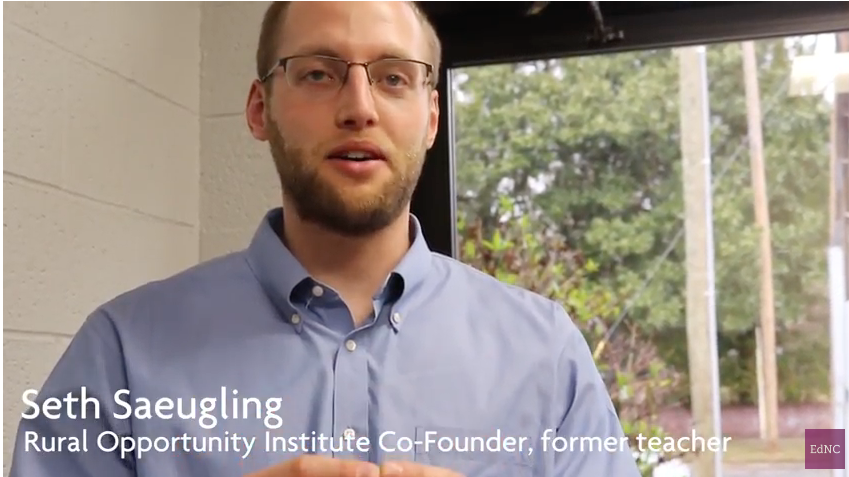
image3: Lindsey Bickers-Bock of Durham ACEs Resilience Task Force, Michael Hayes of Buncombe County (NC) ACEs Connection and Seth Saeugling of Edgecombe County (NC) ACEs Connection
image2 (1): Michael Hayes of Buncombe County (NC) ACEs Connection and Vernisha Crawford of Resilience Charlotte (NC) ACEs Connection
image1 (1): Crystal Kelly of Watauga County  (NC) ACEs Connection, Kim Morgan of Davie County  (NC) ACEs Connection, and Laneita Williams of Forsyth County (NC) ACEs Connection
IMG_1900: Catherine Joyner of the North Carolina Department of Health and Human Services, Scott Whisnant of the New Hanover Resiliency Task Force, and Chris Freeze of Mississippi ACEs Connection
IMG_1897: Scott Whistnant of New Hanover Resiliency Task Force, Crystal Kelly of Watauga County  (NC) ACEs Connection, and Laneita Williams of Forsyth County (NC) ACEs Connection

Carey Smith Sipp

carey.pacescommunites@gmail.com
❤️ 3

Views: 480

Historical trauma, racism resources from NC workshop

Carey Sipp Carey Sipp 9/14/1911:07 AM

At a standing-room-only workshop on historical and racial trauma in Wilmington, NC this week, one of the workshop leaders, Jen Neitzel, Ph.D., executive director of the Educational Equity Institute , shared a list of resources on the topic of racism, trauma, white fragility, inequity, social justice and more.

Neitzel and fellow presenters Justin L. Perry, a therapist in private practice,  and Jaraun “Gemini” Boyd, a client advocate for The Bail Project, spoke and interacted with an audience that included a physician, educators, social workers, parents, state, county, and city employees, and non-profit and faith community leaders. 

The workshop was coordinated by the New Hanover Resiliency Task Force and sponsored by the North Carolina Department of Health and Human Services through a grant from the Substance Abuse and Mental Health Services Administration (SAMHSA), managed by the Center for Child and Family Health.

At the end of the three-hour workshop most of the crowd lingered, many saying they wanted to continue the conversation on the different types of trauma and their causes and symptoms, the importance of the attachment cycle and how it plays out in different situations, and strategies for working with children and families who experience racial and historical trauma.

Here is Neitzel’s list of recommended resources to learn more about historical and racial trauma: 

Books

White Fragility by Robin DiAngelo

How to be an Anti-Racist by Ibram X Kendi

Stamped from the Beginning by Ibram X Kendi

Between the World and Me by Ta-Nahesi Coates

Just Mercy by Bryan Stevenson

 Online articles

1619 Project – The New York Times Magazine

 TED Talks

We Need to Talk about an Injustice – Bryan Stevenson

Color Blind or Color Brave? – Melody Hobson

 Documentaries/Movies

13th (on Netflix)

When They See Us (Netflix)

 Podcasts

1619 Project

Pod Save the People

Code Switch

 Twitter

Jonathan Capehart

Eddie Glaude Jr.

Deray

Clint Smith Jr.

Brittney Packnett

Bakari Sellers

April Ryan

Zerlina Maxwell

Jamil Smith

Nikole Hannah-Jones

Equal Justice Initiative

Rachel Cargle

Austin Channing

Charles Blow

 Facebook

Black Women Radicals

Rachel Cargle

Austin Channing

The Conscious Kid

Charles Blow

 Instagram

Black Women Radicals

Rachel Cargle

Austin Channing

The Conscious Kid

Charles Blow

Attachments

Hide

Images (1)

IMG_1860: Leaders of the Historical and Racial Trauma workshop Jen Neitzel, Justin L. Perry, and Jaraun "Gemini" Boyd discuss white privilege.

Carey Smith Sipp

carey.pacescommunites@gmail.com
❤️ 1

Tags: JusticeHistorical Racism1619 New York TimesSAMSHAOpressionChanningUNCRacismJuvenile JusticeTraumaBlow

Views: 619

Register now: Free ACEs Connection Webinar on the Human Impact of Climate Change

Carey Sipp Carey Sipp 11/11/197:03 PM

A year after 85 people died in the wildfire that swept through Paradise, CA, and nearby towns, one of the town’s survivors will talk about how she and others are using resilience practices in their recovery from the trauma. 

On Wednesday, Nov. 13, Paradise resident Kelly Doty will have a conversation with Elaine Miller-Karas, who developed the Community Resiliency Model (CRM). Doty, who lost her home in the fire, and Miller-Karas will discuss resilience education skills designed to help people better prepare for and handle climate crises. We will hear first-hand from Doty how well the program, which includes three phases of intervention of the Community Resiliency Model Disaster Relief Program, has worked for her and her family. We’ll also learn how it has been for her, as a mental health professional, to share the model with others as she has helped her community in its recovery from last year’s devastating fires. 

This is the last of three webinars that ACEs Connection is hosting on how climate crises impact humans. The one-hour webinar begins at 2 pm ET/ 1 pm CT/ 12 pm MT/ 11 am PT.

In the first webinar, Building Resilient Communities, Miller-Karas explored integrating a biologically-based model to reduce the impacts of toxic stress for children and adults. She detailed the connection between the science of adverse childhood experiences (ACEs) and using tools in the Community Resiliency Model to help prepare for climate trauma and to help prevent more ACEs as people cope with the stress of a climate disaster. 

The second webinar, Integrating Climate Traumas into ACEs Prevention was led by Bob Doppelt, executive director of the Resource Innovation Group, and founder and coordinator of the International Transformational Resilience Coalition (IRTC). He discussed how climate change creates personal, family and community traumas and toxic stresses, how those stressors trigger feedback loops that expand and aggravate ACEs. 

In it we learned that prevention is the only realistic solution to slowing climate change and preventing the proliferation of ACEs that come with it, as resources and human capacity to respond rationally are severely impacted in climate disasters. 

Building Resilient Communities with Elaine Miller-Karas link: https://www.pacesconnection.com…-elaine-miller-karas

Transformational Resilience for Climate Change Traumas and Toxic Stresses with Bob Doppelt link: https://www.pacesconnection.com…ses-with-bob-doppelt

Speakers:

Elaine Miller-Karas, MSW, LCSW, Executive Director and Co-Founder, Trauma Resource Institute

Kelly Doty, MA, Strengthening Families Program Manager, Youth for Change

Host/facilitators:

Carey Sipp, ACEs Connection

Alison Cebulla, ACEs Connection

“I attended Trauma Resource Institute’s, Community Resiliency Model training in August of 2018. I came away from TRI with a greater sense of self-awareness, a newfound understanding of what resiliency really is, and an eagerness to begin implementing the CRM skills in my day-to-day duties.

Upon my return, I am happy to say I began utilizing my newfound skills-not only in a professional capacity, but also in a personal capacity. “  – Amy Gallardo, Child Interview Specialist, Multidisciplinary Coordinator, Kids Hope, Washington

Registration

Register in advance for this webinar: https://zoom.us/webinar/regist…7W7hEBR-maBYpUTmitDg 

After registering, you will receive a confirmation email containing information about joining the webinar.

Carey Smith Sipp

carey.pacescommunites@gmail.com

❤️ 1

Views: 604

Add Comment

Carey SippCarey SippFormats 

javascript:””

Comments (0) 

Trauma tried to kick down the door. Compassion is helping me heal.

Carey Sipp Carey Sipp 1/26/207:03 AM

The artwork is an original piece titled “Someone at the Door” by Chicago artist Ken Shaw. I bought it about 35 years ago.

(The first part of this piece was written in-the-moment, as an email to a friend following what, for me, was a traumatic experience. The second part of this piece was written about 10 days later, as part of a healing reflection. It occurs to me that this experience, and the reflections, might help someone else experiencing trauma and/or seeking compassion for self or others.)

 PART 1 – AN EMAIL TO A FRIEND AFTER THE TRAUMA.

A woman just banged on my door and damn-near broke it down. It scared the bejesus out of me. F*#k.  Half-asleep I opened the door. She was looking for Jake. No Jake here.

I talked to her for a couple of seconds and then she reached into her purse for God-knows-what. THAT’S WHEN I FREAKED.  Was she reaching for a gun or a knife? I didn’t know. I closed the door. She pushed and pushed against it, but I finally got it closed and locked.

 Then she got mad. And started yelling and then kicking the door. Kicking the door. Kicking the door.

 Heart in my throat.  I found my phone and called the police.

 They arrived and found her next door, banging on that front door, looking for Jake.

They got her down the steps and have been out in the street with her for 15 minutes. God. CPTSD (Complex Post Traumatic Stress Disorder) City.

 Drunk, doped, and psycho people freak me out.

I was already agitated having gone to sleep worried about the political tension between the USA and Iran. These existential threats weigh heavy on me. Potential war. Australia burning out of control.  Floods swamping the South. Then there is my dog, Cosmo, barking, barking, barking.

My heart is pounding out of my chest.

Writing this is helping me calm down.

I am here. It is now.

I’ll play Scrabble on my phone. I’ve read that playing a game after a traumatic event can help prevent Post Traumatic Stress Disorder (PTSD). I wonder if it can help folks who, like me, already have Complex PTSD and don’t want it to get worse because of some random-ass occurrence like a large and apparently out-of-control woman trying to break down your door while accusing you of harboring a guy named Jake?

 Okay. Breathe deeply. I wonder if the police will check on me or not. Damn. I could be having a heart attack and they wouldn’t even know. And I could do something about that. I could call them and say, “Please come check on me.”  Okay. My heart rate is slowing down a bit.

Damn. I had gone to bed early because I didn’t sleep well the last two nights. Both nights I’d checked my phone during the night. That is not a smart thing to do when I want a good night’s rest. I flunk sleep hygiene.

 Well, the police left. I don’t know what happened to that woman.

 She was about 5’9 and probably weighed 180. I’d opened the door thinking it was my housemate’s son banging on the door. Maybe he and his mom had driven straight through the night and were back from their trip.

 I’m so damned glad I got the door closed. She just kept kicking it. For about two minutes she kept kicking on it. I cannot believe the police didn’t ask me if I wanted to press charges. I get that pressing charges would just extend the trauma. But they didn’t even come back up the steps to check on me or call. Nada.

 What a weenie I am. There are people in flood zones, fire zones, war zones and I’m freaking out because a tanked-up human tried to kick the door down.  But, trauma is trauma. A friend would remind me not to diminish how terrified I was; I am. Again, she reached into her purse, I thought she had a gun. Guns terrify me. Absolutely terrify me. Mention them and sometimes I can smell gun oil.

Okay. I am gonna be alright. I’m gonna play Scrabble for a few rounds. I suck at

Scrabble. I’ll do it anyway. I’ll get up and dance to discharge all this adrenaline.  I remember the Community Resiliency Model (CRM) advice and push against the wall. This helps.

I put my back against the wall and breathe and push, using my thigh muscles to really press in. I turn around and face the wall and push, push, push on the wall.

This helps. I jump up and down. I do pushups.

 I have power and agency. I am strong and I’m in my body. This helps. I have choices. I have choices.

I can drink water and eat and go to the bathroom and turn on music or a movie or write. I have choices. I am alive and I have choices. It is 2 a.m. or so and I can write some more and I have choices. Thank God for choices.

 PART 2 – A FEW DAYS LATER:

I look back on the whole experience of the woman at my door and I am overwhelmed with compassion for myself as a little girl. When I was a child, my father, who was a traumatized human himself, would often wake us all up in the middle of the night after a night of drinking. He fought with my mom. He had a hair-trigger temper. He grabbed her by her hair, twisted her arm behind her back. Smacked her.

One time he broke the glass to get into the back door.

Another time there were gunshots.

Guns were always around and, in my mind, were a constant threat. I was always afraid that he would use one on Mother or himself or on all of us. Or one of our pets.

 And so as I reflected on the recent night and all of those nights as a terrified, helpless child, I felt tremendous compassion for myself that I went through that kind of trauma and drama night after night. And that day after day I would want to go back to sleep and not go to school because I was so very tired. But Mother always pushed me to get dressed and out the door to school so she could go to work.

 Never, that I remember, did we ever stay home after one of those crazy nights.

 So that little me would go to school. Lots of times I would get carsick on the way to school, get there, go in, and have a hard time not throwing up.

 It wasn’t until third grade, when I began to have sleepovers at friends’ houses, that I got my first  glimpse that other people’s dads didn’t break into their homes in the middle of the night.

 In addition to feeling tremendous compassion for my younger self, I thought about the woman who tried to kick the door down. I began having compassion for her. Hell, if some things in my life hadn’t gone SO WELL, I could have been her.

I also know the experience of this woman coming to my door was random, not intentional, as the adverse experiences in my childhood were. I began wondering how she ended up in this neighborhood. She is somebody — a daughter, sister, aunt, niece, maybe even a mom — and she is NOT her behavior. She could have just been out for a cocktail and somebody could have slipped a “Mickey” into her drink. Or she could have been out drinking because she was in horrific grief. We never know why people do random, sometimes bizarre things.

 My dad? I feel compassion for him too. I have for years, thank God. I’ve felt compassion for both of my parents. I think he drank and acted out because he was in pain from his childhood trauma, and from World War II, when, as a young submariner, there is no telling what kind of fear he experienced.

His trauma doesn’t excuse his violence. But seeking to understand the roots of his behavior has softened my heart and helped me to forgive and move on and to have, sometimes for long stretches, healthy relationships with men I have loved.

 I am grateful that I can look at my father and mother, both of whom terrified me, with compassion. They were also terrified and terrorizing. Like the woman at my door.

 And THAT is the whole point of integrating this new knowledge about ACEs science into our lives, right? A “turnaround”?

Somebody in the cycle has to stop and connect with the reality that the behavior of someone who is acting out – drinking or raging or whatever – is not about us.

 It is about the person who is acting out and something that happened to them, some pain they are expressing in a way that is the best way they can in the moment. And probably most of their acting out is a cry for help. I have to remember that.

 And in my job with ACEs Connection, I know I have to remember this and move forward with compassion, and model this to the people with whom I work. I want to show people how to not traumatize and terrorize already traumatized people. And that is why I need to practice self care, compassion, and compassion for others.

Days later, as my body still works to settle down after those flight-fight-freeze moments of terror, this means I treat myself gently.

Carey Smith Sipp

carey.pacescommunites@gmail.com

❤️ 9

Views: 1,229

Add Comment

Carey SippCarey SippFormats 

javascript:””

Comments (5) 

Newest · Oldest · Popular

Christine Cissy WhiteChristine Cissy WhiteIt’s not trauma-informed unless it’s informed by trauma survivors.

Carey:
What an important, beautiful and clear piece of writing to show the then/now/then/now push and pull when it comes to our responses, reactions, and how we relate to ourselves during and after current fear and trauma. It all gets tangled and intertwined. I appreciate you sharing your responses and how you calibrated over time. I especially love your current compassion for the child you were who didn’t have the same knowledge, resources, languages, and tools and then the compassion for others past and present, including those who caused your fear. That moved me so much. Keep writing!

Warmly,
Cis


❤️ 1

Carey SippCarey SippFormer Volunteer Co-Director, PACEs Connection Revitalization

Tina Cain posted:

I wish I had my NFB machine I’m gonna get. If you wanted, I would come find you and I would do all I could to help.   I’m so sorry. 

Tina – That is so sweet!

I love neurofeedback and have been doing it for two years. My NFB provider in Wilmington saw me two days later and it was a big help. I go weekly. Used to go twice a week. NFB is a big part of my self-care program! We should talk. We will talk. Thank you! 

And I am doing well. Have wonderful friends here. A good EMDR therapist. I reached out for help. Looked at what went “right” that night (police here quickly; support from friends; I knew to practice extreme self care; it was random and I live in a normally extreme light peaceful neighborhood; etc.) 

Thank you for your concern! 


❤️ 1

FMFormer Member

I wish I had my NFB machine I’m gonna get. If you wanted, I would come find you and I would do all I could to help.   I’m so sorry. 


❤️ 1

LHLaura Haynes CollectorMember

Beautiful healing here!


❤️ 1

Dana BrownDana BrownInterim (Volunteer) Executive Director PACEs Connection

Dearest Carey:
Thank you for your courageous, insightful, wise words, Carey Sipp.  Your reflective thoughts carry a lifetime of pain, abuse, fear, hope, compassion, and love.

Compassion with self, and others in our lives who we have a relationship with, and folks in the public we don’t know well, permeates through your blog. Highlighting “voice and choice” when you didn’t have a voice (childhood – woman banging on your door) and your life’s evolution to deeply knowing you have choices (self-soothing strategies, the “turnaround”, the CRM model) will plant seeds of hope within all who read your piece.

Much Love and Light surrounding you, Carey, as your healing journey continues.  I love you dearly… 


❤️ 2

Back To Top

Post

Add Comment

Manage Blog Post

Welcome to PACEs Connection

Learn about PACEs Connection & who we are.

How to be a part of our social network.

Join local or interest based communities.

Invite others to join PACEs Connection!

The text 'donate' on a background with many inter-connected spheres

Comments

Carey Sipp commented:
Thanks for posting, Laura! For posting this, and so many more blogs over the years. I’m thinking of the ones YOU’VE written (you are…

Carey Sipp

Carey Sipp commented:
Thanks, Jeoff. A lot of great relationships and ongoing work came from this incredible gathering. It laid the groundwork for deepening…

Carey Sipp

David Dooley commented:
Thank you for commenting, Mr. Holmes. I’m not sure what you’re getting at. Can you give me an example?

David Dooley

Tommy Holmes commented:
I loved how you highlighted the connection between ACEs and community resilience! It’s so important to empower people with this…

Tommy Holmes

Patrick Anderson commented:
This one landed, Dr. Long. What I’d underline is that you’ve framed being pushed out as a pattern rather than a run of bad luck — and…

Patrick Anderson

Robert Hawk commented:
That story is heartbreaking and really shows how history and present-day realities can intersect. Reading about Black history in China…

Robert Hawk

David Dooley commented:
Thank you for writing, Mr. Anderson. You wrote… “Your instinct that the utopia requires entirely new forms of parenting education that…

David Dooley

Cecilia Pace commented:
[heart] Pace, Cecilia reacted to your message:

CP

PACEs Connection Discount for Trauma Informed Jobs

TraumaInformedJobs.com is a new job board for the trauma and resilience communities. PACEs Connection members can save 10% on posting with code PACES10

Blog Archive

August 2026(6)

July 2026(35)

June 2026(35)

May 2026(28)

April 2026(37)

March 2026(29)

February 2026(26)

January 2026(18)

December 2025(31)

November 2025(33)

October 2025(32)

September 2025(28)

August 2025(32)

July 2025(26)

June 2025(23)

May 2025(37)

April 2025(35)

March 2025(32)

February 2025(67)

January 2025(62)

December 2024(55)

November 2024(38)

October 2024(38)

September 2024(0)

Blog Directory

Foster Care

PACEs

PACEs Science 101

Resources

Creating Resilient Communities

Donor Profiles

Special Announcements

STAR Network

Research

Feature

Jane Ellen Stevens

History. Culture. Trauma. Podcast

History. Culture. Trauma. Blog

CRC Fellowship

PC Reacts

Blog Directory

Dr. Nadine Burke-Harris Shares Concerns About The Impact COVID-19 Is Having On Blacks [sacobserver.com]

Carey Sipp Carey Sipp 4/18/203:22 PM

Dr. Nadine Burke-Harris joined Gov. Newsom for the first time last week to announce a number of actions leaders have taken to address the pandemic.

By Genoa Barrow, Sacramento Observer, April 17, 2020 

As a pandemic sheds a spotlight on long-standing health inequities for African Americans, California’s surgeon general looks to find lasting solutions.

Dr. Nadine Burke-Harris was named to the new position created by Gov. Gavin Newsom in January 2019. She is an African American pediatrician, entrepreneur and nonprofit CEO from San Francisco, where she founded the Center for Youth Wellness in the predominantly Black Bayview-Hunters Point area. She’s known nationally for work and research around health equity, early childhood and adverse childhood experiences, and toxic stress. She lists these as her top three priorities as surgeon general.

Dr. Nadine Burke-Harris spoke with The Sacramento OBSERVER Tuesday, sharing her role in the fight against the coronavirus, how COVID-19 can exacerbate the chronic stress African Americans often face, and the impact the virus is having on African Americans overall.

[Please click here to read more.]

Carey Smith Sipp

carey.pacescommunites@gmail.com

❤️ 2

Views: 1,244

How Racism Is Shaping the Coronavirus Pandemic [newyorker.com]

Carey Sipp Carey Sipp 5/10/201:03 PM

By Isaac Chotiner, The New Yorker, May 7, 2020 

Evelynn Hammonds, who chairs Harvard’s department of the history of science, has spent her career studying the intersection of race and disease. She wrote a history of New York City’s attempt, a century ago, to control diphtheria, and is currently at work on a book of essays on the history of race, from Jefferson to genomics. Hammonds’s area of expertise is especially relevant today: while the data is incomplete, at this point in time, African-Americans represent nearly a third of U.S. deaths from the coronavirus pandemic and thirty per cent of covid-19 cases, despite making up only about thirteen per cent of the population. Hammonds noted recently, “This new development of what has happened with the pandemic with respect to African-American communities” is “perhaps an old development.”

I spoke by phone with Hammonds, who is currently hosting a series of Webinars with academics and experts at Harvard on African-Americans and epidemics in American history, from the eighteenth century to the present day. As she stated in one of the sessions, “I can’t imagine saying that we have to wait until this pandemic has passed to make clear what kinds of structural inequalities and implicit and explicit biases are at work.” During our conversation, which has been edited for length and clarity, we discussed why African-Americans were once thought to be immune to various diseases, how this belief morphed into the fear that they were spreaders of contagion, and what lessons can be learned from a Civil War-era smallpox outbreak.

[To continue reading, please click here.]

Carey Smith Sipp

carey.pacescommunites@gmail.com

Tools and how to use them is focus of second webinar on Community Resiliency Model, May 14, 2020

Carey Sipp Carey Sipp 5/12/207:27 PM

The second of two free Community Resiliency (CRM) webinars with Elaine Miller-Karas, key creator of the CRM, will be held Thursday, May 14, from 11 a.m. – 12:30 p.m. ET, (10 a.m. CT; 9 a.m. MT, and 8 a.m. PT) and will include the practical application of tools of the model. CRM is an ACEs science-based biological model for helping individuals become emotionally regulated during natural disasters and other dysregulating times. 

elaine Miller-Karas

Miller-Karas will be joined by CRM trainers from Wilmington, NC: Allison Wine, behavioral specialist, and Kelly Purcell, instructional coach and multi-tiered support specialist.  

Thursday’s webinar will include an explanation of CRM tools, including tracking, resourcing, grounding, gesturing and spontaneous movements, and shift and stay. The 90-minute webinar also includes many of the model’s key concepts, as well as the opportunity to practice exercises to help participants “embody” the use of the tools. 

Miller-Karas, who is also the founder of the Trauma Resources Institute, a nonprofit organization working to cultivate trauma-informed and resiliency-focused individuals and communities throughout the world, will lead the webinar.

School Picture

Miller-Karas will be joined by CRM community trainers Kelly Purcell, an instructional coach and multi-tiered support coordinator at a Title One elementary school in Wilmington, NC, and Allison Wine, a pre-K behavioral specialist for 41 classrooms in the New Hanover County, NC, early childhood education program. 

AWineHeadshot

The overview, which offers information and tools you can use immediately to help regulate your central nervous system (share with your family members!) is being offered to members of ACEs Connection as well as to members of the Campaign for Trauma-Informed Policy and Practice (CTIPP). 

Press_Dan

“Elaine Miller-Karas is recognized worldwide for her groundbreaking work, and we appreciate her offering this overview, with tools and resources people can use right now in the midst of the COVID-19 pandemic, to help themselves and others. She will also help us understand more about the importance and benefits of our making this kind of training available to the community at large,” said Dan Press, founder of CTIPP.

Mebane Boyd, executive director of the New Hanover Resiliency Task Force, in Wilmington, NC, has seen positive results from her community’s investment in training people from across all sectors in the CRM model.

IMG_3104

“Over 1,000 individuals in our county have received training in the Community Resiliency Model. Investments have been made to teach how to first recognize one’s own biological responses to stress and then skills to bring one back into their ‘Resilient Zone.’ This zone is where individuals can function as their best self despite the stress and trauma responses that their nervous system exhibits. From teachers to social workers to first responders who have received resiliency training, we are hearing about the benefits of how this is paying off not only in reducing their own trauma, but their increased awareness of the needs of their co-workers and family members,” said Boyd. 

Registration information:

If you registered for the first webinar, held last week, you are automatically registered for the second webinar.  If you did not register for the first webinar, click the link below to register for Thursday’s webinar. 

 Following Thursday’s webinar, both webinars will be available via recording on the ACEs Connection YouTube Channel. To receive notification when the webinars are available, please click here to subscribe to the ACEs Connection YouTube Channel. 

Send questions about the webinars to Carey Sipp, ACEs Connection SE Regional Community Facilitator, at csipp@acesconnection.com

Attachments

Hide

Images (5)

Elaine Miller-Karas
Kelly Purcell
Allison Wine
Dan Press
Mebane Boyd

Files (3)

May 7-Community Resiliency Model- Part 1.pdf

Part 2 CRM ACES 5.14.20 copy. with emk edits 5.9.20pptx.pdf

ACES Community Resiliency Model Activity Booklet.pdf

Carey Smith Sipp

carey.pacescommunites@gmail.com

Views: 239

Op-Ed: How to prepare for the second pandemic — of mental health issues [latimes.com]

Carey Sipp Carey Sipp 5/14/207:43 AM

By Darrell Steinberg, Los Angeles Times, May 11, 2020

When she was in her late 70s, my late grandmother Henrietta became an unofficial mental health provider. Often housebound because of physical ailments, Grandma needed a volunteer effort she could do from her living room, so she became involved with the Jewish Family Services agency, calling half a dozen seniors every week.

The people she was assigned needed a sympathetic ear, and she’d talk for hours with them — about family, memories and the things that mattered in their lives.

My grandmother was the “service provider,” but she received as much as she gave. She had no formal training or license, just the gift of connecting and the will to help.

I’ve been thinking about my grandmother lately because of our current crisis. Over the last month, I’ve heard more than once that the COVID-19 pandemic, as difficult as it is, will be followed by a second pandemic of anxiety, depression and post-traumatic stress, born of unprecedented economic dislocation and isolation. We are already seeing it.

[Please click here to read more.] 

Voter suppression and the impact of COVID-19 on people of color [pbs.org]

Carey Sipp Carey Sipp 5/18/205:46 PM

By PBS News Hour, May 17, 2020

The Rev. William J. Barber has long tackled the issues of race, poverty and hatred. His Poor People’s Campaign in June will hold a digital assembly and march on Washington to draw attention to civil rights issues. Hari Sreenivasan spoke with the reverend about the impacts of COVID-19 on communities of color for our on-going initiative “Chasing the Dream: Poverty and Opportunity in America.”

  • Hari Sreenivasan:Reverend William Barber, thanks so much for joining us.When you see those statistics about how disproportionately affected people of color are in this, why do you think that the country is not as shocked as they ought be?
  • Rev. William Barber:Well, first of all, we’re not getting all the statistics. I mean, we get like in Mississippi, 80 percent of the people in one area that died from COVID-19. It might be we’re not as shocked because we weren’t dealing with it before. And we weren’t shocked when a quarter million people were dying from poverty and no income.[Please click here to read the full transcript.]

Carey Smith Sipp

carey.pacescommunites@gmail.com