Category Archives: Uncategorized

My positive childhood experiences tree

Carey Sipp Carey Sipp 2/8/221:15 PM

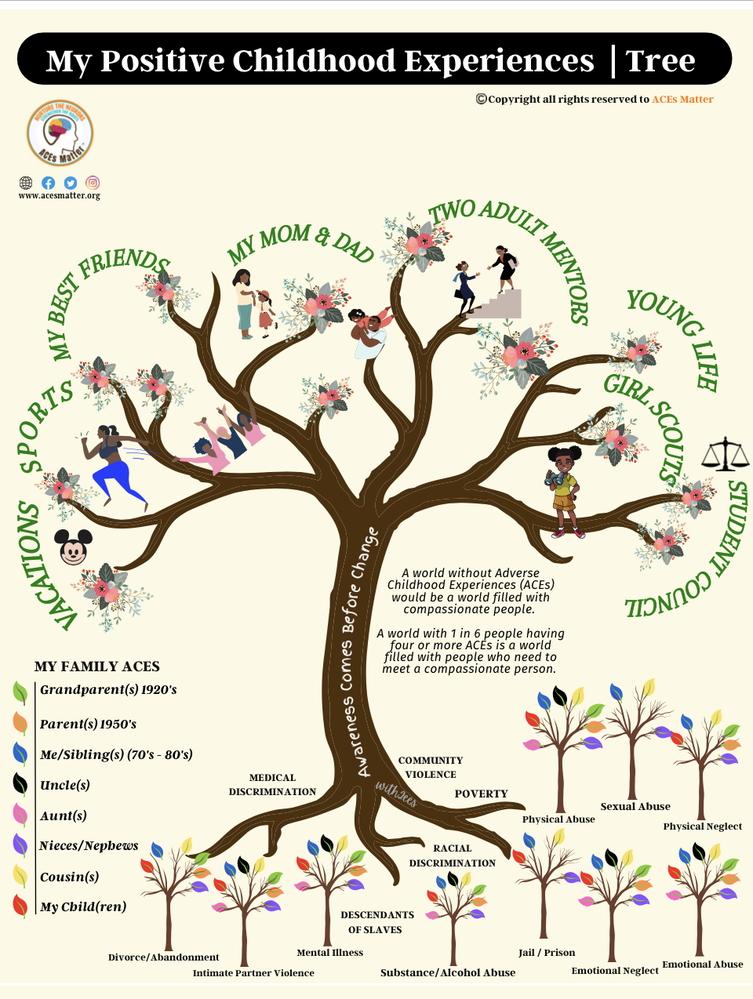
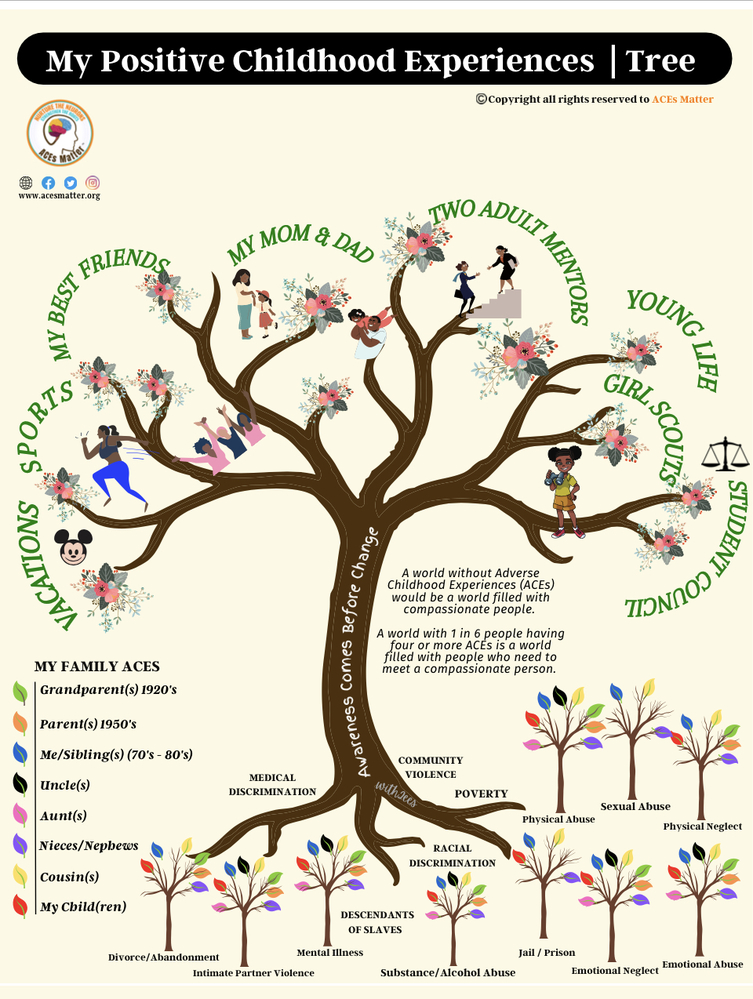
This is the third of three stunning illustrations showing how PACEs (positive and adverse childhood experiences) affected the family of Cendie Stanford, graphic artist and founder of the nonprofit ACEs Matter. This one looks at her positive childhood experiences.

The day before her 16th birthday, Cendie Stanford’s older brother was shot and killed by a young man who, just two years earlier, had been her boyfriend.

“I was heartbroken that two people I loved were out of my life forever,” says Stanford. “The guy I used to call my boyfriend and the man who was born my brother.”
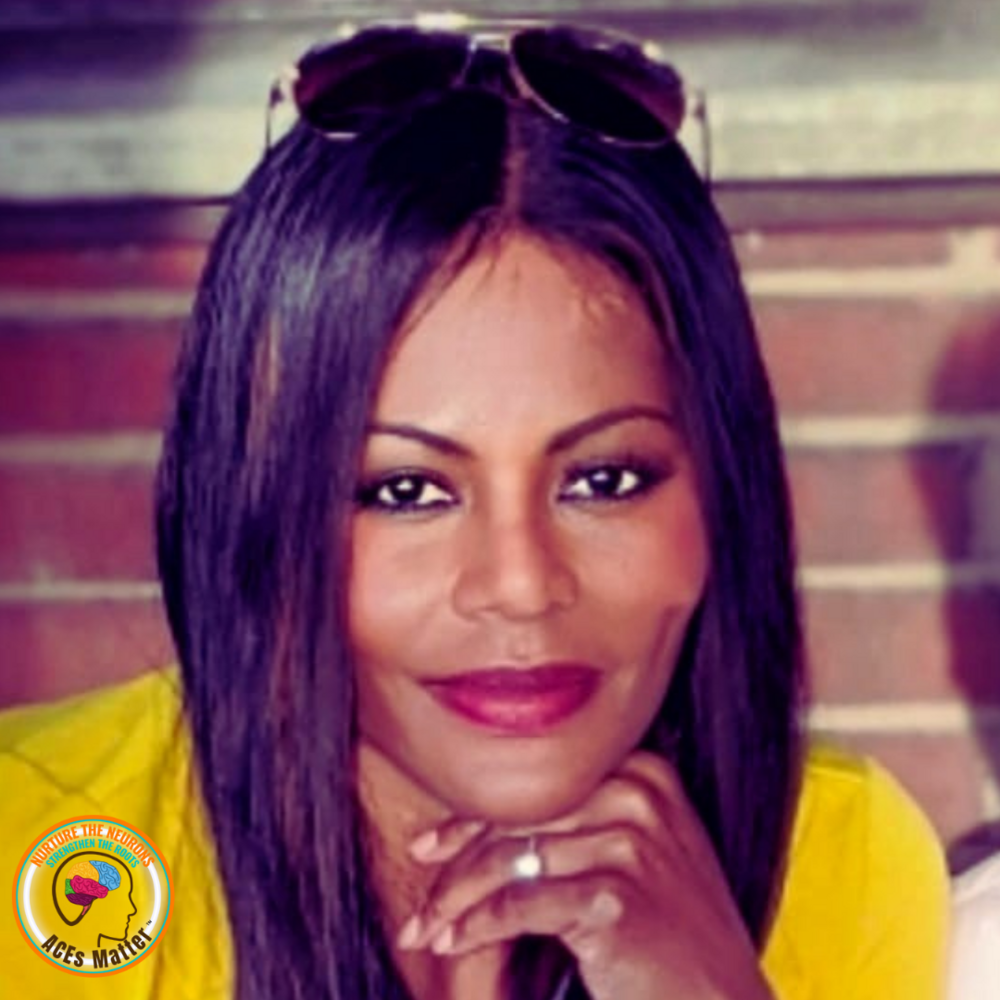
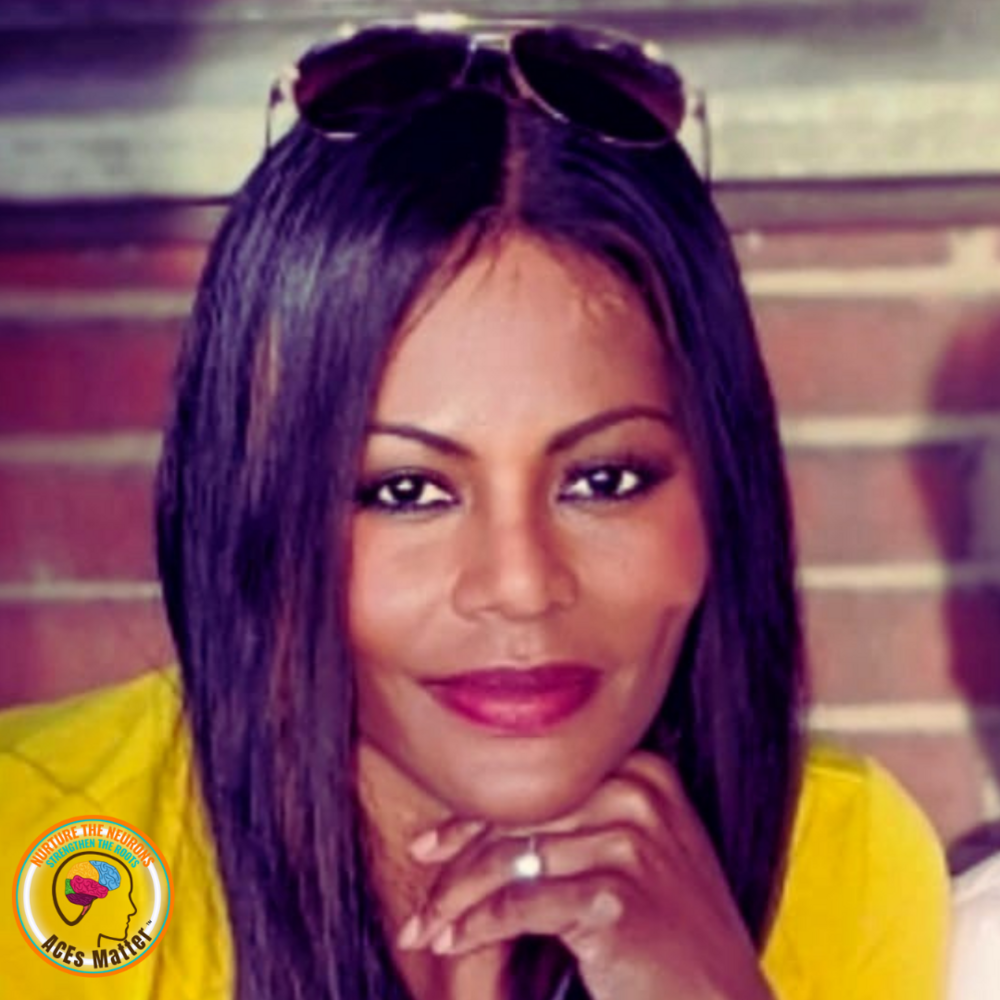
Cendie Bio PicThe shock of this trauma could have led to a downward spiral for Stanford, founder and executive director of the nonprofit ACEs Matter. Instead, she says, a community leader—a family friend—reached out to her.

“An athletic trainer and coach—whom everyone called Prof, and who had coached my brother—took me under his wing,” she says. “When Prof drove three of my friends and me to visit a college during my senior year of high school, it was a turning point. I knew I had to get out of my neighborhood; I had to keep going.”

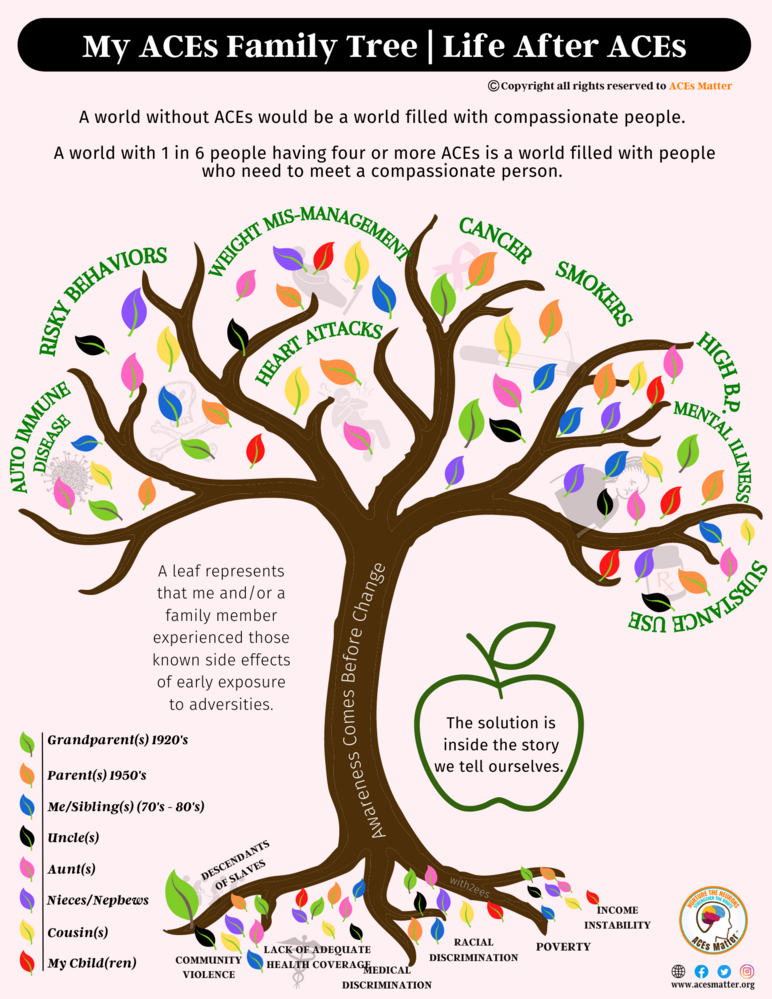
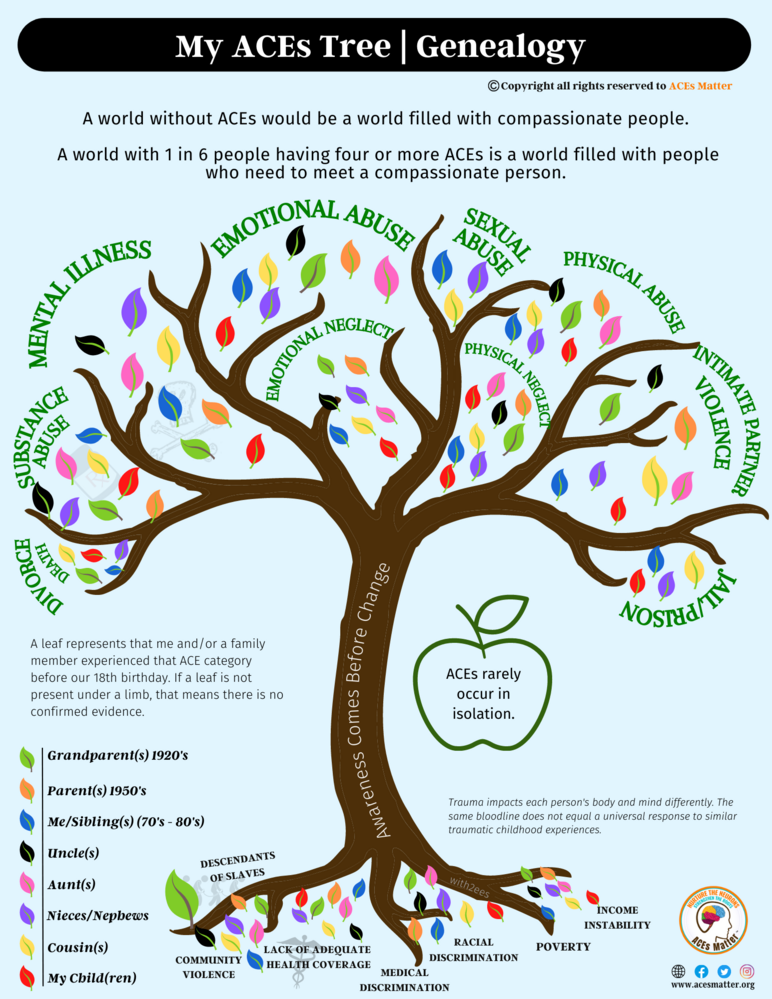
Upon reflecting on her positive childhood experiences (PCEs), Stanford added a third infographic to the first two: My ACEs Tree: GenealogyMy ACEs Family Tree: Life After ACEs.

Positive Childhood Experiences Tree #3

“When I took the resilience quiz and the positive childhood experiences questionnaire, I immediately felt a sense of appreciation, not just for the people in my community who stepped up when I was hurting, but also for the unique abilities of our bodies to recover and thrive in the face of just about anything. Although my ACE score sits at a 10, my PCE score was a five out of seven,” she says. “Now I understand that I had several adults outside my home that were invested in me. My mom loved us dearly, but she had her own ACEs that kept her from parenting well.”

Ask yourself: How did I get here?

“The negative memories serve as a daily reminder of where I never want to be again, and the people I want to help. Looking at the positive experiences is equally as important. For me, it caused a perspective shift. I remembered that many of the PCEs that I experienced didn’t cost my family anything. As I look back on the events that got me here, many of them were community-led and student-centered opportunities that only required awareness,” Stanford adds.

She says she would like every person who has excelled, in spite of high ACEs scores, to stop and look back and ask themselves: “How did I get here?”

“Probably most of us had some help from the community. I needed to remember that I was involved in sports. I was popular amongst my peers, and as teenagers we liked the challenge of getting good grades. So, a huge part of my motivation to leave my neighborhood was caused by my high school experiences of being recognized by the mentally stable adults who saw potential in my gifts,” says Stanford.

I needed to remember being vice president of the student council and the lead photographer for the yearbook—and that Jerry Gray, a former NFL player, walked me out onto the field during the homecoming game because I was a member of the homecoming court who didn’t have their father there,” she adds.

IMG_2042

(Photo from Cendie’s scrapbook)

Stanford said she hopes looking at both their positive and adverse experiences will help people see that they can change, life can bring good experiences, and both of those facts need to be remembered.

Flip the script and remember the positive

“If we are walking around believing that we can’t change, then it’s pretty easy to roll with that thought, and stay negative. But if we flip the script and start telling ourselves stories of empowerment and encouragement from the people who were there for us, we find an alternate solution,” she says. “I believe that, along with a trauma-informed lens, it would serve society if each of us also had a ‘love-informed lens’ so that when possible, we can show people the positives in their life. For almost all of us, there was probably someone who cared.”

Stanford created ACEs Matter to take awareness about PACEs science into underserved areas plagued by crime, danger, and poverty. She believes the first two of her infographics, which are being used in several settings, can help people see why it is so important to know about their own ACEs and their family’s ACEs, and to try to prevent them in the next generation.

ACEs Matter is going to find the people that need to hear about PACEs science. We’re going to go to the businesses that need to better understand their employees and customers and share this with them. My hope is that these infographics, when people fill them out themselves, will help them connect the dots and see the relationship between their ACEs and their health challenges, and their family’s ACEs and their health outcomes,” says Stanford.

“When we put the adverse childhood experiences together with the positive experiences, I hope it will encourage businesses and people in communities to want to provide positive experiences to children, to families. As a child who grew up in an emotionally and financially unstable environment, there is nothing more important, in my opinion, than to help every single child find something positive in their day—every day. Communities can help make that happen,” she says.

“At ACEs Matter, PCEs will be critical in the work we do,” she continued. “We may not be able to pull people out of poverty overnight, but we can sure help them see the beauty in creating and building on the positive.”

To read the first story in this series — please click here.
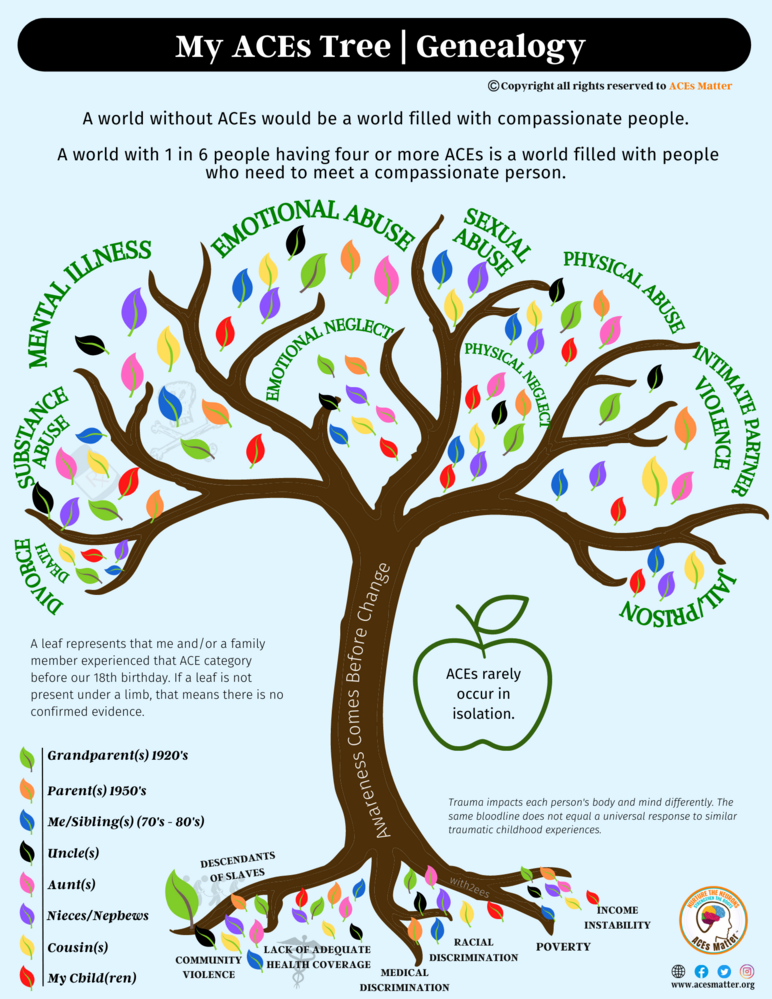
My Tree-ACEs Tree #1

Tree-Life After ACEs #2

To read the second story in this series, please click here.

Stanford says people who’d like to receive a “color-yourself” blank copy of the ACEs Tree infographic from ACEs Matter are encouraged to visit  https://www.flipcause.com/secu…se_pdetails/MTE3NzYz
For those with means, a $1 donation is requested to receive a copy.

Want to help ACEs Matter and Stanford? Please share this story using the social media icons below. (Social media icons show when you have joined PACEs Connection  [it is free to join] and are logged into the website.)

Attachments

Hide

Images (5)

My Tree-ACEs Tree #1
Tree-Life After ACEs #2
Positive Childhood Experiences Tree #3
Cendie Bio Pic
IMG_2042

Files (1)

MY PCEs Tree – 02.pdf

Carey Smith Sipp

carey.pacescommunites@gmail.com

💯 1👍 1

Tags: Positive Childhood Experiencesunderserved areasPACEsCarey SippAdverse Childhood ExperiencesCendie StanfordACEs MatterACEsTexasFlorida PACEs ConnectionFLorida

Views: 6,782

Add Comment

Carey SippCarey SippFormats 

javascript:””

Comments (5) 

Newest · Oldest · Popular

Cendie StanfordCendie StanfordMember

I am sharing this with all my friends!


Carey SippCarey SippFormer Volunteer Co-Director, PACEs Connection Revitalization

@Andrea D Clements, PhD posted:

Carey, I love this! How did you make it? I would love for there to be an “interactive version” where people could populate their own tree. It would be a great exercise to work through with people.

Andi – I wish I had made it! Friend of PACEs Connection Cendie Stanford — who is straight-up brilliant — created the three infographics. I think using them — as blanks— in therapy, prisons, treatment centers, the “meeting-after-the-meeting” for people in recovery, for PACEs Science trainings, in our PACEs Connection communties, in family-of-origin work, in communities of faith, and many more healing opportunities — would lead to there being less shame and blame and greater compassion for ourselves and our families members; more appreciation for the people, places and events that were “bright spots” in our lives. It would also make the consequences of trauma readily apparent; impossible to ignore.

I saw the first piece on a social media feed and wanted to know the story behind it. Cendie and I had actually met a year earlier, so it was fun to reconnect over her new work.

She said today that the conversation about positive and adverse childhood experiences needs to be “the loudest conversation in the world.” (If she’d said it earlier I’d have put that quote in the stories. It is so true!) I am hoping her infographics will increase the number of people having the conversation, as well as the volume/loudness.

Thanks for all your work, Andi!  I bet you and your colleagues and students at the Ballad Strong Brains Institute can help Cendie figure out other ways to use these creative, useful, interactive pieces! I’ve connected you all in response to your email.

Peace and thank you!

C.

 

❤️ 1

Andrea D Clements, PhDAndrea D Clements, PhDMember

Carey, I love this! How did you make it? I would love for there to be an “interactive version” where people could populate their own tree. It would be a great exercise to work through with people.

 

💯 1❤️ 1

Laneita WilliamsonLaneita WilliamsonMember

I love this.  Thank you for posting.


❤️ 1

Cendie StanfordCendie StanfordMember

So many positive memories!
 

❤️ 1

Back To Top

House passes anti-lynching bill that Rep. Bobby Rush says is decades overdue [washingtonpost.com]

Carey Sipp Carey Sipp 3/1/225:00 AM

By Felicia Sonmez, Photo: J. Scott Applewhite/Associated Press, The Washington Post, February 28, 2022

The House on Monday overwhelmingly approved legislation that would make lynching a federal hate crime, two years after a similar effort passed the chamber but was held up by Sen. Rand Paul.

H.R. 55, the Emmett Till Antilynching Act, was introduced by Rep. Bobby L. Rush (D-Ill.). It would amend the U.S. Code to designate lynching a hate crime punishable by up to 30 years in prison.

More than 4,000 people, mostly African Americans, were reported lynched in the United States from 1882 to 1968, in all but a handful of states. Ninety-nine percent of perpetrators escaped state or local punishment, according to Rush’s office.

[Please click here to read more.]

Carey Smith Sipp

carey.pacescommunites@gmail.com

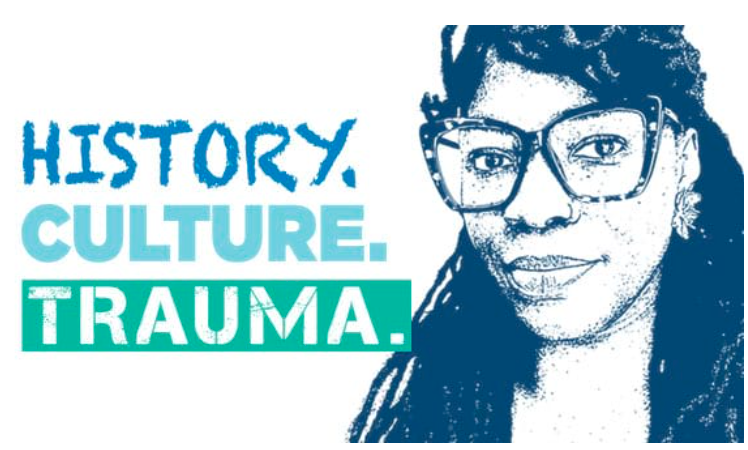
Join us March 10 for PACEs Connection podcast — History. Culture. Trauma. — with guest Dr. Sandra Bloom

Carey Sipp Carey Sipp 3/8/223:13 PM

Women of the PACEs science movement featured for Women’s History Month!

Screen Shot 2022-03-08 at 4.48.29 PM

In consideration of Women’s History Month, the entire month of March is dedicated to the women creating a legacy in the worldwide PACEs movement. In this episode, we will talk with Dr. Sandra Bloom.

For the past 40 years, Bloom has done pioneering work in the field of traumatic stress studies. From 1980-2001, Bloom served as founder and executive director of the Sanctuary programs, inpatient psychiatric programs for the treatment of trauma-related emotional disorders and during those years was also president of the Alliance for Creative Development, a multidisciplinary outpatient practice group.

Bloom is recognized nationally and internationally as the founder of the Sanctuary Model for organizations. Since 2012, Dr. Bloom has also served as co-chair for the Philadelphia ACEs Task Force (http://www.philadelphiaaces.org). In 2020 Bloom introduced a new, online organizational and clinical approach called Creating PRESENCE (https://www.creatingpresence.net). Creating PRESENCE is for creating trauma-informed, trauma-responsive and trauma-resilient organizations.


Tune in Thursday at 1PM Pacific Time

(3PM Central Time; 4PM Eastern Time)

on VoiceAmerica Health and Wellness Channel

Click links below to listen, listen on demand, or visit the promo page.


LISTEN LIVE
VIEW HOST PAGE


Questions? Comments?
Call In Live!
Toll Free: 1-866-472-5792
Intl: 001-480-553-5759

Logged in? Click the social media icons below to share on your social media!

To access past podcasts click here.

Attachments

Hide

Images (1)

Screen Shot 2022-03-08 at 4.48.29 PM

Carey Smith Sipp

Join us March 10 for PACEs Connection podcast — History. Culture. Trauma. — with guest Dr. Sandra Bloom

Carey Sipp Carey Sipp 3/8/223:13 PM

Women of the PACEs science movement featured for Women’s History Month!

Screen Shot 2022-03-08 at 4.48.29 PM

In consideration of Women’s History Month, the entire month of March is dedicated to the women creating a legacy in the worldwide PACEs movement. In this episode, we will talk with Dr. Sandra Bloom.

For the past 40 years, Bloom has done pioneering work in the field of traumatic stress studies. From 1980-2001, Bloom served as founder and executive director of the Sanctuary programs, inpatient psychiatric programs for the treatment of trauma-related emotional disorders and during those years was also president of the Alliance for Creative Development, a multidisciplinary outpatient practice group.

Bloom is recognized nationally and internationally as the founder of the Sanctuary Model for organizations. Since 2012, Dr. Bloom has also served as co-chair for the Philadelphia ACEs Task Force (http://www.philadelphiaaces.org). In 2020 Bloom introduced a new, online organizational and clinical approach called Creating PRESENCE (https://www.creatingpresence.net). Creating PRESENCE is for creating trauma-informed, trauma-responsive and trauma-resilient organizations.


Tune in Thursday at 1PM Pacific Time

(3PM Central Time; 4PM Eastern Time)

on VoiceAmerica Health and Wellness Channel

Click links below to listen, listen on demand, or visit the promo page.


LISTEN LIVE
VIEW HOST PAGE


Questions? Comments?
Call In Live!
Toll Free: 1-866-472-5792
Intl: 001-480-553-5759

Logged in? Click the social media icons below to share on your social media!

To access past podcasts click here.

Attachments

Hide

Images (1)

Screen Shot 2022-03-08 at 4.48.29 PM

Carey Smith Sipp

History. Culture. Trauma. — Encore Presentation — News Media Sucks at Violence Reporting. How can media also heal?

Carey Sipp Carey Sipp 3/15/229:30 AM

Thursday, March 17th 2022: Encore News Media Sucks at Violence Reporting. How can media also heal?  1PM Pacific

Screen Shot 2022-02-21 at 10.36.29 AMScreen Shot 2022-02-21 at 10.36.49 AM

Long-time health, science and technology journalist and PACEs Connection publisher Jane Stevens joins PACEs Connection CEO Ingrid Cockhren to do a deep dive into why people aren’t getting an accurate picture about violence in their communities. In fact, the state of violence reporting boils down to this: the news media are unintentionally providing misinformation about violence. Remarkably, the basics of crime reporting haven’t changed much since the late 1890s. Essentially, it’s the man-bites-dog approach: the unusual, not the normal.

Case in point: Although domestic violence causes comprises most aggravated assault and causes the most damage to communities in the U.S. economically and emotionally, it’s hardly reported. Yet, in many communities, up to one-third of the operating budget goes to dealing with domestic violence and its consequences.

The irony is that although change is journalism’s bread and butter, getting the journalism community to modernize is like moving a mountain with a spoon and a bucket. We discuss how the news media can jettison their old ways by integrating knowledge of the science of positive and adverse childhood experiences and, in the process, provide an accurate picture of violence in their communities, reduce and prevent violence, help reduce systemic racism and its effects, and significantly increase their readership.

Tune in Thursday at 1PM Pacific Time

(3PM Central Time; 4PM Eastern Time)

on VoiceAmerica Health and Wellness Channel

Click links below to listen, listen on demand, or visit the promo page.


Questions? Comments?
Call In Live!
Toll Free: 1-866-472-5792
Intl: 001-480-553-5759

Logged in? Click the social media icons below to share on your social media!

Attachments

Hide

Images (2)

Screen Shot 2022-02-21 at 10.36.29 AM: Jane Stevens, Founder and Publisher, PACEs Connection
Screen Shot 2022-02-21 at 10.36.49 AM: Ingrid Cockhren, CEO, PACEs Connection

PACEs science champion Becky Haas recognized with “Friend of Children Award” from Tennessee Commission on Children and Youth

Carey Sipp Carey Sipp 4/11/221:02 PM

Becky Haas (L) receives the “Friend of Children” award from Jill Stott of the Tennessee Commission on Children and Youth.

Becky Haas, whose work in child safety led to her learning about the 1998 Adverse Childhood Experiences (ACE) Study in 2014 – and her ultimately embracing and teaching the science as a career – was recently honored by the Tennessee Commission on Children and Youth (TCCY) with the “Friend of Children” award.

In giving the award to Haas, Jill Stott, Northeast Regional Director of TCCY, said, “Becky Haas is a local, state, and national leader in implementation and support of trauma informed services and communities. She has a deep understanding of the importance for every professional sector to have intimate knowledge of healthy early childhood development and the potential for early adversity to disrupt that healthy development.”

“This award is designed and intended to recognize an individual or organization who goes above and beyond to improve outcomes for children, youth, and families in their communities,” Stott said. “Haas’s vast experience ranges from local, regional, and state governments, justice and education systems, healthcare, and the faith-based community.

“Her enthusiasm is contagious, and she is an inspiration to all she comes in contact with. Her dedication to this work is an incredible asset for our state,” said Stott.

Haas first learned about ACEs science, (now PACEs, for positive and adverse childhood experiences) in 2014, while employed by the Johnson City, TN, police department.

“I was so taken by the ACE Study that I thought it was criminal not to tell everyone about how preventing childhood trauma could also help prevent adult mental health and health problems such as depression, suicidality, cancer, heart disease, chronic pain, and more, as well as the increased likelihood of becoming a victim or perpetrator of a crime, or becoming someone who is unemployable,” she said.

Haas and fellow community members subsequently started the Northeast Tennessee ACEs Connection community in early 2017. They held an ACEs Symposium in 2108, bringing together speakers from throughout the country.

Haas now speaks and consults worldwide on building trauma-informed methods and policies into multiple sectors including  education, law enforcement, healthcare, and faith communities.

For more information Haas can be reached at becky@beckyhaas.com, or via her website at www.beckyhaas.com

Carey Smith Sipp

carey.pacescommunites@gmail.com

Today! Join us for History. Culture. Trauma. at 1 p.m. PT — America’s Culture of Child Abuse Pt. 3 — with Judge Sheila Calloway

Carey Sipp Carey Sipp 4/21/229:30 AM

April is National Child Abuse Prevention month. For the entire month of April, co-hosts Ingrid Cockhren, CEO of PACEs Connection, and Mathew Portell, director of communities, will examine America’s history of child abuse and neglect and outline how this history connects to our current child abuse crisis.

In part three of this series of episodes dedicated to the systemic nature of child abuse and neglect in America, Cockhren and Portell will discuss the different layers of influence embedded within our society that create the conditionsScreen Shot 2022-04-19 at 12.18.35 PM for abuse and neglect to fester. The focus will be on institutional-level influences.
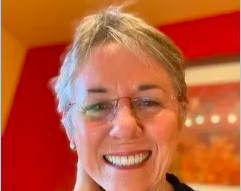
This week’s guest is Judge Sheila Calloway, a pioneer in trauma-informed juvenile justice and a juvenile court judge in Tennessee.

This discussion will include the influence of school environments, racist policies, housing discrimination, community violence, poverty, juvenile justice, the school-to-prison pipeline, the child welfare system, and more.

Cockhren, Portell, and Judge Calloway will also outline how PACEs science can be applied to both address and prevent child abuse and neglect.

To listen to this episode on Thursday, April 21 at 1 p.m PT; 4 p.m. ET,  and find past episodes, click here to visit the History, Culture, Trauma page on VoiceAmerica,

You may also find the show via podcast sources below. Please take a moment to rate and recommend the podcast!

Attachments

Hide

Images (1)

Screen Shot 2022-04-19 at 12.18.35 PM: Judge Sheila Calloway

Oprah Winfrey on the larger pandemic affecting U.S. health care (cbsnews.com)

Carey Sipp Carey Sipp 5/1/228:41 AM

Our commentary comes from Oprah Winfrey, who is partnering with the Smithsonian Channel to raise awareness about inequities in our health care system. The documentary “The Color of Care” debuts May 1.

By Oprah Winfrey,  / CBS NEWS

During the height of the pandemic, I read a story about a family in Detroit. This story would not let me rest; as a matter of fact, it haunted me.

It was the story of the Fowler family. Gary Fowler worked hard his entire life. Fifty-six years old, working 80 hours a week to provide for his family, because that was his greatest desire: to create a secure, beautiful life for the people he loved. He became ill, experiencing COVID symptoms, went to three different hospitals begging them for help. Each hospital sent him home.

Finally, he became so tired, so exhausted, he gave up, went home, sat in his favorite recliner, and died there.  Because hospitals, three of them, in Detroit, would not treat him.

Imagine that: if access to life-saving healthcare for somebody you love depended on the color of their skin.

So, I wondered, how many other Gary Fowlers there are in America? Research tells us there are far too many, and we need to do something about this larger pandemic that COVID has exposed – racial disparities in our healthcare system that cost lives.

We’re fighting the impact of decades of this treatment. But we can do better.

So, let’s make the choice to be better and do better.  This can be changed, and we’re the ones to change it.

Watch executive producer Oprah Winfrey’s special, “The Color of Care,” on racial health disparities, premiering May 1 at 8 p.m. ET/7 p.m. CT on The Smithsonian Channel. To watch a trailer, click on the video player below:

Carey Smith Sipp

carey.pacescommunites@gmail.com

Southern Baptist leaders covered up sex abuse, kept secret database, report says [washingtonpost.com]

Carey Sipp Carey Sipp 5/23/225:00 AM

By Sarah Pulliam Bailey, Photo: Mark Humphrey/Associated Press, The Washington Post, May 22, 2022

Leaders in the Southern Baptist Convention on Sunday released a major third-party investigation that found that sex abuse survivors were often ignored, minimized and “even vilified” by top clergy in the nation’s largest Protestant denomination.

The findings of nearly 300 pages include shocking new details about specific abuse cases and shine a light on how denominational leaders for decades actively resisted calls for abuse prevention and reform. Evidence in the report suggests leaders also lied to Southern Baptists over whether they could maintain a database of offenders to prevent more abuse when top leaders were secretly keeping a private list for years.

The report — the first investigation of its kind in a massive Protestant denomination like the SBC — is expected to send shock waves throughout a conservative Christian community that has had intense internal battles over how to handle sex abuse. The 13 million-member denomination, along with other religious institutions in the United States, has struggled with declining membership for the past 15 years. Its leaders have long resisted comparisons between its sexual abuse crisis and that of the Catholic Church, saying the total number of abuse cases among Southern Baptists was small.

[Please click here to read more.]

Carey Smith Sipp

carey.pacescommunites@gmail.com

Join ex-NFL athlete Caleb Campbell this Thursday on our podcast History. Culture. Trauma.


Join ex-NFL athlete Caleb Campbell this Thursday on our podcast History. Culture. Trauma

Carey Sipp Carey Sipp 5/24/223:04 PM

Caleb Campbell, ex-NFL player, is a mental health advocate and consultant on trauma-informed leadership.

Each year millions of Americans face the reality of living with mental health struggles. The collective trauma of COVID-19 has exasperated our country’s mental health crisis. May is Mental Health Awareness Month. In honor of this designation, History. Culture. Trauma. podcast co-hosts Ingrid Cockhren, CEO of PACEs Connection, and Mathew Portell, director of communities, have spoken with guests about our nation’s science, support, education, advocacy, and policies focused on mental health.

Screen Shot 2022-05-24 at 5.01.02 PMThis Thursday, May 26, Cockhren and Portell will examine the history of mental health responses in this country with mental health advocate Caleb Campbell, who went from West Point Military Academy to the National Football League and eventually became a mental health advocate and consultant on trauma-informed leadership.

Campbell says his journey brought him to understand mental health, trauma, stress, and ”how it plays out in life.”

In 2008, Campbell graduated from the United States Military Academy at West Point and was commissioned as an officer in the United States Army with 972 other cadets. The difference between Campbell and his classmates was that while the majority of them were sent to war, Campbell went to the NFL.

Campbell says he didn’t know at the time that he was about to fight his own battle—his own inner war—and it would almost cost him his life. As a survivor of mental health challenges, Campbell says it is his passion and mission to deliver an authentic and actionable message.

Drawing from his deep well of personal stories around being a West Point graduate, former U.S. Army officer, and an ex-NFL athlete, Campbell says he hopes to help leaders increase their inner capacity so that they can expand their leadership capabilities and deepen their impact.

Co-hosts Cockhren and Portell say Campbell’s message around leadership expansion is timely and important as more and more leaders face unprecedented amounts of stress and pressure.

To listen Thursday, May 26 at 4 p.m. ET; 1 p.m. PT, tune in here.

To find prior podcasts, visit here.

Find History. Culture. Trauma. on your favorite podcast provider by clicking the link below.

Attachments

Hide

Images (1)

Screen Shot 2022-05-24 at 5.01.02 PM

‘Young gay people being out and happy? It’s revolutionary!’ Meet the Heartstopper generation [theguardian.com]

Carey Sipp Carey Sipp 6/2/2210:00 AM

By Michael Segalov, Photo: Netflix, The Guardian, May 31, 2022

Barely three minutes into the first episode of Heartstopper – Netflix’s new LGBTQ+ coming-of-age romcom series, which has been a knockout success with critics and viewers – I turned to my boyfriend, curled up next to me on the sofa. Aimed primarily at a younger audience, the show is about an openly gay male sixth former at an English comprehensive (played by 18-year-old Joe Locke) who falls in love with the school’s most popular rugby player in the year above. “There’s no way,” I declared to my partner with confidence, “that this is going to end well.” His love would go unrequited. We’d seen it all so many times before.

The idea that the show might end as it did – with a tear-jerkingly joyful celebration of young queer love in full bloom, depicted gorgeously – seemed impossible. My own similar experiences at school, I believed, had taught me far better; the notion that television executives would commission – or that British audiences would welcome – a mainstream, queer and adolescent happily-ever-after was firmly beyond the realms of possibility in my jaded millennial mind.

As the Heartstopper plot unfolded, however, so too did a real-life event. By the time – in episode eight – the two main characters had truly fallen for each other, teenage Blackpool FC footballer Jake Daniels had come out; he was the first gay male professional footballer to do so since Justin Fashanu in 1990. A week after Fashanu came out more than three decades ago, his own brother – fellow footballer John – all but disowned him: “John Fashanu: My gay brother is an outcast” read a headline in The Voice. Brian Clough, Justin’s manager at Nottingham Forest, meanwhile, described his star player as a “a bloody poof”. Fashanu tragically killed himself. Years later, John spoke about his regret over how he treated his older brother. In 2019, he and his daughter launched theJustin Fashanu Foundation to eliminate prejudice in football.

[Please click here to read more.]

Carey Smith Sipp

carey.pacescommunites@gmail.com