By Rhitu Chatterjee and Carmel Wroth, National Public Radio, October 7, 2021
Of all the sad statistics the U.S. has dealt with this past year and a half, here is a particularly difficult one: A new study estimates that more than 140,000 children in the U.S. have lost a parent or a grandparent caregiver to COVID-19. The majority of these children come from racial and ethnic minority groups.
“This means that for every four COVID-19 deaths, one child was left behind without a mother, father and/or a grandparent who provided for that child’s home needs and nurture — needs such as love, security and daily care,” says Susan Hillis, an epidemiologist at the Centers for Disease Control and Prevention and lead author of the new study.
The study, which was published Thursday in the journal Pediatrics, estimated the number of losses from April 1, 2020, through the end of June 2021 at 140,000. And that number has risen in the past three months: Hillis estimates it is around 175,000 today.
By Deepa Shivram, National Public Radio, October 20, 2021
Acoalition of the nation’s leading experts in pediatric healthhas issued an urgent warningdeclaring the mental health crisis among children so dire that it has become a national emergency.
The declaration was penned by the American Academy of Pediatrics, the Children’s Hospital Association and the American Academy of Child and Adolescent Psychiatry, which together represent more than 77,000 physicians and 200 children’s hospitals.
In a letter released Tuesday, the groups say that rates of childhood mental health concerns were already steadily rising over the past decade. But the coronavirus pandemic, as well as the issue of racial inequality, they write, has exacerbated the challenges.
As a working daughter, I recently embarked on a new and uncertain phase of my career: taking paid leave for my seriously ill mother. Without children of my own, I never needed to consider paid leave. This new role in caregiving is making me square cultural norms and values engrained in me as a second-generation South Asian immigrant and as a female only child with my senior leadership role in corporate America.
While I’ve juggled responsibilities for years, this one is different. The pandemic sharpened my focus on the importance of care at home. Caregiving at home reinforced lessons learned from my public health training about the fragility of health. Balancing this work became all-consuming and pushed an important decision: My mother had cared for me her entire life, and it was now time for me to care for her.
In the U.S., women, especially women of color, often feel that when faced with the opportunity to care for their loved ones, they must silently deliver exemplary results, no matter their employment status. Caregiving for a loved one is hard enough without the additional mental and emotional strain of knowing you’re expected to do so without complaint or seeking help from others.
Systemic Racism and Systemic Poverty are intertwined injustices in America’s politics and economy and we need to understand the role of these systems in our history and our present as we fight against these injustices. So we have invited two powerful speakers to join us in a moderated conversation on systemic racism: Attorney Geeta Kapur and Attorney Jerry Blackwell. You won’t want to miss this dynamic and enlightening exchange!
Geeta Kapur, a civil rights lawyer who has served the Poor People’s Campaign probono in many of our actions, has recently published her thoroughly researched book To Drink From the Well: The Struggle for Racial Equality at the Nation’s Oldest Public University. In it she explores the history of the University of North Carolina by exposing the plain and uncomfortable truth behind its storied brick walkways, statuary, and covered Well. Kapur tells this story as a citizen speaking to her fellow citizens. Rev William J Barber II says of her work: “By paying attention to the particular history of America’s oldest public university, Kapur illuminates how the struggle for white supremacy that sometimes erupts violently in our society has been maintained and reinforced by the stories we tell ourselves.” You can purchase Kapur’s book online Here, or at this Saturday event, and/or Donate HERE so that the NC Poor People’s Campaign can give away her book to students and others unable to afford one.
Jerry Blackwell, an alumnus of UNC, played a key role as a special prosecutor in the historic April 2021 trial of Policeman Derek Chauvin, the convicted murderer of Mr. George Floyd. A native of Kannapolis, Attorney Blackwell will join Attorney Kapur to discuss white supremacy and racism in the death of George Floyd and at UNC. We have a great deal to learn from them as they talk together, and there will be a Q & A session with the audience following their conversation. REGISTER HERE!
The NC Poor People’s Campaign will conclude the evening by inviting all courageous individuals that have joined together the last three years to demand equality and justice, to take a step further in the fight to end racism and poverty. Join with the Poor People’s Campaign in preparation for the June 18, 2022 Mass Poor People’s & Low Wage Workers Assembly in Washington DC.
The Schedule for Saturday November 13th at Pullen Memorial Baptist Church:
1:00PM Doors will open for Registration and Purchase of Books
2:00PM – 3:30PM Conversation with Attorneys Kapur and Blackwell
3:30PM-4:00PM Q&A
4:00PM Kick-Off for Mass Poor People’s Assembly in DC June 18 2022
Please Note:There is NO COST to attend. This will be a COVID-safe event. Attendance is limited to allow for spaced seating; vaccinations and masks are required.Please Register HERE NOW to Assure Your Seat. Spanish language translation will be provided. Encourage your faith community and social justice network to join you! The event will be Livestreamed for those unable to attend in person.
There is also a nearby event on November 13th being hosted by our partner NC Medicare for All Coalition (NCM4A) and here is their invitation: No one should be burdened with health care costs or go without basic needs. Join the NC Medicare for All Coalition on Saturday, November 13th from 11am-3pm at Chavis Park shelter #2 in Raleigh for the NCM4A FREE MARKET, where everything is free! Bring what you can. Take what you need. The market will include free food and free household items and clothing for anyone and everyone, as well as Medicare for All information and buttons! Chavis Park is located at 505 Martin Luther King Jr Blvd in Raleigh. Plan to stop by the market before joining us at 2pm at Pullen Memorial Baptist Church! If you would like to volunteer or bring items to the market, sign up here.
On the latest edition of The Newsroom, an in-depth conversation with District Attorney Ben David and Chief District Court Judge Jay Corpening. We discuss changing philosophical approaches to juvenile justice and changes to North Carolina’s laws — plus, what could be in store now that New Hanover County has agreed to tap $350 million in hospital sale funds.
On Monday, August 30, gunshots rang out in a crowded hallway at New Hanover High School. One student was badly injured and another was arrested, charged with serious felonies, including attempted first-degree murder.
It’s not clear yet if the young man will be charged as an adult — a decision that will be made during a special hearing in the near future. The outcome of that decision will, no doubt, have life-altering consequences.
In cases like this, the courts have a difficult balance to maintain. On the one hand, they have to take seriously the crimes being committed — and the victims to whom they do harm. But, at the same time, they must acknowledge that many children and young adults who enter the criminal justice system never truly find their way out.
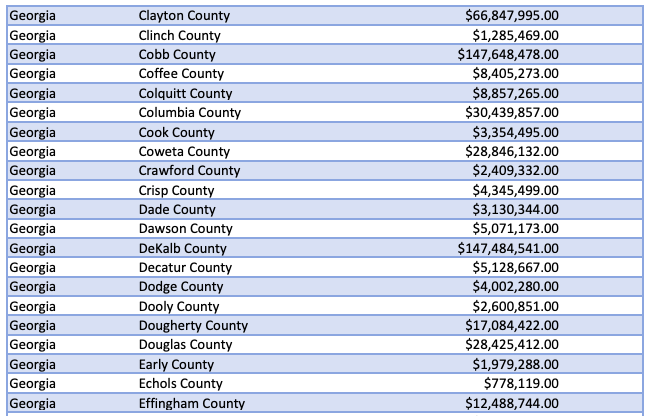
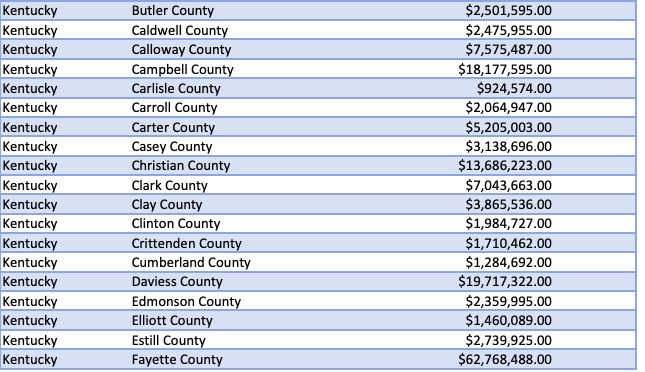
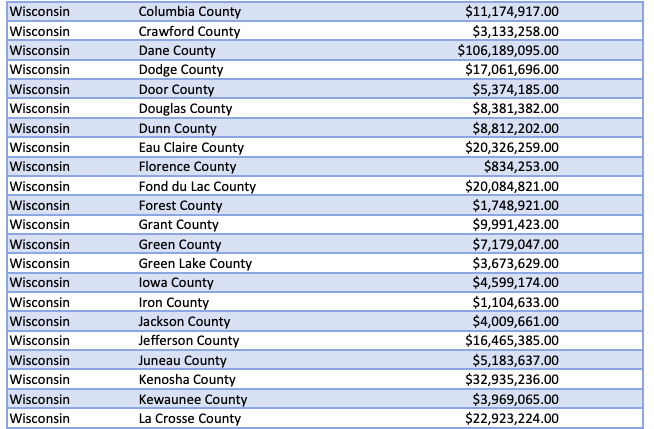
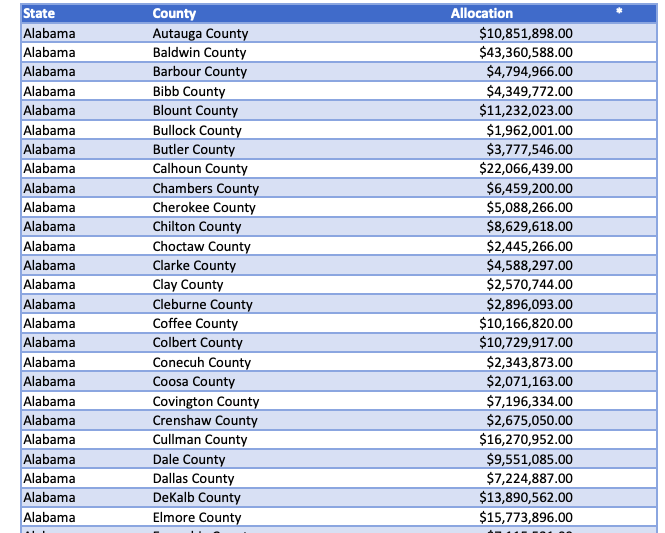
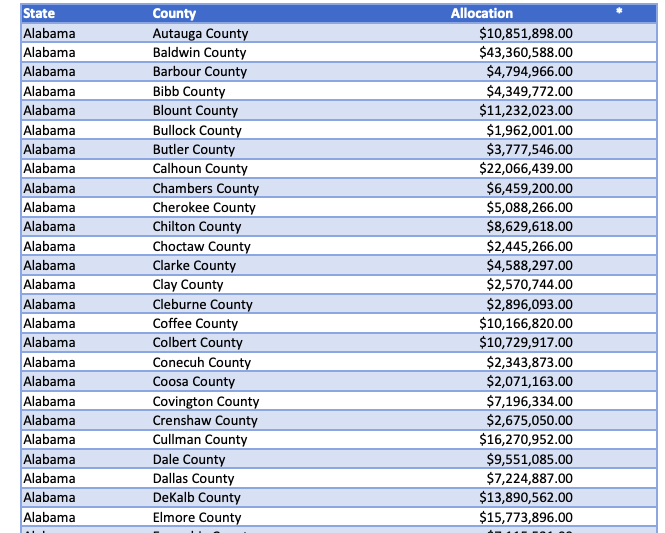
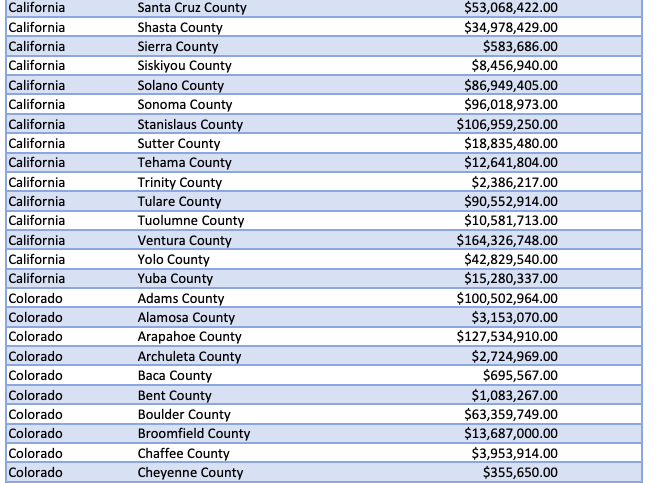
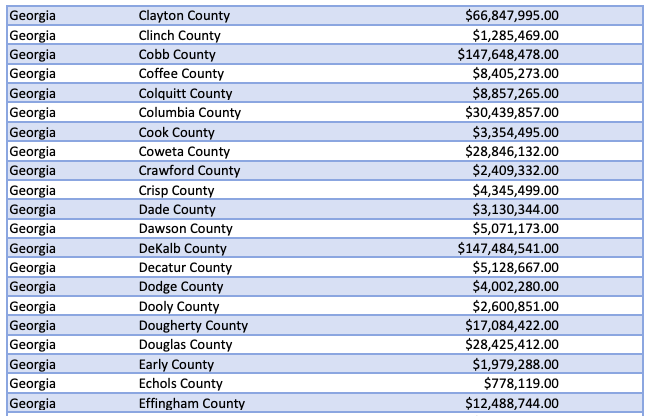
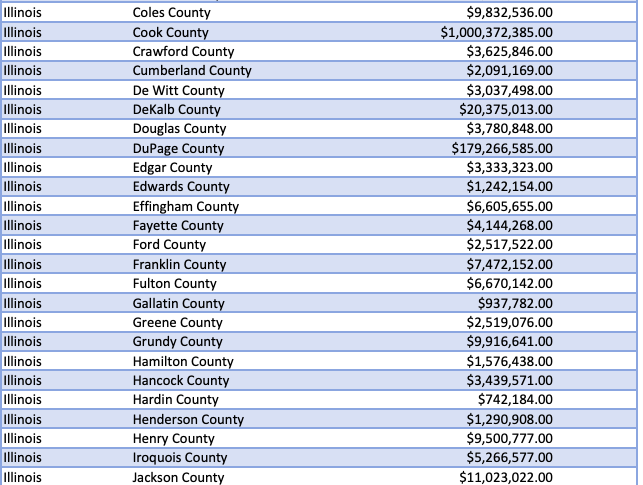
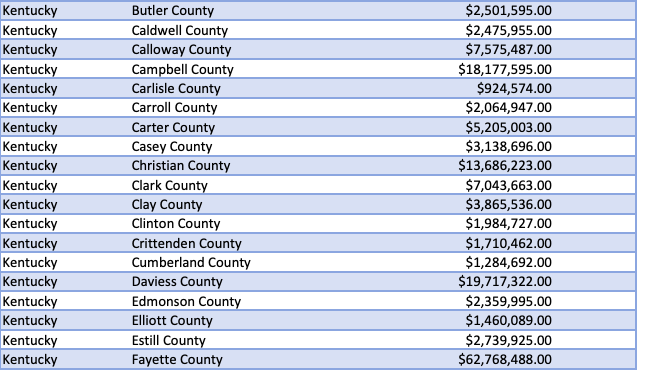
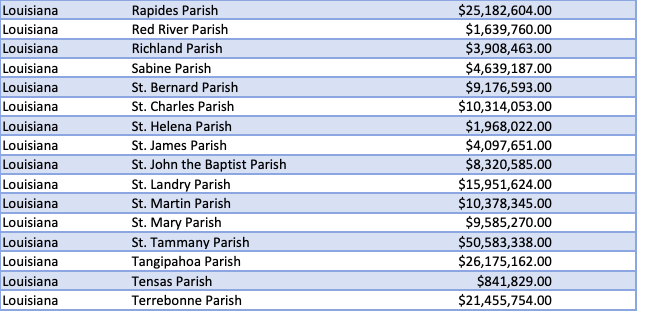
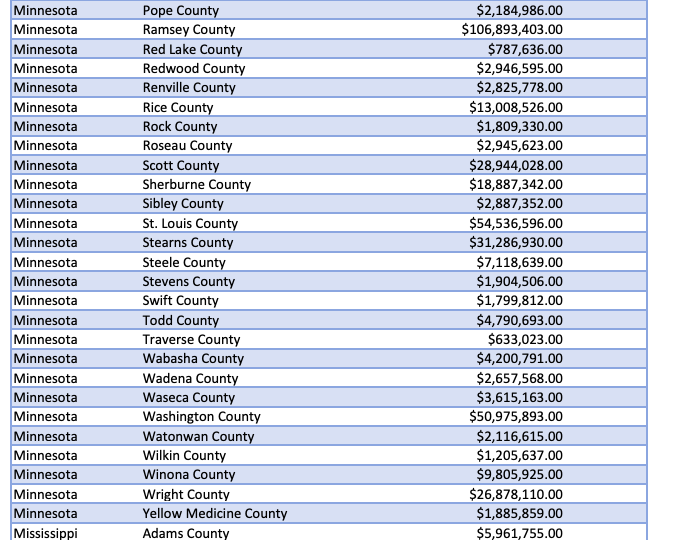
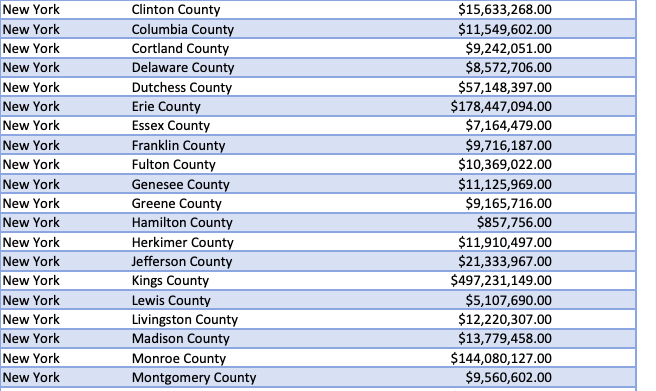
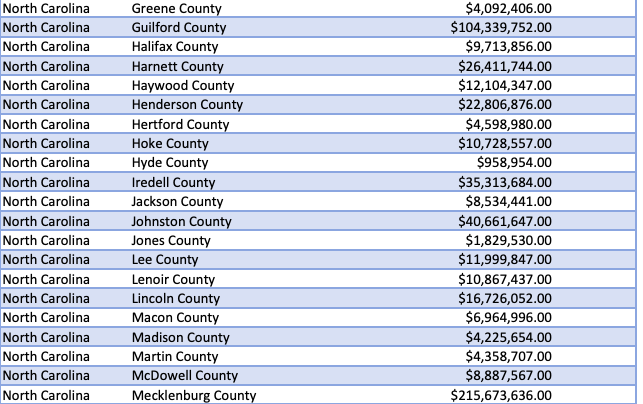
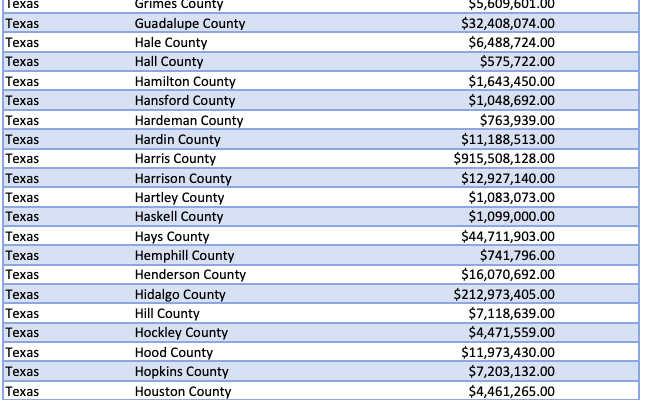
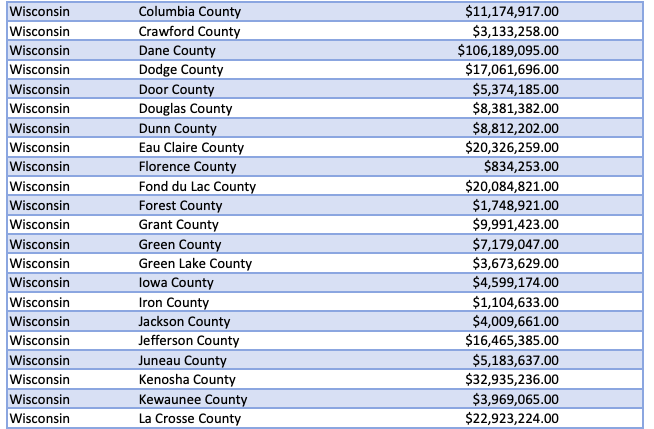
Charts below are sample pages from county-by-county funding allocated as part of ARPA. Information is available by clicking here.
This is the first of several articles on the importance of any resilience-focused entity, including your PACEs Connection community, seeking out the people in your area allocating ARPA funding and asking for money. Organizations do not necessarily have to be 501 C-3 nonprofits to receive funding.
Thanks to federal American Rescue Plan Act (ARPA) funding to states in April 2021, there are several big — as in hundreds of millions of dollars — buckets of money for counties and cities to fund the work of organizations doing pandemic-related resiliency work in their communities.
For the PACEs science movement, this is a pivotal moment of epic opportunity. Funds can be used to conduct trauma-informed training, help reconfigure school and clinic services and spaces to be safer and more supportive, assist caregivers in learning to care for themselves and their loved ones, and support the PACEs science initiatives in communities.
It may sound as though everyone knows the secret to securing the funding, but our anecdotal research shows there is no single path to finding out who is allocating funds or the requirements to obtain funds.
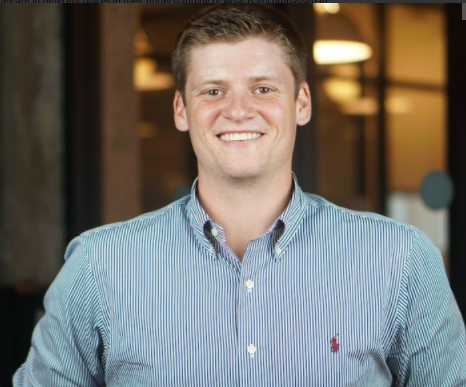
Jesse Kohler, executive director of the Campaign for Trauma Informed Policy and Practice (CTIPP), tracks legislation and funding. We’ve asked him to tell us what he has learned about funding availability, the common denominators of groups or communities receiving funding, and the importance of trauma-informed organizations applying for and receiving funding.
1. What makes this such an important time for trauma-informed communities and organizations to apply for funds?
What makes ARPA funding so unique is the flexibility it allows. While there is some funding that is directed for specific purposes, a lot of the resources made available are to be used at the discretion of the entity receiving the funding, whether that be state, local, and tribal governments, qualified child care centers and schools, or one of the other funding streams created through the bill. In addition to its flexibility, there is a lot of funding available through ARPA. Included in the $1.9 trillion bill are more than $350 billion for governments and $122 billion for primary and secondary schools, for example. While some of these entities have plans for how to spend the funds, others may not. There is an opportunity for the trauma-informed/PACEs movement to show how these one-time funds can be leveraged strategically to address critical issues around mental health and community well-being – issues that have been exacerbated by the pandemic – and promote better outcomes. With the recent passage of the federal infrastructure package, there is now increased funding for improvements to broadband access and other physical infrastructure. While ARPA funding may have initially been leveraged for those purposes, now is the time to use it to meet the community’s psychosocial and emotional needs.
2. What does the PACEs movement stand to gain from trauma-informed communities or organizations securing ARPA funds?
Our society could do a much better job of preventing developmental adversity and reducing the progression of adversity across the lifespan. The pandemic has increased the allostatic load (the cumulative physical burden of chronic stress) almost universally – but we know we can invest in trauma-informed systems and PACES science initiatives that help to alleviate this burden. These investments can help support continued research and expansion of the evidence base showing that money spent in these areas yields positive outcomes and returns.
3. What does the PACEs movement stand to lose if funding goes to organizations that don’t observe trauma-informed policies and practices?
The availability of this much flexible funding is unlikely to come again for generations. We must take advantage of this opportunity to broadly leverage significant funding and direct it where it can make the most difference, now and in the future. In addition to what the PACEs movement stands to lose, we all stand to miss out on an opportunity to effectively intervene and support people recovering from the disastrous impact of the pandemic. We know that the pandemic has disproportionately impacted children, and these funds can help nurture and support improved outcomes for the youngest in our society – outcomes that our movement has been advocating for since it began.
4. How are most organizations finding funding? Is there a common denominator for who is getting funding and for what?
States are all managing the money differently — directing funds out of the executive branch, creating grant programs, leaving decision-making authority to state legislators, passing responsibilities to counties and municipalities, etc. Those who are awarded funds almost universally have taken the steps to figure out how the money is being managed in their state and have advocated for why some of the funding should go toward supporting trauma-infomed approaches. If you have not already done so, start asking your local, state, and tribal governments, school districts, and others receiving ARPA funding how they are planning to spend those funds and advocate to build the PACEs and trauma-informed movement. More information on how to do so – talking points and supporting documents – can be found atwww.traumacampaign.org/arpa.
5. What would you say to organizations that receive funding but don’t track or report outcomes?
Receiving funding is great, but not tracking outcomes reduces the likelihood of continued funding in the future. You must be able to show that the money you received resulted in positive outcomes, or you’re unlikely to get additional funding
6. You’ve mentioned additional funding for our member organizations or communities in the coming months and years. What additional funding is coming that could further accelerate the PACEs movement?
In addition to ARPA, we know that opioid settlement funds will go toward prevention and treatment, which could potentially be used for trauma-informed approaches. Additionally, if the Build Back Better plan is passed, there will be an additional $2.5 billion in funding over the next 10 years for community efforts to reduce trauma. And there are several other pieces of legislation that have been introduced that would create funding streams to support various aspects of the movement, such as the Resilience Investment, Support, and Expansion (RISE) from Trauma Act, the Adverse Childhood Experiences Response Team (ACERT) program, and the Services and Trauma-Informed Research of Outcomes in Neighborhoods Grants (STRONG) Support for Children Act, to name a few. There is a huge need for continued advocacy at all levels to leverage available resources and continue to grow support for more moving forward.
7. How can PACEs Connection members play a role in helping secure this funding?
We created the Trauma Campaign to develop a groundswell of advocates across the country and around the world joining together to build the movement around PACEs and trauma science. You can join atwww.traumacampaign.org/join-the-campaign. In addition, please share this information with others, and continue to explain why implementing PACEs and trauma science is so important. There is great opportunity here, and your voice and actions make a huge difference!
To see how much funding was allocated to each county in the United States, please click here to see Fiscal Recovery Funds, County Funding.
More information on how to do so – talking points and supporting documents – can be found atwww.traumacampaign.org/arpa.
By Cecilia Nowell, Illustration: iStock/Washington Post Illustration, The Lily, December 6, 2021
At the Safe Sisters Circle, a nonprofit in Washington, D.C., founder and executive director Alana C. Brown said she has worked with “countless” survivors of intimate partner violence who were abused while pregnant. While providing legal services to survivors in the city’s predominantly Black Ward 7 and 8, Brown said she’s witnessed that sometimes the abuse isn’t only physical; she’s seen survivors miscarry from the stress of emotional abuse.
Earlier this year, Brown published an article with the National Resource Center on Domestic Violence detailing the specific ways that medical racism, a long legacy of discrimination and reproductive coercion have resulted in Black women facing some of the highest rates of domestic violence and sexual abuse.
So when she read a study published in November in the journal Obstetrics & Gynecology, which found that homicide is a leading cause of death among pregnant and postpartum people — and that Black women, and women and girls under the age of 25, were at the greatest risk — she wasn’t surprised, she said.
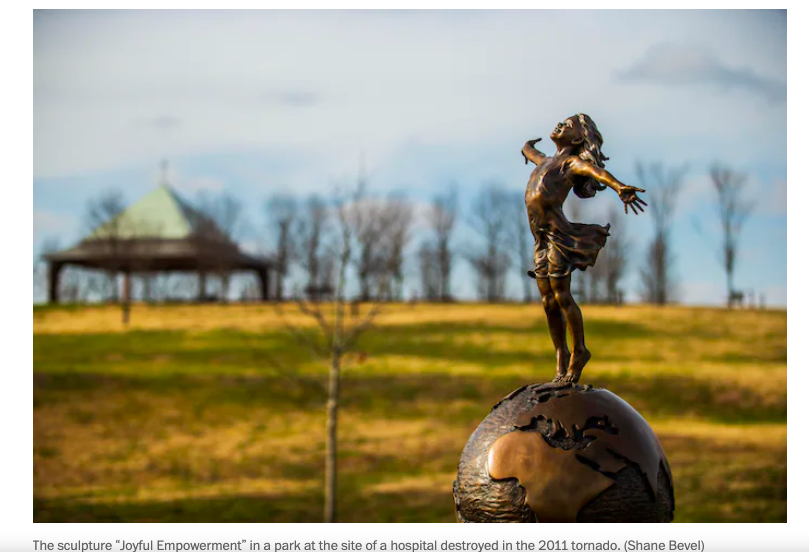
By Todd C. Frankel – Dec. 19, 2021 at 8:00 a.m. EST The Washington Post — After a catastrophic tornado leveled a third of Joplin, Mo., in 2011, Mark Rohr sat in a fire station surrounded by a sea of FEMA “blue jackets” and was told that temporary-housing trailers for thousands of residents left homeless by the storm would be delivered “by the first frost.”
It was May at the time. The first frost was six months away.
“I turned around, looked up at them and said, ‘That’s unacceptable. That’s too long,’” recalled Rohr, then Joplin’s city manager. “If we didn’t keep people close to the city, keep the ties, we’re going to lose them permanently.”
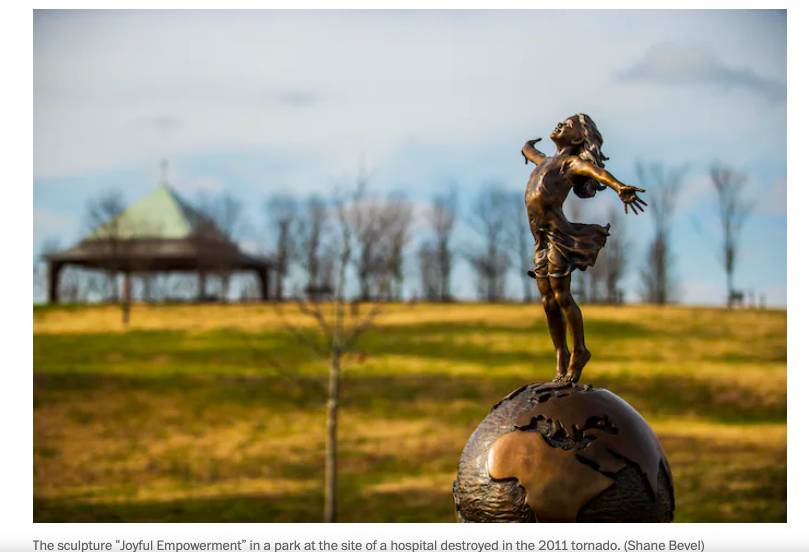
The need to move fast and keep the community together drove every step of Joplin’s recovery from the costliest tornado on record, a mile-wide monster that killed 161 people, destroyed 4,500 homes and businesses, and caused nearly $3 billion in damage. The 2011 twister also is the most-studied, and offers vital lessons for rebuilding Mayfield, Ky., and other communities slammed by severe tornadoes that killed at least 90 people last weekend.
“The first year is all adrenaline. Then people realize the length of time it takes to get back. And you realize how hard it is,” said Jane Cage, a small-business owner who helped lead the Joplin rebuilding effort and later was recruited by FEMA, the Federal Emergency Management Agency,to teach other communities.
To read the rest of this article, please click here.
For the link to request a copy of the collection of essays written by city leaders on how to be prepared for a natural disaster, Joplin Pays it Forward, please click here.
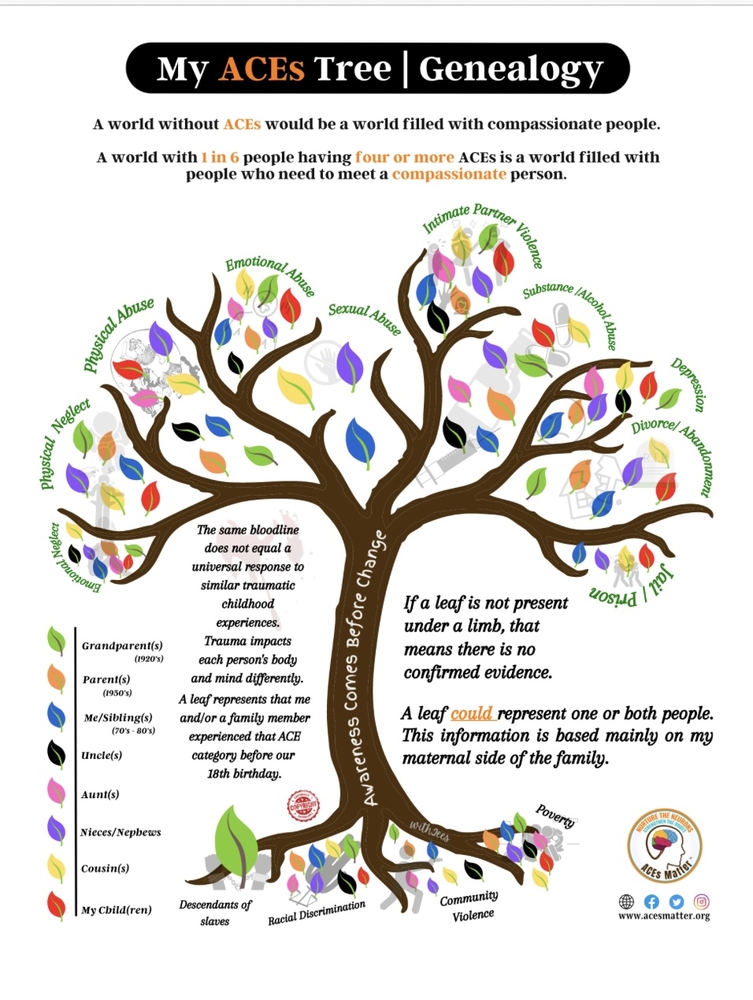
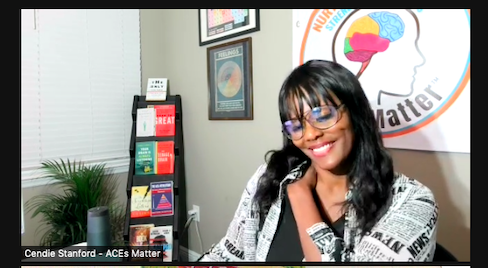
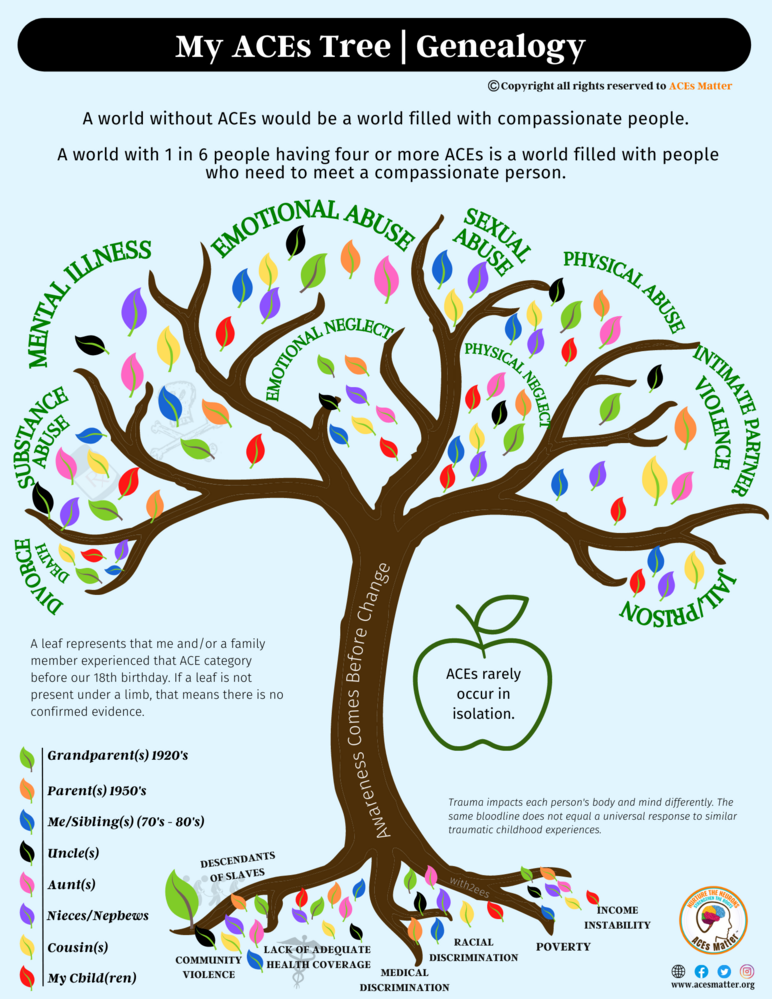
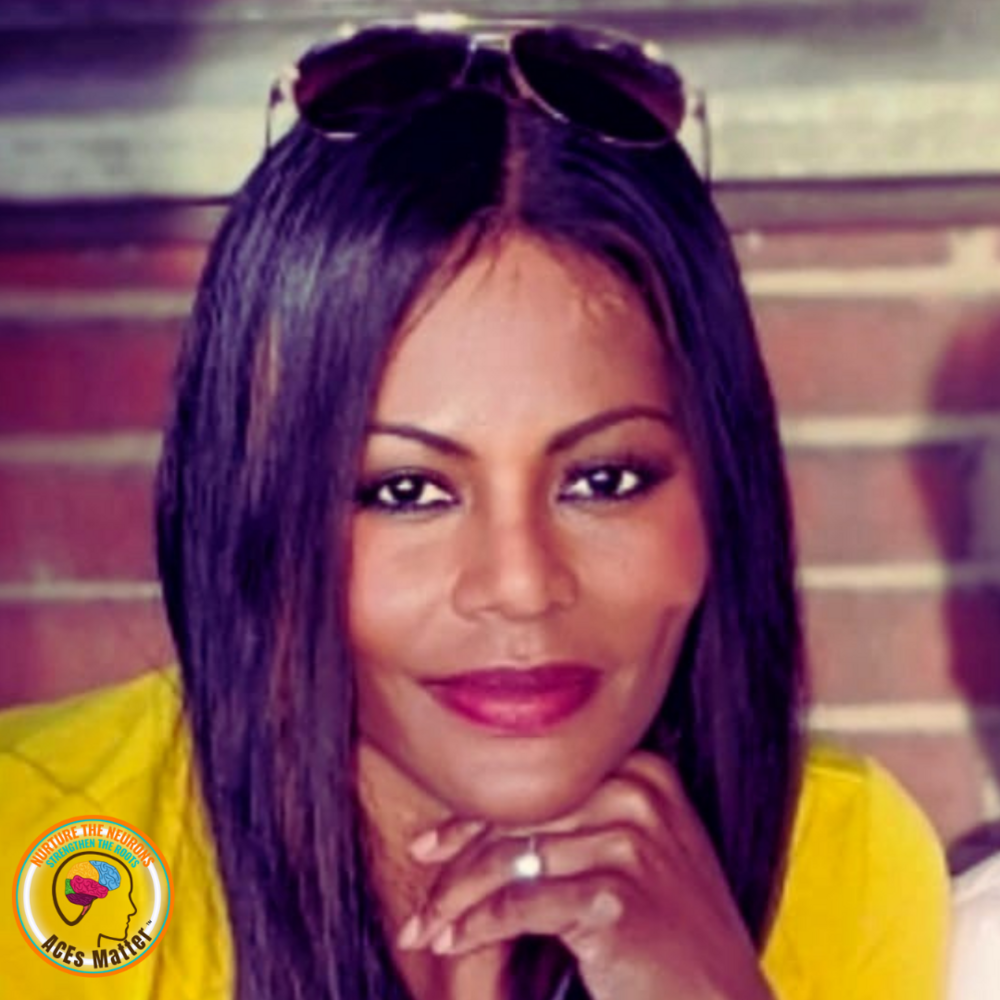
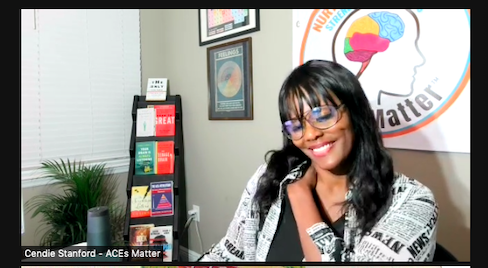
This stunning illustration shows how adverse childhood experiences (ACEs) affected the family of Cendie Stanford, a former school principal, artist, and executive director of her own nonprofit, ACEs Matter. For a larger image, scroll to bottom of post.
Cendie Stanford says that ever since she first learned about ACEs (adverse childhood experiences) science and read Dr. Nadine Burke Harris’s, The Deepest Well, in 2020, she’d been thinking about her own upbringing—which included at least 10 ACEs. She feels strongly that everyone needs to know what she knew about what adversity does to people, because it “explains why people behave the way they behave.”
So Stanford, who lives in Winter Park, Florida, established a nonprofit organization, ACEs Matter, to help get the word out. She was especially interested in reaching neighborhoods where she believed many volunteer ACEs educators wouldn’t want to go, because of crime, danger, and poverty.
She learned everything she could about the science. She logged into PACEs Connection to make connections to identify support and other places she could get help. She also set about putting together a board of directors who could help guide and support her in her goal of educating the most vulnerable people in underserved populations in the seven states in which she’s starting out: Arizona, Florida, Georgia, Louisiana, Mississippi, Missouri, and Texas.
Then earlier this month, she held her first board meeting.
Technical glitches didn’t matter
“I was really nervous about the meeting because I was bringing six people together for the very first time to figure out how they could help with ACES Matter,” she said. “And if anything could go wrong, it did.
“I had six very professional, very educated individuals waiting on me on a Sunday, on a holiday, and there were problems with Zoom. And it was in that moment, with so many technical problems and all these people waiting on me, that I didn’t feel judged.”
It was a moment that called her to stop and share this realization with her board.
“We were talking about the importance of vulnerable communities hearing about ACEs,” she says. “And in that moment, they didn’t care about the sound not working. They didn’t care about the PowerPoint. They were compassionate. And I just felt so loved. And that’s how the (ACEs genealogy) drawing was inspired because when one in six people have four or more ACEs—which I knew on that call included me and at least one other person—I was met with compassionate people.
“In that moment, I said that people need to understand that sometimes there are not enough compassionate people. So in a world with so many of us with these high adversity scores, we live in a world filled with people who need to meet a compassionate person,” she says.
Her board, comprising professionals from the medical industry, educators, technology administrators, and leaders in the spiritual sectors, agreed with her assessment, bringing their professional expertise as well as their own lived childhood experiences to the table.
The next day—Martin Luther King Day—she was inspired to create her “My ACEs Genealogy Tree.” She hopes this resource will help her bring the science of adverse childhood experiences to life for others.
“I’d been thinking about this family tree for almost two years now. And I knew it was going to be a visual because when people can see stuff like that and see themselves in it, it’s so much more powerful than just the words or the data. It’s what had been on my heart, and I think I turned it out in a couple of hours. And it was the most rewarding experience for me to create that illustration,” she says.
“Doing this was just eye-opening,” she continues. “It confirmed all of these feelings that had been bubbling up inside of me that ACEs science is just deeper than our family tree, that it (trauma) was really ingrained in the roots. There’s a lot of work that needs to be done and there is a solution.”
And that solution begins with spreading the word.
“This is life-saving information; we need to share it with everybody we know. Now.”
Stanford talks about a childhood friend who shares about PACEs science whenever possible.
“My friend was home on a family visit in the neighborhood where we grew up, and a 4-year-old child was gunned down,” she recalls. “My friend stayed to attend the funeral of the child and ran into the mayor. In questioning him, she found he had never heard about ACEs, and wanted more information. She also ended up running into a news reporter and faith leaders who wanted to know more.
“We know we should have somebody inside of every community talking about ACEs, and creating safe spaces for people to have this conversation,” she says. “Yes, the conversation can be activating, but it can also be catastrophic if we don’t bring it up.”
This is part one of a three-part series. Next: My ACEs family tree: Life after ACEs.
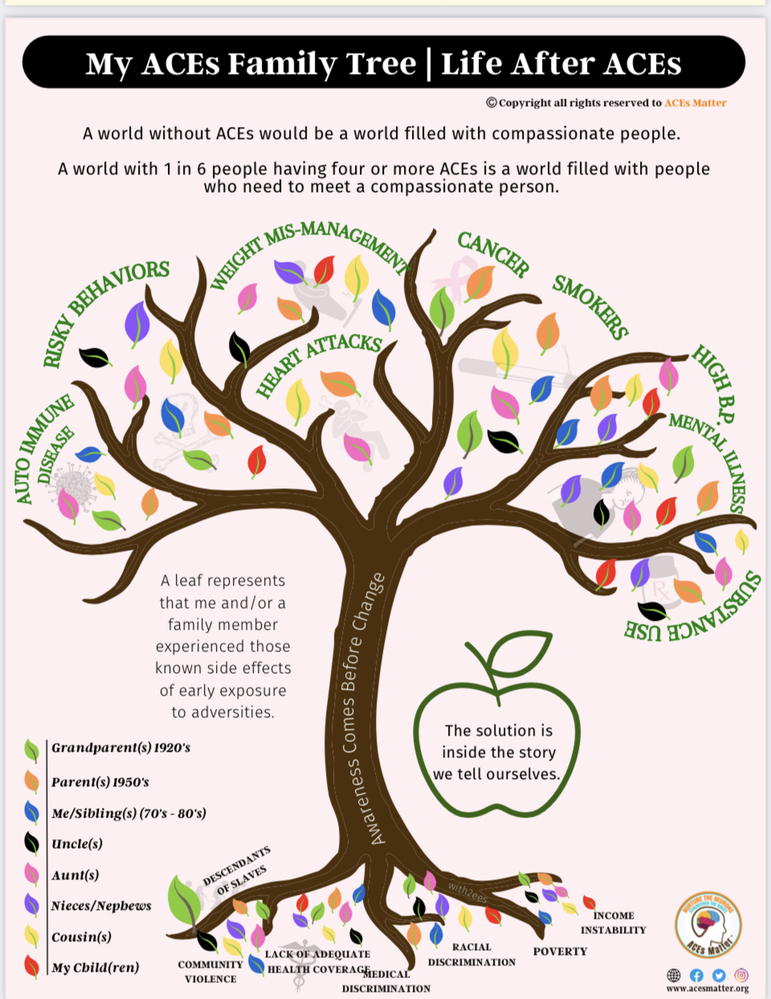
This is the second of two stunning illustrations showing how adverse childhood experiences (ACEs) affected the family of Cendie Stanford, founder of the nonprofit ACEs Matter. Each leaf represents a family member affected by ACEs, and the health consequences they suffered.
When Cendie Stanford, founder and president of ACEs Matter, finished drawing “My ACEs Tree—Genealogy”—she saw clearly the remarkable number of ACEs her grandparents, parents, children and extended family had experienced. The second tree—Life after ACEs—shows how horrifically ACEs played out in their lives.
Yet when she studied the devastating stories of pain and suffering told in the tree leaves, “I felt at peace,” she says. “There was no racing in my heart. There was not a physical reaction to it, when I looked at what ACEs had done to my family, because when I think about the people who have passed, I now have a better understanding of why it happened, why they had cancer, depression, problems with weight management and risky behaviors.”
‘Everybody I know needs this.’
For Stanford, just learning about ACEs science two years ago, and the fact that her score of “10 plus” did not bode well for her future health, was enough to have her turn over a new leaf in self care. “Since I’ve started learning about ACEs,” she says, “I am encouraged to eat better. Meditate. Exercise. I know it’s hard for people to take on self care sometimes, because we didn’t grow up seeing people do those things. I’d never seen anybody that I know meditating.”
She knows this is not the case for many people, that “information is not transformation.” It’s not guaranteed to bring the behavior changes to give up cigarettes, fried foods, sweets, and many other comforts that, consumed habitually, may be very useful to cope with the consequences of ACEs, but are, in the long run, harmful.
She wants people in underserved communities to create a tree like this for themselves, “so they can decide whether or not they want to do something about it,” she says. “Everyone deserves to know about ACEs, so they can make choices, so they can be inspired to help improve their health; practice self care, help rewire their nervous system. So they can maybe help kids and adults learn how to be calm and become regulated without becoming violent, or looking for a cigarette, or food, or a drug or drink” she says. “Brains can change at any age, and our bodies want to heal.”
Transformation requires more than just information.
“Helping people in underserved communities work on their own genealogy by drawing their own ACEs trees may help people open up. People in vulnerable populations don’t feel like it’s safe to talk about feelings. But even if these conversations can be activating, I believe being able to have people create and share their own family tree will show that we all have a lot in common, and need to take some action to improve our health. I hope we all see that not having the conversation is catastrophic,” says Stanford.
“Awareness will lead us to change. I know it is going to take some time. But what we can’t do is just wait for the people in these underserved communities to come to us. Right now we have to find representatives who’ll take this information into the communities, and help people figure out how to calm these kids’ nervous systems, so kids stop killing kids. Something needs to be done so these kids learn how to self regulate, so people get healthier and live better, and longer,” she explains.
Stanford says she plans to prioritize her work in neighborhoods in the zip codes she and her ACEs Matter board of directors are in the process of identifying. “People are advertising their depression every day on social media. You can look at people’s status updates and see that they are hurting,” she adds.
Her next step is to involve representatives from all types of organizations, or sectors, by taking her “ACEs trees” to business and industries as well as into the schools, faith communities, health clinics, first responders and more, in each neighborhood prioritized.
“If businesses—for example, grocery store companies—understand this (the effects of ACEs) and address it,” Stanford explains, “their employees’ productivity could be improved. They’re hiring a lot of these people who are coming to work with adversities, especially if they are in communities where there’s high violence. This is affecting their workers and their shoppers. So if they focused on preventing trauma and promoting resilience, the benefits to their communities could be life-changing, and life-saving.
“Every report I read says communities need to be involved,” she continues. “And that’s what ACEs Matter feels like it can do, just by giving people the tools to take ACEs awareness into the communities and start the conversation. Let’s see where that goes.”
The solutions are right here.
“We need to do what PACEs Connection is talking about, to get communities invested in their people, and build PACEs initiatives in communities, because healthy people are the product of an ACEs aware, resilient community. Let’s invest in these communities because the active community members can pass the knowledge down generation after generation, and stop ACEs and the bad health outcomes from being compounded generation upon generation,” says Stanford.
“I mean, the solutions are right there for us,” she continues. “We just need to make sure that everybody gets invited to the conversation, and then they get to decide what they do with the information, right?”
This is part two of a three-part series.Part one: My ACEs tree: Geneology.Part three: How positive childhood experiences, including those in the family and the community, helped her.
Next week’s illustration and story? Putting it together: At 16, Cendie endured a trauma that could have killed her. In her third illustration, she’ll share how positive childhood experiences (PCEs)—including positive community experiences—helped her go on with life, recover, and become an advocate for the science of positive and adverse childhood experiences.
Cendie, Thank you for sharing your journey. This is a beautiful and powerfully moving tool. Do you have plans to make this shareable or reproducible as a resource?
We also appreciate so much your creativity, passion, and love of the science.
Your sharing your own adverse childhood experiences story, and your family’s story, in these clear pictures of the WHY ACEs Matter, is a gift.
Thanks for putting yourself and your story and passion out into the world. I cannot wait to see what happens to these, and to your third illustration, which we’ll share next week! I believe they will help us all as we use them to help establish connection and create community.
 Carey Sipp 10/8/215:00 AM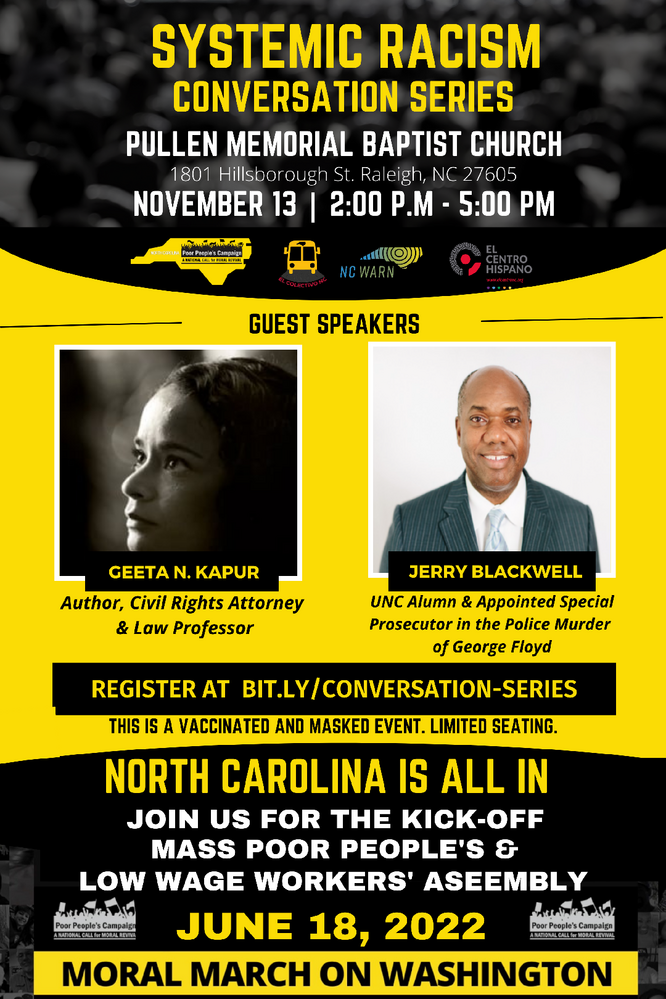
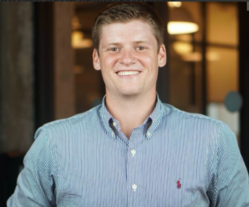 Jesse Kohler, executive director of the Campaign for Trauma Informed Policy and Practice (CTIPP), tracks legislation and funding. We’ve asked him to tell us what he has learned about funding availability, the common denominators of groups or communities receiving funding, and the importance of trauma-informed organizations applying for and receiving funding.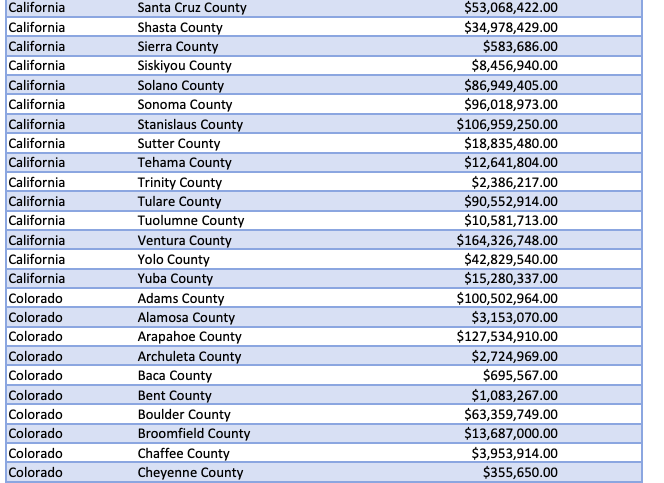


 Technical glitches didn’t matter