Tag Archives: family

Donald Trump is the product of abuse and neglect. His story is common, even for the powerful and wealthy.

Note – With PACEs Connection switching over to a splash page on August 10, 2026, I wanted to save some of the most important posts written by Jane Stevens, a couple of other staff people, and myself. I didn’t save even a 10th of what I would like to have, but I am assured that a “data dump” of all posts and the entire social networking site exists and that we will be able to access what’s needed when the need arises. AND… just in case, I am posting this and a couple of others Jane wrote — which in no way does justice to the volumes of materials she created to help people begin to grok the connection between adverse childhood experiences (ACEs) and our most intractable social ills, or how Jane said PACEs science could help us prevent perpetuating those ills with the flip side of adverse childhood experiences — positive childhood experiences — and policies supporting PCEs and more. Please know I apologize in advance for not uploading more pieces here. Jane’s beloved “ACEsTooHigh.com” site went down earlier in 2026 and I was stunned that that decade plus of work just disappeared. My hope is that the archives of the PACEs Connection social networking site will live on and we can someday create a history of this movement, as I, too, believe the answers to all of our most intractable problems are in this science. How to prevent multi-generational ACEs, how to foster “Neuro-Nurturing” to create the early relational health that is foundational to a lifetime of better health and better choices; how to leverage finding and norming the positive to create ever-widening circles of healthy communities, families, people. Thank you, Carey Sipp

Jane Stevens Jane Stevens 7/28/207:36 PM

A baby is born into a family where he’s ignored by his father. When he does receive his father’s attention, his father constantly yells at, criticizes or punishes him. For the first two years of his life, this child’s mother is perfunctorily attentive, but not loving, and then abandons him for a year. From the time he was born until he is an adult, he witnesses his father abuse his older brother by terrorizing him verbally. This leads to his older brother becoming an alcoholic and dying at the age of 42. He sees his parents engaged in an emotionally neglectful, if not emotionally abusive, marriage.

This is the story of the early years of President Donald J. Trump, according to the captivating book, “Too Much and Never Enough: How My Family Created the World’s Most Dangerous Man.” The book was written by the president’s niece, Mary L. Trump, the daughter of Donald Trump’s older brother. It bursts open the doors to understanding why Donald Trump behaves the way he does. It is also is a cautionary tale for how we decide who becomes a leader, whether that leader is a president, CEO, judge or school superintendent.

In Mary Trump’s words: “Child abuse is, in some sense, the experience of ‘too much’ or ‘not enough.’ Donald directly experienced the ‘not enough’ in the loss of connection to his mother at a crucial developmental stage, which was deeply traumatic. Without warning, his needs weren’t being met, and his fears and longings went unsoothed. Having been abandoned by his mother for at least a year, and having his father fail not only to meet his needs but to make him feel safe or loved, valued or mirrored, Donald suffered deprivations that would scar him for life.”

Anyone who knows about the science of adverse childhood experiences has suspected all along thatcritical aspects of the president’s formative years contributed to his behavior today.

Mary describes Fred Trump, Donald Trump’s father, as a “high-functioning sociopath.”

“In order to cope,” writes Mary, “Donald began to develop powerful but primitive defenses, marked by an increasing hostility to others and a seeming indifference to his mother’s absence and father’s neglect….In place of [his emotional needs] grew a kind of grievance and behaviors—including bullying, disrespect, and aggressiveness—that served their purpose in the moment but became more problematic over time. With appropriate care and attention, they might have been overcome.”

But Donald Trump had practically no positive childhood experiences that could buffer the abuse he endured. “Unfortunately, for Donald and everybody else on this planet,” writes Mary Trump, who has a Ph.D. in psychology, “those behaviors hardened into personality traits…”

Donald Trump didn’t have a chance. The only thing that kept him from ending up as a small-time crook with a prison record is money, and lots of it.

Most people think of child abuse as sexual abuse or the physical abuse of being beaten. But the science of adverse childhood experiences found that other types of childhood abuse—experiencing emotional abuse, emotional neglect, living with a parent who’s addicted to alcohol or other drugs or is mentally ill, having a relative who’s incarcerated or witnessing a mother being abused, witnessing a sibling being abused, bullying, racism and other traumatic experiences—can do just as much damage. That’s because the brain itself can’t distinguish between types of trauma. It’s all just trauma that a child’s brain has to adapt to in order to survive. For example, when a father’s only interactions with a child are to suddenly rage without warning, the stress hormones in the child’s brain trigger a kid to flee for his life, fight or freeze in fear. And if that kid has to protect himself from that father every day, eventually that kid’s brain is altered.

Science is very clear that babies need two important types of positive experiences to lay a solid foundation for a healthy life, notes Mary Trump. One is physical and emotional closeness: “Being held and comforted, having our feelings acknowledged and our upsets soothed are all critical for the healthy development of young children.”

The second is mirroring, “the process through which an attuned parent reflects, processes, and then gives back to the baby the baby’s own feelings,” she writes. “Without mirroring, children are denied crucial information both about how their minds work and about how to understand the world. Just as a secure attachment to a primary caregiver can lead to higher levels of emotional intelligence, mirroring is the root of empathy.”

Although the CDC-Kaiser Permanente Adverse Childhood Experiences Study still isn’t widely known, even though it’s been around for 20 years, it and the other parts of ACEs science are providing a profound shift in our understanding about why we humans behave the way we do. ACEs science also shows that to change behavior that is unhealthy, criminal or unwanted requires a very counterintuitive approach. Instead of using practices based on blaming, shaming and punishing, as we have for centuries, incorporating policies and practices on understanding, nurturing and healing have seen remarkable results in every sector in tens of thousands of organizations (but there are millions of organizations). Schools that integrate practices based on ACEs science, sometimes called trauma-informed schools, are able to eliminate suspensions and expulsions. Hospital emergency rooms see a 30% drop in visits. Suicide attempts by youth drop 98%. Recidivism rates by graduates of batterer intervention courses drop from 60% to 1%. A year after families participate in Safe Babies Courts, 99% of children suffer no further abuse.

The ACE Study found that the higher someone’s ACE score—the more types of childhood adversity a person experienced—the higher their risk of adverse social, economic, health and civic consequences. The study found that most people (64%) have at least one ACE; 12% of the population has an ACE score of 4 or higher. Having an ACE score of 4 nearly doubles the risk of heart disease and cancer. It increases the likelihood of becoming an alcoholic by 700 percent and the risk of attempted suicide by 1200 percent. It increases obesity, violence, and mental illness. Forty-three U.S. states, many countries and countless organizations have done their own ACE surveys, and the results are remarkably similar. (To calculate your ACE and resilience scores, go to: Got Your ACE/Resilience Score?)

Subsequent research links ACEs to Alzheimer’s, dementia, maternal ACEs and infant development, obesity in youth, gynecology patients with chronic pelvic pain….you name the disease or condition, and it’s likely to be exacerbated by ACEs.

By applying this rough, but insightful, way to assess the risk of childhood adversity, and based on the information in Mary Trump’s book, Donald Trump’s ACE score is a 6.

  • Trump’s father emotionally neglected his son when he was a baby and a toddler.
  • When Donald Trump was older, his father was emotionally abusive.
  • Trump’s mother emotionally neglected her son when he was a toddler, at a formative time for his brain development. In other words, he didn’t receive the positive experiences necessary for healthy development.
  • Trump watched his older brother be abused by his father for years.
  • Trump’s mother had mental health problems that seem to have gone undiagnosed and untreated for several years.
  • Trump’s parents were in a relationship that was emotionally neglectful.

Mary Trump chronicles the lives of three generations of Trumps in her book, and shows how trauma is passed from generation to generation. The Trump family considered their lives to be normal. They probably never gave a thought to how their behavior was shaped by what they experienced as children. When people—a few hundred thousand by now—with similar backgrounds have learned about ACEs science, a constant refrain is: “I didn’t know that what I experienced was abuse. I thought it was normal. This explains my life. Why did it take so long for me to hear about this?”

The participants in the ACE Study were 17,000 mostly white, middle- and upper-middle class, college-educated people with jobs and great health care. Looking at Donald Trump’s ACEs is a potent reminder that ACEs apply to people of all economic classes, something to which the ACEs movement and research hasn’t paid much attention lately because people of color and low economics bear the burden of ACEs.

We know that the phrase “hurt people hurt people” emerged from the understanding that most people who’ve committed violent crimes have high ACE scores.

However, hurt people hurt people on many levels, including enacting policies and laws that are just as harmful as interpersonal violence, and often more harmful because they affect hundreds or thousands or millions of people.

People with high ACE scores go in one of two general directions: They see the world as a place of suffering that needs healing, encourage people to work together to solve problems, and believe that the world works better without conflict than with it. Generally speaking, their positive childhood experiences have mitigated the adversity they experienced.

Or they see the world as a dark and dangerous place where carnage is rampant, problems are everywhere and are best solved by identifying and defeating enemies, building walls, and cutting off communication from people identified as “other.” And if enemies do not present themselves, they who see the world as a dangerous place will create enemies and make them larger than they really are, so that their “defeat” empowers them to find more enemies to conquer. Generally speaking, people in this group haven’t had enough protective factors in their lives, and thus favor punitive approaches to changing behavior, such as harsh prison sentences or zero-tolerance schools, even with ample evidence that they don’t work.

People who have high ACE scores and experienced few protective factors in their childhood can heal and change—ACEs aren’t destiny—but it often requires years of effort and constant reinforcement to at least ameliorate what’s been hard-wired into a baby’s brain. Mary Trump believes that her uncle Donald is very likely never to heal. She writes:

“Donald continues to exist in the dark space between the fear of indifference and the fear of failure that led to his brother’s [Fred’s] destruction. It took forty-two years for the destruction to be completed, but the foundations were laid early and played out before Donald’s eyes as he was experiencing his own trauma. The combination of those two things—what he witnessed and what he experienced—both isolated him and terrified him. The role that fear played in his childhood and the role it plays now can’t be overstated. And the fact that fear continues to be an overriding emotion for him speaks to the hell that must have existed inside the House [the Trump family home] six decades ago.

“Every time you hear Donald talking about how something is the greatest, the best, the biggest, the most tremendous (the implication being that he made them so), you have to remember that the man speaking is still, in essential ways, the same little boy who is desperately worried that he, like his older brother, is inadequate and that he, too, will be destroyed for his inadequacy.”

I don’t hate Donald Trump. I’m very sad for the things he experienced—no child should go through what happened to him. However, I hate many of the things he’s done. Authorizing ripping children out of the arms of their parents and separating them for months, years or forever, for example, sets me to writhing in helpless fury, and I wonder: Did the experience of having his mother ripped from his life so suddenly and for so long cause him such pain that it snuffed out the light of his empathy? Mary Trump thinks so.

For those of you who don’t like him, I’m not saying you have to feel sorry for him. I’m saying: You must understand him. You must understand him so that we don’t create more Donald Trumps in this world.

Jane Stevens
Publisher, ACEsTooHigh.com
Founder, PACEs Connection

❤️ 15💯 5👍 2

Views: 134,493

Add Comment

Carey SippCarey SippFormats 

javascript:””

Comments (29) 

Newest · Oldest · Popular

SLSarah Leverett

I am a special educator for emotional/ behavior disorders. I do a lot of research on poverty and the ACE’s. I spend my time making connections and sometimes the only one believing in my students. I passionately continue my education and influence my colleagues on the importance of recognizing trauma. I am so disappointed this article was published in a forum I value and respect. President Trump has a resilience story. The poor choice to publish a politically charged article is a decision that is costing you members. 

 

Alison CebullaAlison CebullaMember

@Catherine April Watters posted:

I read the book also. I was very happy to read someone who witnessed much of the abuse and dysfunction illustrating how $ can be used to paint what ever picture the possessor wishes. No matter How much $ a “family” has it can be used to make GMO people out of their children. I’ve known, felt and been saying this for decades. Most “families” just want their children to make $. It’s a very rare Family who actually raises their child to be Authentic. To be who they’re naturally meant to be THEN make $ being That. Is how I’ve been trying to live for decades with Not much luck. I never expected this country to be a SICK as it’s proven to be. 

 I felt it by the early 80s as I was getting older and had to “get a job”, after living with psych torture for nearly 2 decades, that my health was going One way and $ the other. I needed to focus on my health, recovery. Since I fought my abuser back for over 5 years at least,, I wasn’t like Donald, Freddy or the others,, but, I was criminalized for it and Everyone around Guilted me and made excuses For the Abuser ever since. But, I still had that part of me that was able to fight back, speak truth to “power” to hold onto that a lot of people don’t seem to have, they were indoctrinated like D.T. 

 I figured that if $ was real I should be able to follow the Health and the $ would follow. NOPE! I turned to Fitness because I KNEW that for anything to be Legit it needed to be aligned With Natural Law, physics, like an athlete scores a goal. It’s Clearly been the other way around even for people WITH a lot of money as it is for those “families” who don’t.

 I will NEVER understand WHY so many people follow $ when it’s Clearly Illegitimate and the exact OPPOSITE of supporting health. Maybe if people realized that Health is More than just physical,, Emotional/Spiritual/Relationships,, we Might just get somewhere

I will never understand either and I guess I tend to think of things I don’t understand and spiritual questions. Why do people choose to follow a path of making the most money possible, instead of, say, becoming the most loving person they can be? That’s what you’re asking, right? I think that our work at ACEs Connection shows that childhood can be a sort of brainwashing, and that because Trump learned from his father, “your only value is as a real estate investor,” that’s what he spent his life pursuing, even though, as his numerous bankruptcies show, it’s not something that he had any sort of special talent in.

After reading Snowball, a biography about Warren Buffett, it seemed to me that pursuing money doesn’t always have evil intentions. As a kid, finding interesting ways to make money was a hobby of Buffett’s. The companies he would choose to invest in always had to make sense on paper for the long run–he was never interested in show or quick money. I don’t think billionaires need to exist in our society but he has shown to be someone who values investing in people and using his money to make the world a better place.

But back to the spiritual question…there seem to be ego callings that are false and its our work to sort them out as we grow.

 

Catherine April WattersCatherine April WattersMember

I read the book also. I was very happy to read someone who witnessed much of the abuse and dysfunction illustrating how $ can be used to paint what ever picture the possessor wishes. No matter How much $ a “family” has it can be used to make GMO people out of their children. I’ve known, felt and been saying this for decades. Most “families” just want their children to make $. It’s a very rare Family who actually raises their child to be Authentic. To be who they’re naturally meant to be THEN make $ being That. Is how I’ve been trying to live for decades with Not much luck. I never expected this country to be a SICK as it’s proven to be. 

 I felt it by the early 80s as I was getting older and had to “get a job”, after living with psych torture for nearly 2 decades, that my health was going One way and $ the other. I needed to focus on my health, recovery. Since I fought my abuser back for over 5 years at least,, I wasn’t like Donald, Freddy or the others,, but, I was criminalized for it and Everyone around Guilted me and made excuses For the Abuser ever since. But, I still had that part of me that was able to fight back, speak truth to “power” to hold onto that a lot of people don’t seem to have, they were indoctrinated like D.T. 

 I figured that if $ was real I should be able to follow the Health and the $ would follow. NOPE! I turned to Fitness because I KNEW that for anything to be Legit it needed to be aligned With Natural Law, physics, like an athlete scores a goal. It’s Clearly been the other way around even for people WITH a lot of money as it is for those “families” who don’t.

 I will NEVER understand WHY so many people follow $ when it’s Clearly Illegitimate and the exact OPPOSITE of supporting health. Maybe if people realized that Health is More than just physical,, Emotional/Spiritual/Relationships,, we Might just get somewhere

 

Laurie UdeskyLaurie UdeskyMember

I think that the rules for discussing a private citizen and a powerful public figure who makes decisions that profoundly affect people’s lives is more than warranted. It is the responsibility to do so in any democracy. It is necessary to shine light on the powerful — regardless of their political party or beliefs — to better understand them, and when applicable to hold them accountable. 


👍 3

Jane StevensJane StevensPublisher, ACEsTooHigh; founder, PACEs Connection

Thank you for your comment, Amy. And I’m sorry to see you go. The door is always open here.


FMFormer Member

Jane, you are using ACES Connection as a political platform.  First I saw this article that had nothing to do with preventing ACES, healing trauma and building resilience: https://www.pacesconnection.com…s-washingtonpost-com.  Now this article based on a book that was not written by the POTUS himself.  Wouldn’t that be breaking a very important rule of trauma informed care?  Not giving the person impacted by trauma some control, a voice for their own story?  I imagine we will be seeing many, many more articles about the POTUS from you putting him in the light you choose as we are approaching 11/3/20.  I will be unsubscribing.  

 

💯 1

Elizabeth PerryElizabeth PerryMember

Thanks for compiling this synopsis Jane. The more we realize the extent of pain experienced by the powerful and privileged who are making and implementing destructive policies, the faster we will reprioritize our societies. This is the focus of my work regarding ACEs. It’s not them, it’s us. And financial security or wealth, whiteness, education, or an intact family doesn’t protect most of us. That is the salient point of the original ACE Study that stands out most to me. Donald Trump is a symptom, of the pervasive problem of unresolved childhood trauma plaguing humanity from the echelons of power around the world. The blatant example we see every day of a pained human dissociated from his self, others, nature, and reality is my source of hope for our long awaited awakening to who we are as humans and our need to reset our priorities to meet our children’s needs to prevent creating any more broken men.     


👍 5

MMMichael McCarthyMember

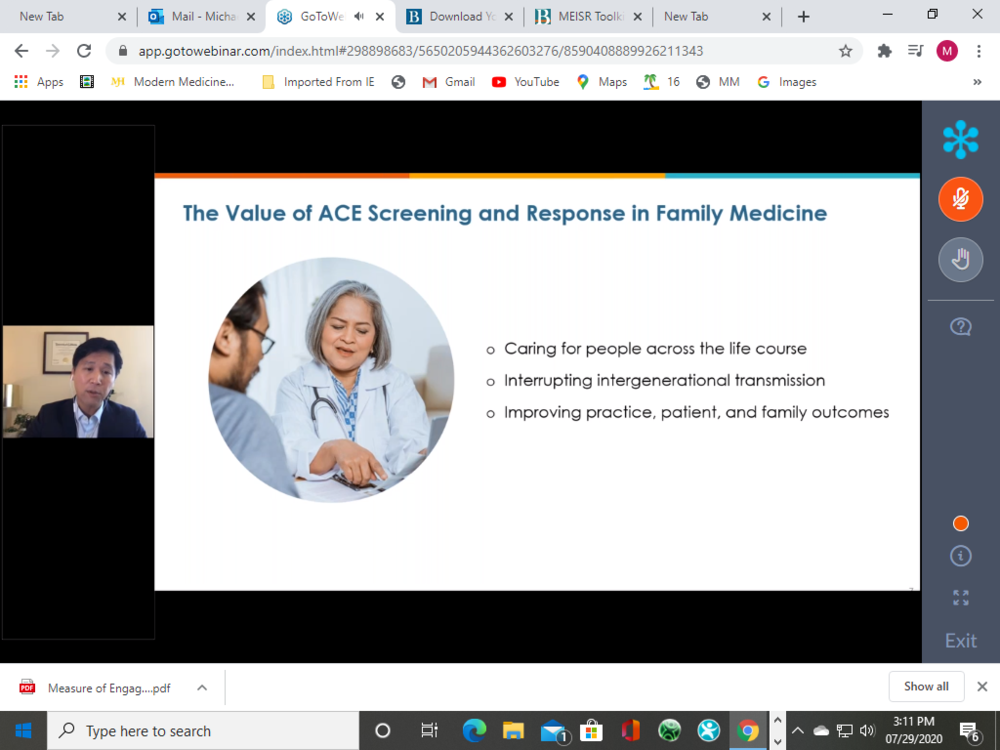
This is a slide from today’s ACEs Aware webinar. As you can see, interrupting intergenerational transmission is one the goals of screening for ACEs in medical practice. It’s not really about blaming, it’s about freeing people from passing these physical and mental health risks to future generations, none of whom deserve to be born into these ongoing processes. I’d like to acknowledge some other posts that have added the very important dimension of marginalized populations’ stressors, present, and historical, into the calculus. ACEs Aware was founded and supported by the California Surgeon General, Dr Burke Harris, who deserves effusive praise for her work on ACEs. Included in the today’s presentation was the epigenetic factors of trauma and how they affect every body system of those exposed. 

Attachments

Hide

Images (1)

2020-07-29 (6)


Tony BuffingtonTony BuffingtonMember

Well written, thank you. Like a few others, I’m somewhat concerned by what I perceived as some “blame” directed toward Mr. Trump’s parents. In my view ACEs are an expression of “the biology of Karma”, and without detailed knowledge his parent’s early environments, and their parents, etc. it might be more useful to regret what he was exposed to and focus on “now what?”


TDToni DuPont-Morales, PhDMember

I am placing my comments based on the years I spent as a PO addressing heinous crimes and tragically raised individuals who had little opportunity to address their lives and move toward developing positive change.  The social part of the pre-sentence report addresses the upbringing and traumas of the criminal as well as those of their family. Regardless of their history, they received consequences that were often severe at times.  The bottom line was that they faced consequences, irrespective of their ACES. Poverty and race were rarely seen as extenuating circumstances.

In all the years I worked, I can not tell you how rare it was to have a wealthy spoiled deviant  person in front of me. They had the benefit of the expensive defense team against the State. I’ve read Mary Trump’s book and her warning is that Donald Trump was raised with the ability and skill to avoid consequences and surround himself with enablers.  It was a warning as to how pervasive the depravity of the family and their enablers are/were. ACES is about identifying the issues where we as a society, can assist in programs and policies to facilitate positive change and understanding. 


💯 1

MMMichael McCarthyMember

There is a fairly broad consensus that President Trump is suffering from mental health problems. I’m an a Green Party member, so I’m not trying to sway anyone’s towards VP  Biden, who I serious reservations about also in the mental health area. This is one more example of a source concerning President Trump’s mental health.

 “The Dangerous Case of Donald Trump is a 2017 book edited by Bandy X. Lee, a forensic psychiatrist, containing essays from 27 psychiatrists, psychologists, and other mental health professionals describing the “clear and present danger” that US President Donald Trump’s mental health poses to the “nation and individual well being.”


👍 1

VYVivian YacopiMember

Although, the results of such upbringing can cause the end results, I do not think it is fair to use ACES Connection to target Donald Trump. What is Mary Trump getting out of this? ($$$$) Not comfortable with this article and seems to be more of a political platform. I will unsubscribe today. 

 

👍 1

Elizabeth FitzgeraldElizabeth FitzgeraldMember

Brilliant Jane. If only there were some professional gate keeping within professions (outside of mental health) that would allow us to intervene when a person’s personal trauma was causing them to become a danger to themselves and/or others. Cops, politicians, lawyers, cashiers, landscapers, servers…I mean really, we all need each other to help us see what we can’t see. I guess that’s why we need the trauma-informed revolution. 

 

👍 2💯 1

Leslie Schwartz LeffLeslie Schwartz LeffMember

Excellent article! I have been both fascinated and repulsed by the idea of reading Mary Trump’s book. Reading this synopsis through a trauma-informed, ACEs lens, was powerful, informative and important. Thank you, Jane!


👍 1

Jane StevensJane StevensPublisher, ACEsTooHigh; founder, PACEs Connection

@Molly Reagh posted:

Hmmm…something does not sit well with me about this article. Many, myself included, have long felt that mainstream ACEs movement does not sufficiently address the intersections of race, class, geography and other socio-environmental factors. This article seems like an apologist stance for bad behavior, without taking into account the extreme privilege that paved the way for Trump to maintain class privilege and be elected president. The ACEs he experienced, while I’m sure traumatizing, should not be extricated from the race and class privilege he also experienced. This argument seems to parallel the narrative that gets played out in the media that white people who commit crimes (the Dylan Roof’s of the world) have mental health issues, when Black, Indigenous People of Color (BIPOC) folks get labeled as thugs. It glaringly leaves out the institutional and systemic racism that overwhelmingly bars BIPOC people from gaining wealth or political power and has no impact on white cisgender men who still hold disproportionate and harmful amounts of power. Honestly, it is further proof of our society’s horrifyingly entrenched white supremacy and I highly encourage you to re-think posting this article in its current form.

I agree with you completely, Molly. This essay strives to explain so that we can understand and change our systems, with the understanding that we are our systems. It’s definitely not an apology.

 

👍 2

Mike FlaningamMike FlaningamMember

Jane, thank you for your fascinating article. A challenge I frequently come across in my practice as a primary care physician for adults, is how to effectively and respectfully get a person, who has certain maladaptive coping mechanisms, to see that their ways of coping are destructive. I wouldn’t expect Mr. Trump to hear Mary Trump’s assessment and respond by thanking her and asking how he can work on changing himself.  Patient’s usually don’t come to me because they’ve identified their maladaptive coping as a problem, but instead focus on their headaches, insomnia, or other symptoms. When ACEs are a contributing cause to such symptoms, and we discuss ACEs science, some people have “a ha!” moments, and start on a path towards healing. However, a lot don’t see the connection, even when I’ve (gently) brought up the topic again.

I also want to comment that I appreciate the concern Anna expressed earlier, about all of us associated with ACEs Connection needing to not allow this forum to devolve into political bickering (my description, not Anna’s). However, I feel it’s appropriate to discuss Mr. Trump’s case here, as long as our goal is to advance the awareness and understanding of ACEs, as opposed to people expressing their negative feelings toward him.  Many precedents have been set, in this forum, to discuss the childhood experiences of still living people (Darrell Hammond being a recent example). I realize that in most previous cases, it’s people sharing their own stories, while in this case, Mr. Trump is not doing the sharing. I believe we therefore, in a trauma-informed way, should be sensitive to the possibility the person who didn’t share their own story might have a different story to tell.  

 

👍 2

Molly ReaghMolly ReaghMember

Hmmm…something does not sit well with me about this article. Many, myself included, have long felt that mainstream ACEs movement does not sufficiently address the intersections of race, class, geography and other socio-environmental factors. This article seems like an apologist stance for bad behavior, without taking into account the extreme privilege that paved the way for Trump to maintain class privilege and be elected president. The ACEs he experienced, while I’m sure traumatizing, should not be extricated from the race and class privilege he also experienced. This argument seems to parallel the narrative that gets played out in the media that white people who commit crimes (the Dylan Roof’s of the world) have mental health issues, when Black, Indigenous People of Color (BIPOC) folks get labeled as thugs. It glaringly leaves out the institutional and systemic racism that overwhelmingly bars BIPOC people from gaining wealth or political power and has no impact on white cisgender men who still hold disproportionate and harmful amounts of power. Honestly, it is further proof of our society’s horrifyingly entrenched white supremacy and I highly encourage you to re-think posting this article in its current form.


LHLaura Haynes CollectorMember

Counting ACEs = essentially a rough sorting-hat for being raised in a dysfunctional family/ by dysfunctional adults.  Functional healthy families have fewer ACE-level events (though something like the death of a parent can strike even a very wholesome home).  

Donald had a huge multitude of “baby ACEs” or “shadow ACEs” as I call them.   You can be rich, fed, never hit, ‘privileged’ —  but if your own parents do not *connect* with you, it is much worse than an isolated horrible event like a divorce.  Being neglected profoundly is orders of magnitude worse than your attentive, loving parents getting a divorce.   For you have no resources to deal with anything bad that happens.

Nobody TOOK PLEASURE in baby Donald.  Nobody interpenetrated with him.  Nobody was his safe place, his place of refuge.  Nobody modeled a safe and interested, caring “other.”  All the experiences by which human beings learn to attach and self-regulate were robbed from him.

When you never receive secure attachment as a baby, that’s the worst ACE that can exist.  A securely attached human being can withstand something like a parental divorce in a VERY different way than a person without that ballast of  relational security.  A securely attached person has internalized their own worth.

I see the child separation at the border as a kind of sick theatre of DJT’s past.  Being ripped away from his mother (the mom as ‘criminal’) as a kind of large scale re-enactment.

 

👍 4

Rebecca Lewis-PankratzRebecca Lewis-PankratzMember

Beautiful. There are no bad guys. It is a bitter pill to swallow but so incredibly necessary to do the work of healing the River of Cruelty.


❤️ 3👍 2

EMEdith MannMember

Ever since 2016 I have observed and wondered about Trump and ACEs, and have occasionally shared my view with others.  My ACEs perspective is one of understanding behavior, not as an excuse for behavior.


👍 4

Denise BusleyDenise BusleyMember

Dearest Jane, You are a stunningly powerful and gifted writer. Thank you for continuing to use your gifts in such a profound way. I continue to be thunderously grateful. 


👍 3👎 1

MMMichael McCarthyMember

@Karen Anthony posted:

I’m reading this book now. As an infant mental health therapist I continue to wonder: what happened to Fred Trump in his early childhood? Or Mary? How did they become the parents they were to the Trump children? How far back do we go?

Yes Karen, as a psychologist with an interest in transgenerational transmission of symptoms, I’ve wondered about our president’s family history and reflect on the concept of “undifferentiated ego mass.” 


👍 1

MMMichael McCarthyMember

I have Mary’s book and have to admit, I haven’t read it yet. I know about the existence of the Goldwater rule concerning not diagnosing those we have not interviewed or tested. That being said, his niece does have insider, collateral information and is a professional herself. I don’t think you need years of training as a clinician to spot something is very wrong with our president at a time in which we need leadership the most. His lack of empathy and self-referented style is apparent. Thank you posting this. He is definitely a tragic man (from Kohut) and even more tragic, is imbued with power that affects us all. 

 

👍 2

Anne Moss RogersAnne Moss RogersMember

Excellent article. Thank you for sharing. I have wondered many times what Trump’s childhood must have been like to produce what we see today. I also think the media played a lot into what he is today. The adoration by them in the early 90s gave him the attention he so desperately craved and fueled his narcissism that had taken root in childhood as a defense mechanism. 


👍 2

KAKaren AnthonyMember

I’m reading this book now. As an infant mental health therapist I continue to wonder: what happened to Fred Trump in his early childhood? Or Mary? How did they become the parents they were to the Trump children? How far back do we go?

 

👍 2🙏 1👏 1

Laura PinheyLaura PinheyMember

Jane, thank you for expressing what many of us have been thinking for several years. 


👍 1

Jane StevensJane StevensPublisher, ACEsTooHigh; founder, PACEs Connection

Thank you for posting your comment, Anna. I always value your opinion and participation.

 

Anna RunkleAnna RunkleMember

Im going to say it: I’m really uncomfortable with this, that this movement and this platform have become so political that it’s now OK to pathologize the private details of a living person’s childhood — details they did not themselves choose to disclose and in fact fought to stop (and that may not even be true).

An adult’s public actions may be fair game, but it is most definitely NOT fair to use a person’s childhood  in order to diagnose them, read their mind, or make damning claims that because of trauma, they can “never heal,” they can’t feel empathy, they are destined to be a “small time crook in Jail” (unless wealthy) or that people like them should not be “created.” These kinds of statements are uncomfortably familiar from other times when “science” was used to label and marginalize others.

I hope ACEs Connection will be extra careful never to “weaponize” ACEs science against anyone, whether you like their policies or not. 

 

✅ 3💯 2👍 2

David DooleyDavid DooleyMember

This is why parenting education must be a part of the solution.  Not conventional parenting education, but a new kind…one that reaches everyone, everywhere, all the time. 

The Centers for Disease Control, the American Academy of Pediatrics, the National Alliance on Mental Illness, and the National Institute of Mental Health should be working furiously on this new kind of parenting education.  Perhaps parenting education campaigns akin to the smoking and seat belts campaigns of the past.  Perhaps multi-media messaging that teaches parenting behaviors and practices generally recognized as supporting the healthy development of children.

Visit www.advancingparenting.org.  Use a computer…our website is not optimized for phones.  We are all about finding interesting and perhaps more effective ways of teaching everyone about parenting.  


👍 3✅ 1

Comments Per Page: 20 · 40
Back To Top

Building Resilience is a Team Effort that Starts Early

Porter Jennings-McGarity Porter Jennings-McGarity 11/30/236:34 PM

(Note – Posting this as it is about a program the late Deborah McNelis and I created and delivered via PACEs Connection to the North Carolina Foster Family Alliance. It was underwritten by Healthy Blue, with Communities in School of Brunswick County, NC, as our fiscal sponsor.)

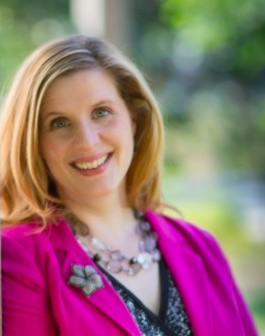
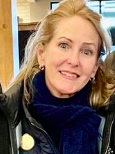
“YES!” was the response of Gaile Osborne, executive director of Foster Family Alliance of North Carolina (FFANC), when asked for input on a new program to help foster and kinship care families learn how to support the brain development of young children.

Screen Shot 2023-11-30 at 7.54.42 PM

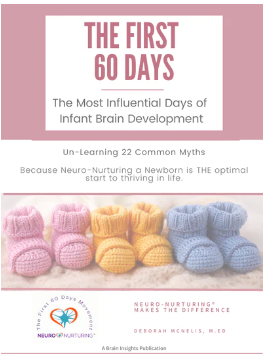
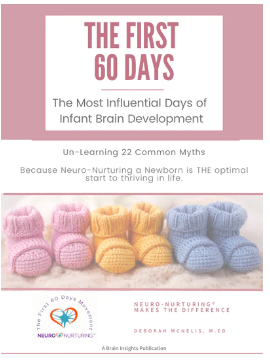
“I love these Brain Insights materials. How soon can we start?” said Osborne upon receiving the “The First 60 Days” booklet on myths about newborns and their caregivers and the eight “Neuro-Nurturing” ringed books.

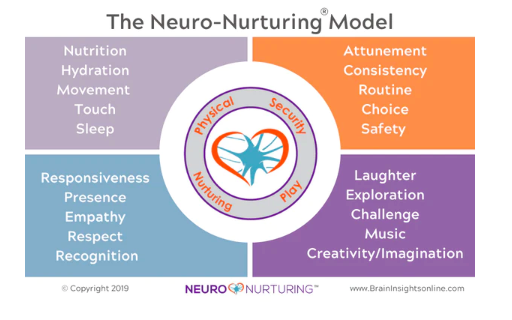
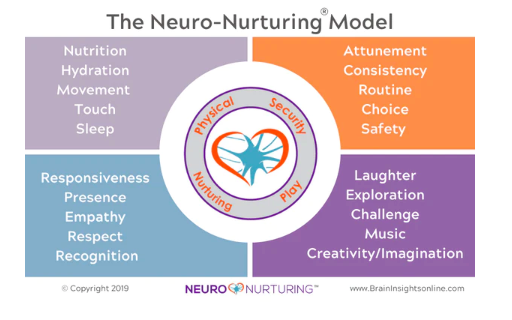
The materials delivered through a program created by PACEs Connection will support parents in “Neuro-Nurturing” – providing the consistent love, healthy touch, connection, and attention proven to support healthy brain development – for ages newborn through five, beginning with secure attachment in the early months and covering overall optimal development throughout the series. The four areas in the model for “Neuro-Nurturing” are physical needs, security, nurturing, and play.

Screen Shot 2023-11-30 at 7.30.30 PM

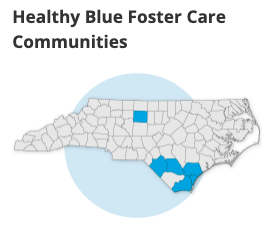
Blue Cross and Blue Shield of North Carolina’s (Blue Cross NC’s) Healthy Blue Medicaid plan provided funding to offer these materials, as one component of several years of programming designed to support families and caregivers.

“Healthy Blue has been a terrific partner since 2021,” said Carey Sipp, director of strategic partnerships for PACEs Connection.

Screen Shot 2023-11-30 at 7.27.07 PM

Part of this funding enabled six North Carolina counties to join the PACEs Connection Cooperative of Communities, which offers peer-to-peer support, a monthly training and think tank for its member communities, and purchase of the materials for the FFANC program.

“We decided we could help children and families best by supporting caregivers.”

Screen Shot 2023-11-30 at 7.37.43 PM

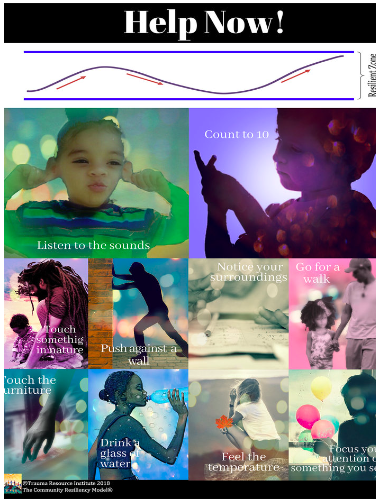
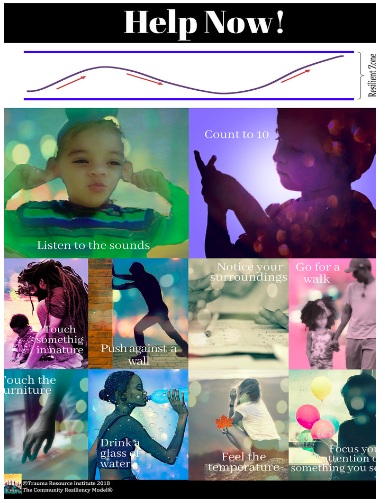
“The first year of the work was during the pandemic. We held a focus group with some Department of Social Service (DSS) county-level supervisors and caseworkers and other family-supporting professionals from several counties to see how we could best achieve the objectives, and we decided we could help children and families best by supporting caregivers. The stress caregivers were under was intense. Our efforts to promote the Community Resiliency Model (CRM) training was very well received by DSS professionals,” said Sipp.

“With Healthy Blue’s support, we decided to share the CRM training widely, as it is designed to help create more ‘trauma-informed’ and ‘resiliency-focused’ communities by helping members of the communities learn how, when stressed, to self-regulate and co-regulate,” said Sipp.

Screen Shot 2023-11-30 at 8.12.55 PM

“The CRM training gives community members a common understanding of the impact of trauma and chronic stress on the nervous system. It also helps people see how the ability to bounce back – resiliency – can be restored or increased using this skills-based approach. We wanted families as well as “helping professionals” to better understand the impact of different types of stress and experience the healing power of learning how to regulate their nervous systems, help others regulate their nervous systems. Participants learn more about the power of compassion, especially self-compassion, that they can share with the children,” said Sipp.

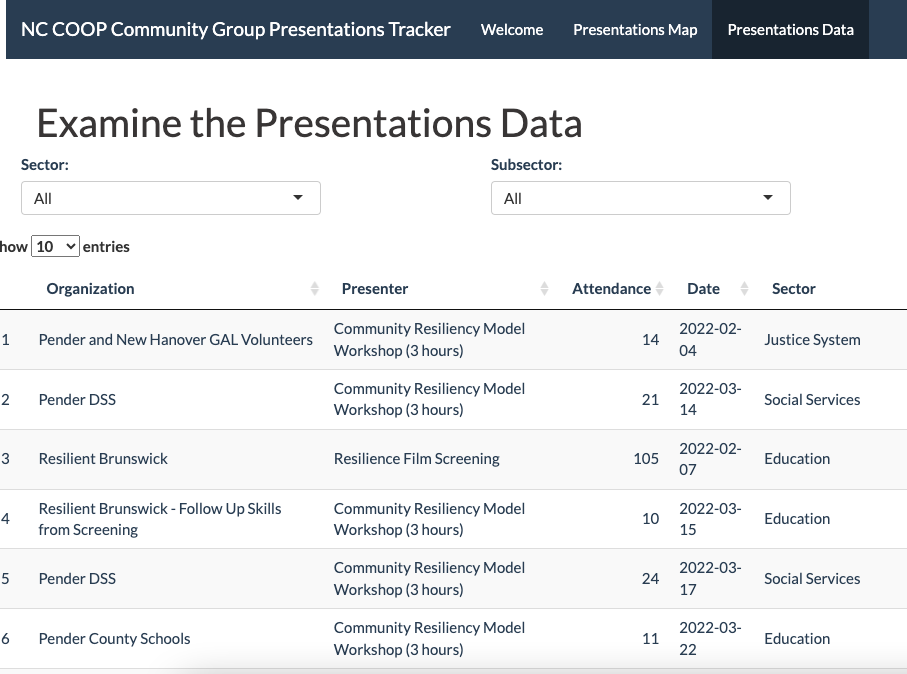
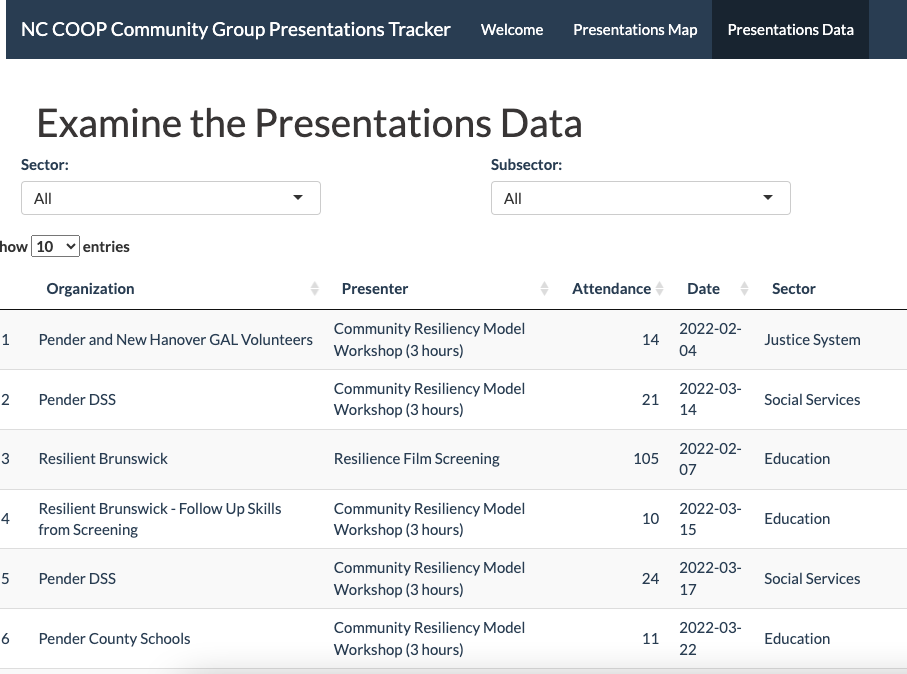
Ultimately, more than 700 people in the six North Carolina counties received some training on the model, and 18 people – including one or two from each county – took the week-long CRM training so they could continue to share it in their communities.

“Overview sessions of one to three hours were shared with DSS workers, Foster Family Alliance members, guardians ad litem, and other groups. We wanted a cross-sector group from each community – people in education, communities of faith, healthcare, law enforcement, mental health, family support, childcare, and more – to have it,” said Sipp.

Screen Shot 2023-11-30 at 8.21.52 PM “Some of the foster parents took the week-long training so they could become certified to become CRM teachers as well. We even have one mother, whose son wasn’t old enough for the training but will take it as soon as he is old enough, plan to become a mother-son training team. The mom has since been able to adopt her son, who practices and shares the skills informally with friends. They will likely share the training together as soon as the son is old enough to be certified, ” said Sipp.

This year’s work began with sending a questionnaire to foster families to gauge their interest in participating and receiving the Brain Insights materials.

“This deeper dive into learning about the brain – and how being supportive of the child’s developing brain can lead to better relational health – was of great interest to the families. We were flooded with responses – 165 surveys were returned in the first 16 hours after it was sent,” said Sipp.

Packages with the materials will soon be received by the first 165 parents to respond. All parents who are members of the Foster Family Alliance are also eligible to participate in a series of webinars taught by the author of the materials, early brain development specialist and founder of Brain Insights, Deborah McNelis.

Screen Shot 2023-11-30 at 9.47.38 PM

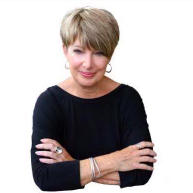
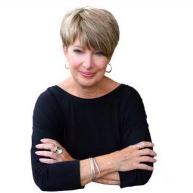
“My entire career has been built on a passion for adults to understand what contributes best for children to reach their full potential – each as a beautifully unique individual. When adults learn the basics of how the brain develops based on repeated experiences, and what the science reveals that children need most at each stage of development, they are thrilled to have that understanding,” said McNelis.

“Suddenly it makes sense as to why a two-year-old does not have the capabilities that a four-year-old might have. Adults become more confident in their nurturing abilities, which helps children become calmer, as, from birth, the primary caregivers of babies are providing needed experiences. Positive experiences make for the healthy brain connections that lead to a foundation of trust, health, the ability to communicate, to learn, to get along with others, and so much more,” said McNelis.

McNelis is quick to point out her understanding of the special needs of foster parents and the children who come into their care, and how vitally important it is to build connections and trust.

Screen Shot 2023-11-30 at 7.26.31 PM“There is a lot of emphasis put on the first two months of life. It is wonderful to be able to have that special time to bond and for the baby to establish a secure attachment. But we know older children benefit greatly from the Brain Insights “Neuro-Nurturing” supports, and our sharing of ways to nurture, interact, play and learn. When children and caregivers make connections with consistency while playing, exploring, spending time in nature, and simply enjoying time together, early relational health improves, which leads to better health outcomes physically, emotionally, and psychologically,” said McNelis.

Apparently, McNelis is connecting well with the parents who’ve taken the first round of webinars.

Screen Shot 2023-11-30 at 7.48.56 PM

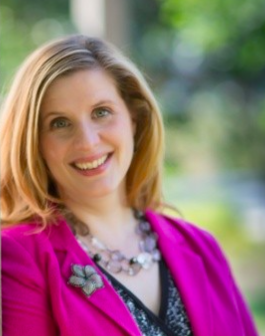
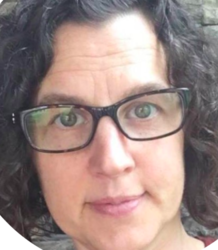
“Evaluations of the first webinars have been incredibly positive, with 100 percent of respondents saying they are likely or very likely to attend subsequent webinars, and 100 percent of respondents saying they were likely to recommend, or would recommend, the webinars to others,” said Kate Schultz, deputy director of the Foster Family Alliance.

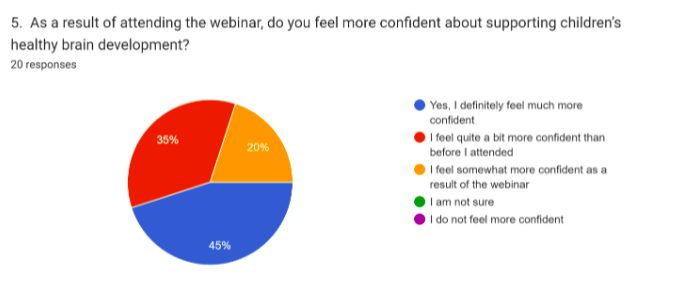
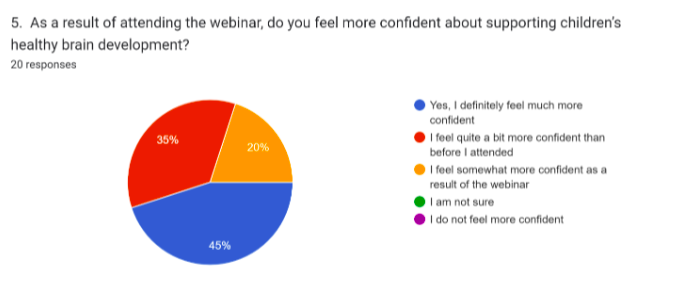
Additionally, 100 percent of participants said that as a result of the webinar, they felt a greater level of confidence in supporting children’s healthy brain development.

Screen Shot 2023-11-30 at 7.45.35 PM

Screen Shot 2023-11-30 at 7.46.45 PM

“We are thrilled that Healthy Blue could support these PACEs Connection communities and this innovative programming that helps caregivers connect in new ways with the children placed in their care. It spoke volumes to us that Gaile Osborne, a foster parent herself, was so enthusiastic about the materials. We are looking forward to the next phase of the program,” said Kristy Kent, director of county engagement for Blue Cross NC.

“While this content goes deeper into brain development, it is also designed to help foster parents and caregivers learn how to PLAY and positively interact with the children. We understand the importance of positive childhood experiences (PCEs) in helping children build ‘buffers’ against the losses and adversity they have experienced. With these materials in-hand, parents have examples of positive experiences they can share with children,” said Kent.

The program, which started in November, will continue with monthly webinars through June 2024. Other aspects of the program will be announced in the months to come, according to Sipp.

For more information, contact Carey Sipp at csipp@pacesconnection.com, or Kate Schultz at kate.schultz@ffa-nc.org

Attachments

Hide

Images (11)

Screen Shot 2023-11-30 at 7.54.42 PM: Gaile Osborne, Foster Family Alliance of North Carolina
Screen Shot 2023-11-30 at 7.30.30 PM: The "Neuro-Nuturing®" model from creator Deborah McNelis, brain development specialist and author
Screen Shot 2023-11-30 at 7.27.07 PM: "Neuro-Nurturing®" is shared in easy-to-access ringed books filled with interactive play ideas to maximize connection and healthy brain development.
Screen Shot 2023-11-30 at 7.37.43 PM: Carey Sipp, PACES Connection
Screen Shot 2023-11-30 at 8.12.55 PM: CRM Training poster, featuring "the Resiliency Zone" and wellness skills and tools taught in the training
Screen Shot 2023-11-30 at 8.21.52 PM: Partial listing of CRM trainings
Screen Shot 2023-11-30 at 9.47.38 PM: Deborah McNelis, creator of "Neuro-Nurturing®" model of infant and child brain development for parents, caregivers, people who love babies and children
Screen Shot 2023-11-30 at 7.26.31 PM: McNelis is the author of "The First 60 Days' booklet which "busts" 22 potentially harmful myths about infants and parenting. The booklet is among materials to be received by participating foster families.
Screen Shot 2023-11-30 at 7.45.35 PM: 100 percent of attendees felt more confident
Screen Shot 2023-11-30 at 7.46.45 PM: Kristy Kent, Healthy Blue
Screen Shot 2023-11-30 at 7.48.56 PM: Kate Schultz, Foster Family Association of North Carolina

Porter Jennings-McGarity, PhD/LCSW (She/Her/Hers)

❤️ 1

Tags: Gaile OsborneKristy KentFoster Family Alliance of North CarolinaHealthy BlueDeborah McNelisNeuro- Nurturing (R)Healthy Blue North CarolinaCommunity Resiliency ModelKate SchultzCarey Smith SippThe First 60 Days

Views: 1,527

Comments (3) 

Newest · Oldest · Popular

Cendie StanfordCendie StanfordMember

YES! This profound initiative underscores the undeniable truth:

“Building resilience is not a solitary journey but a collaborative effort that must commence early in a child’s life.” @Carey Sipp – thanks for sharing


Jeff LinkenbachJeff LinkenbachMember

Porter – Great post and such important information. Well done and thank you.


❤️ 1

Carey SippCarey SippFormer Volunteer Co-Director, PACEs Connection Revitalization

Thanks for posting, Porter!
It has been wonderful here at PACEs Connection to help bring scores of communities into the network, and help many of them grow, find funding, connect with others doing the work who could help them accelerate change. More than that, I have loved learning from the leaders of communities about the importance of establishing a sense of safety and acceptance during their monthly meetings, the absolute need for transparency and trust if a community is to grow; the need for keeping the mantras “nothing about us without us” and “how we do the work is the work we do” front and center.

In all this time, being asked to help support the community of people including children in foster care, foster and kinship parents, guardian ad litem volunteers, Department of Social Service professionals, and community volunteers working with child protective service children and families, was one of the more interesting and compelling challenges. It was also a compliment of sorts, I think, that our funder Healthy Blue thought we could effect change.

All this is to say that I have loved this project of being asked to find ways to help improve the health and well-being of children and families in the foster care system, and being trusted to do so. The fact that there were solid relationships across sectors in the communities in which we did this work made asking for input, creating strategies, and taking action steps a joy. Team members Kelly Purcell, Amy Read, and Bonnie Jordan were and are amazing as we proudly shared the Community Resiliency Model and tracked people’s response to it.

That work made it easier to gain interest, approval, and excitement about the idea of going  deeper into helping foster parents and others become excited about learning more about infant and child brain development. It felt wonderful to have that trust when talking about why understanding brain development matters and how this understanding can help us all become more patient, aware, effective, and compassionate, ultimately in support of the people who’ve had so little voice or choice in what happens in their lives.  

Carey


❤️ 1

Back To Top

Trauma tried to kick down the door. Compassion is helping me heal.

Carey Sipp Carey Sipp 1/26/207:03 AM

The artwork is an original piece titled “Someone at the Door” by Chicago artist Ken Shaw. I bought it about 35 years ago.

(The first part of this piece was written in-the-moment, as an email to a friend following what, for me, was a traumatic experience. The second part of this piece was written about 10 days later, as part of a healing reflection. It occurs to me that this experience, and the reflections, might help someone else experiencing trauma and/or seeking compassion for self or others.)

 PART 1 – AN EMAIL TO A FRIEND AFTER THE TRAUMA.

A woman just banged on my door and damn-near broke it down. It scared the bejesus out of me. F*#k.  Half-asleep I opened the door. She was looking for Jake. No Jake here.

I talked to her for a couple of seconds and then she reached into her purse for God-knows-what. THAT’S WHEN I FREAKED.  Was she reaching for a gun or a knife? I didn’t know. I closed the door. She pushed and pushed against it, but I finally got it closed and locked.

 Then she got mad. And started yelling and then kicking the door. Kicking the door. Kicking the door.

 Heart in my throat.  I found my phone and called the police.

 They arrived and found her next door, banging on that front door, looking for Jake.

They got her down the steps and have been out in the street with her for 15 minutes. God. CPTSD (Complex Post Traumatic Stress Disorder) City.

 Drunk, doped, and psycho people freak me out.

I was already agitated having gone to sleep worried about the political tension between the USA and Iran. These existential threats weigh heavy on me. Potential war. Australia burning out of control.  Floods swamping the South. Then there is my dog, Cosmo, barking, barking, barking.

My heart is pounding out of my chest.

Writing this is helping me calm down.

I am here. It is now.

I’ll play Scrabble on my phone. I’ve read that playing a game after a traumatic event can help prevent Post Traumatic Stress Disorder (PTSD). I wonder if it can help folks who, like me, already have Complex PTSD and don’t want it to get worse because of some random-ass occurrence like a large and apparently out-of-control woman trying to break down your door while accusing you of harboring a guy named Jake?

 Okay. Breathe deeply. I wonder if the police will check on me or not. Damn. I could be having a heart attack and they wouldn’t even know. And I could do something about that. I could call them and say, “Please come check on me.”  Okay. My heart rate is slowing down a bit.

Damn. I had gone to bed early because I didn’t sleep well the last two nights. Both nights I’d checked my phone during the night. That is not a smart thing to do when I want a good night’s rest. I flunk sleep hygiene.

 Well, the police left. I don’t know what happened to that woman.

 She was about 5’9 and probably weighed 180. I’d opened the door thinking it was my housemate’s son banging on the door. Maybe he and his mom had driven straight through the night and were back from their trip.

 I’m so damned glad I got the door closed. She just kept kicking it. For about two minutes she kept kicking on it. I cannot believe the police didn’t ask me if I wanted to press charges. I get that pressing charges would just extend the trauma. But they didn’t even come back up the steps to check on me or call. Nada.

 What a weenie I am. There are people in flood zones, fire zones, war zones and I’m freaking out because a tanked-up human tried to kick the door down.  But, trauma is trauma. A friend would remind me not to diminish how terrified I was; I am. Again, she reached into her purse, I thought she had a gun. Guns terrify me. Absolutely terrify me. Mention them and sometimes I can smell gun oil.

Okay. I am gonna be alright. I’m gonna play Scrabble for a few rounds. I suck at

Scrabble. I’ll do it anyway. I’ll get up and dance to discharge all this adrenaline.  I remember the Community Resiliency Model (CRM) advice and push against the wall. This helps.

I put my back against the wall and breathe and push, using my thigh muscles to really press in. I turn around and face the wall and push, push, push on the wall.

This helps. I jump up and down. I do pushups.

 I have power and agency. I am strong and I’m in my body. This helps. I have choices. I have choices.

I can drink water and eat and go to the bathroom and turn on music or a movie or write. I have choices. I am alive and I have choices. It is 2 a.m. or so and I can write some more and I have choices. Thank God for choices.

 PART 2 – A FEW DAYS LATER:

I look back on the whole experience of the woman at my door and I am overwhelmed with compassion for myself as a little girl. When I was a child, my father, who was a traumatized human himself, would often wake us all up in the middle of the night after a night of drinking. He fought with my mom. He had a hair-trigger temper. He grabbed her by her hair, twisted her arm behind her back. Smacked her.

One time he broke the glass to get into the back door.

Another time there were gunshots.

Guns were always around and, in my mind, were a constant threat. I was always afraid that he would use one on Mother or himself or on all of us. Or one of our pets.

 And so as I reflected on the recent night and all of those nights as a terrified, helpless child, I felt tremendous compassion for myself that I went through that kind of trauma and drama night after night. And that day after day I would want to go back to sleep and not go to school because I was so very tired. But Mother always pushed me to get dressed and out the door to school so she could go to work.

 Never, that I remember, did we ever stay home after one of those crazy nights.

 So that little me would go to school. Lots of times I would get carsick on the way to school, get there, go in, and have a hard time not throwing up.

 It wasn’t until third grade, when I began to have sleepovers at friends’ houses, that I got my first  glimpse that other people’s dads didn’t break into their homes in the middle of the night.

 In addition to feeling tremendous compassion for my younger self, I thought about the woman who tried to kick the door down. I began having compassion for her. Hell, if some things in my life hadn’t gone SO WELL, I could have been her.

I also know the experience of this woman coming to my door was random, not intentional, as the adverse experiences in my childhood were. I began wondering how she ended up in this neighborhood. She is somebody — a daughter, sister, aunt, niece, maybe even a mom — and she is NOT her behavior. She could have just been out for a cocktail and somebody could have slipped a “Mickey” into her drink. Or she could have been out drinking because she was in horrific grief. We never know why people do random, sometimes bizarre things.

 My dad? I feel compassion for him too. I have for years, thank God. I’ve felt compassion for both of my parents. I think he drank and acted out because he was in pain from his childhood trauma, and from World War II, when, as a young submariner, there is no telling what kind of fear he experienced.

His trauma doesn’t excuse his violence. But seeking to understand the roots of his behavior has softened my heart and helped me to forgive and move on and to have, sometimes for long stretches, healthy relationships with men I have loved.

 I am grateful that I can look at my father and mother, both of whom terrified me, with compassion. They were also terrified and terrorizing. Like the woman at my door.

 And THAT is the whole point of integrating this new knowledge about ACEs science into our lives, right? A “turnaround”?

Somebody in the cycle has to stop and connect with the reality that the behavior of someone who is acting out – drinking or raging or whatever – is not about us.

 It is about the person who is acting out and something that happened to them, some pain they are expressing in a way that is the best way they can in the moment. And probably most of their acting out is a cry for help. I have to remember that.

 And in my job with ACEs Connection, I know I have to remember this and move forward with compassion, and model this to the people with whom I work. I want to show people how to not traumatize and terrorize already traumatized people. And that is why I need to practice self care, compassion, and compassion for others.

Days later, as my body still works to settle down after those flight-fight-freeze moments of terror, this means I treat myself gently.

Carey Smith Sipp

carey.pacescommunites@gmail.com

❤️ 9

Views: 1,229

Add Comment

Carey SippCarey SippFormats 

javascript:””

Comments (5) 

Newest · Oldest · Popular

Christine Cissy WhiteChristine Cissy WhiteIt’s not trauma-informed unless it’s informed by trauma survivors.

Carey:
What an important, beautiful and clear piece of writing to show the then/now/then/now push and pull when it comes to our responses, reactions, and how we relate to ourselves during and after current fear and trauma. It all gets tangled and intertwined. I appreciate you sharing your responses and how you calibrated over time. I especially love your current compassion for the child you were who didn’t have the same knowledge, resources, languages, and tools and then the compassion for others past and present, including those who caused your fear. That moved me so much. Keep writing!

Warmly,
Cis


❤️ 1

Carey SippCarey SippFormer Volunteer Co-Director, PACEs Connection Revitalization

Tina Cain posted:

I wish I had my NFB machine I’m gonna get. If you wanted, I would come find you and I would do all I could to help.   I’m so sorry. 

Tina – That is so sweet!

I love neurofeedback and have been doing it for two years. My NFB provider in Wilmington saw me two days later and it was a big help. I go weekly. Used to go twice a week. NFB is a big part of my self-care program! We should talk. We will talk. Thank you! 

And I am doing well. Have wonderful friends here. A good EMDR therapist. I reached out for help. Looked at what went “right” that night (police here quickly; support from friends; I knew to practice extreme self care; it was random and I live in a normally extreme light peaceful neighborhood; etc.) 

Thank you for your concern! 


❤️ 1

FMFormer Member

I wish I had my NFB machine I’m gonna get. If you wanted, I would come find you and I would do all I could to help.   I’m so sorry. 


❤️ 1

LHLaura Haynes CollectorMember

Beautiful healing here!


❤️ 1

Dana BrownDana BrownInterim (Volunteer) Executive Director PACEs Connection

Dearest Carey:
Thank you for your courageous, insightful, wise words, Carey Sipp.  Your reflective thoughts carry a lifetime of pain, abuse, fear, hope, compassion, and love.

Compassion with self, and others in our lives who we have a relationship with, and folks in the public we don’t know well, permeates through your blog. Highlighting “voice and choice” when you didn’t have a voice (childhood – woman banging on your door) and your life’s evolution to deeply knowing you have choices (self-soothing strategies, the “turnaround”, the CRM model) will plant seeds of hope within all who read your piece.

Much Love and Light surrounding you, Carey, as your healing journey continues.  I love you dearly… 


❤️ 2

Back To Top

Post

Add Comment

Manage Blog Post

Welcome to PACEs Connection

Learn about PACEs Connection & who we are.

How to be a part of our social network.

Join local or interest based communities.

Invite others to join PACEs Connection!

The text 'donate' on a background with many inter-connected spheres

Comments

Carey Sipp commented:
Thanks for posting, Laura! For posting this, and so many more blogs over the years. I’m thinking of the ones YOU’VE written (you are…

Carey Sipp

Carey Sipp commented:
Thanks, Jeoff. A lot of great relationships and ongoing work came from this incredible gathering. It laid the groundwork for deepening…

Carey Sipp

David Dooley commented:
Thank you for commenting, Mr. Holmes. I’m not sure what you’re getting at. Can you give me an example?

David Dooley

Tommy Holmes commented:
I loved how you highlighted the connection between ACEs and community resilience! It’s so important to empower people with this…

Tommy Holmes

Patrick Anderson commented:
This one landed, Dr. Long. What I’d underline is that you’ve framed being pushed out as a pattern rather than a run of bad luck — and…

Patrick Anderson

Robert Hawk commented:
That story is heartbreaking and really shows how history and present-day realities can intersect. Reading about Black history in China…

Robert Hawk

David Dooley commented:
Thank you for writing, Mr. Anderson. You wrote… “Your instinct that the utopia requires entirely new forms of parenting education that…

David Dooley

Cecilia Pace commented:
[heart] Pace, Cecilia reacted to your message:

CP

PACEs Connection Discount for Trauma Informed Jobs

TraumaInformedJobs.com is a new job board for the trauma and resilience communities. PACEs Connection members can save 10% on posting with code PACES10

Blog Archive

August 2026(6)

July 2026(35)

June 2026(35)

May 2026(28)

April 2026(37)

March 2026(29)

February 2026(26)

January 2026(18)

December 2025(31)

November 2025(33)

October 2025(32)

September 2025(28)

August 2025(32)

July 2025(26)

June 2025(23)

May 2025(37)

April 2025(35)

March 2025(32)

February 2025(67)

January 2025(62)

December 2024(55)

November 2024(38)

October 2024(38)

September 2024(0)

Blog Directory

Foster Care

PACEs

PACEs Science 101

Resources

Creating Resilient Communities

Donor Profiles

Special Announcements

STAR Network

Research

Feature

Jane Ellen Stevens

History. Culture. Trauma. Podcast

History. Culture. Trauma. Blog

CRC Fellowship

PC Reacts

Blog Directory

Pandemic parenting overwhelming you? A trio of therapists has just the free workshop you need. Register now for events starting Tuesday, April 20.

Carey Sipp Carey Sipp 4/19/218:18 PM

Therapist and anti-spanking advocate Robbyn Peters Bennett

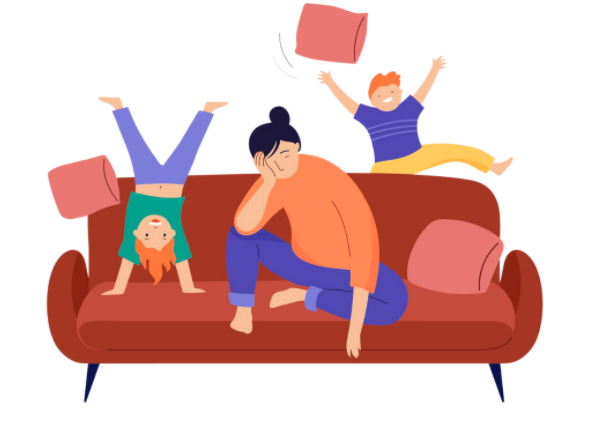
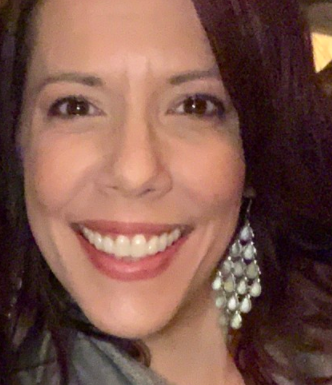
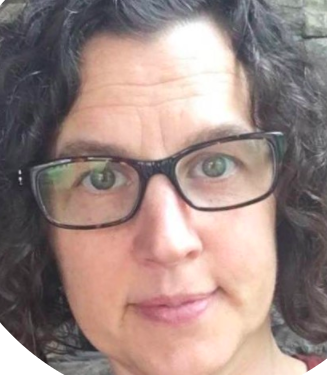
Three therapists have teamed up to lp with overwhelmed, stressed parents by offering a free workshop each remaining day this week: Pandemic Parenting!

Robbyn Peters Bennett from Portland, Oregon, Lori Petro from Philadelphia, Pennsylvania, and Amy Bryant from Decatur, Georgia, organized the event to help parents who have been struggling during the pandemic. Here are the details on what they’re offering and how to attend.

Background:

Bennett said recent research shows the alarming negative impact that chronic pandemic stress has had on children and their parents. Several studies have shown:

  • A majority of parents (52%) said financial stress and social isolation are getting in their way of parenting
  • 1 in 5 said they spanked/slapped their child at least once in the past two weeks, and 12% did it more often
  • 4 in 10 parents shouted at their child in the past two weeks
  • 1 in 5 said they are shouting and spanking more often

“Probably oneAmy Bryant, Wild Child Counseling of the most stressful aspects of the pandemic has been the breakdown of community support for families,” Bennett said. “Parents feel isolated, overwhelmed, burdened with the task of also being their child’s teacher while continuing to hold a full-time job and of course many are struggling with financial worry and feeling isolated. We are shouting across the street to our neighbors and trying to connect through the muffled sounds of face masks. Children have few social interactions and are more dysregulated as a result.
“So my colleagues and I wanted to create a “Community of Care,” said Bennett.

“This parenting event is trauma-informed and is structured to support parents in a way that respects their need for connection, movement, meditation, and science-based parenting support,” said Bennett.

What is it?

The event runs April 20-24, and sessions are free. Each day parents receive a free learning module in their inbox that includes:

  • movement and meditation videos to prepare for, integrate and process all the learning and experiences
  • parent stories to inspire and connect
  • multiple interview sessions to help parents better understand child development, stress responses, and what children – and parents – need to feel more connected and less overwhelmed

Organizers also are offering a live event each night for a modest fee of $25. These events are aimed at helping create a feeling of community and fun, and the fee will help Bennett and her partners create more events in the future.

Who can attend

The workshop is designed for parents, grandparents and anyone who loves children and would like to feel more supported in caring for them. So that can be teachers, coaches, ministers and daycare providers as well.

Live events:

April 20:

Ask the Warden: What Makes Kids Delinquent? Led by George Davis, M.D.

It is amazing how many parents use harsh punishment (even though they don’t want to) out of fear for their children and a strong commitment to keep their child out of trouble. There will be a live Q&A with Davis, the former director of the New Mexico Juvenile Justice system. He is publishing some amazing research on delinquency and adverse childhood experiences.

April 21

Movement Medicine: Calming the Nervous System through Therapeutic Movement. Led by somatic therapist David Mooney

Experience the restorative practice of movement so parents feel better and are better resourced

April 22

Game Night! Movement for Regulation, led by occupational therapist Tinsley Martin

Children/s challenging behaviors are often driven by dysregulation – so mirroring their feelings or talking logically to them isn’t enough. This session is a playful approach to helping children regulate their nervous system and emotion — and parents will feel better too.

April 23

Game Night! Play to Connect, led by Sheena Hill, Parenting Works

There just isn’t enough fun right now! This is a way to join community and play and connect and simply feel good.

April 24

Addressing Our Triggers, led by psychologist Lynyetta Willis, Ph.D.

Feeling activated into flight-fight-freeze is the new normal for a lot of parents who simply have too much stress and not enough support. This session will help parents feel more connected to themselves and will give them some tools to help with their own reactivity.

Screen Shot 2021-04-19 at 10.17.01 PMAdditional speakers:

What to say when you wanna say, “Do as you’re told!” with Mr. Chazz Lewis, M.S.

Mr. Chazz, an inspirational parenting coach on TikTok, talks about why it is difficult for dads, especially, to give up fear based parenting

Feeling overwhelmed by your toddler? How to set limits that meet your own needs, with Devon Kuntzman

Practical  helping parents know what to expect of toddlers and how to help them develop impulse control.

How to deal with irritable and defiant kids, with Robbyn Peters Bennett, LPC, CMHS

Addressing trauma specifically and how to work with children who are often dysregulated and may be thought of as oppositional defiant.

The link between juvenile delinquency and discipline, with George Davis, M.D.

Davis talks about his second ACEs study with children in the juvenile justice system.

What’s my kid supposed to be learning? Trauma-sensitive approach to helping kids learn during a pandemic, with Erin Hambrick, PhD

Parents have intense expectations about  child’s academic progress during the pandemic. Hambrick, from the ChildTrauma Academy, talks about how to prioritize your child’s learning needs and how to deal with the school who may lack a trauma-informed lens.

Building lifelong relationships with kids and teens (and why it matters), with DeAntwann “DJ” Johnson

How to stay close to your teenagers, when they need you the most!

Tools to identify and release triggers, with Lynyetta Willis, Ph.D.

We are all feeling triggered more than usual these days. Willis helps us sort through and validate our triggers.

Others include:

  • Communicating with neurodiverse kids and teens, with Lori Petro
  • When kids steal: supporting your child’s inner guide, with Vivek Patel
  • What grumpy kids need, with Sheena Hill
  • Tired of nagging? Untriggering to parent the next generation, with Iris Chen
  • When siblings hit: setting limits that nurture empathy, with Laura Markham

Desired outcome:

Bennett said the therapists’  goal is to help parents feel more connected and supported by community, and to feel more regulated themselves so that parenting is easier. “We want to raise awareness on the dangers of harsh parenting. A recent study showed that getting angry, hitting, or yelling at children when they are little is linked to inhibited brain development. We know that tending to the connection between the parent and child is the most powerful way to ensure the well-being of children into the future. We want to help parents understand how to deal with challenging behaviors, but also provide them with the care and support they need so that their nervous system can manage it. If we want parents to do better, we have to help them feel better!”

How to attend:

Here is the link to the event landing page: https://event.stopspanking.org/a/46212/hDNZKYhX

If parents can’t find time to watch all the videos during these five days,  they can access all the seminars for free until the end of the month. If they want to hang on to them longer, they only need to pay $25.

Attachments

Hide

Images (5)

Robbyn Peters Bennett
Lori Petro  Founder, TEACH through Love
Amy Bryant, Wild Child Counseling: Amy Bryant
Screen Shot 2021-04-19 at 10.04.14 PM
Screen Shot 2021-04-19 at 10.17.01 PM

Carey Smith Sipp

carey.pacescommunites@gmail.com

❤️ 1

Pandemic parenting overwhelming you? A trio of therapists has just the free workshop you need. Register now for events starting Tuesday, April 20.

Carey Sipp Carey Sipp 4/19/218:18 PM

Therapist and anti-spanking advocate Robbyn Peters Bennett

Three therapists have teamed up to heLori Petro Founder, TEACH through Lovelp with overwhelmed, stressed parents by offering a free workshop each remaining day this week: Pandemic Parenting!

Robbyn Peters Bennett from Portland, Oregon, Lori Petro from Philadelphia, Pennsylvania, and Amy Bryant from Decatur, Georgia, organized the event to help parents who have been struggling during the pandemic. Here are the details on what they’re offering and how to attend.

Background:

Bennett said recent research shows the alarming negative impact that chronic pandemic stress has had on children and their parents. Several studies have shown:

  • A majority of parents (52%) said financial stress and social isolation are getting in their way of parenting
  • 1 in 5 said they spanked/slapped their child at least once in the past two weeks, and 12% did it more often
  • 4 in 10 parents shouted at their child in the past two weeks
  • 1 in 5 said they are shouting and spanking more often

“Probably oneAmy Bryant, Wild Child Counseling of the most stressful aspects of the pandemic has been the breakdown of community support for families,” Bennett said. “Parents feel isolated, overwhelmed, burdened with the task of also being their child’s teacher while continuing to hold a full-time job and of course many are struggling with financial worry and feeling isolated. We are shouting across the street to our neighbors and trying to connect through the muffled sounds of face masks. Children have few social interactions and are more dysregulated as a result.
“So my colleagues and I wanted to create a “Community of Care,” said Bennett.

“This parenting event is trauma-informed and is structured to support parents in a way that respects their need for connection, movement, meditation, and science-based parenting support,” said Bennett.

What is it?

The event runs April 20-24, and sessions are free. Each day parents receive a free learning module in their inbox that includes:

  • movement and meditation videos to prepare for, integrate and process all the learning and experiences
  • parent stories to inspire and connect
  • multiple interview sessions to help parents better understand child development, stress responses, and what children – and parents – need to feel more connected and less overwhelmed

Organizers also are offering a live event each night for a modest fee of $25. These events are aimed at helping create a feeling of community and fun, and the fee will help Bennett and her partners create more events in the future.

Who can attend

The workshop is designed for parents, grandparents and anyone who loves children and would like to feel more supported in caring for them. So that can be teachers, coaches, ministers and daycare providers as well.

Live events:

April 20:

Ask the Warden: What Makes Kids Delinquent? Led by George Davis, M.D.

It is amazing how many parents use harsh punishment (even though they don’t want to) out of fear for their children and a strong commitment to keep their child out of trouble. There will be a live Q&A with Davis, the former director of the New Mexico Juvenile Justice system. He is publishing some amazing research on delinquency and adverse childhood experiences.

April 21

Movement Medicine: Calming the Nervous System through Therapeutic Movement. Led by somatic therapist David Mooney

Experience the restorative practice of movement so parents feel better and are better resourced

April 22

Game Night! Movement for Regulation, led by occupational therapist Tinsley Martin

Children/s challenging behaviors are often driven by dysregulation – so mirroring their feelings or talking logically to them isn’t enough. This session is a playful approach to helping children regulate their nervous system and emotion — and parents will feel better too.

April 23

Game Night! Play to Connect, led by Sheena Hill, Parenting Works

There just isn’t enough fun right now! This is a way to join community and play and connect and simply feel good.

April 24

Addressing Our Triggers, led by psychologist Lynyetta Willis, Ph.D.

Feeling activated into flight-fight-freeze is the new normal for a lot of parents who simply have too much stress and not enough support. This session will help parents feel more connected to themselves and will give them some tools to help with their own reactivity.

Screen Shot 2021-04-19 at 10.17.01 PMAdditional speakers:

What to say when you wanna say, “Do as you’re told!” with Mr. Chazz Lewis, M.S.

Mr. Chazz, an inspirational parenting coach on TikTok, talks about why it is difficult for dads, especially, to give up fear based parenting

Feeling overwhelmed by your toddler? How to set limits that meet your own needs, with Devon Kuntzman

Practical  helping parents know what to expect of toddlers and how to help them develop impulse control.

How to deal with irritable and defiant kids, with Robbyn Peters Bennett, LPC, CMHS

Addressing trauma specifically and how to work with children who are often dysregulated and may be thought of as oppositional defiant.

The link between juvenile delinquency and discipline, with George Davis, M.D.

Davis talks about his second ACEs study with children in the juvenile justice system.

What’s my kid supposed to be learning? Trauma-sensitive approach to helping kids learn during a pandemic, with Erin Hambrick, PhD

Parents have intense expectations about  child’s academic progress during the pandemic. Hambrick, from the ChildTrauma Academy, talks about how to prioritize your child’s learning needs and how to deal with the school who may lack a trauma-informed lens.

Building lifelong relationships with kids and teens (and why it matters), with DeAntwann “DJ” Johnson

How to stay close to your teenagers, when they need you the most!

Tools to identify and release triggers, with Lynyetta Willis, Ph.D.

We are all feeling triggered more than usual these days. Willis helps us sort through and validate our triggers.

Others include:

  • Communicating with neurodiverse kids and teens, with Lori Petro
  • When kids steal: supporting your child’s inner guide, with Vivek Patel
  • What grumpy kids need, with Sheena Hill
  • Tired of nagging? Untriggering to parent the next generation, with Iris Chen
  • When siblings hit: setting limits that nurture empathy, with Laura Markham

Desired outcome:

Bennett said the therapists’  goal is to help parents feel more connected and supported by community, and to feel more regulated themselves so that parenting is easier. “We want to raise awareness on the dangers of harsh parenting. A recent study showed that getting angry, hitting, or yelling at children when they are little is linked to inhibited brain development. We know that tending to the connection between the parent and child is the most powerful way to ensure the well-being of children into the future. We want to help parents understand how to deal with challenging behaviors, but also provide them with the care and support they need so that their nervous system can manage it. If we want parents to do better, we have to help them feel better!”

How to attend:

Here is the link to the event landing page: https://event.stopspanking.org/a/46212/hDNZKYhX

If parents can’t find time to watch all the videos during these five days,  they can access all the seminars for free until the end of the month. If they want to hang on to them longer, they only need to pay $25.

Attachments

Hide

Images (5)

Robbyn Peters Bennett
Lori Petro  Founder, TEACH through Love
Amy Bryant, Wild Child Counseling: Amy Bryant
Screen Shot 2021-04-19 at 10.04.14 PM
Screen Shot 2021-04-19 at 10.17.01 PM

Carey Smith Sipp

carey.pacescommunites@gmail.com

❤️ 1

A world filled with people who have four or more ACEs is a world filled with people who need to meet a compassionate person. – Cendie Stanford

Carey Sipp Carey Sipp 1/25/221:57 PM

This stunning illustration shows how adverse childhood experiences (ACEs) affected the family of Cendie Stanford, a former school principal, artist, and executive director of her own nonprofit, ACEs Matter. For a larger image, scroll to bottom of post.

Cendie Stanford says that ever since she first learned about ACEs (adverse childhood experiences) science and read Dr. Nadine Burke Harris’s, The Deepest Well, in 2020, she’d been thinking about her own upbringing—which included at least 10 ACEs. She feels strongly that everyone needs to know what she knew about what adversity does to people, because it “explains why people behave the way they behave.”

So Stanford, who lives in Winter Park, Florida, established a nonprofit organization, ACEs Matter, to help get the word out. She was especially interested in reaching neighborhoods where she believed many volunteer ACEs educators wouldn’t want to go, because of crime, danger, and poverty.

She learned everything she could about the science. She logged into PACEs Connection to make connections to identify support and other places she could get help. She also set about putting together a board of directors who could help guide and support her in her goal of educating the most vulnerable people in underserved populations in the seven states in which she’s starting out: Arizona, Florida, Georgia, Louisiana, Mississippi, Missouri, and Texas.

Then earlier this month, she held her first board meeting.

4A13AD2A-CFF2-46D2-B0F8-6E3A93E46E43Technical glitches didn’t matter

“I was really nervous about the meeting because I was bringing six people together for the very first time to figure out how they could help with ACES Matter,” she said. “And if anything could go wrong, it did.

“I had six very professional, very educated individuals waiting on me on a Sunday, on a holiday, and there were problems with Zoom. And it was in that moment, with so many technical problems and all these people waiting on me, that I didn’t feel judged.”

It was a moment that called her to stop and share this realization with her board.

“We were talking about the importance of vulnerable communities hearing about ACEs,” she says. “And in that moment, they didn’t care about the sound not working. They didn’t care about the PowerPoint. They were compassionate. And I just felt so loved. And that’s how the (ACEs genealogy) drawing was inspired because when one in six people have four or more ACEs—which I knew on that call included me and at least one other person—I was met with compassionate people.

“In that moment, I said that people need to understand that sometimes there are not enough compassionate people. So in a world with so many of us with these high adversity scores, we live in a world filled with people who need to meet a compassionate person,” she says.

Her board, comprising professionals from the medical industry, educators, technology administrators, and leaders in the spiritual sectors, agreed with her assessment, bringing their professional expertise as well as their own lived childhood experiences to the table.

The next day—Martin Luther King Day—she was inspired to create her “My ACEs Genealogy Tree.” She hopes this resource will help her bring the science of adverse childhood experiences to life for others.

“I’d been thinking about this family tree for almost two years now. And I knew it was going to be a visual because when people can see stuff like that and see themselves in it, it’s so much more powerful than just the words or the data. It’s what had been on my heart, and I think I turned it out in a couple of hours. And it was the most rewarding experience for me to create that illustration,” she says.

“Doing this was just eye-opening,” she continues. “It confirmed all of these feelings that had been bubbling up inside of me that ACEs science is just deeper than our family tree, that it (trauma) was really ingrained in the roots. There’s a lot of work that needs to be done and there is a solution.”

And that solution begins with spreading the word.

“This is life-saving information; we need to share it with everybody we know. Now.”

Stanford talks about a childhood friend who shares about PACEs science whenever possible.

“My friend was home on a family visit in the neighborhood where we grew up, and a 4-year-old child was gunned down,” she recalls. “My friend stayed to attend the funeral of the child and ran into the mayor. In questioning him, she found he had never heard about ACEs, and wanted more information. She also ended up running into a news reporter and faith leaders who wanted to know more.

“We know we should have somebody inside of every community talking about ACEs, and creating safe spaces for people to have this conversation,” she says. “Yes, the conversation can be activating, but it can also be catastrophic if we don’t bring it up.”

This is part one of a three-part series. Next: My ACEs family tree: Life after ACEs.

8AFFFA7F-E48E-4F54-96B6-FDF2F89C7AB3

Click here to see the tree on the ACEs Matter website.

Attachments

Hide

Images (2)

4A13AD2A-CFF2-46D2-B0F8-6E3A93E46E43
8AFFFA7F-E48E-4F54-96B6-FDF2F89C7AB3

Carey Smith Sipp

carey.pacescommunites@gmail.com

❤️ 4💯 1

Views: 2,859

Add Comment

Carey SippCarey Sipp

My ACEs family tree: Life after ACEs

Carey Sipp Carey Sipp 2/1/221:12 PM

This is the second of two stunning illustrations showing how adverse childhood experiences (ACEs) affected the family of Cendie Stanford, founder of the nonprofit ACEs Matter. Each leaf represents a family member affected by ACEs, and the health consequences they suffered.

When Cendie Stanford, founder and president of ACEs Matter, finished drawing “My ACEs Tree—Genealogy”—she saw clearly the remarkable number of ACEs her grandparents, parents, children and extended family had experienced. The second tree—Life after ACEs—shows how horrifically ACEs played out in their lives.

34BE3920-6A5C-4CC2-AD41-CD33D8BC99CC

Yet when she studied the devastating stories of pain and suffering told in the tree leaves, “I felt at peace,” she says. “There was no racing in my heart. There was not a physical reaction to it, when I looked at what ACEs had done to my family, because when I think about the people who have passed, I now have a better understanding of why it happened, why they had cancer, depression, problems with weight management and risky behaviors.”

‘Everybody I know needs this.’

For Stanford, just learning about ACEs science two years ago, and the fact that her score of “10 plus” did not bode well for her future health, was enough to have her turn over a new leaf in self care. “Since I’ve started learning about ACEs,” she says, “I am encouraged to eat better. Meditate. Exercise. I know it’s hard for people to take on self care sometimes, because we didn’t grow up seeing people do those things. I’d never seen anybody that I know meditating.”2BD3D83F-564E-4B2D-AC6C-9E13918D46AC

She knows this is not the case for many people, that “information is not transformation.” It’s not guaranteed to bring the behavior changes to give up cigarettes, fried foods, sweets, and many other comforts that, consumed habitually, may be very useful to cope with the consequences of ACEs, but are, in the long run, harmful.

She wants people in underserved communities to create a tree like this for themselves, “so they can decide whether or not they want to do something about it,” she says. “Everyone deserves to know about ACEs, so they can make choices, so they can be inspired to help improve their health; practice self care, help rewire their nervous system. So they can maybe help kids and adults learn how to be calm and become regulated without becoming violent, or looking for a cigarette, or food, or a drug or drink” she says. “Brains can change at any age, and our bodies want to heal.”

Transformation requires more than just information.

“Helping people in underserved communities work on their own genealogy by drawing their own ACEs trees may help people open up. People in vulnerable populations don’t feel like it’s safe to talk about feelings. But even if these conversations can be activating, I believe being able to have people create and share their own family tree will show that we all have a lot in common, and need to take some action to improve our health. I hope we all see that not having the conversation is catastrophic,” says Stanford.

“Awareness will lead us to change. I know it is going to take some time. But what we can’t do is just wait for the people in these underserved communities to come to us. Right now we have to find representatives who’ll take this information into the communities, and help people figure out how to calm these kids’ nervous systems, so kids stop killing kids. Something needs to be done so these kids learn how to self regulate, so people get healthier and live better, and longer,” she explains.

Stanford says she plans to prioritize her work in neighborhoods in the zip codes she and her ACEs Matter board of directors are in the process of identifying. “People are advertising their depression every day on social media. You can look at people’s status updates and see that they are hurting,” she adds.

Her next step is to involve representatives from all types of organizations, or sectors, by taking her “ACEs trees” to business and industries as well as into the schools, faith communities, health clinics, first responders and more, in each neighborhood prioritized.

“If businesses—for example, grocery store companies—understand this (the effects of ACEs) and address it,” Stanford explains, “their employees’ productivity could be improved. They’re hiring a lot of these people who are coming to work with adversities, especially if they are in communities where there’s high violence. This is affecting their workers and their shoppers. So if they focused on preventing trauma and promoting resilience, the benefits to their communities could be life-changing, and life-saving.

“Every report I read says communities need to be involved,” she continues. “And that’s what ACEs Matter feels like it can do, just by giving people the tools to take ACEs awareness into the communities and start the conversation. Let’s see where that goes.”

The solutions are right here.

“We need to do what PACEs Connection is talking about, to get communities invested in their people, and build PACEs initiatives in communities, because healthy people are the product of an ACEs aware, resilient community. Let’s invest in these communities because the active community members can pass the knowledge down generation after generation, and stop ACEs and the bad health outcomes from being compounded generation upon generation,” says Stanford.

“I mean, the solutions are right there for us,” she continues. “We just need to make sure that everybody gets invited to the conversation, and then they get to decide what they do with the information, right?”

283A8F24-1FEF-495F-A9B9-D4F8B06CCDB2

This is part two of a three-part series. Part one: My ACEs tree: Geneology. Part three: How positive childhood experiences, including those in the family and the community, helped her.

Next week’s illustration and story? Putting it together: At 16, Cendie endured a trauma that could have killed her. In her third illustration, she’ll share how positive childhood experiences (PCEs)—including positive community experiences—helped her go on with life, recover, and become an advocate for the science of positive and adverse childhood experiences.

Attachments

Hide

Images (3)

2BD3D83F-564E-4B2D-AC6C-9E13918D46AC: Cendie Standford
34BE3920-6A5C-4CC2-AD41-CD33D8BC99CC: #1
283A8F24-1FEF-495F-A9B9-D4F8B06CCDB2: #2

Carey Smith Sipp

carey.pacescommunites@gmail.com

💯 1❤️ 1

Views: 2,305

Add Comment

Carey SippCarey SippFormats 

javascript:””

Comments (3) 

Newest · Oldest · Popular

Alyshia BoagniAlyshia BoagniMember

Cendie, Thank you for sharing your journey. This is a beautiful and powerfully moving tool.  Do you have plans to make this shareable or reproducible as a resource?


❤️ 1

Carey SippCarey SippFormer Volunteer Co-Director, PACEs Connection Revitalization

Thanks, Cendie.

We have terrific editors.

We also appreciate so much your creativity, passion, and love of the science.

Your sharing your own adverse childhood experiences story, and your family’s story, in these clear pictures  of the WHY ACEs Matter, is a gift.

Thanks for putting yourself and your story and passion out into the world. I cannot wait to see what happens to these, and to your third illustration,  which we’ll share next week! I believe they will help us all as we use them to help establish connection and create community.  

Carey


❤️ 1

Cendie StanfordCendie StanfordMember

Beautifully articulated! Thank You for sharing parts of my story.


❤️ 2

Healthy Blue pilots innovative collaboration to improve health of foster care community in six NC PACEs Connection “Coop” communities

Carey Sipp Carey Sipp 8/30/225:49 PM

For the last eight months the Medicaid plan provider has engaged community resiliency-building experts and organizers to help children, families, and caseworkers in the state’s foster care program to boost resilience and better manage stress. The innovative project is called the Healthy Blue Initiative.

Screen Shot 2022-08-30 at 3.48.11 PM

“We all know kids in foster care have higher rates of adverse childhood experiences (ACEs) than most children.

They are often in foster care due to loss of a parent from death, illness — including addiction — divorce, or incarceration,” says Amy Read, community trainer for Coastal Horizons, a large mental healthcare provider in Eastern Carolina.

Screen Shot 2022-08-30 at 3.52.25 PM

“Many foster children have experienced emotional and physical neglect, abuse, and/or sexual abuse. Most children in foster care have seen a lot of disruption, having been removed from their families and, if not placed with relatives, placed with a family or families they do not know,” she adds.

“There is intense loss of relationships, familiar surroundings, and often a school setting in which they at least had some routines,” says Read. With former social-emotional learning coach Kelly Purcell, she helps lead the initiative by working with six communities whose leadership includes a resilience initiative based on the science of positive and adverse childhood experiences — PACEs science.

Naimah Dye, Medicaid strategy growth and engagement director for Healthy Blue, says the organization is eager to see the outcomes of offering this support to the more than 2,000 children in these six counties. She is also glad to see that caseworkers and parents will be provided tools to build their own resilience to avoid being overwhelmed.

Screen Shot 2022-08-30 at 3.46.24 PM“The reason we looked to PACEs Connection for help in doing this is because they had the relationships with the different sectors in the communities—education, healthcare, child and family services, communities of faith, recreation, law enforcement, the arts, mental health—to bring a coordinated effort to the mission,” says Dye.

“PACEs Connection communities who are affiliates of the organization’s Cooperative of Communities have measurement tools that will help us see how the project is working,” she continues. “We won’t know overnight, and we know that; but over the course of the year we will be using PACEs Connection’s tools and their analysis to measure the communities’ progress. This ability to measure how many organizations are involved, the depth of their involvement, and ultimately how different sectors of the population are doing—in this case foster children—will help us get an idea of how effective the work is,” she says.


Screen Shot 2022-08-30 at 6.41.53 PM
The Community Resiliency Tracker shows how many organizations have “signed on” to the work, what sectors they’re in, and, in another graph, how far along they are on the path to becoming trauma-informed.

Screen Shot 2022-08-30 at 6.43.50 PM

The Community Resiliency Tracker map also hows where organizations are, their names, how far along they are on the path to becoming trauma informed, and what sector the organization is in. This is a quick,  transparent gap analysis of where to work next!

What would have the greatest impact?
When the project’s leaders met with Department of Social Services employees, educators, and some foster parents before the work started, they were enthusiastic. “We wanted to start by asking what was needed and what, in the opinion of people working with foster children and within the system, would have the greatest impact on reducing stress and improving the health and well being of everyone from the social workers to the parents to the children themselves,” says Read.

Screen Shot 2022-08-30 at 4.04.48 PMOne of the foster parents on the fact-finding calls was Kristy Blackwell, a family youth partner with Coastal Horizons. The mother of four teenage boys, three of whom are foster children, Blackwell talked about the importance of to giving caregivers and children resiliency skills. One of her older foster children also shared thoughts about what was needed by the children.

The team listened to input from all corners and decided sharing resiliency skills with caregivers, and then families and children, made sense, so caregivers could use the skills to help care for themselves, and share the skills in their work with the families.

Screen Shot 2022-08-30 at 4.41.54 PMThe North Carolina communities involved are Resilient Bladen CountyResilient Brunswick County, the New Hanover Resiliency Task ForceResilient Guilford County, the Pender County Resiliency Task Force and Robeson Overcoming Adversity through Resilience (R.O.A.R.) for Robeson County.

“Resilient Guilford joined with the eastern counties in the project that involves ‘a lot of ‘dovetailing’—building on existing opportunities for connection—and community building to strengthen relationships among children, families and caregivers. In all six counties the work centers on providing proven tools for lowering stress, building resilience, and in bringing some positive childhood experiences to the children and their families,” says Read.

Screen Shot 2022-08-30 at 3.51.09 PMTying the six communities together and supporting their growth is Purcell, a former instructional coach with an emphasis on social emotional learning for the New Hanover County School System. A nationally-recognized trainer in the Community Resilience Model (CRM), Purcell has coordinated with the communities and caregivers to deliver CRM trainings. She is also working toward creating culturally appropriate,  community-led positive childhood experiences to buffer the impact of ACEs.

Purcell has attended most of the resiliency task force meetings in all six counties for the last eight months and says, “At the same time we are helping to strengthen children, families, and caregivers, we’ve been strengthening the overall community, so everyone from teachers and physicians to Sunday school leaders and coaches has heard about the project and can support it by using the same information about PACEs science and resilience tools.

“Emphasizing PACEs science education creates a shared mental model among the families, caregivers and community members, adding another level of support and resilience. Helping them learn about PACEs science reinforces why they want to do the work. The PACEs science presentation shows that the best way to have an impact is to keep going back to the science, the fact that adverse experiences affect health outcomes; positive experiences can be buffers, we can all play a role in supporting children and families” she says.

Screen Shot 2022-08-30 at 6.52.11 PMThe PACEs Connection Community Resiliency Tracker helps initiatives and member organizations gauge progress on the path to becoming “trauma informed”, which includes having staff members learn about PACEs science.

Creating Resilient Communities

Purcell has also made sure to share the free PACES Connection “Creating Resilient Communities” training information with initiative members at the meetings, in hopes of more and more community members learning the importance of following the PACEs Connection model of educating, aggregating (tracking), engaging, activating, and then celebrating the work to help the communities continue to grow.

“It’s great to see the collaborative effort of the communities, how members continue to connect and invite others to be part of the local effort. To create the healthy, compassionate communities that will be more supportive of foster families, we need to keep the work going, and growing, so people are hearing these messages at home, at work, in their faith communities, at their doctor’s office. That’s how we build sustainability” said Purcell.


The Healthy Blue Initiative website as a “real-time  report”

Purcell and Read have also used one of the most important tools available to the PACEs Connection communities—the free sites on PACEs Connection. They created and maintain a site for the Healthy Blue Initiative Foster Care Initiative, NC, which they’ve used to track, in near real-time, the presentations, projects, and progress of the entire initiative. Added to this, community managers from the communities have taken advantage of their memberships in the PACEs Connection Cooperative of Communities to attend the monthly meetings of Coop affiliates, as well as training sessions that are free to Coop members.

Screen Shot 2022-08-30 at 4.46.06 PM

Read is quick to compliment Purcell on her strategy and the way she’s done the work.

“Kelly is the perfect person to be working with children and leaders for this project,” says Read. “This includes the guardian ad litem volunteers she’s trained, North Carolina Department of Social Services leaders, and the children in a school where there are many children involved in the foster care system. She knows how important it is to help the community at large understand the impact of toxic childhood stress, and the healing potential of positive childhood experiences. She is a motivator, communicator and a connector, with the infectious enthusiasm to match her education, experience, training, and skills.”

Part of Purcell’s responsibility has been to work with the different sectors in each community to find opportunities to connect with children and families in foster care. Once connecting points are identified, Purcell provides trainings and organizes events, such a three-county virtual viewing of the documentary “Resilience: The Biology of Stress & The Science of Hope”’ followed by a panel discussion.

Screen Shot 2022-08-30 at 4.01.09 PM“Some of the trainings have been in person,” notes Purcell. “Others, depending on the state of the pandemic and availability, have been and will continue to be online. We continue to look at bringing caseworkers, parents, and children together when and where appropriate to include positive childhood experiences. We’re exploring offerings that will involve arts and an outdoor activity.”

Presentations data goes into an easily-updated presentations tracker.

Screen Shot 2022-08-30 at 3.49.21 PM

“Building resiliency skills is a godsend”

Blackwell, the foster mother of teenager boys who also works with youth in foster care, had learned resiliency skills before the Healthy Blue Initiative started, and that was one of the reasons, during the planning phase of the program, she was so vocal about centering the work around sharing the skills.

“Building resiliency skills has been a godsend. Building resiliency skills in myself as a parent was especially helpful when we had a house fire in April (2021). It was such a blessing for us to know to notice who was there to support us, to remember things wouldn’t be bad forever, and that we could take the time to breathe,” she says.

“If more parents and caregivers had these skills, we would probably have more kids stay in their homes. That would reduce stress. The kids may need less medical attention because we’ve reduced the stress. My 15-year-old says it well. He talks about being in a foster home that wasn’t the greatest, and that maybe if they had all had some resiliency skills, it would have been a better fit,” she adds.

For more information about this program, contact Amy Read at aread@coastalhorizons.org; Kelly Purcell at resilientsenc@gmail.com

For more information about PACEs Connection, the Cooperative of Communities, and potential strategic alliances such as the Healthy Blue Initiative with PACEs Connection, contact Carey Sipp, PACEs Connection director of strategic partnerships, at csipp@pacesconnection.com

Attachments

Hide

Images (12)

Screen Shot 2022-08-30 at 3.48.11 PM
Screen Shot 2022-08-30 at 3.52.25 PM: Amy Read, Community Trainer for Coastal Horizons in Wilmington, NC
Screen Shot 2022-08-30 at 3.46.24 PM: Naimah Dye,Medicaid strategy growth and engagement director for Healthy Blue
Screen Shot 2022-08-30 at 4.04.48 PM: Kristy Blackwell,  foster mother and Family Youth Partner with Coastal Horizons
Screen Shot 2022-08-30 at 6.41.53 PM: The Community Resiliency Tracker shows how many organizations have "signed on" to the work, what sectors they're in, and how far along they are on the path to becoming trama-informed.
Screen Shot 2022-08-30 at 6.52.11 PM: The PACEs Connection Community Resiliency Tracker helps initiatives and member organizations gauge progress on the path to becoming "trauma informed", which includes having staff members learn about PACEs science
Screen Shot 2022-08-30 at 6.43.50 PM: The Community Resiliency Tracker map shows where organizations are, their names, how far along they are on the path to becoming trauma informed, and what sector the organization is in. This is a quick,  transparent gap analysis of where to work next!
Screen Shot 2022-08-30 at 3.51.09 PM: Kelly Purcell, nationally recognized trainer in the Community Resiliency Model
Screen Shot 2022-08-30 at 4.01.09 PM: Resilience: The Biology of Stress & The Science of Hope documentary
Screen Shot 2022-08-30 at 3.49.21 PM: Training events by the Healthy Blue Initiative as posted in the PACEs Connection Health Blue Initiative Presentations Tracker
Screen Shot 2022-08-30 at 4.41.54 PM: Artwork showing the six county initiatives that are part of the Healthy Blue Initiative
Screen Shot 2022-08-30 at 4.46.06 PM: The Healthy Blue Initiative uses its PACEs Connection website as a real-time "annual report" to update partners on events, reports, presentations. The site also links to the PACEs Connection website for each of the six HBI county initiatives.

Carey Smith Sipp

carey.pacescommunites@gmail.com

Tags: Pender CountyKelly PurcellGuilford CountyBladen CountyNew Hanover CountyCommunity Resiliency ModelHealth BlueRobeson CountyCarey SippBrunswick CountyNaimah DyeAmy Read

Views: 572

Add Comment

Year-end giving to PACEs Connection has become a family tradition for Lisa Hofmeister. ‘This work matches our family’s values.’

Carey Sipp Carey Sipp 12/22/2210:45 AM

A recent photo of Lisa Hofmeister (second from left) with her family.

Note: PACEs Connection is in dire financial straits. We need you, our almost 58,000 members, to help us cover the loss of foundation funding that was promised and did not come through. Unfortunately, staff pay and hours were cut for December.

The good news is that, since sounding the alarm this summer, we’ve raised more than $65,000 thanks to all of your who donated. To get a sense of who your fellow members are, who is donating, and why, please read and share this eighth in a series of donor profiles. Now that you know we need your help, please join Lisa Hofmeister—who, with her mother and brother has made a family gift to PACEsConnection for the last three years—and make a generous tax-deductible year-end donation.

Most people are stunned when they first learn about PACEs science. Lisa Hofmeister is no exception.

With a degree in psychology, a career in healthcare information technology, and a personal interest in equity and restorative justice, Hofmeister was surprised when she heard about the CDC-Kaiser Permanente Adverse Childhood Experiences Study.

“It seemed as though I should have known about this earlier,” she says of the ground-breaking research that was first published in 1998.

Since discovering ACEs Connection, now PACEs Connection, Hofmeister has been an avid follower and supporter of the organization and the PACEs science movement to prevent and heal childhood adversity, and to build healthier and more resilient families and communities.

“Our family chooses a charitable organization to support every year, so I was eager to suggest PACEs Connection, especially given our family’s interest in social justice and grassroots community organizing”, she continues. “I see PACEs Connection as the scaffolding behind a movement—perhaps the most important public health movement of our time. It allows passionate, talented people to collaborate, share inspiration, and innovate by imitating what works.”.

Q: What motivated you to become involved in PACEs Connection?

A: “In 2019 after a local trauma therapist’s presentation about ACEs, brain science, and resilience, I went from complete ignorance to near-obsession. I couldn’t stop thinking about it and couldn’t find enough people to marvel about this powerful ‘root cause’ discovery with me. So I was thrilled to learn that PACEs Connection was already on the case, thoughtfully creating a network and a platform for sharing new research and ideas.”

Q: How do you hope PACEs science will change the world?

A: “I do believe PACEs science can bring paradigm-shifting and compassionate change to a world that desperately needs it. My hope is that, together, we can promote it in a way that invites others to be curious and hopeful in this time of extreme polarization. It has great potential to heal and unite us.”

Q: Why should other members of PACEs Connection provide financial support to our organization?

A: “Sometimes I worry that the sheer volume of PACEs-related groups dilutes the good work that people are doing, and makes it confusing. I admire how PACEs Connection is clearly trying to avoid working in a silo, partnering with groups like CTIPP (Campaign forTrauma Informed Policy and Practice) and providing a platform to connect. This is an invaluable service.”

Q: What is your involvement in a PACEs community?

A: “I recently got connected with the Trauma-Informed Healthcare Education and Research (TIHCER) Community on PACEs Connection and am looking forward to hearing ideas about bringing trauma-informed care into the realm of the electronic health record. I’m also hoping to connect with Wisconsin-based groups focused on trauma-informed care in education.”

Hofmeister encourages fellow members of PACEs Connection to join her in making a generous, tax-deductible donation to PACEs Connection here.

If you’d prefer to mail your gift rather than give it online, here’s how…

Make check payable to:

TSNE (Third Sector New England, our fiscal sponsor) and write PACEs Connection Donation on the memo line.

Mail check to:

mail iconPACEs Connection,

c/o TSNE, 89 South Street

Suite 700

                        Boston, MA 02111

information iconMaking a wire transfer or need Tax ID information?
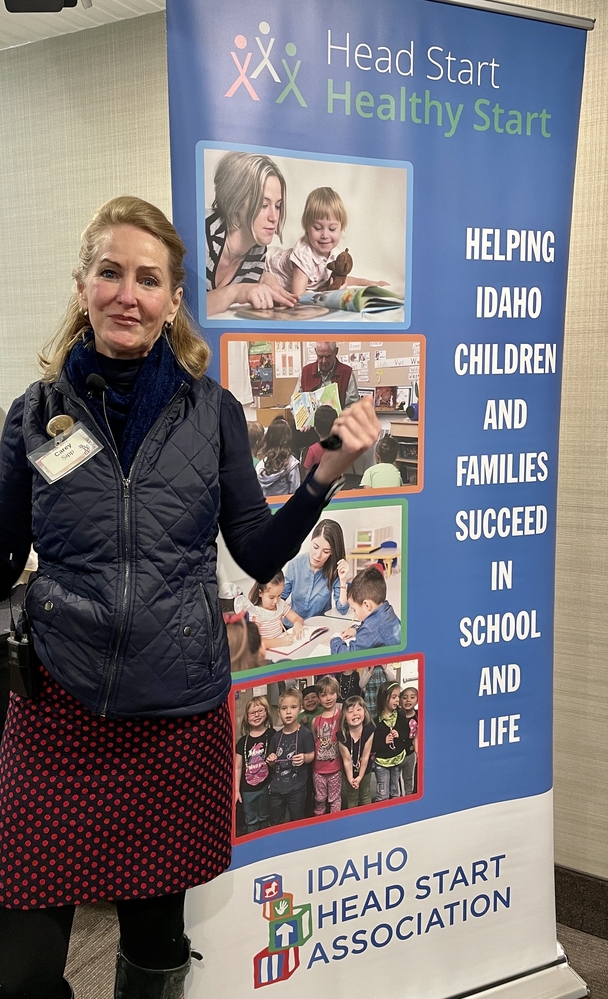
Please contact Carey Sipp, Director of Strategic Partnerships, at csipp@pacesconnection.com

Carey Smith Sipp

Year-end giving to PACEs Connection has become a family tradition for Lisa Hofmeister. ‘This work matches our family’s values.’

Carey Sipp Carey Sipp 12/22/2210:45 AM

A recent photo of Lisa Hofmeister (second from left) with her family.

Note: PACEs Connection is in dire financial straits. We need you, our almost 58,000 members, to help us cover the loss of foundation funding that was promised and did not come through. Unfortunately, staff pay and hours were cut for December.

The good news is that, since sounding the alarm this summer, we’ve raised more than $65,000 thanks to all of your who donated. To get a sense of who your fellow members are, who is donating, and why, please read and share this eighth in a series of donor profiles. Now that you know we need your help, please join Lisa Hofmeister—who, with her mother and brother has made a family gift to PACEsConnection for the last three years—and make a generous tax-deductible year-end donation.

Most people are stunned when they first learn about PACEs science. Lisa Hofmeister is no exception.

With a degree in psychology, a career in healthcare information technology, and a personal interest in equity and restorative justice, Hofmeister was surprised when she heard about the CDC-Kaiser Permanente Adverse Childhood Experiences Study.

“It seemed as though I should have known about this earlier,” she says of the ground-breaking research that was first published in 1998.

Since discovering ACEs Connection, now PACEs Connection, Hofmeister has been an avid follower and supporter of the organization and the PACEs science movement to prevent and heal childhood adversity, and to build healthier and more resilient families and communities.

“Our family chooses a charitable organization to support every year, so I was eager to suggest PACEs Connection, especially given our family’s interest in social justice and grassroots community organizing”, she continues. “I see PACEs Connection as the scaffolding behind a movement—perhaps the most important public health movement of our time. It allows passionate, talented people to collaborate, share inspiration, and innovate by imitating what works.”.

Q: What motivated you to become involved in PACEs Connection?

A: “In 2019 after a local trauma therapist’s presentation about ACEs, brain science, and resilience, I went from complete ignorance to near-obsession. I couldn’t stop thinking about it and couldn’t find enough people to marvel about this powerful ‘root cause’ discovery with me. So I was thrilled to learn that PACEs Connection was already on the case, thoughtfully creating a network and a platform for sharing new research and ideas.”

Q: How do you hope PACEs science will change the world?

A: “I do believe PACEs science can bring paradigm-shifting and compassionate change to a world that desperately needs it. My hope is that, together, we can promote it in a way that invites others to be curious and hopeful in this time of extreme polarization. It has great potential to heal and unite us.”

Q: Why should other members of PACEs Connection provide financial support to our organization?

A: “Sometimes I worry that the sheer volume of PACEs-related groups dilutes the good work that people are doing, and makes it confusing. I admire how PACEs Connection is clearly trying to avoid working in a silo, partnering with groups like CTIPP (Campaign forTrauma Informed Policy and Practice) and providing a platform to connect. This is an invaluable service.”

Q: What is your involvement in a PACEs community?

A: “I recently got connected with the Trauma-Informed Healthcare Education and Research (TIHCER) Community on PACEs Connection and am looking forward to hearing ideas about bringing trauma-informed care into the realm of the electronic health record. I’m also hoping to connect with Wisconsin-based groups focused on trauma-informed care in education.”

Hofmeister encourages fellow members of PACEs Connection to join her in making a generous, tax-deductible donation to PACEs Connection here.

If you’d prefer to mail your gift rather than give it online, here’s how…

Make check payable to:

TSNE (Third Sector New England, our fiscal sponsor) and write PACEs Connection Donation on the memo line.

Mail check to:

mail iconPACEs Connection,

c/o TSNE, 89 South Street

Suite 700

                        Boston, MA 02111

information iconMaking a wire transfer or need Tax ID information?
Please contact Carey Sipp, Director of Strategic Partnerships, at csipp@pacesconnection.com

Carey Smith Sipp

A personal adventure: Asking for help after giving a talk on asking for help

Carey Sipp Carey Sipp 3/14/234:53 PM

Bill Foxcroft, executive director of the Idaho Head Start Association and me with Tommy Sheridan, deputy director of the National Head Start Association.

There’s some irony in asking for help after giving a talk on asking for help.

I’ll explain.

Sitting at the airport in Salt Lake City, two talks for the Idaho Head Start Association completed, I was glancing through the evaluations of my talks—95% were 8+. Whew. Apparently the topic—how asking for help as a single mother of two helped save my family and me—resonated with staff, teachers, and parents in the Head Start program in Idaho.

IMG_7667I loved the audience, love the organization, and am a long-time proponent of early childhood education, intervention, and support. The National Head Start program has served more than 36 million children over its 58-year history. Today more than a million children attend Head Start programs, which employ more than 257,000 people! The talks and new friendships made in Boise were affirming for myself as well.

Next stop? Bozeman, Montana, for a brief visit with my grown children, their respective significant others, and my grandpuppies. It would be my first-ever foray into the “Treasure State” in the worst part of the winter. It was supposed to be -17 degrees in Bozeman when I landed.

When I looked up from the evaluations, I noticed the woman sitting next to me doing something I recognized, and said: “I know that move. You’re checking on a child sleeping behind that column, aren’t you?”

Yes, she replied and told me that she and her daughter, age 11, had been traveling all day from Belgium, where they’d spent time with her parents. We laughed about a similar experience I’d had with my daughter when she was about the same age—we’d spent the night under a desk at the Portland airport waiting to catch a flight to Atlanta.

Geraldine—by that time we’d exchanged names—agreed to watch my things while I went to the ladies’ room. When I returned, she said our flight had been canceled, and that she’d booked the last room at the airport Radisson. I gave her a thumbs up and said I was going to look for an alternate fight.

Maybe I could fly into Billings tonight.

Or rent a car. It was a six-hour-plus drive. The roads were rough. No dice.

IMG_5618 2

No flights to Billings, either.

I started zigging and zagging over the map of Montana to see what else could work, and thought about Helena. It wasn’t that far from Bozeman. Meanwhile the line to the Delta service desk, which was about 100-people deep when I got to the gate, had about 200 people waiting impatiently.

Then, jackpot. There was a flight to Helena—a 90-minute drive from Bozeman—the next morning. Better still,I booked a seat.

I told Geraldine and she started checking availability for the same flight. A few minutes later, she and her daughter, Nelle, booked their seats.

Relief in the air, I made a big ask: Would Geraldine be willing to split the cost of the room and perhaps she, her daughter and I could have a Salt Lake City girls’ night sleepover?

I didn’t know the extent of Geraldine’s world traveling experience at that time, but I could tell she’d sized me up. In the little bit of conversation that we’d had—I’d told her I was coming from giving a talk to the Idaho Head Start Association and that I was eager to see my adult children in Bozeman for the first time in months—she’d decided I was a safe risk. She said yes, and I said I’d pay for the ride to the hotel.

Long story short: We did have the last room at the Airport Radisson. It had two queen-sized beds. Nelle and Geraldine bedded down quickly; they’d had a long day. I sent a few messages to the kids, confirming everything, did an abbreviated cleanup, and went to sleep around 1 a.m., grateful to be in a clean bed instead of trying to sleep in a chair at the airport.

image000000 2

Geraldine, Nelle, and me before heading back to the airport, after our pop-up girls-only Salt Lake City slumber party!

At 6:30 a.m. we headed back to the airport. While waiting, Geraldine and I shared more bits of personal histories. She’d been a college recruiter, and had traveled throughout China, India, and Malaysia before having children. We talked a bit about having daughters, and how grateful I was that my daughter is not a pre-teen at this time when the news about teenage girls and the post-pandemic pressures they are feeling with social media and more, is a great cause of concern. These facts are well-documented in a book I recommended to Geraldine, Girls on the Brink by author and friend Donna Jackson Nakazawa.

When we boarded the plane, our conversation ended; our seats were far apart. After landing, we hugged and thanked each other. My daughter arrived to whisk me away; Geraldine’s husband came to pick up his wife and daughter. And our adventure seemed to come to an end.

But I decided there was something to be learned from writing about this experience.

Later, I texted Geraldine to ask if she was okay if I wrote a story about what we’d experienced in the last 14 or so hours, if I only used their first names and sent it to her first. She was good with that.

And here we are.

I’m back from a great experience of meeting wonderful people who work with Head Start, and spending an incredibly sweet time with my children, during which I thanked them for living so close to each other.

IMG_1645They’d always been close, so when Patrick left Georgia for Montana six years ago, Louisa, who also loves the outdoors, followed suit. They have been rock-solid supports for each other. They know how to ask each other for help when they need it, and they know how to offer support in healthy ways. This served them well when Patrick and a friend of his bought a white-water rafting business, and Louisa helped him with bookings and more for several summers.

There was so much gratitude gained during this brief adventure.

Gratitude for my health, my children and their great relationships with their significant others and amazing dogs. Gratitude that I had enjoyed giving the talks I gave and that they were so well received. Gratitude for the confidence to ask for help and that I’d listened when people along the way told me that asking for help is a sign of maturity. Gratitude that I’d made new connections with people who were enthusiastic about the work being done at PACEs Connection, and how well it aligns with work being done by the thousands of employees at Head Start who are eager, too, to prevent and heal trauma.

Screen Shot 2023-03-14 at 6.46.36 PMWriting this blog was a kind of gift to myself on this March day, which is also my birthday. It is also a way of marking and celebrating these new friendships and possibilities, and affirming the fact that we’re never too old to ask for help, or to have a pop-up, girls-only slumber party.   

Attachments

Hide

Images (6)

mceclip0: Bill Foxcroft, Carey Sipp, and Tommy Sheridan
IMG_7667: Giving keynote on the last day of the Idaho Head Start Association Conference in February.
IMG_5618 2: A long slog in the dark?
image000000 2: Nelle, Geraldine, and me following our "slumber party."
IMG_1645: My daughter, Louisa, daughter-in-law, Libby, and son Patrick at the "family business" in Gardiner, MT.
Screen Shot 2023-03-14 at 6.46.36 PM

Carey Smith Sipp

carey.pacescommunites@gmail.com

❤️ 5👍 1🏆 1

FSU center director wins Lawton Chiles Advocacy Award for work supporting children (news.fsu.edu/news/university-news)


Carey Sipp Carey Sipp 4/12/2311:39 PM
 

Stanley Lynch, chief medical officer of United Healthcare Community Plan, Mimi Graham, director of the Center for Prevention and Early Intervention Policy, Jim Clark, provost and executive vice president for Academic Affairs at Florida State University.
BY: MARK BLACKWELL THOMAS | PUBLISHED:  |
Mimi Graham, director of the Center for Prevention and Early Intervention Policy (CPEIP) at Florida State University, is the winner of the 2023 Lawton Chiles Advocacy Award.
Through 34 years at FSU, Graham’s work has aimed to improve the health of children, particularly from conception through the first 1,000 days of life.
“Mimi Graham has been an extraordinary advocate for children throughout her entire career,” said Vice President for Research Stacey Patterson. “Her research and advocacy have effectively addressed some of society’s most challenging issues related to infants, young children and teens. This award is a deserving recognition of her work, which she never sees as complete.”
Former Florida Governor Lawton Chiles started CPEIP to improve maternal and child health outcomes. Graham’s accomplishments there include leading a statewide infant mental health movement helping to build clinical capacity, co-founding the Florida Association for Infant Mental Health in 2000 and infusing infant mental health into programs across the state. That work includes ensuring judges in Florida’s Early Childhood Courts are trauma-educated and better equipped to address the needs of young children.
“I’m so proud to receive this award named after Governor Chiles, whose vision still inspires my work,” Graham said. “Making Florida a better place for kids is something we should all strive for. We know that through investments in trauma-informed systems and early interventions, we can break multi-generational cycles of abuse and set children up to have healthy lives.”
Graham added: “We need to continue to work to ensure that our state prioritizes these investments in children so that every kid has the resources and care they need to succeed.”
Under Graham, CPEIP has embarked upon a multitude of programs and initiatives including the “Partners for a Healthy Baby” home visiting curriculum, which has served over 20 million families and provides research-based guidance to help expectant families have healthy pregnancies.
CPEIP has attracted more than $100 million in grants for FSU since launching in 1992.
For more information, visit the Chiles Advocacy Award.
Carey Smith Sipp
carey.pacescommunites@gmail.com
👍 1