Tag Archives: education

Lincoln High School in Walla Walla, WA, tries new approach to school discipline — suspensions drop 85%

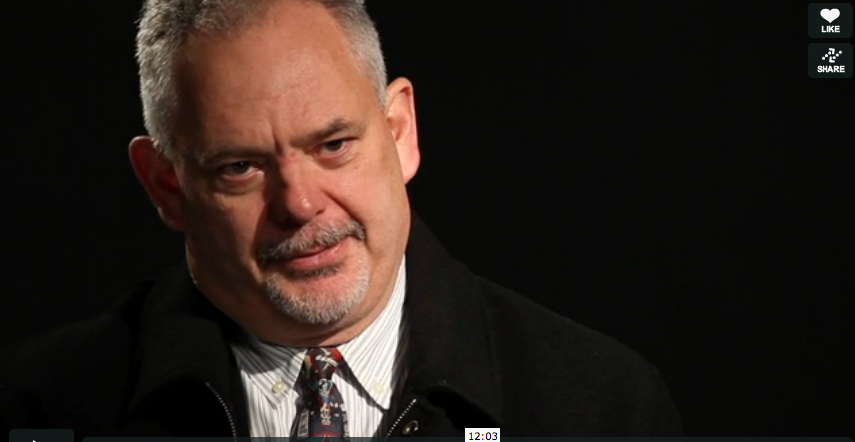
Jane Stevens Jane Stevens 4/23/124:30 PMJim Sporleder, principal of Lincoln High School

THE FIRST TIME THAT principal Jim Sporleder tried the New Approach to Student Discipline at Lincoln High School in Walla Walla, WA, he was blown away. Because it worked. In fact, it worked so well that he never went back to the Old Approach to Student Discipline. This is how it went down:

A student blows up at a teacher, drops the F-bomb. The usual approach at Lincoln – and, safe to say, at most high schools in this country – is automatic suspension. Instead, Sporleder sits the kid down and says quietly:

“Wow. Are you OK? This doesn’t sound like you. What’s going on?” He gets even more specific: “You really looked stressed. On a scale of 1-10, where are you with your anger?”

The kid was ready. Ready, man! For an anger blast to his face….”How could you do that?” “What’s wrong with you?”…and for the big boot out of school. But he was NOT ready for kindness. The armor-plated defenses melt like ice under a blowtorch and the words pour out: “My dad’s an alcoholic. He’s promised me things my whole life and never keeps those promises.” The waterfall of words that go deep into his home life, which is no piece of breeze, end with this sentence: “I shouldn’t have blown up at the teacher.”

Whoa.

And then he goes back to the teacher and apologizes. Without prompting from Sporleder.

“The kid still got a consequence,” explains Sporleder – but he wasn’t sent home, a place where there wasn’t anyone who cares much about what he does or doesn’t do. He went to ISS — in-school suspension, a quiet, comforting room where he can talk about anything with the attending teacher, catch up on his homework, or just sit and think about how maybe he could do things differently next time.

Before the words “namby-pamby”, “weenie”, or “not the way they did things in my day” start flowing across your lips, take a look at these numbers:

2009-2010 (Before new approach)

  • 798 suspensions (days students were out of school)
  • 50 expulsions
  • 600 written referrals

2010-2011 (After new approach)

  • 135 suspensions (days students were out of school)
  • 30 expulsions
  • 320 written referrals

“It sounds simple,” says Sporleder about the new approach. “Just by asking kids what’s going on with them, they just started talking. It made a believer out of me right away.”

________________

The dark underbelly of school discipline

Take a short walk on the dark side of our public education system, and you learn some disturbing lessons about school punishment.

First. U.S. schools suspend millions of kids — 3,328,750, to be exact. Since the 1970s, says a National Education Policy Center report published in October 2011, the suspension rate’s nearly doubled for white kids, to 6%. It’s more than doubled for Hispanics to 7%, and to a stunning 15% for blacks. For Native Americans, it’s almost tripled, from 3% to 8%.

Second. If you think all these suspensions are for weapons and drugs, recalibrate. There’s been a kind of “zero-tolerance creep” since schools adopted “zero-tolerance” policies. Only 5% of all out-of-school suspensions were for weapons or drugs, said the NEPC report, citing a 2006 study. The other 95% were categorized as “disruptive behavior” and “other”, which includes cell phone use, violation of dress code, being “defiant”, display of affection, and, in at least one case, farting.

Third. These suspensions don’t work for schools. Get rid of the “bad” students, and the “good” students can learn, get high scores, live good lives. That’s the myth. The reality? It’s just the opposite. Says the NEPC report: “…research on the frequent use of school suspension has indicated that, after race and poverty are controlled for, higher rates of out-of-school suspension correlate with lower achievement scores.”

Fourth. They don’t work for the kids who get kicked out. In fact, these “throw-away” kids get shunted off a possible track to college and onto the dead-end spur of juvenile hall and prison.

“Studies show that one suspension triples the likelihood of a juvenile justice contact within that year,” California Chief Justice Tani Cantil-Sakauye told the California Legislature last month. “And that one suspension doubles the likelihood of repeating the grade.”

Fifth. All these suspensions have led many communities to create “alternative” schools, where they dump the “bad” kids who can’t make it in regular public school. Lincoln High School was set up as one of those alternative schools.

How Mr. Sporleder stumbled across an epiphany in Spokane

It’s the Spring of 2010, and Jim Sporleder’s mind more or less silently exploded.

This is the guy with 25 years experience as a principal. In Walla Walla, he’s got a rep for really connecting with kids. He preaches “discipline with dignity”.

John Medina – a developmental molecular biologist who’s an improbable cross between an old-time rip-snortin’ preacher and Jon Stewart – just drilled a hole in Sporleder’s brain and dropped this in:

Severe and chronic trauma (such as living with an alcoholic parent, or watching in terror as your mom gets beat up) causes toxic stress in kids. Toxic stress damages kid’s brains. When trauma launches kids into flight, fight or fright mode, they cannot learn. It is physiologically impossible.

Sporleder was three years into an exhausting stint as principal of the Lincoln Alternative School. He’d asked for the position after reading a report about the troubled school. The report quoted a couple of Lincoln High’s kids: “We’re the dumping ground,” one said. “Who cares about us,” another said. It wasn’t a question.

“That report riveted me,” says Sporleder. “I’m a person of faith. I felt called to come over here.”

Gangs controlled the school. It had only 50 students, but they were the toughest in the school system – the kids who’d been kicked out of other schools. Lincoln was their last chance.

“I didn’t know if I was going to make it,” recalls Sporleder. “We had some pretty rough kids. It took me quite a while to get on top of that.”

And then, at the behest of Teri Barila, co-founder of the Children’s Resilience Initiative in Walla Walla, he goes to this meeting where this guy who’s part comedian, part evangelist, part scientist (and best-selling author of Brain Rules) more or less tells him that this “discipline with dignity” stuff is, well, useless. Punishing misbehavior just doesn’t work. You’re simply adding trauma to an already traumatized kid.

“He explained it in lay terms,” says Sporleder. “I got it.”

Now, some people who are well into their careers can’t handle a paradigm shift. It’s overwhelming. That’s mostly because it’s just too much trouble to change the way you do…everything.

Spoiler alert: Sporleder isn’t one of those people.

He returned from Spokane to light a fire under his teachers. He felt compelled to figure out a way to do something different to reach his kids, but wasn’t sure exactly how. Teri Barila was in a perfect position to assist.

This is your (damaged) brain on ACEs

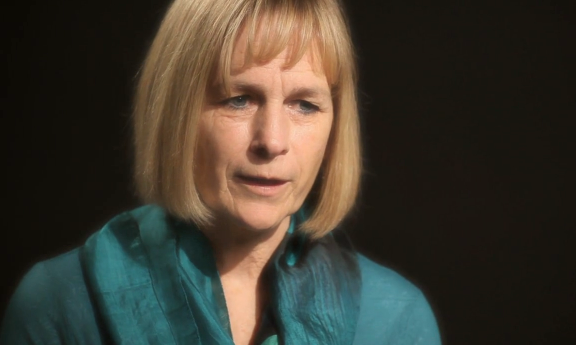
Really good ideas that help people solve problems often take such a long time to move from research to implementation that it can cost a community millions of dollars. Twenty years ago, Washington State created a state network — the Family Policy Counciland 42 community public health and safety networks — to share good information FAST to tackle a big, expensive problem: the high rates of child abuse and youth drug and alcohol abuse in the state. Teri Barila, a former fish biologist, leads the network in Walla Walla, a city of about 30,000 people in southeastern Washington.Teri Barila
About 10 years ago, the council caught wind of two major game-changing discoveries. One was the CDC’s Adverse Childhood Experiences Study (ACE Study). It showed a stunning link between childhood toxic stress and the chronic diseases people developed as adults. This includes heart disease, lung cancer, diabetes, some breast cancer, and many autoimmune diseases, as well as depression, violence, being a victim of violence, and suicide.

The ACE Study measured 10 common types of childhood trauma. Five were the usual suspects: emotional, sexual and physical abuse, and emotional and physical neglect. Five were family problems: a parent addicted to alcohol or other drugs, seeing a mother being abused, a family member in prison, a family member diagnosed with a mental illness, and a parent who’s disappeared through abandoning the family or divorce. (Although the word “trauma” is more commonly used to describe physical injury, in this milieu, it refers to any experience that causes toxic stress.)

The study’s researchers came up with an ACE score to explain a person’s risk for chronic disease. Think of it as a cholesterol score for childhood toxic stress. You get one point for each type of trauma. The higher your ACE score, the higher your risk of health and social problems.
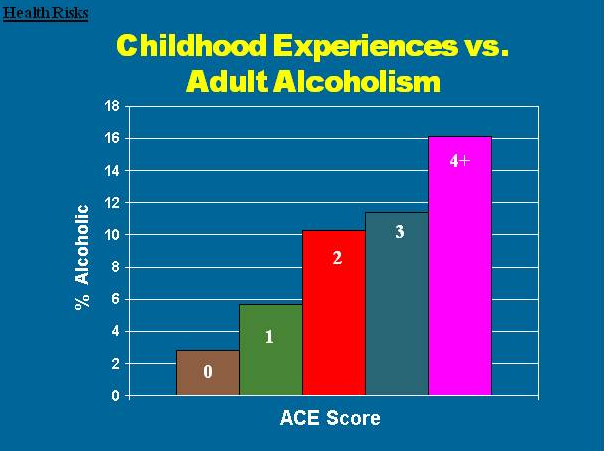
A whopping 70 percent of the 17,000 people in the study had an ACE score of at least one; 87 percent of those had more than one. With an ACE score of 4 or more, things start getting serious. The likelihood of chronic pulmonary lung disease increases 390 percent; hepatitis, 240 percent; depression 460 percent; suicide, 1,220 percent.

The percentages climb to grim and astounding levels as the ACE score climbs – people with an ACE score of 6, for example, have a 4,600 percent increase in the risk of becoming an IV drug user. Grow up with an ACE score of 10, and you’re likely to find yourself homeless, in prison for life, or end up dead by your own hand. People with high ACE scores die, on average, 20 years earlier than those with low ACE scores.

By the way, lest you think that the ACE Study was yet another involving inner-city poor people of color, take note: The study’s participants were 17,000 mostly white, middle and upper-middle class college-educated San Diegans with good jobs and great health care – they all belonged to Kaiser Permanente, a health maintenance organization. As Dr. Robert Anda, one of the co-founders of the ACE Study says, “It’s not them. It’s us.”

The second game-changing discovery explained why childhood trauma had such tragic long-term consequences: Toxic stress physically damages a child’s developing brain. This was determined by a group of researchers, including neurobiologist Martin Teicher and pediatrician Jack Shonkoff, both at Harvard University, and neuroscientist Bruce McEwen at Rockefeller University. In a nutshell, toxic overdoses of stress hormones stunt the growth of some parts of the brain, and fry the circuits in others.
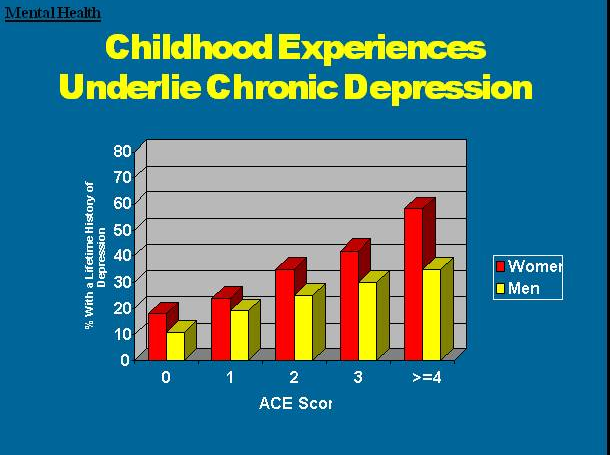
Children with toxic stress live their lives in fight, flight or fright (freeze) mode. They respond to the world as a place of constant danger. They can fall behind in school, fail to develop healthy relationships with peers, or develop problems with authority because they are unable to trust adults. With failure, despair, and frustration pecking away at their psyche, they find solace in food, alcohol, tobacco, methamphetamines, inappropriate sex, high-risk sports, and/or work. They don’t regard these coping methods as problems. They see them as solutions to escape from depression, anxiety, anger, fear and shame.

When Barila learned all this at a meeting that the Family Policy Council organized, it chilled and angered her. Determined to do something about it, she co-founded the Children’s Resilience Initiative to educate the Walla Walla community about ACEs and to build resilience to combat ACEs.

Barila brought Natalie Turner, an expert in creating trauma-free schools, to town to help Sporleder and his teachers.

Natalie Turner’s two simple rules for dealing with troubled students

When she met with the Lincoln High staff, Natalie Turner, from Washington State University’s Area Health Education Center, picked up right where John Medina, who lit up Sporleder’s brain, left off.

Toxic stress comes from complex trauma, she said.

Complex trauma ain’t pretty.

It’s when your dad’s in prison AND your mom’s a meth addict AND she’s too drugged out to move in the mornings, so you’ve got to take care of your little brother, get him fed and off to school, AND you’re despairing about being evicted for the third time because she hasn’t paid the rent and the landlord’s screaming at you to do something.

Or your dad’s a raging alcoholic AND he beat the crap out of your mom again last night AND the cops came and took him away at 2 a.m. AND the EMTs took your mom to the hospital and you hardly slept a wink and you’re frantic with worry because you don’t know what’s going to happen, but you’ve got to stay cool or otherwise you’ll have a complete meltdown.

Or your fat step-dad’s sneaking into your bed in the middle of the night AND you’re too terrified to move because he says if you say anything he’ll kill you and your sister and your mom, who’s depressed AND doesn’t talk much anyway.

Teens who live with complex trauma are walking post-traumatic stress time bombs, says Turner. They teeter through their days. The smallest incident can push them into a full-blown meltdown. Some kids run away. Some explode in rage. Some just mentally check out.
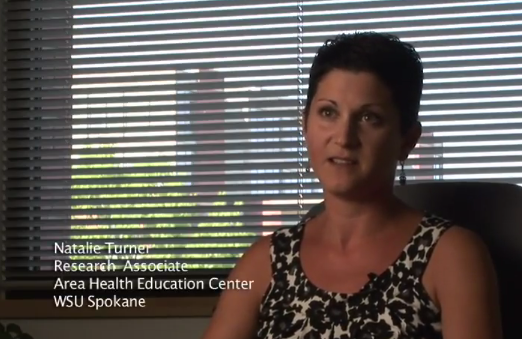
“In flight, fight or freeze mode,” Turner explains, “survival trumps everything else.” So when a kid who’s got complex trauma feels threatened or overwhelmed, exploding in rage at something that most people wouldn’t even shrug over is a perfectly normal response.

That’s worth repeating: exploding in rage, getting pissed off, stomping, hitting….it’s all normal. Until a school helps kids learn how to control their emotions, they’ll just keep losing it. For some kids, erupting is a stress reflex response.

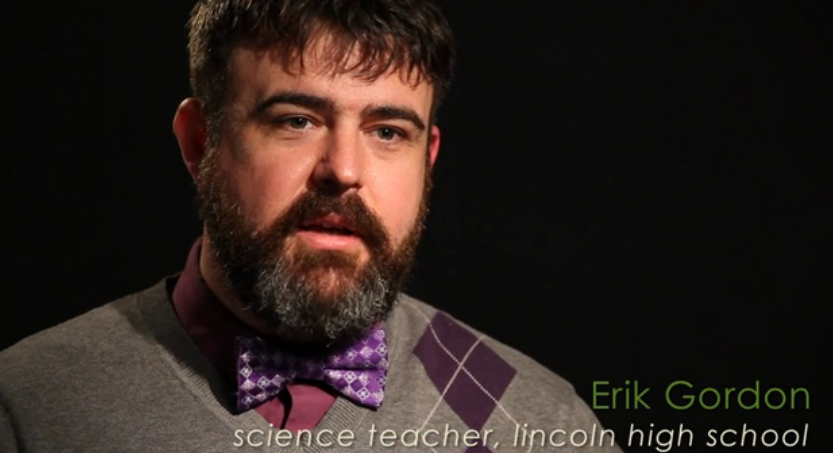
“That’s the hardest pill to swallow,” says Erik Gordon, a science teacher at Lincoln High. “Trying to figure out how much of their behavior is from a choice and how much is outside their control. It’s a drag when you believe it’s outside their control, because all of the easy disciplinary action doesn’t work.”

There are just two simple rules, says Turner.

Rule No. 1: Take nothing a raging kid says personally. Really. Act like a duck: let the words roll off your back like drops of water.

Rule No. 2: Don’t mirror the kid’s behavior. Take a deep breath. Wait for the storm to pass, and then ask something along the lines of: “Are you okay? Did something happen to you that’s bothering you? Do you want to talk about it?”

It’s not that a kid gets off the hook for bad behavior. “There have to be consequences,” explains Turner. Replace punishment, which doesn’t work, with a system to give kids tools so that they can learn how to recognize their reaction to stress and to control it. “We need to teach the kids how to do something differently if we want to see a different response.”

Kids need adults they can count on, who they know will not hurt them, and who are there to help them learn these new skills, Turner tells the Lincoln High staff. If it’s not happening at home, it had better happen at school. Otherwise that teen doesn’t have much of a chance at life.

(For those of you who are interested in the underlying model that guides Turner’s teaching, it’s the ARC model developed at the Trauma Center at Justice Resource Institute. Turner and her co-workers were also influenced by the trauma-sensitive classroom movement, for which more information can be found in The Purple Book, published by Massachusetts Advocates for Children.)

The red zones of Lincoln High

The Lincoln High staff took Turner’s information and flipped its system of school discipline like a pancake.

The changes began in the classroom. “Teachers started becoming detectives,” says Gordon. “We began focusing our concern on what we know that’s going on that might be causing behavior in a kid,” versus what type of punishment to mete out.

When a kid erupts in class, teachers intervene quickly. “A kid that I have a really great relationship with might blow up,” says Gordon. “So, I step out of the classroom with that kid and ask: ‘What’s going on? Because that was really intense.’ I know that something is bumming this kid out, because normally, we really enjoy each other.”
Other responses include:

  • “Class isn’t working today, how about taking a time out with Shelly (in the ISS Room) so that you can get yourself calmed down?”
  • “I feel that I really blew it and I feel like I have set you off. I want to apologize and see if there is anything that I can do to help you.”
  • “You seem really upset, would you like to speak to someone in the Health Center?”

If it escalates to principal level, Jim Sporleder uses his infamous zone system: red, yellow and green. Here’s how that works:

Three boys don’t respond to their teacher, who asks them politely, but firmly to leave class and talk with the principal. Although three fuming teens sit down in front of Sporleder, he sees three brains under extreme stress, unable to take in anything useful or to solve a problem.

“You’re in the red zone,” he tells them succinctly. He doesn’t yell. He doesn’t roll his eyes. There’s no body language that says “I can’t stand you kids,” because he actually thinks the world of them.

“Let’s meet tomorrow morning. You’re going to take the rest of the day and night to process this.” (Sometimes Sporleder has found himself in the red zone, and tells the kids: “I’m in the red. I don’t want to make any decisions that could come from my own anger or stress. Let’s take a break and meet later.”)

The next morning, Sporleder says, all three approach him and say they’ve talked over the problem with the teacher, have apologized and figured out a solution. “We’ve got it all worked out,” they explain.

“That’s more common than not these days,” says Sporleder.

But if they had refused to apologize to the teacher and refused to solve the problem, or their infraction was more serious, they would have gone to ISS – in-school suspension.

“I don’t have kids arguing about the consequences,” says Sporleder.

Well…mostly he doesn’t. Sometimes he still gets kids asking to be suspended to home instead of in school, which tells him that ISS may be more uncomfortable, but it’s more effective. In that quiet room, they can’t distract themselves with TV, video games or drugs. A staff member offers conversation – about how the teen is dealing with the incident, or other issues in her or his life. Other teachers stop by to make sure the teen is caught up on homework.

“At home, there’s no accountability,” he explains. During in-school suspension, the teens can’t escape their issues. It’s not fun to have to give up old beliefs and habits. But they all get lots of support to get into the green zone.

“We tell our kids we love them,” says Sporleder. “They’re important to us.”

The third big change occurs in the school’s monthly staff meetings. Instead of talking about disciplining problem kids, they focus on why that teen’s having problems, develop a plan to help the teen, and make sure to follow up.

In the last two years, the Lincoln High staff has noticed that the kids’ ability to regulate their own emotions has dramatically improved. “There’s not near the number of huge emotional explosions that there used to be,” says Gordon. “Even the way the kids interact with each other is more subdued.”

They way the kids see it is that the teachers have chilled out.

What else do the kids say?

At Lincoln High, the kids not only live ACEs, but they talk them.

As senior Heidi Schoessler, 18, explains it: Students have ACEs (adverse childhood experiences). Those are the bad things going on in their lives. Resilience factors – such as asking for help, helping a friend, experiencing success, having hope — trumps those ACEs. They’re beginning to learn about those resilience factors in school and in the school’s health clinic.

When Schoessler showed up at Lincoln, she couldn’t be in a classroom with more than two or three people at a time, says Sporleder. She’d been bullied and harassed so much in elementary and middle school, that being around too many students caused a stress response that made her sick. Sixteen-year-old Aron Wulf was so withdrawn, he hardly talked. Jordan Massey, 17, had anger issues. Brendon Gilman, 15, who was removed from a family of meth addicts and has lived in several foster homes, says in this video about The Health Center at Lincoln High he was so angry with life that he didn’t care about the future because he was so mad about the present.

Today, all four chat easily about the school and its changes. Gilman went from failing grades to A’s. Schoessler’s taking college classes. Wulf is active in the production of the school play. All four do presentations for the community about the changes in the school.

“I got here, and my whole high school experience flat-out changed,” says Massey, a junior who transferred in halfway through his freshman year. “People came up to me and greeted me. It felt like I had real friends here. I loved it. I call it my home away from home. It really feels like a family here. The teachers are amazing. That’s how a high school should be.”

Here’s how Wulf describes the changes in his life: Shortly after he was born, his parents divorced. He’s been living with his mother. When he was younger, he spent every other weekend with his father.

“My dad’s verbally abusive. He has a really bad temper,” Wulf says quietly. “My mom has always been sick in bed pretty much. The people who should have been around were never around, basically. She has problems with depression and what not. She might commit suicide. There are financial issues.”

When he talks about Lincoln, his voice gets strong, and hopeful. “Lincoln’s the first school I’ve been to that I actually loved,” he explains. “It was the first time I ever felt that somebody actually cared to hear my story to know how I was feeling. My own teachers understand me better than my mom does.”

Wulf is an example of the type of quiet, isolated student that Dr. Vincent Felitti, co-founder of the CDC’s ACE Study, advises educators to “make sure you always connect with,” says Sporleder. The quiet students – the ones who respond to toxic stress with “fright” or “flight” – sit quietly in the back of the room with their heads down. They’re often labeled as “lazy” or “unmotivated”. They might not be as loud or belligerent as those who drop into “fight” mode, but they’re hurting just as much.

“I’m always looking for kids who are isolated,” says Sporleder.

“What is happening at Lincoln is completely different,” says Schoessler. “There’s so much more of a caring atmosphere. Students will come to the teachers when they need help. It’s something I have never seen in any other school.”

Even in-school suspension is useful, says Gilman, who spent time in ISS for getting in a dust-up with his ex-girlfriend at school. “I couldn’t handle being around her,” he says. “It kind of helped, even for just the day, to be away from everyone and everything, including her. It helped me reflect why I was there and why I had acted the way I did — without someone telling me how I’m wrong for what I did. It helped me look at the situation and what I can do to prevent it from happening again.”

School’s ACE survey helps kids, teachers understand each other

The kids talk ACEs because, as part of a science class on data and analysis, they developed a survey of 96 questions that include the shortened version of the ACE survey.

“It is so invasive,” says Sporleder, barely suppressing a shudder. “If an outsider developed it, it would never have been used.”

Since the original research in San Diego, 18 states have done ACE surveys, including Washington. If not the first high school in the U.S., Lincoln is certainly among the first in the U.S. to do its own ACE survey.

The survey’s anonymous, and students can skip questions if they want to. Some examples:

  • “Has there ever been an adult in your household that has hit you so hard that you had marks or were injured?” One-quarter of the kids said yes.
  • “How many sexual partners have you had? Ten percent said 4 to 6.
  • “Have you ever been forced to do something sexual that you didn’t want to do?” Almost 20 percent said yes.

The results show that these kids are grappling with way more than any kid – or adult, for that matter — should:

  • 25% of the students are homeless.
  • 84% have lost a loved one.
  • 66% feel abandoned by their parents.
  • 65% have an immediate family member in jail.
  • 80% have suffered serious depression
  • 50% live with someone who abuses alcohol or other drugs.

The survey’s useful, says Gilman, because “it gives you this feeling that ‘I’m not the only person who’s gone through that’. It’s easier to interact with people and to understand the way some people act.

The staff uses the survey to help understand the level and intensity of the teens’ stress. They also use it to teach the students that they cannot control and are not accountable for the trauma they have endured.

“When students understand they’re not responsible for the family they were born into, but they are responsible for who they will become as adults, and when they can see the power in that, it’s just amazing what happens,” Barila says in the Health Center video.

The grim reality is that the average ACE score for the teens at Lincoln High is 4.5. These kids are at high risk for developing chronic diseases when they’re older, becoming violent or being a victim of violence, suffering from depression or committing suicide.

ACE Study co-founder Dr. Robert Anda says that the study exposed “a chronic public health disaster”. So if a teen’s bad behavior or isolation or lack of motivation is a normal response to complex trauma, then that behavior is also a health issue. That’s what pediatrician Alison Kirby says.

The Health Clinic at Lincoln High

Four years ago, says Sporleder, “we needed a doctor to provide physicals for our first boys basketball team. Dr. Alison Kirby, a local pediatrician, volunteered to do all the exams for free.

“When’s the last time you had a physical?” she blithely asked the first boy. Ten years ago, he answered, before he started first grade. Her eyebrows shot up. She asked another. Never, he said.Dr. Alison Kirby

Kirby was appalled. She didn’t realize that there were children in Walla Walla who hadn’t seen a doctor in 10 years.

“In my regular clinic, I see with kids with insurance,” says Kirby. “The students at Lincoln are a different group of kids. They are invisible. It doesn’t really connect with most people in this community that these kids are the future of our small town. Once you do see it, it’s unethical to look away.”

In all communities, kids are the future – a costly future or a beneficial future. They grow up to live out their lives in healthy or unhealthy ways, in ways that contribute to the growth and health of their community or to the economic and emotional afflictions. And how they live their childhood determines their future. If a large number have high ACE scores, then the community ends up spending more money for cops, courts, prisons, welfare, social services, medical and mental health than for schools, playgrounds, community pools, and libraries. People working in education, prisons, child welfare agencies and juvenile justice have known this intuitively for a long time. Now the research proves it.

Kirby didn’t look away. She cajoled, rounded up, lobbied, wheedled, coaxed, prevailed upon, inveigled and persuaded the community to step up, fund and volunteer at a health clinic that’s right next to the school. Open 10 a.m. to 2 p.m., five days a week, it’s the only school health center in eastern Washington.

Kirby expected 90 percent of the clinic work to be “treating asthma, infections, stitches.” It turns out that 90 percent of the work focuses on the kids’ mental health.

“What we were finding is that there are not enough psychologists and counselors to go around,” she says. Given the toxic stresses that the kids are dealing with, she says, it’s no surprise.

“If your brain isn’t healthy and you’re not doing well, your body physically isn’t going to do well, either,” says Katherine Boehm, clinic coordinator in the health center video. “If you are struggling with depression or anxiety, you’re going to have a much harder time concentrating in school and being able to complete your work.”

The staff at the health center uses the student ACE survey to develop programs and services that help the kids learn skills to build resilience, specifically to:

  • create social connectedness
  • provide concrete support in times of need
  • teach social and emotional competence

Last year, 175 of the school’s 200 students made 1,500 visits to the clinic. Still, nearly 20 percent of the students “still don’t trust us,” says Kirby. “They’re so beat up emotionally that they have huge vulnerability issues. They’ll come in with a friend for 6 months to a year before they come on their own.”

Part of that reticence comes from their treatment at other clinics. They have homemade tattoos and shaved eyebrows. They might smell bad because they’re homeless and haven’t been able to take a shower for three days. “At a big clinic, if they’re judged on appearance or smell,” says Kirby, “they get treated badly and the kids won’t go back. We accept them for who they are. Their future is more important than their past.”

Some have lived in dysfunctional families for so long that they don’t know what healthy is, so they’re vulnerable to abusive relationships, says Kirby. One 15-year-old girl, desperate for interaction with a loving adult, went online and found a “foster-daddy”.

“She got a ride 50 miles to a bigger city, where he was,” says Kirby. “She had severe depression, was “cutting”. His solution was to beat her.” The clinic treated her festering wounds and talked with her about healthy relationships.

“Many of these kids don’t have a parent who says ‘I love you’ and means it,” says Kirby. “Instead it’s ‘I love you, so now go score some dope for me’.

Kirby and the staff want to provide the support for the students to heal and to develop enough self-confidence to live healthy lives. For some, that means living different lives than their families are living. Many education experts say that kids wouldn’t have problems if their parents would just get involved. But the parents of most of the students at Lincoln HIgh are themselves are struggling with the effects of their own childhood trauma, and many are passing the trauma on to their children.

As Kirby puts it: “Their family is in a plane that’s going to crash. We tell them: ‘You’re going to parachute out. You’re going to college.’ Their family is likely to say to them: ‘Hey you in the parachute — get back in this plane. We need you to go to work and support us.’ The people in the plane give lots of pushback: ‘What? You’re too good to be with our family now?’ Sometimes kids change back. Sometimes kids get healthy and say: ‘I don’t want to live like that anymore.’”

Lincoln High’s metamorphosis is just beginning

Natalie Turner says that of all the schools she and her co-workers at the Area Health Education Center work with, “Lincoln’s at the top of the list.”

One of the keys has been a staff that embraces two basic concepts: toxic stress prevents kids from learning, and moving from a punitive approach to a supportive, educational approach changes behavior. Gordon says it’s also the unconditional love that the teachers at Lincoln High show the kids on a regular basis.Lincoln High School, Walla Walla, WA

“Watching Jim Sporleder’s paradigm shift over the last five years has been just awesome,” says Gordon. “I’ve seen that guy cry talking about our kids. Lincoln is just a collection of staff that unconditionally love these kids. The rest is just mental hoo-ha.”

The mental hoo-ha has allowed and encouraged that kind of overt love, caring and support that’s characteristic of Lincoln and that inspires many people to go into the teaching profession. Turner has worked with educators who just won’t budge from clinging to a system that clearly shows no progress in helping the “troublemakers” and “unmotivated” students.

“If the staff aren’t ready, there’s no point in going in and trying to move a system,” she says. “There have been a couple of schools where they’ve had a very resistant staff, and we’ve decided to leave and try again another time.”

Although it’s made significant changes, Lincoln’s not finished, says Sporleder. “Part of what we’ve done is the relationship piece,” he explains. “That’s the powerful piece – we’ve built strong relationships with our kids. Now I want to move forward to help kids understand how resilience trumps ACEs.

Since he’s found no guidelines for this part, he’s trying this approach: He’s put together a chart that hangs on a wall in his office. It shows ACEs and, on red cards, the qualities of resilience that can overcome those ACEs.

He’s asked some students to read the ten ACEs and tell him how many they have, says Sporleder. “I never ask them which ones. And then we start talking about resilience. I share with them qualities that I have seen them demonstrate that build that resilience.”

One student told him: “I get it — the more red cards you have the greater the chance it trumps your ACEs.” Sporleder emphasizes how important it is for them to connect with positive caring adults to help them to continue to build their character and to build their resilience.

The changes at Lincoln have not eliminated expulsions. And the school hasn’t done the analysis to know for certain if the changes have resulted in better grades and attendance.

Nevertheless, Lincoln’s results are showing the community that change is possible. If suspensions can be reduced by 85 percent among teens whom most of the community had given up on, if they can blossom into happy kids who suddenly see themselves as having a future, perhaps the same changes can occur in other settings.

“We intentionally focused on Lincoln as a pilot of sorts,” says Barila, “with the full support of the assistant superintendent, so we could learn what strategies work and how, so we could then ‘pass it on’ throughout the school district.”

The next chapter, she says, is to see if the rest of the schools in the district can accomplish similar results. That includes Walla Walla High School, with its 2,000 students and larger class sizes, as well as six elementary schools, two middle schools, a Catholic school system and a Seventh Day Adventist school.

There’s little doubt that many of the 6,000 other kids in Walla Walla’s school district have adverse childhood experiences, too. Perhaps they don’t have ACE scores as high as Lincoln students, but ACE scores are more common than not. According to Washington State’s 2009 ACE survey, 62 percent of the state’s population has at least one ACE, and 27 percent have an ACE score of 3 or more.

But Lincoln alone can’t make enough changes to help every child, says Barila. “That social-emotional competency has to be built in soooo much sooner than Lincoln,” she notes. The goal of the Children’s Resilience Initiative is to educate the entire community about adverse childhood experiences, the effect of toxic stress on kids’ brains, and to encourage all organizations, agencies, clinics and youth groups to build and increase resilience factors. That’s why she named the organization the Children’s Resilience Initiative and not the ACEs Education Initiative, she says.

Still, if other schools adopt this approach, it won’t be easy, says Sporleder. He knows that his peers discipline “like I used to discipline. I think our educational system reacts to the action. We need to respond to what is causing the action.

“This is such a paradigm shift, you have to believe in it to make change happen,” Sporleder says. “The administration has to show support. That’s what I’ve seen. You’ve just gotta believe in it. You’ve gotta know that it’s true.”

Jane Stevens
Publisher, ACEsTooHigh.com
Founder, PACEs Connection

Views: 1,616

Add Comment

Carey SippCarey SippFormats 

javascript:””

Comments (6) 

Newest · Oldest · Popular

Jane StevensJane StevensPublisher, ACEsTooHigh; founder, PACEs Connection

Thank you, Shelley. The school staff continue to do amazing work.


FMFormer Member

This article is a mind-blower.  Thank you, Jane for posting!  Amazing!


Jane StevensJane StevensPublisher, ACEsTooHigh; founder, PACEs Connection

I think so, too! 


Vincent J. Felitti, MDVincent J. Felitti, MDMember

This was a tremendously impressive place to visit.  It deserves a documentary TV show to illustrate what’s being done about problems that generally are comfortably not acknowledged or understood.  


Jane StevensJane StevensPublisher, ACEsTooHigh; founder, PACEs Connection

Thanks, Laura!


FMFormer Member

Wonderful article. Thanks, Jane!

Building Resilience is a Team Effort that Starts Early

Porter Jennings-McGarity Porter Jennings-McGarity 11/30/236:34 PM

(Note – Posting this as it is about a program the late Deborah McNelis and I created and delivered via PACEs Connection to the North Carolina Foster Family Alliance. It was underwritten by Healthy Blue, with Communities in School of Brunswick County, NC, as our fiscal sponsor.)

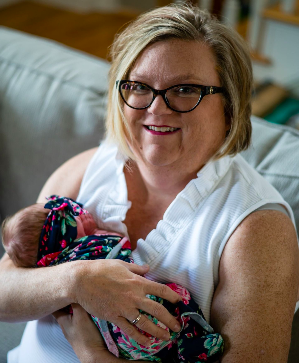
“YES!” was the response of Gaile Osborne, executive director of Foster Family Alliance of North Carolina (FFANC), when asked for input on a new program to help foster and kinship care families learn how to support the brain development of young children.

Screen Shot 2023-11-30 at 7.54.42 PM

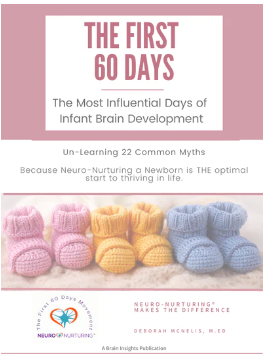
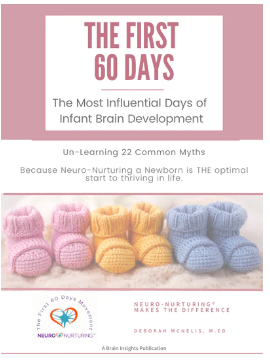
“I love these Brain Insights materials. How soon can we start?” said Osborne upon receiving the “The First 60 Days” booklet on myths about newborns and their caregivers and the eight “Neuro-Nurturing” ringed books.

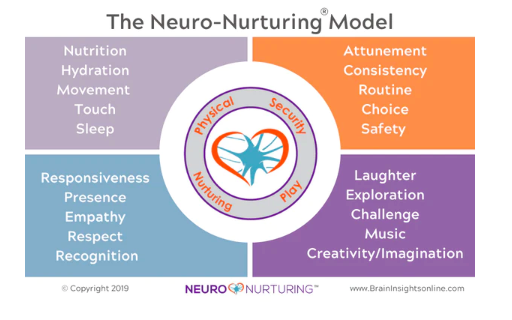
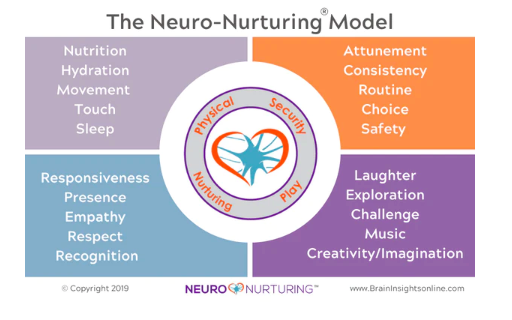
The materials delivered through a program created by PACEs Connection will support parents in “Neuro-Nurturing” – providing the consistent love, healthy touch, connection, and attention proven to support healthy brain development – for ages newborn through five, beginning with secure attachment in the early months and covering overall optimal development throughout the series. The four areas in the model for “Neuro-Nurturing” are physical needs, security, nurturing, and play.

Screen Shot 2023-11-30 at 7.30.30 PM

Blue Cross and Blue Shield of North Carolina’s (Blue Cross NC’s) Healthy Blue Medicaid plan provided funding to offer these materials, as one component of several years of programming designed to support families and caregivers.

“Healthy Blue has been a terrific partner since 2021,” said Carey Sipp, director of strategic partnerships for PACEs Connection.

Screen Shot 2023-11-30 at 7.27.07 PM

Part of this funding enabled six North Carolina counties to join the PACEs Connection Cooperative of Communities, which offers peer-to-peer support, a monthly training and think tank for its member communities, and purchase of the materials for the FFANC program.

“We decided we could help children and families best by supporting caregivers.”

Screen Shot 2023-11-30 at 7.37.43 PM

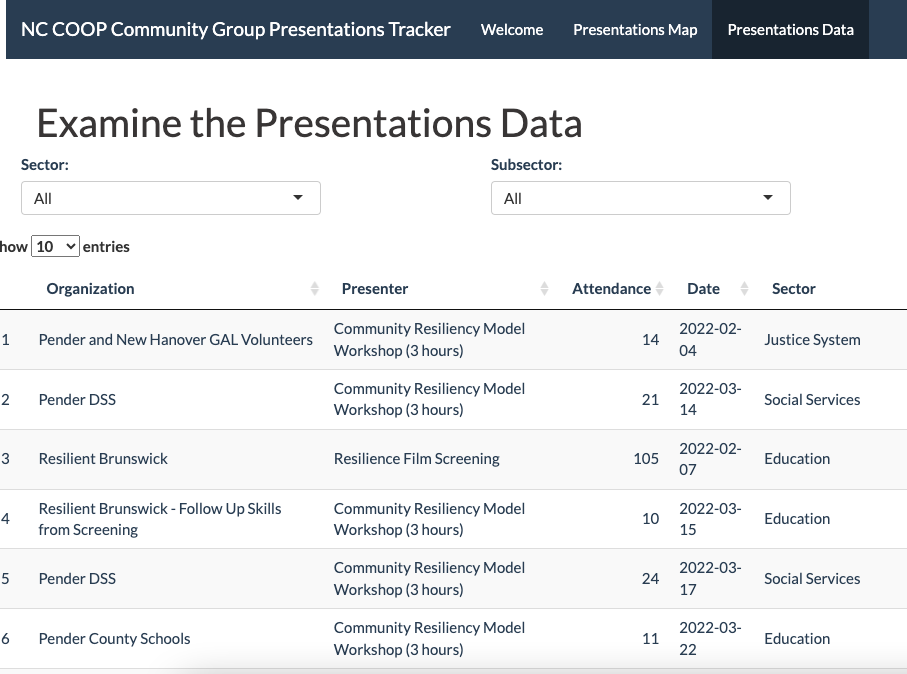
“The first year of the work was during the pandemic. We held a focus group with some Department of Social Service (DSS) county-level supervisors and caseworkers and other family-supporting professionals from several counties to see how we could best achieve the objectives, and we decided we could help children and families best by supporting caregivers. The stress caregivers were under was intense. Our efforts to promote the Community Resiliency Model (CRM) training was very well received by DSS professionals,” said Sipp.

“With Healthy Blue’s support, we decided to share the CRM training widely, as it is designed to help create more ‘trauma-informed’ and ‘resiliency-focused’ communities by helping members of the communities learn how, when stressed, to self-regulate and co-regulate,” said Sipp.

Screen Shot 2023-11-30 at 8.12.55 PM

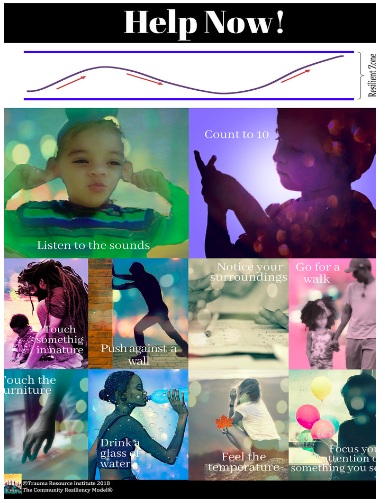
“The CRM training gives community members a common understanding of the impact of trauma and chronic stress on the nervous system. It also helps people see how the ability to bounce back – resiliency – can be restored or increased using this skills-based approach. We wanted families as well as “helping professionals” to better understand the impact of different types of stress and experience the healing power of learning how to regulate their nervous systems, help others regulate their nervous systems. Participants learn more about the power of compassion, especially self-compassion, that they can share with the children,” said Sipp.

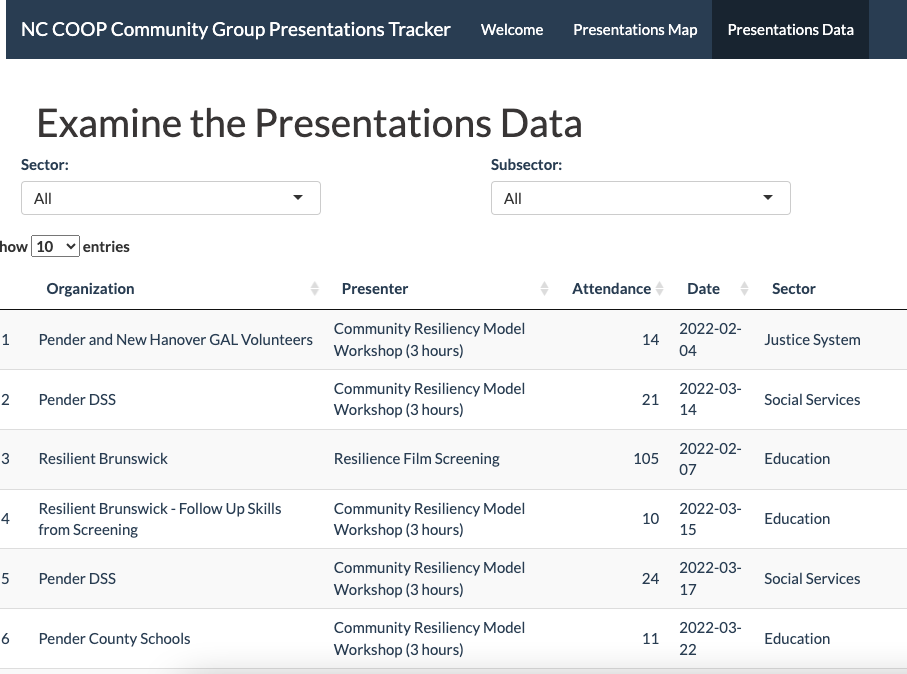
Ultimately, more than 700 people in the six North Carolina counties received some training on the model, and 18 people – including one or two from each county – took the week-long CRM training so they could continue to share it in their communities.

“Overview sessions of one to three hours were shared with DSS workers, Foster Family Alliance members, guardians ad litem, and other groups. We wanted a cross-sector group from each community – people in education, communities of faith, healthcare, law enforcement, mental health, family support, childcare, and more – to have it,” said Sipp.

Screen Shot 2023-11-30 at 8.21.52 PM “Some of the foster parents took the week-long training so they could become certified to become CRM teachers as well. We even have one mother, whose son wasn’t old enough for the training but will take it as soon as he is old enough, plan to become a mother-son training team. The mom has since been able to adopt her son, who practices and shares the skills informally with friends. They will likely share the training together as soon as the son is old enough to be certified, ” said Sipp.

This year’s work began with sending a questionnaire to foster families to gauge their interest in participating and receiving the Brain Insights materials.

“This deeper dive into learning about the brain – and how being supportive of the child’s developing brain can lead to better relational health – was of great interest to the families. We were flooded with responses – 165 surveys were returned in the first 16 hours after it was sent,” said Sipp.

Packages with the materials will soon be received by the first 165 parents to respond. All parents who are members of the Foster Family Alliance are also eligible to participate in a series of webinars taught by the author of the materials, early brain development specialist and founder of Brain Insights, Deborah McNelis.

Screen Shot 2023-11-30 at 9.47.38 PM

“My entire career has been built on a passion for adults to understand what contributes best for children to reach their full potential – each as a beautifully unique individual. When adults learn the basics of how the brain develops based on repeated experiences, and what the science reveals that children need most at each stage of development, they are thrilled to have that understanding,” said McNelis.

“Suddenly it makes sense as to why a two-year-old does not have the capabilities that a four-year-old might have. Adults become more confident in their nurturing abilities, which helps children become calmer, as, from birth, the primary caregivers of babies are providing needed experiences. Positive experiences make for the healthy brain connections that lead to a foundation of trust, health, the ability to communicate, to learn, to get along with others, and so much more,” said McNelis.

McNelis is quick to point out her understanding of the special needs of foster parents and the children who come into their care, and how vitally important it is to build connections and trust.

Screen Shot 2023-11-30 at 7.26.31 PM“There is a lot of emphasis put on the first two months of life. It is wonderful to be able to have that special time to bond and for the baby to establish a secure attachment. But we know older children benefit greatly from the Brain Insights “Neuro-Nurturing” supports, and our sharing of ways to nurture, interact, play and learn. When children and caregivers make connections with consistency while playing, exploring, spending time in nature, and simply enjoying time together, early relational health improves, which leads to better health outcomes physically, emotionally, and psychologically,” said McNelis.

Apparently, McNelis is connecting well with the parents who’ve taken the first round of webinars.

Screen Shot 2023-11-30 at 7.48.56 PM

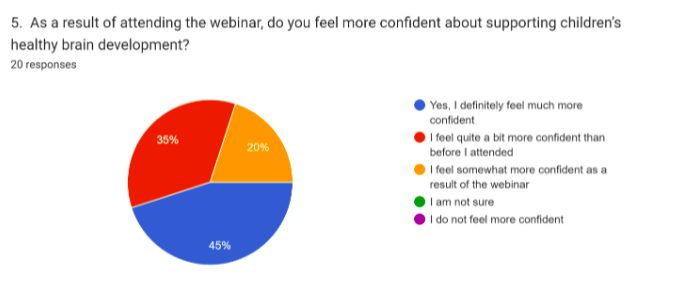
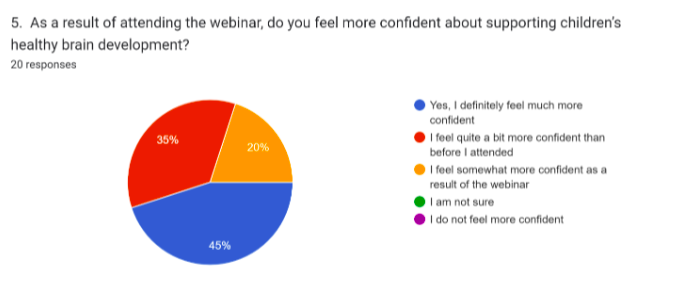
“Evaluations of the first webinars have been incredibly positive, with 100 percent of respondents saying they are likely or very likely to attend subsequent webinars, and 100 percent of respondents saying they were likely to recommend, or would recommend, the webinars to others,” said Kate Schultz, deputy director of the Foster Family Alliance.

Additionally, 100 percent of participants said that as a result of the webinar, they felt a greater level of confidence in supporting children’s healthy brain development.

Screen Shot 2023-11-30 at 7.45.35 PM

Screen Shot 2023-11-30 at 7.46.45 PM

“We are thrilled that Healthy Blue could support these PACEs Connection communities and this innovative programming that helps caregivers connect in new ways with the children placed in their care. It spoke volumes to us that Gaile Osborne, a foster parent herself, was so enthusiastic about the materials. We are looking forward to the next phase of the program,” said Kristy Kent, director of county engagement for Blue Cross NC.

“While this content goes deeper into brain development, it is also designed to help foster parents and caregivers learn how to PLAY and positively interact with the children. We understand the importance of positive childhood experiences (PCEs) in helping children build ‘buffers’ against the losses and adversity they have experienced. With these materials in-hand, parents have examples of positive experiences they can share with children,” said Kent.

The program, which started in November, will continue with monthly webinars through June 2024. Other aspects of the program will be announced in the months to come, according to Sipp.

For more information, contact Carey Sipp at csipp@pacesconnection.com, or Kate Schultz at kate.schultz@ffa-nc.org

Attachments

Hide

Images (11)

Screen Shot 2023-11-30 at 7.54.42 PM: Gaile Osborne, Foster Family Alliance of North Carolina
Screen Shot 2023-11-30 at 7.30.30 PM: The "Neuro-Nuturing®" model from creator Deborah McNelis, brain development specialist and author
Screen Shot 2023-11-30 at 7.27.07 PM: "Neuro-Nurturing®" is shared in easy-to-access ringed books filled with interactive play ideas to maximize connection and healthy brain development.
Screen Shot 2023-11-30 at 7.37.43 PM: Carey Sipp, PACES Connection
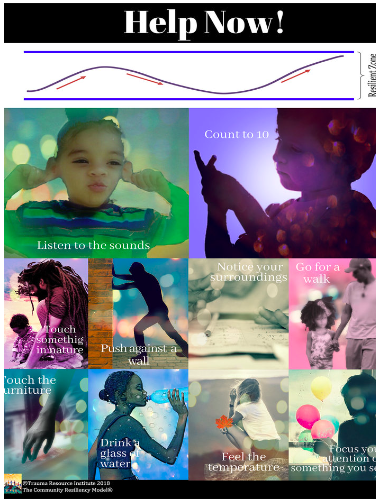
Screen Shot 2023-11-30 at 8.12.55 PM: CRM Training poster, featuring "the Resiliency Zone" and wellness skills and tools taught in the training
Screen Shot 2023-11-30 at 8.21.52 PM: Partial listing of CRM trainings
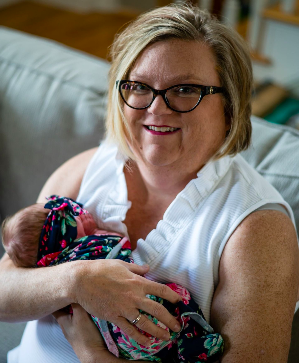
Screen Shot 2023-11-30 at 9.47.38 PM: Deborah McNelis, creator of "Neuro-Nurturing®" model of infant and child brain development for parents, caregivers, people who love babies and children
Screen Shot 2023-11-30 at 7.26.31 PM: McNelis is the author of "The First 60 Days' booklet which "busts" 22 potentially harmful myths about infants and parenting. The booklet is among materials to be received by participating foster families.
Screen Shot 2023-11-30 at 7.45.35 PM: 100 percent of attendees felt more confident
Screen Shot 2023-11-30 at 7.46.45 PM: Kristy Kent, Healthy Blue
Screen Shot 2023-11-30 at 7.48.56 PM: Kate Schultz, Foster Family Association of North Carolina

Porter Jennings-McGarity, PhD/LCSW (She/Her/Hers)

❤️ 1

Tags: Gaile OsborneKristy KentFoster Family Alliance of North CarolinaHealthy BlueDeborah McNelisNeuro- Nurturing (R)Healthy Blue North CarolinaCommunity Resiliency ModelKate SchultzCarey Smith SippThe First 60 Days

Views: 1,527

Comments (3) 

Newest · Oldest · Popular

Cendie StanfordCendie StanfordMember

YES! This profound initiative underscores the undeniable truth:

“Building resilience is not a solitary journey but a collaborative effort that must commence early in a child’s life.” @Carey Sipp – thanks for sharing


Jeff LinkenbachJeff LinkenbachMember

Porter – Great post and such important information. Well done and thank you.


❤️ 1

Carey SippCarey SippFormer Volunteer Co-Director, PACEs Connection Revitalization

Thanks for posting, Porter!
It has been wonderful here at PACEs Connection to help bring scores of communities into the network, and help many of them grow, find funding, connect with others doing the work who could help them accelerate change. More than that, I have loved learning from the leaders of communities about the importance of establishing a sense of safety and acceptance during their monthly meetings, the absolute need for transparency and trust if a community is to grow; the need for keeping the mantras “nothing about us without us” and “how we do the work is the work we do” front and center.

In all this time, being asked to help support the community of people including children in foster care, foster and kinship parents, guardian ad litem volunteers, Department of Social Service professionals, and community volunteers working with child protective service children and families, was one of the more interesting and compelling challenges. It was also a compliment of sorts, I think, that our funder Healthy Blue thought we could effect change.

All this is to say that I have loved this project of being asked to find ways to help improve the health and well-being of children and families in the foster care system, and being trusted to do so. The fact that there were solid relationships across sectors in the communities in which we did this work made asking for input, creating strategies, and taking action steps a joy. Team members Kelly Purcell, Amy Read, and Bonnie Jordan were and are amazing as we proudly shared the Community Resiliency Model and tracked people’s response to it.

That work made it easier to gain interest, approval, and excitement about the idea of going  deeper into helping foster parents and others become excited about learning more about infant and child brain development. It felt wonderful to have that trust when talking about why understanding brain development matters and how this understanding can help us all become more patient, aware, effective, and compassionate, ultimately in support of the people who’ve had so little voice or choice in what happens in their lives.  

Carey


❤️ 1

Back To Top

What the pandemic has done to racial inequality in North Carolina [charlotteobserver.com]

Carey Sipp Carey Sipp 12/30/207:20 AM

By Gene Nichol, The Charlotte Observer, December 28, 2020

It doesn’t happen as often as one might wish. But, on occasion, you can still be surprised by what someone says. For example, earlier this month, the Donald Trump-appointed Chair of the Federal Reserve, Jerome Powell, explained to the Senate Banking Committee:

“Disparate economic outcomes on the basis of race, have been with us for a very long time, they are a long-standing aspect of our economy, and there is a great risk that the pandemic is making them worse. Because the people who are most affected by the job losses are people in relatively low-paying parts of the service industries that happen to skew more to minorities and women, there is a real concern that if we don’t act as quickly as possible to support these people then we’ll leave behind an even more unequal situation. We need to do as much as we can to avoid exacerbating inequality.”

Seriously, the guy Bloomberg News calls “Wall Street’s Head of State” lectured the country on the challenges of economic justice. Man.

The traditional patterns of racial economic subordination Powell referenced have long dominated every component of life in North Carolina. Today, for example, twice as many African-American Tar Heels live in poverty as whites. The numbers are even worse for Black kids – nearly three times as many are poor as whites.

Racial income disparity is huge. But racial wealth disparity astonishes. Black households, on average, claim less than a tenth of the economic assets of white Tar Heel families. Racial minorities are dramatically more likely, in North Carolina, to be unemployed, uninsured, food insecure, housing insecure, and trapped in low wage work. Such defining disparities have existed throughout the entirety of our state’s history. Radical, systemic, disproportional racial economic impact, as Chairman Powell put it, has “been with us for a very long time.”

To read the rest of this post, please click here.

https://www.charlotteobserver….rticle248124905.html

Carey Smith Sipp

carey.pacescommunites@gmail.com

New ACEs initiatives learn about strategic plan development from from New Hanover (NC) Resiliency Task Force executive director Mebane Boyd


The desire to see other ACEs initiatives grow and flourish was evident at a recent meeting of the Resilient Columbus County (North Carolina) ACEs initiative when Mebane Boyd, executive director of the New Hanover Resiliency Task Force (also in North Carolina), shared with the Columbus County and neighboring Pender County groups how New Hanover created and works on its strategic plan. 

In the spirit of sharing, Boyd agreed to let ACEs Connection post the strategic plan and the video of the meeting, so other new ACEs initiatives can learn from the New Hanover Resiliency Task Force’s work and experience.

“We are learning as we go,” Boyd said. “We just happen to have a couple of years’ head start on today’s beginning communities. We want to share what we’ve learned and are learning.” 

In the spring of 2018, New Hanover County got a six-month planning grant from the Duke Endowment. Boyd was hired to be the six-month coordinator.  

She joined a group of 10 or 15 people who were inspired by the screening of the documentary “Resilience” earlier that spring, and who wanted to get going on an initiative. 

 “The (New Hanover Regional) hospital, Community Care, Smart Start, Communities in Schools, the Department of Social Services, people in the court system and others saw the documentary and said, ‘Let’s stop talking and do something,’” Boyd said. 

 Their planning period paid off. The group started meeting regularly and opened the meetings up to anybody who wanted to come. “It was one of the best things we did,” Boyd said.

Screen Shot 2020-08-28 at 2.15.14 PM

In the first phase of the plan, the group decided to engage and involve the community, agree on a timeline, and decide on which models to consider and invest in. They also looked at what data to collect on individual, organizational and systems levels.  This remains an area of growth and learning.

Phase Two involves educating the community on the Pair of ACEs, the fact that there are adverse childhood experiences and adverse community experiences.  ”We knew we needed to educate and be educated, to learn about what our community’s experiences were and are. We need to understand our unique adverse community environment,” Boyd said. 

Screen Shot 2020-08-28 at 2.39.03 PM

Phase Two also involves education about the impact of toxic stress and the Community Resiliency Model (CRM), a hands-on neurobiological training involving ACEs and brain science, to help people learn how to regulate their central nervous system and stay grounded during stressful situations. 

Implementing Phase Three means helping organizations and providers become more trauma-informed and better able to deal with their own traumas and triggers.

Screen Shot 2020-08-28 at 2.16.14 PM

“Most of the early (CRM) trainings centered on teachers, first responders, and health care workers. Until we are well, it is hard for us to take care of (other) people,” Boyd said. 

 Phase Four is training in trauma-informed and resilience-focused models for students, clients, parents, and the community. 

Phase Five is implementing the trainings across all sectors of the community; this work will be ongoing.  

Phase Six is community-level coaching and accountability, and work on funding strategies to continue to train and coach.

The phases look organized paper, but, Boyd said, “Nothing we do in human services is linear. If somebody new comes into the work, you have to educate them,” said Boyd, explaining that the group may have several phases of the work going on at the same time.

Quick to give credit to groups that helped develop the plan, Boyd was particularly complimentary of the New Hanover County Strategic Planning Department. 

“We were able to use their expertise, and met many, many times, before coming up with the second page of the document. Some of us got frustrated. This took months. We would wonder, ‘Why are we talking about this again?’”

”Creating the plan was the work. Coming up with our common language was key to our progress.  We needed to establish the community level goals, and to look at where we could make a difference. 

“Racial equity runs through everything that we do,” she added. “In the last few months, we’ve realized what a challenge racial equity is, and we’ve realized that everything we do should be done through the filter of racial equity.” 

 Measuring success is also part of the work. Boyd said the group worked to develop Critical Success Factors, to “establish data points that can help tell us if what we are doing matters, if it is moving the needle.”

Screen Shot 2020-08-28 at 2.16.27 PM

The group recently completed a steering committee retreat.

 “Planning is never done and creating a strategic plan is something you are always working on,” she said. “Some of the work is immediate and some of it is long-term work that could be going on for 10 years or more.

 “We are changing generational trauma. This is not work done in a short period of time. We knew we would be in it for the long haul. So we are now educating about trauma and racial disparity.” 

She says a main factor in the success of this work is to keep it “trauma-informed and resiliency-focused.”

 The group will know their hard work is paying off as they see more agencies looking through the trauma lens. An example? When more pediatrics practices are using ACEs screening, and more community members, having been through the trainings or hearing about them, are understanding their own biological responses to stress. Among other criteria for success are greater community understanding of ACEs science, more parents and providers being able to support children’s needs for social/emotional development and stress management, and delivery of equity training. 

 Boyd had these additional comments during the Q&A session: 

 On relationships: They are so important. If you were together and respectful and built your community, you are developing your relationships for further work. I spend a lot of my time inviting people to meetings, thanking them for coming. A  lot of my time is spent on building relationships.

 On the pace of the work: When you get together and convene, that is the work. Don’t be in a rush.  

 On who is needed to do the work: Work with the people who are there and committed. If you wait until everybody is at the table, you will never get it done.

 On funding: You need money to pay a coordinator. We have received grants. The Department of Public Instruction provided money in 2018 that was used to train the trainers for the Community Resiliency Model, so about 30 people could attend the five-day training. We also have a part-time person doing all the movie screening and coordination of training. Task Force members are helping to get out the vote, and have been asked to contact legislators to ask for Medicaid expansion. We could use that (Medicaid expansion) money to help prevent ACEs, make lives better. 

 On the difference the work has made in the community: All 1,800 county employees have received at least a 90-minute CRM resilience training. They are not fully trained on CRM but have learned some CRM skills. County employees say staff members are now much more aware of their co-workers’ stress. They look in on each other, they know to ask, “How are you doing?” It helps to create a common language. It helps to normalize stress responses and push that message of having compassion and empathy for ourselves and our colleagues. 

 On subcommittees: Each subcommittee meets monthly. There are eight subcommittees for the New Hanover Resiliency Task Force: 

  1. First Responders and Justice
  2. Early Childhood (ages 0-8)
  3. 4th to12th Grade 
  4. Family, Faith and Community
  5. Health Care 
  6. Data   
  7. Arts 
  8. Marketing 

 For more information, visit the New Hanover Resiliency Task Force on acesconnection.com or visit the website the group was already working on when they joined ACEs Connection, nhcbouncesback.org.

To access the video on YouTube, please

Attachments

Show

Carey Smith Sipp

carey.pacescommunites@gmail.com

❤️ 1

Views: 23

Add Comment

Carey SippCarey Sipp(Change Author)Formats 

javascript:””

Comments (1) 

Newest · Oldest · Popular

Katie CrosbyKatie CrosbyMember

Amazing work being done at the NHRTF!!


👍 1

Back To Top

Post

Add Comment

Copy Link to Blog Post

Manage Blog Post

Configure Blog

Leave Community

Manage Widgets On Blog Pages

Blog Directory

ACEs Connection Information

ACEs Stories & Champions

Belief Statement

Conferences & Classes

Data

Events

Meeting Notes

Membership Essentials

PACEs in the Arts

Presentations & Trainings

Resources & Toolkits

Blog Directory

Comments

Blog Archive

August 2026(0)

July 2026(0)

June 2026(1)

May 2026(3)

April 2026(4)

March 2026(0)

February 2026(0)

January 2026(0)

December 2025(0)

November 2025(0)

October 2025(0)

September 2025(0)

August 2025(0)

July 2025(1)

June 2025(2)

May 2025(5)

April 2025(2)

March 2025(4)

February 2025(0)

January 2025(1)

December 2024(0)

November 2024(0)

October 2024(3)

September 2024(0)

Current Community Visitors

Current Visitors: 9 (1 member, 8 guests)

Carey Sipp

Resources for Downloading Directory

ACEs PPT Presentations

ACEs Videos

Handouts for Parents

Meeting Notes

Operations

Policy / Data Information

Resources & Toolkits

TI Healthcare

TI Schools

Downloads Categories

     & Toolkits
TI Healthcare
TI Schools
Downloads Categories

Pandemic parenting overwhelming you? A trio of therapists has just the free workshop you need. Register now for events starting Tuesday, April 20.

Carey Sipp Carey Sipp 4/19/218:18 PM

Therapist and anti-spanking advocate Robbyn Peters Bennett

Three therapists have teamed up to lp with overwhelmed, stressed parents by offering a free workshop each remaining day this week: Pandemic Parenting!

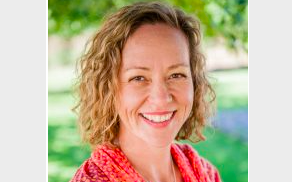
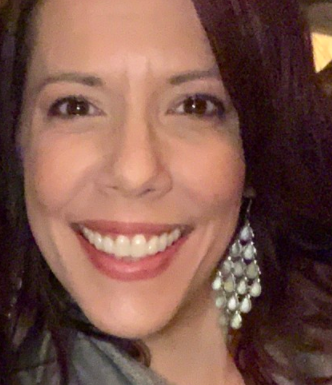
Robbyn Peters Bennett from Portland, Oregon, Lori Petro from Philadelphia, Pennsylvania, and Amy Bryant from Decatur, Georgia, organized the event to help parents who have been struggling during the pandemic. Here are the details on what they’re offering and how to attend.

Background:

Bennett said recent research shows the alarming negative impact that chronic pandemic stress has had on children and their parents. Several studies have shown:

  • A majority of parents (52%) said financial stress and social isolation are getting in their way of parenting
  • 1 in 5 said they spanked/slapped their child at least once in the past two weeks, and 12% did it more often
  • 4 in 10 parents shouted at their child in the past two weeks
  • 1 in 5 said they are shouting and spanking more often

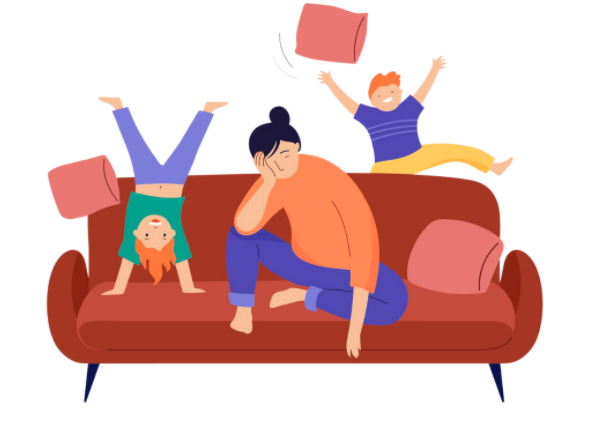
“Probably oneAmy Bryant, Wild Child Counseling of the most stressful aspects of the pandemic has been the breakdown of community support for families,” Bennett said. “Parents feel isolated, overwhelmed, burdened with the task of also being their child’s teacher while continuing to hold a full-time job and of course many are struggling with financial worry and feeling isolated. We are shouting across the street to our neighbors and trying to connect through the muffled sounds of face masks. Children have few social interactions and are more dysregulated as a result.
“So my colleagues and I wanted to create a “Community of Care,” said Bennett.

“This parenting event is trauma-informed and is structured to support parents in a way that respects their need for connection, movement, meditation, and science-based parenting support,” said Bennett.

What is it?

The event runs April 20-24, and sessions are free. Each day parents receive a free learning module in their inbox that includes:

  • movement and meditation videos to prepare for, integrate and process all the learning and experiences
  • parent stories to inspire and connect
  • multiple interview sessions to help parents better understand child development, stress responses, and what children – and parents – need to feel more connected and less overwhelmed

Organizers also are offering a live event each night for a modest fee of $25. These events are aimed at helping create a feeling of community and fun, and the fee will help Bennett and her partners create more events in the future.

Who can attend

The workshop is designed for parents, grandparents and anyone who loves children and would like to feel more supported in caring for them. So that can be teachers, coaches, ministers and daycare providers as well.

Live events:

April 20:

Ask the Warden: What Makes Kids Delinquent? Led by George Davis, M.D.

It is amazing how many parents use harsh punishment (even though they don’t want to) out of fear for their children and a strong commitment to keep their child out of trouble. There will be a live Q&A with Davis, the former director of the New Mexico Juvenile Justice system. He is publishing some amazing research on delinquency and adverse childhood experiences.

April 21

Movement Medicine: Calming the Nervous System through Therapeutic Movement. Led by somatic therapist David Mooney

Experience the restorative practice of movement so parents feel better and are better resourced

April 22

Game Night! Movement for Regulation, led by occupational therapist Tinsley Martin

Children/s challenging behaviors are often driven by dysregulation – so mirroring their feelings or talking logically to them isn’t enough. This session is a playful approach to helping children regulate their nervous system and emotion — and parents will feel better too.

April 23

Game Night! Play to Connect, led by Sheena Hill, Parenting Works

There just isn’t enough fun right now! This is a way to join community and play and connect and simply feel good.

April 24

Addressing Our Triggers, led by psychologist Lynyetta Willis, Ph.D.

Feeling activated into flight-fight-freeze is the new normal for a lot of parents who simply have too much stress and not enough support. This session will help parents feel more connected to themselves and will give them some tools to help with their own reactivity.

Screen Shot 2021-04-19 at 10.17.01 PMAdditional speakers:

What to say when you wanna say, “Do as you’re told!” with Mr. Chazz Lewis, M.S.

Mr. Chazz, an inspirational parenting coach on TikTok, talks about why it is difficult for dads, especially, to give up fear based parenting

Feeling overwhelmed by your toddler? How to set limits that meet your own needs, with Devon Kuntzman

Practical  helping parents know what to expect of toddlers and how to help them develop impulse control.

How to deal with irritable and defiant kids, with Robbyn Peters Bennett, LPC, CMHS

Addressing trauma specifically and how to work with children who are often dysregulated and may be thought of as oppositional defiant.

The link between juvenile delinquency and discipline, with George Davis, M.D.

Davis talks about his second ACEs study with children in the juvenile justice system.

What’s my kid supposed to be learning? Trauma-sensitive approach to helping kids learn during a pandemic, with Erin Hambrick, PhD

Parents have intense expectations about  child’s academic progress during the pandemic. Hambrick, from the ChildTrauma Academy, talks about how to prioritize your child’s learning needs and how to deal with the school who may lack a trauma-informed lens.

Building lifelong relationships with kids and teens (and why it matters), with DeAntwann “DJ” Johnson

How to stay close to your teenagers, when they need you the most!

Tools to identify and release triggers, with Lynyetta Willis, Ph.D.

We are all feeling triggered more than usual these days. Willis helps us sort through and validate our triggers.

Others include:

  • Communicating with neurodiverse kids and teens, with Lori Petro
  • When kids steal: supporting your child’s inner guide, with Vivek Patel
  • What grumpy kids need, with Sheena Hill
  • Tired of nagging? Untriggering to parent the next generation, with Iris Chen
  • When siblings hit: setting limits that nurture empathy, with Laura Markham

Desired outcome:

Bennett said the therapists’  goal is to help parents feel more connected and supported by community, and to feel more regulated themselves so that parenting is easier. “We want to raise awareness on the dangers of harsh parenting. A recent study showed that getting angry, hitting, or yelling at children when they are little is linked to inhibited brain development. We know that tending to the connection between the parent and child is the most powerful way to ensure the well-being of children into the future. We want to help parents understand how to deal with challenging behaviors, but also provide them with the care and support they need so that their nervous system can manage it. If we want parents to do better, we have to help them feel better!”

How to attend:

Here is the link to the event landing page: https://event.stopspanking.org/a/46212/hDNZKYhX

If parents can’t find time to watch all the videos during these five days,  they can access all the seminars for free until the end of the month. If they want to hang on to them longer, they only need to pay $25.

Attachments

Hide

Images (5)

Robbyn Peters Bennett
Lori Petro  Founder, TEACH through Love
Amy Bryant, Wild Child Counseling: Amy Bryant
Screen Shot 2021-04-19 at 10.04.14 PM
Screen Shot 2021-04-19 at 10.17.01 PM

Carey Smith Sipp

carey.pacescommunites@gmail.com

❤️ 1

Pandemic parenting overwhelming you? A trio of therapists has just the free workshop you need. Register now for events starting Tuesday, April 20.

Carey Sipp Carey Sipp 4/19/218:18 PM

Therapist and anti-spanking advocate Robbyn Peters Bennett

Three therapists have teamed up to heLori Petro Founder, TEACH through Lovelp with overwhelmed, stressed parents by offering a free workshop each remaining day this week: Pandemic Parenting!

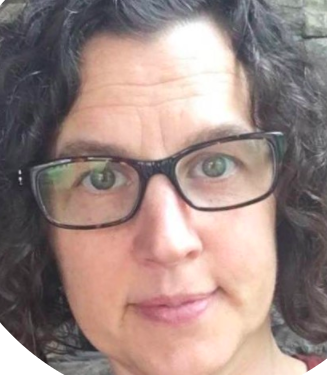
Robbyn Peters Bennett from Portland, Oregon, Lori Petro from Philadelphia, Pennsylvania, and Amy Bryant from Decatur, Georgia, organized the event to help parents who have been struggling during the pandemic. Here are the details on what they’re offering and how to attend.

Background:

Bennett said recent research shows the alarming negative impact that chronic pandemic stress has had on children and their parents. Several studies have shown:

  • A majority of parents (52%) said financial stress and social isolation are getting in their way of parenting
  • 1 in 5 said they spanked/slapped their child at least once in the past two weeks, and 12% did it more often
  • 4 in 10 parents shouted at their child in the past two weeks
  • 1 in 5 said they are shouting and spanking more often

“Probably oneAmy Bryant, Wild Child Counseling of the most stressful aspects of the pandemic has been the breakdown of community support for families,” Bennett said. “Parents feel isolated, overwhelmed, burdened with the task of also being their child’s teacher while continuing to hold a full-time job and of course many are struggling with financial worry and feeling isolated. We are shouting across the street to our neighbors and trying to connect through the muffled sounds of face masks. Children have few social interactions and are more dysregulated as a result.
“So my colleagues and I wanted to create a “Community of Care,” said Bennett.

“This parenting event is trauma-informed and is structured to support parents in a way that respects their need for connection, movement, meditation, and science-based parenting support,” said Bennett.

What is it?

The event runs April 20-24, and sessions are free. Each day parents receive a free learning module in their inbox that includes:

  • movement and meditation videos to prepare for, integrate and process all the learning and experiences
  • parent stories to inspire and connect
  • multiple interview sessions to help parents better understand child development, stress responses, and what children – and parents – need to feel more connected and less overwhelmed

Organizers also are offering a live event each night for a modest fee of $25. These events are aimed at helping create a feeling of community and fun, and the fee will help Bennett and her partners create more events in the future.

Who can attend

The workshop is designed for parents, grandparents and anyone who loves children and would like to feel more supported in caring for them. So that can be teachers, coaches, ministers and daycare providers as well.

Live events:

April 20:

Ask the Warden: What Makes Kids Delinquent? Led by George Davis, M.D.

It is amazing how many parents use harsh punishment (even though they don’t want to) out of fear for their children and a strong commitment to keep their child out of trouble. There will be a live Q&A with Davis, the former director of the New Mexico Juvenile Justice system. He is publishing some amazing research on delinquency and adverse childhood experiences.

April 21

Movement Medicine: Calming the Nervous System through Therapeutic Movement. Led by somatic therapist David Mooney

Experience the restorative practice of movement so parents feel better and are better resourced

April 22

Game Night! Movement for Regulation, led by occupational therapist Tinsley Martin

Children/s challenging behaviors are often driven by dysregulation – so mirroring their feelings or talking logically to them isn’t enough. This session is a playful approach to helping children regulate their nervous system and emotion — and parents will feel better too.

April 23

Game Night! Play to Connect, led by Sheena Hill, Parenting Works

There just isn’t enough fun right now! This is a way to join community and play and connect and simply feel good.

April 24

Addressing Our Triggers, led by psychologist Lynyetta Willis, Ph.D.

Feeling activated into flight-fight-freeze is the new normal for a lot of parents who simply have too much stress and not enough support. This session will help parents feel more connected to themselves and will give them some tools to help with their own reactivity.

Screen Shot 2021-04-19 at 10.17.01 PMAdditional speakers:

What to say when you wanna say, “Do as you’re told!” with Mr. Chazz Lewis, M.S.

Mr. Chazz, an inspirational parenting coach on TikTok, talks about why it is difficult for dads, especially, to give up fear based parenting

Feeling overwhelmed by your toddler? How to set limits that meet your own needs, with Devon Kuntzman

Practical  helping parents know what to expect of toddlers and how to help them develop impulse control.

How to deal with irritable and defiant kids, with Robbyn Peters Bennett, LPC, CMHS

Addressing trauma specifically and how to work with children who are often dysregulated and may be thought of as oppositional defiant.

The link between juvenile delinquency and discipline, with George Davis, M.D.

Davis talks about his second ACEs study with children in the juvenile justice system.

What’s my kid supposed to be learning? Trauma-sensitive approach to helping kids learn during a pandemic, with Erin Hambrick, PhD

Parents have intense expectations about  child’s academic progress during the pandemic. Hambrick, from the ChildTrauma Academy, talks about how to prioritize your child’s learning needs and how to deal with the school who may lack a trauma-informed lens.

Building lifelong relationships with kids and teens (and why it matters), with DeAntwann “DJ” Johnson

How to stay close to your teenagers, when they need you the most!

Tools to identify and release triggers, with Lynyetta Willis, Ph.D.

We are all feeling triggered more than usual these days. Willis helps us sort through and validate our triggers.

Others include:

  • Communicating with neurodiverse kids and teens, with Lori Petro
  • When kids steal: supporting your child’s inner guide, with Vivek Patel
  • What grumpy kids need, with Sheena Hill
  • Tired of nagging? Untriggering to parent the next generation, with Iris Chen
  • When siblings hit: setting limits that nurture empathy, with Laura Markham

Desired outcome:

Bennett said the therapists’  goal is to help parents feel more connected and supported by community, and to feel more regulated themselves so that parenting is easier. “We want to raise awareness on the dangers of harsh parenting. A recent study showed that getting angry, hitting, or yelling at children when they are little is linked to inhibited brain development. We know that tending to the connection between the parent and child is the most powerful way to ensure the well-being of children into the future. We want to help parents understand how to deal with challenging behaviors, but also provide them with the care and support they need so that their nervous system can manage it. If we want parents to do better, we have to help them feel better!”

How to attend:

Here is the link to the event landing page: https://event.stopspanking.org/a/46212/hDNZKYhX

If parents can’t find time to watch all the videos during these five days,  they can access all the seminars for free until the end of the month. If they want to hang on to them longer, they only need to pay $25.

Attachments

Hide

Images (5)

Robbyn Peters Bennett
Lori Petro  Founder, TEACH through Love
Amy Bryant, Wild Child Counseling: Amy Bryant
Screen Shot 2021-04-19 at 10.04.14 PM
Screen Shot 2021-04-19 at 10.17.01 PM

Carey Smith Sipp

carey.pacescommunites@gmail.com

❤️ 1

Violence against Indigenous women is ‘a crisis.’ Deb Haaland’s new Missing & Murdered Unit could help, advocates say. [thelily.com]

Carey Sipp Carey Sipp 4/26/211:00 PM

By Cecilia Nowell, The Lily, April 20, 2021

Growing up in Canada, Agnes Woodward, who’s Plains Cree and originally from Kawacatoose First Nation, always knew that her family cared deeply about missing and murdered Indigenous women. In the 1990s, she watched as her aunt Mona and a few others began trying to draw attention to the lacking police response when Indigenous women went missing: They would hold up images of missing friends on street corners. In 1992, they organized the first march in Vancouver in memory of missing and murdered Indigenous women (MMIW).

Then, in 2015, the Canadian government approached Woodward’s family to ask if they wanted to add her aunt, Eleanor (Laney) Ewenin, to the list it was compiling as part of its National Inquiry into Missing and Murdered Indigenous Women and Girls. The entire family gathered to talk over the decision and concluded that “if we step up and we tell our story” and it helps any other families, “then it’s our responsibility to do so,” Woodward recalled. Her mother, uncle and aunts had been taken from their parents in Canada’s so-called Sixties Scoop, a period that lasted into the 1980s during which the Canadian government removed Indigenous children from their parents’ care and placed them with foster families. Laney had been separated from the other children, and in 1982, when she was just 23, she was killed.

Woodward, now 38, became a seamstress and began designing ribbon skirts in honor of her aunt and other missing women, eventually creating the company ReeCreations in 2018. Her ribbon skirts quickly became a continentwide symbol of the MMIW movement.

[Please click here to read more.]

Carey Smith Sipp

carey.pacescommunites@gmail.com

The most important thing you can do with your kids? Play with them! says Dr. Bruce Perry

Carey Sipp Carey Sipp 5/11/213:56 PM

“The most important thing you can do with your children is play with them!” said Dr. Bruce Perry, noted child psychiatrist and author. He was answering the question, “How do we prepare our children to go back to school next fall?”

Perry, a brain expert specializing in how children are impacted by trauma, gave a presentation on his neuro-sequential model of brain development to more than 800 people at an Austin Ed Fund event Monday evening. The co-author, with Oprah Winfrey, of the new book What Happened to You, also discussed the importance of educators focusing on “regulation and relationships.”

“If educators keep the focus on regulation and relationships, you’ll have many many more children with an open (able to learn) cortex. Keep the focus on regulation and relationship building you cannot go wrong,” Perry said.

Other topics Perry addressed during the more than two-hour event included workplace stress, how school boards can best support teachers, why going slowly is important post-pandemic, the importance of the arts and sports to brain development, and what corporations could learn about the importance of valuing their employees’ brains. The event was sponsored by the Buena Vista Foundation, Tapestry Foundation, The Klein Foundation, and St. David’s Foundation.

In the wide-ranging conversation, Perry also addressed these topics:

On preparing children to be ready for school this fall

“Play with them and let them play, and let them play with each other. Let them sort of reconnect with their friends, you know, do things that are fun. What that means is, if your kids over the summer have a regulating and rewarding set of experiences, they’re going to come to school ready to go to work.”

On the importance of fun

“I think fun is the best way to learn things. I think kids keep telling us that when they find something that they enjoy. It’s amazing what they can learn. So I am always happy to let them play, let them take the lead when it comes to acquisition of cognitive content.”

On school boards supporting teachers

We spend a lot of our work trying to help the teacher, through improving awareness about self care. But we’re really working to try to help schools to create policies and practices that are respectful, that are regulating, that are relational, so that there can be parallel process from, you know, the board all the way down to the administrators down into their classroom, down to the teachers and then out into the community.

When children learn self-regulation and take it home
When a child taught them (parents) a little bit about the brain, that’s really what we want to see. We think that that’s the greatest way to have this creating impact…as the children kind of become the teacher, when it comes to (teaching) that great framework of regulate, relate and reason.

On the pressures of being a young parent in today’s world

We put way too much pressure on our young parents. Human beings are intended to parent with more adults around us, with the extended family model, where there’s an auntie and an older cousin and the grandmother can jump in every once in a while to help. We’re not biologically designed to meet the fundamental needs of multiple kids by ourselves. So, first it (for) parents listening,  just be forgiving of yourself. Give yourself a little bit of a break. And remember what I said about the parallel process (of self-regulation) with teachers. You need to get regulated too. I mean it’s good for you to go to your exercise or take your walks or have your coffee with friends. That’s not being selfish. That’s actually allowing you to be your best for your child when they’re in the home.

What we can do to help each other during the pandemic.

I think one of the things that we really need to keep doing with each other is just be very nice to each other. We need to be kinder to each other. We need to go, “Wow, you’re in a tough situation. So how can I help? How can we figure out how to get us some help?”  And I think when we do that, the community will be better.

The question NOT to you can ask your children

Everybody knows that when kids come home from school, like the worst thing you could ever ask them is, do they have any homework. Don’t ask them. Feed them, give them a chance to get regulated, and then engage them. But again these are the things that we (all) need.

About bringing the concept of regulation into the corporate world

I have to say though there’s a lot of promise about bringing these concepts (regulate, relate, reason) into corporate environments and into the workplace. Because for the corporation, the most valuable resource of any organization is the people. And the most valuable part of those people is their cortex. That’s the part of them that can be creative, productive, and most social. All the things that you want in the workplace are going to be cortically mediated. And so, it’s in the best interest of the corporation to have a lot of open cortexes. And so once you teach people about this, then corporate environments change, and they create a more regulating, respectful environment. When we go to workplaces or organizational environments that begin to appreciate this, they make changes that lead to monetary bottom line improvements, and that, you know in a corporate environment, that helps something stick.

About protecting yourself in a toxic workplace

If you’re in an organization that doesn’t get this, you’ve got to figure out ways to protect yourself. And one of the most important ways to do it is with your tiny little group.You create a little group of people you feel safe with. You take care of each other. That’s how we optimally survive in relationship. So if you can find a group that you can connect with and belong with to help you sort of  buffer all of the things that go on at work, then that’s a really valuable thing, to have that small group. To just being kind to yourself and being kind to others. It’s such a simple and great message.

What should teachers know on as they go back to school

I would recommend that they (teachers) focus on regulation and relationship. And if those elements are incorporated into the process of coming back into the learning environment, you’re going to have many many more open cortexes. So whatever way you decide to do, whether it’s through team building or games, focus on regulation. And then, relationship building.

What administrators should focus on

Yeah, I think this is where you really need to have your administrators step up and protect you (teachers). There really has to be communication all the way up to the board of education in the state, so that we know that these kids are ultimately going to be able to master any of the content that we want them to by the time they graduate from high school or middle school or wherever. But if we’re smart about it, we’re going to keep more kids in school, which is a big issue for a lot of places in high school…if we don’t try to shove cognitive content down their throats, when everything’s all dysregulated.

And so, when I say go slow, I’m not saying don’t learn anything. I’m just saying, don’t let the pressure of not mastering some kinds of concepts unravel you, you’ll get through it. You may just want to change the pacing of how you learn certain things. You may want to think about different strategies of how you sort of co-mingle curricular content. I can guarantee you that if you had your teachers sit down and look at what you’re supposed to learn in history and what you’re supposed to learn in some other topic, they could come up with a creative way to collapse the minutes of instructional minutes and feather in a whole lot of regulatory stuff. You know one of the things that I think they should consider doing for example, is if you take a typical middle-school history teacher who’s got four classes, that person will give the same didactic presentation in 20 minutes four times in the day. He should record it, and then those kids can have control over when they watch it. And that’s part of their assignment, (to) watch the lecture, before you come to class. But then when you’re going in class, do stuff (that) is for regulating, and more conversational, more relational. They’ll get more engaged, they’ll learn more. So, if you let the teachers be creative about this stuff, they’re gonna do fine. But if you say, “Hey here’s the worksheet that you have to do on the third day of this week,” that’s just gonna make everybody feel crazy. And you’re setting yourself up for failure, and setting us up for failure.

On helping kids feel safe and become lifelong learners

If you really want people to be lifelong learners, and you want people to be creative and productive and contribute to society and ultimately pay taxes, and write books and do sculptures and create musicals, you’ve got to make them feel safe. You’ve got to make them love their learning environment. And you do that by respecting them and listening to them and being patient with them.

On resilience and the importance of community

One of the things that we’re able to look at is the timing and the nature of bad things. It could be a loss of a parent, it could be abuse, it could be neglect and so forth. But we also looked at the timing and the nature of good things — relational health, connection to family, community and culture. And here’s basically what we find: that if you have adversity, but you also have connections to family and community and culture, which are resilience building factors, you’re not at any increased risk for bad outcomes. However, if you have adversity and the amount of adversities sort of outweighs the presence of relational connection, you have significant increase in risk.

And so this is where relational poverty is a really important thing. You know families that have no extended family nearby. They’re not connected to their community of faith; they don’t know their neighbors. That kind of social isolation puts you at tremendous risk for even minor adversity. If you have big adversity and then you have that relational poverty, that’s when you’re really at risk.

And, the ideal is, and this is why we really have been focusing a lot on building community, culture and connection to each other, is that we have a lot of relational health. Even with adversity, you end up being pretty healthy. And so in the end, the most powerful factors that determine how you function in the present is connections to others, positive connections. That is really is the major (factor). You know people that study resilience. It really is basically all about how you’re connected.That’s what we found; that’s what a lot of other people that do this research have found. You don’t have to have thousands of people that you’re connected to.

Oprah talks about this a lot. She literally points to one teacher who saw her and understood how special she was, and who really was her lifeline. She provided resilience building experiences that set her on her life trajectory. And I think that’s true for a lot of people. And the good news therefore, from my perspective is that every one of us out there can be that kind of person for somebody. You know, it may be your child or your nieces and nephews and maybe a neighbor kid, or it may be the kid you’re coaching in little league. If you’re a teacher, you’re doing this all the time and you probably don’t even realize you’re literally creating life-saving, and life-transforming experiences for children, even in the little moments, the moments when you really are present with them.

Sensory overload
One of the unfortunate things about our modern world is that we’re so sensory overloaded with our phones and our appointments that even when we are around people, we don’t slow down enough to give them that moment. People feel it when you see a colleague or a friend answer a text in the middle of a conversation. It’s a completely different experience than when they’re truly present and listening. I think that this is something that we can all do for the people around us, and if we can be better at doing that, the social fabric in our family and in our community will grow and become stronger. If you can put everything aside, and truly be with that person, and hear them, take a stance of curiosity, as opposed to a stance of judgment, you’re, you’re gonna make a huge difference in that person’s life,

The role of arts in learning
One of the most important resilience-building activities that you can do is music, the arts and sports. And the irony is, in educational environments, all too often we view those as add-ons, sort of as electives. But the truth is, if you really understand how the brain works, you’ll recognize that the best way to make somebody available for high-quality academic achievement is to give them episodic regulatory opportunities for resilience-building through sport, through music, through creative arts, through performance arts. Those things should be absolutely core to high-quality academic curriculum. If you look at the origin of Western education, sports, music, theater, they were all part of the traditional Greek and Roman education. People over centuries tend to do things because they work. And I think that we should listen to our ancestors in that regard, and reincorporate some of that back into schools.

For more information on the Dr. Bruce Perry webinar, the Austin Ed Fund and the Austin School District’s Social and Emotional Learning work visit https://austinedfund.org/dr-bruce-perry-event/

Carey Smith Sipp

carey.pacescommunites@gmail.com

❤️ 2

Tags: Bruce PerrySally HernandezSt. David’s Foundation

Views: 7,899

Add Comment

Carey SippCarey SippFormats 

javascript:””

Comments (1) 

Newest · Oldest · Popular

Christine BruglerChristine BruglerMember

Carey, thank you for sharing exchanges of this great conversation, as well as the link for additional resources! You rock! 

The best way to start any meeting. Ever.

Carey Sipp Carey Sipp 8/17/2111:25 AM

Following a brief mindfulness check-in, PACEs Connection staff meetings begin with the review of our Vision, Mission, and Values statements, as well as our Equity and Inclusion Statement. At a recent meeting, top row, L-R, Ingrid Cockhren, Carey Sipp, Donielle Prince, Jane Stevens. Middle row, L-R, John Flores, Porter Jennings-McGarity, Jenna Quinn, Gail Kennedy. Bottom row, L-R, Rafael Maravilla, Natalie Audage, Alison Cebulla, Samantha Sangenito.


A couple of times last week I felt my body downshift to a more comfortable lower gear, the way it has several thousand times over the course of 26 years. This happens when I’ve “claimed” my seat at meetings for people recovering from having lived in the chaos and trauma of addiction, or in meetings for people who want help with their own addictions.

Many recovery meetings open with the oft-quoted Serenity Prayer, which asks petitioners to be granted “the serenity to accept the things we cannot change, the courage to change the things we need can, and the wisdom to know the difference.” We read the beautiful Promises of Alcoholics Anonymous, or a version of it appropriate to whatever group is meeting, along with the Twelve Steps and Twelve Traditions.

This “meeting norm” of reading through the mission of why we are there, the vision of what we’ll gain if we “keep coming back” and the 24 behavioral milestones of theTwelve Steps and the Twelve Traditions has served, for my central nervous system, as a signal to let down. Relax. Open my mind. Open my heart. Trust it is safe to be where I am and who I am and to speak my peace. Here I am welcomed, accepted, loved, appreciated before I am even known. Though I may be only tolerated by some, love and kindness is the code. With spiritual help I won’t “act out” or ask for special treatment as here I am “a worker among workers.” Though were I to act out, my loving accountability partners would likely not do so much judging as they would gently nudge to help me remember to look for “my part” in whatever is setting me off. It is a model for living that I love and treasure. And it helps the group focus, center, get in sync, and oftentimes come to a collective gratitude.

Gratitude was the feeling I had last week when at two PACEs Connection meetings. The first was a meeting with a couple of statewide organizers, one of whom had been through a harrowing week of family illness. The other was our weekly PACEs Connection staff update during which several of us expressed disappointment and exasperation about the increase in COVID-19 cases. Both meetings began by reading, out loud, the PACEs Connection Vision and Mission statements as well as our Values and our Equity and Inclusion Statement.

Our Vision

A resilient world where all people thrive.

Our Mission

The human and digital catalyst that grows and supports the worldwide PACEs and resilience movement, and tells its authentic stories.

Equity & Inclusion Statement

PACEs Connection is an anti-racist organization committed to the pursuit of social justice.

In our work to promote resilience and prevent and mitigate ACEs, we will intentionally embrace and uplift people who have historically not had a seat at the table. PACEs Connection will celebrate the voices and tell the stories of people who have been barred from decision making and who have shouldered the burden of systemic and economic oppression as the result of genocide, slavery, family separation, forced relocation, mass incarceration, red lining and all other practices, policies and institutions that have traumatized marginalized groups. These groups include people of color, people living with mental health and substance use challenges, people living with disabilities, and members of the LGBTQI community.

Our Values

As individuals and as an organization, it is our intention and daily practice to encourage and model these core values:

Integrity. Transparency.

Equity. Inclusion.  

Empathy. Compassion.  

Joy. Celebration.

Courage.

Integrity. Transparency. We manage through trust not control. To create trust and an accountable environment where everyone feels they can say what needs to be said when it needs to be said, we maintain an environment free from hidden agendas or conditions, accompanied by full information and no fear of retaliation. We speak directly, do what we say we will do and have pure motives. We contribute authentically and participate fully. We are leaders and we model leadership at every level.

Equity. Inclusion.  We regularly examine our roles in perpetuating inequitable systems and work to change inequitable practices, structures and policies that contribute to ACEs, and maintain an environment where everyone is welcomed, respected, supported and valued.

Empathy. Compassion.  We value empathy, which validates the experiences of others and is born from compassion.

Joy. Celebration.  We cultivate resilience and equanimity by sharing the truth of our stories and celebrating our lessons learned and our successes.

Courage. Knowing that we, ourselves, are the foundation for our success and the key to achieving our vision, we encourage and provide opportunities for personal growth and professional advancement and satisfaction. Our courage is grounded in the body and is a measure of our heartfelt participation in life, with one another, and with our work.

Something about reading these grounding, encouraging, compelling words centered us.

In several meetings of PACEs Connection communities in the Southeast, where I am our organization’s regional coordinator, readers begin with their own community’s vision and mission statements. They take a few minutes to check in and establish their meeting norms, including one person speaking at a time, staying on topic, etc.

The communities that open meetings with their vision, mission and some form of meeting norms tend to advance their PACEs science movements with focus and energy. There is purpose, cooperation, energy, effectiveness.

Does your community begin its meetings with a vision and mission, or words that unify and inspire your members? If you do, please post them in the comments. With more than 400 communities on PACEs Connection, I’d love to learn about the different ways we all begin.

How we end—in a world where all people thrive—depends on how we begin.

To me, this is a given: The 10 minutes we take to start our meetings are vitally important to help us start on the same page, to share a mental model of what we’re working for, to work together for our common goal.  

Thank you for all you do in your home, community, and the world to help prevent and heal trauma, and to lead us toward a more healing-centered and just society.

Carey Smith Sipp

carey.pacescommunites@gmail.com

❤️ 2

Views: 593

Add Comment

Carey SippCarey SippFormats 

javascript:””

Register now! Veteran consultants share best practices to fund rural resiliency initiatives in June 9 CTIPP – PACEs Connection funding forum.

Carey Sipp Carey Sipp 6/6/2210:15 PM

Decades of funding expertise will come together to support rural resilience initiatives on June 9th from noon – 1:30 p.m. ET in a webinar hosted by the Campaign on Trauma Informed Policy and Practice (CTIPP) and PACEs Connection. Register now.

Screen Shot 2022-05-20 at 9.15.18 PM
“We’re excited to present this group of three experts, who have worked in every corner of the United States, to help rural communities secure what more they can of the American Rescue Plan Act (ARPA) funding and opioid settlement funds, as well as other state and local funds.  We’ll talk about available funding, zero in on challenges unique to rural communities, and find out how experts are helping,” said Jesse Kohler, CTIPP executive director.

Screen Shot 2022-05-20 at 8.57.05 PMAdrienne Elder, director of interagency projects at EB Consulting of Oklahoma City, Oklahoma, will share information about a statewide public-private partnership that includes more than 30 counties working with leadership from the Oklahoma Public Health Institute.

Screen Shot 2022-05-20 at 8.54.22 PM

Dave Ellis is continuing his 28th year of consulting upon completion of his contract to serve as executive director of the Office of Resilience for the New Jersey Department of Children and Families. Ellis has run the first statewide resilience initiative in the country and is a veteran of securing funding for domestic violence, homelessness prevention, community engagement, diversity and equity, juvenile justice initiatives, and more.

Screen Shot 2022-05-20 at 3.56.09 PMTeresa Purcell of Longview, Washington, is a national political, communications, and organizing consultant working in rural America and with Black, Indigenous and people of color communities. She has worked in 34 states to help a wide variety of clients with strategic planning, program development and implementation, advocacy, civic engagement, and fundraising.

“This group of experts brings together a rich and successful track record of working with federal, state, and local funders and will share successes, insights, and answers to attendee questions,” said Kohler.

Register here for the webinar.

Attachments

Hide

Images (4)

Screen Shot 2022-05-20 at 9.15.18 PM: Jesse Kohler
Screen Shot 2022-05-20 at 8.57.05 PM: Adrienne Elder
Screen Shot 2022-05-20 at 8.54.22 PM: Dave Ellis
Screen Shot 2022-05-20 at 3.56.09 PM: Teresa Purcell

Carey Smith Sipp

carey.pacescommunites@gmail.com

Tune into Thursday’s ‘History. Culture. Trauma.’ podcast to hear how CAST trains an army of child maltreatment professionals

Carey Sipp Carey Sipp 7/19/224:16 PM

The horror of a child maltreatment case being mishandled or overlooked compelled this week’s guest on “History. Culture. Trauma.” to create a national, education-based solution.

Dr. Tyler Counsil is the director of Child Advocacy Studies (CAST), part of the Zero Abuse Project. He uses his passion for prevention, healing, education, and justice to the benefit of students at almost every level of education after high school.

“Today’s students in community colleges, technical schools and four-year colleges are eager to help prevent and heal child abuse and to bring justice for victims and survivors,” says Counsil. “Whether they are studying for a degree or certification in programs ranging from criminal justice to social work, they need to have a multidisciplinary understanding of how to respond to child maltreatment.”

According to Counsil, CAST courses are offered at 86 colleges, community colleges and universities across 29 states in the U.S. CAST learning focuses on developing students’ understanding of the factors that lead to child maltreatment as well as how various professionals, from law enforcement, social work, forensics and healthcare respond to abuse and neglect, so they can work more effectively.

On Thursday’s podcast with hosts Ingrid Cockhren, CEO of PACEs Connection, and Mathew Portell, director of communities, Counsil will share insights to advance listeners’ understanding of our country’s history and culture of child abuse.

“Work on a single child abuse case may involve multiple systems and institutions,” says Counsil. “With CAST programs being shared at education centers across the country, students learn about the various professional responses to child maltreatment and develop a multidisciplinary understanding of the most effective responses.”

Those who complete the CAST courses are will be better equipped to carry out the work of different agencies and systems (healthcare, criminal justice, social services) as they advocate on behalf of the needs of children as victims and survivors of child abuse.

According to the CAST website, “Universities seldom prepare students for the reality of child protection. Successful professional training will produce child maltreatment professionals who will be knowledgeable enough to competently manage child maltreatment cases.”

“Beginning in college, we must produce an army of frontline workers well equipped to organize all the players in their local communities for the benefit of children,” he says. “Each member of the CAST front line has experience recognizing abuse typologies, speaking with survivors and non-offending caregivers, conducting agency-appropriate investigations and testifying in court. While these experiences increase professional competency, the most compelling reason to provide this training is that it may prevent a child maltreatment case from being mishandled or overlooked.”

Learn more about where CAST programs are offered at the website. https://www.zeroabuseproject.o…ld-advocacy-studies/

About Tyler Counsil

Counsil has worked over six years in the public and private laboratory sector, having been employed as a microbiologist, DNA specialist, quality assurance/quality control manager, and forensic scientist throughout the span of his laboratory career. His most recent venture involved working as a forensic scientist with the Indiana State Police Laboratory Division. He is a deputy coroner and death investigator for his county. Counsil has also been appointed as president-elect for the National Partnership to End Interpersonal Violence Across the Lifespan.

Counsil also has extensive experience working in post-secondary education. With over seven years of professional work experience at institutions of higher education, he has served as an associate professor for traditional and online learning platforms, with a combined five years of program development and directorial leadership experience for Child Advocacy Studies (CAST) criminal justice and forensic science programs.

Counsil has a B.A. in biology from Hanover College (Hanover, IN), a B.S. in criminal justice from Oakland City University (Oakland City, IN), and a M.S. and Ed.D. in biology from Ball State University (Muncie, IN).

Professional memberships:

  • American Academy of Forensic Sciences
  • Midwestern Association of Forensic Scientists
  • National Alliance on Mental Illness
  • National Partnership to End Interpersonal Violence
  • National Science Teachers Association
  • Indiana Academy of the Social Sciences

Tune into the “History. Culture. Trauma.” podcast on Thursday at 1 p.m. PT; 4 p.m. ET here.

For this and past episodes, connect with your podcast provider below:

Listen in Apple Podcasts

Listen in Google Podcasts

Listen on TuneIn

Listen on Stitcher

Listen on iHeartRadio

Listen on Spotify

Like us on FaceBook

Connect on LinkedIn

Follow on Twitter

Follow on Instagram

Channel Homepage

Bookmark This Show

iTunes Feed

Google Feed

Subscribe to RSS Feed

Attachments

Hide

Images (1)

Screen Shot 2022-05-24 at 5.01.02 PM

Files (1)

CAST_Curricula_508.pdf

Carey Smith Sipp

carey.pacescommunites@gmail.com