Tag Archives: bruce-perry

The most important thing you can do with your kids? Play with them! says Dr. Bruce Perry

Carey Sipp Carey Sipp 5/11/213:56 PM

“The most important thing you can do with your children is play with them!” said Dr. Bruce Perry, noted child psychiatrist and author. He was answering the question, “How do we prepare our children to go back to school next fall?”

Perry, a brain expert specializing in how children are impacted by trauma, gave a presentation on his neuro-sequential model of brain development to more than 800 people at an Austin Ed Fund event Monday evening. The co-author, with Oprah Winfrey, of the new book What Happened to You, also discussed the importance of educators focusing on “regulation and relationships.”

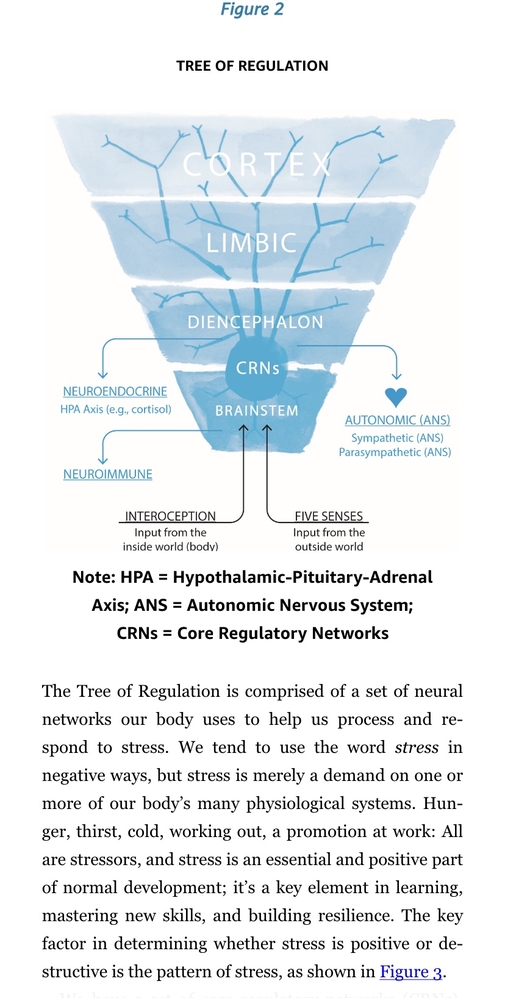
“If educators keep the focus on regulation and relationships, you’ll have many many more children with an open (able to learn) cortex. Keep the focus on regulation and relationship building you cannot go wrong,” Perry said.

Other topics Perry addressed during the more than two-hour event included workplace stress, how school boards can best support teachers, why going slowly is important post-pandemic, the importance of the arts and sports to brain development, and what corporations could learn about the importance of valuing their employees’ brains. The event was sponsored by the Buena Vista Foundation, Tapestry Foundation, The Klein Foundation, and St. David’s Foundation.

In the wide-ranging conversation, Perry also addressed these topics:

On preparing children to be ready for school this fall

“Play with them and let them play, and let them play with each other. Let them sort of reconnect with their friends, you know, do things that are fun. What that means is, if your kids over the summer have a regulating and rewarding set of experiences, they’re going to come to school ready to go to work.”

On the importance of fun

“I think fun is the best way to learn things. I think kids keep telling us that when they find something that they enjoy. It’s amazing what they can learn. So I am always happy to let them play, let them take the lead when it comes to acquisition of cognitive content.”

On school boards supporting teachers

We spend a lot of our work trying to help the teacher, through improving awareness about self care. But we’re really working to try to help schools to create policies and practices that are respectful, that are regulating, that are relational, so that there can be parallel process from, you know, the board all the way down to the administrators down into their classroom, down to the teachers and then out into the community.

When children learn self-regulation and take it home
When a child taught them (parents) a little bit about the brain, that’s really what we want to see. We think that that’s the greatest way to have this creating impact…as the children kind of become the teacher, when it comes to (teaching) that great framework of regulate, relate and reason.

On the pressures of being a young parent in today’s world

We put way too much pressure on our young parents. Human beings are intended to parent with more adults around us, with the extended family model, where there’s an auntie and an older cousin and the grandmother can jump in every once in a while to help. We’re not biologically designed to meet the fundamental needs of multiple kids by ourselves. So, first it (for) parents listening,  just be forgiving of yourself. Give yourself a little bit of a break. And remember what I said about the parallel process (of self-regulation) with teachers. You need to get regulated too. I mean it’s good for you to go to your exercise or take your walks or have your coffee with friends. That’s not being selfish. That’s actually allowing you to be your best for your child when they’re in the home.

What we can do to help each other during the pandemic.

I think one of the things that we really need to keep doing with each other is just be very nice to each other. We need to be kinder to each other. We need to go, “Wow, you’re in a tough situation. So how can I help? How can we figure out how to get us some help?”  And I think when we do that, the community will be better.

The question NOT to you can ask your children

Everybody knows that when kids come home from school, like the worst thing you could ever ask them is, do they have any homework. Don’t ask them. Feed them, give them a chance to get regulated, and then engage them. But again these are the things that we (all) need.

About bringing the concept of regulation into the corporate world

I have to say though there’s a lot of promise about bringing these concepts (regulate, relate, reason) into corporate environments and into the workplace. Because for the corporation, the most valuable resource of any organization is the people. And the most valuable part of those people is their cortex. That’s the part of them that can be creative, productive, and most social. All the things that you want in the workplace are going to be cortically mediated. And so, it’s in the best interest of the corporation to have a lot of open cortexes. And so once you teach people about this, then corporate environments change, and they create a more regulating, respectful environment. When we go to workplaces or organizational environments that begin to appreciate this, they make changes that lead to monetary bottom line improvements, and that, you know in a corporate environment, that helps something stick.

About protecting yourself in a toxic workplace

If you’re in an organization that doesn’t get this, you’ve got to figure out ways to protect yourself. And one of the most important ways to do it is with your tiny little group.You create a little group of people you feel safe with. You take care of each other. That’s how we optimally survive in relationship. So if you can find a group that you can connect with and belong with to help you sort of  buffer all of the things that go on at work, then that’s a really valuable thing, to have that small group. To just being kind to yourself and being kind to others. It’s such a simple and great message.

What should teachers know on as they go back to school

I would recommend that they (teachers) focus on regulation and relationship. And if those elements are incorporated into the process of coming back into the learning environment, you’re going to have many many more open cortexes. So whatever way you decide to do, whether it’s through team building or games, focus on regulation. And then, relationship building.

What administrators should focus on

Yeah, I think this is where you really need to have your administrators step up and protect you (teachers). There really has to be communication all the way up to the board of education in the state, so that we know that these kids are ultimately going to be able to master any of the content that we want them to by the time they graduate from high school or middle school or wherever. But if we’re smart about it, we’re going to keep more kids in school, which is a big issue for a lot of places in high school…if we don’t try to shove cognitive content down their throats, when everything’s all dysregulated.

And so, when I say go slow, I’m not saying don’t learn anything. I’m just saying, don’t let the pressure of not mastering some kinds of concepts unravel you, you’ll get through it. You may just want to change the pacing of how you learn certain things. You may want to think about different strategies of how you sort of co-mingle curricular content. I can guarantee you that if you had your teachers sit down and look at what you’re supposed to learn in history and what you’re supposed to learn in some other topic, they could come up with a creative way to collapse the minutes of instructional minutes and feather in a whole lot of regulatory stuff. You know one of the things that I think they should consider doing for example, is if you take a typical middle-school history teacher who’s got four classes, that person will give the same didactic presentation in 20 minutes four times in the day. He should record it, and then those kids can have control over when they watch it. And that’s part of their assignment, (to) watch the lecture, before you come to class. But then when you’re going in class, do stuff (that) is for regulating, and more conversational, more relational. They’ll get more engaged, they’ll learn more. So, if you let the teachers be creative about this stuff, they’re gonna do fine. But if you say, “Hey here’s the worksheet that you have to do on the third day of this week,” that’s just gonna make everybody feel crazy. And you’re setting yourself up for failure, and setting us up for failure.

On helping kids feel safe and become lifelong learners

If you really want people to be lifelong learners, and you want people to be creative and productive and contribute to society and ultimately pay taxes, and write books and do sculptures and create musicals, you’ve got to make them feel safe. You’ve got to make them love their learning environment. And you do that by respecting them and listening to them and being patient with them.

On resilience and the importance of community

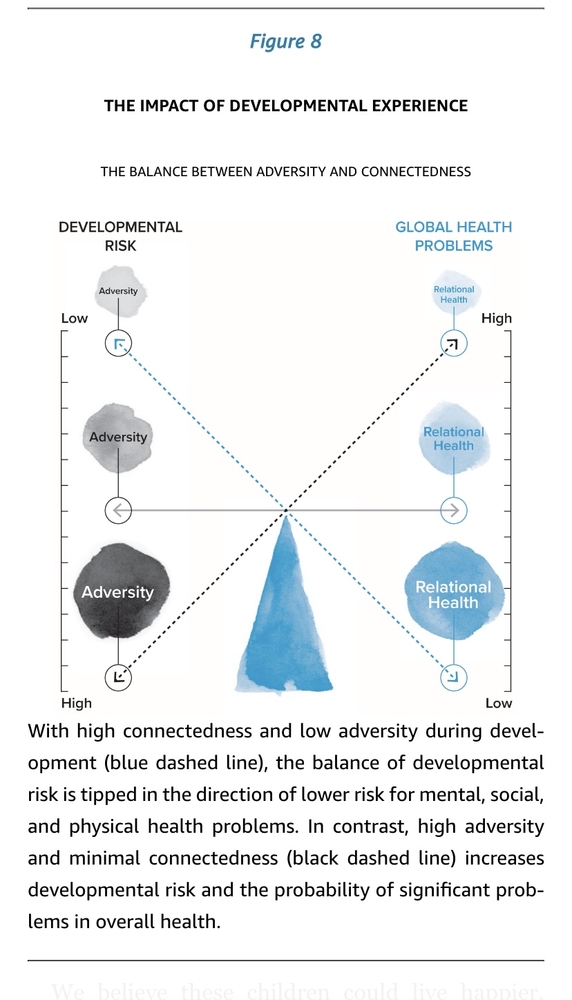
One of the things that we’re able to look at is the timing and the nature of bad things. It could be a loss of a parent, it could be abuse, it could be neglect and so forth. But we also looked at the timing and the nature of good things — relational health, connection to family, community and culture. And here’s basically what we find: that if you have adversity, but you also have connections to family and community and culture, which are resilience building factors, you’re not at any increased risk for bad outcomes. However, if you have adversity and the amount of adversities sort of outweighs the presence of relational connection, you have significant increase in risk.

And so this is where relational poverty is a really important thing. You know families that have no extended family nearby. They’re not connected to their community of faith; they don’t know their neighbors. That kind of social isolation puts you at tremendous risk for even minor adversity. If you have big adversity and then you have that relational poverty, that’s when you’re really at risk.

And, the ideal is, and this is why we really have been focusing a lot on building community, culture and connection to each other, is that we have a lot of relational health. Even with adversity, you end up being pretty healthy. And so in the end, the most powerful factors that determine how you function in the present is connections to others, positive connections. That is really is the major (factor). You know people that study resilience. It really is basically all about how you’re connected.That’s what we found; that’s what a lot of other people that do this research have found. You don’t have to have thousands of people that you’re connected to.

Oprah talks about this a lot. She literally points to one teacher who saw her and understood how special she was, and who really was her lifeline. She provided resilience building experiences that set her on her life trajectory. And I think that’s true for a lot of people. And the good news therefore, from my perspective is that every one of us out there can be that kind of person for somebody. You know, it may be your child or your nieces and nephews and maybe a neighbor kid, or it may be the kid you’re coaching in little league. If you’re a teacher, you’re doing this all the time and you probably don’t even realize you’re literally creating life-saving, and life-transforming experiences for children, even in the little moments, the moments when you really are present with them.

Sensory overload
One of the unfortunate things about our modern world is that we’re so sensory overloaded with our phones and our appointments that even when we are around people, we don’t slow down enough to give them that moment. People feel it when you see a colleague or a friend answer a text in the middle of a conversation. It’s a completely different experience than when they’re truly present and listening. I think that this is something that we can all do for the people around us, and if we can be better at doing that, the social fabric in our family and in our community will grow and become stronger. If you can put everything aside, and truly be with that person, and hear them, take a stance of curiosity, as opposed to a stance of judgment, you’re, you’re gonna make a huge difference in that person’s life,

The role of arts in learning
One of the most important resilience-building activities that you can do is music, the arts and sports. And the irony is, in educational environments, all too often we view those as add-ons, sort of as electives. But the truth is, if you really understand how the brain works, you’ll recognize that the best way to make somebody available for high-quality academic achievement is to give them episodic regulatory opportunities for resilience-building through sport, through music, through creative arts, through performance arts. Those things should be absolutely core to high-quality academic curriculum. If you look at the origin of Western education, sports, music, theater, they were all part of the traditional Greek and Roman education. People over centuries tend to do things because they work. And I think that we should listen to our ancestors in that regard, and reincorporate some of that back into schools.

For more information on the Dr. Bruce Perry webinar, the Austin Ed Fund and the Austin School District’s Social and Emotional Learning work visit https://austinedfund.org/dr-bruce-perry-event/

Carey Smith Sipp

carey.pacescommunites@gmail.com

❤️ 2

Tags: Bruce PerrySally HernandezSt. David’s Foundation

Views: 7,899

Add Comment

Carey SippCarey SippFormats 

javascript:””

Comments (1) 

Newest · Oldest · Popular

Christine BruglerChristine BruglerMember

Carey, thank you for sharing exchanges of this great conversation, as well as the link for additional resources! You rock! 

“What Happened to You?” by Bruce Perry and Oprah Winfrey: a book that resonates with us in the PACEs world

Carey Sipp Carey Sipp 6/8/211:25 PM

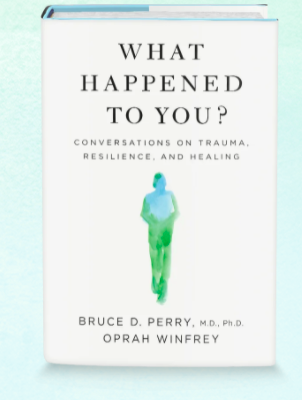
What do PACEs Connection and “What Happened to You?”, the new book by Oprah Winfrey and Bruce Perry, have in common?

Almost everything. That’s my conclusion after I finished listening to the book on Audible and re-reading parts of it on Kindle.

In the book, Winfrey, a world-class connector, journalist, entertainer, author, thought leader, actor, and philanthropist, teams up with her longtime friend Perry, a child psychiatrist, neuroscientist, and principal of the neurosequential model of brain-based therapy. They engage in a series of conversations about trauma, resilience, the power of relationships and community, healing, what they call post-traumatic wisdom, and  what we need now.

Screen Shot 2021-06-08 at 12.22.24 PM

With warmth and their easy familiarity with each other, they take us through an education about trauma that I believe the world is hungry for, explaining the science of adverse childhood experiences (ACEs) and why and how traumas have affected us. Perry does a masterful job of explaining that how we are loved as infants and children is likely to determine how we are able to love—or not love — as adults, with Winfrey giving pointed and moving examples. They truly ring almost all of the bells we at PACEs Connection hope to ring in our vision to create a world where all people thrive, and in our mission to prevent and heal trauma, and help individuals, families and communities create and build on the positive experiences that lead to strength and resilience.

Winfrey stuns us over and over with personal accounts of intensely painful personal traumas, and leaves us, throughout the book and especially at the powerful ending, with the hope that our traumas can help us become wise and powerful.

I honestly believed we would see a book or a series of O Network specials from Perry and Winfrey three years ago, not long after the “60 Minutes” interview when she and Perry talked about adverse childhood experiences and trauma-informed approaches. In previewing the interview, Winfrey told long-time friend and fellow journalist Gayle King of CBS that learning about ACEs Science and trauma-informed care “changes everything,” and that she’d “dance on tabletops” if that’s what it took to get people to pay attention to it.

Whatever moved them to share this life-changing work, this is my truth about it: “What Happened to You?” is a book that humanity desperately needs to help us remember, and understand, deep in our bones and DNA, that we are wired for connection and empathy, despite the economic and technological forces that can sometimes make them seem so far out of reach. It is a book I love and want to share widely, especially with parents, policymakers, educators, faith leaders, coaches, law enforcement, the medical community—actually, anyone and everyone—even young students, as I believe our knowing this information early on in life could help prevent many traumas to self and others.

Perhaps I am projecting as I listen to Perry talk about the unrealistic expectations with which society has burdened single mothers. Or I am connecting dots that aren’t there when I think that perhaps Perry and Winfrey could normalize the belief—even among the most hardened anti-welfare politicians—that reducing the overwhelm and stress of poverty, oppression, and multi-generational addiction and abuse is the right thing to do, because withholding support damages the brains of our nation’s children.

What do we, as a nation, love? What collectively inspires consensus?

I believe it is love for our children, and this book will help us remember that. It explains the importance of giving our children the best start possible—especially in the first two months of life—and could help spark healing relationships.

99E9EED4-E2EB-47B1-A97A-2AC2EF832875

In “What Happened to You?” the two long-time friends advocate for nurturing brain development, and for the mental health, trauma education, and well being of their fellow Americans, the world. I believe that what they advocate for—community, acceptance, and a common understanding of the need to prevent trauma, promote regulation, relationships and reasoning—is vital to restoring and saving our collective humanity. They want us to ask, “What happened to you?” instead of “What’s wrong with you?” because asking the second question can traumatize already traumatized people with the implication that there is something bad or wrong with them, as opposed to there being something bad or wrong that happened to them.

That Perry and Winfrey are a powerful team is indisputable. When she focuses her attention on something, change happens. I believe her decades of work as a trusted Black journalist, daily coming into the homes of all kinds of people with intimate, often hard-to-hear stories of childhood abuse and uplifting stories of people who’ve overcome obstacles, helped set the stage for Barack Obama’s presidency, the Me Too Movement, and some Americans being more willing to have some difficult conversations.

But even as brilliant and straightforward as Perry and Winfrey are, it likely took a lot of work to make the book as approachable as it is. Its conversational style belies the volumes of information many readers are likely to absorb.

Help for even the most broken children

It is fascinating to hear Perry share, with the utmost respect, stories of people who’ve endured unimaginable trauma. He discusses his calm, easy way of relating with children by getting on the floor to color with them, by having very brief but frequent connections, by building trust, by observing and asking just the right slightly probing question at just the right moment. It’s clear that he knows exactly what amount and weight a relationship can take and when. With the help of Perry and his team, children who would seem too broken to mend are brought back to functioning by patiently following his brilliant neurosequential model of therapy.

12940CB2-E09E-45AF-98B2-F0428529D39B

Equally compelling, Winfrey reveals vulnerabilities that are searingly sad. Because I listened to the book, her velvety, deep voice was so warm and rich it cannot leave my mind. It  haunts me as I recall revelations that were so painful, I needed to pull my car off the road or stop walking and sit down to catch my breath.

Among her most personal revelations were her grandmother’s intense beatings and her mother’s ongoing abandonment. She recalled standing with her mother at the age of six and feeling crushed by her mother’s agreement with her landlady to let “that dark-skinned-nappy-headed child” sleep outside on the porch on Winfrey’s first night in Milwaukee. That Winfrey knows the truth then—that she is absolutely alone—evokes feelings of empathy, anger, grief, fear.

Winfrey later reveals how she learned she’d never truly been “tucked into bed”. It was during the making of a movie when the director asked her to tuck a child into bed, and she realized she didn’t know that tucking in also means sharing affection instead of just arranging blankets, because no one ever tucked her in at night. I again had to stop the car to handle the shock and grief I felt for her.

In the final chapter of the book, Winfrey’s honesty, humility, and compassion are breathtaking and gave me chills, repeatedly, as she shared how she and her mother finally connected prior to her mother’s death. Have some tissues ready and know you are likely to be a stronger, better human for the privilege of hearing this account.

Hearing their easy conversation as Perry and Winfrey talk back and forth about the importance of community, relationships, regulation and education buffers the pain of the stories they share. They definitely found a rhythm in sharing concepts, examples, solutions.

944045D8-B6CF-44C2-95FA-634B44FE03E2Hearing Perry explain, through vivid and moving examples, how the body reacts to trauma, will hopefully open people up to be more compassionate about children who are dysregulated, people who are dysregulated, themselves  when they are dysregulated.

Perry’s stories illustrate beautifully how we are wired for love—or not—and that how we are wired is projected onto the world. That he has figured out ways to help people heal, and that this takes years of healing work, is hopeful, daunting, and instructive. Don’t write off children who’ve suffered abuse.

A constant source of reassurance for me is that Oprah survives the abuse she shares, and that we know she’s oftentimes enjoying life after having done such a heroic and remarkable job of overcoming, thriving, and helping others.

First two months of life are critical

Which leads me to a couple of many profound moments in the book. First, about developmental trauma and the importance of the first two months of life, of mothers and babies developing a secure attachment.

Perry writes, “The basic finding is that the experiences of the first two months of life have a disproportionately important impact on your long-term health and development. This has to do with the remarkably rapid growth of the brain early in life, and the organization of those all-important core regulatory networks.

“If, in the first two months of life, a child experienced high adversity with minimal relational buffering but was then put into a healthier environment for the next twelve years, their outcomes were worse than the outcomes of children who had low adversity and healthy relational connection in the first two months but then spent the next twelve years with high adversity.

“Think of that: The child who has only two months of really bad experiences does worse than the child with almost twelve years of bad experiences, all because of the timing of the experiences.

“This sounds discouraging. But we believe that poor outcomes are not inevitable; in fact, we believe that this is a perfect example of why we need developmentally informed, trauma-aware systems.”

Perry invites readers to think back to conversations about how important attentive, responsive caregiving is in providing the organizing experiences for the infant’s stress-response systems.

“Remember that if the life experiences of the first two months include inconsistent or unpredictable stress, this pattern of activation creates a sensitized stress response. That leads to a cascade of problems—trauma related problems. And even when these children are no longer in high-risk settings, their problems have to be addressed by caregivers, pediatricians, mental health providers, and educators. But if these people misunderstand what’s going on, if these systems focus on “What is wrong with you?”—as unfortunately, they typically do—the children won’t get better. They will continue to struggle. Their emotional reactivity and behavior problems will be viewed without a developmental or trauma lens, which could lead to ineffective interventions.”

Racism and trauma

A520C45A-14DD-43C7-92A3-EE91C1679AC1

Another big aha is Perry’s take on racism and trauma. He says: “I believe that if you don’t recognize the built-in biases in yourself and the structural biases in your systems—biases regarding race, gender, sexual orientation—you can’t truly be trauma-informed. Marginalized peoples—excluded, minimized, shamed—are traumatized peoples, because as we’ve discussed, humans are fundamentally relational creatures. To be excluded or dehumanized in an organization, community, or society you are part of results in prolonged uncontrollable stress that is sensitizing. Marginalization is a fundamental trauma.

“This is why I believe that a truly trauma-informed system is an anti-racist system. The destructive effects of racial marginalizing are pervasive and severe. In North America, Australia, and New Zealand, for instance, Black, brown, and Indigenous children are more likely to be over diagnosed and overmedicated in mental health systems, removed from their homes to enter the child welfare system, suspended or expelled from school, and charged at school with truancy and ‘assault,’ with the result that they enter the juvenile-justice system in disproportionate ways.”

If people could learn this and take to heart that each “micro-aggression” is actually damaging the brains of their co-workers, children in classrooms, grocery stores, buses, street corners, shops, schools—anywhere and everywhere that children, people of color are treated as less-than in even the slightest way—perhaps we would stop this invisible, persistent torture that is costing all of society by preventing children from reaching their full potential.

All this is why I think Winfrey and Perry would so connect with the work done at PACEs Connection to build community, to educate about trauma, to track the work being done, to engage people in sharing the science of positive and childhood experiences, and to celebrate that work. I believe they would help share the new science of positive childhood experiences—how important it is for children to experience and enjoy community traditions, feel supported at home and at school, have supportive friends and have at least two non-parent adults who genuinely care about them. Winfrey is living proof of the impact teachers can have in lifting a child up and helping them believe in themselves when no one else does. She readily credits a specific grammar school teacher for seeing something special in her, for nurturing her love of learning, and inspiring confidence when no one else did.

I urge you to borrow or buy and read this book, and if you are a member of one of the 400+ geographic or interest-based communities on PACEs Connection, entreat your community members to have a book group about “What Happened to You?”, post about it, and email the link to me at csipp@pacesconnection.com.

And  for more, listen to Oprah’s recent interview with Bruce Perry.

Attachments

Hide

Images (6)

Screen Shot 2021-06-08 at 12.22.24 PM
99E9EED4-E2EB-47B1-A97A-2AC2EF832875: Figure 2
12940CB2-E09E-45AF-98B2-F0428529D39B: Figure 3
944045D8-B6CF-44C2-95FA-634B44FE03E2: Figure 8
A520C45A-14DD-43C7-92A3-EE91C1679AC1: Figure 5
Screen Shot 2021-06-07 at 1.39.39 PM: Oprah Winfrey photo by Chris Craymer; Bruce Perry photo by Jimmy Greene

Carey Smith Sipp

carey.pacescommunites@gmail.com

❤️ 2👍 2

Tags: playreasonPovertyabusetrauma-informedhealing centeredcommunityrhythmhealingrelateregulationSingle mothersrelationshipRacism

Views: 27,775

Add Comment

Carey SippCarey SippFormats 

javascript:””