Tag Archives: life

Substance-abuse doc says: Stop chasing the drug! Focus on ACEs.

Jane Stevens Jane Stevens 5/1/179:18 PM

He says: Addiction shouldn’t be called “addiction”. It should be called “ritualized compulsive comfort-seeking”.

He says: Ritualized compulsive comfort-seeking (what traditionalists call addiction) is a normal response to the adversity experienced in childhood, just like bleeding is a normal response to being stabbed. 

He says: The solution to changing the illegal or unhealthy ritualized compulsive comfort-seeking behavior of opioid addiction is to address a person’s adverse childhood experiences (ACEs) individually and in group therapy; treat people with respect; provide medication assistance in the form of buprenorphine, an opioid used to treat opioid addiction; and help them find a ritualized compulsive comfort-seeking behavior that won’t kill them or put them in jail.

This “he” isn’t some hippy-dippy new age dreamer. He is Dr. Daniel Sumrok, director of the Center for Addiction Sciences at the University of Tennessee Health Science Center’s College of Medicine. The center is the first to receive the Center of Excellence designation from the Addiction Medicine Foundation, a national organization that accredits physician training in addiction medicine. Sumrok is also one of the first 106 physicians in the U.S. to become board-certified in addiction medicine by the American Board of Medical Specialties

Sumrok, a family physician and former U.S. Army Green Beret who’s served the rural area around McKenzie, TN, for the last 28 years, combines the latest science of addiction and applies it to his patients, most of whom are addicted to opioids — but also to alcohol, food, sex, gambling, etc. He sees them in the center’s two outpatient clinics: his clinic, which the Center for Addiction Science has taken over as its rural clinic, and another that opened recently in downtown Memphis.

Since he first sat down in the early 1980s to write a research paper (“Public Health Legacy of the Vietnam War: Post-Traumatic Stress Disorder and Implications for Appalachians”) to describe the symptoms of the newly named post-traumatic stress disorder in Vietnam veterans – “problems with the law, having trouble sleeping, anxiety, divorce, sleep troubles, substance use disorders, depression, anxiety, cognitive and chronic pain issues” — Sumrok has pieced together the ingredients for a revolutionary approach to addiction. It’s an approach that’s advocated by many of the leading thinkers in addiction and trauma, including Drs. Gabor MatéLance Dodes and Bessel van der Kolk. Surprisingly, it’s a fairly simple formula: Treat people with respect instead of blaming or shaming them. Listen intently to what they have to say. Integrate the healing traditions of the culture in which they live. Use prescription drugs, if necessary. And integrate adverse childhood experiences science: ACEs.

“My patients seem to respond really well to this,” he says.

ACEs understanding changes practice  

Learning about ACEs more than two years ago was a big turning point for his understanding of addictions, explains Sumrok. “I was working in an eating disorders clinic and someone told me ‘90 percent of these folks have sexual trauma’. I remember thinking: That can’t be right. But that was exactly right. Since I’ve learned about ACEs, I talk about it every day.”

He also practices it every day, by integrating ACEs assessments for all patients in his clinics. He currently has about 200 patients who are addicted, most to opioids (heroin and prescription pain relievers, including oxycodone, hydrocodone, codeine, morphine, and fentanyl). “I’ve seen about 1,200 patients who are addicted,” he says. “Of those, more than 1,100 have an ACE score of 3 or more.”

ACEs comes from the CDC-Kaiser Permanente Adverse Childhood Experiences Study (ACE Study), groundbreaking research that looked at how 10 types of childhood trauma affect long-term health. They include: physical, emotional and sexual abuse; physical and emotional neglect; living with a family member who’s addicted to alcohol or other substances, or who’s depressed or has other mental illnesses; experiencing parental divorce or separation; having a family member who’s incarcerated, and witnessing a mother being abused. Subsequent ACE surveys include racism, witnessing violence outside the home, bullying, losing a parent to deportation, living in an unsafe neighborhood, and involvement with the foster care system. Other types of childhood adversity can also include being homeless, living in a war zone, being an immigrant, moving many times, witnessing a sibling being abused, witnessing a father or other caregiver or extended family member being abused, involvement with the criminal justice system, attending a school that enforces a zero-tolerance discipline policy, etc.

The ACE Study is one of five parts of ACEs science, which also includes how toxic stress from ACEs damage children’s developing brains; how toxic stress from ACEs affects health; and how it can affect our genes and be passed from one generation to another (epigenetics); and resilience research, which shows the brain is plastic and the body wants to heal. Resilience research focuses on what happens when individuals, organizations and systems integrate trauma-informed and resilience-building practices, for example in education and in the family court system.

The ACE Study found that the higher someone’s ACE score – the more types of childhood adversity a person experienced – the higher their risk of chronic disease, mental illness, violence, being a victim of violence and a bunch of other consequences. The study found that most people (64%) have at least one ACE; 12% of the population has an ACE score of 4. Having an ACE score of 4 nearly doubles the risk of heart disease and cancer. It increases the likelihood of becoming an alcoholic by 700 percent and the risk of attempted suicide by 1200 percent. (For more information, go to ACEs Science 101. To calculate your ACE and resilience scores, go to: Got Your ACE Score?)

High ACE scores also relate to addiction: Compared with people who have zero ACEs, people with ACE scores are two to four times more likely to use alcohol or other drugs and to start using drugs at an earlier age. People with an ACE score of 5 or higher are seven to 10 times more likely to use illegal drugs, to report addiction and to inject illegal drugs.

The ACE Study also found that it didn’t matter what the types of ACEs were. An ACE score of 4 that includes divorce, physical abuse, an incarcerated family member and a depressed family member has the same statistical health consequences as an ACE score of 4 that includes living with an alcoholic, verbal abuse, emotional neglect and physical neglect.

Subsequent research on the link between childhood adversity and addiction corroborates the findings from the ACE Study, including studies that have found that people who’ve experienced childhood trauma have more chronic pain and use more prescription drugs; people who experienced five or more traumatic events are three times more likely to misuse prescription pain medications.
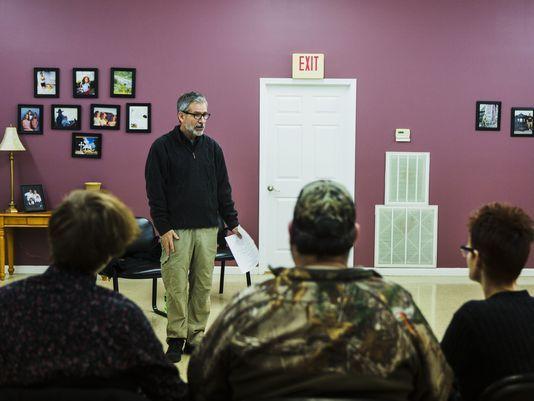
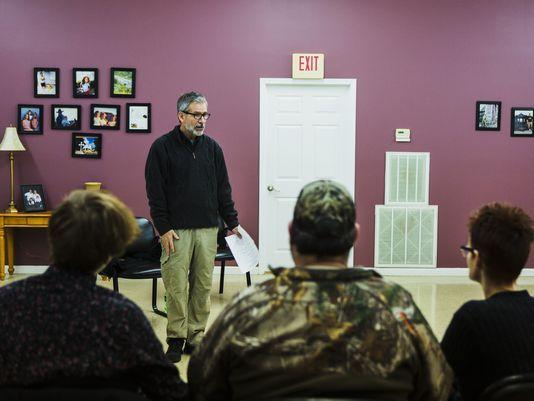
Sumrok group
Dr. Dan Sumrok with group therapy members at McKenzie, TN, clinic (Photo: Yalonda James, The Commercial Appeal)


“ACEs just doesn’t predict substance abuse disorders,” says Sumrok. “All of our major chronic diseases link to substance abuse, so this is too big to ignore.”

Whether you’re talking about obesity, addiction to cigarettes, alcohol or opioids, the cause is the same, he says: “It’s the trauma of childhood that causes neurobiological changes.” And the symptoms he saw 40 years ago in soldiers returning from Vietnam are the same in the people he sees today who are addicted to opioids or other substances or behaviors that help them cope with the anxiety, depression, hopelessness, fear, anger, and/or frustration that continues to be generated from the trauma they experienced as children.

Learning about ACEs helped him understand that the original definition of PTSD, which many people still cling to, is not accurate. In the 1980s, PTSD was defined as a result of trauma that was outside the realm of normal experience.

“That was just wrong,” says Sumrok. “Divorce, living with depressed or addicted family members are very common events for kids. My efforts are around helping people to see the connections, and that their experiences are predictable and normal. And the longer the experiences last, the bigger the effect.”

He also says, “Drop the ‘D’, because PTSD is not a disorder.” It’s what he learned from van der Kolk, who wrote The Body Keeps the Score. “Bessel says we’ve named this thing wrong. Post-traumatic stress is a brain adaptation. It’s not an imagined fear. If one of your feet was bitten off by a lion, you’re going to be on guard for lions,” explains Sumrok. “Hypervigilance is not an imagined fear, if you’ve had one foot bitten off by a lion. It’s a real fear, and you’re going to be on the lookout for that lion. I tell my patients that they’ve had real trauma that’s not imagined. They’re not crazy.”

Patients learn about their ACEs, understand their lives better

This is what happens when a person sees Sumrok for the first time: They fill out the 10-question ACE survey (Got Your ACE Score?) in the waiting room. “Then when I see them, I go through each question and ask them again,” says Sumrok, who also does a normal physical exam. “Frequently, there’s a difference between the two. For example, this morning, I saw a woman and she reported an ACE score of 1 on the survey. Then, when I asked her the questions, she reported nine out of 10.”

That’s just how I grew up, she told Sumrok. She didn’t think being beaten, humiliated or seeing her mother smoking crack every day was harmful or unusual, especially since most kids she knew were experiencing the same thing.

Sumrok normalizes their addiction, which he explains is the coping behavior they adopted because they weren’t provided with a healthy alternative when they were young. He explains the science of adverse childhood experiences to them, and how their addictions are a normal – and a predictable – result of their childhood trauma. He explains what happens in the brain when they experience toxic stress, how their amygdala is their emotional fuse box. How the thinking part of their brain didn’t develop the way it should have. How it goes offline at the first sign of danger, even if they’re not connecting the trigger with the experience. Drugs like Zoloft don’t really help much, he tells them. Zoloft and other anti-depressants don’t remove the memory triggered by the odor of after shave that was worn by your uncle who sexually abused you when you were eight, or the memory triggered by a voice that sounds just like your mother who used to beat you with a belt, or by a face of a man  who looks like your father who used to scream at you about how worthless you were…the examples are infinite. That’s why van der Kolk says, “’The body keeps the score’,” Sumrok says. 

“After I explain all this to them, many of them stare at me and say: ‘You mean I’m not crazy?’” says Sumrok. “I tell them, ‘No, you’re not crazy’.” Sometimes he yells out the door to his nurse: ‘Patsy! Where’s my not-crazy stamp? I need to stamp this person’s chart.”

For people who are addicted to opioids, he prescribes buprenorphine (one of the brand names: Suboxone), which helps them to withdraw from opioids and to keep their job, or return to work. For most people, the drug is less addictive than other opioids. Sometimes if people are young, healthy and haven’t been addicted long, they can withdraw from opioids without buprenorphine.

“There’s no buzz associated with buprenorphine,” says Sumrok. “They can concentrate and think. Once they’re free of the continuous distraction of the acquisition and use of substances, they become pretty valuable employees.”

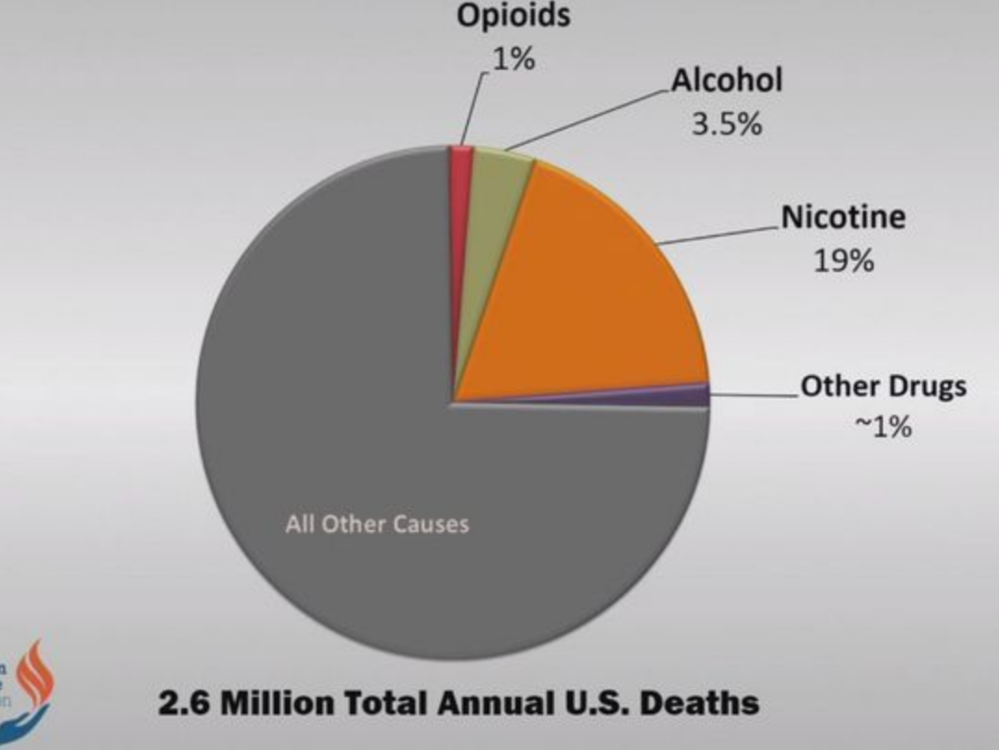
For people who are addicted to alcohol, he prescribes naltrexone (one of the brand names: Revia), because alcoholics have a high risk of death if they aren’t provided medication. And in this current national attention on opioids, Sumrok is careful to point out that although 33,000 people died from opioid overdose in 201588,000 people die annually from alcohol-related causes, and 480,000 from cigarette smoking. The complicating factor — and why policies don’t work when they chase the eradication of one drug, only to focus on eradicating the next popular drug of choice for “ritualized compulsive comfort-seeking” — is that many people use opioids and alcohol and cigarettes. And if they receive no help to get at why they’re using legal or illegal substances, they will move on to another, more easily accessible drug when the current drug they’re using becomes more difficult to find.  
Adrugdeaths

All patients sign a contract agreeing that they won’t drink alcohol or take other drugs. “We don’t mess around with that,” says Sumrok. “We can’t deal with them being deceptive, because if they drink or do other drugs, it can kill them. If their drug screens aren’t consistent, we ask them to find another doctor.” Just about everybody stays, he says.

They also participate in group therapy. For physicians who prescribe buprenorphine, it’s now required, but Sumrok had seen the research about the effectiveness of group therapy, and had started 12-step groups for his patients about 10 years ago. Talking with others who have the same experiences helps each person normalize their own experiences. Sumrok and the others in the group help each other find “ritualized compulsive comfort-seeking behaviors” that won’t kill them or put them in jail, such as coaching their kid’s soccer team or volunteering at a food bank. (Sumrok often quotes Forest Gump: “Helping helps the helper.”). He also encourages them to integrate other rituals into their lives, such as walking 30 minutes a day or other exercise, joining a 12-step group or finding a path to encourage a spiritual awakening.  

“Six months into this,” says Sumrok, “they start saying things like, ‘My wife and I are back together’, they’re hanging out with their kids. It’s pretty cool to see how people get their lives back. My favorite word is ‘normal’. When they tell me they feel normal, I know they’re doing okay.”

So, how long does it take before they’re cured? “How long should you take insulin if you have diabetes?” responds Sumrok, making the point that this is a chronic disease, that people should be in treatment for as long as it is necessary, and that some may relapse. His goal is for them to not have to use buprenorphine, but he knows that because of the number and duration of their ACEs, and the paucity of resilience factors provided to them when they were children, many will need continual support. He helps them learn how to integrate that support into their lives.

“When a diabetes patient comes in with a blood sugar level of 300, we don’t say: ‘Give me back that insulin.’ We intensify the treatment to get them back in balance,” explains Sumrok. “Only in addictions do we shame people. We tell them they can’t be part of this recovery anymore. We create a teeny hoop that’s called abstinence, and not too many people can jump through that hoop. If every time we saw a diabetic, we told them that their kidneys were going to fail, they would be blind and we would amputate their extremities, there wouldn’t be many diabetics who got help. I have patients who drop out, and then return a couple of months later, and say, ‘Doc, Christmas came, I saw some of my buddies, and I started using again.’ I tell them, ‘Come on in. Let’s work with you.’ And I remind myself that I’m not saving souls, I’m saving their asses. It’s about getting them so they can function at work, at home, at play. It’s not about making them perfect human beings.

“It has been abundantly clear to me and reinforced over a 40-year career,” continues Sumrok, “that patients desire, and respond better to, sensitive and informed care. From the Navajo Nation to Appalachia to Memphis and from the mountains of Honduras to the jungles of Amazonia, people regard respect as the sine qua non of quality care.”

Stories AND data drive solutions

Although Sumrok thinks his approach benefits his patients, he knows he needs data to prove it. When he saw a recent study that said 43% of people on buprenorphine were using other opioids, he did his own analysis of a sample of his patients, and found that only 8% were using other opioids. After tracking down those who were, most had good reasons, such as a man whose arm and shoulder were in a new cast after surgery repairing an injury, and he was taking a narcotic. Only one did not, and when shown his drug test, he said, “You know what? I slipped.” He talked about it in group, says Sumrok, and everyone in his group hovered around him to make sure he’d continue the program.
Derefinko
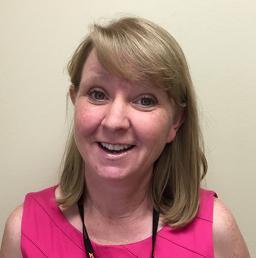
Dr. Karen Derefinko

Because Sumrok has kept fastidious records of the patients who have done their ACE scores, Dr. Karen Derefinko, a clinical psychologist and assistant professor in the Department of Preventive Medicine at the University of Tennessee Health Science Center, is starting a research project to examine all 1,200 records in Sumrok’s clinic in McKenzie to look at the relationship between people’s ACE scores and their adherence to treatment and their relapses.

“We think that people with high ACE scores are likely to have more relapses,” she says. “And that may be because people with higher scores have fewer resources and more difficulty associated with adhering to their treatment plans.”

She and her research assistant will de-identify the records, so that all information is anonymous, and then collect the data. Once that data is analyzed — probably within two months — Derefinko and her assistant will conduct focus groups of some of Sumrok’s patients. She’s already been sitting in some of the groups.

“Dan encourages this participatory nature of his groups,” she says. “People are very willing to talk. After the group sessions, they’re often not done talking about why they came to Sumrok and why other programs didn’t work for them.”

Through the records and the focus groups, Derefinko hopes to identify barriers to care, which include basics such as how people can find good care easily (most of Sumrok’s patients find out about him through word of mouth), being wary of the treatment because it isn’t explained to them, or — what Sumrok hears a lot — being judged or talked down to instead of given understanding and respect.

“In Shelby County, people complain about barriers to care, which many people think is because of economics,” she says. “But it may not be just economics that is keeping people from accessing treatment; it may be more about being judged, and not knowing what the treatment looks like.”

Being treated with respect builds trust, trust builds health

One of Sumrok’s patients – I’ll call him John, which is not his real name – has been driving 140 miles from Southeast Missouri to see Sumrok for the last five years. He began using drugs off and on during his 20s. When he was in his 30s, he injured his back, was sent to a worker’s comp physician, who prescribed stronger doses of pain killers until his back stopped hurting.

“I was taking pain pills like candy,” says the 46-year-old, who is married and has a son. “All of a sudden, the pills are gone, and you’re very sick, and I start looking for them everywhere – on the street, taking them from family members without asking – just to keep me from getting sick. I thought I had to have them to function. If I didn’t have six or seven pain pills, I wasn’t going to be able to get out of bed. If I didn’t get them, I’d be sick, puking….I’d do about anything to have those pills.”

After he spent his and his wife’s life savings, and the money they’d put away to buy a home, and his retirement fund from a previous job; after he saw friends die from overdosing; and after he realized that he was risking losing his wife and son, he told his wife he needed help, and they found Sumrok. 

“It’s been a miracle, for sure,” says John. As the Suboxone took effect, “after two or three weeks, I began to feel normal again.”

About two years ago, Sumrok asked him to fill out the ACE survey. “It really did make a difference,” says John. He had never connected experiences in his childhood with using drugs as an adult.

“When I was just a baby,” recalls John, “my grandpa took me from my mother, and told my parents: ‘When you guys are stable, I’ll let you have him back.’ Up until I was 10 or 11, I called them ‘Mom’ and ‘Dad’.’” His older sisters were sent to live with his other set of grandparents. He didn’t live with his parents again until he was 15 years old. His sisters were adults and out on their own by then.

Until he did the ACE survey and talked with Sumrok about his childhood, it didn’t dawn on him that losing his mother, father and his sisters at a young age could have affected him in ways he didn’t realize. “I knew I was loved by my grandfather and grandmother, but being a young kid and seeing other kids going out with their parents was frustrating,” he says. “I lived with old people who never left the house, while my parents were out running around. I maybe thought my mom and dad didn’t care about me enough to change. I might have always felt like I wasn’t important enough to my mom and dad for them to change the way they were living and acting.”

But now he has a better understanding of what it was like to be a 19-year-old in the late 1960s and involved in the drug and party scene then, as his parents were. He understands them better, and why they weren’t able to care for him. He and his family members have “had our discussions,” says John. “My family life is a whole lot better. I didn’t have relationships with my parents or sisters. We only live seven miles apart, and I barely saw them twice a year, if that. But now I have my wife back. I’ve got my son back. And I see my parents and sisters all the time. We’re a tight-knit family.” He’s also able to hold a job, and is a reliable employee.

John sees Sumrok once a month now. He participates in group therapy, where they can safely talk about their ACE scores without having to get into specifics. He checks in with Sumrok, who renews his prescription.

“I like group therapy with Dr. Sumrok,” says John. “He talks to us with respect. We feel very comfortable with him. Dr. Sumrok never lies. I trust him fully. And he trusts me. It took five or six months to build that trust. The more I met with him, the more I realized that he was really concerned about me. He wants to help people. Let him train more doctors in the procedures he uses. You can’t treat people like they’re nobodies.”

A 29-year-old patient, who chose to be called “Mr. Big” since I’m not using his real name, has been seeing Sumrok for the last six months. He had been in a methadone treatment program, and found Sumrok after he couldn’t pay for treatment any longer. Sumrok was the only physician who would take his insurance. Mr. Big filled out the ACE survey in the waiting room, but reported his score as a two. Then Sumrok went through the survey with him, and Mr. Big’s score climbed to an 8.

“It does help me understand my addiction better,” says Mr. Big, who is a single father of two children, five and six years old. “For one, my trauma in my childhood was very dramatic. I thought everyone’s parents did what they were doing. I could see why I related to narcotics and stuff. It was the only place I had to turn. I started taking opiates when I was 11 or 12 years old. I was playing football, and broke my ankle. They gave me painkillers that made me feel like Superman. I couldn’t get enough, because I wasn’t feeling like Superman without it.”

The Suboxone helps him feel “normal — probably the way everybody else feels,” says Mr. Big. “Nothing I took ever gave me that feeling before. I’m a better person, father, and a better brother” to his sister, whom he convinced to also get help from Sumrok.

The first time he went for help, to a methadone clinic, he didn’t like it for two reasons: Methadone made him nod off or feel high, and the people at the clinic treated him as if he was a number, or just there for the drugs. “That’s just unprofessional, in my opinion,” he says. “Sumrok actually sits down and talks to you like a human being.” 

Mr. Big wants to work with Sumrok to develop a “game plan so that I can live without my medicine,” he says. He just wants to live a normal life. What does a normal life mean?

“It means that I’m home overnight with my children,” he says. “I don’t have to rob, lie, steal, or cheat to find drugs. I can fit in with society and not be high off my mind. I can wake up every day and do stuff. My children — they know Daddy’s not in bed sick any more. It’s wonderful. I’m wore out. I never knew that first grade and kindergarten had homework that was so complicated.”

With addictions and deaths on upswing, how to increase addiction docs?

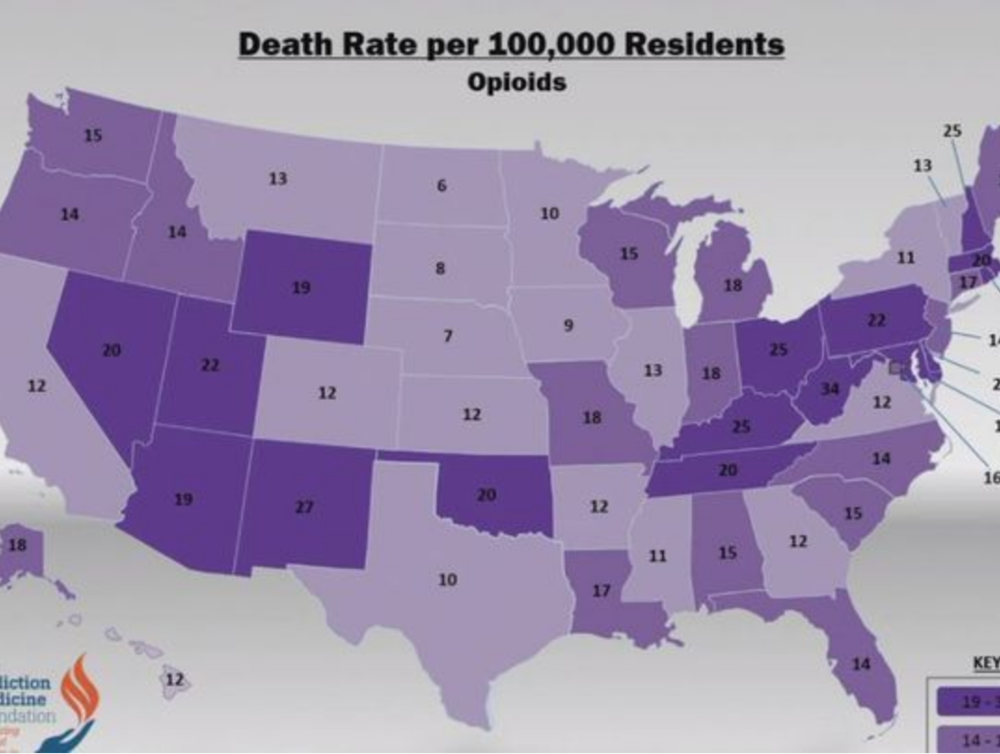
Prescription and illicit opioids are the “main driver of drug overdose deaths,” according to the CDC, with 33,091 deaths in 2015. That’s four times more than 1999. And between 2014 and 2015, Tennessee saw a 13.8 percent increase in opioid deaths. More than 1,000 people died from opioid overdoses in 2014, and tens of thousands of people lead desperate lives, most of them unknowingly fueled by their childhood experiences. Only 10% of these are getting the help they need, says Sumrok.
Adrugdeathrate

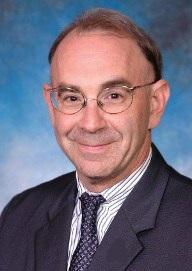
Dan Sumrok is just one doctor, in one part of the country. How can what he does be scaled up to thousands of physicians who can treat addiction successfully in all parts of the U.S.? By doing what Dr. David Stern, Robert Kaplan executive dean and vice-chancellor for clinical affairs for the University of Tennessee’s College of Medicine and the University of Tennessee Health Sciences Center, did: launch the Center for Addiction Science.

“This really starts with Dr. Altha Stewart, who’s the director of the Center for Health in Justice-Involved Youth,” says Stern. “She’s the one who showed me that kids with high ACE scores end up in trouble. When I developed the Center for Addiction Science, it had to be like a cancer center, it had to be multi-disciplinary. In the old days, we thought people who had addictions were weak in the moral department. You really needed someone to straighten you out, because your mother didn’t do a good enough job.”
DavidStern
Dr. David Stern

But that approach doesn’t work. Neither does criminalizing addictions. Stigma drives problems underground, says Stern, instead of driving them to a solution. The center is taking an integrated approach to using research and education to help people in all possible ways, from physiology to genetics to counseling.

Stern believes that every physician should know about ACEs science, which is one of the reasons he chose Sumrok to lead the center, along with his willingness to be creative and seek solutions across disciplines. “Two of the most prevalent things in acute care are depression and addiction,” says Stern. “I think it’s important to be able to understand what ACEs mean to patients, what addiction is all about, how to recognize it, how to treat it.” He’s in the process of finding an associate dean for medical education, and is looking for someone who will integrate ACEs and other social determinants of health into the school’s curriculum. 

“I think a medical school should provide for the community it serves,” says Stern. “This medical school should be the medical school for Memphis. We should develop solutions that are scalable.”

Dr. Altha Stewart, associate professor of psychiatry in the University of Tennessee College of Medicine, learned about ACEs in 2009 when a group in Shelby County began educating people about ACEs science. They brought Dr. Vincent Felitti, co-founder of the ACE Study, and Robin Karr Morse, who wrote Ghosts from the Nursery: Tracing the Roots of Violence, which was published in 2007, to give a presentation. (Karr-Morse later wrote Scared Sick: The Role of Childhood Trauma in Adult Disease with Meredith S. Wiley; it was published in 2012.)
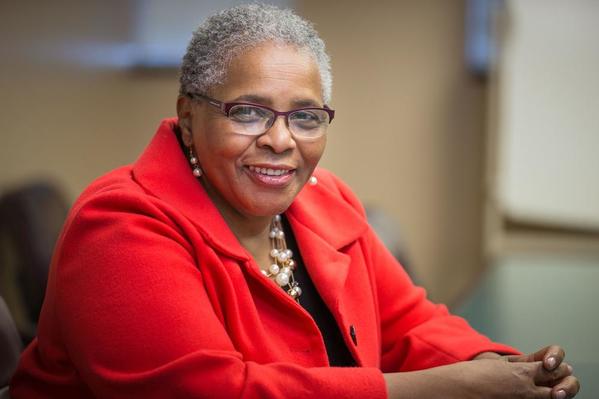
1-altha-stewart
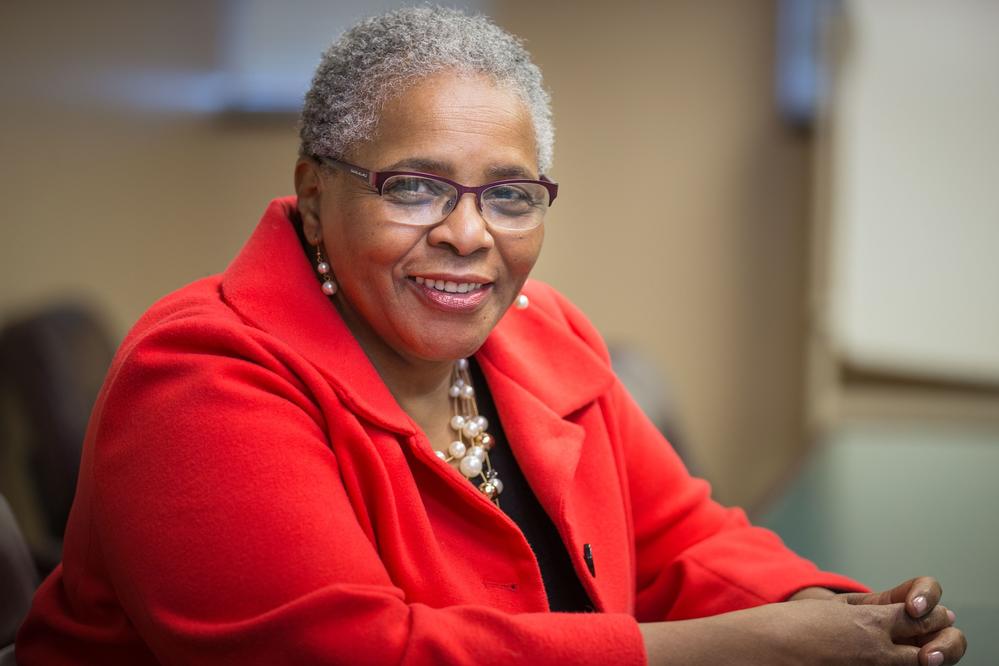
Dr. Altha Stewart


“It’s become a core part of what I do now in my professional work,” says Stewart, who was recently named president-elect of the American Psychiatric Association. She’s working with the Shelby County community and the local criminal justice system to integrate trauma-informed and resilience-building practices to find ways to help youth who enter the justice system — all of whom have likely experienced ACEs — instead of shaming, blaming or punishing them.

The things that have happened to kids — as well as to many people who come into the health care system — are out of their control, says Stewart. “When you’re a child, you don’t control the people who abuse and assault you, who create hostile environments, who don’t provide you with clean clothes,” sheAltha_Stewartpres says. “If a child can’t control their environment, because of these things they grow up thinking they’re bad, different, horrible people. This new approach (integrating trauma-informed and resilient-building practices based on ACEs science) helps them feel like they’re not drowning anymore. When they can pop their head out of the water and get a breath, and see outstretched hands, a life preserver, a life boat, that changes their entire perspective.”
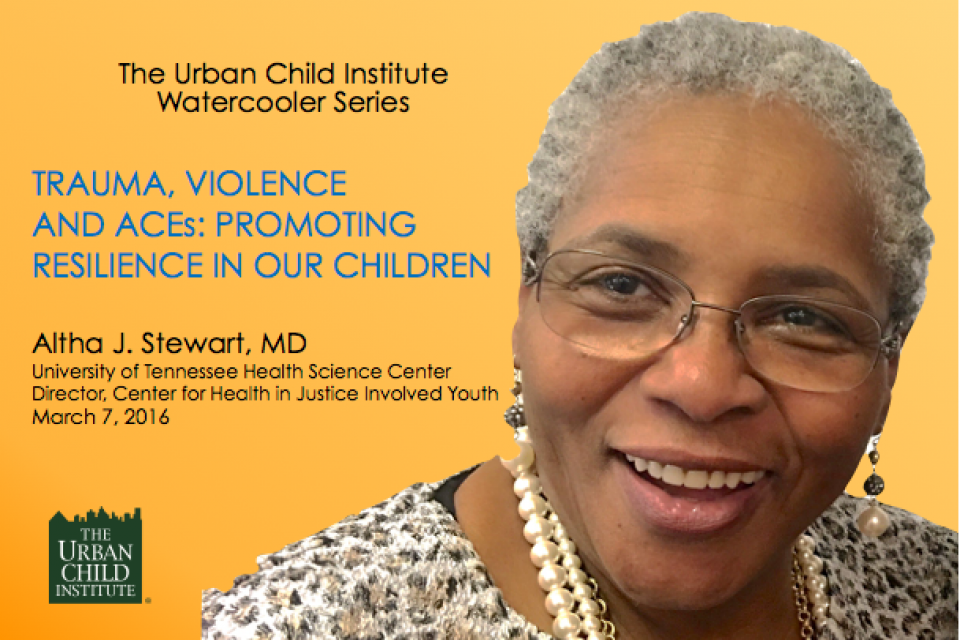
When Sumrok began integrating ACEs into addiction treatment, that was innovative, says Stewart. “If you don’t ask these questions, people tend not to tell you,” she says. Sumrok’s approach is part of a shift in patient engagement and involvement. “The trend in health care is that patients are partners in their treatment.”   

This new knowledge about why and how humans behave the way they do also speaks to how “we have trained the medical profession,” says Stewart. The traditional approach is that physicians “know everything. The people whom we treat know nothing. We tell them what to do, and if they don’t get better or do what we say, it’s their own fault.

“That’s simply not true,” she emphasizes. “Some of us have come to understand that there’s more expertise in the community and our patients than we’ve understood. That takes a bit of humility on the part of a physician, and an understanding that we are partners in helping a person heal.”

Sumrok’s experience with the young fellows at the Center for Addiction Science is giving him some real hope that the medical profession can change. When he’s explained to them how important it is to ask patients about ACEs and other aspects of their lives — such as food availability, safe housing, transportation, jobs (in the medical profession vernacular: social determinants of health) — “they say ‘isn’t that just taking a patient history?’”

He and others at the University of Tennessee Health Sciences Center have an opportunity to educate young physicians outside the state, too. Derefinko is also director of the newly created National Center for Research of the Addiction Medicine Foundation. The foundation oversees the 130 addiction medicine fellowships at 46 medical schools across the country.

“We want metrics to understand the impact they’re having” when they go out in the world, says Derefinko: where they go, whom they’re treating, how they’re practicing, whether they’re integrating ACEs science. In addition, the foundation will be developing some accreditation guidelines so that all fellows receive the latest and best education in addiction medicine.

One of those elements, says Sumrok, has to be empathy, which physicians can practice by listening, acknowledging and understanding how the experiences in a person’s childhood and adulthood have shaped their lives and health.

“Can you teach empathy?” he asks. “Can people learn to be empathetic providers? I think you can. I think so.” 

Attachments

Hide

Images (8)

1-altha-stewart
Altha_Stewartpres
Aopioiddeaths
DavidStern
Sumrok group
Adrugdeathrate
Adrugdeaths
Derefinko

Jane Stevens
Publisher, ACEsTooHigh.com
Founder, PACEs Connection

❤️ 15

Views: 425,538

Add Comment

Carey SippCarey SippFormats 

javascript:””

Comments (15) 

Newest · Oldest · Popular

Jane StevensJane StevensPublisher, ACEsTooHigh; founder, PACEs Connection

Thanks, Liz.

The pie chart came from The Addiction Medicine Foundation.


LBLiz Blackwell-MooreMember

Great article.  Do you have the source for the pie chart graphic on how many deaths are caused by tobacco, alcohol, and other drugs?  

Thanks

 

Russell WilsonRussell WilsonMember

Jane Stevens posted:

Thank you, Russell!

all that being said, I think a significant contribution of articles like Dr Sumrok’s is that it might help release people from the mental straightjackets in which they struggle, so to consider a bigger range of factors involved in more complex relationships. Such multifactorial studies can be very expensive and difficult to undertake. Look again at the recent discussion of Culverhouse’ “collaborative” meta-analysis of the role, or lack thereof, of the serotonin gene variant in influencing the role of early life stress in the development later problems — not all researchers agreed to have their data included in the meta-analysis. Whether or not current research methodologies, and inter-institutional schemes of arrangement, are up to the task remains a big question — meta-analysis itself is a relatively new methodology. Such questions won’t be answered in my lifetime but need to remain center-stage if we are to bring more humanity into the hard task of living human lives,


Jane StevensJane StevensPublisher, ACEsTooHigh; founder, PACEs Connection

Thank you, Russell!


Russell WilsonRussell WilsonMember

just became aware of this from the Australian peer support workers Facebook page

Jane, exhaustive / exhausting coverage of this! — people would be well acquainted with my own postings re this on this site — but also don’t forget that this is yet another re-visiting of the “self-medication hypothesis” — and for comments on this from  multi-disciplinary perspectives see http://onlinelibrary.wiley.com…012.04001.x/abstract

Darke’s article must be purchased to be read — he didn’t respond to my request to a copy when I asked closer to its original publication — but the comments letters are free.

“for every complex problem, there is a simple solution, and it’s simply wrong” — in practice, it’s a bit more complicated, but one cannot ignore the VERY high incidence of adverse childhood events in the AOD population, so “not true for everybody, but …..”


Jane StevensJane StevensPublisher, ACEsTooHigh; founder, PACEs Connection

Thanks, Emily! That’s a good point about the artificial bifurcation in trauma and addiction. The people who’ve worked at the Substance Abuse and Mental Health Services Administration (SAMHSA) have told me that it wasn’t all that long ago that people thought substance abuse and mental health weren’t related. And I think there are quite a few people who think that substance abuse and mental health and physical health aren’t related. ACEs science definitely shows otherwise!

Thanks for all that great work you’re doing at ConVal!


FMFormer Member

Fantastic article, Jane!  It is so edifying in the work I have led for the ConVal School District.  More importantly, it may help open eyes to those facilities and practitioners who have long made an artificial bifurcation in trauma and addiction (e.g. “you can’t be in treatment if you haven’t dealt with your trauma” or vice versa).  We need to further embrace a trauma informed approach across the continuum of care spectrum.  Again, great work!


Jane StevensJane StevensPublisher, ACEsTooHigh; founder, PACEs Connection

Thanks, Jen! That was my reaction, too, when I first heard the idea. It makes total sense!

 

Jennifer HosslerJennifer HosslerMember

Great article, Jane. I am particularly struck by this notion of dropping the “D” in PTSD.  It makes sense.  Calling it a disorder is further pathologizing what is really a normal or expected response to traumatic stress.  I had never even considered this idea.  We throw PTSD around so much to describe a variety of symptoms and reactions.  This is definitely something to consider.  


Jane StevensJane StevensPublisher, ACEsTooHigh; founder, PACEs Connection

Cissy, thanks for sharing this. Quite a few people have seen this today. I hope it’s helpful!

Jondi, thanks for your kind words!

Lisa, thanks for all the great work you’re doing; and for sharing that work on this network. 

Rick, I’m very glad you’re part of this community.

And, Mary — I agree. There are so many people who are integrating this ACEs science in creative ways that show the promise that this new knowledge has for solving our most intractable problems! 


❤️ 1

Mary L. HoldenMary L. HoldenMember

Thank you for this article…it gives me so much new hope for humanity!


RHRick Herranz Sr.Member

Jane

 You hit a home run with me on this article. Great job. I really am so happy to be a part of this informed community and men and women who are on the front lines of this Social epidemic.

Rick Herranz Tuesday 05/02/17

 

Lisa FrederiksenLisa FrederiksenMember

Thank you for writing this, Jane – it is so thorough and so needed. I have been working in the substance use disorders (or as Dr. Sumrok calls it, the “ritualized compulsive comfort-seeking”) field for many years, now, and once I learned about the ACEs Study – it was “ah – ha” – that explains how a person develops the disorder and it explains why they relapse because the root causes were not treated. Most importantly, it helps the person understand – they didn’t choose it or as Dr. Sumrok quoted his patients often saying, “You mean I’m not crazy?” 

 

❤️ 2

Jondi WhitisJondi WhitisMember

Jane, this is such a remarkably useful and accessible article; thank you.  I appreciate your making a complicated subject so readable and compelling.

 

❤️ 1

Christine Cissy WhiteChristine Cissy WhiteIt’s not trauma-informed unless it’s informed by trauma survivors.

Jane:

I’m sharing the heck out of this. What a fantastic profile and example of how thinking and lives and practices change, for the better, from an understanding of ACEs. To be on the receiving end of this type of care and approach (I love the “not crazy” stamps) is life-changing to life-saving. And it changes the entire framework for lots of us in ways that allow us to make more effective changes – as helpers and people being helped sometimes.

And with that, many of share this sentiment.

“Since I’ve learned about ACEs, I talk about it every day.”

Cissy
 

❤️ 2

Preventing Medical Error Takes Big Courage for Children of Alcoholics; Patients or Advocates with ACEs Scores

Carey Sipp Carey Sipp 2/16/183:02 PM

Mon 16 Jul 2012 19:56:56 |

By Carey Sipp

Almost nine years ago, over the course of four days, I let my doctor send me home from his office three times before I almost died of pneumonia. I spent two weeks in the hospital; it took many months to fully recover.  It was a life-changing experience, and I continue to learn from it.

About three years ago a physician’s assistant skipped a basic, obvious test for a 17-year-old with swollen glands. Twelve hours later, in the emergency room, physicians glanced at my daughter, diagnosed mononucleosis, and confirmed it shortly thereafter with a “spot mono test.” The greater danger though, came from a severe reaction to antibiotics, medication my daughter would never have taken had the mono test been done at the doctor’s office. The horrifically painful reaction could have killed her.

Despite the fact that I’ve helped in marketing and fundraising for more than a dozen medical entities, including a hospital safety consultancy, in my 30+year career, it’s taken years of a different type of recovery to realize that no physician has what it takes for me to care for my family and myself.  That requires the self-awareness, trust in my own intuition, and courage to risk evoking anger in someone in “authority” by calling them into question, if need be. That type of courage comes from becoming an emotionally healthy adult.

As a person healing from abuse, I must work doubly hard to stay in the moment and not let fears from the past keep me from doing “the next right thing.”  An overwhelming fear of authority, desire to “people please,” and a sometimes crippling self-doubt can prevent me from questioning others, especially if I am not taking great care of myself; if I am not “living in the moment.”

“I am a real bulldog when it comes to advocating for my mom,” I said to the staff at the infusion clinic where my mother was to receive three pints of blood recently.  The staff wanted to give her all three pints on the same day. My gut told me that at almost 87, my mom, who had just lost her husband to Alzheimer’s the night before, and has been weakened for years by an autoimmune disorder, did not need to be in that clinic for 16 hours straight. When, three days later, we received her diagnosis of congestive heart failure, the doctor said we’d made a good choice to stretch the procedures over two days.

My mother, daughter, and I survived each of those medical crises. I wonder, though, had I known more or followed my intuition earlier when my daughter and I were sick, if our outcomes could have been better.

By the time we got to my mom’s situation, I knew that relying solely on medical professionals does not ensure the best care. More important was learning how to trust my instincts and speak up. This is equally important for the millions upon millions of addiction and abuse survivors. We, especially, need to remember these bottom lines:

1. We need to practice “extreme self-care,” and try to stay out of the hospital; our health is already compromised by the stress of “adverse childhood experiences.”

2. If we do go to the hospital, just like everyone else, we need an advocate friend or family member to help us watch what’s going on – right down to asking hospital staff if they’ve washed their hands before we’re touched. We must value ourselves and have the courage to ask for help.

3. If you yourself are filled with the self-doubt, insecurity, and fear of authority that can come from growing up in addiction and abuse, these emotions can keep you from getting the best care for yourself and your loved ones. This is a good time to learn more about emotional healing that can help you, and your loved ones, learn how to speak up and become healthier on all counts.

There is not a surgical procedure that can cure the more than 30 million children of alcoholics who live, as I do at times, affected by some or all of the  14 characteristics of adult children of alcoholics called “The Laundry List,” by the ACOA fellowship. If there were such a surgical procedure, it could save our health care system literally billions upon billions of dollars from family addiction and abuse passed on from generation to generation.  Addictions to alcohol, food, drugs, cigarettes, and harmful behavioral addictions to sex, gambling, spending, pornography, and toxic relationships, cost our health care system more than any other single condition.

The most amazing thing? One of the most effective treatments for these addictions, and the co-addictions suffered by the family members, is free. It just takes the courage to find a support group such as Alcoholics Anonymous, Al-Anon, Adult Children of Alcoholics, Overeaters Anonymous, or the like. Again, the meetings are free. You can even call a toll-free number and attend meetings in complete anonymity, via a conference call.

Nine years ago,  had I not prayed for the strength to stand up and ask for what I believed I needed – a surgical procedure to remove fluid from my lungs – I may well have died.  I had to trust God, and my own God-given intelligence and courage to speak up.

The big lesson: recovery really does save lives, one day at a time, whether we’re in the hospital, or at the kitchen table.

Carey Sipp’s first book, The TurnAround Mom – How an Abuse and Addiction Survivor Stopped the Toxic Cycle for Her Family, and How You Can, Too, guides fellow “children of chaos” to create the kind of sane and loving home life that helps prevent next-generation addiction and abuse. Her book is available here.

RESOURCES:

acesconnection.com

 CDC Adverse Childhood Experiences 

Cost of Alcohol and Drug Abuse

There is help for Children of Alcoholics at

nacoa.org

(National Association for Children of Addiction)

and

adultchildren.org 

(Adult Children of Alcoholics World Service Organization Worldwide, Inc.)

Read more articles by Carey Sipp here.

Carey Smith Sipp

carey.pacescommunites@gmail.com

❤️ 5

Tags: Adverse Childhood Experiences

Views: 462

Add Comment

Carey SippCarey SippFormats 

javascript:””

Comments (1) 

Newest · Oldest · Popular

Karen ClemmerKaren ClemmerMember

The “Laundry List” so enlightening …


❤️ 1

Neurofeedback helps military family overcome suicidality, depression

Carey Sipp Carey Sipp 11/19/188:05 PM

Stacey Breitmann, trauma survivor, mom, military wife, neurofeedback advocate and coach.

“I want to see as many troubled families and individuals as possible – especially people such as I, who have experienced multiple Adverse Childhood Experiences (ACEs) –  have access to neurofeedback. It has changed my life by changing my brain. I grew up in a horrific situation, never able to trust being safe. Stress would take me back to that childhood place of feeling terrified. Neurofeedback helped me become more rational, as my brain was trained to function with less stress. Now that I am not in constant panic, I can see the parts of our lives that are not going the way we want them to go and can look at these challenges with clarity and openness instead of fear and blame, shame, or guilt,” says Stacey Breitmann, trauma survivor, mom, military wife, and neurofeedback advocate.

For the Breitmann family in North Georgia, the last few years have been intensely stressful. Todd, a Lt. Col. in the Air Force for 24 years, retired in 2012, and fell into depression and anxiety when his military career came to an end. In an attempt to change the mood by changing the focus and location, the family bought a farm, sold it, tried life in a Winnebago for a couple of years while homeschooling their daughters on the road. Finally, when they settled in North Georgia in 2016, family stresses and Todd’s depression became so crippling that he became suicidal. Residential treatment seemed to be the best option.

In Todd’s absence, his wife Stacey did what good military wives do: She ran the household – as the mom and the dad. But the stress of being left behind this time were life-threatening for her too. Her fears that Todd might take his life during treatment drove Stacey beyond depression into being suicidal, too.

To read the rest of this post by Carey Sipp, ACEs Connection SE Regional Community Facilitator, click here.

Carey Smith Sipp

carey.pacescommunites@gmail.com

Trauma tried to kick down the door. Compassion is helping me heal.

Carey Sipp Carey Sipp 1/26/207:03 AM

The artwork is an original piece titled “Someone at the Door” by Chicago artist Ken Shaw. I bought it about 35 years ago.

(The first part of this piece was written in-the-moment, as an email to a friend following what, for me, was a traumatic experience. The second part of this piece was written about 10 days later, as part of a healing reflection. It occurs to me that this experience, and the reflections, might help someone else experiencing trauma and/or seeking compassion for self or others.)

 PART 1 – AN EMAIL TO A FRIEND AFTER THE TRAUMA.

A woman just banged on my door and damn-near broke it down. It scared the bejesus out of me. F*#k.  Half-asleep I opened the door. She was looking for Jake. No Jake here.

I talked to her for a couple of seconds and then she reached into her purse for God-knows-what. THAT’S WHEN I FREAKED.  Was she reaching for a gun or a knife? I didn’t know. I closed the door. She pushed and pushed against it, but I finally got it closed and locked.

 Then she got mad. And started yelling and then kicking the door. Kicking the door. Kicking the door.

 Heart in my throat.  I found my phone and called the police.

 They arrived and found her next door, banging on that front door, looking for Jake.

They got her down the steps and have been out in the street with her for 15 minutes. God. CPTSD (Complex Post Traumatic Stress Disorder) City.

 Drunk, doped, and psycho people freak me out.

I was already agitated having gone to sleep worried about the political tension between the USA and Iran. These existential threats weigh heavy on me. Potential war. Australia burning out of control.  Floods swamping the South. Then there is my dog, Cosmo, barking, barking, barking.

My heart is pounding out of my chest.

Writing this is helping me calm down.

I am here. It is now.

I’ll play Scrabble on my phone. I’ve read that playing a game after a traumatic event can help prevent Post Traumatic Stress Disorder (PTSD). I wonder if it can help folks who, like me, already have Complex PTSD and don’t want it to get worse because of some random-ass occurrence like a large and apparently out-of-control woman trying to break down your door while accusing you of harboring a guy named Jake?

 Okay. Breathe deeply. I wonder if the police will check on me or not. Damn. I could be having a heart attack and they wouldn’t even know. And I could do something about that. I could call them and say, “Please come check on me.”  Okay. My heart rate is slowing down a bit.

Damn. I had gone to bed early because I didn’t sleep well the last two nights. Both nights I’d checked my phone during the night. That is not a smart thing to do when I want a good night’s rest. I flunk sleep hygiene.

 Well, the police left. I don’t know what happened to that woman.

 She was about 5’9 and probably weighed 180. I’d opened the door thinking it was my housemate’s son banging on the door. Maybe he and his mom had driven straight through the night and were back from their trip.

 I’m so damned glad I got the door closed. She just kept kicking it. For about two minutes she kept kicking on it. I cannot believe the police didn’t ask me if I wanted to press charges. I get that pressing charges would just extend the trauma. But they didn’t even come back up the steps to check on me or call. Nada.

 What a weenie I am. There are people in flood zones, fire zones, war zones and I’m freaking out because a tanked-up human tried to kick the door down.  But, trauma is trauma. A friend would remind me not to diminish how terrified I was; I am. Again, she reached into her purse, I thought she had a gun. Guns terrify me. Absolutely terrify me. Mention them and sometimes I can smell gun oil.

Okay. I am gonna be alright. I’m gonna play Scrabble for a few rounds. I suck at

Scrabble. I’ll do it anyway. I’ll get up and dance to discharge all this adrenaline.  I remember the Community Resiliency Model (CRM) advice and push against the wall. This helps.

I put my back against the wall and breathe and push, using my thigh muscles to really press in. I turn around and face the wall and push, push, push on the wall.

This helps. I jump up and down. I do pushups.

 I have power and agency. I am strong and I’m in my body. This helps. I have choices. I have choices.

I can drink water and eat and go to the bathroom and turn on music or a movie or write. I have choices. I am alive and I have choices. It is 2 a.m. or so and I can write some more and I have choices. Thank God for choices.

 PART 2 – A FEW DAYS LATER:

I look back on the whole experience of the woman at my door and I am overwhelmed with compassion for myself as a little girl. When I was a child, my father, who was a traumatized human himself, would often wake us all up in the middle of the night after a night of drinking. He fought with my mom. He had a hair-trigger temper. He grabbed her by her hair, twisted her arm behind her back. Smacked her.

One time he broke the glass to get into the back door.

Another time there were gunshots.

Guns were always around and, in my mind, were a constant threat. I was always afraid that he would use one on Mother or himself or on all of us. Or one of our pets.

 And so as I reflected on the recent night and all of those nights as a terrified, helpless child, I felt tremendous compassion for myself that I went through that kind of trauma and drama night after night. And that day after day I would want to go back to sleep and not go to school because I was so very tired. But Mother always pushed me to get dressed and out the door to school so she could go to work.

 Never, that I remember, did we ever stay home after one of those crazy nights.

 So that little me would go to school. Lots of times I would get carsick on the way to school, get there, go in, and have a hard time not throwing up.

 It wasn’t until third grade, when I began to have sleepovers at friends’ houses, that I got my first  glimpse that other people’s dads didn’t break into their homes in the middle of the night.

 In addition to feeling tremendous compassion for my younger self, I thought about the woman who tried to kick the door down. I began having compassion for her. Hell, if some things in my life hadn’t gone SO WELL, I could have been her.

I also know the experience of this woman coming to my door was random, not intentional, as the adverse experiences in my childhood were. I began wondering how she ended up in this neighborhood. She is somebody — a daughter, sister, aunt, niece, maybe even a mom — and she is NOT her behavior. She could have just been out for a cocktail and somebody could have slipped a “Mickey” into her drink. Or she could have been out drinking because she was in horrific grief. We never know why people do random, sometimes bizarre things.

 My dad? I feel compassion for him too. I have for years, thank God. I’ve felt compassion for both of my parents. I think he drank and acted out because he was in pain from his childhood trauma, and from World War II, when, as a young submariner, there is no telling what kind of fear he experienced.

His trauma doesn’t excuse his violence. But seeking to understand the roots of his behavior has softened my heart and helped me to forgive and move on and to have, sometimes for long stretches, healthy relationships with men I have loved.

 I am grateful that I can look at my father and mother, both of whom terrified me, with compassion. They were also terrified and terrorizing. Like the woman at my door.

 And THAT is the whole point of integrating this new knowledge about ACEs science into our lives, right? A “turnaround”?

Somebody in the cycle has to stop and connect with the reality that the behavior of someone who is acting out – drinking or raging or whatever – is not about us.

 It is about the person who is acting out and something that happened to them, some pain they are expressing in a way that is the best way they can in the moment. And probably most of their acting out is a cry for help. I have to remember that.

 And in my job with ACEs Connection, I know I have to remember this and move forward with compassion, and model this to the people with whom I work. I want to show people how to not traumatize and terrorize already traumatized people. And that is why I need to practice self care, compassion, and compassion for others.

Days later, as my body still works to settle down after those flight-fight-freeze moments of terror, this means I treat myself gently.

Carey Smith Sipp

carey.pacescommunites@gmail.com

❤️ 9

Views: 1,229

Add Comment

Carey SippCarey SippFormats 

javascript:””

Comments (5) 

Newest · Oldest · Popular

Christine Cissy WhiteChristine Cissy WhiteIt’s not trauma-informed unless it’s informed by trauma survivors.
Carey:
What an important, beautiful and clear piece of writing to show the then/now/then/now push and pull when it comes to our responses, reactions, and how we relate to ourselves during and after current fear and trauma. It all gets tangled and intertwined. I appreciate you sharing your responses and how you calibrated over time. I especially love your current compassion for the child you were who didn’t have the same knowledge, resources, languages, and tools and then the compassion for others past and present, including those who caused your fear. That moved me so much. Keep writing!

Warmly,
Cis


❤️ 1

Carey SippCarey SippFormer Volunteer Co-Director, PACEs Connection Revitalization

Tina Cain posted:

I wish I had my NFB machine I’m gonna get. If you wanted, I would come find you and I would do all I could to help.   I’m so sorry. 

Tina – That is so sweet!

I love neurofeedback and have been doing it for two years. My NFB provider in Wilmington saw me two days later and it was a big help. I go weekly. Used to go twice a week. NFB is a big part of my self-care program! We should talk. We will talk. Thank you! 

And I am doing well. Have wonderful friends here. A good EMDR therapist. I reached out for help. Looked at what went “right” that night (police here quickly; support from friends; I knew to practice extreme self care; it was random and I live in a normally extreme light peaceful neighborhood; etc.) 

Thank you for your concern! 


❤️ 1

FMFormer Member

I wish I had my NFB machine I’m gonna get. If you wanted, I would come find you and I would do all I could to help.   I’m so sorry. 


❤️ 1

LHLaura Haynes CollectorMember

Beautiful healing here!


❤️ 1

Dana BrownDana BrownInterim (Volunteer) Executive Director PACEs Connection

Dearest Carey:
Thank you for your courageous, insightful, wise words, Carey Sipp.  Your reflective thoughts carry a lifetime of pain, abuse, fear, hope, compassion, and love.

Compassion with self, and others in our lives who we have a relationship with, and folks in the public we don’t know well, permeates through your blog. Highlighting “voice and choice” when you didn’t have a voice (childhood – woman banging on your door) and your life’s evolution to deeply knowing you have choices (self-soothing strategies, the “turnaround”, the CRM model) will plant seeds of hope within all who read your piece.

Much Love and Light surrounding you, Carey, as your healing journey continues.  I love you dearly… 


❤️ 2

Back To Top

Post

Add Comment

Manage Blog Post

Welcome to PACEs Connection

Learn about PACEs Connection & who we are.

How to be a part of our social network.

Join local or interest based communities.

Invite others to join PACEs Connection!

The text 'donate' on a background with many inter-connected spheres

Comments

Carey Sipp commented:
Thanks for posting, Laura! For posting this, and so many more blogs over the years. I’m thinking of the ones YOU’VE written (you are…

Carey Sipp

Carey Sipp commented:
Thanks, Jeoff. A lot of great relationships and ongoing work came from this incredible gathering. It laid the groundwork for deepening…

Carey Sipp

David Dooley commented:
Thank you for commenting, Mr. Holmes. I’m not sure what you’re getting at. Can you give me an example?

David Dooley

Tommy Holmes commented:
I loved how you highlighted the connection between ACEs and community resilience! It’s so important to empower people with this…

Tommy Holmes

Patrick Anderson commented:
This one landed, Dr. Long. What I’d underline is that you’ve framed being pushed out as a pattern rather than a run of bad luck — and…

Patrick Anderson

Robert Hawk commented:
That story is heartbreaking and really shows how history and present-day realities can intersect. Reading about Black history in China…

Robert Hawk

David Dooley commented:
Thank you for writing, Mr. Anderson. You wrote… “Your instinct that the utopia requires entirely new forms of parenting education that…

David Dooley

Cecilia Pace commented:
[heart] Pace, Cecilia reacted to your message:

CP

PACEs Connection Discount for Trauma Informed Jobs

TraumaInformedJobs.com is a new job board for the trauma and resilience communities. PACEs Connection members can save 10% on posting with code PACES10

Blog Archive

August 2026(6)

July 2026(35)

June 2026(35)

May 2026(28)

April 2026(37)

March 2026(29)

February 2026(26)

January 2026(18)

December 2025(31)

November 2025(33)

October 2025(32)

September 2025(28)

August 2025(32)

July 2025(26)

June 2025(23)

May 2025(37)

April 2025(35)

March 2025(32)

February 2025(67)

January 2025(62)

December 2024(55)

November 2024(38)

October 2024(38)

September 2024(0)

Blog Directory

Foster Care

PACEs

PACEs Science 101

Resources

Creating Resilient Communities

Donor Profiles

Special Announcements

STAR Network

Research

Feature

Jane Ellen Stevens

History. Culture. Trauma. Podcast

History. Culture. Trauma. Blog

CRC Fellowship

PC Reacts

Blog Directory

A Better Normal Friday, June 26th at Noon PDT: “Grief/Family Trauma in the Time of COVID-19”

Carey Sipp Carey Sipp 6/19/201:44 PM

Please join us for the community discussion of A Better Normal, our ongoing series in which we envision a future in which every community, organization and system has integrated practices based on ACEs science to create a better normal. The one we had wasn’t working very well.

 “Grief/Family Trauma in the Time of COVID-19” 

With Tian Dayton, PhD, psychologist, author. Moderated by ACEs Connection staff members Carey Sipp and Alison Cebulla 

Friday, June 26th, 2020

Noon to 1pm, PDT (3 p.m. – 4 p.m. EDT)

Click here to register

As Tian Dayton, PhD, writes, “The uncertainty and unpredictability that are part and parcel of COVID-19 over time can produce many of the same trauma symptoms as we see when treating PTSD. But in this case, we’re not talking about a one-time event with a clear beginning, middle and end. Rather the length and duration here are unclear and the finish line is constantly in motion. We hear conflicting information and don’t know who to trust. We worry about what our future and the future of those we love might hold. This kind of daily atmosphere can lead to a kind of ‘anticipatory grief’.” 

Dayton shares this quote from Stacey Colino of US News and World Report: ”Pre-trauma stress is a phenomenon you won’t find in the Diagnostic and Statistical Manual of Mental Disorders (DSM-V). The symptoms are similar to post-traumatic stress disorder (including grief, sadness, worry,  disturbing intrusive thoughts, sleep troubles and nightmares, and avoiding situations or activities that are reminiscent of the stressful event) but in this case, they stem from anticipatory anxiety about an event that may occur in the future.”

“The symptoms we’re describing here,” notes Dayton, “like anxiety, shock, disturbing thoughts and mood shifts can, if they remain unacknowledged or unattended to, morph into PTSD. Taking the time to work through the feelings that this period is bringing forth in us as they happen, can go a long way to acting as a preventative to later problems and life complications.”

During the discussion Dayton will strive to: 

  • Cut through the emotional and psychological “red tape” of pre-trauma symptoms that might be keeping us immobilized. 
  • Discuss anxiety or depression that may be leading us to act out in abusive or neglectful ways. 
  • Look at symptoms that are making us want to eat, drink, or drug our way back to calm rather than adopt the healthy habits that will not only bring calm, but give us the life skills to carry forward that will enable us to change and grow. 
  • Discuss the need to feel our feelings as we have them, so we can heal them, in the here and now, as having mini healings now may help us avoid the need for maxi healings later.
  • Discuss how pain from the past can get mixed up with today, leading us to be confused and overwhelmed. 
  • Discuss how the present, the very real stress of today can take its toll on our peace of mind, as uncertainty, and conflicting reports as to what to do, can evoke our fight flight, freeze response.  
  • Discuss the very significant anxiety about what the future will hold; what’s next? When will this be over and what will “over” look like? My world is changing;  what does that mean for me? 

Dayton will also help participants to look at the many faces of grief:

  • Anticipatory grief 
  • Age correspondence reaction 
  • Parental Inner Child Grief 
  • Complicated grief/mourning 
  • Inhibited grief 
  • Cumulative grief 
  • Collective grief 
  • Normal grief
Screen Shot 2020-06-18 at 10.52.11 AM

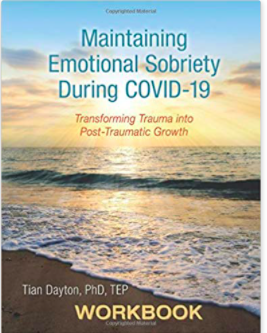
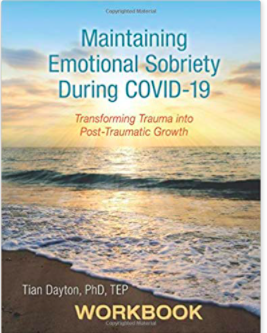
Dayton will also discuss post traumatic growth and share from her latest book, Maintaining Emotional Sobriety During COVID-19 and how it can help us see, as she says, “What’s getting triggered inside of you, as a window into your inner world, a way to get to know yourself, your coping styles and your manner of being in intimate relationships. You can learn. You can grow from adversity by meeting it with openness, humility and grace.”

Screen Shot 2020-06-18 at 10.56.03 AMDayton is a Senior Fellow at The Meadows. She is the author of fifteen books including The Soulful Journey of Recovery, The ACoA Trauma Syndrome, Emotional Sobriety, Trauma and Addiction, Forgiving and Moving On andThe Living Stage. She has developed an approach for incorporating experiential work into treatment programs and group work, Relationship Trauma Repair RTR.

Dayton has a master’s degree in educational psychology and a PhD in clinical psychology and is a board certified trainer in psychodrama, sociometry and group psychotherapy. She is a certified Montessori teacher, and is the director of The New York Psychodrama Training Institute. A nationally renowned speaker, expert, and consultant in psychodrama, trauma and addiction, adult children of alcoholics (ACoAs) and self-help related issues, Dayton was on the faculty at NYU for eight years teaching psychodrama. 

She is also a fellow of the American Society of Psychodrama, Sociometry and Group Psychotherapy ASGPP, and is a recipient of the Lifetime Achievement Award, Scholar’s Award, President’s Award and Gratitude Award. Dayton is the former editor-in-chief of the Journal of Psychodrama, Sociometry and Group Psychotherapy and a member of the professional standards committee. She is also the winner of The Mona Mansell Award and The Ackerman/Black Award, and has been a guest expert on NBC, CNN, MSNBC, Montel, Ricki Lake, John Walsh, Geraldo. Dayton blogs for Thrive Global and The Huffington Post.

Click here to register.

Attachments

Hide

Images (2)

Screen Shot 2020-06-18 at 10.52.11 AM: Maintaining Emotional Sobriety During COVID-19
Screen Shot 2020-06-18 at 10.56.03 AM

Carey Smith Sipp

carey.pacescommunites@gmail.com

Tags: Emotional SobrietyPost Traumatic GrwothTianBetterNormalACEs

Views: 1,372

Trauma-informed policing: Learn how three highly experienced community leaders strengthen ties between police and community

Carey Sipp Carey Sipp 7/24/203:29 PM

ACEs initiative participants in communities where there is tension between the community and law enforcement will want to join Becky Haas in a compelling conversation on law enforcement, ACEs science, COVID-19 and the Black Lives Matter movement and protests. Haas is a nationally recognized adverse childhood experiences (ACEs) science initiative builder and trainer. She and colleagues Renee Wilson-Simmons, the head of the ACE Awareness Foundation of Memphis, Tennessee, and Maggi Duncan, executive director of the Tennessee Association of Chiefs of Police, will share a vision of trauma-informed law enforcement and answer your questions on Friday, July 31 at noon PDT; 3 p.m. EDT.

Wilson-Simmons and Haas will discuss, among other topics, how parents are the key to preventing many ACEs, and give an in-depth look at the ACE Awareness Foundation’s signature program, Universal Parenting Places (UPP), where parents can receive professional counseling, information, and emotional support for family-related issues or concerns, no matter how small. 

Haas and Duncan will discuss how their mutual passion to reduce childhood trauma has led to their work on behalf of Tennessee Governor Bill Lee to launch,  statewide, the Handle with Care (HWC) law, an innovative partnership with law enforcement and education.

In 2016, when Haas was working for the Johnson City Tennessee Police Department, staff was approached by HWC developer, Andrea Darr, about launching the program. Since Haas was simultaneously beginning to train her community about ACEs she knew that HWC was what they needed in her area of Tennessee, ravaged with opioid addiction, to help prevent trauma for children there.

Haas headshot

Haas had started sharing ACEs science with her community shortly after learning about it in 2015. Getting the word about HWC was another step in a long path toward helping the state of Tennessee, and now communities throughout the United States, become more trauma-informed. 

“When children have seen parents fighting, or acting out in other ways on drugs or alcohol, to the point that law enforcement comes to their home, these children are in no shape, emotionally, physically, or mentally, to perform at school the next day. This law helps prevent already traumatized kids from having to take tests or go through other stressors at school. There is little learning done when a child is not rested, fed, regulated, and connected to his or her teachers. This law is about not re-traumatizing already traumatized children, by forcing them to perform when they are wrung out and dysregulated,” Haas said.

“By having law enforcement communicating by email to the child’s school, with only the child’s name and the words ‘handle with care’ on the email, school administrators, teachers, and counselors now know to give a child who needs it some safe and nurturing space and time to rest and recover,” Haas said. 

HWC was among many topics discussed when Haas and her partner in community building, Dr. Andrea Clements, a psychology professor at East Tennessee State University, hosted two governor’s wives, representatives from Tennessee and 20 other states at a Substance Abuse and Mental Health Services Administration forum (SAMHSA) forum in Johnson City in September 2018.

It was at that forum that several of Wilson-Simmons’ staff members from the ACE Awareness Foundation in Memphis shared about what they are doing with regard to the innovative UPP program, based on the work of international speaker Robin Karr-Morse, founder of “The Parenting Institute” based in Portland, Oregon.

IMG_0001

Haas wanted to know more about this program with four sites in Memphis and one in Leland, Mississippi, and reached out to Wilson-Simmons. 

During the webinar, Wilson-Simmons and Haas will discuss the work done by the ACE Awareness Foundation and the UPPs. She will also ask Wilson-Simmons to share the latest on the work the foundation is doing to develop a partnership with the City of Memphis to ensure that the city’s police officers and emergency medical technicians (EMTs) are aware of ACEs and the important work of the UPPs, and are prepared to share information about the UPPs and make informal referrals to the UPPs.

Webinar participants will also be invited to ask Wilson-Simmons questions about the origin of the partnership, and her advice on how such a partnership might be replicated.

IMG_0280

Haas and Duncan met at the 2018 Tennessee Governor’s Summit, where Haas was speaking. Fellow Summit attendees from the Office of Criminal Justice Programs introduced the two women and Duncan, knowing of Haas’ work in crime reduction and with the Johnson City PD, she knew she wanted her assistance when the time came.  Duncan and the TACP have been providing training on the West Virginia HWC model for a few years but now were ready to look at launching HWC throughout Tennessee and asked Haas to help train law enforcement. This program of the Tennessee Association of Police Chiefs was set to begin this past spring, but was tabled, for now, by COVID-19.

Today Haas consults with leaders in law enforcement, juvenile justice, corrections, education, healthcare, and communities of faith. Her work to help create groundbreaking programs, including Building Strong Brains Tennessee and the Building a Trauma Informed System of Care toolkit, has led her to speaking and meeting officials throughout the country.

Haas and Duncan say that during the webinar they will talk about how HWC is a good starting point for community sectors such as education, police, and child services to begin working together to the benefit of all. They will also

  • Discuss the importance of police understanding trauma/ACEs science
  • Share tools to help reduce trauma on-scene for children
  • Give examples of trauma-informed policing and officer self-care 
  • Paint a picture of some solutions for what has been happening in policing for the last couple of months, since the death of George Floyd in Minneapolis, including the worldwide protests against police brutality and for defunding police forces 
  • Do a reality check on the challenges of taking trauma-informed policies into a police department 
  • Share the benefits of what an informed partnership between officers of the peace could mean for officers and communities 

Click here to register for the Trauma-Informed Policing webinar.

Attachments

Hide

Images (3)

Haas headshot: Becky Haas, adverse childhood experiences (ACEs) science initiative builder and trainer
IMG_0001: Renee' Wilson-Simmons, head of the ACE Awareness Foundation of Memphis, Tennessee
IMG_0280: Maggi Duncan, executive director, Tennessee Association of Chiefs of Police

Files (1)

Building a Trauma Informed System of Care Toolkit.pdf

Carey Smith Sipp

carey.pacescommunites@gmail.com

Tags: Becky HaasTennessee Association of Chiefs of policpolice chiefspoliceGeorge FloydProtestschiefs of policeBlack Lives MatterBuilding a Trauma Informed System of Carlaw enforcementACEs Awareness FoundationStrong Brains Tennessee

Views: 3,477

The Emotional Toll of Racism (insidehighered.com)

Carey Sipp Carey Sipp 10/26/2012:49 PM

By Greta Anderson, Inside Higher Education, October 23, 2020

Black students continuously experience, fight against and bear emotional scars from racism, which can lead to increased anxiety and poor mental health outcomes. Some colleges are just starting to address these issues.

Colbie Lofton’s first week of classes at Appalachian State University is sealed in her mind.

Lofton, who is Black, asked her macroeconomics professor a question during class and heard someone sitting behind her say, “I guess n****rs don’t understand.”

Lofton, “completely shocked” to hear a racial slur used so casually, said nothing, and neither did her professor, who Lofton said paused and appeared to have heard the comment. When the class ended, Lofton left, reeling from hurt, and went to a nearby bathroom to cry. She then returned to her dorm and confided in her roommate, but she said she didn’t report the comment to the university because she was not aware of the process to do so.

That 2018 incident was a marker for other racial incidents that would follow at the predominantly white campus in North Carolina and leave Lofton without any illusions about the deep prejudices that some students on campus have against Black people. She has felt “out of place” ever since and hyperaware of her surroundings, which has taken a toll on her mental health.

“That is a story that continues to sit with me,” said Lofton, who is now a junior.

She is not alone. Black students at many predominantly white colleges have long complained of the racial hostility, subtle and blatant, that they regularly encounter on their campuses. Whether victims of constant microaggressions or outright verbal or physical assaults, many have stories of being called a racial slur directly or seeing it scrawled on a campus wall, viewing racist posts by classmates on social media, or sitting through a presentation by a classmate professing a white supremacist conspiracy. The incidents were the focal points of protest movements and demands for change for several years, but the calls for action seemed to reach a crescendo this year as Black students at colleges across the country repeatedly called for college administrators to condemn and address racism on their campuses.

(To read more, please click here.)

Carey Smith Sipp

carey.pacescommunites@gmail.com

Views: 621

Add Comment

50,000th-member celebration filled with long-time friends of ACEs Connection, laughter, shining examples of how the ACEs movement is growing, accelerating!

Carey Sipp Carey Sipp 3/9/214:54 PM

Amid laughter and more than a few eyes glistening with tears, much gratitude and a chat-box filled with uplifting messages, members of ACEs Connection from around the world gathered via Zoom on March 4 to celebrate the milestone of the social networking site reaching 50,000 members.

The group acknowledged founder and publisher Jane Stevens’ foresight in starting this human and digital catalyst, growing and supporting the worldwide ACEs and resilience movement and telling its authentic stories.

Among the authentic stories told by the more than 130 participants was that of Stevens herself. She recounted the start of ACEs Connection in January 2012, and how overnight the fledgling site went to 200 members after Vincent Felitti, M.D., co-author of the seminal 1998 Adverse Childhood Experiences Study, sent a message to everyone on his email list with an invitation to join ACEsConnection.com. Stevens laughed when she said it then took about 18 months to reach 1,000 members.

As she launched into the call, surrounded by beaming faces of longtime and new members, Stevens shared a bit about the importance of the “why” of ACEs Connection.

“A team member suggested we look at a TEDTalk by Simon Sineck. It was amazing because it was a way — beyond mission, vision and value — to get at the heart of why we do what we do. There’s an outer circle of the ‘what,’ an inner circle of the ‘how,’ and at the center is the ‘why’.

‘The ‘why’ is what gets you up in the morning: We believe with this new and amazing knowledge (the science of adverse childhood experiences, or ACEs) that humans can finally and truly heal ourselves, our organizations, and our systems. We can really and truly solve our most intractable problems. No doubt about it. We don’t have to have war or poverty or abuse or any of that with this new knowledge,” said Stevens.

“So how do we do this?” she asked. “We’ve built a structure and developed a strategy to get this new knowledge out to people in organizations to unite us in our why. So what do we do? We tell stories about what you are doing. And we connect everybody so that you all know where each other are, so you don’t feel alone. And we provide our network and our tools and guidelines so you can work together.”

Stevens talked about the powerful tools ACEs Connection has developed.

“But most importantly, we give all of you whatever you want or need so you can keep doing this for yourself and for your community and for others. It’s like a multiplier effect. It started with me, but now there’s more than 50,000 of you!

“We’re giving you information that you can say is making a difference in your life, so you can make a difference in other people’s lives, which you all have! Look at the power of this 50,000 people in this organization,” Stevens exclaimed.

“I thank you all from the bottom of my heart for coming along with me on this journey  — from where I started and didn’t know what I was doing to helping create a place where we all share and help each other to do this ‘why’ that we are all so passionate about.”

Stevens thanked the ACEs Connection staff and donors, including the Robert Wood Johnson Foundation, The California Endowment, Genentech, the Lisa Stone Pritzker Family Fund, the George Sarlo Foundation, St. David’s Foundation, Cambia Health Foundation and Blue Shield of California Foundation.

Stevens described the day ACEs Connection surpassed the 50,000-member mark.

“We were watching all day to see who would be that 50,000th person,” she said. it turned out to be Anne Borowiec of New Jersey. Boroweic said she heard about ACEs Connection from friends.

Anne Borowiec, ACEs Connection’s 50,000th member, co-chair, JerseyCAN

“I used to work as a banker and worked in investment issues and philanthropy issues and got interested in education. I watched foundations searching for how to make an impact, and saw how they zeroed in on younger kids. We found a strategy that has power in the state concerning private philanthropists — but got the state involved.

“I coach a board called JerseyCAN, focused on public education and making sure all kids have access to great schools that open doors to their future. It was the inequities and the equity issues that we saw in education that caused JerseyCAN to form. And so I care about this space broadly and applaud what New Jersey has done and applaud that there is a national network (ACEs Connection) to be supported, so there is leverage in all of this.”

Here are comments from some of the others on the celebration call:

Dwana Young, community manager, New Jersey Resiliency Coalition, program director, New Jersey Office of Resilience

A statewide group well represented on the Zoom call was the New Jersey Resiliency Coalition. Dwana Young of the New Jersey Office of Resilience discussed what makes the initiative in New Jersey grow and work so well.

The New Jersey Office of Resilience is “The first (statewide) resilience office in the U.S. We have the full backing of Commissioner (Christine) Byer (of the Department of Children and Families) as well as the governor and the First Lady’s office. We are excited to be doing the work, and to be the first office of this kind. People from across the nation are calling us, asking about what we are doing with the release of the Statewide Action Plan. We are excited about our call next week with Nadine Burke Harris, the surgeon general of California — excited to be working with her.

“We are positioned to create resources that will be from the community for the community. We’re focused on making everything we do community-led and driven. We are engaging our indigenous community; they are often left out. This is like something not done before — state and public sectors, legislators.

“You ask how we have been growing? The secret is to share your link every chance you get! I drop it in Zoom chat every meeting I am on. I use it on every email.”

The New Jersey Resiliency Coalition site is on ACEs Connection, which Young calls “the LinkedIn of ACEs science.”

“This is where you come to get everything you need to know from across the globe. We are intentional about doing this in New Jersey.  We are not hoarding information, we are one band, one sound!”

Any ACEs Connection community manager wanting to know how to grow should “do what Dwana’s community has done,” said Alison Cebulla, Northeast and Mid-Atlantic region community facilitator. “Just join Dwana’s community and just do what she does.”

“There are about 400 communities,” Stevens added. “We are aiming for 5,000 out of 34,000 cities and counties in the U.S., and we are hoping that the community managers in countries outside the U.S. will determine how many cities and counties are in their countries and determine their own goals. With this approach we can reach a tipping point, and spread the word so that ACEs science becomes like electricity — we only notice it when it is not there. We are doing this because we want this knowledge to be so embedded. And we are well on our way.”

During the celebration, Stevens called on several longtime friends whose stories have influenced thousands of people to learn more about trauma and its impact. One of those  friends is Jim Sporleder.

Jim Sporleder, Jim Sporleder Consulting

“In 2012, when I started ACEs Connection,” Stevens said, “it was less ACEs Connection, the social network, more ACEs Too High (the ACEs science news site also founded by Stevens). I was looking everywhere to find something that would lend itself to a story. And I saw this tiny little story in Walla Walla, Washington, about this principal of an alternative high school who had integrated ACEs science and thought, wow, how did that happen?

“I did an article about him and how he developed the plan with his staff, a small staff, a 200-person school. I posted it and I remember sitting there watching late into the night how many page views it was getting. And all of a sudden it zoomed up and was getting 10,000 an hour!

The story of Lincoln High School went viral and currently has had more than 900,000 page views. The story and a subsequent documentary, “Paper Tigers,” directed by the late James Redford and produced by KPJR Films, were vitally important in helping to start a movement toward trauma-informed schools. Here’s how Jom Sporleder, the principal featured in the documentary, explains it.

“I can remember being at Lincoln, and trying to change the culture at a very challenging school at that time. Our community champion, Teri Barila, asked me to a conference and it was the first time I’d heard about toxic stress. I thought that my discipline taught kids and didn’t punish them. I was able to hear Dr. John Medina as a keynote. The first time hearing about toxic stress and how it affects the brain blew my beliefs that behavior was a choice. He said, ‘It is not the students’ fault.’

“What that did to me was put me in front of a mirror and I had to say, ’Jim, you are punishing kids.’ And that meant I was hurting them. So I was searching everywhere. Teri Barila helped me see that what I had was a theory. She helped me put it into practice.

“The results were amazing. A committed staff got behind the program. And the community partners got behind it. What keeps the fire burning inside me is the kids. Our students. Instead of telling them what they were doing wrong, (telling them to) quit, and giving them the consequence and sending them out the door, and started asking them ‘What’s going on?’ and they started telling me, that drove connection. I was wondering, my god, how do they even make it to school?

“So my transformation was the kids, and their stories. As a staff we were so committed to creating a culture to help them transform. But what they gave back? I will never be able to match that.”

He also spoke of how Stevens had mentored him during a difficult time, when she said, “Jim, this is a new chapter,” as he was leaving public education as a principal. Stevens and Felitti told Jamie Redford to visit Lincoln High School, “and that is how “Paper Tigers” happened.”

“The one moment that continues to drive my conversation was when I truly understood the ‘power of one.’ The science directs us and shows us the power of one, whether it’s school or social services. If we can be that one caring adult, the power of one can change a lifepath from hoplesness to hope.”

Martha Davis, senior program officer, Robert Wood Johnson Foundation

Martha Davis, senior program officer at the Robert Wood Johnson Foundation, met Stevens in 2013 when ACEs Connection had 800 members.

“Congratulations to you and your team — all of you all who I know work so hard and have really built this against some pretty strong odds. You’re up against strong odds now, and I have full confidence in your odds to keep this afloat.”

Dave Ellis, executive director of the New Jersey Office of Resilience

Dave learned about ACEs when he went to a conference in California and stumbled into a room where Felitti was doing a presentation about the ACE Study. Like many who learned about ACEs science, he had to find a way to tell people about it. In 2012, Dave facilitated establishing the first training that Laura Porter and Dr. Rob Anda (co-founder of the ACE Study) did in the U.S., in Minnesota. These many years later, he has been tapped to lead the first state resilience office in the U.S. “It has been for me a great opportunity both to do the work and to learn,” said Dave. “There were so many things that were happening here before I got here. It is the only office of its kind. The Office of Resilience resides in the Department of Family and Children but we are not a part of a state agency. We actually infiltrate every state agency in New Jersey, and are pushing them towards becoming trauma-informed and healing-centered. So that’s the work.”

Chuck Price, founder, Blue Collar Consulting

As the former director of the Waupaca County (Illinois) Health and Human Services and vice president of the Wisconsin County Human Service Association, Chuck Price “made the public health department integrate ACEs science in a way I don’t think anybody had before,” said Stevens.

The county had a population of about 53,000 people. “We used ACEs science and trauma informed care to really transform the agency, to change the culture,” he said. We did it all for the people coming in the door. We wanted to be sure people were coming to us, the trusted entity. So we wanted to use the science to help folks feel trust.

“So we trained everybody in the agency on what is ACEs (science), what is trauma-informed care. And in doing that, in the helping profession, we find that 32% of our staff had four or more ACEs. So that put a whole different lens on staff support, to be able to do the work every day. We put a lot of work into changing our culture and supporting our staff through that, which in turn provided this incredible service back to the folks we are serving.

“It didn’t come easily at first, but it all made sense in terms of how do we want to run a health and human service agency. It really spoke to me and we had tons of support. At the time we had First Lady (Tonette) Walker, Casey Family Programs was really involved, and had the chance to meet Jim (Sporleder), who was a real mentor.

“We were lucky enough in time and place to be trailblazers.”

Judge Lynn Tepper, retired

Florida Judge Lynn Tepper talked about the impact ofSafe Baby Courts, and the work she and her colleague, Mimi Graham, Ph.D., director of Florida State University’s Center for Prevention and Early Intervention Policy, have done with children in Florida.

“Dr. Mimi Graham of Florida State University, who started the Early Childhood Center at Tallahassee is the one who introduced me (to ACEs science), and we started teaching whoever would let us teach it to judges, lawyers, stakeholders in the justice system.

“I did a lot of teaching and also worked with the National Council of Juvenile Family Court judges, and my court became a model court, so I had meetings nine times a year with local stakeholders. The stakeholders — the ones who were touching people’s lives, be it within the schools, within the mental health, within the business community — they knew what toxic stress was, so that they understood the impact of trauma. This would  remind them that we need to stop asking ‘What did you do wrong?’ and instead ask ‘What happened to you?’

“We would bring in trauma informed therapists, and show “Paper Tigers,” and we had panels and invited large groups of people to see “Paper Tigers.” This became part of my court and other courts in my circuit. Our juvenile detention center is so trauma-informed that kids don’t want to go home.

“In  2018 we got Dr. Vincent Felitti to come in and teach all the circuit judges in the state. We did an anonymous ACEs survey and found that in 2018, circuit court judges had higher ACEs scores than the original 17,000 people from the first ACEs survey. But they always had high scores of resiliency.

“I still do lots of teaching, trying to embed this. I am trying to get my old law school and local university to embed in their education teaching trauma informed care and adverse childhood experiences. If we don’t teach the people who will become the social workers, lawyers, judges, we will lose a lot of people. When they see through a trauma lens, it will never be the same!”

You are ACEs Connection

Stevens then thanked the ACEs Connection staff and members of the site, saying “ACEs Connection is you and is obviously all the 50,000 people who are part of it.”

“I am so lucky to have gone with my gut on this and to have this come out of it. All we are doing is making sure this keeps going and we keep doing what Jim Sporleder said, which is making a difference and changing people’s lives, and bringing more light into their lives. And we can do that for the whole world, no doubt!”

The scores of people, comments, and thank-yous in the chat are uplifting, inspiring, and telling. Here they are, along with some of the resources mentioned during the call:

CHAT

Name and location

15:01:07 From Becky Haas to Everyone : Johnson City TN

15:01:08 From Tina Hallock to Everyone : Ithaca NY

15:01:11 From Marisela Chavez to Everyone : Los Angeles

15:01:11 From Christa Detzel to Everyone : Plainfield, IN

15:01:11 From denise connors to Everyone : New Brunswick, Canada

15:01:14 From Madison McHugh to Everyone : Newark, NJ

15:01:14 From Ann Borowiec to Everyone : Summit New Jersey

15:01:14 From Tobi Newman to Everyone : Vancouver, BC, Canada

15:01:15 From Shawnette Goodman to Everyone : Lawrenceville NJ

15:01:15 From Martha Davis to Everyone : Philadelphia PA

15:01:15 From Karen Hayden to Everyone : Louisville, KY

15:01:16 From Emily Daniels to Everyone : Peterborough, NH

15:01:16 From Chuck Price to Everyone : Wisconsin Rapids WI

15:01:17 From Maria Margaritis to Everyone : Windsor, Ontario, Canada

15:01:18 From Melissa Backes to Everyone : Trenton NJ

15:01:19 From Clarissa Wentworth to Everyone : Redding, California

15:01:19 From Jim Sporleder to Everyone : Walla Walla, WA

15:01:20 From Tim Ryan to Everyone : Issaquah , WA.

15:01:21 From Charlea Wetzel to Everyone : New Jersey

15:01:22 From Alicia Bowker to Everyone : New Jersey!

15:01:22 From Dwana Young to Everyone : New Jersey!!

15:01:22 From Deb Timmerman to Everyone : Wayland, MI

15:01:23 From Michelle Kennedy to Everyone : Toms River NJ

15:01:23 From Judith Green to Everyone : New Jersey

15:01:24 From Rick Hager to Everyone : Rick Hager

Community Outreach Coordinator

Office of Communications, Legislative and Public Affairs

New Jersey Department of Children and Families (DCF)

PO Box 729

Trenton, NJ 08625

C:  (609) 947-7505

Richard.hager@dcf.nj.gov

15:01:24 From CHRISTINE BRUGLER to Everyone : Ursuline MInistries, Youngstown, OH

15:01:25 From Melen Vue to Everyone : Sacramento, CA

15:01:25 From Susan Shaw to Everyone : St. Louis

15:01:25 From Adriana van Altvorst to Everyone : Auckland, NZ

15:01:25 From Catherine Campbell to Everyone : Catherine Campbell, California

15:01:26 From Elizabeth Smith to Everyone : Sonoma County, California

15:01:26 From Jenna Quinn(she/hers) – ACEs Connection Staff to Everyone : Cambridge, MA

15:01:27 From Madison McHugh to Everyone : New Jersey!

15:01:27 From Teri Wellbrock to Everyone : Hilton Head Island, South Carolina!

15:01:30 From Jim Hickman to Everyone : Oakland, CA!

15:01:31 From Ann Boerth to Everyone : Minnesota

15:01:31 From Dawn Marlow to Everyone : New Jersey

15:01:33 From Carol Kirkbride to Everyone : New Jersey!

15:01:34 From Melissa McPheeters to Everyone : Tacoma, WA

15:01:34 From Gloria Richardson to Everyone : New Jersey

15:01:35 From Teresa Heyer to Everyone : Trenton NJ

15:01:36 From Teresa Barrett to Everyone : Montreal, Canada

15:01:36 From Lorna Minewiser to Everyone : Sacramento CA

15:01:37 From Aileen Journett to Everyone : Ridgefield Park, NJ

15:01:37 From Kelly Szewczyk to Everyone : NJ

15:01:38 From Katrina to Everyone : Edmonton Alberta Canada

15:01:38 From Sabrina Bristo-Wiggins to Everyone : Hi everyone. Sabrina Bristo-Wiggins from Durham North Carolina

15:01:39 From Natalie Audage to Everyone : Davis, California

15:01:41 From Lara Kain to Everyone : Los Angeles

15:01:41 From Elizabeth Prewitt to Everyone : Washington, DC

15:01:44 From steven mendez to Everyone : Belford, New Jersey

15:01:45 From Shawnette Goodman to Everyone : New Jersey

15:01:47 From RAYMOND LAMBERT to Everyone : Raymond in Ireland

15:01:49 From Mildred Class-Ramirez to Everyone : New Jersey

15:01:49 From Nancy Caruso to Everyone : NJ

15:01:51 From Adrian Alexander to Everyone : Caribbean

15:01:54 From Stephanie Ostrow to Everyone : NJ!

15:01:54 From Sabrina Wright-Belser to Everyone : Sorry I don’t have a camera!!

15:02:01 From Carol vivona to Everyone : Jeanne Vivona NJ

15:02:09 From Dan Press to Everyone : dan Press, Washington DC

What is your work or volunteer role?

15:02:26 From Deb Timmerman to Everyone : Consulting

15:02:27 From Ann Borowiec to Everyone : Education policy

15:02:28 From Martha Davis to Everyone : Philanthropy/Public Health

15:02:28 From Clarissa Wentworth to Everyone : Public Health

15:02:29 From denise connors to Everyone : healthcare

15:02:29 From Susan Shaw to Everyone : Social Services

15:02:32 From Dawn Marlow to Everyone : Child Welfare

15:02:32 From Maria Margaritis to Everyone : Education

15:02:32 From Mildred Class-Ramirez to Everyone : Child Protection

15:02:32 From Aileen Journett to Everyone : Child Protective Services (State)

15:02:32 From Kate Mackinnon to Everyone : Healthcare

15:02:33 From Madison McHugh to Everyone : Philanthropy

15:02:33 From Lara Kain to Everyone : ACEsConnection and Education

15:02:33 From Christa Detzel to Everyone : Wellness Counselor at a high School

15:02:34 From Amanda Coggin to Everyone : Amanda in Berkeley, CA – hospital chaplain

15:02:34 From Michelle Kennedy to Everyone : Child welfare

15:02:34 From Adriana van Altvorst to Everyone : Education / advocacy

15:02:34 From steven mendez to Everyone : Child protection

15:02:35 From Rick Hager to Everyone : Rick Hager

Community Outreach Coordinator

15:02:35 From Madison McHugh to Everyone : philanthropy

15:02:35 From Carol vivona to Everyone : Social work

15:02:36 From Catherine Campbell to Everyone : Advocate – California Protective Parents Association

15:02:37 From Alicia Bowker to Everyone : Child Abuse Prevention – State Government

15:02:38 From Sabrina Bristo-Wiggins to Everyone : I’m in Social Services

15:02:38 From Shawnette Goodman to Everyone : Child Welfare

15:02:38 From Tim Ryan to Everyone : Family Support

15:02:38 From Alina Kitchell to Everyone : education/homeless/foster

15:02:40 From Lorna Minewiser to Everyone : Coaching and training

15:02:40 From Shawnette Goodman to Everyone : Department of Children and Families

15:02:41 From CHRISTINE BRUGLER to Everyone : Faith-Based and community outreach

15:02:42 From Sabrina Wright-Belser to Everyone : social work

15:02:42 From Elizabeth Prewitt to Everyone : ACEs Connection….community organizing, media, etc.

15:02:44 From Tina Hallock to Everyone : family support in schools

15:02:45 From Nancy Caruso to Everyone : Child and Family Services State agency

15:02:46 From Chuck Price to Everyone : Child welfare/human services consulting

15:02:48 From Tobi Newman to Everyone : non-profit for at-risk youth

15:02:49 From Dwana Young to Everyone : DCF Office of Resilience

15:02:49 From Marisela Chavez to Everyone : TIC trainer/coach for child care providers

15:02:50 From Karen Hayden to Everyone : residential treatment

15:02:50 From Ann Boerth to Everyone : Government – Policy

15:02:50 From Tasneem Ismailji to Everyone : Tasneem Ismailji -health

15:02:52 From RAYMOND LAMBERT to Everyone : Complimentary therapies

15:02:52 From Elizabeth Smith to Everyone : A mix of it all 

15:02:52 From Emily Daniels to Everyone : Founder, HERE this NOW

15:02:52 From Linda Manaugh to Everyone : Community Manager with Raising Resilient Oklahomans

15:02:54 From Teresa Barrett to Everyone : health coaching & fitness

15:02:55 From Gina Pearson to Everyone : Children Mental Health – Department of Children and Families

15:02:55 From James Encinas to Everyone : Education

15:02:56 From Charlea Wetzel to Everyone : Child Welfare

15:02:58 From Gloria Richardson to Everyone : Department of Children and Families

15:03:01 From Melissa Backes to Everyone : DCF Contracting

15:03:02 From Sofia Noncent-Johnson to Everyone : State Government- Substance Use (Prevention)

15:03:03 From Kaysie Getty to Everyone : Child Welfare

15:03:04 From Kathy Straley to Everyone : Social Service Children & Families

15:03:08 From Melissa McPheeters to Everyone : Head Start

15:03:08 From Stephanie Ostrow to Everyone : Child Care Resource and Referral Agency

15:03:14 From Lashea Brickle to Everyone : DCPP Essex Area Office, FC Project Court Liaison

15:03:25 From Teri Wellbrock to Everyone : The Healing Place Podcast host/producer, speaker, trauma-warrior, writer, therapy-dog handler

15:03:26 From Catherine Ali to Everyone : Conflict transformation

15:03:35 From Sabrina Wright-Belser to Everyone : DCPP Newark NJ

15:03:42 From Tia Sanders to Everyone : Children’s System of Care NJ

15:03:48 From Carol Kirkbride to Everyone : Children’s system of care!

15:04:46 From Elizabeth Perry to Everyone : Elizabeth Perry Mi’kma’ki/Nova Scotia

15:05:03 From Joy Thomas to Everyone : Joy Thomas, ACE Resource Network, Philanthropy, Outreach, Awareness, Education, Empowerment

How did you feel when you learned about ACEs science?

15:05:07 From CHRISTINE BRUGLER to Everyone : ENERGIZED

15:05:10 From Carey Sipp to Everyone : When I learned about ACEs Science I was scared to death.

15:05:10 From Elizabeth Perry to Everyone : Relief

15:05:15 From Emily Daniels to Everyone : IT CHANGED MY LIFE!!!

15:05:16 From Deb Timmerman to Everyone : Finally understood my self

15:05:17 From Adriana van Altvorst to Everyone : empowered,

15:05:20 From Teresa Barrett to Everyone : Aha!

15:05:20 From Ann Borowiec to Everyone : such common sense codified with research

15:05:20 From Marisela Chavez to Everyone : Not surprised

15:05:20 From Cissy White to Everyone : Life-changing validation!

15:05:21 From Carol Kirkbride to Everyone : understanding

15:05:21 From Sabrina Wright-Belser to Everyone : Extremely excited

15:05:22 From Mary Giuliani to Everyone : Stunned,

15:05:23 From Kate Mackinnon to Everyone : validated

15:05:23 From Tim Ryan to Everyone : Solutions

15:05:24 From Tina Hallock to Everyone : compassionate, relieved, understanding

15:05:25 From Marisela Chavez to Everyone : relieved

15:05:25 From Amanda Coggin to Everyone : Relieved, heard, seen, a path forward, game changers

15:05:26 From James Encinas to Everyone : Life Changing

15:05:26 From Becky Haas to Everyone : Like I’d heard the cure for cancer.  It had to be urgently shared!

15:05:26 From Dwana Young to Everyone : motivated

15:05:27 From Charlea Wetzel to Everyone : Enlightening

15:05:27 From Christa Detzel to Everyone : Validated in terms of needing a more holistic approach to treatment

15:05:27 From Jim Sporleder to Everyone : Transforming

15:05:29 From Mildred Class-Ramirez to Everyone : Finally understood

15:05:31 From Sabrina Wright-Belser to Everyone : I felt understood

15:05:31 From Martha Davis to Everyone : Mobilized and Ready

15:05:32 From Ann Boerth to Everyone : An AHA Moment

15:05:32 From Sharon Kelly to Everyone : eye-opening, hopeful, educational

15:05:33 From Lara Kain to Everyone : Aha

15:05:33 From Sofia Noncent-Johnson to Everyone : Confirmation

15:05:34 From denise connors to Everyone : All the pieces fell into place! Finally, the science means I can advocate for change in the healthcare system

15:05:35 From Gina Pearson to Everyone : vulnerable ; resilient; connected; strong; relieved; validated

15:05:36 From Mary Giuliani to Everyone : Deshaming

15:05:36 From Chuck Price to Everyone : Helped me transform an entire Human Service Dept!

15:05:39 From Shawnette Goodman to Everyone : enlightened

15:05:44 From Lorna Minewiser to Everyone : It helped me understand myself and clients.

15:05:45 From RAYMOND LAMBERT to Everyone : General & natural progression from being with Alice Miller

15:05:48 From Nancy Caruso to Everyone : Excited, very interested in learning more

15:05:49 From Elizabeth Perry to Everyone : Missing piece of the puzzle.

15:05:50 From Sabrina Bristo-Wiggins to Everyone : I was intrigued and excited. Changed the way I practice Social Work!

15:05:50 From Amanda Coggin to Everyone : Generational healing

15:05:51 From Tina Hallock to Everyone : not alone

15:05:51 From Catherine Campbell to Everyone : Named what we have all seen – lives will be saved!

15:05:52 From Karen Hayden to Everyone : Clarity and why is it not part of education and any human service pedagogy

15:05:58 From Susan Shaw to Everyone : Alarmed about the consequences, but made so much sense

15:06:02 From Dawn Marlow to Everyone : healing

15:06:08 From Elizabeth Perry to Everyone : Set me on my legacy project path.

15:06:11 From Elizabeth Smith to Everyone : Relief, validation, I wasn’t alone, hope, inspired, purpose

15:06:29 From Teri Wellbrock to Everyone : Validated. Excited for connections/resources. Inspirational guests for the podcast!

15:06:33 From Marisela Chavez to Everyone : finally ACEs being validated and working on moving forward

15:06:34 From Elizabeth Prewitt to Everyone : stunned, amazed, enlightened, made common sense, understood myself and family,

15:06:53 From Peter Chiavetta to Everyone : aces would save this nation.

15:06:55 From Drew Factor to Everyone : the lens through which I see the world shifted

15:06:56 From Dianne Couts to Everyone : I was relieved for myself and became more helpful to others.

15:07:04 From Adriana van Altvorst to Everyone : Connected

15:07:12 From Emily Daniels to Everyone : Love what you said, Peter!

15:07:18 From Natalie Audage to Everyone : Like everyone needed to know about it!

15:07:20 From CHRISTINE BRUGLER to Everyone : hello my west-coast friend! 

How did you feel when you learned about ACEs science?

15:07:44 From Carey Sipp to Everyone : Found my tribe!

15:07:46 From Marisela Chavez to Everyone : grateful

15:07:47 From Tina Hallock to Everyone : CONNECTED!!

15:07:47 From Christa Detzel to Everyone : Excited for the resource

15:07:48 From Tia Sanders to Everyone : clarity

15:07:49 From Martha Davis to Everyone : Thrilled and connected

15:07:49 From Becky Haas to Everyone : Like I met long lost family members 

15:07:50 From Lara Kain to Everyone : My people!

15:07:51 From Deb Timmerman to Everyone : Empowered and connected

15:07:56 From Ann Borowiec to Everyone : Collaborative movements are so powerful

15:07:57 From Rafael Maravilla to Everyone : Finally!!

15:07:57 From Karen Hayden to Everyone : Stumbled on it when doing research

15:07:59 From denise connors to Everyone : stumbled upon a treasure trove of resources!

15:07:59 From Maria Margaritis to Everyone : I didn’t know it was a movement! Very excited!

15:08:00 From Teresa Barrett to Everyone : Community

15:08:02 From Mary Giuliani to Everyone : I finally have a safe community who understands me!!!

15:08:04 From Melissa Backes to Everyone : Hopeful

15:08:06 From ACEs Connection to Everyone : “What an amazing community of caring and passionate people!”

15:08:06 From Emily Daniels to Everyone : Thrilled that there was someplace that I could find others like ME!  Nerd out and be supported!

15:08:09 From Catherine Campbell to Everyone : Bravo to Jane to bring us all together and move to change and healing.

15:08:09 From Dwana Young to Everyone : The LinkedIn of ACEs Resources

15:08:09 From Lorna Minewiser to Everyone : Relieved, excited, curious, and welcomed

15:08:11 From CHRISTINE BRUGLER to Everyone : Community and Connection!!

15:08:12 From Drew Factor to Everyone : I found my people!

15:08:12 From RAYMOND LAMBERT to Everyone : Wonderful family and forum to join with. End of isolation !

15:08:13 From Cissy White to Everyone : Thrilled to have communications among ALL no matter education, past, etc.
15:08:14 From Rumyana Kudeva to Everyone : belonging to a bigger than me movement

15:08:15 From Adriana van Altvorst to Everyone : I found a reason why I was as I am

15:08:16 From Jim Sporleder to Everyone : There would be no Paper Tigers without Jane

15:08:16 From Chuck Price to Everyone : Great to have a network of rockstars to tap into!

15:08:20 From Sofia Noncent-Johnson to Everyone : We are more alike than different!

15:08:23 From Gina Pearson to Everyone : Found grace and accountability

15:08:24 From Clarissa Wentworth to Everyone : Excited to connect with so many passionate people around the world

15:08:28 From Mary Lou Lamont to Everyone : learning and extending my understanding of ACES and affect on lives

15:08:30 From Sabrina Bristo-Wiggins to Everyone : I was thrilled to learn what other communities are doing to educate people and find new resources for my practice

15:08:30 From Dawn Marlow to Everyone : like having another family

15:08:32 From tian dayton to Everyone : Glad you were doing this

15:08:39 From Elizabeth Prewitt to Everyone : that one person, Jane Stevens, could see what was needed and made it happened…

15:08:41 From Elizabeth Perry to Everyone : I felt I found my community. I wasn’t doing it alone.

15:08:42 From James Encinas to Everyone : It has become a great resource and connection with great individuals.

15:08:48 From Donna Nakazawa to Everyone : So grateful to meet Jane and see her taking this science into the world in a way that changed the world

15:08:50 From Peter Chiavetta to Everyone : the connection gave me the support to push envelope.

15:08:56 From Amanda Coggin to Everyone : The only way to truly heal is in relationship, and ACEsConnwcction could help with that.

15:08:57 From Sue Shaw to Everyone : Connections!!!

15:09:09 From Teri Wellbrock to Everyone : Beautiful community of survivors, thrivers, advocates and inspirational souls!

15:09:34 From Sabrina Wright-Belser to Everyone : Finally feel understood

15:09:37 From RAYMOND LAMBERT to Everyone : Hi Jane !

15:09:54 From Cissy White to Everyone : Love These!!!

15:10:00 From Kate Mackinnon to Everyone : Cheers Jane! You’re a rockstar

15:11:01 From Martha Davis to Everyone : Jane’s hard work, perseverance and love have built a movement. Thank you Jane!

15:11:03 From Emily Daniels to Everyone : Thank you, Jane!!!  You gave my voice a place to be heard

15:12:01 From Adriana van Altvorst to Everyone : Ohhh, the things you have done and started, Jane. Thank you for giving me HOPE

15:12:53 From Dianne Couts to Everyone : What, How, Why – I love the Golden Circle!

15:13:09 From Linda Manaugh to Everyone : Thanks to Jane and the entire AC team for all you have made possible through this amazing community!

15:14:51 From Elizabeth Perry to Everyone : You give us a place to gather.

15:15:19 From RAYMOND LAMBERT to Everyone : Hi Cissy !

15:15:38 From Carey Sipp to Everyone : Stopping Generational Trauma!

15:16:00 From Emily Daniels to Everyone : Love seeing you Cis!!  You were on my mind this morning!

15:16:18 From Sabrina Wright-Belser to Everyone : I love figuring it out together!!!

15:16:21 From Carey Sipp to Everyone : Thank you so much to our donors, supporters, members!

15:16:31 From Carey Sipp to Everyone : Your being here is a gift!

15:16:32 From CHRISTINE BRUGLER to Everyone : Such AWESOME staff! ❤

15:16:49 From Teri Wellbrock to Everyone : I feel the same . . . it takes a village. Thank you for creating this one. So many inspirational trauma-warriors and healing advocates.

15:20:03 From Lynn Tepper to Everyone : Often when I teach, I quote from the powerful and memorable shared stories on ACEs Connection. It makes such an impact

15:20:13 From Madison McHugh, Turrell Fund to Everyone : Go Ann! Thank you for representing the NJ ACEs work and being part of the community.

15:20:43 From Alison Cebulla (she/her) – ACEs Connection to Everyone : https://www.pacesconnection.com…Resiliency-Coalition

15:20:59 From Alison Cebulla (she/her) – ACEs Connection to Everyone : Check out the NJ Resiliency Coalition! Join! They are doing so much!

15:21:57 From gail kennedy to Everyone : YAY!!!  GO NJ!!!!

15:22:16 From Becky Haas to Everyone : Fabulous work NJ!

15:22:42 From Martha Davis to Everyone : Proud to work in NJ!! Congrats NJ team!

15:22:46 From Madison McHugh, Turrell Fund to Everyone : Dwana, the Office of Resilience is exemplary and so are you!

15:22:55 From Elizabeth Perry to Everyone : Once it gets accepted by governments and funded, momentum moves exponentially. We need this in Canada.

15:23:46 From Chuck Price to Everyone : NJ doing some amazing work, amazing leadership!

15:24:02 From Dianne Couts to Everyone : Thank you, Diana.

15:24:14 From Virginia Hayman to Everyone : Good evening everyone

15:24:20 From Jenna Quinn(she/hers) – ACEs Connection Staff to Everyone : Amazing work & words Dwana! Excited for the NJ event next week

15:24:23 From Ericka Dickerson to Everyone : Awesome Job Dwana!! You represent NJ well!! One Band One Sound!!!

15:24:30 From Elizabeth Prewitt to Everyone : Might find this story of interest about New Jersey: https://www.pacesconnection.com…-other-key-officials

15:25:29 From Cissy White to Everyone : Beautiful site and work – Dwana!

15:25:32 From Dianne Couts to Everyone : Dwana – Thank you – Impressive site as well.

15:26:27 From Carey Sipp to Everyone : YES Dwana! Great work!

15:26:37 From Dwana Young to Everyone : Please note that all emails send on the site will directly go to my email

15:26:58 From Ann Borowiec to Everyone : Dwana, So exciting what you are doing here in NJ. Ann

15:27:04 From Elizabeth Prewitt to Everyone : Great New Jersey site…so much news and inspiration

15:27:04 From Sabrina Wright-Belser to Everyone : Love the pearls Carey!

15:27:16 From RAYMOND LAMBERT to Everyone : Jim Sporleder ! I want to stop and salute you all especially here tonight. Alone I think I am with the view, that Paper Tigers *IS* the most important film/documentary on the market, if we want to deal with schools, institutions, prisons, and even, the general population. THANK YOU !  Raymond from Ireland

15:28:05 From Jim Hickman to Everyone : Jane Stevens = “Never doubt that a small group of thoughtful, committed, citizens can change the world. Indeed, it is the only thing that ever has.”

15:29:21 From Sabrina Wright-Belser to Everyone : This is God sent for me!! My prayers answered!

15:29:24 From Dwana Young to Everyone : https://www.pacesconnection.com…Resiliency-Coalition

15:29:32 From Margaret Gismonde to Everyone : DCP & P-Camden South-Resource Development Specialist

15:30:17 From Sabrina Wright-Belser to Everyone : Thank you Dwana!

15:30:20 From RAYMOND LAMBERT to Everyone : So happy to get validation for my point of view, that Paper Tigers IS so important. Thank you for this Jane

15:30:43 From Alison Cebulla (she/her) – ACEs Connection to Everyone : Sure!

15:30:49 From Mildred Class-Ramirez to Everyone : Please share the link to that story. Thanks.

15:30:58 From Dwana Young to Everyone : Paper Tigers 🐅

15:31:17 From jane stevens to Carey Sipp(Direct Message) : https://acestoohigh.com/2012/0…-expulsions-drop-85/

15:31:26 From jane stevens to Everyone : https://acestoohigh.com/2012/0…-expulsions-drop-85/

15:31:35 From Maria Margaritis to Everyone : Brain Rules! So great.

15:31:36 From Karen Clemmer to Everyone : See Paper Tigers for free on Amazon Prime https://www.amazon.com/Paper-T…rleder/dp/B01KKYE5II

15:31:45 From Teri Wellbrock to Everyone : I call you the trauma-informed guru! Just love you, Jim, and am so grateful to know you and now call you my friend. Such a gift you offer with your light and work. Thank you!

15:32:08 From Lara Kain to Everyone : Same Teri

15:32:13 From Carey Sipp to Everyone : https://acestoohigh.com/2012/0…-expulsions-drop-85/

15:32:29 From gail kennedy to Everyone : and this story about a webinar that Jim did with us: https://www.pacesconnection.com…n-with-jim-sporleder

15:32:36 From Carey Sipp to Everyone : And the documentary Paper Tigers is available on Amazon Prime!

15:32:59 From Kathryn Stinely to Everyone : Paper Tigers and your work has been shared throughout our district’s health services.  Has really shifted the way we approach so many student issues.  Thank you for all you have done.

15:33:31 From Carey Sipp to Everyone : Link to Paper Tigers on Amazon Prime Video https://www.amazon.com/dp/B01KKYEZ1A/?ref=dvm_us_dl_sl_go_smd|m_DuSBHKksc_c256091339273&gclid=CjwKCAiAp4KCBhB6EiwAxRxbpGH_WbK4LPmDhvfMgeejq1fx4fp27tbBeRmHMPwZ4o7VEnge09W7dxoCW3QQAvD_BwE

15:34:15 From Carey Sipp to Everyone : Paper Tigers is free for members of Amazon Prime.

15:34:31 From Sabrina Wright-Belser to Everyone : Right!!! Not why he or she is acting that way, but instead what happened to he or she!!!

15:34:33 From Karen Clemmer to Everyone : Maria Margaritis – LOVE your background screen OXOXO

15:35:20 From Maria Margaritis to Everyone : Thank you Karen Clemmer! Canna.com

15:35:27 From Elizabeth Prewitt to Everyone : This is so moving, what an inspiration.  Thank you Jim and Jane.

15:35:39 From Carey Sipp to Everyone : God bless James Redford and KPJR!

15:35:46 From Maria Margaritis to Everyone : Canva.com typo

15:35:46 From Elizabeth Perry to Everyone : Jane makes things happen.

15:35:50 From Cissy White to Everyone : I love hearing this!!!!

15:36:34 From CHRISTINE BRUGLER to Everyone : Jane is the Master Connector! ❤

15:36:47 From Lara Kain to Everyone : #betheone

15:36:50 From Teri Wellbrock to Everyone : #onecaringadult

15:36:53 From Lynn Tepper to Everyone : or a court setting.

15:36:54 From Teri Wellbrock to Everyone : I talk about it often

15:37:02 From Teri Wellbrock to Everyone : so so important

15:37:28 From Maria Margaritis to Everyone : I heard about Paper Tigers and TI Practices through the Institute for Trauma and Loss in Children and Adolescents & Star Commonwealth

15:37:55 From Sabrina Wright-Belser to Everyone : I do the  same Jim!

15:37:59 From Lynn Tepper to Everyone : absolutely! I did the same thing… no matter who I come in connection with. giving HOPE and connections

15:38:09 From Carey Sipp to Everyone : YES Judge Tepper!

15:38:26 From Dianne Couts to Everyone : So many people are beaten down all day, every day. A smile, a kind word, an affirmation can mean the world to people we meet.

15:38:37 From Elizabeth Perry to Everyone : Relationships, relationships, relationships. How are we interacting with each other?

15:38:56 From Carey Sipp to Everyone : JUST ONE!

15:39:00 From Teri Wellbrock to Everyone : I love it. When I visited Denver to see my son, my uber driver builds schools in Africa in his off time. He has a Netflix show about him. So awesome!

15:39:02 From Lynn Tepper to Everyone : the other key in these individual connections I find is, it helps to lift the shame that society and others have put on them

15:39:18 From Mary Lou Lamont to Everyone : love that.  wrapped in love

15:39:21 From Carey Sipp to Everyone : Again, AMEN Judge Tepper. Lifting shame is life-saving.

15:39:29 From gail kennedy to Everyone : https://btocalifornia.org/

15:39:32 From Sabrina Wright-Belser to Everyone : Support systems are crucial

15:39:39 From Emily Daniels to Everyone : Jim, you have been an incredible friend, mentor, and leader in this movement.  Very grateful for you!  Will always be1

15:39:50 From Karen Clemmer to Everyone : #ACEs #ACEsScience

15:39:56 From Carey Sipp to Everyone : Amen Emily!

15:40:10 From Mildred Class-Ramirez to Everyone : I connected to one person and she told me that my words stopped her from ending her life. Completely amazed and all I did was talk and smile.

15:40:13 From Rafael Maravilla to Everyone : #PCEs

15:40:21 From Sabrina Wright-Belser to Everyone : God Bless you Jim!!

15:40:22 From Teri Wellbrock to Everyone : Agree, Emily!

15:40:31 From Chuck Price to Everyone : Thank you for your friendship and mentorship Jim!  Forever grateful!

15:40:35 From Elizabeth Perry to Everyone : You’re the best Jim.

15:40:36 From Jonathan Wilson to Everyone : Good morning from Tokyo

15:40:40 From Karen Clemmer to Everyone : CHEERS to Jim!!

15:40:51 From Becky Haas to Everyone : Jim has inspired us all!!

15:40:53 From Lara Kain to Everyone : Can’t wait to see you in person again Jim!

15:41:01 From Virginia Hayman to Everyone : thank you so much Jim, powerful words

15:42:01 From Lynn Tepper to Everyone : Your experience, Jim Sporleder, helped to open the eyes of so many key stakeholders in our Communities in Florida when we showed the Paper Tigers a few years ago.Thank you!

15:42:11 From Tim Ryan to Everyone : Amazing leaders, thanks so much!

15:42:50 From Sabrina Wright-Belser to Everyone : My new Movement!!!!

15:43:16 From Jonathan Wilson to Carey Sipp(Direct Message) : Hi Carey – joining in late

15:44:40 From denise connors to Everyone : THe wise women club!!

15:44:47 From Jonathan Wilson to Carey Sipp(Direct Message) : Japan

15:45:05 From Jonathan Wilson to Carey Sipp(Direct Message) : OpSAFE International

15:45:51 From Dan Press to Everyone : Jane — Thank you for all you have done. You were available to answer all my uninformed questions way back 6 or 7 years ago when I was just trying to learn about ACEs and have been an inspiration ever since. You and your wonderful team are a joy to work  with.

15:46:31 From Carey Sipp to Everyone : On WISCONSIN! The first Trauma Informed STATE!

15:47:27 From Mary Lou Lamont to Everyone : That is very interesting to learn.

15:48:05 From tian dayton to Everyone : I am so touched by hearing about the work you are doing with kids and in communities

15:48:14 From Karen Hayden to Everyone : My organization is in the process of becoming Sanctuary Certified which is a trauma informed organization framework.

15:48:30 From Jim Sporleder to Everyone : Chuck is the real deal, contact him as an amazing resource. A true warrior for those we serve.

15:49:56 From Alison Cebulla (she/her) – ACEs Connection to Everyone : Learn more about Dave Ellis and his role here: https://www.nj.gov/dcf/news/pr…ved/200609_aces.html

15:49:59 From Becky Haas to Everyone : Go Chuck!  We have been so inspired by your work!

15:50:46 From Lara Kain to Everyone : Infiltrate!

15:50:48 From Mary Lou Lamont to Everyone : Impressive

15:50:48 From gail kennedy to Everyone : So much to learn from NJ!

15:51:02 From Dwana Young to Everyone : That’s my BOSS!!

15:51:12 From Maria Margaritis to Everyone : Gail, I was just thinking the same thing! I want to move there!

15:51:15 From Sabrina Bristo-Wiggins to Everyone : i love it: infiltrate the state agencies!

15:51:59 From Adriana van Altvorst to Everyone : Many thanks to all the ACES Connection staff as well…just had a zoom with Jenna. Also get support for community managers from Alison Cebulla, Karen Clemmer, Donielle Prince, Lara Kain, Gail Kennedy, Ingrid Cockran…..apologies for misspelling of names I do it with love There are so many more who have helped me set up as a community manager here in NZ

15:52:05 From gail kennedy to Everyone : I really love how they are not embedded in any state agency. that is SO IMPORTANT!

15:52:15 From Adriana van Altvorst to Everyone : Aces Connection is GLOBAL!!!!

15:52:50 From Karen Clemmer to Everyone : Adriana van Altvorst OXOXOX Thank YOU!!

15:53:00 From Alison Cebulla (she/her) – ACEs Connection to Everyone : Thanks Adriana! 

15:53:15 From Carey Sipp to jane stevens(Direct Message) : Also Jonathan Wilson from OPsafe in JAPAN – helping us take ACEs to Japan. 6 a.m there.

15:53:16 From James Encinas to Everyone : Great to see you Dave, Happy to hear that you are bringing the work to New Jersey.

15:53:41 From Donielle (she/hers) to Everyone : Sharing about Judge Tepper’s work, via the ACEs Connection story, made such a big splash at a presentation I did for federal public defenders in CA. Such amazing, compelling work!

15:53:51 From Sarah Peyton to Everyone : It’s been such an amazing, radical pleasure to be here today and to hear all the folks sharing their work and passion – it’s balm for my soul. Just a note about the free Resonance Summit March 18-21 with keynoters Stephen Porges, Deb Dana, Bonnie Badenoch and Ruth Lanius, all speaking about the power of relational connection to heal trauma and make brains good places to live. https://sarahpeyton.com/the-resonance-summit/

15:54:09 From Adriana van Altvorst to Everyone : I share the information with relevant people in NZ….consistently persistent….that is how we learn getting repeated exposure to good practice and better ways

15:54:09 From Carey Sipp to Sarah Peyton(Direct Message) : SO glad you are here!

15:54:33 From Sarah Peyton to Carey Sipp(Direct Message) : It brings me to tears to be here – thank you for inviting me-

15:54:33 From Adriana van Altvorst to Everyone : Baby Courts so valuable ….trying to get that into NZ too

15:54:42 From Donielle (she/hers) to Everyone : Thanks for being such a consistent ambassador – champion! – Adriana!

15:55:01 From Carey Sipp to Everyone : We need Rotary International to become a “channel partner”

15:55:12 From Karen Clemmer to Everyone : Love and humility

15:55:34 From Hyacinth Charles to Everyone : Could a nation wide focus on teaching Police Officers toxic stress make a difference in the way they work?

If you could say anything to Jane Stevens, what would you say?

15:56:03 From Sarah Peyton to Everyone : Bone deep gratitude – cellular gratitude!

15:56:05 From CHRISTINE BRUGLER to Everyone : THANK YOU JANE!!

15:56:08 From denise connors to Everyone : Thank you for your vision, mentorship and perseverance!

15:56:09 From Alison Cebulla (she/her) – ACEs Connection to Everyone : I would say thank you for the large scope and vision!

15:56:10 From Elizabeth Perry to Everyone : I just did a webinar for social workers in Canada and we had 800 register. This is how the work can move when we finally get enough people interested. It just explodes.

15:56:14 From Rafael Maravilla to Everyone : Thank you! (hug)

15:56:14 From Amanda Coggin to Everyone : Yes! @Lynn!

15:56:22 From Adriana van Altvorst to Everyone : I am a consistent ambassador….I learned from great role models and fully supported

15:56:23 From Deb Timmerman to Everyone : Thanks for being a trailblazer!

15:56:24 From Becky Haas to Everyone : Heartfelt thanks Jane for your leadership and friendship!  5,000 strong WILL happen 

15:56:24 From tian dayton to Carey Sipp(Direct Message) : Love your focus on getting the trauma informed care and understanding in the agencies and institutions of the communities, it’s worth everything

15:56:34 From James Encinas to Everyone : THANK YOU JANE!!!

15:56:40 From RAYMOND LAMBERT to Everyone : Thank you Jane. And delighted to see you looking so well  

15:56:48 From Donielle (she/hers) to Everyone : Thank you for your vision and perseverance Jane!

15:56:48 From tian dayton to Carey Sipp(Direct Message) : And same to you Carey and Allison for your dedication!

15:56:51 From Adriana van Altvorst to Everyone : Ripple effect…..

15:57:03 From Jim Sporleder to Everyone : Jane, thank you for being such a wonderful friend, mentor, resource and such an amazing national leader.

15:57:27 From Lorna Minewiser to Everyone : Thank you for all you’ve done and all you do.

15:57:27 From Lara Kain to Everyone : Such an honor to work here!

15:57:34 From Tobi Newman to Everyone : Thank you so much, Jane.

15:57:34 From Elizabeth Perry to Everyone : Thank you Jane for your courage and vision.

15:57:37 From Martha Davis to Everyone : Jane you are a friend, mentor, visionary leader, brave warrior.  Thank you!

15:57:37 From Ann Borowiec to Everyone : great leadership

15:57:43 From Jarett White to Everyone : great job!! thank you!!

15:57:43 From Sue Shaw to Everyone : Thank you for being a lifeline for so many!

15:57:43 From Sylvia Paull to Everyone : Jane, you did it and are changing the world.

15:57:51 From Marisela Chavez to Everyone : Thank you to all who bring TIC to the world!

15:57:52 From Lynn Tepper to Everyone : Jane Stevens idea has transformed the lives of innumerable individuals as well as for generations to come

15:57:52 From Becky Haas to Everyone : Wonderful staff!!  Love them all 

15:57:53 From Virginia Hayman to Everyone : Thank you for all of your hard work throughout the years.  I appreciate it.

15:57:56 From Rumyana Kudeva to Everyone : Thank you for making a path for all of us.

15:57:56 From Mary Giuliani to Everyone : Thanks you so much Jane for being such a huge catalyst in transforming my life and the lives of millions of other with childhood trauma!

15:57:57 From Sharon Kelly to Everyone : Thank you for you patience and commitment to sharing this with all to better our world.

15:57:57 From Jim Sporleder to Everyone : Wow! What an amazing team of compassionate, and gifted staff.

15:57:58 From Hyacinth Charles to Everyone : Awesome vision and determination.  I imagine it wasn’t easy initially.  Congratulations!!!!!!

15:58:00 From Tim Ryan to Everyone : Fabulous Work Jane and Team

15:58:07 From Mary Lou Lamont to Everyone : Thank You Jane.  Just started learning about ACEs and appreciate connecting here

15:58:13 From Tia Sanders to Everyone : Thank you for the courage to think outside the box and for risk everything to you did to challenge the paradigm necessary to change the world. thank you for applying knowledge in a practical life changing way.

15:58:15 From Teri Wellbrock to Everyone : Thank you, Jane, for this inspirational community of hope, healing, and resilience-building tools. Just . . . thank you!

15:58:16 From Jim Hickman to Everyone : Thank you, Jane, and the Aces Connections team, for bringing us together with you on this journey!

15:58:19 From Dr. Cynthia Samuel PhD, RN to Everyone : So glad I joined.  Heartfelt congratulations for a job truly well done!!

15:58:20 From Mildred Class-Ramirez to Everyone : Thank you Jane for your vision and dedication. This will help many.

15:58:20 From Amanda Coggin to Everyone : Thank you, Jane, for helping to shift our society from suffering to healing

15:58:21 From Karen Hayden to Everyone : Jane your purpose launched a platform that will leave a legacy of compassion for overcoming childhood adversity!

15:58:28 From Karen Clemmer to Everyone : Grateful to be a part of this important work!

15:58:29 From Maria Margaritis to Everyone : Thank you for being genuine and passionate about this work. A role model leader.

15:58:29 From denise connors to Everyone : Cissy! Don’t forget Cissy

15:58:32 From Natalie Audage to Everyone : I’m so grateful to know you and your wonderful work. It’s an honor to work with ACEs Connection!

15:58:36 From Jeoffry Gordon to Everyone : Jane, Thanks for all your work and inspiration.Building a great compassionate community

15:58:36 From Catherine Campbell to Everyone : Jane, thank you for following your heart and being the catalyst for moving ACEs forward.  We all benefit from your love and care.  I am forever grateful for you!

15:58:38 From Sabrina Wright-Belser to Everyone : I am in love with the Movement!!!

15:58:38 From Clarissa Wentworth to Everyone : Thank you for creating such a huge community! You have provided me with so much information that I’ve been incorporating into my work and life

15:58:45 From Dave Ellis to Everyone : Exceptionally GREAT work!!!

15:58:45 From Daniel Sumrok to Everyone : The work is changing medical care ,addictions care,education, justice and corrections where I live.

15:58:47 From Sabrina Bristo-Wiggins to Everyone : Thank you Jane for your vision and the audacity to believe in it! ACES Connection and this network have been a wonderful resource!

15:58:51 From Elizabeth Prewitt to Everyone : Jane has been my friend and mentor since 8th grade…how lucky can a person be?

15:58:58 From Daniel Sumrok to Everyone : Love Jane!

15:58:59 From Donna Nakazawa to Everyone : Jane you’re a brilliant genius of creating and connection, coupled with the biggest and kindest heart — and you never stop using both to change the planet one heart one community at a time. Congratulations Jane! I love you! Such a joy to know you and witness how you are changing the world. Much love.

15:59:04 From tian dayton to Carey Sipp(Direct Message) : and Carey Sipp….

15:59:05 From Kathryn Stinely to Everyone : Thank you so much for being a conduit of information and role model for how to be a change agent.  The ripple effects of your work will continue to touch untold numbers of lives.

15:59:14 From Sabrina Wright-Belser to Everyone : Hello Dave!!! Love the work you do!! Thank you!!

15:59:27 From Becky Haas to Everyone : We love you!!

15:59:28 From Alison Cebulla (she/her) – ACEs Connection to Everyone : I couldn’t fit all staff in the spotlight!

15:59:34 From Teresa Barrett to Everyone : Thank you, Jane! You and your team inspiring hope and inspiration… with love from Canada (Quebec)

15:59:36 From Adriana van Altvorst to Everyone : Jane , you are a great leader…you work and walk with us, you support us and connect us. You strengthen us so that we can stand strong as one. For we do not stand as one we stand as many.

15:59:39 From Laurie Udesky to Everyone : Love you too Jane!

15:59:42 From Sabrina Wright-Belser to Everyone : Thank you Jane!! We appreciate you!!!

15:59:50 From Lara Kain to Everyone : Hugs!

16:00:17 From Carey Sipp to Everyone : Thank you Jonathon Wilson for being here from Japan!

16:00:31 From Elizabeth Smith to Everyone : I can’t wait to meet you one day! Thank you for making this all happen. Opening doors for communication and connecting people. You are a true inspiration to me. P.S. your staff rocks, especially my amazing mentor Karen

16:00:54 From Karen Clemmer to Everyone : OXOXO Elizabeth

16:01:02 From Myra Halpern to Everyone : Thank you so much! Aloha!

16:01:14 From Martha Davis to Everyone : A wonderful celebration. Goodbye everyone!

16:01:19 From Teri Wellbrock to Everyone : Congrats on 50K . . . yay! I’ll promote the news on my social media!

16:01:21 From Leida Arce to Everyone : Thank you for your perseverance, bringing this knowledge to the masses.  Those with ACEs no longer feel alone.  Awesome!

16:01:26 From Sabrina Wright-Belser to Everyone : Thank you Alison!!

16:01:27 From RAYMOND LAMBERT to Everyone : Thank you EVERYONE who organized this !

16:01:32 From CHRISTINE BRUGLER to Everyone : ACEsConnection is the WIND BENEATH MY WINGS!

16:01:36 From Maria Margaritis to Everyone : Alison Cebulla, thank you for convincing me to be a CM! I have learned so much from everyone!

16:01:39 From Becky Haas to Everyone : Grateful to Jane and so many here that have become friends and mentors.  xo

16:01:46 From James Encinas to Carey Sipp(Direct Message) : Way to go Carey!

16:01:54 From Elizabeth Perry to Everyone : Thanks for hosting this opportunity to celebrate all we do collectively.

16:01:56 From Adriana van Altvorst to Everyone : To all of us for joining in and doing our bit…..together we have made this possible under the leadership of Jane and her staff

16:02:08 From Sabrina Wright-Belser to Everyone : Later All!

16:02:34 From Becky Haas to Everyone : We love Dan Press!!

16:02:55 From Charlea Wetzel to Everyone : Thank you and Congratulations….

16:02:59 From tian dayton to Carey Sipp(Direct Message) : Giving this WORKBOOK away…….https://www.tiandayton.com/boo…ety-during-covid-19/

16:03:13 From Dwana Young to Everyone : Trying to safe the chat. Please advise

16:03:28 From Ann Boerth to Everyone : Thank you Jane & ACEsConnection for all your support!

16:03:30 From Lynn Tepper to Everyone : we have been working on some legislation in FL this session that would incorporate ACEs and Trauma assessments and E-B TIC. fingers crossed

16:03:31 From Jenna Quinn(she/hers) – ACEs Connection Staff to Everyone : Dwana, I can email you the chat if you’d like!

16:03:39 From Sabrina Bristo-Wiggins to Everyone : Trying to save the chat but unable to do so

16:03:48 From Gina Pearson to Everyone : Dwana, click the three dots next to “file”

16:04:02 From Gina Pearson to Everyone : then click “”save chat”

16:04:07 From Adriana van Altvorst to Everyone : Save the chat

16:04:11 From Alison Cebulla (she/her) – ACEs Connection to Everyone : I can send a link to all who registered to the recording and that will include the chat

16:04:13 From Marcia Stanton to Everyone : Jane, my upmost respect for all you’ve done and continue to do. You’re such an inspiration to all. I’m so fortunate to know you. Much love to you!.

16:04:14 From Becky Haas to Everyone : Love you Carey!

16:04:15 From Sabrina Wright-Belser to Everyone : Hello Onieka!!!

16:04:18 From Lynn Tepper to Everyone : Dr Daniel Sumrock…. rocks! he changes the conversation in a critical way.

16:04:22 From Alison Cebulla (she/her) – ACEs Connection to Everyone : It won’t be lost!

16:04:23 From Elizabeth Prewitt to Everyone : Thank you Carey.

16:04:28 From Teri Wellbrock to Everyone : Thanks for the shout out, Carey! Love and hugs your way!

16:04:45 From Karen Clemmer to Everyone : We all love you Rafael!

16:04:46 From Adriana van Altvorst to Everyone : Thanks Rafael…..

16:04:50 From Maria Margaritis to Everyone : Rafael I read all your blogs! Amazing work!

16:04:54 From Lynn Tepper to Everyone : Thank you Jane and Carey!

Following the call, Stevens and staff members talked about the celebration and how much it meant to them for so many people to have joined during the workday. Stevens was quick to say, “For members who missed this celebration, just wait until next year, We’ll celebrate 10 years of ACEs Connection!”

Attachments

Hide

Images (8)

AC 2
AC 3
AC 5
AC3
AC4
AC6
js (1)
Celebration art BEST

Carey Smith Sipp

carey.pacescommunites@gmail.com

❤️ 4

Views: 741

Add Comment

Carey SippCarey SippFormats 

javascript:””

Comments (2) 

Newest · Oldest · Popular

Becky HaasBecky HaasMember

So much fun!  Inspiring!


Laurie UdeskyLaurie UdeskyMember

Great write up Carey!


Back To Top

Post

Add Comment

Manage Blog Post

Welcome to PACEs Connection

Learn about PACEs Connection & who we are.

How to be a part of our social network.

Join local or interest based communities.

Invite others to join PACEs Connection!

The text 'donate' on a background with many inter-connected spheres

Comments

Carey Sipp commented:
Thanks, Jeoff. A lot of great relationships and ongoing work came from this incredible gathering. It laid the groundwork for deepening…

Carey Sipp

David Dooley commented:
Thank you for commenting, Mr. Holmes. I’m not sure what you’re getting at. Can you give me an example?

David Dooley

Tommy Holmes commented:
I loved how you highlighted the connection between ACEs and community resilience! It’s so important to empower people with this…

Tommy Holmes

Patrick Anderson commented:
This one landed, Dr. Long. What I’d underline is that you’ve framed being pushed out as a pattern rather than a run of bad luck — and…

Patrick Anderson

Robert Hawk commented:
That story is heartbreaking and really shows how history and present-day realities can intersect. Reading about Black history in China…

Robert Hawk

David Dooley commented:
Thank you for writing, Mr. Anderson. You wrote… “Your instinct that the utopia requires entirely new forms of parenting education that…

David Dooley

Cecilia Pace commented:
[heart] Pace, Cecilia reacted to your message:

CP

Patrick Anderson commented:
David — this is one of the most useful framings of the parenting question I have seen on this platform. Two things you get exactly right…

Patrick Anderson
PACEs Connection Discount for Trauma Informed Jobs

TraumaInformedJobs.com is a new job board for the trauma and resilience communities. PACEs Connection members can save 10% on posting with code PACES10

Blog Archive

August 2026(6)

July 2026(35)

June 2026(35)

May 2026(28)

April 2026(37)

March 2026(29)

February 2026(26)

January 2026(18)

December 2025(31)

November 2025(33)

October 2025(32)

September 2025(28)

August 2025(32)

July 2025(26)

June 2025(23)

May 2025(37)

April 2025(35)

March 2025(32)

February 2025(67)

January 2025(62)

December 2024(55)

November 2024(38)

October 2024(38)

September 2024(0)

Blog Directory

Foster Care

PACEs

PACEs Science 101

Resources

Creating Resilient Communities

Donor Profiles

Special Announcements

STAR Network

Research

Feature

Jane Ellen Stevens

History. Culture. Trauma. Podcast

History. Culture. Trauma. Blog

CRC Fellowship

PC Reacts

Blog Directory


Copyright © 2023, PACEsConnection. All rights reserved.

“What Happened to You?” by Bruce Perry and Oprah Winfrey: a book that resonates with us in the PACEs world

Carey Sipp Carey Sipp 6/8/211:25 PM

What do PACEs Connection and “What Happened to You?”, the new book by Oprah Winfrey and Bruce Perry, have in common?

Almost everything. That’s my conclusion after I finished listening to the book on Audible and re-reading parts of it on Kindle.

In the book, Winfrey, a world-class connector, journalist, entertainer, author, thought leader, actor, and philanthropist, teams up with her longtime friend Perry, a child psychiatrist, neuroscientist, and principal of the neurosequential model of brain-based therapy. They engage in a series of conversations about trauma, resilience, the power of relationships and community, healing, what they call post-traumatic wisdom, and  what we need now.

Screen Shot 2021-06-08 at 12.22.24 PM

With warmth and their easy familiarity with each other, they take us through an education about trauma that I believe the world is hungry for, explaining the science of adverse childhood experiences (ACEs) and why and how traumas have affected us. Perry does a masterful job of explaining that how we are loved as infants and children is likely to determine how we are able to love—or not love — as adults, with Winfrey giving pointed and moving examples. They truly ring almost all of the bells we at PACEs Connection hope to ring in our vision to create a world where all people thrive, and in our mission to prevent and heal trauma, and help individuals, families and communities create and build on the positive experiences that lead to strength and resilience.

Winfrey stuns us over and over with personal accounts of intensely painful personal traumas, and leaves us, throughout the book and especially at the powerful ending, with the hope that our traumas can help us become wise and powerful.

I honestly believed we would see a book or a series of O Network specials from Perry and Winfrey three years ago, not long after the “60 Minutes” interview when she and Perry talked about adverse childhood experiences and trauma-informed approaches. In previewing the interview, Winfrey told long-time friend and fellow journalist Gayle King of CBS that learning about ACEs Science and trauma-informed care “changes everything,” and that she’d “dance on tabletops” if that’s what it took to get people to pay attention to it.

Whatever moved them to share this life-changing work, this is my truth about it: “What Happened to You?” is a book that humanity desperately needs to help us remember, and understand, deep in our bones and DNA, that we are wired for connection and empathy, despite the economic and technological forces that can sometimes make them seem so far out of reach. It is a book I love and want to share widely, especially with parents, policymakers, educators, faith leaders, coaches, law enforcement, the medical community—actually, anyone and everyone—even young students, as I believe our knowing this information early on in life could help prevent many traumas to self and others.

Perhaps I am projecting as I listen to Perry talk about the unrealistic expectations with which society has burdened single mothers. Or I am connecting dots that aren’t there when I think that perhaps Perry and Winfrey could normalize the belief—even among the most hardened anti-welfare politicians—that reducing the overwhelm and stress of poverty, oppression, and multi-generational addiction and abuse is the right thing to do, because withholding support damages the brains of our nation’s children.

What do we, as a nation, love? What collectively inspires consensus?

I believe it is love for our children, and this book will help us remember that. It explains the importance of giving our children the best start possible—especially in the first two months of life—and could help spark healing relationships.

99E9EED4-E2EB-47B1-A97A-2AC2EF832875

In “What Happened to You?” the two long-time friends advocate for nurturing brain development, and for the mental health, trauma education, and well being of their fellow Americans, the world. I believe that what they advocate for—community, acceptance, and a common understanding of the need to prevent trauma, promote regulation, relationships and reasoning—is vital to restoring and saving our collective humanity. They want us to ask, “What happened to you?” instead of “What’s wrong with you?” because asking the second question can traumatize already traumatized people with the implication that there is something bad or wrong with them, as opposed to there being something bad or wrong that happened to them.

That Perry and Winfrey are a powerful team is indisputable. When she focuses her attention on something, change happens. I believe her decades of work as a trusted Black journalist, daily coming into the homes of all kinds of people with intimate, often hard-to-hear stories of childhood abuse and uplifting stories of people who’ve overcome obstacles, helped set the stage for Barack Obama’s presidency, the Me Too Movement, and some Americans being more willing to have some difficult conversations.

But even as brilliant and straightforward as Perry and Winfrey are, it likely took a lot of work to make the book as approachable as it is. Its conversational style belies the volumes of information many readers are likely to absorb.

Help for even the most broken children

It is fascinating to hear Perry share, with the utmost respect, stories of people who’ve endured unimaginable trauma. He discusses his calm, easy way of relating with children by getting on the floor to color with them, by having very brief but frequent connections, by building trust, by observing and asking just the right slightly probing question at just the right moment. It’s clear that he knows exactly what amount and weight a relationship can take and when. With the help of Perry and his team, children who would seem too broken to mend are brought back to functioning by patiently following his brilliant neurosequential model of therapy.

12940CB2-E09E-45AF-98B2-F0428529D39B

Equally compelling, Winfrey reveals vulnerabilities that are searingly sad. Because I listened to the book, her velvety, deep voice was so warm and rich it cannot leave my mind. It  haunts me as I recall revelations that were so painful, I needed to pull my car off the road or stop walking and sit down to catch my breath.

Among her most personal revelations were her grandmother’s intense beatings and her mother’s ongoing abandonment. She recalled standing with her mother at the age of six and feeling crushed by her mother’s agreement with her landlady to let “that dark-skinned-nappy-headed child” sleep outside on the porch on Winfrey’s first night in Milwaukee. That Winfrey knows the truth then—that she is absolutely alone—evokes feelings of empathy, anger, grief, fear.

Winfrey later reveals how she learned she’d never truly been “tucked into bed”. It was during the making of a movie when the director asked her to tuck a child into bed, and she realized she didn’t know that tucking in also means sharing affection instead of just arranging blankets, because no one ever tucked her in at night. I again had to stop the car to handle the shock and grief I felt for her.

In the final chapter of the book, Winfrey’s honesty, humility, and compassion are breathtaking and gave me chills, repeatedly, as she shared how she and her mother finally connected prior to her mother’s death. Have some tissues ready and know you are likely to be a stronger, better human for the privilege of hearing this account.

Hearing their easy conversation as Perry and Winfrey talk back and forth about the importance of community, relationships, regulation and education buffers the pain of the stories they share. They definitely found a rhythm in sharing concepts, examples, solutions.

944045D8-B6CF-44C2-95FA-634B44FE03E2Hearing Perry explain, through vivid and moving examples, how the body reacts to trauma, will hopefully open people up to be more compassionate about children who are dysregulated, people who are dysregulated, themselves  when they are dysregulated.

Perry’s stories illustrate beautifully how we are wired for love—or not—and that how we are wired is projected onto the world. That he has figured out ways to help people heal, and that this takes years of healing work, is hopeful, daunting, and instructive. Don’t write off children who’ve suffered abuse.

A constant source of reassurance for me is that Oprah survives the abuse she shares, and that we know she’s oftentimes enjoying life after having done such a heroic and remarkable job of overcoming, thriving, and helping others.

First two months of life are critical

Which leads me to a couple of many profound moments in the book. First, about developmental trauma and the importance of the first two months of life, of mothers and babies developing a secure attachment.

Perry writes, “The basic finding is that the experiences of the first two months of life have a disproportionately important impact on your long-term health and development. This has to do with the remarkably rapid growth of the brain early in life, and the organization of those all-important core regulatory networks.

“If, in the first two months of life, a child experienced high adversity with minimal relational buffering but was then put into a healthier environment for the next twelve years, their outcomes were worse than the outcomes of children who had low adversity and healthy relational connection in the first two months but then spent the next twelve years with high adversity.

“Think of that: The child who has only two months of really bad experiences does worse than the child with almost twelve years of bad experiences, all because of the timing of the experiences.

“This sounds discouraging. But we believe that poor outcomes are not inevitable; in fact, we believe that this is a perfect example of why we need developmentally informed, trauma-aware systems.”

Perry invites readers to think back to conversations about how important attentive, responsive caregiving is in providing the organizing experiences for the infant’s stress-response systems.

“Remember that if the life experiences of the first two months include inconsistent or unpredictable stress, this pattern of activation creates a sensitized stress response. That leads to a cascade of problems—trauma related problems. And even when these children are no longer in high-risk settings, their problems have to be addressed by caregivers, pediatricians, mental health providers, and educators. But if these people misunderstand what’s going on, if these systems focus on “What is wrong with you?”—as unfortunately, they typically do—the children won’t get better. They will continue to struggle. Their emotional reactivity and behavior problems will be viewed without a developmental or trauma lens, which could lead to ineffective interventions.”

Racism and trauma

A520C45A-14DD-43C7-92A3-EE91C1679AC1

Another big aha is Perry’s take on racism and trauma. He says: “I believe that if you don’t recognize the built-in biases in yourself and the structural biases in your systems—biases regarding race, gender, sexual orientation—you can’t truly be trauma-informed. Marginalized peoples—excluded, minimized, shamed—are traumatized peoples, because as we’ve discussed, humans are fundamentally relational creatures. To be excluded or dehumanized in an organization, community, or society you are part of results in prolonged uncontrollable stress that is sensitizing. Marginalization is a fundamental trauma.

“This is why I believe that a truly trauma-informed system is an anti-racist system. The destructive effects of racial marginalizing are pervasive and severe. In North America, Australia, and New Zealand, for instance, Black, brown, and Indigenous children are more likely to be over diagnosed and overmedicated in mental health systems, removed from their homes to enter the child welfare system, suspended or expelled from school, and charged at school with truancy and ‘assault,’ with the result that they enter the juvenile-justice system in disproportionate ways.”

If people could learn this and take to heart that each “micro-aggression” is actually damaging the brains of their co-workers, children in classrooms, grocery stores, buses, street corners, shops, schools—anywhere and everywhere that children, people of color are treated as less-than in even the slightest way—perhaps we would stop this invisible, persistent torture that is costing all of society by preventing children from reaching their full potential.

All this is why I think Winfrey and Perry would so connect with the work done at PACEs Connection to build community, to educate about trauma, to track the work being done, to engage people in sharing the science of positive and childhood experiences, and to celebrate that work. I believe they would help share the new science of positive childhood experiences—how important it is for children to experience and enjoy community traditions, feel supported at home and at school, have supportive friends and have at least two non-parent adults who genuinely care about them. Winfrey is living proof of the impact teachers can have in lifting a child up and helping them believe in themselves when no one else does. She readily credits a specific grammar school teacher for seeing something special in her, for nurturing her love of learning, and inspiring confidence when no one else did.

I urge you to borrow or buy and read this book, and if you are a member of one of the 400+ geographic or interest-based communities on PACEs Connection, entreat your community members to have a book group about “What Happened to You?”, post about it, and email the link to me at csipp@pacesconnection.com.

And  for more, listen to Oprah’s recent interview with Bruce Perry.

Attachments

Hide

Images (6)

Screen Shot 2021-06-08 at 12.22.24 PM
99E9EED4-E2EB-47B1-A97A-2AC2EF832875: Figure 2
12940CB2-E09E-45AF-98B2-F0428529D39B: Figure 3
944045D8-B6CF-44C2-95FA-634B44FE03E2: Figure 8
A520C45A-14DD-43C7-92A3-EE91C1679AC1: Figure 5
Screen Shot 2021-06-07 at 1.39.39 PM: Oprah Winfrey photo by Chris Craymer; Bruce Perry photo by Jimmy Greene

Carey Smith Sipp

carey.pacescommunites@gmail.com

❤️ 2👍 2

Tags: playreasonPovertyabusetrauma-informedhealing centeredcommunityrhythmhealingrelateregulationSingle mothersrelationshipRacism

Views: 27,775

Add Comment

Carey SippCarey SippFormats 

javascript:””

A world filled with people who have four or more ACEs is a world filled with people who need to meet a compassionate person. – Cendie Stanford

Carey Sipp Carey Sipp 1/25/221:57 PM

This stunning illustration shows how adverse childhood experiences (ACEs) affected the family of Cendie Stanford, a former school principal, artist, and executive director of her own nonprofit, ACEs Matter. For a larger image, scroll to bottom of post.

Cendie Stanford says that ever since she first learned about ACEs (adverse childhood experiences) science and read Dr. Nadine Burke Harris’s, The Deepest Well, in 2020, she’d been thinking about her own upbringing—which included at least 10 ACEs. She feels strongly that everyone needs to know what she knew about what adversity does to people, because it “explains why people behave the way they behave.”

So Stanford, who lives in Winter Park, Florida, established a nonprofit organization, ACEs Matter, to help get the word out. She was especially interested in reaching neighborhoods where she believed many volunteer ACEs educators wouldn’t want to go, because of crime, danger, and poverty.

She learned everything she could about the science. She logged into PACEs Connection to make connections to identify support and other places she could get help. She also set about putting together a board of directors who could help guide and support her in her goal of educating the most vulnerable people in underserved populations in the seven states in which she’s starting out: Arizona, Florida, Georgia, Louisiana, Mississippi, Missouri, and Texas.

Then earlier this month, she held her first board meeting.

4A13AD2A-CFF2-46D2-B0F8-6E3A93E46E43Technical glitches didn’t matter

“I was really nervous about the meeting because I was bringing six people together for the very first time to figure out how they could help with ACES Matter,” she said. “And if anything could go wrong, it did.

“I had six very professional, very educated individuals waiting on me on a Sunday, on a holiday, and there were problems with Zoom. And it was in that moment, with so many technical problems and all these people waiting on me, that I didn’t feel judged.”

It was a moment that called her to stop and share this realization with her board.

“We were talking about the importance of vulnerable communities hearing about ACEs,” she says. “And in that moment, they didn’t care about the sound not working. They didn’t care about the PowerPoint. They were compassionate. And I just felt so loved. And that’s how the (ACEs genealogy) drawing was inspired because when one in six people have four or more ACEs—which I knew on that call included me and at least one other person—I was met with compassionate people.

“In that moment, I said that people need to understand that sometimes there are not enough compassionate people. So in a world with so many of us with these high adversity scores, we live in a world filled with people who need to meet a compassionate person,” she says.

Her board, comprising professionals from the medical industry, educators, technology administrators, and leaders in the spiritual sectors, agreed with her assessment, bringing their professional expertise as well as their own lived childhood experiences to the table.

The next day—Martin Luther King Day—she was inspired to create her “My ACEs Genealogy Tree.” She hopes this resource will help her bring the science of adverse childhood experiences to life for others.

“I’d been thinking about this family tree for almost two years now. And I knew it was going to be a visual because when people can see stuff like that and see themselves in it, it’s so much more powerful than just the words or the data. It’s what had been on my heart, and I think I turned it out in a couple of hours. And it was the most rewarding experience for me to create that illustration,” she says.

“Doing this was just eye-opening,” she continues. “It confirmed all of these feelings that had been bubbling up inside of me that ACEs science is just deeper than our family tree, that it (trauma) was really ingrained in the roots. There’s a lot of work that needs to be done and there is a solution.”

And that solution begins with spreading the word.

“This is life-saving information; we need to share it with everybody we know. Now.”

Stanford talks about a childhood friend who shares about PACEs science whenever possible.

“My friend was home on a family visit in the neighborhood where we grew up, and a 4-year-old child was gunned down,” she recalls. “My friend stayed to attend the funeral of the child and ran into the mayor. In questioning him, she found he had never heard about ACEs, and wanted more information. She also ended up running into a news reporter and faith leaders who wanted to know more.

“We know we should have somebody inside of every community talking about ACEs, and creating safe spaces for people to have this conversation,” she says. “Yes, the conversation can be activating, but it can also be catastrophic if we don’t bring it up.”

This is part one of a three-part series. Next: My ACEs family tree: Life after ACEs.

8AFFFA7F-E48E-4F54-96B6-FDF2F89C7AB3

Click here to see the tree on the ACEs Matter website.

Attachments

Hide

Images (2)

4A13AD2A-CFF2-46D2-B0F8-6E3A93E46E43
8AFFFA7F-E48E-4F54-96B6-FDF2F89C7AB3

Carey Smith Sipp

carey.pacescommunites@gmail.com

❤️ 4💯 1

Views: 2,859

Add Comment

Carey SippCarey Sipp