NOTE from Carey on 8.12.26 : The PACEs Connection social network was replaced by a splash page on August 10, 2026. Knowing this was happening, I urged leadership to let the most prolific content providers and donors know, and started saving blogs I’d written over my 13-years of knowing Jane Stevens, founder and publisher of PACEs Connection and the now disappeared ACESTooHigh.com. This history, written by Jane, is saved on my site now for posterity. Someday the history of how this movement came about, who led it, who funded it, how it grew, expanded, contracted, and more, will be told. Saving this and other information on my careysipp.com site is an attempt to capture as much of this information as possible. It’s here for use while the PACEs Connection site is revitalized, and here in case some of this information doesn’t make it to the new site. AGAIN, this is a limited selection of article I deemed most important, and is in no way a comprehensive or fair representation of the wide scope of PACEs Connection in its heyday, when we had about 20 staffers and were offering frequent “A Better Normal”, “Historical Trauma in America” (by region), “Connecting Communities One Book at a Time”, and other webinars and events. For more of the history, another separate site, https://www.pacesconnectioninfo.com/ is still up. I will try to add more content from it, hoping that if it is saved in several places, it will be available for the revitalized site and/or posterity.
Jane Stevens launched PACEs Connection in January 2012 with ACEsConnection.com, now PACEsConnection.com, a community-of-practice social network and ACEsTooHigh.com, a news site for the general public. The intent was to inform people, organizations, and communities about a new understanding of human behavior that had been emerging since 1980s. It was clear that this new knowledge had the potential to solve our most intractable problems. The network was designed to connect the pioneers who were integrating trauma-informed and resilience-building practices based on PACEs science across sectors. This included pediatricians, educators, business owners, judges, community activists, people participating in associations, people working in juvenile justice, social workers, people in the faith-based community, emergency medical technicians, etc.
In 2014, PACEs Connection received funding from the Robert Wood Johnson Foundation and The California Endowment and began operating as a nonprofit through a fiscal sponsorship with Prevention Institute. At that time, a small team of people began working with Stevens to grow PACEs Connection. In March 2016, PACEs Connection received another round of funding from the Robert Wood Johnson Foundation, which sunsets in 2021, and TSNE MissionWorks, which is a 501c3, became our fiscal sponsor. Subsequently, at the end of 2016, PACEs Connection received a second round of funding from The California Endowment. In 2017, the Lisa & John Pritzker Family Fund, and The George Sarlo Foundation provided two years of funding. Genentech’s Resilience Effect philanthropic initiative began providing funding, which mostly supports a reporter who covers pediatrics. In 2020, Blue Shield of California Foundation began providing funding for work in California.
PACEs Connection has become the hub for the PACEs movement. Between 2012-2021, PACEsConnection.com grew from 200 members and no community sites, to more than 52,000 people from every state in the U.S. and more than 40 countries, with more members joining daily. More than 400 communities representing PACEs initiatives have launched in nearly every state in the U.S. and in several countries, with more community sites launching weekly. The community sites can be thought of as mini-PACEsConnections that support PACEs initiatives in cities, counties, regions, states, and nations. The network also supports interest communities such as PACEs in Education, PACEs in Pediatrics, and Parenting with PACEs, and organizational groups such as California Essentials for Childhood.
On ACEsTooHigh.com, articles receive from a few hundred to more than two million page views. Since its inception, ACEsTooHigh.com has also grown: in 2012, it had 471,000 page views and 3,600 visitors; by 2021, it had nearly 10 million page views and six million visitors.
Since 2012, PACEs Connection has used Marshall Ganz’ five-pronged approach to grow the PACEs movement — relationship building, storytelling, structure, strategy, and action. Our initial strategy focused on educating people and organizations about PACEs science, telling stories about people and organizations in different sectors who developed practice-based evidence that inspired others to take action, connecting people who were doing similar work, and developing a networking structure to support all this.
In our next phase, we are focusing focus on systems and policy change. That means creating a national scaffolding using distributed networking technology that links the “mini-movements” taking place in thousands of geographic- and interest-based communities, providing them tools to support their work, and then scaling up that approach. To accomplish this, we launched the PACEs Connection Cooperative of Communities for communities that need advanced tools to measure progress, as well as more guidelines and services.
From these communities will emerge new healing-centered systems that integrate PACEs science from the start (for example, creating a healing-centered system that merges schools and healthcare…something that the State of Oregon is developing) and that can be replicated throughout the world. Our relationship-building and storytelling continues; we have seen those elements light a fire of participation, innovation and sea-change across the world.
He says: Addiction shouldn’t be called “addiction”. It should be called “ritualized compulsive comfort-seeking”.
He says: Ritualized compulsive comfort-seeking (what traditionalists call addiction) is a normal response to the adversity experienced in childhood, just like bleeding is a normal response to being stabbed.
He says: The solution to changing the illegal or unhealthy ritualized compulsive comfort-seeking behavior of opioid addiction is to address a person’s adverse childhood experiences (ACEs) individually and in group therapy; treat people with respect; provide medication assistance in the form of buprenorphine, an opioid used to treat opioid addiction; and help them find a ritualized compulsive comfort-seeking behavior that won’t kill them or put them in jail.
This “he” isn’t some hippy-dippy new age dreamer. He is Dr. Daniel Sumrok, director of the Center for Addiction Sciences at the University of Tennessee Health Science Center’s College of Medicine. The center is the first to receive the Center of Excellence designation from the Addiction Medicine Foundation, a national organization that accredits physician training in addiction medicine. Sumrok is also one of the first 106 physicians in the U.S. to become board-certified in addiction medicine by the American Board of Medical Specialties.
Sumrok, a family physician and former U.S. Army Green Beret who’s served the rural area around McKenzie, TN, for the last 28 years, combines the latest science of addiction and applies it to his patients, most of whom are addicted to opioids — but also to alcohol, food, sex, gambling, etc. He sees them in the center’s two outpatient clinics: his clinic, which the Center for Addiction Science has taken over as its rural clinic, and another that opened recently in downtown Memphis.
Since he first sat down in the early 1980s to write a research paper (“Public Health Legacy of the Vietnam War: Post-Traumatic Stress Disorder and Implications for Appalachians”) to describe the symptoms of the newly named post-traumatic stress disorder in Vietnam veterans – “problems with the law, having trouble sleeping, anxiety, divorce, sleep troubles, substance use disorders, depression, anxiety, cognitive and chronic pain issues” — Sumrok has pieced together the ingredients for a revolutionary approach to addiction. It’s an approach that’s advocated by many of the leading thinkers in addiction and trauma, including Drs. Gabor Maté, Lance Dodes and Bessel van der Kolk. Surprisingly, it’s a fairly simple formula: Treat people with respect instead of blaming or shaming them. Listen intently to what they have to say. Integrate the healing traditions of the culture in which they live. Use prescription drugs, if necessary. And integrate adverse childhood experiences science: ACEs.
“My patients seem to respond really well to this,” he says.
ACEs understanding changes practice
Learning about ACEs more than two years ago was a big turning point for his understanding of addictions, explains Sumrok. “I was working in an eating disorders clinic and someone told me ‘90 percent of these folks have sexual trauma’. I remember thinking: That can’t be right. But that was exactly right. Since I’ve learned about ACEs, I talk about it every day.”
He also practices it every day, by integrating ACEs assessments for all patients in his clinics. He currently has about 200 patients who are addicted, most to opioids (heroin and prescription pain relievers, including oxycodone, hydrocodone, codeine, morphine, and fentanyl). “I’ve seen about 1,200 patients who are addicted,” he says. “Of those, more than 1,100 have an ACE score of 3 or more.”
ACEs comes from the CDC-Kaiser Permanente Adverse Childhood Experiences Study (ACE Study), groundbreaking research that looked at how 10 types of childhood trauma affect long-term health. They include: physical, emotional and sexual abuse; physical and emotional neglect; living with a family member who’s addicted to alcohol or other substances, or who’s depressed or has other mental illnesses; experiencing parental divorce or separation; having a family member who’s incarcerated, and witnessing a mother being abused. Subsequent ACE surveys include racism, witnessing violence outside the home, bullying, losing a parent to deportation, living in an unsafe neighborhood, and involvement with the foster care system. Other types of childhood adversity can also include being homeless, living in a war zone, being an immigrant, moving many times, witnessing a sibling being abused, witnessing a father or other caregiver or extended family member being abused, involvement with the criminal justice system, attending a school that enforces a zero-tolerance discipline policy, etc.
The ACE Study is one of five parts of ACEs science, which also includes how toxic stress from ACEs damage children’s developing brains; how toxic stress from ACEs affects health; and how it can affect our genes and be passed from one generation to another (epigenetics); and resilience research, which shows the brain is plastic and the body wants to heal. Resilience research focuses on what happens when individuals, organizations and systems integrate trauma-informed and resilience-building practices, for example in education and in the family court system.
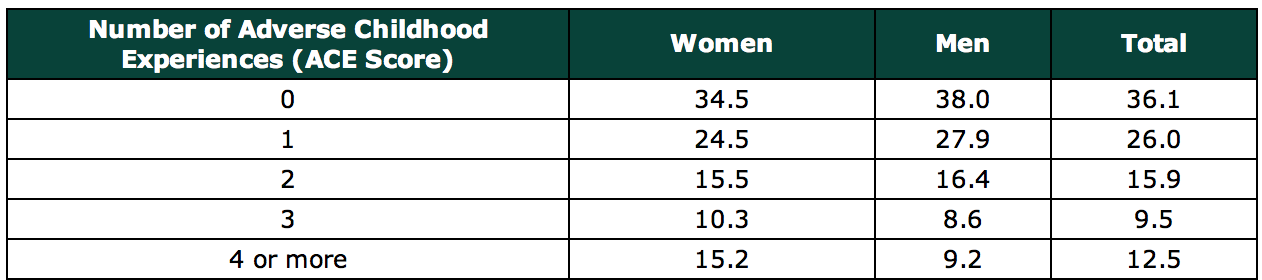
The ACE Study found that the higher someone’s ACE score – the more types of childhood adversity a person experienced – the higher their risk of chronic disease, mental illness, violence, being a victim of violence and a bunch of other consequences. The study found that most people (64%) have at least one ACE; 12% of the population has an ACE score of 4. Having an ACE score of 4 nearly doubles the risk of heart disease and cancer. It increases the likelihood of becoming an alcoholic by 700 percent and the risk of attempted suicide by 1200 percent. (For more information, go to ACEs Science 101. To calculate your ACE and resilience scores, go to: Got Your ACE Score?)
High ACE scores also relate to addiction: Compared with people who have zero ACEs, people with ACE scores are two to four times more likely to use alcohol or other drugs and to start using drugs at an earlier age. People with an ACE score of 5 or higher are seven to 10 times more likely to use illegal drugs, to report addiction and to inject illegal drugs.
The ACE Study also found that it didn’t matter what the types of ACEs were. An ACE score of 4 that includes divorce, physical abuse, an incarcerated family member and a depressed family member has the same statistical health consequences as an ACE score of 4 that includes living with an alcoholic, verbal abuse, emotional neglect and physical neglect.
Subsequent research on the link between childhood adversity and addiction corroborates the findings from the ACE Study, including studies that have found that people who’ve experienced childhood trauma have more chronic pain and use more prescription drugs; people who experienced five or more traumatic events are three times more likely to misuse prescription pain medications.
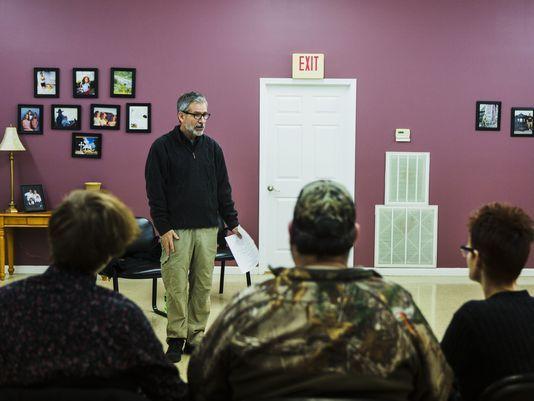
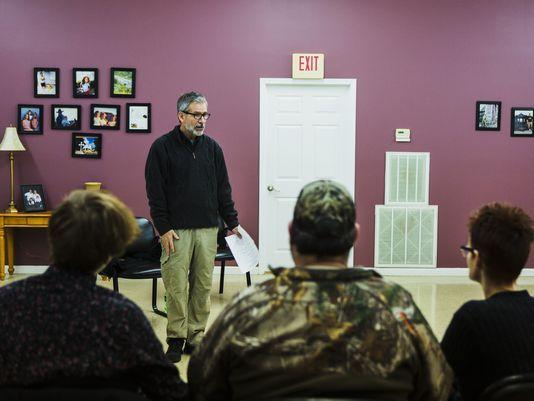
Dr. Dan Sumrok with group therapy members at McKenzie, TN, clinic (Photo: Yalonda James, The Commercial Appeal)
“ACEs just doesn’t predict substance abuse disorders,” says Sumrok. “All of our major chronic diseases link to substance abuse, so this is too big to ignore.”
Whether you’re talking about obesity, addiction to cigarettes, alcohol or opioids, the cause is the same, he says: “It’s the trauma of childhood that causes neurobiological changes.” And the symptoms he saw 40 years ago in soldiers returning from Vietnam are the same in the people he sees today who are addicted to opioids or other substances or behaviors that help them cope with the anxiety, depression, hopelessness, fear, anger, and/or frustration that continues to be generated from the trauma they experienced as children.
Learning about ACEs helped him understand that the original definition of PTSD, which many people still cling to, is not accurate. In the 1980s, PTSD was defined as a result of trauma that was outside the realm of normal experience.
“That was just wrong,” says Sumrok. “Divorce, living with depressed or addicted family members are very common events for kids. My efforts are around helping people to see the connections, and that their experiences are predictable and normal. And the longer the experiences last, the bigger the effect.”
He also says, “Drop the ‘D’, because PTSD is not a disorder.” It’s what he learned from van der Kolk, who wrote The Body Keeps the Score. “Bessel says we’ve named this thing wrong. Post-traumatic stress is a brain adaptation. It’s not an imagined fear. If one of your feet was bitten off by a lion, you’re going to be on guard for lions,” explains Sumrok. “Hypervigilance is not an imagined fear, if you’ve had one foot bitten off by a lion. It’s a real fear, and you’re going to be on the lookout for that lion. I tell my patients that they’ve had real trauma that’s not imagined. They’re not crazy.”
Patients learn about their ACEs, understand their lives better
This is what happens when a person sees Sumrok for the first time: They fill out the 10-question ACE survey (Got Your ACE Score?) in the waiting room. “Then when I see them, I go through each question and ask them again,” says Sumrok, who also does a normal physical exam. “Frequently, there’s a difference between the two. For example, this morning, I saw a woman and she reported an ACE score of 1 on the survey. Then, when I asked her the questions, she reported nine out of 10.”
That’s just how I grew up, she told Sumrok. She didn’t think being beaten, humiliated or seeing her mother smoking crack every day was harmful or unusual, especially since most kids she knew were experiencing the same thing.
Sumrok normalizes their addiction, which he explains is the coping behavior they adopted because they weren’t provided with a healthy alternative when they were young. He explains the science of adverse childhood experiences to them, and how their addictions are a normal – and a predictable – result of their childhood trauma. He explains what happens in the brain when they experience toxic stress, how their amygdala is their emotional fuse box. How the thinking part of their brain didn’t develop the way it should have. How it goes offline at the first sign of danger, even if they’re not connecting the trigger with the experience. Drugs like Zoloft don’t really help much, he tells them. Zoloft and other anti-depressants don’t remove the memory triggered by the odor of after shave that was worn by your uncle who sexually abused you when you were eight, or the memory triggered by a voice that sounds just like your mother who used to beat you with a belt, or by a face of a man who looks like your father who used to scream at you about how worthless you were…the examples are infinite. That’s why van der Kolk says, “’The body keeps the score’,” Sumrok says.
“After I explain all this to them, many of them stare at me and say: ‘You mean I’m not crazy?’” says Sumrok. “I tell them, ‘No, you’re not crazy’.” Sometimes he yells out the door to his nurse: ‘Patsy! Where’s my not-crazy stamp? I need to stamp this person’s chart.”
For people who are addicted to opioids, he prescribes buprenorphine (one of the brand names: Suboxone), which helps them to withdraw from opioids and to keep their job, or return to work. For most people, the drug is less addictive than other opioids. Sometimes if people are young, healthy and haven’t been addicted long, they can withdraw from opioids without buprenorphine.
“There’s no buzz associated with buprenorphine,” says Sumrok. “They can concentrate and think. Once they’re free of the continuous distraction of the acquisition and use of substances, they become pretty valuable employees.”
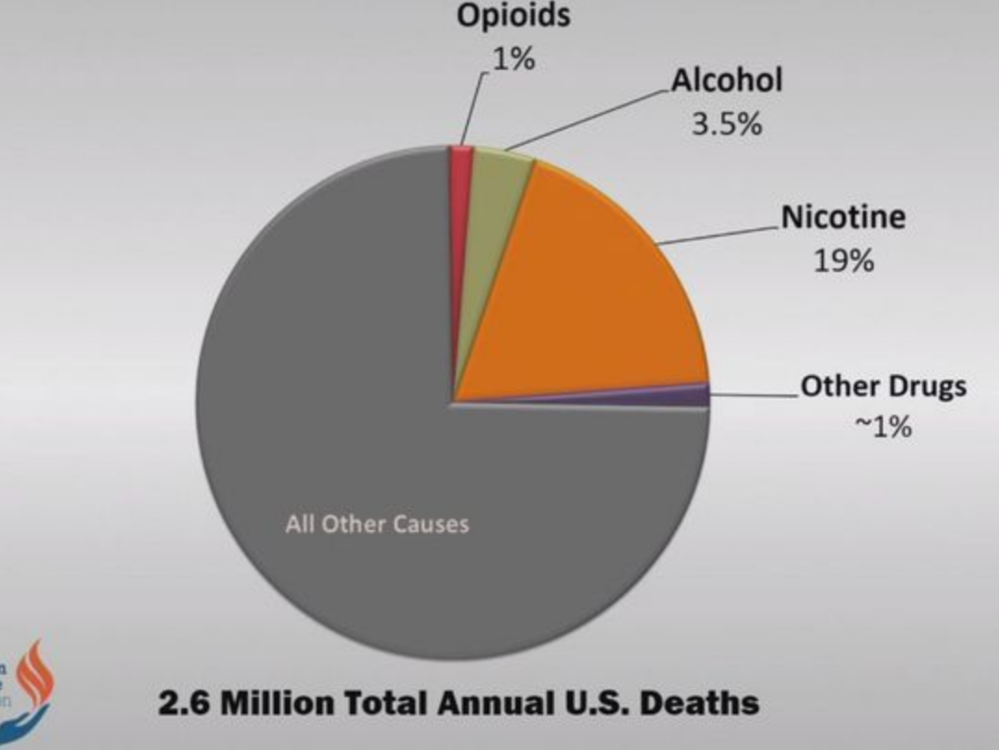
For people who are addicted to alcohol, he prescribes naltrexone (one of the brand names: Revia), because alcoholics have a high risk of death if they aren’t provided medication. And in this current national attention on opioids, Sumrok is careful to point out that although 33,000 people died from opioid overdose in 2015, 88,000 people die annually from alcohol-related causes, and 480,000 from cigarette smoking. The complicating factor — and why policies don’t work when they chase the eradication of one drug, only to focus on eradicating the next popular drug of choice for “ritualized compulsive comfort-seeking” — is that many people use opioids and alcohol and cigarettes. And if they receive no help to get at why they’re using legal or illegal substances, they will move on to another, more easily accessible drug when the current drug they’re using becomes more difficult to find.
All patients sign a contract agreeing that they won’t drink alcohol or take other drugs. “We don’t mess around with that,” says Sumrok. “We can’t deal with them being deceptive, because if they drink or do other drugs, it can kill them. If their drug screens aren’t consistent, we ask them to find another doctor.” Just about everybody stays, he says.
They also participate in group therapy. For physicians who prescribe buprenorphine, it’s now required, but Sumrok had seen the research about the effectiveness of group therapy, and had started 12-step groups for his patients about 10 years ago. Talking with others who have the same experiences helps each person normalize their own experiences. Sumrok and the others in the group help each other find “ritualized compulsive comfort-seeking behaviors” that won’t kill them or put them in jail, such as coaching their kid’s soccer team or volunteering at a food bank. (Sumrok often quotes Forest Gump: “Helping helps the helper.”). He also encourages them to integrate other rituals into their lives, such as walking 30 minutes a day or other exercise, joining a 12-step group or finding a path to encourage a spiritual awakening.
“Six months into this,” says Sumrok, “they start saying things like, ‘My wife and I are back together’, they’re hanging out with their kids. It’s pretty cool to see how people get their lives back. My favorite word is ‘normal’. When they tell me they feel normal, I know they’re doing okay.”
So, how long does it take before they’re cured? “How long should you take insulin if you have diabetes?” responds Sumrok, making the point that this is a chronic disease, that people should be in treatment for as long as it is necessary, and that some may relapse. His goal is for them to not have to use buprenorphine, but he knows that because of the number and duration of their ACEs, and the paucity of resilience factors provided to them when they were children, many will need continual support. He helps them learn how to integrate that support into their lives.
“When a diabetes patient comes in with a blood sugar level of 300, we don’t say: ‘Give me back that insulin.’ We intensify the treatment to get them back in balance,” explains Sumrok. “Only in addictions do we shame people. We tell them they can’t be part of this recovery anymore. We create a teeny hoop that’s called abstinence, and not too many people can jump through that hoop. If every time we saw a diabetic, we told them that their kidneys were going to fail, they would be blind and we would amputate their extremities, there wouldn’t be many diabetics who got help. I have patients who drop out, and then return a couple of months later, and say, ‘Doc, Christmas came, I saw some of my buddies, and I started using again.’ I tell them, ‘Come on in. Let’s work with you.’ And I remind myself that I’m not saving souls, I’m saving their asses. It’s about getting them so they can function at work, at home, at play. It’s not about making them perfect human beings.
“It has been abundantly clear to me and reinforced over a 40-year career,” continues Sumrok, “that patients desire, and respond better to, sensitive and informed care. From the Navajo Nation to Appalachia to Memphis and from the mountains of Honduras to the jungles of Amazonia, people regard respect as the sine qua non of quality care.”
Stories AND data drive solutions
Although Sumrok thinks his approach benefits his patients, he knows he needs data to prove it. When he saw a recent study that said 43% of people on buprenorphine were using other opioids, he did his own analysis of a sample of his patients, and found that only 8% were using other opioids. After tracking down those who were, most had good reasons, such as a man whose arm and shoulder were in a new cast after surgery repairing an injury, and he was taking a narcotic. Only one did not, and when shown his drug test, he said, “You know what? I slipped.” He talked about it in group, says Sumrok, and everyone in his group hovered around him to make sure he’d continue the program.
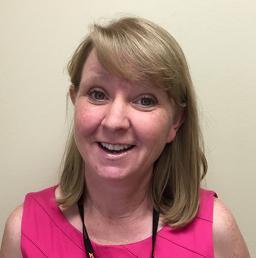
Dr. Karen Derefinko
Because Sumrok has kept fastidious records of the patients who have done their ACE scores, Dr. Karen Derefinko, a clinical psychologist and assistant professor in the Department of Preventive Medicine at the University of Tennessee Health Science Center, is starting a research project to examine all 1,200 records in Sumrok’s clinic in McKenzie to look at the relationship between people’s ACE scores and their adherence to treatment and their relapses.
“We think that people with high ACE scores are likely to have more relapses,” she says. “And that may be because people with higher scores have fewer resources and more difficulty associated with adhering to their treatment plans.”
She and her research assistant will de-identify the records, so that all information is anonymous, and then collect the data. Once that data is analyzed — probably within two months — Derefinko and her assistant will conduct focus groups of some of Sumrok’s patients. She’s already been sitting in some of the groups.
“Dan encourages this participatory nature of his groups,” she says. “People are very willing to talk. After the group sessions, they’re often not done talking about why they came to Sumrok and why other programs didn’t work for them.”
Through the records and the focus groups, Derefinko hopes to identify barriers to care, which include basics such as how people can find good care easily (most of Sumrok’s patients find out about him through word of mouth), being wary of the treatment because it isn’t explained to them, or — what Sumrok hears a lot — being judged or talked down to instead of given understanding and respect.
“In Shelby County, people complain about barriers to care, which many people think is because of economics,” she says. “But it may not be just economics that is keeping people from accessing treatment; it may be more about being judged, and not knowing what the treatment looks like.”
Being treated with respect builds trust, trust builds health
One of Sumrok’s patients – I’ll call him John, which is not his real name – has been driving 140 miles from Southeast Missouri to see Sumrok for the last five years. He began using drugs off and on during his 20s. When he was in his 30s, he injured his back, was sent to a worker’s comp physician, who prescribed stronger doses of pain killers until his back stopped hurting.
“I was taking pain pills like candy,” says the 46-year-old, who is married and has a son. “All of a sudden, the pills are gone, and you’re very sick, and I start looking for them everywhere – on the street, taking them from family members without asking – just to keep me from getting sick. I thought I had to have them to function. If I didn’t have six or seven pain pills, I wasn’t going to be able to get out of bed. If I didn’t get them, I’d be sick, puking….I’d do about anything to have those pills.”
After he spent his and his wife’s life savings, and the money they’d put away to buy a home, and his retirement fund from a previous job; after he saw friends die from overdosing; and after he realized that he was risking losing his wife and son, he told his wife he needed help, and they found Sumrok.
“It’s been a miracle, for sure,” says John. As the Suboxone took effect, “after two or three weeks, I began to feel normal again.”
About two years ago, Sumrok asked him to fill out the ACE survey. “It really did make a difference,” says John. He had never connected experiences in his childhood with using drugs as an adult.
“When I was just a baby,” recalls John, “my grandpa took me from my mother, and told my parents: ‘When you guys are stable, I’ll let you have him back.’ Up until I was 10 or 11, I called them ‘Mom’ and ‘Dad’.’” His older sisters were sent to live with his other set of grandparents. He didn’t live with his parents again until he was 15 years old. His sisters were adults and out on their own by then.
Until he did the ACE survey and talked with Sumrok about his childhood, it didn’t dawn on him that losing his mother, father and his sisters at a young age could have affected him in ways he didn’t realize. “I knew I was loved by my grandfather and grandmother, but being a young kid and seeing other kids going out with their parents was frustrating,” he says. “I lived with old people who never left the house, while my parents were out running around. I maybe thought my mom and dad didn’t care about me enough to change. I might have always felt like I wasn’t important enough to my mom and dad for them to change the way they were living and acting.”
But now he has a better understanding of what it was like to be a 19-year-old in the late 1960s and involved in the drug and party scene then, as his parents were. He understands them better, and why they weren’t able to care for him. He and his family members have “had our discussions,” says John. “My family life is a whole lot better. I didn’t have relationships with my parents or sisters. We only live seven miles apart, and I barely saw them twice a year, if that. But now I have my wife back. I’ve got my son back. And I see my parents and sisters all the time. We’re a tight-knit family.” He’s also able to hold a job, and is a reliable employee.
John sees Sumrok once a month now. He participates in group therapy, where they can safely talk about their ACE scores without having to get into specifics. He checks in with Sumrok, who renews his prescription.
“I like group therapy with Dr. Sumrok,” says John. “He talks to us with respect. We feel very comfortable with him. Dr. Sumrok never lies. I trust him fully. And he trusts me. It took five or six months to build that trust. The more I met with him, the more I realized that he was really concerned about me. He wants to help people. Let him train more doctors in the procedures he uses. You can’t treat people like they’re nobodies.”
A 29-year-old patient, who chose to be called “Mr. Big” since I’m not using his real name, has been seeing Sumrok for the last six months. He had been in a methadone treatment program, and found Sumrok after he couldn’t pay for treatment any longer. Sumrok was the only physician who would take his insurance. Mr. Big filled out the ACE survey in the waiting room, but reported his score as a two. Then Sumrok went through the survey with him, and Mr. Big’s score climbed to an 8.
“It does help me understand my addiction better,” says Mr. Big, who is a single father of two children, five and six years old. “For one, my trauma in my childhood was very dramatic. I thought everyone’s parents did what they were doing. I could see why I related to narcotics and stuff. It was the only place I had to turn. I started taking opiates when I was 11 or 12 years old. I was playing football, and broke my ankle. They gave me painkillers that made me feel like Superman. I couldn’t get enough, because I wasn’t feeling like Superman without it.”
The Suboxone helps him feel “normal — probably the way everybody else feels,” says Mr. Big. “Nothing I took ever gave me that feeling before. I’m a better person, father, and a better brother” to his sister, whom he convinced to also get help from Sumrok.
The first time he went for help, to a methadone clinic, he didn’t like it for two reasons: Methadone made him nod off or feel high, and the people at the clinic treated him as if he was a number, or just there for the drugs. “That’s just unprofessional, in my opinion,” he says. “Sumrok actually sits down and talks to you like a human being.”
Mr. Big wants to work with Sumrok to develop a “game plan so that I can live without my medicine,” he says. He just wants to live a normal life. What does a normal life mean?
“It means that I’m home overnight with my children,” he says. “I don’t have to rob, lie, steal, or cheat to find drugs. I can fit in with society and not be high off my mind. I can wake up every day and do stuff. My children — they know Daddy’s not in bed sick any more. It’s wonderful. I’m wore out. I never knew that first grade and kindergarten had homework that was so complicated.”
With addictions and deaths on upswing, how to increase addiction docs?
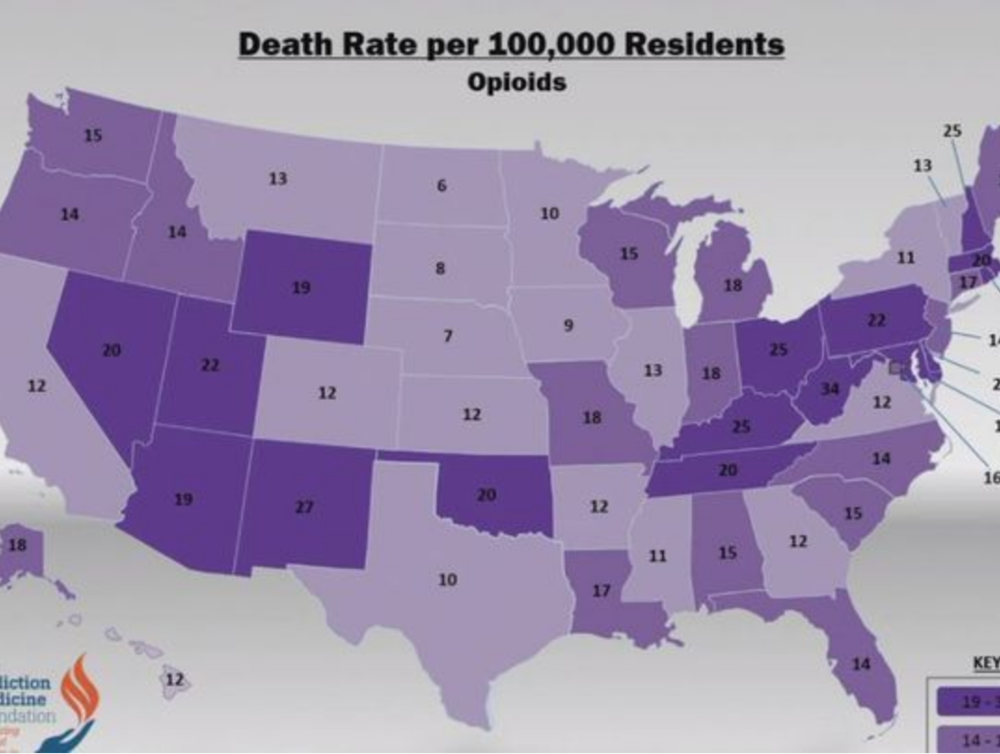
Prescription and illicit opioids are the “main driver of drug overdose deaths,” according to the CDC, with 33,091 deaths in 2015. That’s four times more than 1999. And between 2014 and 2015, Tennessee saw a 13.8 percent increase in opioid deaths. More than 1,000 people died from opioid overdoses in 2014, and tens of thousands of people lead desperate lives, most of them unknowingly fueled by their childhood experiences. Only 10% of these are getting the help they need, says Sumrok.
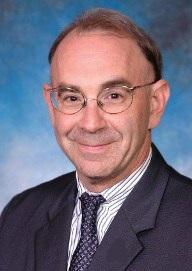
Dan Sumrok is just one doctor, in one part of the country. How can what he does be scaled up to thousands of physicians who can treat addiction successfully in all parts of the U.S.? By doing what Dr. David Stern, Robert Kaplan executive dean and vice-chancellor for clinical affairs for the University of Tennessee’s College of Medicine and the University of Tennessee Health Sciences Center, did: launch the Center for Addiction Science.
“This really starts with Dr. Altha Stewart, who’s the director of the Center for Health in Justice-Involved Youth,” says Stern. “She’s the one who showed me that kids with high ACE scores end up in trouble. When I developed the Center for Addiction Science, it had to be like a cancer center, it had to be multi-disciplinary. In the old days, we thought people who had addictions were weak in the moral department. You really needed someone to straighten you out, because your mother didn’t do a good enough job.”
Dr. David Stern
But that approach doesn’t work. Neither does criminalizing addictions. Stigma drives problems underground, says Stern, instead of driving them to a solution. The center is taking an integrated approach to using research and education to help people in all possible ways, from physiology to genetics to counseling.
Stern believes that every physician should know about ACEs science, which is one of the reasons he chose Sumrok to lead the center, along with his willingness to be creative and seek solutions across disciplines. “Two of the most prevalent things in acute care are depression and addiction,” says Stern. “I think it’s important to be able to understand what ACEs mean to patients, what addiction is all about, how to recognize it, how to treat it.” He’s in the process of finding an associate dean for medical education, and is looking for someone who will integrate ACEs and other social determinants of health into the school’s curriculum.
“I think a medical school should provide for the community it serves,” says Stern. “This medical school should be the medical school for Memphis. We should develop solutions that are scalable.”
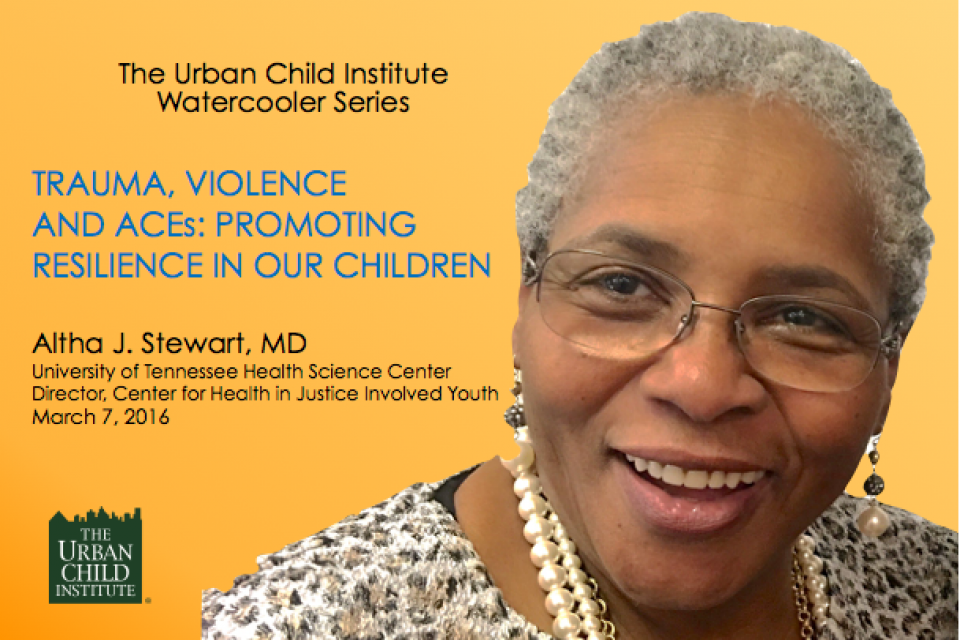
Dr. Altha Stewart, associate professor of psychiatry in the University of Tennessee College of Medicine, learned about ACEs in 2009 when a group in Shelby County began educating people about ACEs science. They brought Dr. Vincent Felitti, co-founder of the ACE Study, and Robin Karr Morse, who wrote Ghosts from the Nursery: Tracing the Roots of Violence, which was published in 2007, to give a presentation. (Karr-Morse later wrote Scared Sick: The Role of Childhood Trauma in Adult Disease with Meredith S. Wiley; it was published in 2012.)
Dr. Altha Stewart
“It’s become a core part of what I do now in my professional work,” says Stewart, who was recently named president-elect of the American Psychiatric Association. She’s working with the Shelby County community and the local criminal justice system to integrate trauma-informed and resilience-building practices to find ways to help youth who enter the justice system — all of whom have likely experienced ACEs — instead of shaming, blaming or punishing them.
The things that have happened to kids — as well as to many people who come into the health care system — are out of their control, says Stewart. “When you’re a child, you don’t control the people who abuse and assault you, who create hostile environments, who don’t provide you with clean clothes,” she says. “If a child can’t control their environment, because of these things they grow up thinking they’re bad, different, horrible people. This new approach (integrating trauma-informed and resilient-building practices based on ACEs science) helps them feel like they’re not drowning anymore. When they can pop their head out of the water and get a breath, and see outstretched hands, a life preserver, a life boat, that changes their entire perspective.”
When Sumrok began integrating ACEs into addiction treatment, that was innovative, says Stewart. “If you don’t ask these questions, people tend not to tell you,” she says. Sumrok’s approach is part of a shift in patient engagement and involvement. “The trend in health care is that patients are partners in their treatment.”
This new knowledge about why and how humans behave the way they do also speaks to how “we have trained the medical profession,” says Stewart. The traditional approach is that physicians “know everything. The people whom we treat know nothing. We tell them what to do, and if they don’t get better or do what we say, it’s their own fault.
“That’s simply not true,” she emphasizes. “Some of us have come to understand that there’s more expertise in the community and our patients than we’ve understood. That takes a bit of humility on the part of a physician, and an understanding that we are partners in helping a person heal.”
Sumrok’s experience with the young fellows at the Center for Addiction Science is giving him some real hope that the medical profession can change. When he’s explained to them how important it is to ask patients about ACEs and other aspects of their lives — such as food availability, safe housing, transportation, jobs (in the medical profession vernacular: social determinants of health) — “they say ‘isn’t that just taking a patient history?’”
He and others at the University of Tennessee Health Sciences Center have an opportunity to educate young physicians outside the state, too. Derefinko is also director of the newly created National Center for Research of the Addiction Medicine Foundation. The foundation oversees the 130 addiction medicine fellowships at 46 medical schools across the country.
“We want metrics to understand the impact they’re having” when they go out in the world, says Derefinko: where they go, whom they’re treating, how they’re practicing, whether they’re integrating ACEs science. In addition, the foundation will be developing some accreditation guidelines so that all fellows receive the latest and best education in addiction medicine.
One of those elements, says Sumrok, has to be empathy, which physicians can practice by listening, acknowledging and understanding how the experiences in a person’s childhood and adulthood have shaped their lives and health.
“Can you teach empathy?” he asks. “Can people learn to be empathetic providers? I think you can. I think so.”
all that being said, I think a significant contribution of articles like Dr Sumrok’s is that it might help release people from the mental straightjackets in which they struggle, so to consider a bigger range of factors involved in more complex relationships. Such multifactorial studies can be very expensive and difficult to undertake. Look again at the recent discussion of Culverhouse’ “collaborative” meta-analysis of the role, or lack thereof, of the serotonin gene variant in influencing the role of early life stress in the development later problems — not all researchers agreed to have their data included in the meta-analysis. Whether or not current research methodologies, and inter-institutional schemes of arrangement, are up to the task remains a big question — meta-analysis itself is a relatively new methodology. Such questions won’t be answered in my lifetime but need to remain center-stage if we are to bring more humanity into the hard task of living human lives,
Jane StevensPublisher, ACEsTooHigh; founder, PACEs Connection
just became aware of this from the Australian peer support workers Facebook page
Jane, exhaustive / exhausting coverage of this! — people would be well acquainted with my own postings re this on this site — but also don’t forget that this is yet another re-visiting of the “self-medication hypothesis” — and for comments on this from multi-disciplinary perspectives see http://onlinelibrary.wiley.com…012.04001.x/abstract
Darke’s article must be purchased to be read — he didn’t respond to my request to a copy when I asked closer to its original publication — but the comments letters are free.
“for every complex problem, there is a simple solution, and it’s simply wrong” — in practice, it’s a bit more complicated, but one cannot ignore the VERY high incidence of adverse childhood events in the AOD population, so “not true for everybody, but …..”
Jane StevensPublisher, ACEsTooHigh; founder, PACEs Connection
Thanks, Emily! That’s a good point about the artificial bifurcation in trauma and addiction. The people who’ve worked at the Substance Abuse and Mental Health Services Administration (SAMHSA) have told me that it wasn’t all that long ago that people thought substance abuse and mental health weren’t related. And I think there are quite a few people who think that substance abuse and mental health and physical health aren’t related. ACEs science definitely shows otherwise!
Thanks for all that great work you’re doing at ConVal!
FMFormer Member
Fantastic article, Jane! It is so edifying in the work I have led for the ConVal School District. More importantly, it may help open eyes to those facilities and practitioners who have long made an artificial bifurcation in trauma and addiction (e.g. “you can’t be in treatment if you haven’t dealt with your trauma” or vice versa). We need to further embrace a trauma informed approach across the continuum of care spectrum. Again, great work!
Jane StevensPublisher, ACEsTooHigh; founder, PACEs Connection
Thanks, Jen! That was my reaction, too, when I first heard the idea. It makes total sense!
Great article, Jane. I am particularly struck by this notion of dropping the “D” in PTSD. It makes sense. Calling it a disorder is further pathologizing what is really a normal or expected response to traumatic stress. I had never even considered this idea. We throw PTSD around so much to describe a variety of symptoms and reactions. This is definitely something to consider.
Jane StevensPublisher, ACEsTooHigh; founder, PACEs Connection
Cissy, thanks for sharing this. Quite a few people have seen this today. I hope it’s helpful!
Jondi, thanks for your kind words!
Lisa, thanks for all the great work you’re doing; and for sharing that work on this network.
Rick, I’m very glad you’re part of this community.
And, Mary — I agree. There are so many people who are integrating this ACEs science in creative ways that show the promise that this new knowledge has for solving our most intractable problems!
You hit a home run with me on this article. Great job. I really am so happy to be a part of this informed community and men and women who are on the front lines of this Social epidemic.
Thank you for writing this, Jane – it is so thorough and so needed. I have been working in the substance use disorders (or as Dr. Sumrok calls it, the “ritualized compulsive comfort-seeking”) field for many years, now, and once I learned about the ACEs Study – it was “ah – ha” – that explains how a person develops the disorder and it explains why they relapse because the root causes were not treated. Most importantly, it helps the person understand – they didn’t choose it or as Dr. Sumrok quoted his patients often saying, “You mean I’m not crazy?”
Christine Cissy WhiteIt’s not trauma-informed unless it’s informed by trauma survivors.
Jane:
I’m sharing the heck out of this. What a fantastic profile and example of how thinking and lives and practices change, for the better, from an understanding of ACEs. To be on the receiving end of this type of care and approach (I love the “not crazy” stamps) is life-changing to life-saving. And it changes the entire framework for lots of us in ways that allow us to make more effective changes – as helpers and people being helped sometimes.
And with that, many of share this sentiment.
“Since I’ve learned about ACEs, I talk about it every day.”
NOTE – August 9, 2026 – many of these links will likely be broken when the PACEs Connection site switches to a splash page. I am posting the remaining four stories listed in the prior post about the top five posts on PACEs up until 2022. Others follow here. Peace!
There are 10 types of childhood trauma measured in the CDC-Kaiser Permanente Adverse Childhood Experiences Study. (There are many others…see below.) Five are personal — physical abuse, verbal abuse, sexual abuse, physical neglect, and emotional neglect. Five are related to other family members: a parent who’s an alcoholic, a mother who’s a victim of domestic violence, a family member in jail, a family member diagnosed with a mental illness, and experiencing divorce of parents. Each type of trauma counts as one. So a person who’s been physically abused, with one alcoholic parent, and a mother who was beaten up has an ACE score of three.
There are, of course, many other types of childhood trauma — racism, bullying, watching a sibling being abused, losing a caregiver (grandmother, mother, grandfather, etc.), homelessness, surviving and recovering from a severe accident, witnessing a father being abused by a mother, witnessing a grandmother abusing a father, involvement with the foster care system, involvement with the juvenile justice system, etc. The ACE Study included only those 10 childhood traumas because those were mentioned as most common by a group of about 300 Kaiser members; those traumas were also well studied individually in the research literature.
The most important thing to remember is that the ACE score is meant as a guideline: If you experienced other types of toxic stress over months or years, then those would likely increase your risk of health consequences, depending on the positive childhood experiences you had (see below).
Prior to your 18th birthday:
Did a parent or other adult in the household often or very often… Swear at you, insult you, put you down, or humiliate you? or Act in a way that made you afraid that you might be physically hurt? No___If Yes, enter 1 __
Did a parent or other adult in the household often or very often… Push, grab, slap, or throw something at you? or Ever hit you so hard that you had marks or were injured? No___If Yes, enter 1 __
Did an adult or person at least 5 years older than you ever… Touch or fondle you or have you touch their body in a sexual way? or Attempt or actually have oral, anal, or vaginal intercourse with you? No___If Yes, enter 1 __
Did you often or very often feel that … No one in your family loved you or thought you were important or special? or Your family didn’t look out for each other, feel close to each other, or support each other? No___If Yes, enter 1 __
Did you often or very often feel that … You didn’t have enough to eat, had to wear dirty clothes, and had no one to protect you? or Your parents were too drunk or high to take care of you or take you to the doctor if you needed it? No___If Yes, enter 1 __
Were your parents ever separated or divorced? No___If Yes, enter 1 __
Was your mother or stepmother: Often or very often pushed, grabbed, slapped, or had something thrown at her? or Sometimes, often, or very often kicked, bitten, hit with a fist, or hit with something hard? or Ever repeatedly hit over at least a few minutes or threatened with a gun or knife? No___If Yes, enter 1 __
Did you live with anyone who was a problem drinker or alcoholic, or who used street drugs? No___If Yes, enter 1 __
Was a household member depressed or mentally ill, or did a household member attempt suicide? No___If Yes, enter 1 __
Did a household member go to prison? No___If Yes, enter 1 __
Now add up your “Yes” answers: _ This is your ACE Score
The CDC’s Adverse Childhood Experiences Study (ACE Study) uncovered a stunning link between childhood trauma and the chronic diseases people develop as adults, as well as social and emotional problems. This includes heart disease, lung cancer, diabetes and many autoimmune diseases, as well as depression, violence, being a victim of violence, and suicide.
childhood trauma was very common, even in employed white middle-class, college-educated people with great health insurance;
there was a direct link between childhood trauma and adult onset of chronic disease, as well as depression, suicide, being violent and a victim of violence;
more types of trauma increased the risk of health, social and emotional problems.
people usually experience more than one type of trauma – rarely is it only sex abuse or only verbal abuse.
A whopping two thirds of the 17,000 people in the ACE Study had an ACE score of at least one — 87 percent of those had more than one. Thirty-six states and the District of Columbia have done their own ACE surveys; their results are similar to the CDC’s ACE Study.
The study’s researchers came up with an ACE score to explain a person’s risk for chronic disease. Think of it as a cholesterol score for childhood toxic stress. You get one point for each type of trauma. The higher your ACE score, the higher your risk of health and social problems. (Of course, other types of trauma exist that could contribute to an ACE score, so it is conceivable that people could have ACE scores higher than 10; however, the ACE Study measured only 10 types.)
As your ACE score increases, so does the risk of disease, social and emotional problems. With an ACE score of 4 or more, things start getting serious. The likelihood of chronic pulmonary lung disease increases 390 percent; hepatitis, 240 percent; depression 460 percent; attempted suicide, 1,220 percent.
(By the way, lest you think that the ACE Study was yet another involving inner-city poor people of color, take note: The study’s participants were 17,000 mostly white, middle and upper-middle class college-educated San Diegans with good jobs and great health care – they all belonged to the Kaiser Permanente health maintenance organization. Prior to the ACE Study, most research about effects of abuse, neglect, etc., involved poor people of color who live in the inner city. And so the notion was that it was inner-city people of color who experienced abuse, neglect, etc., not white middle-class or white upper-class people….that somehow white people of means were immune from the kinds of problems affecting people who were poor. That’s not only ridiculous, but it was just another way to perpetrate racism and classism. The ACE Study quashed that notion. So, it’s not that I’m saying that the ACE Study is credible because it was done on white people, I’m saying that the ACE Study opened the door to an understanding that ACEs are at the root of nearly all problems of physical, mental, economic and social health in humans, no matter where in the world those humans live. The ACE Study and the other research that makes up ACEs science provided an opening to a better understanding of the constructs that make up our notion of why people suffer ill health — physical, mental, economic, social — and that includes systemic racism. )
Two years ago, instead of retiring as planned, Dave Ellis decided to apply for the new position of “executive on loan” to create and lead the New Jersey Office of Resilience (OoR) in the Department of Children and Families (DCF). It is the first state-level office to integrate policies and practices based on the science of positive and adverse childhood experiences. His appointment electrified the national PACEs movement, not only because he was a pioneer in the movement, but because the state was willing to make some bold moves.
On Friday, DCF announced that Ellis is leaving May 31, at the end of his two-year contract. Although he may be leaving New Jersey, his commitment to integrating policies and practices based on PACEs science, especially in communities, hasn’t waned. He’s already received inquiries from other states and is adding to his busy consulting schedule.
In reaction to the announcement, a chorus of “oh nooooo’s” began echoing throughout New Jersey as well as other states. Yesterday, Ellis and I had a Zoom call to talk about his tenure and departure.
“I refuse to be upset,” says Ellis, a plain-speaking, truth-talking, advocate with an insatiable curiosity, “mainly because I knew from the very beginning that this was a two-year opportunity. It’s always been two years. I kept telling folks, it’s a two-year grant position.”
His intention for the two years was simple: “To come to New Jersey, to recognize the great work already happening, to move the state into a position of national recognition and to give the community the ability to actually implement things that it believes will work. I also wanted to give local communities a voice. With the $3-million micro-grant process that we’ve launched, the amazing ideas that communities have come up with, and the upcoming People’s Gathering in September, the state is poised to truly exhibit what it looks like to partner with communities most impacted by adversity.”
How NJ laid the groundwork
Three foundations and DCF created a sound foundation for Ellis arrival so that he could hit the ground running. In 2018, The Nicholson Foundation, the Burke Foundation and the Turrell Fund worked with DCF to begin the process of launching the Office of Resilience. Ellis was chosen to lead the office; he is not a state employee—his salary is paid by the foundations. His five team members are paid by the state.
In two short years, the Office of Resilience developed the NJ ACEs Statewide Action Plan; a statewide awareness campaign, Actions4ACEs, that targets educators and law enforcement; a healing-centered education pilot in 75 school districts; and has provided in-depth training for around 4,000 people through ACE Interface.
When they began their work in 2020, “DCF had little contact with the Native American community,” says Ellis. “Not until Dwana Young on my staff went out there and kept beating on doors. Now we’re connected to all three tribes and the New Jersey Commission on American Indian Affairs. That’s important because the Indigenous populations across the country are No. 1 in being disproportionally impacted by ACEs.”
Great accomplishments, and more work to do
“We’ve done so much, and yet there’s so much left to do,” says Ellis.
Ellis worked with DCF’s grant and contract units to use $3 million in federal funding to design a system of awarding microgrants. “We awarded $3 million to three nonprofits to distribute through a process that will allow small agencies and individuals to submit their ideas for consideration,” says Ellis. “A selection committee made up of Office of Resilience staff, DCF staff, the three awarded agencies and community members will select the ideas to be funded.”
The reporting process will be unlike most grants, notes Ellis. “I told them it’s quite simple,” he says. “I’m interested in what we are learning. Whether you fail or succeed, that’s the wrong question. It’s not about how many you served. If you’re succeeding, I’m more interested in what are you learning? If you’re failing, what are you learning? And how do we share all of that with community so that we all learn, and we can all move forward together?”
All people who participate in the grants— funders, organizations and individuals alike—have been or will be trained in PACEs science, so that it becomes part of the DNA of the work, he says. Unless people who administer the funds and carry out the projects do the difficult work of understanding their own childhood trauma, they can’t be as successful as they could be. Training will continue to expand: With the support of two small grants from foundations, a cohort of trainers is being coached to train all 6,700 DCF staff in PACEs science.
Long-term goals for a long-term effort
Ellis’ main concerns are ensuring sustainability of the work over the next couple of decades and making sure the work is centered in communities. “How do I put this office in a position so that 10 years from now, 20 years from now this is still relevant work? That’s why I wanted things grounded in community so that whatever we did, the community then had the ability to do it themselves.”
The state, foundations, communities need to invest in integrating PACEs science in communities and state agencies for the next 10 to 20 years, he says: “You have to invest for the long haul. We tend to invest for the short term rather than looking at the long game which, in this work, is required to actually prevent ACEs and increased PCEs (positive childhood experiences.” Only in this way can the state solve its most intractable problems.
“There’s a request into the governor for a $10-million allotment over three years of the federal American Rescue Plan Act funds to stabilize this office outside of DCF,” says Elllis. “Because if this effort stays only in one state agency as a statewide initiative, it becomes associated just with that agency. The design, from my perspective has always been, that the OoR in DCF would continue, but that there would be a statewide, much larger umbrella that would be outside of DCF.” The working name of the organization is the Healing NJ Together Technical Assistance Center. Suggestions for its location include being housed at a university, creating it as a standalone nonprofit, or as part of the state extension office. That will be determined after Ellis’ departure.
He would like to see more involvement from the legislature. “There is no state appropriation at this time,” he explains. And yet, this is a statewide initiative. It began as a governor’s initiative. A lot of the work going forward will require state support specifically to support the office.”
And, above all, communities need to continue to be at the center and foundation of the work. “You know who I mean by community,” he points out. “Those people who are most directly impacted need to be involved in all decisions about them. That’s not what the traditional model is, but I believe that unless until we engage with them, this change isn’t going to happen.
“What I really want to see us figure out is how to move from a place where we’re doing harm and to think about how we prevent it,” he continues. “How do we not just heal from childhood adversities and their effects, but how do we prevent them from occurring? That is the ultimate goal. It’s the one thing that I won’t stop fighting for. We can’t focus on only healing because that means that we’re allowing all of these things to continue.”
As we talk, in the background Ellis’ wife is busy packing boxes. “Somebody asked me the other day: Are you okay?” Ellis muses. “I’m better than okay. I feel good that when I leave here, and there’s somebody younger who comes in, I will certainly work to help them transition and give them whatever I can. But I’m not going to tell them how to do this job. I want them to do it their way.”
Over a relative short time, he, his team, the state departments he’s worked with and the communities he’s inspired have made huge strides in New Jersey. At the end of this month, he and his wife will move to Arizona where they’re building a house. And after a two-week vacation in Portugal, he’ll return to figure out his next challenge.
Jane Stevens Publisher, ACEsTooHigh.com Founder, PACEs Connection
Thank you Jane for the report. Dave has done amazing work, leaving a legacy. Exchanged brief messages a couple of days ago. Met him at my conference in February here Arizona, and he is coming here… interestingly small world and the movement advances wherever he goes!
TraumaInformedJobs.com is a new job board for the trauma and resilience communities. PACEs Connection members can save 10% on posting with code PACES10
Note – This is another post by Jane. It is about a fellow staffer whom we adored. We also lost Elizabeth Prewitt to cancer in 2025, and then Jane herself, also in 2025. This was following the death of Dan Press, founder of the Campaign on Trauma Informed Policy and Practice, a “sister organization”, in, I believe, 2022. Their obituaries are all posted on this careysipp.com site, as I wanted to save them, to remember these amazing people. With help from some of Jane’s friends and fellow PACEs staffers, I crafted Jane’s obituary, which I will try to link here once I fiture out more about wordpress. Also in the mix is the obituary of my dear friend and partner in Neuro Nuturing, Deborah McNelis, who also died of cancer in 2025. I did not post, unfortunately, the obituary of another dear friend of PACEs Connections, Robin Cogan, author of “The Relentless School Nurse.” I regret not posting about her untimely life and death in a fitting post on PACEs. Her death was stunning and grieved by literally thousands of nurses across the country. Too many wonderful people in this field die early and of cancer. I wonder about the connection. Knowing the stories of some of these people well, I could say their “numbers” told the tale. AND knowing some of these people so very well, I would say that were I to say this, that their ACEs spelled their death sentences, I know they would be PISSED. Because all of these people also believed in the power of positive childhood experiences (PCEs) and found and lifted up the positive as a part of their healing. It was remarkable and wonderful to witness; to be a part of their work to help prevent children from having their lives altered by toxic childhood stress. Again, not everyone I’ve mentioned here had a high ACE score. Their own writings reveal those facts and are their stories shared. Bottom line? I am grateful to have known each of the people mentioned, and Cissy, who was the first among the group to pass away, lived fully and was grieved mightily.
Our beloved friend and former PACEs Connection staff member, Cissy White, died peacefully in Weymouth, MA, on Sunday morning, surrounded by family and friends.
This the obituary the family wrote that appeared here.
So many people are holding this angel of grace, strength, beauty, intellect, humor, and compassion in their hearts right now, remembering Cissy’s deep kindness and generous, brave heart. She taught us all how to live.
Cissy leaves daughter Kai Schildmeier, mother Nancy Atwood and her husband Chip (Cissy’s stepfather), sister Karyn Doherty and her husband John, brother Joseph Atwood and his wife Mindy, stepbrother Dan Coxall, nieces Rachel and Catrin Doherty, nephews Zane and Kindred Atwood, beloved aunt and uncle Mary and Jimmy Moy, aunt Diane Shaughnessy, uncle Eddie Moy, cousins Jeffrey, Michael, Stephen, Danny, Jennifer, Jamie, Andrea, Chris, Corey, Teddy, Ryan, and Katie. She also leaves her co-parent, her former husband David Schildmeier, as well as many devoted friends, including caregivers Beth O’Malley, Heidi Aylward, Kathy MacDonald, and Lynn Tryba. Cissy’s biological father was the late Frank White of Boston.
Although she left us much too early, Cissy never viewed her diagnosis of ovarian cancer in 2019 as a tragedy. In her own words: “If I die soon, it will be too soon but it will also not be tragic because I got peace and a sense of closeness and acceptance of myself. I still feel triumphant and joyful about this life and I do not feel diminished.”
Cissy’s life was a triumph. Her only regrets were that she couldn’t be here longer for her daughter and that, as an activist, she didn’t always prioritize having fun. In recent years, Cissy made a practice of “joy stalking,” a phrase she coined to describe fiercely appreciating “the small and delicious delights” of everyday life. [Here is her post “Professional Joy Stalker”, and here is a link to all of Cissy’s posts on PACEsConnection.com.]
Before getting into Cissy’s many accomplishments, we want to take a moment to remember her one-of-a-kind laugh (her brother-in-law John describes it as a cross between Marilyn Monroe and Arnold Horschack); the warmth, safety, and acceptance she offered; the long conversations over glasses of iced coffee; the way she could be so open and verbally appreciative of others’ gifts and talents; the way she built connections among her many and assorted friends; the creative moments, gathering sea glass and making art; the way she spoiled her pets unapologetically; the way her daughter, Kai was always her number one priority.
Cissy was an outspoken and passionate advocate for trauma survivors, most recently working at ACEs Connection (now PACEs Connection), a social network that recognizes the impact of adverse childhood experiences (ACEs) in shaping physical and emotional health. Her roles included Northeast Region Community Facilitator as well as Community Manager, Parenting with ACEs.
“It’s not trauma-informed if it’s not informed by trauma survivors” was her motto; she always said that healing tools should be affordable, accessible, and appealing to survivors and that patient-centered care should center patients’ voices, experiences, and collaboration, otherwise it was hypocritical and silencing. Cis would not stand for anyone being silenced. Her survivor-led advocacy work earned her the Touching Trauma at its Heart Award from the Attachment and Trauma Network, the VOICE for Traumatized Children.
Her work was written about in the Atlantic Monthly, the Boston Globe, and other outlets. She appeared in the December 2020 PBS News Hour series “Invisible Scars: America’s Childhood Trauma Crisis,” in an episode about how treating trauma early can help kids cope down the line.
She was a guest on podcasts such as Cancer Connections by the Clarity Foundation and Trauma Therapist Podcast with Guy McPherson. She was a sought-after speaker on issues related to PTSD and childhood trauma. Herself a childhood trauma survivor, Cissy knew first hand the power of writing to heal. She began sharing her journey on her blog healwritenow.com in 2013. In 2014, she collaborated with artist, writer, and professor Margaret Bellafiore to create Body Language: An Interactive Installation Exploring the Impact of Trauma, which was shown in Cambridge, MA. The installation gave visitors the chance to viscerally experience the changes that occur in the body as a result of surviving trauma.
Cissy realized a longtime dream in 2015 when she opened the Heal Write Now Center in Weymouth. That experience was a powerful way for her to step out into the world, saying she believed in the healing power of words, community, truth-telling, and safe and affordable spaces for people to create and share. Cissy’s journalism and essays were published in Ms. Magazine online, Elephant Journal, the Boston Globe, Spirituality Camp; Health, PTSD Journal, PsychCentral, To Write Love on Her Arms, ACEs Connection, PACEs Connection and ACEs Too High, among others.
After being diagnosed with ovarian cancer in 2019, Cissy became involved in patient advocacy work, volunteering for the Ovarian Cancer Research Alliance (OCRA) as part of the Survivors Teaching Students program. Her hope was that future medical professionals better understand the early symptoms of ovarian cancer in order to prevent misdiagnosis, delayed diagnosis, and a poorer prognosis, as there’s currently no way to screen for ovarian cancer.
After Cissy was herself misdiagnosed, she was dismayed to learn that ovarian cancer survival rates were no better than they were decades ago when she had been a caretaker for her beloved maternal grandmother, Edna “Nan” Shaughnessy, who died of ovarian cancer in 1990. Cissy’s first-person account of what it was like to be involved in cancer drug trials, “The Clinical Trial Treatment Train,” was published in the New England Journal of Medicine on August 23, 2022. Throughout her rigorous and often disheartening treatment, Cis felt seen and supported by the team at MGH, and especially by her oncologist, Dr. Richard Penson, who knew her as a writer, not only as a cancer patient. It was their discussions that led to her essay in the NEJM.
Though Cis was proud of her published writing, equally important to her was the expressive creative writing she did right up until the last week of her life in her weekly writing circle. As she did her entire life, she leaned into the healing power of writing to hold her in joy and sorrow. She considered this practice, and the love of her family and friends, her medicine after treatments failed her.
From 2000 to 2003, Cissy worked in the Communications Camp; Events Planning department for Wide Horizons for Children, an adoption agency in Waltham, MA, that works with orphaned children worldwide. In 2003, she and her then-husband David Schildmeier traveled to China to adopt Kai, the love and light of Cissy’s life. In her own words: “My daughter brought the world to me. My daughter is a beam of sunlight brought to my soul.”
Cissy was an amazing parent who devoted her life to ensuring Kai had everything she needed to become the smart, caring, kind, and impressive young woman she is today, taking an active role as a parent advisor and member of the board of trustees for the South Shore Charter Public School, and later through her years as a devoted and proud dance mom at the respective dance academies for which Kai was an avid dance team competitor. This culminated in Cissy’s great pride in Kai’s admission to Boston University, where she is a STEM student hoping to become a physician.
Cissy graduated from Bromfield High School in Harvard, MA, in 1985 and earned a BA from Hampshire College in Amherst, MA, in 1991. Her focus at Hampshire was social psychology and creative and critical writing. Cis appreciated and supported the work of Beth O’Malley’s Adoption Lifebook’s for children and teens who were either adopted or live in foster care; when she discovered O’Malley and her work, she made a lifelong friend.
She found inspiration in the work of psychotherapist Serben Fisher; guided imagery pioneer Belleruth Krepon Naparstek; science journalist Donna Jackson Nakazawa; and writer Nancy Slonim Aronie. Cis always said Nancy’s writing workshops were where she found her voice.
Relatives and friends are respectfully invited to attend a visitation for Cissy on Saturday April 15, 2023, from 11-1pm in the CC Shepherd Funeral Home located at 134 Pleasant St (Columbian Sq.) Weymouth. A service for Cissy will take place immediately after the visitation in the funeral home. Cissy asked that family and friends wear bright colors if they choose. Hot pink was her favorite, but all colors are encouraged. In lieu of flowers, memorial donations may be made to the Ovarian Cancer Research Alliance.
Please visit Cissy’s tribute page at https://give.ocrahope.org/cissy. Checks may be mailed to Ovarian Cancer Research Alliance, PO Box 32141, New York, NY 10087-2141.
Jane Stevens Publisher, ACEsTooHigh.com Founder, PACEs Connection
Note – With PACEs Connection switching over to a splash page on August 10, 2026, I wanted to save some of the most important posts written by Jane Stevens, a couple of other staff people, and myself. I didn’t save even a 10th of what I would like to have, but I am assured that a “data dump” of all posts and the entire social networking site exists and that we will be able to access what’s needed when the need arises. AND… just in case, I am posting this and a couple of others Jane wrote — which in no way does justice to the volumes of materials she created to help people begin to grok the connection between adverse childhood experiences (ACEs) and our most intractable social ills, or how Jane said PACEs science could help us prevent perpetuating those ills with the flip side of adverse childhood experiences — positive childhood experiences — and policies supporting PCEs and more. Please know I apologize in advance for not uploading more pieces here. Jane’s beloved “ACEsTooHigh.com” site went down earlier in 2026 and I was stunned that that decade plus of work just disappeared. My hope is that the archives of the PACEs Connection social networking site will live on and we can someday create a history of this movement, as I, too, believe the answers to all of our most intractable problems are in this science. How to prevent multi-generational ACEs, how to foster “Neuro-Nurturing” to create the early relational health that is foundational to a lifetime of better health and better choices; how to leverage finding and norming the positive to create ever-widening circles of healthy communities, families, people. Thank you, Carey Sipp
A baby is born into a family where he’s ignored by his father. When he does receive his father’s attention, his father constantly yells at, criticizes or punishes him. For the first two years of his life, this child’s mother is perfunctorily attentive, but not loving, and then abandons him for a year. From the time he was born until he is an adult, he witnesses his father abuse his older brother by terrorizing him verbally. This leads to his older brother becoming an alcoholic and dying at the age of 42. He sees his parents engaged in an emotionally neglectful, if not emotionally abusive, marriage.
This is the story of the early years of President Donald J. Trump, according to the captivating book, “Too Much and Never Enough: How My Family Created the World’s Most Dangerous Man.” The book was written by the president’s niece, Mary L. Trump, the daughter of Donald Trump’s older brother. It bursts open the doors to understanding why Donald Trump behaves the way he does. It is also is a cautionary tale for how we decide who becomes a leader, whether that leader is a president, CEO, judge or school superintendent.
In Mary Trump’s words: “Child abuse is, in some sense, the experience of ‘too much’ or ‘not enough.’ Donald directly experienced the ‘not enough’ in the loss of connection to his mother at a crucial developmental stage, which was deeply traumatic. Without warning, his needs weren’t being met, and his fears and longings went unsoothed. Having been abandoned by his mother for at least a year, and having his father fail not only to meet his needs but to make him feel safe or loved, valued or mirrored, Donald suffered deprivations that would scar him for life.”
Anyone who knows about the science of adverse childhood experiences has suspected all along thatcritical aspects of the president’s formative years contributed to his behavior today.
Mary describes Fred Trump, Donald Trump’s father, as a “high-functioning sociopath.”
“In order to cope,” writes Mary, “Donald began to develop powerful but primitive defenses, marked by an increasing hostility to others and a seeming indifference to his mother’s absence and father’s neglect….In place of [his emotional needs] grew a kind of grievance and behaviors—including bullying, disrespect, and aggressiveness—that served their purpose in the moment but became more problematic over time. With appropriate care and attention, they might have been overcome.”
But Donald Trump had practically no positive childhood experiences that could buffer the abuse he endured. “Unfortunately, for Donald and everybody else on this planet,” writes Mary Trump, who has a Ph.D. in psychology, “those behaviors hardened into personality traits…”
Donald Trump didn’t have a chance. The only thing that kept him from ending up as a small-time crook with a prison record is money, and lots of it.
Most people think of child abuse as sexual abuse or the physical abuse of being beaten. But the science of adverse childhood experiences found that other types of childhood abuse—experiencing emotional abuse, emotional neglect, living with a parent who’s addicted to alcohol or other drugs or is mentally ill, having a relative who’s incarcerated or witnessing a mother being abused, witnessing a sibling being abused, bullying, racism and other traumatic experiences—can do just as much damage. That’s because the brain itself can’t distinguish between types of trauma. It’s all just trauma that a child’s brain has to adapt to in order to survive. For example, when a father’s only interactions with a child are to suddenly rage without warning, the stress hormones in the child’s brain trigger a kid to flee for his life, fight or freeze in fear. And if that kid has to protect himself from that father every day, eventually that kid’s brain is altered.
Science is very clear that babies need two important types of positive experiences to lay a solid foundation for a healthy life, notes Mary Trump. One is physical and emotional closeness: “Being held and comforted, having our feelings acknowledged and our upsets soothed are all critical for the healthy development of young children.”
The second is mirroring, “the process through which an attuned parent reflects, processes, and then gives back to the baby the baby’s own feelings,” she writes. “Without mirroring, children are denied crucial information both about how their minds work and about how to understand the world. Just as a secure attachment to a primary caregiver can lead to higher levels of emotional intelligence, mirroring is the root of empathy.”
Although the CDC-Kaiser Permanente Adverse Childhood Experiences Study still isn’t widely known, even though it’s been around for 20 years, it and the other parts of ACEs science are providing a profound shift in our understanding about why we humans behave the way we do. ACEs science also shows that to change behavior that is unhealthy, criminal or unwanted requires a very counterintuitive approach. Instead of using practices based on blaming, shaming and punishing, as we have for centuries, incorporating policies and practices on understanding, nurturing and healing have seen remarkable results in every sector in tens of thousands of organizations (but there are millions of organizations). Schools that integrate practices based on ACEs science, sometimes called trauma-informed schools, are able to eliminate suspensions and expulsions. Hospital emergency rooms see a 30% drop in visits. Suicide attempts by youth drop 98%. Recidivism rates by graduates of batterer intervention courses drop from 60% to 1%. A year after families participate in Safe Babies Courts, 99% of children suffer no further abuse.
The ACE Study found that the higher someone’s ACE score—the more types of childhood adversity a person experienced—the higher their risk of adverse social, economic, health and civic consequences. The study found that most people (64%) have at least one ACE; 12% of the population has an ACE score of 4 or higher. Having an ACE score of 4 nearly doubles the risk of heart disease and cancer. It increases the likelihood of becoming an alcoholic by 700 percent and the risk of attempted suicide by 1200 percent. It increases obesity, violence, and mental illness. Forty-three U.S. states, many countries and countless organizations have done their own ACE surveys, and the results are remarkably similar. (To calculate your ACE and resilience scores, go to: Got Your ACE/Resilience Score?)
Subsequent research links ACEs to Alzheimer’s, dementia, maternal ACEs and infant development, obesity in youth, gynecology patients with chronic pelvic pain….you name the disease or condition, and it’s likely to be exacerbated by ACEs.
By applying this rough, but insightful, way to assess the risk of childhood adversity, and based on the information in Mary Trump’s book, Donald Trump’s ACE score is a 6.
Trump’s father emotionally neglected his son when he was a baby and a toddler.
When Donald Trump was older, his father was emotionally abusive.
Trump’s mother emotionally neglected her son when he was a toddler, at a formative time for his brain development. In other words, he didn’t receive the positive experiences necessary for healthy development.
Trump watched his older brother be abused by his father for years.
Trump’s mother had mental health problems that seem to have gone undiagnosed and untreated for several years.
Trump’s parents were in a relationship that was emotionally neglectful.
Mary Trump chronicles the lives of three generations of Trumps in her book, and shows how trauma is passed from generation to generation. The Trump family considered their lives to be normal. They probably never gave a thought to how their behavior was shaped by what they experienced as children. When people—a few hundred thousand by now—with similar backgrounds have learned about ACEs science, a constant refrain is: “I didn’t know that what I experienced was abuse. I thought it was normal. This explains my life. Why did it take so long for me to hear about this?”
The participants in the ACE Study were 17,000 mostly white, middle- and upper-middle class, college-educated people with jobs and great health care. Looking at Donald Trump’s ACEs is a potent reminder that ACEs apply to people of all economic classes, something to which the ACEs movement and research hasn’t paid much attention lately because people of color and low economics bear the burden of ACEs.
We know that the phrase “hurt people hurt people” emerged from the understanding that most people who’ve committed violent crimes have high ACE scores.
However, hurt people hurt people on many levels, including enacting policies and laws that are just as harmful as interpersonal violence, and often more harmful because they affect hundreds or thousands or millions of people.
People with high ACE scores go in one of two general directions: They see the world as a place of suffering that needs healing, encourage people to work together to solve problems, and believe that the world works better without conflict than with it. Generally speaking, their positive childhood experiences have mitigated the adversity they experienced.
Or they see the world as a dark and dangerous place where carnage is rampant, problems are everywhere and are best solved by identifying and defeating enemies, building walls, and cutting off communication from people identified as “other.” And if enemies do not present themselves, they who see the world as a dangerous place will create enemies and make them larger than they really are, so that their “defeat” empowers them to find more enemies to conquer. Generally speaking, people in this group haven’t had enough protective factors in their lives, and thus favor punitive approaches to changing behavior, such as harsh prison sentences or zero-tolerance schools, even with ample evidence that they don’t work.
People who have high ACE scores and experienced few protective factors in their childhood can heal and change—ACEs aren’t destiny—but it often requires years of effort and constant reinforcement to at least ameliorate what’s been hard-wired into a baby’s brain. Mary Trump believes that her uncle Donald is very likely never to heal. She writes:
“Donald continues to exist in the dark space between the fear of indifference and the fear of failure that led to his brother’s [Fred’s] destruction. It took forty-two years for the destruction to be completed, but the foundations were laid early and played out before Donald’s eyes as he was experiencing his own trauma. The combination of those two things—what he witnessed and what he experienced—both isolated him and terrified him. The role that fear played in his childhood and the role it plays now can’t be overstated. And the fact that fear continues to be an overriding emotion for him speaks to the hell that must have existed inside the House [the Trump family home] six decades ago.
“Every time you hear Donald talking about how something is the greatest, the best, the biggest, the most tremendous (the implication being that he made them so), you have to remember that the man speaking is still, in essential ways, the same little boy who is desperately worried that he, like his older brother, is inadequate and that he, too, will be destroyed for his inadequacy.”
I don’t hate Donald Trump. I’m very sad for the things he experienced—no child should go through what happened to him. However, I hate many of the things he’s done. Authorizing ripping children out of the arms of their parents and separating them for months, years or forever, for example, sets me to writhing in helpless fury, and I wonder: Did the experience of having his mother ripped from his life so suddenly and for so long cause him such pain that it snuffed out the light of his empathy? Mary Trump thinks so.
For those of you who don’t like him, I’m not saying you have to feel sorry for him. I’m saying: You must understand him. You must understand him so that we don’t create more Donald Trumps in this world.
Jane Stevens Publisher, ACEsTooHigh.com Founder, PACEs Connection
I am a special educator for emotional/ behavior disorders. I do a lot of research on poverty and the ACE’s. I spend my time making connections and sometimes the only one believing in my students. I passionately continue my education and influence my colleagues on the importance of recognizing trauma. I am so disappointed this article was published in a forum I value and respect. President Trump has a resilience story. The poor choice to publish a politically charged article is a decision that is costing you members.
I read the book also. I was very happy to read someone who witnessed much of the abuse and dysfunction illustrating how $ can be used to paint what ever picture the possessor wishes. No matter How much $ a “family” has it can be used to make GMO people out of their children. I’ve known, felt and been saying this for decades. Most “families” just want their children to make $. It’s a very rare Family who actually raises their child to be Authentic. To be who they’re naturally meant to be THEN make $ being That. Is how I’ve been trying to live for decades with Not much luck. I never expected this country to be a SICK as it’s proven to be.
I felt it by the early 80s as I was getting older and had to “get a job”, after living with psych torture for nearly 2 decades, that my health was going One way and $ the other. I needed to focus on my health, recovery. Since I fought my abuser back for over 5 years at least,, I wasn’t like Donald, Freddy or the others,, but, I was criminalized for it and Everyone around Guilted me and made excuses For the Abuser ever since. But, I still had that part of me that was able to fight back, speak truth to “power” to hold onto that a lot of people don’t seem to have, they were indoctrinated like D.T.
I figured that if $ was real I should be able to follow the Health and the $ would follow. NOPE! I turned to Fitness because I KNEW that for anything to be Legit it needed to be aligned With Natural Law, physics, like an athlete scores a goal. It’s Clearly been the other way around even for people WITH a lot of money as it is for those “families” who don’t.
I will NEVER understand WHY so many people follow $ when it’s Clearly Illegitimate and the exact OPPOSITE of supporting health. Maybe if people realized that Health is More than just physical,, Emotional/Spiritual/Relationships,, we Might just get somewhere
I will never understand either and I guess I tend to think of things I don’t understand and spiritual questions. Why do people choose to follow a path of making the most money possible, instead of, say, becoming the most loving person they can be? That’s what you’re asking, right? I think that our work at ACEs Connection shows that childhood can be a sort of brainwashing, and that because Trump learned from his father, “your only value is as a real estate investor,” that’s what he spent his life pursuing, even though, as his numerous bankruptcies show, it’s not something that he had any sort of special talent in.
After reading Snowball, a biography about Warren Buffett, it seemed to me that pursuing money doesn’t always have evil intentions. As a kid, finding interesting ways to make money was a hobby of Buffett’s. The companies he would choose to invest in always had to make sense on paper for the long run–he was never interested in show or quick money. I don’t think billionaires need to exist in our society but he has shown to be someone who values investing in people and using his money to make the world a better place.
But back to the spiritual question…there seem to be ego callings that are false and its our work to sort them out as we grow.
I read the book also. I was very happy to read someone who witnessed much of the abuse and dysfunction illustrating how $ can be used to paint what ever picture the possessor wishes. No matter How much $ a “family” has it can be used to make GMO people out of their children. I’ve known, felt and been saying this for decades. Most “families” just want their children to make $. It’s a very rare Family who actually raises their child to be Authentic. To be who they’re naturally meant to be THEN make $ being That. Is how I’ve been trying to live for decades with Not much luck. I never expected this country to be a SICK as it’s proven to be.
I felt it by the early 80s as I was getting older and had to “get a job”, after living with psych torture for nearly 2 decades, that my health was going One way and $ the other. I needed to focus on my health, recovery. Since I fought my abuser back for over 5 years at least,, I wasn’t like Donald, Freddy or the others,, but, I was criminalized for it and Everyone around Guilted me and made excuses For the Abuser ever since. But, I still had that part of me that was able to fight back, speak truth to “power” to hold onto that a lot of people don’t seem to have, they were indoctrinated like D.T.
I figured that if $ was real I should be able to follow the Health and the $ would follow. NOPE! I turned to Fitness because I KNEW that for anything to be Legit it needed to be aligned With Natural Law, physics, like an athlete scores a goal. It’s Clearly been the other way around even for people WITH a lot of money as it is for those “families” who don’t.
I will NEVER understand WHY so many people follow $ when it’s Clearly Illegitimate and the exact OPPOSITE of supporting health. Maybe if people realized that Health is More than just physical,, Emotional/Spiritual/Relationships,, we Might just get somewhere
I think that the rules for discussing a private citizen and a powerful public figure who makes decisions that profoundly affect people’s lives is more than warranted. It is the responsibility to do so in any democracy. It is necessary to shine light on the powerful — regardless of their political party or beliefs — to better understand them, and when applicable to hold them accountable.
Jane StevensPublisher, ACEsTooHigh; founder, PACEs Connection
Thank you for your comment, Amy. And I’m sorry to see you go. The door is always open here.
FMFormer Member
Jane, you are using ACES Connection as a political platform. First I saw this article that had nothing to do with preventing ACES, healing trauma and building resilience: https://www.pacesconnection.com…s-washingtonpost-com. Now this article based on a book that was not written by the POTUS himself. Wouldn’t that be breaking a very important rule of trauma informed care? Not giving the person impacted by trauma some control, a voice for their own story? I imagine we will be seeing many, many more articles about the POTUS from you putting him in the light you choose as we are approaching 11/3/20. I will be unsubscribing.
Thanks for compiling this synopsis Jane. The more we realize the extent of pain experienced by the powerful and privileged who are making and implementing destructive policies, the faster we will reprioritize our societies. This is the focus of my work regarding ACEs. It’s not them, it’s us. And financial security or wealth, whiteness, education, or an intact family doesn’t protect most of us. That is the salient point of the original ACE Study that stands out most to me. Donald Trump is a symptom, of the pervasive problem of unresolved childhood trauma plaguing humanity from the echelons of power around the world. The blatant example we see every day of a pained human dissociated from his self, others, nature, and reality is my source of hope for our long awaited awakening to who we are as humans and our need to reset our priorities to meet our children’s needs to prevent creating any more broken men.
This is a slide from today’s ACEs Aware webinar. As you can see, interrupting intergenerational transmission is one the goals of screening for ACEs in medical practice. It’s not really about blaming, it’s about freeing people from passing these physical and mental health risks to future generations, none of whom deserve to be born into these ongoing processes. I’d like to acknowledge some other posts that have added the very important dimension of marginalized populations’ stressors, present, and historical, into the calculus. ACEs Aware was founded and supported by the California Surgeon General, Dr Burke Harris, who deserves effusive praise for her work on ACEs. Included in the today’s presentation was the epigenetic factors of trauma and how they affect every body system of those exposed.
Well written, thank you. Like a few others, I’m somewhat concerned by what I perceived as some “blame” directed toward Mr. Trump’s parents. In my view ACEs are an expression of “the biology of Karma”, and without detailed knowledge his parent’s early environments, and their parents, etc. it might be more useful to regret what he was exposed to and focus on “now what?”
I am placing my comments based on the years I spent as a PO addressing heinous crimes and tragically raised individuals who had little opportunity to address their lives and move toward developing positive change. The social part of the pre-sentence report addresses the upbringing and traumas of the criminal as well as those of their family. Regardless of their history, they received consequences that were often severe at times. The bottom line was that they faced consequences, irrespective of their ACES. Poverty and race were rarely seen as extenuating circumstances.
In all the years I worked, I can not tell you how rare it was to have a wealthy spoiled deviant person in front of me. They had the benefit of the expensive defense team against the State. I’ve read Mary Trump’s book and her warning is that Donald Trump was raised with the ability and skill to avoid consequences and surround himself with enablers. It was a warning as to how pervasive the depravity of the family and their enablers are/were. ACES is about identifying the issues where we as a society, can assist in programs and policies to facilitate positive change and understanding.
There is a fairly broad consensus that President Trump is suffering from mental health problems. I’m an a Green Party member, so I’m not trying to sway anyone’s towards VP Biden, who I serious reservations about also in the mental health area. This is one more example of a source concerning President Trump’s mental health.
“The Dangerous Case of Donald Trump is a 2017 book edited by Bandy X. Lee, a forensic psychiatrist, containing essays from 27 psychiatrists, psychologists, and other mental health professionals describing the “clear and present danger” that US President Donald Trump’s mental health poses to the “nation and individual well being.”
Although, the results of such upbringing can cause the end results, I do not think it is fair to use ACES Connection to target Donald Trump. What is Mary Trump getting out of this? ($$$$) Not comfortable with this article and seems to be more of a political platform. I will unsubscribe today.
Brilliant Jane. If only there were some professional gate keeping within professions (outside of mental health) that would allow us to intervene when a person’s personal trauma was causing them to become a danger to themselves and/or others. Cops, politicians, lawyers, cashiers, landscapers, servers…I mean really, we all need each other to help us see what we can’t see. I guess that’s why we need the trauma-informed revolution.
Excellent article! I have been both fascinated and repulsed by the idea of reading Mary Trump’s book. Reading this synopsis through a trauma-informed, ACEs lens, was powerful, informative and important. Thank you, Jane!
Hmmm…something does not sit well with me about this article. Many, myself included, have long felt that mainstream ACEs movement does not sufficiently address the intersections of race, class, geography and other socio-environmental factors. This article seems like an apologist stance for bad behavior, without taking into account the extreme privilege that paved the way for Trump to maintain class privilege and be elected president. The ACEs he experienced, while I’m sure traumatizing, should not be extricated from the race and class privilege he also experienced. This argument seems to parallel the narrative that gets played out in the media that white people who commit crimes (the Dylan Roof’s of the world) have mental health issues, when Black, Indigenous People of Color (BIPOC) folks get labeled as thugs. It glaringly leaves out the institutional and systemic racism that overwhelmingly bars BIPOC people from gaining wealth or political power and has no impact on white cisgender men who still hold disproportionate and harmful amounts of power. Honestly, it is further proof of our society’s horrifyingly entrenched white supremacy and I highly encourage you to re-think posting this article in its current form.
I agree with you completely, Molly. This essay strives to explain so that we can understand and change our systems, with the understanding that we are our systems. It’s definitely not an apology.
Jane, thank you for your fascinating article. A challenge I frequently come across in my practice as a primary care physician for adults, is how to effectively and respectfully get a person, who has certain maladaptive coping mechanisms, to see that their ways of coping are destructive. I wouldn’t expect Mr. Trump to hear Mary Trump’s assessment and respond by thanking her and asking how he can work on changing himself. Patient’s usually don’t come to me because they’ve identified their maladaptive coping as a problem, but instead focus on their headaches, insomnia, or other symptoms. When ACEs are a contributing cause to such symptoms, and we discuss ACEs science, some people have “a ha!” moments, and start on a path towards healing. However, a lot don’t see the connection, even when I’ve (gently) brought up the topic again.
I also want to comment that I appreciate the concern Anna expressed earlier, about all of us associated with ACEs Connection needing to not allow this forum to devolve into political bickering (my description, not Anna’s). However, I feel it’s appropriate to discuss Mr. Trump’s case here, as long as our goal is to advance the awareness and understanding of ACEs, as opposed to people expressing their negative feelings toward him. Many precedents have been set, in this forum, to discuss the childhood experiences of still living people (Darrell Hammond being a recent example). I realize that in most previous cases, it’s people sharing their own stories, while in this case, Mr. Trump is not doing the sharing. I believe we therefore, in a trauma-informed way, should be sensitive to the possibility the person who didn’t share their own story might have a different story to tell.
Hmmm…something does not sit well with me about this article. Many, myself included, have long felt that mainstream ACEs movement does not sufficiently address the intersections of race, class, geography and other socio-environmental factors. This article seems like an apologist stance for bad behavior, without taking into account the extreme privilege that paved the way for Trump to maintain class privilege and be elected president. The ACEs he experienced, while I’m sure traumatizing, should not be extricated from the race and class privilege he also experienced. This argument seems to parallel the narrative that gets played out in the media that white people who commit crimes (the Dylan Roof’s of the world) have mental health issues, when Black, Indigenous People of Color (BIPOC) folks get labeled as thugs. It glaringly leaves out the institutional and systemic racism that overwhelmingly bars BIPOC people from gaining wealth or political power and has no impact on white cisgender men who still hold disproportionate and harmful amounts of power. Honestly, it is further proof of our society’s horrifyingly entrenched white supremacy and I highly encourage you to re-think posting this article in its current form.
Counting ACEs = essentially a rough sorting-hat for being raised in a dysfunctional family/ by dysfunctional adults. Functional healthy families have fewer ACE-level events (though something like the death of a parent can strike even a very wholesome home).
Donald had a huge multitude of “baby ACEs” or “shadow ACEs” as I call them. You can be rich, fed, never hit, ‘privileged’ — but if your own parents do not *connect* with you, it is much worse than an isolated horrible event like a divorce. Being neglected profoundly is orders of magnitude worse than your attentive, loving parents getting a divorce. For you have no resources to deal with anything bad that happens.
Nobody TOOK PLEASURE in baby Donald. Nobody interpenetrated with him. Nobody was his safe place, his place of refuge. Nobody modeled a safe and interested, caring “other.” All the experiences by which human beings learn to attach and self-regulate were robbed from him.
When you never receive secure attachment as a baby, that’s the worst ACE that can exist. A securely attached human being can withstand something like a parental divorce in a VERY different way than a person without that ballast of relational security. A securely attached person has internalized their own worth.
I see the child separation at the border as a kind of sick theatre of DJT’s past. Being ripped away from his mother (the mom as ‘criminal’) as a kind of large scale re-enactment.
Ever since 2016 I have observed and wondered about Trump and ACEs, and have occasionally shared my view with others. My ACEs perspective is one of understanding behavior, not as an excuse for behavior.
Dearest Jane, You are a stunningly powerful and gifted writer. Thank you for continuing to use your gifts in such a profound way. I continue to be thunderously grateful.
I’m reading this book now. As an infant mental health therapist I continue to wonder: what happened to Fred Trump in his early childhood? Or Mary? How did they become the parents they were to the Trump children? How far back do we go?
Yes Karen, as a psychologist with an interest in transgenerational transmission of symptoms, I’ve wondered about our president’s family history and reflect on the concept of “undifferentiated ego mass.”
I have Mary’s book and have to admit, I haven’t read it yet. I know about the existence of the Goldwater rule concerning not diagnosing those we have not interviewed or tested. That being said, his niece does have insider, collateral information and is a professional herself. I don’t think you need years of training as a clinician to spot something is very wrong with our president at a time in which we need leadership the most. His lack of empathy and self-referented style is apparent. Thank you posting this. He is definitely a tragic man (from Kohut) and even more tragic, is imbued with power that affects us all.
Excellent article. Thank you for sharing. I have wondered many times what Trump’s childhood must have been like to produce what we see today. I also think the media played a lot into what he is today. The adoration by them in the early 90s gave him the attention he so desperately craved and fueled his narcissism that had taken root in childhood as a defense mechanism.
I’m reading this book now. As an infant mental health therapist I continue to wonder: what happened to Fred Trump in his early childhood? Or Mary? How did they become the parents they were to the Trump children? How far back do we go?
Im going to say it: I’m really uncomfortable with this, that this movement and this platform have become so political that it’s now OK to pathologize the private details of a living person’s childhood — details they did not themselves choose to disclose and in fact fought to stop (and that may not even be true).
An adult’s public actions may be fair game, but it is most definitely NOT fair to use a person’s childhood in order to diagnose them, read their mind, or make damning claims that because of trauma, they can “never heal,” they can’t feel empathy, they are destined to be a “small time crook in Jail” (unless wealthy) or that people like them should not be “created.” These kinds of statements are uncomfortably familiar from other times when “science” was used to label and marginalize others.
I hope ACEs Connection will be extra careful never to “weaponize” ACEs science against anyone, whether you like their policies or not.
This is why parenting education must be a part of the solution. Not conventional parenting education, but a new kind…one that reaches everyone, everywhere, all the time.
The Centers for Disease Control, the American Academy of Pediatrics, the National Alliance on Mental Illness, and the National Institute of Mental Health should be working furiously on this new kind of parenting education. Perhaps parenting education campaigns akin to the smoking and seat belts campaigns of the past. Perhaps multi-media messaging that teaches parenting behaviors and practices generally recognized as supporting the healthy development of children.
Visit www.advancingparenting.org. Use a computer…our website is not optimized for phones. We are all about finding interesting and perhaps more effective ways of teaching everyone about parenting.
The science of PACEs refers to the research about the stunning effects of positive and adverse childhood experiences (PACEs) and how they work together to affect our lives, as well as our organizations, systems and communities. It comprises:
The CDC-Kaiser Permanente ACE Study and subsequent surveys that show that most people in the U.S. have at least one ACE, and that people with four ACEs— including living with an alcoholic parent, racism, bullying, witnessing violence outside the home, physical abuse, and losing a parent to divorce — have a huge risk of adult onset of chronic health problems such as heart disease, cancer, diabetes, suicide, and alcoholism.
Brain science (neurobiology of toxic stress) — how toxic stress caused by ACEs damages the function and structure of kids’ developing brains.
Health consequences — how toxic stress caused by ACEs affects short- and long-term health, and can impact every part of the body, leading to autoimmune diseases, such as arthritis, as well as heart disease, breast cancer, lung cancer, etc.
Historical and generational trauma (epigenetic consequences of toxic stress) — how toxic stress caused by ACEs can alter how our DNA functions, and how that can be passed on from generation to generation.
Positive Childhood Experiences and resilience research and practice — Building on the knowledge that the brain is plastic and the body wants to heal, this part of PACEs science includes evidence-based practice, as well as practice-based evidence by people, organizations and communities that are integrating trauma-informed and resilience-building practices. This ranges from looking at how the brain of a teen with a high ACE score can be healed with cognitive behavior therapy, to how schools can integrate trauma-informed and resilience-building practices that result in an increase in students’ scores, test grades and graduation rates.
1. What are ACEs?
ACEs are adverse childhood experiences that harm children’s developing brains and lead to changing how they respond to stress and damaging their immune systems so profoundly that the effects show up decades later. ACEs cause much of our burden of chronic disease, most mental illness, and are at the root of most violence.
“ACEs” comes from the CDC-Kaiser Adverse Childhood Experiences Study, a groundbreaking public health study that discovered that childhood trauma leads to the adult onset of chronic diseases, depression and other mental illness, violence and being a victim of violence, as well as financial and social problems. The ACE Study has published about 70 research papers since 1998. Hundreds of additional research papers based on the ACE Study have also been published.
The 10 ACEs the researchers measured:
— Physical, sexual and verbal abuse.
— Physical and emotional neglect.
— A family member who is:
depressed or diagnosed with other mental illness;
addicted to alcohol or another substance;
in prison.
— Witnessing a mother being abused.
— Losing a parent to separation, divorce or other reason.
Subsequent to the ACE Study, other ACE surveys have expanded the types of ACEs to include racism, gender discrimination, witnessing a sibling being abused, witnessing violence outside the home, witnessing a father being abused by a mother, being bullied by a peer or adult, involvement with the foster care system, living in a war zone, living in an unsafe neighborhood, losing a family member to deportation, etc.
ACEs are common…nearly two-thirds (64%) of adults have at least one.
They cause adult onset of chronic disease, such as cancer and heart disease, as well as mental illness, violence and being a victim of violence
ACEs don’t occur alone….if you have one, there’s an 87% chance that you have two or more.
The more ACEs you have, the greater the risk for chronic disease, mental illness, violence and being a victim of violence. People have an ACE score of 0 to 10. Each type of trauma counts as one, no matter how many times it occurs. You can think of an ACE score as a cholesterol score for childhood trauma. For example, people with an ACE score of 4 are twice as likely to be smokers and seven times more likely to be alcoholic. Having an ACE score of 4 increases the risk of emphysema or chronic bronchitis by nearly 400 percent, and attempted suicide by 1200 percent. People with high ACE scores are more likely to be violent, to have more marriages, more broken bones, more drug prescriptions, more depression, and more autoimmune diseases. People with an ACE score of 6 or higher are at risk of their lifespan being shortened by 20 years.
ACEs are responsible for a big chunk of workplace absenteeism, and for costs in health care, emergency response, mental health and criminal justice. So, the fifth finding from the ACE Study is that childhood adversity contributes to most of our major chronic health, mental health, economic health and social health issues.
On a population level, it doesn’t matter which four ACEs a person has; the harmful consequences are the same. The brain cannot distinguish one type of toxic stress from another; it’s all toxic stress, with the same impact.
What’s particularly startling is that the 17,000 ACE Study participants were mostly white, middle- and upper-middle class, college-educated, and all had jobs and great health care (they were all members of Kaiser Permanente).
Brain science shows that, in the absence of protective factors, toxic stress damages children’s developing brains. Stress is the body’s normal response to challenging events or environments. Positive stress — the first day of school, a big exam, a sports challenge — is part of growing up, and parents or caregivers help children prepare for and learn how to handle positive stress, which is moderate and doesn’t last long. It increases heart rate and the amount of stress hormones in the body, but they return to normal levels quickly.
But when events or the environment are threatening or harmful – we stumble across a bear in the woods – our brains instantly zap into fight, flight or freeze mode and bypass our thinking brains, which can be way too analytical to save us (Is the bear really mean? Is it more interested in berries or killing me? Should I wait until I see it charge?). With help from caring adults, children also recover from this tolerable stress.
Too much stress – toxic stress – occurs when that raging bear comes home from the bar every night, says pediatrician Nadine Burke Harris. Then a child’s brain and body will produce an overload of stress hormones — such as cortisol and adrenaline — that harm the function and structure of the brain. This can be particularly devastating in children, whose brains are developing at a galloping pace from before they are born to age three. Toxic stress is the kind of stress that can come in response to living for months or years with a screaming alcoholic father, a severely depressed and neglectful mother or a parent who takes out life’s frustrations by whipping a belt across a child’s body.
Chronic toxic stress—living in a red alert mode for months or years — can also damage our bodies. In a red alert state, the body pumps out adrenaline and cortisol continuously. Over time, the constant presence of adrenaline and cortisol keep blood pressure high, which weakens the heart and circulatory system. They also keep glucose levels high to provide enough energy for the heart and muscles to act quickly; this can lead to type 2 diabetes. Too much adrenaline and cortisol can also increase cholesterol.
Too much cortisol can lead to osteoporosis, arthritis, gastrointestinal disease, depression, anorexia nervosa, Cushing’s syndrome, hyperthyroidism and the shrinkage of lymph nodes, leading to the inability to ward off infections.
If the red alert system is always on, eventually the adrenal glands give out, and the body can’t produce enough cortisol to keep up with the demand. This may cause the immune system to attack parts of the body, which can lead to lupus, multiple sclerosis, rheumatoid arthritis, and fibromyalgia.
Cortisol is also extremely important in maintaining the body’s appropriate inflammation response. In a normal response to a bee sting or infection, the body rushes antibodies, white blood cells and other cell fighters to the site and the tissues swell while the battle rages. But too much swelling damages tissue. Cortisol controls this fine balance. So without the mediating effects of cortisol, the inflammatory response runs amok and can cause a host of diseases.
If you’re chronically stressed and then experience an additional traumatic event, your body will have trouble returning to a normal state. Over time, you will become more sensitive to trauma or stress, developing a hair-trigger response to events that other people shrug off.
Biomedical researchers say that childhood trauma is biologically embedded in our bodies: Children with adverse childhood experiences and adults who have experienced childhood trauma may respond more quickly and strongly to events or conversations that would not affect those with no ACEs, and have higher levels of indicators for inflammation than those who have not suffered childhood trauma. This wear and tear on the body is the main reason why the lifespan of people with an ACE score of six or higher is likely to be shortened by 20 years.
4. What’s epigenetics and how does that relate to historical or generational trauma?
Most people believe that the DNA we’re born with does not change and that it determines all that we are during our lifetime. That’s true, but the research from epigenetics — the study of how social and other environments turn our genes on and off — shows that toxic stress can actually change how our genes function, which can lead to long-term changes in all parts of our bodies and brains. What’s more, these changes can be transferred from generation to generation.
Epigenetics means “above the genome” and refers to changes in gene expression that are not the result of changes in the DNA sequence (or mutations).
Resources:
WhatIsEpigenetics.com — This New York-based blog and news aggregator covers the field of epigenetics and is funded by EpiGentek. It includes backgrounders, including epigenetics fundamentals.
Epigenetics — From the Genetics Science Learning Center at the University of Utah, this section includes explainers and an overview of how the social environment affects your epigenome.
5. Positive Childhood Experiences and resilience research: If you have a high ACE score, are you doomed? No!
The good news is that the brain is plastic, and the body wants to heal.
The brain is continually changing in response to the environment. If the toxic stress stops and is replaced by practices that build resilience, the brain can slowly undo many of the stress-induced changes.
There is well documented research on how individuals’ brains and bodies become healthier through mindfulness practices, exercise, good nutrition, adequate sleep, and healthy social interactions.
Here’s a good article that weaves the unified science of human development together: Scars That Don’t Fade, from Massachusetts General Hospital’s Proto Magazine.
In the last few years, researchers have started to examine the impacts of positive childhood experiences (PCEs) on children and adults. We at PACEs Connection are particularly interested in the interplay between positive and adverse childhood experiences. Here’s some of the relevant research:
In 2014, Bethell, Dr. Paul Newacheck, Dr. Eva Hawes, and Dr. Neal Halfon found that children with higher ACE scores were less likely to demonstrate resilience, live in a protective home environment, have a mother who was healthy, and live in safe and supportive neighborhoods. However, almost half of the children who had experienced ACEs also demonstrated resilience, and “resilience mitigated the impact of adverse childhood experiences on grade repetition and school engagement.” Adverse Childhood Experiences: Assessing The Impact On Health And School Engagement And The Mitigating Role Of Resilience | Health Affairs
Dr. Yui Yamaoka and Dr. David Bard reported in 2019 that “the number of adverse childhood experiences was associated with both social-emotional deficits and developmental delay risks in early childhood; however, positive parenting practices demonstrated robust protective effects independent of the number of adverse childhood experiences.” Positive Parenting Matters in the Face of Early Adversity – PubMed (nih.gov)
Among juvenile offenders, Dr. Michael Baglivio and Dr. Kevin Wolff discovered in 2020 that “high ACE scores were associated with increased reoffending, and high PCE scores were associated with decreased recidivism, as measured by both rearrest and reconviction. Further, among juveniles with four or more ACEs who have six or more PCEs, reconviction was 23% lower and rearrest 22% lower when compared to those youth with four or more ACEs and less than six PCEs, controlling for a host of demographic and criminal history measures.” Positive Childhood Experiences (PCE): Cumulative Resiliency in the Face of Adverse Childhood Experiences – Michael T. Baglivio, Kevin T. Wolff, 2021 (sagepub.com)
In 2019, Dr. AliceAnn Crandall, Dr. Jacob Miller, Dr. Aaron Cheung, Dr. Lynneth Novilla, Dr. Rozalyn Glade, Dr. M. Lelinneth Novilla, Dr. Brianna Magnusson, Dr. Barbara Leavitt, Dr. Michael Barnes, and Dr. Carl Hanson observed in a study of adults that “higher counter-ACEs scores [i.e., positive childhood experiences] were associated with improved adult health and that counter-ACEs neutralized the negative impact of ACEs on adult health.”ACEs and counter-ACEs: How positive and negative childhood experiences influence adult health – ScienceDirect
Finally, in 2016, Bethell, Gombojav, Dr. Michele Solloway, and Dr. Lawrence Wissow examined ACEs, resilience, family protective factors, and emotional, mental or behavioral conditions (EMB) in children and youth in the U.S. The authors found that children with ACEs had higher EMB than children without ACEs, but the presence of resilience was significantly associated with lower amounts of EMB for both children with and without ACEs. In addition, the prevalence of EMB was lower when family protective factors were present, even if the child had ACEs, although the presence of two or more ACEs decreased the effect. Adverse Childhood Experiences, Resilience and Mindfulness-Based Approaches: Common Denominator Issues for Children with Emotional, Mental, or Behavioral Problems (nih.gov)
Who’s using PACEs science?
Many people, organizations, agencies, systems and communities are beginning to implement trauma-informed, resilience-building practices based on PACEs science.
Many schools — including schools in San Francisco, CA, Spokane, WA, San Diego, CA, and Walla Walla, WA — have integrated healing-centered/trauma-informed practices into classrooms, playgrounds and school policies. These schools have seen 90 percent drops in suspensions after one year; after three years, the schools no longer expel students and some no longer even have the need for in-school suspensions. The grades, test scores and graduation rates increased, and the students most benefitted were those with the highest ACE scores. By the end of 2017, several hundred schools across the U.S. were integrating trauma-informed and resilience-building practices based on ACEs science.
Homeless shelters and the faith-based community are integrating practices based on PACEs research. At the heart of their approach is educating those who are homeless and people in rescue missions about PACEs science; it often changes their whole understanding of their behavior, because they realize that they weren’t born bad, that they had no control over what happened to them as children, that they coped appropriately, given what was available to them, and that they can change. Batterers intervention programs that have integrated PACEs science have reduced recidivism rates from what was accepted — 20 to 60 percent — to zero to four percent.
Cities and states are integrating practices based on PACEs science. By the end of 2017, several hundred communities around the U.S. had launched PACEs initiatives. This report on self-healing communities describes how integrating ACEs science drastically reduced youth suicide, teen pregnancy, juvenile arrests, and high-school drop-out rates — all at the same time — in communities in Washington State that integrated practices based on PACEs science.
Growing Resilient Communities provides guidelines and tools for communities to launch and grow local PACEs initiatives, and measure the progress of their work.
What does trauma-informed mean?
According to the Substance Abuse and Mental Health Services Administration (SAHMSA), part of the U.S. Department of Health and Human Services, a trauma-informed approach refers to how an organization or community thinks about and responds to children and adults who have experienced or may be at risk for experiencing trauma. In this approach, the whole community understands the prevalence and impact of ACEs, the role trauma plays in people’s lives, and the complex and varied paths for healing and recovery.
A trauma-informed approach asks: “What happened to you?” instead of “What’s wrong with you?” It is designed to avoid re-traumatizing already traumatized people, with a focus on “safety first” (including emotional safety), and a commitment to do no harm. But a trauma-informed approach is most successful when an organization or community builds policies and practices based on a foundation of ACEs science.
SAMHSA’s Concept of Trauma and Guidance for a Trauma-Informed Approach — Introduces a concept of trauma and offers a framework for how an organization, system, or service sector can become trauma-informed. Includes a definition of trauma (the three “E’s”), a definition of a trauma-informed approach (the four “R’s”), 6 key principles, and 10 implementation domains.
ACEsTooHigh.com – News site covering PACEs research and practices
PACEsConnection.com – Social network (with 60,000+ members across sectors) and more than 400 community sites that support ACEs initiatives in cities, counties, states, regions and nations.
SAMHSA’s Concept of Trauma and Guidance for a Trauma-Informed Approach — Introduces a concept of trauma and offers a framework for how an organization, system, or service sector can become trauma-informed. Includes a definition of trauma (the three “E’s”), a definition of a trauma-informed approach (the four “R’s”), 6 key principles, and 10 implementation domains.
Paper Tigers — What does it mean to be a trauma-informed school? And how do you educate teens whose childhood experiences have left them with a brain and body ill-suited to learn? This film follows six students through a year in America’s first trauma-informed high school.
Resilience — Resilience chronicles how trailblazers in pediatrics, education, and social welfare are using cutting-edge science and field-tested therapies to protect children from the insidious effects of toxic stress.
CAREgivers — How is the professional care provider affected emotionally and physically, and who helps them?
For a list of all documentaries addressing PACEs science, and how to access them, go here.
If individuals want society to be less aggressive, more calm, less reactive, and more cooperative and collaborative… For the developing brain to develop the capacity for empathy, compassion, and all that comes to mind when thinking about what it means to be human, it requires certain developmental and social experiences at crucial junctures. Drywall Installation Arlington Drywall Contractor Pros
FMFormer Member
ACE Science is woefully limited by leaving out everything about the development of the stress response system and healthy brain architecture, Resiliency is developed in infancy via a secure attachment. A secure and loving attachment in infancy develops a brain’s limbic and cortical regulation over the brainstem’s reactivity leading to control over violent, aggressive and impulsive behavior. Focusing on anything but healthy early brain development will always be radically suboptimal.
If people want the society to be less violent and more cooperative and collaborative, more relaxed and less reactive… the developing brain needs certain developmental and relational experiences at critical points in time in order for a brain to bring forth the capacity for empathy and compassion and everything one thinks of when one considers what it means to be human.
I’m presenting a talk to a group of Pastors on ACES but the slide deck on ACES that I received does not have any slides on Neuroplasticity, from either a science perspective or from a biblical perspective.
Do any of you have a few slides that you’d be willing to share with me?
May I stress the link between family trauma and poverty. Living without resources means lack of access to survival resources like food, safe shelter, medical care, behavioral health care and transport to vital services. It also means lacking the resources to thrive: family centered schools, parent support, early childhood learning programs, youth mentors and job training. ACEs prevention programs, if it is to include our most vulnerable children and families, can build into theor strategic plan and priorities the strengthening of ten key family resources. For more information on a data-driven and cross-sector approach that addresses health disparities please visit www.resilienceleaders.org
Jane, this is great! Great! I love ACES Connection; I am grateful for the resource. It is connecting me to fabulous people and fabulous efforts – thank you!
But there is one “bone of contention” that I will pick – this reference list is missing the work of Bessel Van Der Kolk, Peter Levine, Pat Ogden, Bruce Perry… we DESPERATELY NEED TO MOVE BEYOND COGNITIVE/BEHAVIORAL APPROACHES to treating trauma. As someone that has YEARS of experience working with children and teens and working with that kind of approach to treating depression, anxiety, suicidality, substance misuse, cutting, ODD – you name it, I have worked with it – it’s an epic fail. EPIC! The emerging modalities of treatment (e.g. somatic experiencing, trauma-informed yoga, trauma drama, rhythmic movement and music, etc.) make way for regulating the body’s stress response!
We are a culture OBSESSED with the mind and the power of the mind – to the detriment of the body. We must remember that when someone is struggling with anxiety, depression, rage, etc., the individual is experiencing an overwhelming visceral body experience.
I just had to share this…in all the trauma-informed training and efforts I see going on, I am thrilled. But then I get “un-thrilled” when it’s the same means of practice we have been endorsing and implementing for years (without success!). It’s time to move beyond behavioral and cognitive behavioral approaches to resolving trauma.
Thank you for this concise review of ACE’s. My senior research project looks at the use of ACE scores in serving adjudicated youth with histories of harmful sexual behaviors. Your post provides a lot of information and resources that will be helpful to my project. Much appreciated!
TraumaInformedJobs.com is a new job board for the trauma and resilience communities. PACEs Connection members can save 10% on posting with code PACES10
NOTE FROM Carey Sipp on 8.9.26 – This grant, announced in September of 2020, was ultimately rescinded. Right now I am uploading stories I wrote or posted on for the social network over the course of nine years. There was a post subseqent to this one in which Jane Stevens shared that the grant was rescinded. If/when I find it, I will do my best to link it back to the post below. Following the Pandemic, there were many shifts in priorities by grant-making organizations and funding became harder and harder to secure.
ACEs Connection — the digital catalyst, information exchange and resource uniting the people, organizations, systems and communities in the worldwide adverse childhood experiences (ACEs) movement — was today awarded a $500,000 grant from Blue Shield of California Foundation for its work to support communities and families in these challenging times.
“This inspiring and impactful grant supports our mission to make California the healthiest state and end domestic violence,” said Debbie I. Chang, MPH, foundation president and CEO.
“Prevention, equity, and changing systems so that they support the needs of individuals and families are key elements of health. We are proud to contribute to collaborations and organizations like ACEs Connection that address critical issues today while also building a better tomorrow,” said Chang.
ACEs Connection was among 20 organizations receiving grants that totaled $10.6 million. (ACEs Connection’s award is listed as TSNE, which is ACEs Connection’s fiscal sponsor.) Those organization’s missions include preventing domestic violence, strengthening the economic position of childcare workers and families who rely on them, and enabling multi-sector collaborations that drive health equity.
“We are honored, grateful and thrilled to receive a grant from Blue Shield of California Foundation,” said Jane Stevens, founder and publisher of ACEs Connection. “ACEs Connection is working at the nexus of the most pressing issues of the day. Racism, the inequitable response to the pandemic, lack of healthcare, lack of childcare, domestic violence, affordable housing …. ACEs are at the root of all of these challenges and more, and the pioneers in the ACEs science movement have already shown that incorporating ACEs science into organizations in any sector can solve communities’ most intractable problems. We are overjoyed to work together with Blue Shield of California Foundation on this mission to build a healthier and safer California for all.”
ACEs Connection has nearly 9,000 members in California, the most in any state, and all 58 counties have ACEs initiatives at various stages of development. The social journalism network has nearly 47,000 members total and provides guidance and tools for more than 300 communities with ACEs initiatives. Its staff and members post solution-oriented articles, essays and videos, and contribute to resources and calendar sections. The network also posts a daily digest and weekly roundup. For an overview of ACEs Connection, please go to ACEsConnectionInfo.com.
“We are grateful for your support,” said members of the ACEs Connection staff on a recent “all staff Zoom call”. L-R (top row) Laurie Udesky, Carey Sipp, Gail Kennedy, Lara Kain (second row) Cissy White, Rafael Maravilla, Donielle Prince, Jenna Quinn (third row) Ingrid Cockhren, (off camera) Alison Cebulla, Jane Stevens. Out that day, and grateful all the same, were Karen Clemmer, Dana Brown, Elizabeth Prewitt, Marianne Avari, and Samantha Sangenito
‘Tis the giving season, and as of mid-December ACEs Connection is at the halfway mark — $25,000 — toward our goal of raising $50,000 in donations to match the contribution of a generous funder. “We are thrilled that our community has responded so generously to our requests for donations,” said Jane Stevens, founder and publisher of ACEs Connection. “Your gift is important because If we raise $50,000 in member donations, a generous anonymous donor will match the amount, dollar for dollar, so your gift will be doubled.”
More than 110 members of ACEs Connection have used the online giving option to make their donation. Gifts have ranged in size from $1000 to $5. As Stevens says, “No gift is too small. Our matching gift donor is looking at this as another way to build community, in addition to our ability to raise the $50,000, so I want members to know that a gift in any amount is appreciated.”
While ACEs Connection staff will be taking a break during the holiday season — our Daily Digest and Weekly Roundup will go on hiatus until Jan. 4, 2021 — our online donation option remains active.
“We want to model what a trauma-informed organization looks like by truly taking some well-deserved time off during the holiday season,” said Stevens,
“This year proved beyond the shadow of a doubt that the science of adverse childhood experiences (ACEs) is at the nexus of the loss of life during the pandemic, the racism driving civil unrest, and the wrenching fear, poverty and despair experienced by millions due to the economic downturn,” said Stevens.
“We have been out front during this time. Our staff has been posting reports on the ACEs, resilience, the pandemic, racism, and poverty from every corner of our nation and the world. We’ve been gathering the stories from your communities; researching and reporting the data that show how being a person of color and living in poverty — both environmental ACEs — has disproportionately affected Black, Latinx and Indigenous people,” Stevens added.
In March, ACEs Connection responded to the popular question of “When will things get back to normal?” by saying “We need a better normal.” “The normal we had wasn’t working for most people in the U.S. So, we created ‘A Better Normal’ webinar series to shine a light on the problems being surfaced by the pandemic and the death of George Floyd so that we could share solutions, expertise from our vast community of members, and hope,” said Stevens.
“We hosted more than 65 webinars over the last nine months, in addition to several more on starting and growing ACEs initiatives, the Community Resiliency Model. Of those, 27 ‘Better Normals’ focused on re-imagining education in our ‘Education Upended’ series,” said Stevens.
In addition, the ACEs Connection “community of communities” has grown during the pandemic, now totaling 348 geographic communities and some 40 interest-based communities.
“In short, it has been a demanding year. We’ve grown our membership base to almost 49,000 members, and added to our followers on YouTube, Twitter, LinkedIn, FaceBook and Instagram.
We’ve worked hard on reporting about policy and advocacy, science and community successes. It’s time for us to practice what we preach and take a rest, and we encourage members to take time to rest and recover from the challenges this year brought, too, if possible.” said Stevens.
ACEs Connection will share its last Weekly Update for the year Wednesday, December 16, and its last Daily Digest on Friday, December 18.
“The website will be up and monitored. It is likely that members will continue to post, and that despite time off, some staff will be compelled to post updates as well,” said Stevens. Further, “The matching grant campaign will be extended to January 31, 2021, so we will start the new year with new videos and stories on why our supporters support us.”
For those of you who would like to mail a check, here is that information:
Please make the check out to TSNE (For Third Sector New England, our fiscal partner) and on the “for line” please note “for ACEs Connection.” The address to send the check is
Christine Carreiro ATTN: ACEs Connection TSNE MissionWorks 89 South Street Suite 700 Boston, MA, 02111
If you would like to post a two-to-three minute video about “Why I support ACEs Connection,” you are invited to do so. If you’d like to make a video, please use Zoom to record it, and email it to Carey Sipp at csipp@acesconnection.com, for review and posting after January 4, 2021. Please put “Why I Support” video in the subject line of the email.
Speaking on behalf of the ACEs Connection staff, Stevens said: “We wish all of you health, peace and happiness as 2020 draws to a close. We know that 2021 will be a better year.”
Amid laughter and more than a few eyes glistening with tears, much gratitude and a chat-box filled with uplifting messages, members of ACEs Connection from around the world gathered via Zoom on March 4 to celebrate the milestone of the social networking site reaching 50,000 members.
The group acknowledged founder and publisher Jane Stevens’ foresight in starting this human and digital catalyst, growing and supporting the worldwide ACEs and resilience movement and telling its authentic stories.
Among the authentic stories told by the more than 130 participants was that of Stevens herself. She recounted the start of ACEs Connection in January 2012, and how overnight the fledgling site went to 200 members after Vincent Felitti, M.D., co-author of the seminal 1998 Adverse Childhood Experiences Study, sent a message to everyone on his email list with an invitation to join ACEsConnection.com. Stevens laughed when she said it then took about 18 months to reach 1,000 members.
As she launched into the call, surrounded by beaming faces of longtime and new members, Stevens shared a bit about the importance of the “why” of ACEs Connection.
“A team member suggested we look at a TEDTalk by Simon Sineck. It was amazing because it was a way — beyond mission, vision and value — to get at the heart of why we do what we do. There’s an outer circle of the ‘what,’ an inner circle of the ‘how,’ and at the center is the ‘why’.
‘The ‘why’ is what gets you up in the morning: We believe with this new and amazing knowledge (the science of adverse childhood experiences, or ACEs) that humans can finally and truly heal ourselves, our organizations, and our systems. We can really and truly solve our most intractable problems. No doubt about it. We don’t have to have war or poverty or abuse or any of that with this new knowledge,” said Stevens.
“So how do we do this?” she asked. “We’ve built a structure and developed a strategy to get this new knowledge out to people in organizations to unite us in our why. So what do we do? We tell stories about what you are doing. And we connect everybody so that you all know where each other are, so you don’t feel alone. And we provide our network and our tools and guidelines so you can work together.”
Stevens talked about the powerful tools ACEs Connection has developed.
“But most importantly, we give all of you whatever you want or need so you can keep doing this for yourself and for your community and for others. It’s like a multiplier effect. It started with me, but now there’s more than 50,000 of you!
“We’re giving you information that you can say is making a difference in your life, so you can make a difference in other people’s lives, which you all have! Look at the power of this 50,000 people in this organization,” Stevens exclaimed.
“I thank you all from the bottom of my heart for coming along with me on this journey — from where I started and didn’t know what I was doing to helping create a place where we all share and help each other to do this ‘why’ that we are all so passionate about.”
Stevens thanked the ACEs Connection staff and donors, including the Robert Wood Johnson Foundation, The California Endowment, Genentech, the Lisa Stone Pritzker Family Fund, the George Sarlo Foundation, St. David’s Foundation, Cambia Health Foundation and Blue Shield of California Foundation.
Stevens described the day ACEs Connection surpassed the 50,000-member mark.
“We were watching all day to see who would be that 50,000th person,” she said. it turned out to be Anne Borowiec of New Jersey. Boroweic said she heard about ACEs Connection from friends.
“I used to work as a banker and worked in investment issues and philanthropy issues and got interested in education. I watched foundations searching for how to make an impact, and saw how they zeroed in on younger kids. We found a strategy that has power in the state concerning private philanthropists — but got the state involved.
“I coach a board called JerseyCAN, focused on public education and making sure all kids have access to great schools that open doors to their future. It was the inequities and the equity issues that we saw in education that caused JerseyCAN to form. And so I care about this space broadly and applaud what New Jersey has done and applaud that there is a national network (ACEs Connection) to be supported, so there is leverage in all of this.”
Here are comments from some of the others on the celebration call:
Dwana Young, community manager, New Jersey Resiliency Coalition, program director, New Jersey Office of Resilience
A statewide group well represented on the Zoom call was the New Jersey Resiliency Coalition. Dwana Young of the New Jersey Office of Resilience discussed what makes the initiative in New Jersey grow and work so well.
The New Jersey Office of Resilience is “The first (statewide) resilience office in the U.S. We have the full backing of Commissioner (Christine) Byer (of the Department of Children and Families) as well as the governor and the First Lady’s office. We are excited to be doing the work, and to be the first office of this kind. People from across the nation are calling us, asking about what we are doing with the release of the Statewide Action Plan. We are excited about our call next week with Nadine Burke Harris, the surgeon general of California — excited to be working with her.
“We are positioned to create resources that will be from the community for the community. We’re focused on making everything we do community-led and driven. We are engaging our indigenous community; they are often left out. This is like something not done before — state and public sectors, legislators.
“You ask how we have been growing? The secret is to share your link every chance you get! I drop it in Zoom chat every meeting I am on. I use it on every email.”
“This is where you come to get everything you need to know from across the globe. We are intentional about doing this in New Jersey. We are not hoarding information, we are one band, one sound!”
Any ACEs Connection community manager wanting to know how to grow should “do what Dwana’s community has done,” said Alison Cebulla, Northeast and Mid-Atlantic region community facilitator. “Just join Dwana’s community and just do what she does.”
“There are about 400 communities,” Stevens added. “We are aiming for 5,000 out of 34,000 cities and counties in the U.S., and we are hoping that the community managers in countries outside the U.S. will determine how many cities and counties are in their countries and determine their own goals. With this approach we can reach a tipping point, and spread the word so that ACEs science becomes like electricity — we only notice it when it is not there. We are doing this because we want this knowledge to be so embedded. And we are well on our way.”
During the celebration, Stevens called on several longtime friends whose stories have influenced thousands of people to learn more about trauma and its impact. One of those friends is Jim Sporleder.
“In 2012, when I started ACEs Connection,” Stevens said, “it was less ACEs Connection, the social network, more ACEs Too High (the ACEs science news site also founded by Stevens). I was looking everywhere to find something that would lend itself to a story. And I saw this tiny little story in Walla Walla, Washington, about this principal of an alternative high school who had integrated ACEs science and thought, wow, how did that happen?
“I did an article about him and how he developed the plan with his staff, a small staff, a 200-person school. I posted it and I remember sitting there watching late into the night how many page views it was getting. And all of a sudden it zoomed up and was getting 10,000 an hour!
The story of Lincoln High School went viral and currently has had more than 900,000 page views. The story and a subsequent documentary, “Paper Tigers,” directed by the late James Redford and produced by KPJR Films, were vitally important in helping to start a movement toward trauma-informed schools. Here’s how Jom Sporleder, the principal featured in the documentary, explains it.
“I can remember being at Lincoln, and trying to change the culture at a very challenging school at that time. Our community champion, Teri Barila, asked me to a conference and it was the first time I’d heard about toxic stress. I thought that my discipline taught kids and didn’t punish them. I was able to hear Dr. John Medina as a keynote. The first time hearing about toxic stress and how it affects the brain blew my beliefs that behavior was a choice. He said, ‘It is not the students’ fault.’
“What that did to me was put me in front of a mirror and I had to say, ’Jim, you are punishing kids.’ And that meant I was hurting them. So I was searching everywhere. Teri Barila helped me see that what I had was a theory. She helped me put it into practice.
“The results were amazing. A committed staff got behind the program. And the community partners got behind it. What keeps the fire burning inside me is the kids. Our students. Instead of telling them what they were doing wrong, (telling them to) quit, and giving them the consequence and sending them out the door, and started asking them ‘What’s going on?’ and they started telling me, that drove connection. I was wondering, my god, how do they even make it to school?
“So my transformation was the kids, and their stories. As a staff we were so committed to creating a culture to help them transform. But what they gave back? I will never be able to match that.”
He also spoke of how Stevens had mentored him during a difficult time, when she said, “Jim, this is a new chapter,” as he was leaving public education as a principal. Stevens and Felitti told Jamie Redford to visit Lincoln High School, “and that is how “Paper Tigers” happened.”
“The one moment that continues to drive my conversation was when I truly understood the ‘power of one.’ The science directs us and shows us the power of one, whether it’s school or social services. If we can be that one caring adult, the power of one can change a lifepath from hoplesness to hope.”
Martha Davis, senior program officer, Robert Wood Johnson Foundation
Martha Davis, senior program officer at the Robert Wood Johnson Foundation, met Stevens in 2013 when ACEs Connection had 800 members.
“Congratulations to you and your team — all of you all who I know work so hard and have really built this against some pretty strong odds. You’re up against strong odds now, and I have full confidence in your odds to keep this afloat.”
Dave Ellis, executive director of the New Jersey Office of Resilience
Dave learned about ACEs when he went to a conference in California and stumbled into a room where Felitti was doing a presentation about the ACE Study. Like many who learned about ACEs science, he had to find a way to tell people about it. In 2012, Dave facilitated establishing the first training that Laura Porter and Dr. Rob Anda (co-founder of the ACE Study) did in the U.S., in Minnesota. These many years later, he has been tapped to lead the first state resilience office in the U.S. “It has been for me a great opportunity both to do the work and to learn,” said Dave. “There were so many things that were happening here before I got here. It is the only office of its kind. The Office of Resilience resides in the Department of Family and Children but we are not a part of a state agency. We actually infiltrate every state agency in New Jersey, and are pushing them towards becoming trauma-informed and healing-centered. So that’s the work.”
As the former director of the Waupaca County (Illinois) Health and Human Services and vice president of the Wisconsin County Human Service Association, Chuck Price “made the public health department integrate ACEs science in a way I don’t think anybody had before,” said Stevens.
The county had a population of about 53,000 people. “We used ACEs science and trauma informed care to really transform the agency, to change the culture,” he said. We did it all for the people coming in the door. We wanted to be sure people were coming to us, the trusted entity. So we wanted to use the science to help folks feel trust.
“So we trained everybody in the agency on what is ACEs (science), what is trauma-informed care. And in doing that, in the helping profession, we find that 32% of our staff had four or more ACEs. So that put a whole different lens on staff support, to be able to do the work every day. We put a lot of work into changing our culture and supporting our staff through that, which in turn provided this incredible service back to the folks we are serving.
“It didn’t come easily at first, but it all made sense in terms of how do we want to run a health and human service agency. It really spoke to me and we had tons of support. At the time we had First Lady (Tonette) Walker, Casey Family Programs was really involved, and had the chance to meet Jim (Sporleder), who was a real mentor.
“We were lucky enough in time and place to be trailblazers.”
Florida Judge Lynn Tepper talked about the impact ofSafe Baby Courts, and the work she and her colleague, Mimi Graham, Ph.D., director of Florida State University’s Center for Prevention and Early Intervention Policy, have done with children in Florida.
“Dr. Mimi Graham of Florida State University, who started the Early Childhood Center at Tallahassee is the one who introduced me (to ACEs science), and we started teaching whoever would let us teach it to judges, lawyers, stakeholders in the justice system.
“I did a lot of teaching and also worked with the National Council of Juvenile Family Court judges, and my court became a model court, so I had meetings nine times a year with local stakeholders. The stakeholders — the ones who were touching people’s lives, be it within the schools, within the mental health, within the business community — they knew what toxic stress was, so that they understood the impact of trauma. This would remind them that we need to stop asking ‘What did you do wrong?’ and instead ask ‘What happened to you?’
“We would bring in trauma informed therapists, and show “Paper Tigers,” and we had panels and invited large groups of people to see “Paper Tigers.” This became part of my court and other courts in my circuit. Our juvenile detention center is so trauma-informed that kids don’t want to go home.
“In 2018 we got Dr. Vincent Felitti to come in and teach all the circuit judges in the state. We did an anonymous ACEs survey and found that in 2018, circuit court judges had higher ACEs scores than the original 17,000 people from the first ACEs survey. But they always had high scores of resiliency.
“I still do lots of teaching, trying to embed this. I am trying to get my old law school and local university to embed in their education teaching trauma informed care and adverse childhood experiences. If we don’t teach the people who will become the social workers, lawyers, judges, we will lose a lot of people. When they see through a trauma lens, it will never be the same!”
You are ACEs Connection
Stevens then thanked the ACEs Connection staff and members of the site, saying “ACEs Connection is you and is obviously all the 50,000 people who are part of it.”
“I am so lucky to have gone with my gut on this and to have this come out of it. All we are doing is making sure this keeps going and we keep doing what Jim Sporleder said, which is making a difference and changing people’s lives, and bringing more light into their lives. And we can do that for the whole world, no doubt!”
The scores of people, comments, and thank-yous in the chat are uplifting, inspiring, and telling. Here they are, along with some of the resources mentioned during the call:
CHAT
Name and location
15:01:07 From Becky Haas to Everyone : Johnson City TN
15:01:08 From Tina Hallock to Everyone : Ithaca NY
15:01:11 From Marisela Chavez to Everyone : Los Angeles
15:01:11 From Christa Detzel to Everyone : Plainfield, IN
15:01:11 From denise connors to Everyone : New Brunswick, Canada
15:01:14 From Madison McHugh to Everyone : Newark, NJ
15:01:14 From Ann Borowiec to Everyone : Summit New Jersey
15:01:14 From Tobi Newman to Everyone : Vancouver, BC, Canada
15:01:15 From Shawnette Goodman to Everyone : Lawrenceville NJ
15:01:15 From Martha Davis to Everyone : Philadelphia PA
15:01:15 From Karen Hayden to Everyone : Louisville, KY
15:01:16 From Emily Daniels to Everyone : Peterborough, NH
15:01:16 From Chuck Price to Everyone : Wisconsin Rapids WI
15:01:17 From Maria Margaritis to Everyone : Windsor, Ontario, Canada
15:01:18 From Melissa Backes to Everyone : Trenton NJ
15:01:19 From Clarissa Wentworth to Everyone : Redding, California
15:01:19 From Jim Sporleder to Everyone : Walla Walla, WA
15:01:20 From Tim Ryan to Everyone : Issaquah , WA.
15:01:21 From Charlea Wetzel to Everyone : New Jersey
15:01:22 From Alicia Bowker to Everyone : New Jersey!
15:01:22 From Dwana Young to Everyone : New Jersey!!
15:01:22 From Deb Timmerman to Everyone : Wayland, MI
15:01:23 From Michelle Kennedy to Everyone : Toms River NJ
15:01:23 From Judith Green to Everyone : New Jersey
15:01:24 From Rick Hager to Everyone : Rick Hager
Community Outreach Coordinator
Office of Communications, Legislative and Public Affairs
New Jersey Department of Children and Families (DCF)
PO Box 729
Trenton, NJ 08625
C: (609) 947-7505
Richard.hager@dcf.nj.gov
15:01:24 From CHRISTINE BRUGLER to Everyone : Ursuline MInistries, Youngstown, OH
15:01:25 From Melen Vue to Everyone : Sacramento, CA
15:01:25 From Susan Shaw to Everyone : St. Louis
15:01:25 From Adriana van Altvorst to Everyone : Auckland, NZ
15:01:25 From Catherine Campbell to Everyone : Catherine Campbell, California
15:01:26 From Elizabeth Smith to Everyone : Sonoma County, California
15:01:26 From Jenna Quinn(she/hers) – ACEs Connection Staff to Everyone : Cambridge, MA
15:01:27 From Madison McHugh to Everyone : New Jersey!
15:01:27 From Teri Wellbrock to Everyone : Hilton Head Island, South Carolina!
15:01:30 From Jim Hickman to Everyone : Oakland, CA!
15:01:31 From Ann Boerth to Everyone : Minnesota
15:01:31 From Dawn Marlow to Everyone : New Jersey
15:01:33 From Carol Kirkbride to Everyone : New Jersey!
15:01:34 From Melissa McPheeters to Everyone : Tacoma, WA
15:01:34 From Gloria Richardson to Everyone : New Jersey
15:01:35 From Teresa Heyer to Everyone : Trenton NJ
15:01:36 From Teresa Barrett to Everyone : Montreal, Canada
15:01:36 From Lorna Minewiser to Everyone : Sacramento CA
15:01:37 From Aileen Journett to Everyone : Ridgefield Park, NJ
15:01:37 From Kelly Szewczyk to Everyone : NJ
15:01:38 From Katrina to Everyone : Edmonton Alberta Canada
15:01:38 From Sabrina Bristo-Wiggins to Everyone : Hi everyone. Sabrina Bristo-Wiggins from Durham North Carolina
15:01:39 From Natalie Audage to Everyone : Davis, California
15:01:41 From Lara Kain to Everyone : Los Angeles
15:01:41 From Elizabeth Prewitt to Everyone : Washington, DC
15:01:44 From steven mendez to Everyone : Belford, New Jersey
15:01:45 From Shawnette Goodman to Everyone : New Jersey
15:01:47 From RAYMOND LAMBERT to Everyone : Raymond in Ireland
15:01:49 From Mildred Class-Ramirez to Everyone : New Jersey
15:01:49 From Nancy Caruso to Everyone : NJ
15:01:51 From Adrian Alexander to Everyone : Caribbean
15:01:54 From Stephanie Ostrow to Everyone : NJ!
15:01:54 From Sabrina Wright-Belser to Everyone : Sorry I don’t have a camera!!
15:02:01 From Carol vivona to Everyone : Jeanne Vivona NJ
15:02:09 From Dan Press to Everyone : dan Press, Washington DC
What is your work or volunteer role?
15:02:26 From Deb Timmerman to Everyone : Consulting
15:02:27 From Ann Borowiec to Everyone : Education policy
15:02:28 From Martha Davis to Everyone : Philanthropy/Public Health
15:02:28 From Clarissa Wentworth to Everyone : Public Health
15:02:29 From denise connors to Everyone : healthcare
15:02:29 From Susan Shaw to Everyone : Social Services
15:02:32 From Dawn Marlow to Everyone : Child Welfare
15:02:32 From Maria Margaritis to Everyone : Education
15:02:32 From Mildred Class-Ramirez to Everyone : Child Protection
15:02:32 From Aileen Journett to Everyone : Child Protective Services (State)
15:02:32 From Kate Mackinnon to Everyone : Healthcare
15:02:33 From Madison McHugh to Everyone : Philanthropy
15:02:33 From Lara Kain to Everyone : ACEsConnection and Education
15:02:33 From Christa Detzel to Everyone : Wellness Counselor at a high School
15:02:34 From Amanda Coggin to Everyone : Amanda in Berkeley, CA – hospital chaplain
15:02:34 From Michelle Kennedy to Everyone : Child welfare
15:02:34 From Adriana van Altvorst to Everyone : Education / advocacy
15:02:34 From steven mendez to Everyone : Child protection
15:02:35 From Rick Hager to Everyone : Rick Hager
Community Outreach Coordinator
15:02:35 From Madison McHugh to Everyone : philanthropy
15:02:35 From Carol vivona to Everyone : Social work
15:02:36 From Catherine Campbell to Everyone : Advocate – California Protective Parents Association
15:02:37 From Alicia Bowker to Everyone : Child Abuse Prevention – State Government
15:02:38 From Sabrina Bristo-Wiggins to Everyone : I’m in Social Services
15:02:38 From Shawnette Goodman to Everyone : Child Welfare
15:02:38 From Tim Ryan to Everyone : Family Support
15:02:38 From Alina Kitchell to Everyone : education/homeless/foster
15:02:40 From Lorna Minewiser to Everyone : Coaching and training
15:02:40 From Shawnette Goodman to Everyone : Department of Children and Families
15:02:41 From CHRISTINE BRUGLER to Everyone : Faith-Based and community outreach
15:02:42 From Sabrina Wright-Belser to Everyone : social work
15:02:42 From Elizabeth Prewitt to Everyone : ACEs Connection….community organizing, media, etc.
15:02:44 From Tina Hallock to Everyone : family support in schools
15:02:45 From Nancy Caruso to Everyone : Child and Family Services State agency
15:02:46 From Chuck Price to Everyone : Child welfare/human services consulting
15:02:48 From Tobi Newman to Everyone : non-profit for at-risk youth
15:02:49 From Dwana Young to Everyone : DCF Office of Resilience
15:02:49 From Marisela Chavez to Everyone : TIC trainer/coach for child care providers
15:02:50 From Karen Hayden to Everyone : residential treatment
15:02:50 From Ann Boerth to Everyone : Government – Policy
15:02:50 From Tasneem Ismailji to Everyone : Tasneem Ismailji -health
15:02:52 From RAYMOND LAMBERT to Everyone : Complimentary therapies
15:02:52 From Elizabeth Smith to Everyone : A mix of it all
15:02:52 From Emily Daniels to Everyone : Founder, HERE this NOW
15:02:52 From Linda Manaugh to Everyone : Community Manager with Raising Resilient Oklahomans
15:02:54 From Teresa Barrett to Everyone : health coaching & fitness
15:02:55 From Gina Pearson to Everyone : Children Mental Health – Department of Children and Families
15:02:55 From James Encinas to Everyone : Education
15:02:56 From Charlea Wetzel to Everyone : Child Welfare
15:02:58 From Gloria Richardson to Everyone : Department of Children and Families
15:03:01 From Melissa Backes to Everyone : DCF Contracting
15:03:02 From Sofia Noncent-Johnson to Everyone : State Government- Substance Use (Prevention)
15:03:03 From Kaysie Getty to Everyone : Child Welfare
15:03:04 From Kathy Straley to Everyone : Social Service Children & Families
15:03:08 From Melissa McPheeters to Everyone : Head Start
15:03:08 From Stephanie Ostrow to Everyone : Child Care Resource and Referral Agency
15:03:14 From Lashea Brickle to Everyone : DCPP Essex Area Office, FC Project Court Liaison
15:03:25 From Teri Wellbrock to Everyone : The Healing Place Podcast host/producer, speaker, trauma-warrior, writer, therapy-dog handler
15:03:26 From Catherine Ali to Everyone : Conflict transformation
15:03:35 From Sabrina Wright-Belser to Everyone : DCPP Newark NJ
15:03:42 From Tia Sanders to Everyone : Children’s System of Care NJ
15:03:48 From Carol Kirkbride to Everyone : Children’s system of care!
15:04:46 From Elizabeth Perry to Everyone : Elizabeth Perry Mi’kma’ki/Nova Scotia
15:05:03 From Joy Thomas to Everyone : Joy Thomas, ACE Resource Network, Philanthropy, Outreach, Awareness, Education, Empowerment
How did you feel when you learned about ACEs science?
15:05:07 From CHRISTINE BRUGLER to Everyone : ENERGIZED
15:05:10 From Carey Sipp to Everyone : When I learned about ACEs Science I was scared to death.
15:05:10 From Elizabeth Perry to Everyone : Relief
15:05:15 From Emily Daniels to Everyone : IT CHANGED MY LIFE!!!
15:05:16 From Deb Timmerman to Everyone : Finally understood my self
15:05:17 From Adriana van Altvorst to Everyone : empowered,
15:05:20 From Teresa Barrett to Everyone : Aha!
15:05:20 From Ann Borowiec to Everyone : such common sense codified with research
15:05:20 From Marisela Chavez to Everyone : Not surprised
15:05:20 From Cissy White to Everyone : Life-changing validation!
15:05:21 From Carol Kirkbride to Everyone : understanding
15:05:21 From Sabrina Wright-Belser to Everyone : Extremely excited
15:05:22 From Mary Giuliani to Everyone : Stunned,
15:05:23 From Kate Mackinnon to Everyone : validated
15:05:23 From Tim Ryan to Everyone : Solutions
15:05:24 From Tina Hallock to Everyone : compassionate, relieved, understanding
15:05:25 From Marisela Chavez to Everyone : relieved
15:05:25 From Amanda Coggin to Everyone : Relieved, heard, seen, a path forward, game changers
15:05:26 From James Encinas to Everyone : Life Changing
15:05:26 From Becky Haas to Everyone : Like I’d heard the cure for cancer. It had to be urgently shared!
15:05:26 From Dwana Young to Everyone : motivated
15:05:27 From Charlea Wetzel to Everyone : Enlightening
15:05:27 From Christa Detzel to Everyone : Validated in terms of needing a more holistic approach to treatment
15:05:27 From Jim Sporleder to Everyone : Transforming
15:05:29 From Mildred Class-Ramirez to Everyone : Finally understood
15:05:31 From Sabrina Wright-Belser to Everyone : I felt understood
15:05:31 From Martha Davis to Everyone : Mobilized and Ready
15:05:32 From Ann Boerth to Everyone : An AHA Moment
15:05:32 From Sharon Kelly to Everyone : eye-opening, hopeful, educational
15:05:33 From Lara Kain to Everyone : Aha
15:05:33 From Sofia Noncent-Johnson to Everyone : Confirmation
15:05:34 From denise connors to Everyone : All the pieces fell into place! Finally, the science means I can advocate for change in the healthcare system
15:05:35 From Gina Pearson to Everyone : vulnerable ; resilient; connected; strong; relieved; validated
15:05:36 From Mary Giuliani to Everyone : Deshaming
15:05:36 From Chuck Price to Everyone : Helped me transform an entire Human Service Dept!
15:05:39 From Shawnette Goodman to Everyone : enlightened
15:05:44 From Lorna Minewiser to Everyone : It helped me understand myself and clients.
15:05:45 From RAYMOND LAMBERT to Everyone : General & natural progression from being with Alice Miller
15:05:48 From Nancy Caruso to Everyone : Excited, very interested in learning more
15:05:49 From Elizabeth Perry to Everyone : Missing piece of the puzzle.
15:05:50 From Sabrina Bristo-Wiggins to Everyone : I was intrigued and excited. Changed the way I practice Social Work!
15:05:50 From Amanda Coggin to Everyone : Generational healing
15:05:51 From Tina Hallock to Everyone : not alone
15:05:51 From Catherine Campbell to Everyone : Named what we have all seen – lives will be saved!
15:05:52 From Karen Hayden to Everyone : Clarity and why is it not part of education and any human service pedagogy
15:05:58 From Susan Shaw to Everyone : Alarmed about the consequences, but made so much sense
15:06:02 From Dawn Marlow to Everyone : healing
15:06:08 From Elizabeth Perry to Everyone : Set me on my legacy project path.
15:06:11 From Elizabeth Smith to Everyone : Relief, validation, I wasn’t alone, hope, inspired, purpose
15:06:29 From Teri Wellbrock to Everyone : Validated. Excited for connections/resources. Inspirational guests for the podcast!
15:06:33 From Marisela Chavez to Everyone : finally ACEs being validated and working on moving forward
15:06:34 From Elizabeth Prewitt to Everyone : stunned, amazed, enlightened, made common sense, understood myself and family,
15:06:53 From Peter Chiavetta to Everyone : aces would save this nation.
15:06:55 From Drew Factor to Everyone : the lens through which I see the world shifted
15:06:56 From Dianne Couts to Everyone : I was relieved for myself and became more helpful to others.
15:07:04 From Adriana van Altvorst to Everyone : Connected
15:07:12 From Emily Daniels to Everyone : Love what you said, Peter!
15:07:18 From Natalie Audage to Everyone : Like everyone needed to know about it!
15:07:20 From CHRISTINE BRUGLER to Everyone : hello my west-coast friend!
How did you feel when you learned about ACEs science?
15:07:44 From Carey Sipp to Everyone : Found my tribe!
15:07:46 From Marisela Chavez to Everyone : grateful
15:07:47 From Tina Hallock to Everyone : CONNECTED!!
15:07:47 From Christa Detzel to Everyone : Excited for the resource
15:07:48 From Tia Sanders to Everyone : clarity
15:07:49 From Martha Davis to Everyone : Thrilled and connected
15:07:49 From Becky Haas to Everyone : Like I met long lost family members
15:07:50 From Lara Kain to Everyone : My people!
15:07:51 From Deb Timmerman to Everyone : Empowered and connected
15:07:56 From Ann Borowiec to Everyone : Collaborative movements are so powerful
15:07:57 From Rafael Maravilla to Everyone : Finally!!
15:07:57 From Karen Hayden to Everyone : Stumbled on it when doing research
15:07:59 From denise connors to Everyone : stumbled upon a treasure trove of resources!
15:07:59 From Maria Margaritis to Everyone : I didn’t know it was a movement! Very excited!
15:08:00 From Teresa Barrett to Everyone : Community
15:08:02 From Mary Giuliani to Everyone : I finally have a safe community who understands me!!!
15:08:04 From Melissa Backes to Everyone : Hopeful
15:08:06 From ACEs Connection to Everyone : “What an amazing community of caring and passionate people!”
15:08:06 From Emily Daniels to Everyone : Thrilled that there was someplace that I could find others like ME! Nerd out and be supported!
15:08:09 From Catherine Campbell to Everyone : Bravo to Jane to bring us all together and move to change and healing.
15:08:09 From Dwana Young to Everyone : The LinkedIn of ACEs Resources
15:08:09 From Lorna Minewiser to Everyone : Relieved, excited, curious, and welcomed
15:08:11 From CHRISTINE BRUGLER to Everyone : Community and Connection!!
15:08:12 From Drew Factor to Everyone : I found my people!
15:08:12 From RAYMOND LAMBERT to Everyone : Wonderful family and forum to join with. End of isolation !
15:08:13 From Cissy White to Everyone : Thrilled to have communications among ALL no matter education, past, etc.
15:08:14 From Rumyana Kudeva to Everyone : belonging to a bigger than me movement
15:08:15 From Adriana van Altvorst to Everyone : I found a reason why I was as I am
15:08:16 From Jim Sporleder to Everyone : There would be no Paper Tigers without Jane
15:08:16 From Chuck Price to Everyone : Great to have a network of rockstars to tap into!
15:08:20 From Sofia Noncent-Johnson to Everyone : We are more alike than different!
15:08:23 From Gina Pearson to Everyone : Found grace and accountability
15:08:24 From Clarissa Wentworth to Everyone : Excited to connect with so many passionate people around the world
15:08:28 From Mary Lou Lamont to Everyone : learning and extending my understanding of ACES and affect on lives
15:08:30 From Sabrina Bristo-Wiggins to Everyone : I was thrilled to learn what other communities are doing to educate people and find new resources for my practice
15:08:30 From Dawn Marlow to Everyone : like having another family
15:08:32 From tian dayton to Everyone : Glad you were doing this
15:08:39 From Elizabeth Prewitt to Everyone : that one person, Jane Stevens, could see what was needed and made it happened…
15:08:41 From Elizabeth Perry to Everyone : I felt I found my community. I wasn’t doing it alone.
15:08:42 From James Encinas to Everyone : It has become a great resource and connection with great individuals.
15:08:48 From Donna Nakazawa to Everyone : So grateful to meet Jane and see her taking this science into the world in a way that changed the world
15:08:50 From Peter Chiavetta to Everyone : the connection gave me the support to push envelope.
15:08:56 From Amanda Coggin to Everyone : The only way to truly heal is in relationship, and ACEsConnwcction could help with that.
15:08:57 From Sue Shaw to Everyone : Connections!!!
15:09:09 From Teri Wellbrock to Everyone : Beautiful community of survivors, thrivers, advocates and inspirational souls!
15:09:34 From Sabrina Wright-Belser to Everyone : Finally feel understood
15:09:37 From RAYMOND LAMBERT to Everyone : Hi Jane !
15:09:54 From Cissy White to Everyone : Love These!!!
15:10:00 From Kate Mackinnon to Everyone : Cheers Jane! You’re a rockstar
15:11:01 From Martha Davis to Everyone : Jane’s hard work, perseverance and love have built a movement. Thank you Jane!
15:11:03 From Emily Daniels to Everyone : Thank you, Jane!!! You gave my voice a place to be heard
15:12:01 From Adriana van Altvorst to Everyone : Ohhh, the things you have done and started, Jane. Thank you for giving me HOPE
15:12:53 From Dianne Couts to Everyone : What, How, Why – I love the Golden Circle!
15:13:09 From Linda Manaugh to Everyone : Thanks to Jane and the entire AC team for all you have made possible through this amazing community!
15:14:51 From Elizabeth Perry to Everyone : You give us a place to gather.
15:15:19 From RAYMOND LAMBERT to Everyone : Hi Cissy !
15:15:38 From Carey Sipp to Everyone : Stopping Generational Trauma!
15:16:00 From Emily Daniels to Everyone : Love seeing you Cis!! You were on my mind this morning!
15:16:18 From Sabrina Wright-Belser to Everyone : I love figuring it out together!!!
15:16:21 From Carey Sipp to Everyone : Thank you so much to our donors, supporters, members!
15:16:31 From Carey Sipp to Everyone : Your being here is a gift!
15:16:32 From CHRISTINE BRUGLER to Everyone : Such AWESOME staff! ❤
15:16:49 From Teri Wellbrock to Everyone : I feel the same . . . it takes a village. Thank you for creating this one. So many inspirational trauma-warriors and healing advocates.
15:20:03 From Lynn Tepper to Everyone : Often when I teach, I quote from the powerful and memorable shared stories on ACEs Connection. It makes such an impact
15:20:13 From Madison McHugh, Turrell Fund to Everyone : Go Ann! Thank you for representing the NJ ACEs work and being part of the community.
15:25:29 From Cissy White to Everyone : Beautiful site and work – Dwana!
15:25:32 From Dianne Couts to Everyone : Dwana – Thank you – Impressive site as well.
15:26:27 From Carey Sipp to Everyone : YES Dwana! Great work!
15:26:37 From Dwana Young to Everyone : Please note that all emails send on the site will directly go to my email
15:26:58 From Ann Borowiec to Everyone : Dwana, So exciting what you are doing here in NJ. Ann
15:27:04 From Elizabeth Prewitt to Everyone : Great New Jersey site…so much news and inspiration
15:27:04 From Sabrina Wright-Belser to Everyone : Love the pearls Carey!
15:27:16 From RAYMOND LAMBERT to Everyone : Jim Sporleder ! I want to stop and salute you all especially here tonight. Alone I think I am with the view, that Paper Tigers *IS* the most important film/documentary on the market, if we want to deal with schools, institutions, prisons, and even, the general population. THANK YOU ! Raymond from Ireland
15:28:05 From Jim Hickman to Everyone : Jane Stevens = “Never doubt that a small group of thoughtful, committed, citizens can change the world. Indeed, it is the only thing that ever has.”
15:29:21 From Sabrina Wright-Belser to Everyone : This is God sent for me!! My prayers answered!
15:29:32 From Margaret Gismonde to Everyone : DCP & P-Camden South-Resource Development Specialist
15:30:17 From Sabrina Wright-Belser to Everyone : Thank you Dwana!
15:30:20 From RAYMOND LAMBERT to Everyone : So happy to get validation for my point of view, that Paper Tigers IS so important. Thank you for this Jane
15:30:43 From Alison Cebulla (she/her) – ACEs Connection to Everyone : Sure!
15:30:49 From Mildred Class-Ramirez to Everyone : Please share the link to that story. Thanks.
15:30:58 From Dwana Young to Everyone : Paper Tigers 🐅
15:31:45 From Teri Wellbrock to Everyone : I call you the trauma-informed guru! Just love you, Jim, and am so grateful to know you and now call you my friend. Such a gift you offer with your light and work. Thank you!
15:32:36 From Carey Sipp to Everyone : And the documentary Paper Tigers is available on Amazon Prime!
15:32:59 From Kathryn Stinely to Everyone : Paper Tigers and your work has been shared throughout our district’s health services. Has really shifted the way we approach so many student issues. Thank you for all you have done.
15:34:15 From Carey Sipp to Everyone : Paper Tigers is free for members of Amazon Prime.
15:34:31 From Sabrina Wright-Belser to Everyone : Right!!! Not why he or she is acting that way, but instead what happened to he or she!!!
15:34:33 From Karen Clemmer to Everyone : Maria Margaritis – LOVE your background screen OXOXO
15:35:20 From Maria Margaritis to Everyone : Thank you Karen Clemmer! Canna.com
15:35:27 From Elizabeth Prewitt to Everyone : This is so moving, what an inspiration. Thank you Jim and Jane.
15:35:39 From Carey Sipp to Everyone : God bless James Redford and KPJR!
15:35:46 From Maria Margaritis to Everyone : Canva.com typo
15:35:46 From Elizabeth Perry to Everyone : Jane makes things happen.
15:35:50 From Cissy White to Everyone : I love hearing this!!!!
15:36:34 From CHRISTINE BRUGLER to Everyone : Jane is the Master Connector! ❤
15:36:47 From Lara Kain to Everyone : #betheone
15:36:50 From Teri Wellbrock to Everyone : #onecaringadult
15:36:53 From Lynn Tepper to Everyone : or a court setting.
15:36:54 From Teri Wellbrock to Everyone : I talk about it often
15:37:02 From Teri Wellbrock to Everyone : so so important
15:37:28 From Maria Margaritis to Everyone : I heard about Paper Tigers and TI Practices through the Institute for Trauma and Loss in Children and Adolescents & Star Commonwealth
15:37:55 From Sabrina Wright-Belser to Everyone : I do the same Jim!
15:37:59 From Lynn Tepper to Everyone : absolutely! I did the same thing… no matter who I come in connection with. giving HOPE and connections
15:38:09 From Carey Sipp to Everyone : YES Judge Tepper!
15:38:26 From Dianne Couts to Everyone : So many people are beaten down all day, every day. A smile, a kind word, an affirmation can mean the world to people we meet.
15:38:37 From Elizabeth Perry to Everyone : Relationships, relationships, relationships. How are we interacting with each other?
15:38:56 From Carey Sipp to Everyone : JUST ONE!
15:39:00 From Teri Wellbrock to Everyone : I love it. When I visited Denver to see my son, my uber driver builds schools in Africa in his off time. He has a Netflix show about him. So awesome!
15:39:02 From Lynn Tepper to Everyone : the other key in these individual connections I find is, it helps to lift the shame that society and others have put on them
15:39:18 From Mary Lou Lamont to Everyone : love that. wrapped in love
15:39:21 From Carey Sipp to Everyone : Again, AMEN Judge Tepper. Lifting shame is life-saving.
15:39:32 From Sabrina Wright-Belser to Everyone : Support systems are crucial
15:39:39 From Emily Daniels to Everyone : Jim, you have been an incredible friend, mentor, and leader in this movement. Very grateful for you! Will always be1
15:39:50 From Karen Clemmer to Everyone : #ACEs #ACEsScience
15:39:56 From Carey Sipp to Everyone : Amen Emily!
15:40:10 From Mildred Class-Ramirez to Everyone : I connected to one person and she told me that my words stopped her from ending her life. Completely amazed and all I did was talk and smile.
15:40:13 From Rafael Maravilla to Everyone : #PCEs
15:40:21 From Sabrina Wright-Belser to Everyone : God Bless you Jim!!
15:40:22 From Teri Wellbrock to Everyone : Agree, Emily!
15:40:31 From Chuck Price to Everyone : Thank you for your friendship and mentorship Jim! Forever grateful!
15:40:35 From Elizabeth Perry to Everyone : You’re the best Jim.
15:40:36 From Jonathan Wilson to Everyone : Good morning from Tokyo
15:40:40 From Karen Clemmer to Everyone : CHEERS to Jim!!
15:40:51 From Becky Haas to Everyone : Jim has inspired us all!!
15:40:53 From Lara Kain to Everyone : Can’t wait to see you in person again Jim!
15:41:01 From Virginia Hayman to Everyone : thank you so much Jim, powerful words
15:42:01 From Lynn Tepper to Everyone : Your experience, Jim Sporleder, helped to open the eyes of so many key stakeholders in our Communities in Florida when we showed the Paper Tigers a few years ago.Thank you!
15:42:11 From Tim Ryan to Everyone : Amazing leaders, thanks so much!
15:42:50 From Sabrina Wright-Belser to Everyone : My new Movement!!!!
15:43:16 From Jonathan Wilson to Carey Sipp(Direct Message) : Hi Carey – joining in late
15:44:40 From denise connors to Everyone : THe wise women club!!
15:44:47 From Jonathan Wilson to Carey Sipp(Direct Message) : Japan
15:45:05 From Jonathan Wilson to Carey Sipp(Direct Message) : OpSAFE International
15:45:51 From Dan Press to Everyone : Jane — Thank you for all you have done. You were available to answer all my uninformed questions way back 6 or 7 years ago when I was just trying to learn about ACEs and have been an inspiration ever since. You and your wonderful team are a joy to work with.
15:46:31 From Carey Sipp to Everyone : On WISCONSIN! The first Trauma Informed STATE!
15:47:27 From Mary Lou Lamont to Everyone : That is very interesting to learn.
15:48:05 From tian dayton to Everyone : I am so touched by hearing about the work you are doing with kids and in communities
15:48:14 From Karen Hayden to Everyone : My organization is in the process of becoming Sanctuary Certified which is a trauma informed organization framework.
15:48:30 From Jim Sporleder to Everyone : Chuck is the real deal, contact him as an amazing resource. A true warrior for those we serve.
15:49:59 From Becky Haas to Everyone : Go Chuck! We have been so inspired by your work!
15:50:46 From Lara Kain to Everyone : Infiltrate!
15:50:48 From Mary Lou Lamont to Everyone : Impressive
15:50:48 From gail kennedy to Everyone : So much to learn from NJ!
15:51:02 From Dwana Young to Everyone : That’s my BOSS!!
15:51:12 From Maria Margaritis to Everyone : Gail, I was just thinking the same thing! I want to move there!
15:51:15 From Sabrina Bristo-Wiggins to Everyone : i love it: infiltrate the state agencies!
15:51:59 From Adriana van Altvorst to Everyone : Many thanks to all the ACES Connection staff as well…just had a zoom with Jenna. Also get support for community managers from Alison Cebulla, Karen Clemmer, Donielle Prince, Lara Kain, Gail Kennedy, Ingrid Cockran…..apologies for misspelling of names I do it with love There are so many more who have helped me set up as a community manager here in NZ
15:52:05 From gail kennedy to Everyone : I really love how they are not embedded in any state agency. that is SO IMPORTANT!
15:52:15 From Adriana van Altvorst to Everyone : Aces Connection is GLOBAL!!!!
15:52:50 From Karen Clemmer to Everyone : Adriana van Altvorst OXOXOX Thank YOU!!
15:53:00 From Alison Cebulla (she/her) – ACEs Connection to Everyone : Thanks Adriana!
15:53:15 From Carey Sipp to jane stevens(Direct Message) : Also Jonathan Wilson from OPsafe in JAPAN – helping us take ACEs to Japan. 6 a.m there.
15:53:16 From James Encinas to Everyone : Great to see you Dave, Happy to hear that you are bringing the work to New Jersey.
15:53:41 From Donielle (she/hers) to Everyone : Sharing about Judge Tepper’s work, via the ACEs Connection story, made such a big splash at a presentation I did for federal public defenders in CA. Such amazing, compelling work!
15:53:51 From Sarah Peyton to Everyone : It’s been such an amazing, radical pleasure to be here today and to hear all the folks sharing their work and passion – it’s balm for my soul. Just a note about the free Resonance Summit March 18-21 with keynoters Stephen Porges, Deb Dana, Bonnie Badenoch and Ruth Lanius, all speaking about the power of relational connection to heal trauma and make brains good places to live. https://sarahpeyton.com/the-resonance-summit/
15:54:09 From Adriana van Altvorst to Everyone : I share the information with relevant people in NZ….consistently persistent….that is how we learn getting repeated exposure to good practice and better ways
15:54:09 From Carey Sipp to Sarah Peyton(Direct Message) : SO glad you are here!
15:54:33 From Sarah Peyton to Carey Sipp(Direct Message) : It brings me to tears to be here – thank you for inviting me-
15:54:33 From Adriana van Altvorst to Everyone : Baby Courts so valuable ….trying to get that into NZ too
15:54:42 From Donielle (she/hers) to Everyone : Thanks for being such a consistent ambassador – champion! – Adriana!
15:55:01 From Carey Sipp to Everyone : We need Rotary International to become a “channel partner”
15:55:12 From Karen Clemmer to Everyone : Love and humility
15:55:34 From Hyacinth Charles to Everyone : Could a nation wide focus on teaching Police Officers toxic stress make a difference in the way they work?
If you could say anything to Jane Stevens, what would you say?
15:56:03 From Sarah Peyton to Everyone : Bone deep gratitude – cellular gratitude!
15:56:05 From CHRISTINE BRUGLER to Everyone : THANK YOU JANE!!
15:56:08 From denise connors to Everyone : Thank you for your vision, mentorship and perseverance!
15:56:09 From Alison Cebulla (she/her) – ACEs Connection to Everyone : I would say thank you for the large scope and vision!
15:56:10 From Elizabeth Perry to Everyone : I just did a webinar for social workers in Canada and we had 800 register. This is how the work can move when we finally get enough people interested. It just explodes.
15:56:14 From Rafael Maravilla to Everyone : Thank you! (hug)
15:56:14 From Amanda Coggin to Everyone : Yes! @Lynn!
15:56:22 From Adriana van Altvorst to Everyone : I am a consistent ambassador….I learned from great role models and fully supported
15:56:23 From Deb Timmerman to Everyone : Thanks for being a trailblazer!
15:56:24 From Becky Haas to Everyone : Heartfelt thanks Jane for your leadership and friendship! 5,000 strong WILL happen
15:56:24 From tian dayton to Carey Sipp(Direct Message) : Love your focus on getting the trauma informed care and understanding in the agencies and institutions of the communities, it’s worth everything
15:56:34 From James Encinas to Everyone : THANK YOU JANE!!!
15:56:40 From RAYMOND LAMBERT to Everyone : Thank you Jane. And delighted to see you looking so well
15:56:48 From Donielle (she/hers) to Everyone : Thank you for your vision and perseverance Jane!
15:56:48 From tian dayton to Carey Sipp(Direct Message) : And same to you Carey and Allison for your dedication!
15:56:51 From Adriana van Altvorst to Everyone : Ripple effect…..
15:57:03 From Jim Sporleder to Everyone : Jane, thank you for being such a wonderful friend, mentor, resource and such an amazing national leader.
15:57:27 From Lorna Minewiser to Everyone : Thank you for all you’ve done and all you do.
15:57:27 From Lara Kain to Everyone : Such an honor to work here!
15:57:34 From Tobi Newman to Everyone : Thank you so much, Jane.
15:57:34 From Elizabeth Perry to Everyone : Thank you Jane for your courage and vision.
15:57:37 From Martha Davis to Everyone : Jane you are a friend, mentor, visionary leader, brave warrior. Thank you!
15:57:37 From Ann Borowiec to Everyone : great leadership
15:57:43 From Jarett White to Everyone : great job!! thank you!!
15:57:43 From Sue Shaw to Everyone : Thank you for being a lifeline for so many!
15:57:43 From Sylvia Paull to Everyone : Jane, you did it and are changing the world.
15:57:51 From Marisela Chavez to Everyone : Thank you to all who bring TIC to the world!
15:57:52 From Lynn Tepper to Everyone : Jane Stevens idea has transformed the lives of innumerable individuals as well as for generations to come
15:57:52 From Becky Haas to Everyone : Wonderful staff!! Love them all
15:57:53 From Virginia Hayman to Everyone : Thank you for all of your hard work throughout the years. I appreciate it.
15:57:56 From Rumyana Kudeva to Everyone : Thank you for making a path for all of us.
15:57:56 From Mary Giuliani to Everyone : Thanks you so much Jane for being such a huge catalyst in transforming my life and the lives of millions of other with childhood trauma!
15:57:57 From Sharon Kelly to Everyone : Thank you for you patience and commitment to sharing this with all to better our world.
15:57:57 From Jim Sporleder to Everyone : Wow! What an amazing team of compassionate, and gifted staff.
15:57:58 From Hyacinth Charles to Everyone : Awesome vision and determination. I imagine it wasn’t easy initially. Congratulations!!!!!!
15:58:00 From Tim Ryan to Everyone : Fabulous Work Jane and Team
15:58:07 From Mary Lou Lamont to Everyone : Thank You Jane. Just started learning about ACEs and appreciate connecting here
15:58:13 From Tia Sanders to Everyone : Thank you for the courage to think outside the box and for risk everything to you did to challenge the paradigm necessary to change the world. thank you for applying knowledge in a practical life changing way.
15:58:15 From Teri Wellbrock to Everyone : Thank you, Jane, for this inspirational community of hope, healing, and resilience-building tools. Just . . . thank you!
15:58:16 From Jim Hickman to Everyone : Thank you, Jane, and the Aces Connections team, for bringing us together with you on this journey!
15:58:19 From Dr. Cynthia Samuel PhD, RN to Everyone : So glad I joined. Heartfelt congratulations for a job truly well done!!
15:58:20 From Mildred Class-Ramirez to Everyone : Thank you Jane for your vision and dedication. This will help many.
15:58:20 From Amanda Coggin to Everyone : Thank you, Jane, for helping to shift our society from suffering to healing
15:58:21 From Karen Hayden to Everyone : Jane your purpose launched a platform that will leave a legacy of compassion for overcoming childhood adversity!
15:58:28 From Karen Clemmer to Everyone : Grateful to be a part of this important work!
15:58:29 From Maria Margaritis to Everyone : Thank you for being genuine and passionate about this work. A role model leader.
15:58:29 From denise connors to Everyone : Cissy! Don’t forget Cissy
15:58:32 From Natalie Audage to Everyone : I’m so grateful to know you and your wonderful work. It’s an honor to work with ACEs Connection!
15:58:36 From Jeoffry Gordon to Everyone : Jane, Thanks for all your work and inspiration.Building a great compassionate community
15:58:36 From Catherine Campbell to Everyone : Jane, thank you for following your heart and being the catalyst for moving ACEs forward. We all benefit from your love and care. I am forever grateful for you!
15:58:38 From Sabrina Wright-Belser to Everyone : I am in love with the Movement!!!
15:58:38 From Clarissa Wentworth to Everyone : Thank you for creating such a huge community! You have provided me with so much information that I’ve been incorporating into my work and life
15:58:45 From Dave Ellis to Everyone : Exceptionally GREAT work!!!
15:58:45 From Daniel Sumrok to Everyone : The work is changing medical care ,addictions care,education, justice and corrections where I live.
15:58:47 From Sabrina Bristo-Wiggins to Everyone : Thank you Jane for your vision and the audacity to believe in it! ACES Connection and this network have been a wonderful resource!
15:58:51 From Elizabeth Prewitt to Everyone : Jane has been my friend and mentor since 8th grade…how lucky can a person be?
15:58:58 From Daniel Sumrok to Everyone : Love Jane!
15:58:59 From Donna Nakazawa to Everyone : Jane you’re a brilliant genius of creating and connection, coupled with the biggest and kindest heart — and you never stop using both to change the planet one heart one community at a time. Congratulations Jane! I love you! Such a joy to know you and witness how you are changing the world. Much love.
15:59:04 From tian dayton to Carey Sipp(Direct Message) : and Carey Sipp….
15:59:05 From Kathryn Stinely to Everyone : Thank you so much for being a conduit of information and role model for how to be a change agent. The ripple effects of your work will continue to touch untold numbers of lives.
15:59:14 From Sabrina Wright-Belser to Everyone : Hello Dave!!! Love the work you do!! Thank you!!
15:59:27 From Becky Haas to Everyone : We love you!!
15:59:28 From Alison Cebulla (she/her) – ACEs Connection to Everyone : I couldn’t fit all staff in the spotlight!
15:59:34 From Teresa Barrett to Everyone : Thank you, Jane! You and your team inspiring hope and inspiration… with love from Canada (Quebec)
15:59:36 From Adriana van Altvorst to Everyone : Jane , you are a great leader…you work and walk with us, you support us and connect us. You strengthen us so that we can stand strong as one. For we do not stand as one we stand as many.
15:59:39 From Laurie Udesky to Everyone : Love you too Jane!
15:59:42 From Sabrina Wright-Belser to Everyone : Thank you Jane!! We appreciate you!!!
15:59:50 From Lara Kain to Everyone : Hugs!
16:00:17 From Carey Sipp to Everyone : Thank you Jonathon Wilson for being here from Japan!
16:00:31 From Elizabeth Smith to Everyone : I can’t wait to meet you one day! Thank you for making this all happen. Opening doors for communication and connecting people. You are a true inspiration to me. P.S. your staff rocks, especially my amazing mentor Karen
16:00:54 From Karen Clemmer to Everyone : OXOXO Elizabeth
16:01:02 From Myra Halpern to Everyone : Thank you so much! Aloha!
16:01:14 From Martha Davis to Everyone : A wonderful celebration. Goodbye everyone!
16:01:19 From Teri Wellbrock to Everyone : Congrats on 50K . . . yay! I’ll promote the news on my social media!
16:01:21 From Leida Arce to Everyone : Thank you for your perseverance, bringing this knowledge to the masses. Those with ACEs no longer feel alone. Awesome!
16:01:26 From Sabrina Wright-Belser to Everyone : Thank you Alison!!
16:01:27 From RAYMOND LAMBERT to Everyone : Thank you EVERYONE who organized this !
16:01:32 From CHRISTINE BRUGLER to Everyone : ACEsConnection is the WIND BENEATH MY WINGS!
16:01:36 From Maria Margaritis to Everyone : Alison Cebulla, thank you for convincing me to be a CM! I have learned so much from everyone!
16:01:39 From Becky Haas to Everyone : Grateful to Jane and so many here that have become friends and mentors. xo
16:01:46 From James Encinas to Carey Sipp(Direct Message) : Way to go Carey!
16:01:54 From Elizabeth Perry to Everyone : Thanks for hosting this opportunity to celebrate all we do collectively.
16:01:56 From Adriana van Altvorst to Everyone : To all of us for joining in and doing our bit…..together we have made this possible under the leadership of Jane and her staff
16:02:08 From Sabrina Wright-Belser to Everyone : Later All!
16:02:34 From Becky Haas to Everyone : We love Dan Press!!
16:02:55 From Charlea Wetzel to Everyone : Thank you and Congratulations….
16:03:13 From Dwana Young to Everyone : Trying to safe the chat. Please advise
16:03:28 From Ann Boerth to Everyone : Thank you Jane & ACEsConnection for all your support!
16:03:30 From Lynn Tepper to Everyone : we have been working on some legislation in FL this session that would incorporate ACEs and Trauma assessments and E-B TIC. fingers crossed
16:03:31 From Jenna Quinn(she/hers) – ACEs Connection Staff to Everyone : Dwana, I can email you the chat if you’d like!
16:03:39 From Sabrina Bristo-Wiggins to Everyone : Trying to save the chat but unable to do so
16:03:48 From Gina Pearson to Everyone : Dwana, click the three dots next to “file”
16:04:02 From Gina Pearson to Everyone : then click “”save chat”
16:04:07 From Adriana van Altvorst to Everyone : Save the chat
16:04:11 From Alison Cebulla (she/her) – ACEs Connection to Everyone : I can send a link to all who registered to the recording and that will include the chat
16:04:13 From Marcia Stanton to Everyone : Jane, my upmost respect for all you’ve done and continue to do. You’re such an inspiration to all. I’m so fortunate to know you. Much love to you!.
16:04:14 From Becky Haas to Everyone : Love you Carey!
16:04:15 From Sabrina Wright-Belser to Everyone : Hello Onieka!!!
16:04:18 From Lynn Tepper to Everyone : Dr Daniel Sumrock…. rocks! he changes the conversation in a critical way.
16:04:22 From Alison Cebulla (she/her) – ACEs Connection to Everyone : It won’t be lost!
16:04:23 From Elizabeth Prewitt to Everyone : Thank you Carey.
16:04:28 From Teri Wellbrock to Everyone : Thanks for the shout out, Carey! Love and hugs your way!
16:04:45 From Karen Clemmer to Everyone : We all love you Rafael!
16:04:46 From Adriana van Altvorst to Everyone : Thanks Rafael…..
16:04:50 From Maria Margaritis to Everyone : Rafael I read all your blogs! Amazing work!
16:04:54 From Lynn Tepper to Everyone : Thank you Jane and Carey!
Following the call, Stevens and staff members talked about the celebration and how much it meant to them for so many people to have joined during the workday. Stevens was quick to say, “For members who missed this celebration, just wait until next year, We’ll celebrate 10 years of ACEs Connection!”
TraumaInformedJobs.com is a new job board for the trauma and resilience communities. PACEs Connection members can save 10% on posting with code PACES10