Note – the other of the “Top Five” stories was Jane’s piece about “PACEs Science 101” It was posted here on this little site earlier. Instead of posting it twice, I am sharing another of her top posts, this one that is a personal favorite regarding how “ACEs Science can help prevent school shootings, but first people have to learn about ACEs Science.” This was posted in 2.20.18, which was actually the day Jane was diagnosed with brain cancer.
One important note – in 2019 the Positive Childhood Experiences study was published; I often wonder what would have happened had Jane revised this piece to include that. Though in reality? She overhauled what was ACEs Connection to rename it PACEs Connection in 2021, as she believed so fervently in the power of PCEs to help prevent society’s most intractable problems. And with this article, I have completed, for now, the partial transfer of what I believe to have been some of the post important pieces posted on PACEs Connection. Apologies to our dear friend Dr. Christina Bethell, who had many pieces posted. If I can, and the site stays up longer, I will include those as well. For now? Self care is a priority. Carey August 9, 2026
 Jane Stevens 2/20/1810:38 PM
David Hogg, a senior at Marjory Stoneman Douglas High School, speaks at a rally calling for more gun control. Photo by Jonathan Drake / Reuters
_______________________
After 17 people, mostly teens, were shot and killed by another teen last week in Parkland, FL, what seems to be a real movement is growing, propelled by kids devastated by their friends’ deaths and wanting to prevent such a massacre from ever happening again.
Their rallies and marches and lie-downs probably won’t have much effect in the short-term, as some of the Parkland teens learned as they witnessed — and some of them wept during — today’s lightning vote by state lawmakers along party lines to end debate on an assault weapons ban, which killed any further consideration of the bill in the Florida legislature’s current session.
But their persistence can make a difference in the long run, especially if they — and we — widen this to include the dozens of kids shot on the streets of Chicago or Camden or in other communities every week. We can even broaden the approach to include the 200 people, including many children, who died in Syrian air strikes in the last two days, because the roots and solutions are the same.
The kids in Parkland, FL, have the advantages that we want all our children to have: a great education in an affluent community so that they are prepared for and feel confident enough to know how to communicate in social and mainstream media about what they want, and to do it in an informed and cohesive way, with their community at their back. This means support and advice from parents, teachers, mentors and other adults who have created and maintained that environment for them.
Most of the kids living on our nation’s Indian reservations, in poor African-American communities, in poor white communities that don’t have the advantage of good schools, safe neighborhoods, well-paying jobs for their parents, affordable housing, great health care, soccer fields, baseball diamonds, swimming pools and parks….these kids don’t have the support or wherewithal or access to that same megaphone. It’s not that they aren’t capable, or that their parents couldn’t be capable of providing the same support that the kids in Parkland have. But they live in conditions created by us adults and our traditional systems that prevent them from realizing their dreams. Creating those conditions of opportunity for everyone is the responsibility of the adults….all of us adults.
But ACEs science clearly shows even the advantageous environment of Parkland, FL, is not really safe, as the kids found out. Their first response — that this is a gun regulation issue — is right. There’s no reason why any kid in this country needs an assault rifle, bump stocks or anything else.
But that’s just one tiny, tiny, tiny part of the solution. This isn’t only a gun regulation issue. It’s a systems change issue. All of our systems have to change their approach to changing behavior — whether it’s criminal, unhealthy or unwanted behavior — from a blame, shame and punishment approach, to one that is based in understanding, nurturing and healing….in other words, ACEs science.
Anyone wise to ACEs science (and that includes most of the more than 20,000 people who participate in ACEs Connection) would read this Washington Post story — Teachers say Florida suspect’s problems started in middle school and the system tried to help him — and know it’s likely that Nikolas Cruz’s problems started at childbirth…and perhaps before…and that the school system, social service system, and mental health system, for all their good intentions, stepped in too late and were not equipped to help him or his family.
According to the article, during one year in middle school, “he racked up numerous infractions — including for a fight during the second week of school and continuing with a pattern of unruly behavior, insults and profanity.”
“His middle school and high school teachers referred him to individual and family counseling, the records show. They held parent conferences and called social workers. They sent him to in-school suspension, and they sent him off campus. For a time, they sent him to a school for emotionally disturbed youth. Finally, after he was disciplined for an assault at Marjory Stoneman Douglas High, they asked for an assessment of the threat he posed to his school, and ultimately he was expelled, about a year before he returned with a gun.”
“Teachers worked “very, very, very hard” to get Cruz to a school center that would help him address his issues, said the sixth-grade teacher, who noted that Cruz’s now-deceased (adoptive) mother also understood his problems and wanted to get him help. But that process took years, the teacher said, and required loads of paperwork to back up Cruz’s needs.”
Here’s the crux of the situation we’re in…where most of our systems are in helping troubled people:
“Instead of slipping through the cracks, it appears Cruz was the target of aggressive work to help put him on the right track. But it also appears he might have hit the limit of what could be done.”
We who know about ACEs science say: No way!
The wrap-around services could/should have started when Cruz was born, if his family was troubled, as it seems they were, from all reports. And because this is a generational issue, a wrap-around service approach that focuses on helping people heal themselves, while making sure they don’t hurt themselves or others, is important to implement in all systems that serve people along their lifespan.
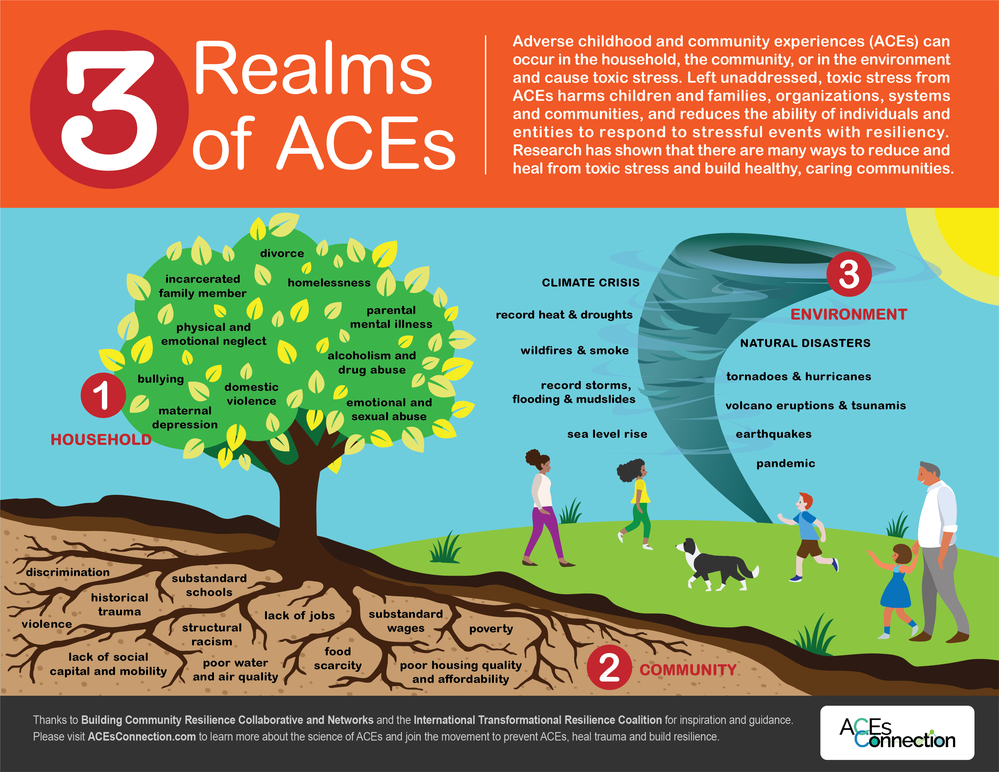
Systems change begins with people who learn about ACEs science. ACEs comes from the CDC-Kaiser Permanente Adverse Childhood Experiences Study (ACE Study), groundbreaking research that looked at how 10 types of childhood trauma affect long-term health. They include: physical, emotional and sexual abuse; physical and emotional neglect; living with a family member who’s addicted to alcohol or other substances, or who’s depressed or has other mental illnesses; experiencing parental divorce or separation; having a family member who’s incarcerated, and witnessing a mother being abused.
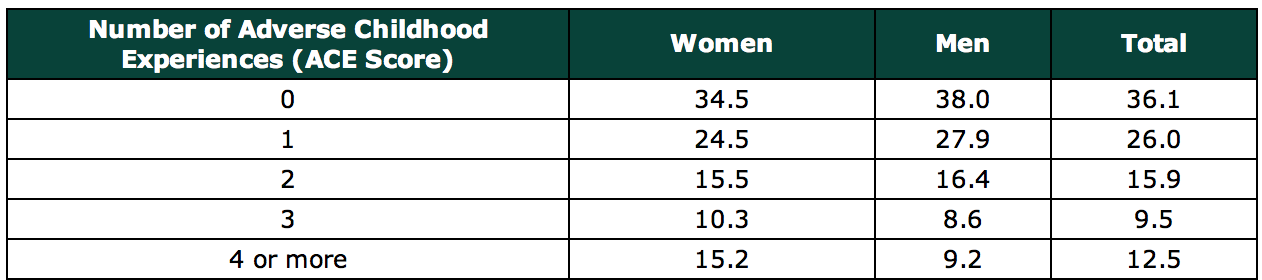
The ACE Study found that the higher someone’s ACE score – the more types of childhood adversity a person experienced – the higher their risk of chronic disease, mental illness, violence, being a victim of violence and several other consequences. The study found that most people (64%) have at least one ACE; 12% of the population has an ACE score of 4. Having an ACE score of 4 nearly doubles the risk of heart disease and cancer. It increases the likelihood of becoming an alcoholic by 700 percent and the risk of attempted suicide by 1200 percent. (For more information, go to ACEs Science 101. To calculate your ACE and resilience scores, go to: Got Your ACE Score?)
Other ACEs surveys include racism, witnessing violence outside the home, bullying, spanking, losing a parent to deportation, living in an unsafe neighborhood, and involvement with the foster care system. Other types of childhood adversity can also include being homeless, living in a war zone, being an immigrant, moving many times, witnessing a sibling being abused, witnessing a father or other caregiver or extended family member being abused, involvement with the criminal justice system, and attending a school that enforces a zero-tolerance discipline policy.
The ACE Study is one of five parts of ACEs science, which also includes how toxic stress from ACEs damage children’s developing brains; how toxic stress from ACEs severely damages health; how it can change our genes and be passed from one generation to another in historical trauma; and resilience research, which shows the brain is plastic and the body wants to heal.
ACEs affects us all….either personally, in our family members, our friends, or people in our immediate or extended community (i.e., our nation and world). Most of our nation’s burden of chronic disease is ACE-related, as are most of our social and mental health issues. Much of the toxicity in our systems reside in the roots of our history of slavery, racial discrimination and genocide, and we are just beginning to comprehend its reach and effects.
Most people realize the effects of ACEs in their ill health outcomes; in a smaller percentage, the effects emerge as violence, or being a victim of violence. Even the people who live in the affluent community of Parkland, FL, have ACEs — the 17,000 people who participated in the original ACE Study were mostly white, college-educated, and all had jobs and great health care. Thirty-eight states and Washington, DC, have done their own ACE surveys, with similar results to the original ACE Study.
The resilience research part of ACEs science research focuses on what happens when individuals, organizations and systems integrate trauma-informed and resilience-building practices. And when they do, the results are remarkable, astounding, so mind-blowing that they finally provide some hope that we can solve our most intractable problems.
For example:
- Many schools – including schools in San Francisco, CA, Spokane, WA, San Diego, CA, and Walla Walla, WA — have integrated trauma-informed practices into classrooms, playgrounds and school policies. These schools have seen 90 percent drops in suspensions after one year; after three years, the schools no longer expel students and some no longer even have the need for in-school suspensions. The grades, test scores and graduation rates increased, and the students most benefitted were those with the highest ACE scores. By the end of 2017, several hundred schools across the U.S. were integrating trauma-informed and resilience-building practices based on ACEs science.
- Safe Babies Courts have integrated ACEs science in resilience-building practices that provide wrap-around services for families; a year after participating in Safe Babies Courts, 99 percent of the children suffer no further abuse.
- Homeless shelters and the faith-based community are integrating practices based on ACEs research. At the heart of their approach is educating those who are homeless and people in rescue missions about ACEs science. This new understanding of their lives often changes their entire understanding of their behavior, because they realize that they weren’t born bad, that they had no control over what happened to them as children, that they coped appropriately, given what was available to them, and, most important and freeing, that they can change.
- A rural health clinic in Pueblo, CO, changed its medical practice after it integrated ACEs screening, and saw a 30 percent drop in emergency department visits. A family physician in Tennessee educates his opioid patients about their ACEs, with nearly 100 percent of them returning to health and getting their lives back. The physician also understands that ACEs leads to damage that is chronic and, thus, he treats addictions as he does diabetes, as a chronic disease.
- Batterers intervention programs that have integrated ACEs science have reduced recidivism rates from what was accepted — 20 to 60 percent — to zero to four percent.
- Cities and states are integrating ACE-, trauma-informed practices and resilience building practices. By the end of 2017, several hundred communities around the U.S. had launched ACEs initiatives. This report on self-healing communities describes how integrating ACEs science drastically reduced youth suicide, teen pregnancy, juvenile arrests, and high-school drop-out rates — all at the same time — in communities in Washington State that integrated practices based on ACEs science.
People who are incorporating these changes are doing so city by city, county by county, state by state across the U.S. Also people in interest-based communities, such as education and pediatrics, among many sectors, are integrating trauma-informed and resilience-building practices based on ACEs science.
These folks are educating their organizations, their communities, their families, their leaders, their legislators about this new knowledge. Several legislatures and governor’s offices have started incorporating ACEs science into laws and policies.
The important thing to note is that this ACEs science is apolitical and a-cultural. It’s being used in a communities that are Republican, Democrat, Independent, and in diverse communities around the world. It’s a new way of understanding why we humans do what we do, and how our systems can change to actually help people heal themselves, instead of further traumatizing them.
Next week, we’re debuting state profiles of all 50 states and Washington, DC, that show where remarkable progress is being made in states and communities, and where it needs a boost.
We hope that the information in the profiles will help propel this new understanding of how to actually solve our most intractable problems. Enough organizations and communities have shown that it can be done, so that, although it will take time, there’s no excuse not to do it.
This new understanding actually shows that we don’t have to put up with poverty, or the systems that keep people in poverty, whether it’s systems-induced poverty or poverty of spirit. And for every child, no matter where they live, that’s great news.
Jane Stevens
Publisher, ACEsTooHigh.com
Founder, PACEs Connection
Views: 32,186
Add Comment
 Carey SippFormats
javascript:””
Comments (25)
 Melissa SadinMember
Amen Jane!!!!
Jane StevensPublisher, ACEsTooHigh; founder, PACEs Connection
Thanks, Daniel. My experience so far is that when people “get” ACEs science, it changes their whole approach, no matter what their political bent, no matter what culture or country they’re in. It’s when they don’t “get” ACEs science that they are stuck in traditional and uninformed approaches.
DMDaniel MarloweMember
Hi Jane, gratitude for this report and the encouragement you give to all. However there is one statement that continues to give me pause. I know this is not a political site by any means albeit you brought it into the picture for me when you included in your statement: “…ACEs science is apolitical..”. While it may be true that ACEs science is being shared and regarded and even touted apolitically across the board, from my perspective, that is where it clearly stops in the “apolitical” sense. That is, the group(s), more specifically, the current group who holds the talking stick might speak ACEs in one direction however if it does not fit into or follow their agenda in the other direction, then that is where “apolitical” stops and it is clearly political. The effects of ACEs is a broad and deep reaching situation that requires systems and approaches that help to heal, resolve and improve wellbeing and productivity. I have to say, when it is put out there that this is an “apolitical” movement, the science of it all is not used in any what whatsoever “apolitically” over the past year and in to today. When group(s) serve to enact laws, policies and rhetoric that further marginalize people by passing tax reform laws; further increase insecurity by threatening citizenships or freedoms and assault weapons for all; further challenge systems that serve ACEs conditions by discrediting them and defunding them then there has to be some accountability here. Maybe it ought to be guilt and not blame, shame or punishment? Maybe pure guilt will get that group(s) to wake up and stop merely talking about ACEs science out of one side and start acting (and enacting) laws, policies, and funding that helps address the state of affairs on every side!
James EncinasMember
So exciting to hear the numbers of people who have read the essay you’ve written Jane. If all the people on acesconnection re post it, share on social media, share with a family member, share it at their schools, work place…..let’s see 10 x 35,000 😊
Jane StevensPublisher, ACEsTooHigh; founder, PACEs Connection
Wow! Terrific, Becky!! Thank you!
 Becky HaasMember
Jane Stevens posted:
Thank you, Audrey & James. Between ACEs Connection & ACEs Too High, this essay has been viewed more than 35,000 times since last Wednesday, and seems to be getting a little momentum….which is great! The more people who become curious about ACEs, the better!
Thanks to everyone here who’s participating so deeply in this work and spreading the word.
Wonderful! I had someone in another city share the article on Facebook and tag me and a Vice-Mayor in another town who has attended our ACEs training. I recently was interviewed by phone by Minnesota Senator Amy Klobachar’s DC Counsel about ACEs, our System of Care and trauma-informed policing. I’ve shared it with them 
Jane StevensPublisher, ACEsTooHigh; founder, PACEs Connection
Thank you, Audrey & James. Between ACEs Connection & ACEs Too High, this essay has been viewed more than 35,000 times since last Wednesday, and seems to be getting a little momentum….which is great! The more people who become curious about ACEs, the better!
Thanks to everyone here who’s participating so deeply in this work and spreading the word.
 Audrey StillermanMember
Go Jane!!! Thank you for so effectively articulating essential details of this current tragedy (particularly all the things that were done for/with Nicholas Cruz and still were not enough), acknowledging the importance of what happens in the intra-familial, community, structural and historical arenas both separately and together, and offering great examples of real solutions. The whole article is fantastic, and I especially appreciate these sections: The kids in Parkland, FL, have the advantages that we want all our children to have…Creating those conditions of opportunity for everyone is the responsibility of the adults….all of us adults., …approach to changing behavior — whether it’s criminal, unhealthy or unwanted behavior — from a blame, shame and punishment approach, to one that is based in understanding, nurturing and healing…. ,Other ACEs surveys include racism… and Much of the toxicity in our systems reside in the roots of our history of slavery, racial discrimination and genocide and we are just beginning to comprehend its reach and effects. As you say, we have to keep going back to a place of deeply knowing and translating the science into practice to achieve what we all want. Looking forward to sharing widely!
James EncinasMember
Thank you for sharing your talent, voice, truth Jane! – “All of our systems have to change their approach to changing behavior — whether it’s criminal, unhealthy or unwanted behavior — from a blame, shame and punishment approach, to one that is based in understanding, nurturing and healing….in other words, the science of adverse childhood experiences — ACEs.” – Amen
LHLaura Haynes CollectorMember
Thank you for this. I am a CASA to a kid the same age as Nikolas Cruz. I noticed so many places where this child was failed along the way, and where his adoptive family was failed by being under-informed about his early trauma and likely outcomes of that.
Nikolas experienced serious “developmental” Trauma. ACEs that happen to a pre-verbal child are exponentially more devastating, as they damage a mind that has not had a chance to grow or form in healthy ways yet. He was abandonned by his mother as an aware older baby. That’s the worst thing a baby can experience. As we become more sophisticated about trauma, I think ACEs need to be considered in terms of timing, too, and in terms of degree.
Nikolas likely had Reactive Attachment Disorder, though nobody seems to have diagnosed this; however it makes sense of his many symptoms and it connects to his early life trauma. I would guess he got CBT CBT CBT (one size fits all mental health services, like in my town) and no right brain focused services like Neurofeedback, EMDR, or somatic therapies. No attachment-focused therapies that would have addressed his real woundedness.
It’s heartbreaking. By un-tethering early childhood trauma from this boy’s later life problems, its easy to get confused on how to actually help.
 Jenny SorensenMember
Thank you for your post! I am a mental health professional in Houston, Texas and want to figure out a way to help spread the word on a larger scale! I educate all my clients about ACE’s and screen them during my assessment, but it’s not enough! I welcome any ideas or suggestions on how to become more active in raising awareness and educating on ACE’s. Thanks again.
Jane StevensPublisher, ACEsTooHigh; founder, PACEs Connection
That’s terrific, Becky!
Becky HaasMember
Jane Stevens posted:
Lisa, Mary, Becky, Anne and Carey: Thank you for kind words and sharing this!
I’m working with a national non-profit and the Chairman of their Board lives in Florida. She had a teenage cousin who attends Parkland and was spared injury the day of the shooting by the bravery of the football coach who directed him to run. I shared your article with her and others on the Board (who I’m helping to educate about ACEs science) and received a response…”your article was very helpful!”
 Elizabeth FitzgeraldMember
Jane your poignant words are fueling hope. Thank you for your persistent efforts in spreading good news.
 Grace HarrisMember
Jane, I so agree. I think it would be informative for someone to research the number of ACES that the shooters have experienced. I have always thought that we can’t create a society that will be safe for our children and grandchildren until we make sure that all children are raised in a nurturing, safe way. Not every child who has experienced trauma and neglect will end up hurting others, but those that do, will often just hurt someone who is in their way and that makes all of us vulnerable to these consequences.
 Mary GiulianiMember
Jane, THANK YOU for speaking so eloquently to the core issue in this school shooting: HURT PEOPLE, HURT PEOPLE and the core solution, SYSTEMS CHANGE THAT focuses on understanding why we humans do what we do, and how our systems can change to actually help people heal themselves, instead of further traumatizing them.
 Michelle SimonsMember
Excellent post! Sharing everywhere I can!
Jane StevensPublisher, ACEsTooHigh; founder, PACEs Connection
Lisa, Mary, Becky, Anne and Carey: Thank you for kind words and sharing this!
 Lisa FrederiksenMember
This is excellent, Jane – all of it, but I especially liked this quote:
“But that’s just one tiny, tiny, tiny part of the solution. This isn’t only a gun regulation issue. It’s a systems change issue. All of our systems have to change their approach to changing behavior — whether it’s criminal, unhealthy or unwanted behavior — from a blame, shame and punishment approach, to one that is based in understanding, nurturing and healing….in other words, ACEs science.”
I’ll be sharing widely – thank you!
Mary L. HoldenMember
This article should be ‘picked up’ by news media outlets worldwide. Excellent reporting here, and very useful information. Thank you.
AJAnne JonesMember
Share on Facebook, Twitter, et al.!
Carey SippFormer Volunteer Co-Director, PACEs Connection Revitalization
Jane –
Thank you for this eloquent case for ACEs Science to be tied to what is happening in this incredibly challenging moment. Thanks for sharing solutions and successes so people can see what happens when we stop blaming and shaming others, and instead look at solutions, and see how we can be part of the solution.
I am sharing this far and wide in hopes that somehow it lands in the hands of the students from Marjory Stoneman Douglas High School, so they can help tell the world about the vital importance of ACEs Science. The solutions are here.
I hope young leaders from Marjory Stoneman Douglas High School can read this piece today. I believe it would give them important information and some comfort. There is comfort in knowing there are solutions. I will be Tweeting it and tagging them, and invite others to do so too. Meeting people where they are is part of the solution.
Becky HaasMember
Good words…understanding ACEs science = hope! Looking forward to seeing your 50 states and DC report.
Jane StevensPublisher, ACEsTooHigh; founder, PACEs Connection
Thank you, Helena!
HSHelena SNOWMember
Brilliant, Jane! And so needs to be said. We have to start making the right connections to move us away from the blame and punishment scenario – at the macro level just as at the micro level. Sharing!