Tag Archives: health

ACEs science can prevent school shootings, but first people have to learn about ACEs science

Note – the other of the “Top Five” stories was Jane’s piece about “PACEs Science 101” It was posted here on this little site earlier. Instead of posting it twice, I am sharing another of her top posts, this one that is a personal favorite regarding how “ACEs Science can help prevent school shootings, but first people have to learn about ACEs Science.” This was posted in 2.20.18, which was actually the day Jane was diagnosed with brain cancer.

One important note – in 2019 the Positive Childhood Experiences study was published; I often wonder what would have happened had Jane revised this piece to include that. Though in reality? She overhauled what was ACEs Connection to rename it PACEs Connection in 2021, as she believed so fervently in the power of PCEs to help prevent society’s most intractable problems. And with this article, I have completed, for now, the partial transfer of what I believe to have been some of the post important pieces posted on PACEs Connection. Apologies to our dear friend Dr. Christina Bethell, who had many pieces posted. If I can, and the site stays up longer, I will include those as well. For now? Self care is a priority. Carey August 9, 2026

Jane Stevens Jane Stevens 2/20/1810:38 PM

David Hogg, a senior at Marjory Stoneman Douglas High School, speaks at a rally calling for more gun control. Photo by Jonathan Drake / Reuters
_______________________

After 17 people, mostly teens, were shot and killed by another teen last week in Parkland, FL, what seems to be a real movement is growing, propelled by kids devastated by their friends’ deaths and wanting to prevent such a massacre from ever happening again.

Their rallies and marches and lie-downs probably won’t have much effect in the short-term, as some of the Parkland teens learned as they witnessed — and some of them wept during — today’s lightning vote by state lawmakers along party lines to end debate on an assault weapons ban, which killed any further consideration of the bill in the Florida legislature’s current session. 

But their persistence can make a difference in the long run, especially if they — and we — widen this to include the dozens of kids shot on the streets of Chicago or Camden or in other communities every week. We can even broaden the approach to include the 200 people, including many children, who died in Syrian air strikes in the last two days, because the roots and solutions are the same. 

The kids in Parkland, FL, have the advantages that we want all our children to have: a great education in an affluent community so that they are prepared for and feel confident enough to know how to communicate in social and mainstream media about what they want, and to do it in an informed and cohesive way, with their community at their back. This means support and advice from parents, teachers, mentors and other adults who have created and maintained that environment for them. 

Most of the kids living on our nation’s Indian reservations, in poor African-American communities, in poor white communities that don’t have the advantage of good schools, safe neighborhoods, well-paying jobs for their parents, affordable housing, great health care, soccer fields, baseball diamonds, swimming pools and parks….these kids don’t have the support or wherewithal or access to that same megaphone. It’s not that they aren’t capable, or that their parents couldn’t be capable of providing the same support that the kids in Parkland have. But they live in conditions created by us adults and our traditional systems that prevent them from realizing their dreams. Creating those conditions of opportunity for everyone is the responsibility of the adults….all of us adults. 

But ACEs science clearly shows even the advantageous environment of Parkland, FL, is not really safe, as the kids found out. Their first response — that this is a gun regulation issue — is right. There’s no reason why any kid in this country needs an assault rifle, bump stocks or anything else.  

But that’s just one tiny, tiny, tiny part of the solution. This isn’t only a gun regulation issue. It’s a systems change issue. All of our systems have to change their approach to changing behavior — whether it’s criminal, unhealthy or unwanted behavior — from a blame, shame and punishment approach, to one that is based in understanding, nurturing and healing….in other words, ACEs science.  

Anyone wise to ACEs science (and that includes most of the more than 20,000 people who participate in ACEs Connection) would read this Washington Post story — Teachers say Florida suspect’s problems started in middle school and the system tried to help him — and know it’s likely that Nikolas Cruz’s problems started at childbirth…and perhaps before…and that the school system, social service system, and mental health system, for all their good intentions, stepped in too late and were not equipped to help him or his family. 

According to the article, during one year in middle school, “he racked up numerous infractions — including for a fight during the second week of school and continuing with a pattern of unruly behavior, insults and profanity.” 

“His middle school and high school teachers referred him to individual and family counseling, the records show. They held parent conferences and called social workers. They sent him to in-school suspension, and they sent him off campus. For a time, they sent him to a school for emotionally disturbed youth. Finally, after he was disciplined for an assault at Marjory Stoneman Douglas High, they asked for an assessment of the threat he posed to his school, and ultimately he was expelled, about a year before he returned with a gun.”

“Teachers worked “very, very, very hard” to get Cruz to a school center that would help him address his issues, said the sixth-grade teacher, who noted that Cruz’s now-deceased (adoptive) mother also understood his problems and wanted to get him help. But that process took years, the teacher said, and required loads of paperwork to back up Cruz’s needs.”

Here’s the crux of the situation we’re in…where most of our systems are in helping troubled people: 

“Instead of slipping through the cracks, it appears Cruz was the target of aggressive work to help put him on the right track. But it also appears he might have hit the limit of what could be done.”

We who know about ACEs science say: No way! 

The wrap-around services could/should have started when Cruz was born, if his family was troubled, as it seems they were, from all reports. And because this is a generational issue, a wrap-around service approach that focuses on helping people heal themselves, while making sure they don’t hurt themselves or others, is important to implement in all systems that serve people along their lifespan.  

Systems change begins with people who learn about ACEs science. ACEs comes from the CDC-Kaiser Permanente Adverse Childhood Experiences Study (ACE Study), groundbreaking research that looked at how 10 types of childhood trauma affect long-term health. They include: physical, emotional and sexual abuse; physical and emotional neglect; living with a family member who’s addicted to alcohol or other substances, or who’s depressed or has other mental illnesses; experiencing parental divorce or separation; having a family member who’s incarcerated, and witnessing a mother being abused.

The ACE Study found that the higher someone’s ACE score – the more types of childhood adversity a person experienced – the higher their risk of chronic disease, mental illness, violence, being a victim of violence and several other consequences. The study found that most people (64%) have at least one ACE; 12% of the population has an ACE score of 4. Having an ACE score of 4 nearly doubles the risk of heart disease and cancer. It increases the likelihood of becoming an alcoholic by 700 percent and the risk of attempted suicide by 1200 percent. (For more information, go to ACEs Science 101. To calculate your ACE and resilience scores, go to: Got Your ACE Score?)

Other ACEs surveys include racism, witnessing violence outside the home, bullying, spanking, losing a parent to deportation, living in an unsafe neighborhood, and involvement with the foster care system. Other types of childhood adversity can also include being homeless, living in a war zone, being an immigrant, moving many times, witnessing a sibling being abused, witnessing a father or other caregiver or extended family member being abused, involvement with the criminal justice system, and attending a school that enforces a zero-tolerance discipline policy.

The ACE Study is one of five parts of ACEs science, which also includes how toxic stress from ACEs damage children’s developing brains; how toxic stress from ACEs severely damages health; how it can change our genes and be passed from one generation to another in historical trauma; and resilience research, which shows the brain is plastic and the body wants to heal. 

ACEs affects us all….either personally, in our family members, our friends, or people in our immediate or extended community (i.e., our nation and world). Most of our nation’s burden of chronic disease is ACE-related, as are most of our social and mental health issues. Much of the toxicity in our systems reside in the roots of our history of slavery, racial discrimination and genocide, and we are just beginning to comprehend its reach and effects.

Most people realize the effects of ACEs in their ill health outcomes; in a smaller percentage, the effects emerge as violence, or being a victim of violence. Even the people who live in the affluent community of Parkland, FL, have ACEs — the 17,000 people who participated in the original ACE Study were mostly white, college-educated, and all had jobs and great health care. Thirty-eight states and Washington, DC, have done their own ACE surveys, with similar results to the original ACE Study. 

The resilience research part of ACEs science research focuses on what happens when individuals, organizations and systems integrate trauma-informed and resilience-building practices. And when they do, the results are remarkable, astounding, so mind-blowing that they finally provide some hope that we can solve our most intractable problems.

For example: 

  • Many schools – including schools in San Francisco, CASpokane, WASan Diego, CA, and Walla Walla, WA — have integrated trauma-informed practices into classrooms, playgrounds and school policies. These schools have seen 90 percent drops in suspensions after one year; after three years, the schools no longer expel students and some no longer even have the need for in-school suspensions. The grades, test scores and graduation rates increased, and the students most benefitted were those with the highest ACE scores. By the end of 2017, several hundred schools across the U.S. were integrating trauma-informed and resilience-building practices based on ACEs science.
  • Safe Babies Courts have integrated ACEs science in resilience-building practices that provide wrap-around services for families; a year after participating in Safe Babies Courts, 99 percent of the children suffer no further abuse.
  • Homeless shelters and the faith-based community are integrating practices based on ACEs research. At the heart of their approach is educating those who are homeless and people in rescue missions about ACEs science. This new understanding of their lives often changes their entire understanding of their behavior, because they realize that they weren’t born bad, that they had no control over what happened to them as children, that they coped appropriately, given what was available to them, and, most important and freeing, that they can change. 
  • rural health clinic in Pueblo, CO, changed its medical practice after it integrated ACEs screening, and saw a 30 percent drop in emergency department visits. A family physician in Tennessee educates his opioid patients about their ACEs, with nearly 100 percent of them returning to health and getting their lives back. The physician also understands that ACEs leads to damage that is chronic and, thus, he treats addictions as he does diabetes, as a chronic disease.
  • Batterers intervention programs that have integrated ACEs science have reduced recidivism rates from what was accepted — 20 to 60 percent — to zero to four percent.
  • Cities and states are integrating ACE-, trauma-informed practices and resilience building practices. By the end of 2017, several hundred communities around the U.S. had launched ACEs initiatives. This report on self-healing communities describes how integrating ACEs science drastically reduced youth suicide, teen pregnancy, juvenile arrests, and high-school drop-out rates — all at the same time — in communities in Washington State that integrated practices based on ACEs science.

People who are incorporating these changes are doing so city by city, county by county, state by state  across the U.S. Also people in interest-based communities, such as education and pediatrics, among many sectors, are integrating trauma-informed and resilience-building practices based on ACEs science.  

These folks are educating their organizations, their communities, their families, their leaders, their legislators about this new knowledge. Several legislatures and governor’s offices have started incorporating ACEs science into laws and policies. 

The important thing to note is that this ACEs science is apolitical and a-cultural. It’s being used in a communities that are Republican, Democrat, Independent, and in diverse communities around the world. It’s a new way of understanding why we humans do what we do, and how our systems can change to actually help people heal themselves, instead of further traumatizing them.  

Next week, we’re debuting state profiles of all 50 states and Washington, DC, that show where remarkable progress is being made in states and communities, and where it needs a boost.

We hope that the information in the profiles will help propel this new understanding of how to actually solve our most intractable problems. Enough organizations and communities have shown that it can be done, so that, although it will take time, there’s no excuse not to do it. 

This new understanding actually shows that we don’t have to put up with poverty, or the systems that keep people in poverty, whether it’s systems-induced poverty or poverty of spirit. And for every child, no matter where they live, that’s great news. 

Jane Stevens
Publisher, ACEsTooHigh.com
Founder, PACEs Connection

❤️ 31💯 1 

Views: 32,186

Add Comment

Carey SippCarey SippFormats 

javascript:””

Comments (25) 

Newest · Oldest · Popular

Melissa SadinMelissa SadinMember

Amen Jane!!!!


Jane StevensJane StevensPublisher, ACEsTooHigh; founder, PACEs Connection

Thanks, Daniel. My experience so far is that when people “get” ACEs science, it changes their whole approach, no matter what their political bent, no matter what culture or country they’re in. It’s when they don’t “get” ACEs science that they are stuck in traditional and uninformed approaches.


❤️ 1

DMDaniel MarloweMember

Hi Jane, gratitude for this report and the encouragement you give to all.  However there is one statement that continues to give me pause.  I know this is not a political site by any means albeit you brought it into the picture for me when you included in your statement: “…ACEs science is apolitical..”.   While it may be true that ACEs science is being shared and regarded and even touted apolitically across the board, from my  perspective, that is where it clearly stops in the “apolitical” sense.  That is, the group(s), more specifically, the current group who holds the talking stick might speak ACEs in  one direction however if it does not fit into or follow their agenda in the other direction, then that is where “apolitical” stops and it is clearly political.  The effects of ACEs is a broad and deep reaching situation that requires systems and approaches that help to heal, resolve and improve wellbeing and productivity.  I have to say, when it is put out there that this is an “apolitical” movement, the science of it all is not used in any what whatsoever “apolitically” over the past year and in to today.  When group(s) serve to enact laws, policies and rhetoric that further marginalize people by passing tax reform laws; further increase insecurity by threatening citizenships or freedoms and assault weapons for all; further challenge systems that serve ACEs conditions by discrediting them and defunding them then there has to be some accountability here. Maybe it ought to be guilt and not blame, shame or punishment?  Maybe pure guilt will get that group(s) to wake up and stop merely talking about ACEs science out of one side and start acting (and enacting) laws, policies, and funding that helps address the state of affairs on every side!


James EncinasJames EncinasMember

So exciting to hear the numbers of people who have read the essay you’ve written Jane. If all the people on acesconnection re post it, share on social media, share with a family member, share it at their schools, work place…..let’s  see 10 x 35,000 😊


❤️ 2

Jane StevensJane StevensPublisher, ACEsTooHigh; founder, PACEs Connection

Wow!  Terrific, Becky!!  Thank you!

 

❤️ 2

Becky HaasBecky HaasMember

Jane Stevens posted:

Thank you, Audrey & James. Between ACEs Connection & ACEs Too High, this essay has been viewed more than 35,000 times since last Wednesday, and seems to be getting a little momentum….which is great! The more people who become curious about ACEs, the better!

Thanks to everyone here who’s participating so deeply in this work and spreading the word.

Wonderful!  I had someone in another city share the article on Facebook and tag me and a Vice-Mayor in another town who has attended our ACEs training.  I recently was interviewed by phone by Minnesota Senator Amy Klobachar’s DC Counsel about ACEs, our System of Care and trauma-informed policing.  I’ve shared it with them 


❤️ 3

Jane StevensJane StevensPublisher, ACEsTooHigh; founder, PACEs Connection

Thank you, Audrey & James. Between ACEs Connection & ACEs Too High, this essay has been viewed more than 35,000 times since last Wednesday, and seems to be getting a little momentum….which is great! The more people who become curious about ACEs, the better!

Thanks to everyone here who’s participating so deeply in this work and spreading the word.

 

❤️ 5

Audrey StillermanAudrey StillermanMember

Go Jane!!!  Thank you for so effectively articulating essential details of this current tragedy (particularly all the things that were done for/with Nicholas Cruz and still were not enough), acknowledging the importance of what happens in the intra-familial, community, structural and historical arenas both separately and together, and offering great examples of real solutions.  The whole article is fantastic, and I especially appreciate these sections: The kids in Parkland, FL, have the advantages that we want all our children to have…Creating those conditions of opportunity for everyone is the responsibility of the adults….all of us adults., …approach to changing behavior — whether it’s criminal, unhealthy or unwanted behavior — from a blame, shame and punishment approach, to one that is based in understanding, nurturing and healing…. ,Other ACEs surveys include racism… and Much of the toxicity in our systems reside in the roots of our history of slavery, racial discrimination and genocide  and we are just beginning to comprehend its reach and effects.  As you say, we have to keep going back to a place of deeply knowing and translating the science into practice to achieve what we all want.  Looking forward to sharing widely!


❤️ 3

James EncinasJames EncinasMember

Thank you for sharing your talent, voice, truth Jane! – “All of our systems have to change their approach to changing behavior — whether it’s criminal, unhealthy or unwanted behavior — from a blame, shame and punishment approach, to one that is based in understanding, nurturing and healing….in other words, the science of adverse childhood experiences — ACEs.” – Amen


❤️ 2

LHLaura Haynes CollectorMember

Thank you for this.  I am a CASA to a kid the same age as Nikolas Cruz.  I noticed so many places where this child was failed along the way, and where his adoptive family was failed by being under-informed about his early trauma and likely outcomes of that. 

Nikolas experienced serious  “developmental” Trauma.  ACEs that happen to a pre-verbal child are exponentially more devastating, as they damage a mind that has not had a chance to grow or form in healthy ways yet.   He was abandonned by his mother as an aware older baby.  That’s the worst thing a baby can experience.  As we become more sophisticated about trauma, I think ACEs need to be considered in terms of timing, too, and in terms of degree.  

Nikolas likely had Reactive Attachment Disorder, though nobody seems to have diagnosed this; however it makes sense of his many symptoms and it connects to his early life trauma.  I would guess he got CBT CBT CBT (one size fits all mental health services, like in my town) and no right brain focused services like Neurofeedback, EMDR, or somatic therapies.  No attachment-focused therapies that would have addressed his real woundedness. 

It’s heartbreaking.  By un-tethering early childhood trauma from this boy’s later life problems, its easy to get confused on how to actually help. 

 

❤️ 3

Jenny SorensenJenny SorensenMember

Thank you for your post!  I am a mental health professional in Houston, Texas and want to figure out a way to help spread the word on a larger scale!  I educate all my clients about ACE’s and screen them during my assessment, but it’s not enough!   I welcome any ideas or suggestions on how to become more active in raising awareness and educating on ACE’s.  Thanks again.


❤️ 2

Jane StevensJane StevensPublisher, ACEsTooHigh; founder, PACEs Connection

That’s terrific, Becky!


❤️ 2

Becky HaasBecky HaasMember

Jane Stevens posted:

Lisa, Mary, Becky, Anne and Carey: Thank you for kind words and sharing this!

I’m working with a national non-profit and the Chairman of their Board lives in Florida.  She had a teenage cousin who attends Parkland and was spared injury the day of the shooting by the bravery of the football coach who directed him to run.  I shared your article with her and others on the Board (who I’m helping to educate about ACEs science) and received a response…”your article was very helpful!”

 

❤️ 3

Elizabeth FitzgeraldElizabeth FitzgeraldMember

Jane your poignant words are fueling hope. Thank you for your persistent efforts in spreading good news. 

 

❤️ 2

Grace HarrisGrace HarrisMember

Jane, I so agree. I think it would be informative for someone to research the number of ACES that the shooters have experienced.  I have always thought that we can’t create a society that will be safe for our children and grandchildren until we make sure that all children are raised in a nurturing, safe way.  Not every child who has experienced trauma and neglect will end up hurting others, but those that do, will often just hurt someone who is in their way and that makes all of us vulnerable to these consequences. 

 

❤️ 3

Mary GiulianiMary GiulianiMember

Jane, THANK YOU for speaking so eloquently to the core issue in this school shooting: HURT PEOPLE, HURT PEOPLE and the core solution, SYSTEMS CHANGE THAT focuses on understanding why we humans do what we do, and how our systems can change to actually help people heal themselves, instead of further traumatizing them.  

 

❤️ 3

Michelle SimonsMichelle SimonsMember

Excellent post!    Sharing everywhere I can!


❤️ 2

Jane StevensJane StevensPublisher, ACEsTooHigh; founder, PACEs Connection

Lisa, Mary, Becky, Anne and Carey: Thank you for kind words and sharing this!

 

❤️ 3

Lisa FrederiksenLisa FrederiksenMember

This is excellent, Jane – all of it, but I especially liked this quote:

“But that’s just one tiny, tiny, tiny part of the solution. This isn’t only a gun regulation issue. It’s a systems change issue. All of our systems have to change their approach to changing behavior — whether it’s criminal, unhealthy or unwanted behavior — from a blame, shame and punishment approach, to one that is based in understanding, nurturing and healing….in other words, ACEs science.”  

I’ll be sharing widely – thank you!


❤️ 4

Mary L. HoldenMary L. HoldenMember

This article should be ‘picked up’ by news media outlets worldwide. Excellent reporting here, and very useful information. Thank you.


❤️ 3

AJAnne JonesMember

Share on Facebook, Twitter, et al.!


❤️ 1

Carey SippCarey SippFormer Volunteer Co-Director, PACEs Connection Revitalization

Jane –

Thank you for this eloquent case for ACEs Science to be tied to what is happening in this incredibly challenging moment. Thanks for sharing solutions and successes so people can see what happens when we stop blaming and shaming others, and instead look at solutions, and see how we can be part of the solution.

I am sharing this far and wide in hopes that somehow it lands in the hands of the students from Marjory Stoneman Douglas High School, so they can help tell the world about the vital importance of ACEs Science.  The solutions are here. 

I hope young leaders from Marjory Stoneman Douglas High School can read this piece today. I believe it would give them important information and some comfort. There is comfort in knowing there are solutions. I will be Tweeting it and tagging them, and invite others to do so too. Meeting people where they are is part of  the solution. 


❤️ 3

Becky HaasBecky HaasMember

Good words…understanding ACEs science = hope!  Looking forward to seeing your 50 states and DC report.


❤️ 2

Jane StevensJane StevensPublisher, ACEsTooHigh; founder, PACEs Connection

Thank you, Helena!


❤️ 1

HSHelena SNOWMember

Brilliant, Jane! And so needs to be said. We have to start making the right connections to move us away from the blame and punishment scenario – at the macro level just as at the micro level. Sharing!

 

❤️ 5

Childhood trauma leads to lifelong chronic illness — so why isn’t the medical community helping patients?

Donna Jackson Nakazawa Donna Jackson Nakazawa 1/18/172:19 PM

ADonnaDad

When I was twelve, I was coming home from swimming at my neighbor’s dock when I saw an ambulance’s flashing lights in our driveway. I still remember the asphalt burning my feet as I stood, paralyzed, and watched the paramedics take away my father. It was as if I knew those flashing lights were a harbinger that my childhood was over.

At the hospital, a surgeon performed “minor” elective bowel surgery on my young dad. The surgeon made an error, and instead of my father coming home to the “welcome home” banners we’d painted, he died.

The medical care system failed my father miserably. Then the medical care system began to fail me.

At 14 years old, I started fainting. The doctors implied I was trying to garner attention. In college I began having full seizures. I kept them to myself, fearful of seeming a modern Camille. I’d awaken on the floor drenched in sweat, with strangers standing quizzically over me. Then, I had a seizure in front of my aunt, a nurse, and forty-eight hours later awoke in the hospital with a pacemaker in my chest.

In my early 40s I developed Guillain Barre Syndrome, a neurological autoimmune disorder that causes paralysis from the neck down. I found myself in Johns Hopkins Hospital, on the exact anniversary of my father’s death, in the same hospital wing where he had died, unable to move. I was a few days shy of turning 42, the very age at which my dad had passed away.

I recovered, only to relapse, falling paralyzed again. Many of my children’s early memories revolve around my bed, where we played board games and read books.

It wasn’t until I was fifty-one-years old that a physician sat me down and asked me the most important question of my life – one that would lead me to better health than I’d had for decades: “Were there any childhood traumas or stressors that might have contributed to the extreme level of inflammation you’re experiencing as an adult?”

My physician explained that ongoing adversity in childhood leads to a chronic state of “fight, flight or freeze.” Researchers at Yale had recently shown that when inflammatory stress hormones flood a child’s body and brain, they alter the genes that oversee our stress reactivity, re-setting the stress response to “high” for life. This increases the risk of inflammation, which manifests later in cancer, heart disease, and autoimmune diseases like mine.

As a science reporter I was shocked to discover that research linking childhood stress to adult illness began in 1996 with the Kaiser Permanente-CDC Adverse Childhood Experiences Study (ACE Study). Since then, over 1,500 peer-reviewed studies have replicated these findings.

The research was stunning. Two-thirds of Americans report experiencing adverse childhood experiences. These include obvious sexual and physical abuse, but also stressors that many consider to be normal — growing up with divorced parents, living with a depressed or alcoholic mom or dad, having a parent who belittled or humiliated you – or simply not feeling as if your family had your back. People who’d experienced four such categories of childhood adversity were twice as likely to be diagnosed with cancer and depression as adults.

One statistic struck home with me: women who’d faced three types of childhood adversity had a sixty percent greater risk of being hospitalized with an autoimmune disease as an adult. Similar links existed between childhood stressors and adult heart disease, diabetes, migraines and irritable bowel disease. Suffering six categories of early life stress shortened one’s lifespan by twenty years.

However, one study of 125,000 patients showed that when physicians acknowledged and discussed patients’ childhood trauma openly, patients enjoyed a thirty-five percent reduction in doctor visits. Validating patient suffering invites patients to address it at last.

Yet, despite twenty years of research linking childhood stress to adult disease, the majority of the medical community acts as if these findings don’t exist.

This summer, students will begin training in medical schools across the country. They will be expected to emerge with deep-rooted knowledge about how to help patients heal. But shockingly, only a few medical schools teach students about how childhood suffering influences adult disease. The majority of medical schools leave this science out. Perhaps they fear teaching it will open the door to bringing psychiatry into the exam room.

But shouldn’t physicians consider the whole patient – body and mind – so that they can suggest behavioral health tools that will alleviate both the root causes and the symptoms of disease? When physicians help patients come to the profound revelation that childhood adversity plays a role in the chronic illnesses they face now, they help them to heal physically and emotionally at last.

All disease is multifactorial. Past trauma is one of those factors. I can’t help but think of how my own story might have been different if the medical community had been trauma-aware. What if, after my father’s sudden death, the emotional cost of such a traumatic loss had been validated, and our medical system had offered therapeutic interventions?

It’s been two decades since the research linking childhood adversity to adult illness began. But think of how much money we might have saved in our health care system since then if we considered the role that past trauma plays in one’s current medical condition, instead of waiting a lifetime for it to show up in devastating and difficult to treat diseases that ruin lives for a second time.

According to the CDC, the annual health care cost of adult patients who have a history of early trauma is $124 billion a year. Validating patients’ past trauma isn’t only beneficial for their well being, it translates into fewer tests, procedures, and health care dollars spent.

Statistics tell us that two-thirds of Americans reading these words, including physicians, will recognize that experiences in their childhood still trail after them today, like small ghosts. Fortunately, medical science now recognizes many proven interventions for recovering from trauma, even decades after events have occurred.

We are long overdue for a national awareness campaign — similar to public health initiatives on how seat belts save lives, smoking causes cancer, and hand washing prevents flu — to educate physicians and families on how childhood trauma begets adult illness. Only then can we help those who feel paralyzed by their pasts to achieve the healthy lives they deserve.

_________________

This article first appeared in the Huffington Post. Donna Jackson Nakazawa is the author of Childhood Disrupted: How Your Biography Becomes Your Biology and How you Can Heal. You can follow her on Twitter at @DonnaJackNak, and on Facebook at https://www.facebook.com/donnajacksonnakazawaauthor.

Donna Jackson Nakazawa

Author,  THE ANGEL AND THE ASSASSIN, CHILDHOOD DISRUPTED, Creator, YOUR HEALING NARRATIVE: WRITE-TO-HEAL WITH NEURAL RE-NARRATING™

❤️ 13

Tags: healingmedicaldiseasechildhoodpatientchronic diseaseSufferingadultchronichealth careACEsadverse childhood experiences

Views: 3,319

Add Comment

Carey SippCarey SippFormats 

javascript:””

Comments (4) 

Newest · Oldest · Popular

Jane StevensJane StevensPublisher, ACEsTooHigh; founder, PACEs Connection

There are probably several hundred pediatricians (out of 90,000 in the US) that are integrating ACEs science, so we’re seeing some movement. What the pediatric practices that have integrated trauma-informed and resilience-building practices based on ACEs science have realized is that by expanding their lens on health, they ask other questions. Asking about parents’ ACEs is critical to a parent’s understanding of where they are in their lives and how they can create a better environment for their children. They’re open to learning about what a healthy relationship looks like, because, for many, they’ve never experiencing one.

And asking those questions leads to these other questions: Do you have enough food? Do you have transportation to get to vital services (including food)? Do you have a place to live? Is it safe? Do you have enough heat (or cooling)? Do you have a job? Does it pay enough so that you have enough time with your children? Do you have safe and nurturing childcare? Do you need help finding a job? Do you need help taking your medications? Do you need help getting your medical supplies? Do you have enough supplies for your baby? ETC, ETC, ETC. And the clinics that ask these questions work with other organizations within the community to provide those services.  Once they start down this path, all the pediatricians say they would never return to the “old-fashioned” approach. And the most compelling way this is done is through a conversation instead of going through a checklist.

However, as you point out, Donna, there are only a few drops in the proverbial bucket in integrating this approach in adult medicine. But as Dr. Jeff Brenner’s work with people who used emergency rooms frequently shows, expanding the approach can make people healthier.


❤️ 1

Donna Jackson NakazawaDonna Jackson NakazawaMember

Thanks for the kind words Adrienne, and what a great idea for a mandate. Much needed.


Adrienne Decker DelgadoAdrienne Decker DelgadoMember

This is, I think, the best article I’ve read in ACEs Connection Network.  It so clearly spells out the critical role that the medical profession has in asking the correct questions.  

Another resource that we have to ask such questions when children are still young are school social workers.    I have had so many children share experiences of sexual abuse with me.  The earlier the traumas are shared, less mental anguish and physical illnesses.  I would love to see a Federal mandate to fund one school social worker for each school in the United States.


❤️ 4

DSDaniel Sumrok MD DFASAM FAAFPMember

Working on it.


❤️ 1

What ACEs and PCEs do you have?

NOTE – August 9, 2026 – many of these links will likely be broken when the PACEs Connection site switches to a splash page. I am posting the remaining four stories listed in the prior post about the top five posts on PACEs up until 2022. Others follow here. Peace!

Jane Stevens Jane Stevens 1/1/171:00 AM

What ACEs do you have?

There are 10 types of childhood trauma measured in the CDC-Kaiser Permanente Adverse Childhood Experiences Study. (There are many others…see below.) Five are personal — physical abuse, verbal abuse, sexual abuse, physical neglect, and emotional neglect. Five are related to other family members: a parent who’s an alcoholic, a mother who’s a victim of domestic violence, a family member in jail, a family member diagnosed with a mental illness, and experiencing divorce of parents. Each type of trauma counts as one. So a person who’s been physically abused, with one alcoholic parent, and a mother who was beaten up has an ACE score of three.

There are, of course, many other types of childhood trauma — racism, bullying, watching a sibling being abused, losing a caregiver (grandmother, mother, grandfather, etc.), homelessness, surviving and recovering from a severe accident, witnessing a father being abused by a mother, witnessing a grandmother abusing a father, involvement with the foster care system, involvement with the juvenile justice system, etc. The ACE Study included only those 10 childhood traumas because those were mentioned as most common by a group of about 300 Kaiser members; those traumas were also well studied individually in the research literature.

The most important thing to remember is that the ACE score is meant as a guideline: If you experienced other types of toxic stress over months or years, then those would likely increase your risk of health consequences, depending on the positive childhood experiences you had (see below).

Prior to your 18th birthday:

  1. Did a parent or other adult in the household often or very often… Swear at you, insult you, put you down, or humiliate you? or Act in a way that made you afraid that you might be physically hurt?
    No___If Yes, enter 1 __
  2. Did a parent or other adult in the household often or very often… Push, grab, slap, or throw something at you? or Ever hit you so hard that you had marks or were injured?
    No___If Yes, enter 1 __
  3. Did an adult or person at least 5 years older than you ever… Touch or fondle you or have you touch their body in a sexual way? or Attempt or actually have oral, anal, or vaginal intercourse with you?
    No___If Yes, enter 1 __
  4. Did you often or very often feel that … No one in your family loved you or thought you were important or special? or Your family didn’t look out for each other, feel close to each other, or support each other?
    No___If Yes, enter 1 __
  5. Did you often or very often feel that … You didn’t have enough to eat, had to wear dirty clothes, and had no one to protect you? or Your parents were too drunk or high to take care of you or take you to the doctor if you needed it?
    No___If Yes, enter 1 __
  6. Were your parents ever separated or divorced?
    No___If Yes, enter 1 __
  7. Was your mother or stepmother:
    Often or very often pushed, grabbed, slapped, or had something thrown at her? or Sometimes, often, or very often kicked, bitten, hit with a fist, or hit with something hard? or Ever repeatedly hit over at least a few minutes or threatened with a gun or knife?
    No___If Yes, enter 1 __
  8. Did you live with anyone who was a problem drinker or alcoholic, or who used street drugs?
    No___If Yes, enter 1 __
  9. Was a household member depressed or mentally ill, or did a household member attempt suicide?                        No___If Yes, enter 1 __
  10. Did a household member go to prison?
    No___If Yes, enter 1 __

Now add up your “Yes” answers: _ This is your ACE Score

__________________________

Now that you know your ACEs, what does it mean?

First….a tiny bit of background to help you figure this out…..(if you want the back story about the fascinating origins of the ACE Study, read The Adverse Childhood Experiences Study — the largest, most important public health study you never heard of — began in an obesity clinic.)

The CDC’s Adverse Childhood Experiences Study (ACE Studyuncovered a stunning link between childhood trauma and the chronic diseases people develop as adults, as well as social and emotional problems. This includes heart disease, lung cancer, diabetes and many autoimmune diseases, as well as depression, violence, being a victim of violence, and suicide.

The first research results were published in 1998, followed by more than 70 other publications through 2015. They showed that:

  • childhood trauma was very common, even in employed white middle-class, college-educated people with great health insurance;
  • there was a direct link between childhood trauma and adult onset of chronic disease, as well as depression, suicide, being violent and a victim of violence;
  • more types of trauma increased the risk of health, social and emotional problems.
  • people usually experience more than one type of trauma – rarely is it only sex abuse or only verbal abuse.

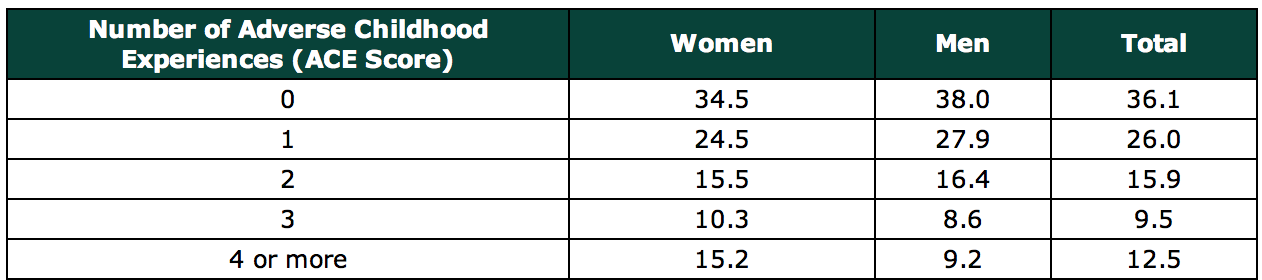
A whopping two thirds of the 17,000 people in the ACE Study had an ACE score of at least one — 87 percent of those had more than one. Thirty-six states and the District of Columbia have done their own ACE surveys; their results are similar to the CDC’s ACE Study.

acescores

The study’s researchers came up with an ACE score to explain a person’s risk for chronic disease. Think of it as a cholesterol score for childhood toxic stress. You get one point for each type of trauma. The higher your ACE score, the higher your risk of health and social problems. (Of course, other types of trauma exist that could contribute to an ACE score, so it is conceivable that people could have ACE scores higher than 10; however, the ACE Study measured only 10 types.)

As your ACE score increases, so does the risk of disease, social and emotional problems. With an ACE score of 4 or more, things start getting serious. The likelihood of chronic pulmonary lung disease increases 390 percent; hepatitis, 240 percent; depression 460 percent; attempted suicide, 1,220 percent.

(By the way, lest you think that the ACE Study was yet another involving inner-city poor people of color, take note: The study’s participants were 17,000 mostly white, middle and upper-middle class college-educated San Diegans with good jobs and great health care – they all belonged to the Kaiser Permanente health maintenance organization. Prior to the ACE Study, most research about effects of abuse, neglect, etc., involved poor people of color who live in the inner city. And so the notion was that it was inner-city people of color who experienced abuse, neglect, etc., not white middle-class or white upper-class people….that somehow white people of means were immune from the kinds of problems affecting people who were poor. That’s not only ridiculous, but it was just another way to perpetrate racism and classism. The ACE Study quashed that notion. So, it’s not that I’m saying that the ACE Study is credible because it was done on white people, I’m saying that the ACE Study opened the door to an understanding that ACEs are at the root of nearly all problems of physical, mental, economic and social health in humans, no matter where in the world those humans live. The ACE Study and the other research that makes up ACEs science provided an opening to a better understanding of the constructs that make up our notion of why people suffer ill health — physical, mental, economic, social — and that includes systemic racism. )

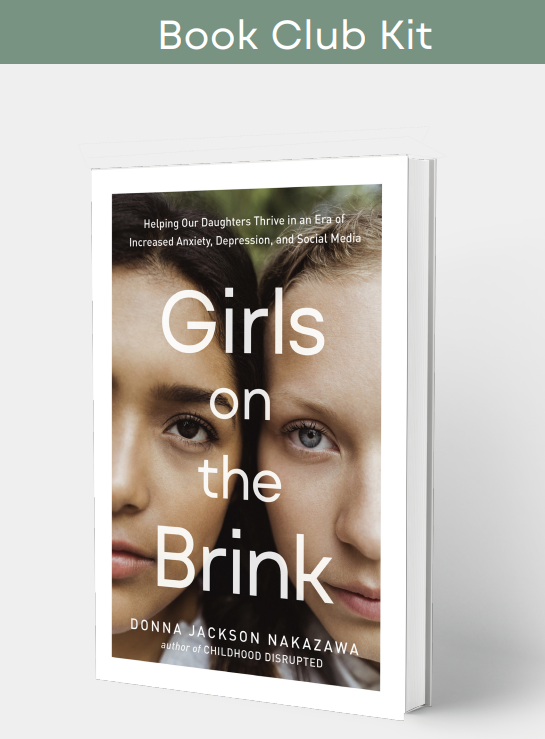
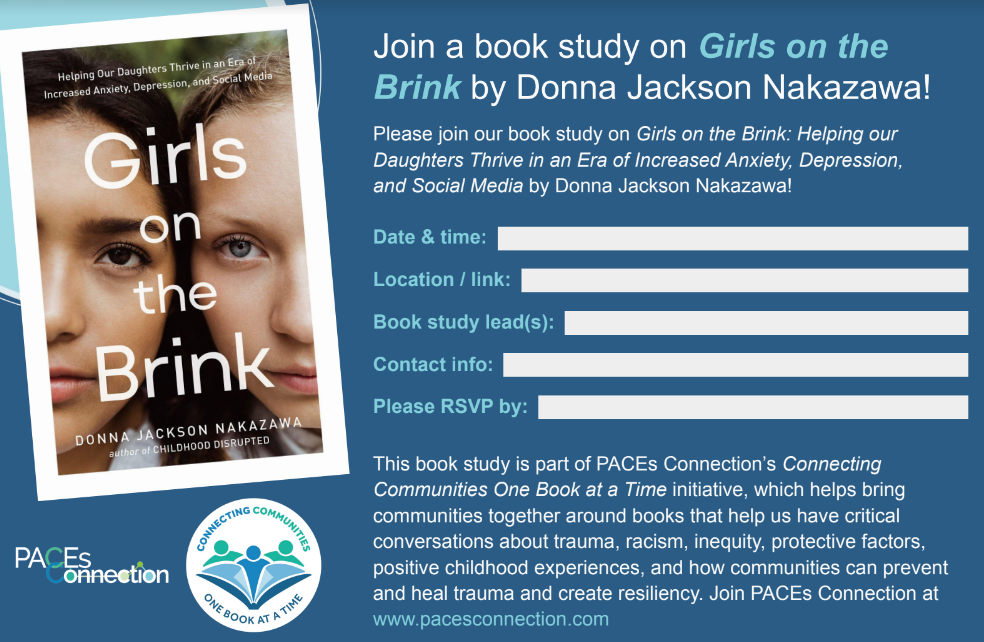
Start your own book study of ‘Girls on the Brink’ by Donna Jackson Nakazawa!

Natalie Audage Natalie Audage 11/1/224:59 PM

“Extremely important” and “very needed” were among the comments of the nearly 100 attendees of the second Connecting Communities One Book at a Time book study webinar when they described Girls on the Brink: Helping Our Daughters Thrive in an Era of Increased Anxiety, Depression, and Social Media.

The book, published on September 13, 2022, was the focus of a conversation between the author, Donna Jackson Nakazawa, and Carey Sipp, PACEs Connection director of strategic partnerships, on October 12, 2022.

Donna Jackson NakazawaAs Nakazawa writes in the introduction of her book, “Depression has long been more prevalent in girls than in boys, but rates of depression in girls have now reached epidemic proportions.  One in four adolescent girls reports suffering from symptoms of major depression compared with fewer than one in ten boys. Girls and young women are twice as likely as boys to suffer from anxiety. In 2021, the Centers for Disease Control and Prevention reported that suicide attempts had recently increased 51 percent among girls compared with 4 percent among boys. These statistics cannot be explained by higher rates of awareness or diagnosis. They are real, and they are scary to every parent of every daughter and to anyone who cares about young women.”

She writes further, “In many ways I wrote this book because I felt a moral imperative to close the gap between what experts have learned about growing strong girls in an increasingly threat-laden ear and what parents need to know.”

“PACE’s Connection’s Connecting Communities One Book at a Time initiative was created to bring communities together around books that help us have critical conversations about trauma, racism, inequity, positive and adverse childhood experiences, and the role community plays in preventing and healing trauma and creating resiliency,” said Sipp. “The mental health of our young people is a concern in every community in the world right now. We believed this book could bring communities together to address a particularly frightening trend involving the increase in depression and anxiety in girls,” she added.

The conversation between Nakazawa and Sipp covered myriad topics, including the effects of unmitigated stress on the female brain, epigenetics, the complex interactions between estrogen and the female brain during adolescent development, sexism, the evolutionary mismatch between girls’ sensitivity to social cues and today’s social media culture, and the finding that the stress response can be decreased by talking to one trusted caregiver.

Nakazawa was clear that while she sees much to worry about girls’ mental health today, she also has hope. She offers 15 antidotes or “strategies for raising emotionally healthy girls” in the book and spoke about a few of them in the webinar.

Antidotes fall into three categories and include three on “the building blocks of good parent-child connection, and the importance of family connection,” six antidotes for “making her home a safe space,” and six antidotes to “bring in what the wider community can provide.” The interview honed in on at least one antidote from each of the three categories, including making it a good experience when your daughter turns to you, the importance of “wonder”, and encouraging a sense of mastery.

“We need to spread Nakazawa’s research and her message of hope. There is so much we can do to improve the mental health of the girls in our lives” said one participant. Another attendee wrote: “Thank you Donna! You’ve changed my life for the better—and I’ve shared your message with many, MANY others…”

“PACEs Connection encourages our members to come together in their communities of friends, colleagues, family members, and fellow parents to start a book study of Girls on the Brink,” said Sipp.”Book studies are terrific ways for communities to address challenges while building the relationships that can help reinforce solutions. We’d love to see many, many communities come together to share Donna’s work and help girls thrive, and have created tools to make this easy for our members to invite their friends, family members, others in their resiliency initiatives, parents of their daughters’ schoolmates, or other groups, to start a book club.”

Here are some resources to help members start their own book studies:

  1. If you missed the event, you can still view the recording of the Girls on the Brink October 12 webinar! You can also listen to an edited version that we prepared for our History. Culture. Trauma. podcast.
  2. Nakazawa and her team put together a wonderful Book Club Kit for people interested in leading Girls on the Brink book studies.
  3. Here’s a handout with tips and items to consider before starting a Girls on the Brink book study.
  4. You can use this recruiting postcard to invite people to join your book study.
  5. If you plan to lead a book study, please fill out the Girls on the Brink Book Study Leader Survey so we can keep track of the great work you’re doing!

Book Club Kit“Please join us as we work to Connect Communities One Book at a Time. By reading the book with a group of friends in your book study of Girls on the Brink, you can be part of the solution. All of us can play a part in supporting girls’ mental health,” said Sipp.

Connecting Communities One Book at a Time launched in June with a study of What Happened to You? by Dr. Bruce Perry and Oprah Winfrey, and resulted in more than 130 book clubs forming across the country, according to Sipp.

“We are thrilled to deliver study guides, support, and a connecting place for our members to come together, learn from the authors, share and learn from each other. We’ve even created an invitation leaders can use to invite members of the community to join their book study, to make it as easy as possible for them to get started,” said Sipp.

“We’d love to see this grow and bring unique books and opportunities to our more than 430 geographic and 40 interest-based communities, and hope they’ll use the book studies as ways to grow their communities, too!” she added.

Sipp encourages book study leaders to please register their book study with PACEs Connection, and to answer a few questions to help in planning for the next study. “Also, as we, learn about new resources that could become available in the “Girls on the Brink” book study, having this information helps us share news with book study leaders,” said Sipp.

Attachments

Hide

Images (3)

Book Club Kit
Donna Jackson Nakazawa
Recruiting form

Natalie Audage, MPH
Pronouns: She/Her/Hers

Ready to take your ACEs initiative to the next level? Click here!
#ACEsDataMatter

✅ 1

Tags: Donna Jackson NakazawaGirls on the BrinkBook studyConnecting Communities 1 Book at a Time

Views: 1,515

Add Comment

Carey SippCarey SippFormats 

javascript:””

Comments (1) 

Newest · Oldest · Popular

FSFrank Sterle Jr.Member

There remains platitudinous lip-service by society in genera, including police services, when it comes to proactive mental illness prevention as well as treatment. Various mainstream news and social media will state the obvious, that society must open up its collective minds and common dialogue when it comes to far more progressively addressing the challenge of more fruitfully treating and preventing such illness in general.   

But they will typically fail to address the problem of ill men, or even boys, refusing to open up and/or ask for help due to their fear of being perceived by peers, etcetera, as weak/non-masculine. The social ramifications exist all around us; indeed, it is endured, however silently, by males of/with whom we are aware/familiar or to whom so many of us are closely related. 

Even today, there remains a mentality, albeit perhaps a subconscious one: Men can take care of themselves, and boys often are basically little men.

Even Ms. Jackson Nakazawa’s own book, Childhood Disrupted, was only able to include one man among its six interviewed adult subjects, there presumably being such a small pool of ACE-traumatized men willing to formally tell his own story of childhood abuse.

One must ask: Is it yet more (in a societal pile of) evidence of a continuing subtle societal take-it-like-a-man mindset, one in which so many men will choose to abstain from ‘complaining’ about their torturous youth, as that is what ‘real men’ do?

One also sees some of that mentality reflected in, for example, a New York Times feature story (“She Was a Big Hit on TikTok. Then a Fan Showed Up With a Gun”, February 19, 2022). Written by Times reporter Elizabeth Williamson, the piece at one point states that “Instagram, owned by Meta, formerly known as Facebook, has … been accused of causing mental and emotional health problems among teenage female users.”

The fact is, mental and emotional — along with physical — health problems are being suffered by teenage boys directly due to social media use. Revelatory of the latter is the increasing incidence of social-media-focused obsession among boys with gaining significant muscle mass, a.k.a. “bigorexia”.

The author of The Highly Sensitive Man (2019, Tom Falkenstein, Ch.1) writes that There are “numerous psychological studies over the last forty years that tell us that, despite huge social change, the stereotypical image of the ‘strong man’ is still firmly with us at all ages, in all ethnic groups, and among all socio-economic backgrounds. In the face of problems, men tend not to seek out emotional or professional help from other people. They use, more often than women, alcohol or drugs to numb unpleasant feelings and, in crises, tend to try to deal with things on their own, instead of searching out closeness or help from others.

“While it is true that a higher percentage of women than men will be diagnosed with an anxiety disorder or a depressive episode, the suicide rate among men is much higher. In the United States, the suicide rate is notably higher in men than in women. According to data from the Centers for Disease Control and Prevention, men account for 77 percent of the forty-five thousand people who kill themselves every year in the United States.

“In fact, men commit suicide more than women everywhere in the world. Men are more likely to suffer from addiction, and when men discuss depressive symptoms with their doctor, they are less likely than women to be diagnosed with depression and consequently don’t receive adequate therapeutic and pharmacological treatment.”

While it’s important that the notable needs of girls’ mental health get properly addressed, society also needs to do more for its males.


👍 1

PACEs Science 101 (FAQs) — Positive and Adverse Childhood Experiences

Jane Stevens Jane Stevens 10/1/191:00 AM

What is PACEs science?

The science of PACEs refers to the research about the stunning effects of positive and adverse childhood experiences (PACEs) and how they work together to affect our lives, as well as our organizations, systems and communities. It comprises:

  1. The CDC-Kaiser Permanente ACE Study and subsequent surveys that show that most people in the U.S. have at least one ACE, and that people with four ACEs— including living with an alcoholic parent, racism, bullying, witnessing violence outside the home, physical abuse, and losing a parent to divorce — have a huge risk of adult onset of chronic health problems such as heart disease, cancer, diabetes, suicide, and alcoholism.
  2. Brain science (neurobiology of toxic stress) — how toxic stress caused by ACEs damages the function and structure of kids’ developing brains.
  3. Health consequences — how toxic stress caused by ACEs affects short- and long-term health, and can impact every part of the body, leading to autoimmune diseases, such as arthritis, as well as heart disease, breast cancer, lung cancer, etc.
  4. Historical and generational trauma (epigenetic consequences of toxic stress) — how toxic stress caused by ACEs can alter how our DNA functions, and how that can be passed on from generation to generation.
  5. Positive Childhood Experiences and resilience research and practice — Building on the knowledge that the brain is plastic and the body wants to heal, this part of PACEs science includes evidence-based practice, as well as practice-based evidence by people, organizations and communities that are integrating trauma-informed and resilience-building practices. This ranges from looking at how the brain of a teen with a high ACE score can be healed with cognitive behavior therapy, to how schools can integrate trauma-informed and resilience-building practices that result in an increase in students’ scores, test grades and graduation rates.

1. What are ACEs?

ACEs are adverse childhood experiences that harm children’s developing brains and lead to changing how they respond to stress and damaging their immune systems so profoundly that the effects show up decades later. ACEs cause much of our burden of chronic disease, most mental illness, and are at the root of most violence.

“ACEs” comes from the CDC-Kaiser Adverse Childhood Experiences Study, a groundbreaking public health study that discovered that childhood trauma leads to the adult onset of chronic diseases, depression and other mental illness, violence and being a victim of violence, as well as financial and social problems. The ACE Study has published about 70 research papers since 1998. Hundreds of additional research papers based on the ACE Study have also been published.

The 10 ACEs the researchers measured:

— Physical, sexual and verbal abuse.

— Physical and emotional neglect.

— A family member who is:

  • depressed or diagnosed with other mental illness;
  • addicted to alcohol or another substance;
  • in prison.

— Witnessing a mother being abused.

— Losing a parent to separation, divorce or other reason.

Subsequent to the ACE Study, other ACE surveys have expanded the types of ACEs to include racism, gender discrimination, witnessing a sibling being abused, witnessing violence outside the home, witnessing a father being abused by a mother, being bullied by a peer or adult, involvement with the foster care system, living in a war zone, living in an unsafe neighborhood, losing a family member to deportation, etc.

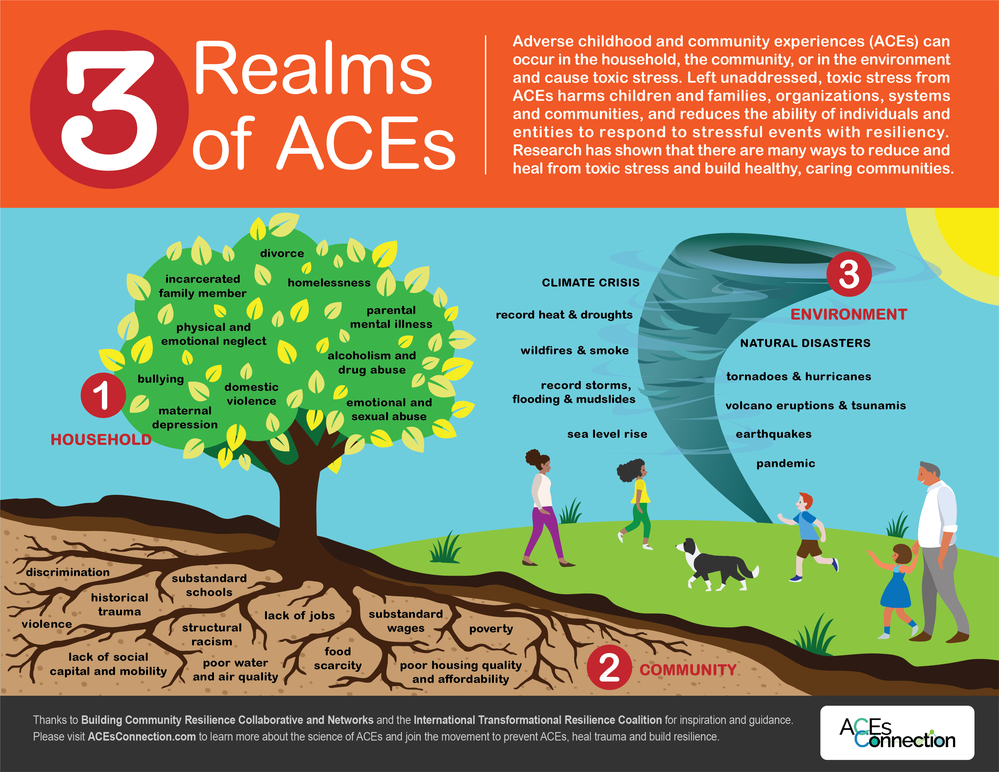
ACEs fall into three large categories:

  • Adverse childhood experiences
  • Adverse community experiences
  • Adverse climate experiences

Resources:

CDC ACE Study site

Wikipedia — Adverse Childhood Experiences Study

The 10 ACE Questions (and 14 resilience survey questions)

The Pair of ACEs: The Soil in Which We’re Rooted, the Branches on Which We Grow

3Realms_092520

Why are ACEs significant?

1. The ACE Study revealed six main discoveries:

  • ACEs are common…nearly two-thirds (64%) of adults have at least one.
  • They cause adult onset of chronic disease, such as cancer and heart disease, as well as mental illness, violence and being a victim of violence
  • ACEs don’t occur alone….if you have one, there’s an 87% chance that you have two or more.
  • The more ACEs you have, the greater the risk for chronic disease, mental illness, violence and being a victim of violence. People have an ACE score of 0 to 10. Each type of trauma counts as one, no matter how many times it occurs. You can think of an ACE score as a cholesterol score for childhood trauma. For example, people with an ACE score of 4 are twice as likely to be smokers and seven times more likely to be alcoholic. Having an ACE score of 4 increases the risk of emphysema or chronic bronchitis by nearly 400 percent, and attempted suicide by 1200 percent. People with high ACE scores are more likely to be violent, to have more marriages, more broken bones, more drug prescriptions, more depression, and more autoimmune diseases. People with an ACE score of 6 or higher are at risk of their lifespan being shortened by 20 years.
  • ACEs are responsible for a big chunk of workplace absenteeism, and for costs in health care, emergency response, mental health and criminal justice. So, the fifth finding from the ACE Study is that childhood adversity contributes to most of our major chronic health, mental health, economic health and social health issues.
  • On a population level, it doesn’t matter which four ACEs a person has; the harmful consequences are the same. The brain cannot distinguish one type of toxic stress from another; it’s all toxic stress, with the same impact.  

What’s particularly startling is that the 17,000 ACE Study participants were mostly white, middle- and upper-middle class, college-educated, and all had jobs and great health care (they were all members of Kaiser Permanente).

Resources:

ACE Study primer — KPJR Films, which came out with Paper Tigers in 2015 and Resilience in 2016, put together this five-minute overview of the ACE Study.

ACE Study video — Three-minute trailer for a four-hour CD of interviews with ACEs researchers produced by the Academy on Violence and Abuse.

How childhood trauma affects health across a lifetime (16-minute TED Talk by Dr. Nadine Burke Harris)

The Adverse Childhood Experiences Study – the largest public health study you never heard of – started in an obesity clinic

Has anyone else done an ACE Study?

Thirty-six states and Washington, D.C. (infographic) have done one or more ACE surveys. Here are links to some of their reports (some states haven’t produced reports).

There are numerous other ACE surveys, including cities, such as Philadelphia; organizations, including the Crittenton Foundation; schools, including Spokane elementary schools; by pediatricians, including Dr. Nadine Burke Harris and Dr. Victor Carrion (2011 and 2013); several countries, including EnglandSaudi Arabia, and a World Health Organization ACE survey of university students in Romania,; and 64,000 juvenile offenders in the Florida juvenile justice system. You can find a list of ACE surveys, including expanded ACE surveys with more questions, in the Resources Section of ACEsConnection.com.


2. What’s the neurobiology of toxic stress?

Brain science shows that, in the absence of protective factors, toxic stress damages children’s developing brains. Stress is the body’s normal response to challenging events or environments. Positive stress — the first day of school, a big exam, a sports challenge — is part of growing up, and parents or caregivers help children prepare for and learn how to handle positive stress, which is moderate and doesn’t last long. It increases heart rate and the amount of stress hormones in the body, but they return to normal levels quickly.

But when events or the environment are threatening or harmful – we stumble across a bear in the woods – our brains instantly zap into fight, flight or freeze mode and bypass our thinking brains, which can be way too analytical to save us (Is the bear really mean? Is it more interested in berries or killing me? Should I wait until I see it charge?). With help from caring adults, children also recover from this tolerable stress.

Too much stress – toxic stress – occurs when that raging bear comes home from the bar every night, says pediatrician Nadine Burke Harris. Then a child’s brain and body will produce an overload of stress hormones — such as cortisol and adrenaline — that harm the function and structure of the brain. This can be particularly devastating in children, whose brains are developing at a galloping pace from before they are born to age three. Toxic stress is the kind of stress that can come in response to living for months or years with a screaming alcoholic father, a severely depressed and neglectful mother or a parent who takes out life’s frustrations by whipping a belt across a child’s body.

Resources:

Harvard University Center on the Developing Child

Video: Toxic Stress Derails Healthy Development (2 min)

An Unhealthy Dose of Stress (Center for Youth Wellness white paper)

The Science Behind PTSD Symptoms: How Trauma Changes the Brain

Brain Story Certification, Alberta Family Wellness Initiative


3. What are the health effects of toxic stress?

Chronic toxic stress—living in a red alert mode for months or years — can also damage our bodies. In a red alert state, the body pumps out adrenaline and cortisol continuously. Over time, the constant presence of adrenaline and cortisol keep blood pressure high, which weakens the heart and circulatory system. They also keep glucose levels high to provide enough energy for the heart and muscles to act quickly; this can lead to type 2 diabetes. Too much adrenaline and cortisol can also increase cholesterol.

Too much cortisol can lead to osteoporosis, arthritis, gastrointestinal disease, depression, anorexia nervosa, Cushing’s syndrome, hyperthyroidism and the shrinkage of lymph nodes, leading to the inability to ward off infections.

If the red alert system is always on, eventually the adrenal glands give out, and the body can’t produce enough cortisol to keep up with the demand. This may cause the immune system to attack parts of the body, which can lead to lupus, multiple sclerosis, rheumatoid arthritis, and fibromyalgia.

Cortisol is also extremely important in maintaining the body’s appropriate inflammation response. In a normal response to a bee sting or infection, the body rushes antibodies, white blood cells and other cell fighters to the site and the tissues swell while the battle rages. But too much swelling damages tissue. Cortisol controls this fine balance. So without the mediating effects of cortisol, the inflammatory response runs amok and can cause a host of diseases.

If you’re chronically stressed and then experience an additional traumatic event, your body will have trouble returning to a normal state. Over time, you will become more sensitive to trauma or stress, developing a hair-trigger response to events that other people shrug off.

Biomedical researchers say that childhood trauma is biologically embedded in our bodies: Children with adverse childhood experiences and adults who have experienced childhood trauma may respond more quickly and strongly to events or conversations that would not affect those with no ACEs, and have higher levels of indicators for inflammation than those who have not suffered childhood trauma. This wear and tear on the body is the main reason why the lifespan of people with an ACE score of six or higher is likely to be shortened by 20 years.

Resources:

What Happened To You? Conversations on Trauma, Resilience and Healing, by Dr. Bruce Perry and Oprah Winfrey

Childhood Disrupted: How Your Biography Becomes Your Biology and How You Can Heal, by Donna Jackson Nakazawa

The Body Keeps the Score: Brain, Mind and Body in the Healing of Trauma, by Bessel Van Der Kolk

The Deepest Well: Healing the Long-Term Effects of Childhood Adversity, by Nadine Burke Harris, 2018.

Scared Sick: The Role of Childhood Trauma in Adult Disease by Robin Karr-Morse with Meredith S. Wiley

Biologial Embedding of Early Social Adversity, Proceedings of the National Academy of Sciences, 2012

PubMed childhood adversity research publications

4. What’s epigenetics and how does that relate to historical or generational trauma?

Most people believe that the DNA we’re born with does not change and that it determines all that we are during our lifetime. That’s true, but the research from epigenetics — the study of how social and other environments turn our genes on and off — shows that toxic stress can actually change how our genes function, which can lead to long-term changes in all parts of our bodies and brains. What’s more, these changes can be transferred from generation to generation.

Epigenetics means “above the genome” and refers to changes in gene expression that are not the result of changes in the DNA sequence (or mutations).

Resources:

WhatIsEpigenetics.com — This New York-based blog and news aggregator covers the field of epigenetics and is funded by EpiGentek. It includes backgrounders, including epigenetics fundamentals.

Epigenetics — From the Genetics Science Learning Center at the University of Utah, this section includes explainers and an overview of how the social environment affects your epigenome.

Epigenetics 101: A beginner’s guide to explaining everything (TheGuardian.com, 2014)

5. Positive Childhood Experiences and resilience research: If you have a high ACE score, are you doomed? No!

The good news is that the brain is plastic, and the body wants to heal.

The brain is continually changing in response to the environment. If the toxic stress stops and is replaced by practices that build resilience, the brain can slowly undo many of the stress-induced changes.

There is well documented research on how individuals’ brains and bodies become healthier through mindfulness practices, exercise, good nutrition, adequate sleep, and healthy social interactions.

Here’s a good article that weaves the unified science of human development together: Scars That Don’t Fade, from Massachusetts General Hospital’s Proto Magazine.

In the last few years, researchers have started to examine the impacts of positive childhood experiences (PCEs) on children and adults. We at PACEs Connection are particularly interested in the interplay between positive and adverse childhood experiences. Here’s some of the relevant research:


Who’s using PACEs science?

Many people, organizations, agencies, systems and communities are beginning to implement trauma-informed, resilience-building practices based on PACEs science.

Resources:

Growing Resilient Communities provides guidelines and tools for communities to launch and grow local PACEs initiatives, and measure the progress of their work.

What does trauma-informed mean?

According to the Substance Abuse and Mental Health Services Administration (SAHMSA), part of the U.S. Department of Health and Human Services, a trauma-informed approach refers to how an organization or community thinks about and responds to children and adults who have experienced or may be at risk for experiencing trauma. In this approach, the whole community understands the prevalence and impact of ACEs, the role trauma plays in people’s lives, and the complex and varied paths for healing and recovery.

A trauma-informed approach asks: “What happened to you?” instead of “What’s wrong with you?” It is designed to avoid re-traumatizing already traumatized people, with a focus on “safety first” (including emotional safety), and a commitment to do no harm. But a trauma-informed approach is most successful when an organization or community builds policies and practices based on a foundation of ACEs science.  

Resources:

SAMHSA overview of what trauma-informed is and isn’t

National Center for Trauma-Informed Care

SAMHSA’s Concept of Trauma and Guidance for a Trauma-Informed Approach — Introduces a concept of trauma and offers a framework for how an organization, system, or service sector can become trauma-informed. Includes a definition of trauma (the three “E’s”), a definition of a trauma-informed approach (the four “R’s”), 6 key principles, and 10 implementation domains.

Any legislation or federal policies?

Updates on U.S. state and federal legislation can be found in the State ACEs Resolutions and Laws section of State PACEs Action on PACEsConnection.com. Some examples:

California legislature resolution to reduce ACEs

Massachusetts bill on trauma-informed schools

Vermont attempt to pass ACEs bill

Overview of state, federal legislation

US Department of Health and Human Services guidelines to state health directors (and the letter to state health directors)

All resources:

CDC ACE Study site

A Critical Assessment of the Adverse Childhood Experiences Study at 20 Years (attached)

Wikipedia — Adverse Childhood Experiences Study

The 10 ACE Questions (and 14 resilience survey questions)

Harvard University Center on the Developing Child (neurobiology of toxic stress)

Alberta Family Wellness Initiative (Canada)

ACEsTooHigh.com – News site covering PACEs research and practices

PACEsConnection.com – Social network (with 60,000+ members across sectors) and more than 400 community sites that support ACEs initiatives in cities, counties, states, regions and nations.

WhatIsEpigenetics.com – News site covering epigenetics

Epigenetics — Explainers and backgrounders about epigenetics

National Center for Trauma-Informed Care

Community Resilience Cookbook — Nine case studies of cities and states that are integrating PACEs research)

SAMHSA’s Concept of Trauma and Guidance for a Trauma-Informed Approach — Introduces a concept of trauma and offers a framework for how an organization, system, or service sector can become trauma-informed. Includes a definition of trauma (the three “E’s”), a definition of a trauma-informed approach (the four “R’s”), 6 key principles, and 10 implementation domains.

Videos:

ACE Study video (three minute trailer)

Video: Toxic Stress Derails Healthy Development (2 min)

How childhood trauma affects health across a lifetime (16-minute TED Talk by Dr. Nadine Burke Harris)

Books:

Childhood Disrupted: How Your Biography Becomes Your Biology and How You Can Heal, by Donna Jackson Nakazawa

The Body Keeps the Score: Brain, Mind and Body in the Healing of Trauma, by Bessel Van Der Kolk

The Deepest Well: Healing the Long-Term Effects of Childhood Adversity, by Nadine Burke Harris, 2018.

Scared Sick: The Role of Childhood Trauma in Adult Disease by Robin Karr-Morse with Meredith S. Wiley

The Last Best Cure: My Quest to Awaken the Healing Parts of My Brain and Get Back My Body, My Joy, and My Life, by Donna Jackson Nakazawa

For other books, go to the ACEs Connection Books community.

Documentaries:

Paper Tigers — What does it mean to be a trauma-informed school? And how do you educate teens whose childhood experiences have left them with a brain and body ill-suited to learn? This film follows six students through a year in America’s first trauma-informed high school.

Resilience — Resilience chronicles how trailblazers in pediatrics, education, and social welfare are using cutting-edge science and field-tested therapies to protect children from the insidious effects of toxic stress.

CAREgivers — How is the professional care provider affected emotionally and physically, and who helps them?

For a list of all documentaries addressing PACEs science, and how to access them, go here.

Attachments

Hide

Images (1)

3Realms_092520

Files (1)

McEwenAJPM.pdf

Jane Stevens
Publisher, ACEsTooHigh.com
Founder, PACEs Connection

❤️ 29

Views: 215,818

Add Comment

Carey SippCarey SippFormats 

javascript:””

Comments (16) 

Newest · Oldest · Popular

MSMary SoleroMember

If individuals want society to be less aggressive, more calm, less reactive, and more cooperative and collaborative… For the developing brain to develop the capacity for empathy, compassion, and all that comes to mind when thinking about what it means to be human, it requires certain developmental and social experiences at crucial junctures. Drywall Installation Arlington Drywall Contractor Pros


FMFormer Member

ACE Science is woefully limited by leaving out everything about the development of the stress response system and healthy brain architecture, Resiliency is developed in infancy via a secure attachment.  A secure and loving attachment in infancy develops a brain’s limbic and cortical regulation over the brainstem’s reactivity  leading to control over violent, aggressive and impulsive behavior.   Focusing on anything but healthy early brain development will always be radically suboptimal. 

If people want the society to be less violent and more cooperative and collaborative, more relaxed and less reactive… the developing brain needs certain developmental and relational experiences at critical points in time in order for a brain to bring forth the capacity for empathy and compassion and everything one thinks of when one considers what it means to be human. 


❤️ 3

Jane StevensJane StevensPublisher, ACEsTooHigh; founder, PACEs Connection

We’re in the process of revising our ACEs Science 101 PPT, Elaine. We’ll post it when it’s finished.


❤️ 2

ESElaine SpicerMember

My question:  is there a powerpoint that goes along with the ACES Science 101?

Thank you!


❤️ 1

Dale FletcherDale FletcherMember

Gail Kennedy (ACEs Connection Staff) posted:

Dale- i encourage you to post your question to the ACEs in the Faith Based community!

I did that too Gail.  Thanks!!


❤️ 1

Gail KennedyGail KennedyMember

Dale- i encourage you to post your question to the ACEs in the Faith Based community!


❤️ 1

Dale FletcherDale FletcherMember

I’m presenting a talk to a group of Pastors on ACES but the slide deck on ACES that I received does not have any slides on Neuroplasticity, from either a science perspective or from a biblical perspective. 

Do any of you have a few slides that you’d be willing to share with me?

Thanks so much in advance!!

Have an awesome day!


❤️ 1

Dominic CappelloDominic CappelloMember

May I stress the link between family trauma and poverty. Living without resources means lack of access to survival resources like food, safe shelter, medical care, behavioral health care and transport to vital services. It also means lacking the resources to thrive: family centered schools, parent support, early childhood learning programs, youth mentors and job training. ACEs prevention programs, if it is to include our most vulnerable children and families, can build into theor strategic plan and priorities the strengthening of ten key family resources. For more information on a data-driven and cross-sector approach that addresses health disparities please visit www.resilienceleaders.org


❤️ 3

Gail KennedyGail KennedyMember

Thanks for identifying that, Dale!  I just fixed it.


❤️ 1

Dale FletcherDale FletcherMember

Hi Jane,

FYI – a link above in the paragraph:

Who’s using ACEs science?

 – Faith-Based Community – is broken. I found the new link:

http://www.mercedsunstar.com/n…/article3306980.html

Hope this helps!  Have a great day!

Dale 


❤️ 1

Emily Read DanielsEmily Read DanielsMember

Jane, this is great!  Great!  I love ACES Connection;  I am grateful for the resource.  It is connecting me to fabulous people and fabulous efforts – thank you! 

But there is one “bone of contention” that I will pick – this reference list is missing the work of Bessel Van Der Kolk, Peter Levine, Pat Ogden, Bruce Perry… we DESPERATELY NEED TO MOVE BEYOND COGNITIVE/BEHAVIORAL APPROACHES to treating trauma.  As someone that has YEARS of experience working with children and teens and working with that kind of approach to treating depression, anxiety, suicidality, substance misuse, cutting, ODD – you name it, I have worked with it – it’s an epic fail.  EPIC!  The emerging modalities of treatment (e.g. somatic experiencing, trauma-informed yoga, trauma drama, rhythmic movement and music, etc.) make way for regulating the body’s stress response! 

We are a culture OBSESSED with the mind and the power of the mind – to the detriment of the body.  We must remember that when someone is struggling with anxiety, depression, rage, etc., the individual is experiencing an overwhelming visceral body experience.  

I just had to share this…in all the trauma-informed training and efforts I see going on, I am thrilled.  But then I get “un-thrilled” when it’s the same means of practice we have been endorsing and implementing for years (without success!).  It’s time to move beyond behavioral and cognitive behavioral approaches to resolving trauma.  


❤️ 6

Jane StevensJane StevensPublisher, ACEsTooHigh; founder, PACEs Connection

Thank you for your comment, Vincent, and for all the work you did that provided the solid foundation for this new understanding of us humans!


❤️ 2

Vincent J. Felitti, MDVincent J. Felitti, MDMember

Jane, I am repeatedly grateful to you for your skills in disseminating all this information so interestingly and understandably.  Thank you!


❤️ 2👍 1

Jane StevensJane StevensPublisher, ACEsTooHigh; founder, PACEs Connection

Thanks, Melissa & Paul. If there’s anything else we need to add, let me know.


❤️ 1

Melissa L. Baker, MPHMelissa L. Baker, MPHMember

Jane, this is SUCH a valuable compilation to have in one place!

i will use these resources and links in my next presentation.

thanks!


❤️ 2

Paul GilmorePaul GilmoreMember

Thank you for this concise review of ACE’s. My senior research project looks at the use of ACE scores in serving adjudicated youth with histories of harmful sexual behaviors. Your post provides a lot of information and resources that will be helpful to my project. Much appreciated! 


❤️ 4

Back To Top

Post

Add Comment

Manage Blog Post

Welcome to PACEs Connection

Learn about PACEs Connection & who we are.

How to be a part of our social network.

Join local or interest based communities.

Invite others to join PACEs Connection!

The text 'donate' on a background with many inter-connected spheres

Comments

Carey Sipp commented:
Thanks for posting, Laura! For posting this, and so many more blogs over the years. I’m thinking of the ones YOU’VE written (you are…

Carey Sipp

Carey Sipp commented:
Thanks, Jeoff. A lot of great relationships and ongoing work came from this incredible gathering. It laid the groundwork for deepening…

Carey Sipp

David Dooley commented:
Thank you for commenting, Mr. Holmes. I’m not sure what you’re getting at. Can you give me an example?

David Dooley

Tommy Holmes commented:
I loved how you highlighted the connection between ACEs and community resilience! It’s so important to empower people with this…

Tommy Holmes

Patrick Anderson commented:
This one landed, Dr. Long. What I’d underline is that you’ve framed being pushed out as a pattern rather than a run of bad luck — and…

Patrick Anderson

Robert Hawk commented:
That story is heartbreaking and really shows how history and present-day realities can intersect. Reading about Black history in China…

Robert Hawk

David Dooley commented:
Thank you for writing, Mr. Anderson. You wrote… “Your instinct that the utopia requires entirely new forms of parenting education that…

David Dooley

Cecilia Pace commented:
[heart] Pace, Cecilia reacted to your message:

CP

PACEs Connection Discount for Trauma Informed Jobs

TraumaInformedJobs.com is a new job board for the trauma and resilience communities. PACEs Connection members can save 10% on posting with code PACES10

Blog Archive

August 2026(6)

July 2026(35)

June 2026(35)

May 2026(28)

April 2026(37)

March 2026(29)

February 2026(26)

January 2026(18)

December 2025(31)

November 2025(33)

October 2025(32)

September 2025(28)

August 2025(32)

July 2025(26)

June 2025(23)

May 2025(37)

April 2025(35)

March 2025(32)

February 2025(67)

January 2025(62)

December 2024(55)

November 2024(38)

October 2024(38)

September 2024(0)

Blog Directory

Foster Care

PACEs

PACEs Science 101

Resources

Creating Resilient Communities

Donor Profiles

Special Announcements

STAR Network

Research

Feature

Jane Ellen Stevens

History. Culture. Trauma. Podcast

History. Culture. Trauma. Blog

CRC Fellowship

PC Reacts

Blog Directory


Copyright © 2023, PACEsConnection. All rights reserved.

Why I believe Gregory Williams and his book, Shattered By The Darkness, will help save lives and revolutionize healthcare.

Carey Sipp Carey Sipp 2/5/197:55 AM

When you first hear about it, it sounds unlikely, fact that something that happened to someone in utero, at the age of two months, or four years, or any time in childhood, is what is killing them as an adult, or making them want to die, or making them want to hurt themselves or others.

Yet the connection between childhood trauma and adult disease, mental illness, addiction, suicide, violence – most all of society’s ills – is as irrefutable as the myriad truths revealed about it in the CDC-Kaiser Permanente Adverse Childhood Experiences Study (ACE Study). The groundbreaking research shows that the more childhood trauma you experience, the greater your likelihood of having serious illness, social and emotional problems — a life punctuated with trauma and drama.

Gregory Williams learned about the ACE Study around the same time he started telling people about his childhood trauma. That he learned about it as he began speaking his truth is no accident. That the science explained so much about his life and touches so many aspects of it – personally and professionally – has made him passionate about spreading the word about ACEs science. His passion is, for many reasons, an incredible gift to the world.

A little background on ACEs science

The original ACE Study queried more than 17,000 people in San Diego in the mid 1990s. The participants — mostly white, college-educated, all with jobs and great health care — completed a questionnaire of nearly 200 questions about their health and wellbeing. Researchers distilled the results of those questions to 10 types of childhood trauma that most people had experienced as children in their families, up to age 18. Five questions asked about physical, emotional or sexual abuse, and emotional or physical neglect. Five more asked about family dysfunction – violence against the mother, parental separation, mental illness, alcoholism or other addiction, and incarceration of a family member.

The study showed that 64% of the respondents had at least one ACE (adverse childhood experience), and that ACEs usually did not occur alone; if you have one ACE, there’s an 87% chance you have two or more. For the 12% of respondents with an ACE score of four, the consequences proved serious and expensive: The likelihood of chronic pulmonary lung disease increases 390 percent; hepatitis, 240 percent; depression 460 percent; alcoholism, 700 percent; attempted suicide, 1,220 percent. For people with an ACE score of 6 or higher, the risks are grave, literally. Their lifespan is shortened by 20 years.

The ACE Study produced 70 research papers and led to 37 US states doing their own ACE surveys, which produced similar results. Several nations and cities, as well as hundreds of organizations, have also done ACE surveys. The ACE Study has led to more than 1,000 research publications that show the link between ACEs and all types of disease, including auto-immune diseases, skin cancer, diseases of the eye, etc. — each supporting the original finding that childhood trauma causes adult disease and dysfunction.

There are many reasons why this is the case. A big part of it, though, can be explained by brain science and physiology. Toxic stress harms the structure and function of the brains of children. Basically, children with high ACE scores become “wired” for “flight, fight, freeze” behavior, and their lives – with higher incidence of illness, violence, drama, risky behavior, and trauma – are the living proof.

In addition to the fact that the wiring — the connections of brain cells (synapses) – becomes more developed in the parts of the brain that deal with survival than the parts of the brain that deal with long-term planning, the stress hormones of cortisol and adrenaline flooding a stressed body cause, over time, increased inflammation of all organ systems. At the cellular level, constant stress is like an ongoing chemical boil in the body. Kids who are constantly exposed to toxic stress are likely to grow into teens and adults whose brains and bodies are set to react to everyday challenges with fight, flight, or freeze fear. Think of an engine constantly revved at the highest revolution per minute. Such an engine is likely to break down more frequently and burn out more quickly.

The ACE Study was developed by two visionary physicians courageous enough to risk their reputations to make the connection between toxic stress and adult health issues. The life work of Drs. Vincent Felitti and Robert Anda, the study helps make sense of some of what has happened to Gregory in the decades since the day, as a 17-year-old with strength and a voice, he looked his father in the eye and told him to STOP the horrific sexual abuse he had experienced daily for 13 years.

Childhood trauma makes some people sick; it makes others want to die. Gregory helps get this point across by sharing the truths of his resulting heart condition, surgery, and challenges with suicidality, obsessive-compulsive disorder (OCD), post-traumatic stress disorder (PTSD), insomnia, and perfectionism.

Borrowed time, buffering factors, resilience, hope.

Gregory, with an ACE score of 8, also knows he would be living on borrowed time, and would most likely be dead, were it not for his also being an example of another aspect of the science: how buffering factors – in his case, caring relatives – helped offset some of the negative physiological consequences of the abuse, helping him become somewhat resilient, which he will share more about in subsequent work.

How Gregory survived the pain, shame, guilt, fear, and the physical manifestations of those emotions – the toxic stew of stress hormones that eat away at every cell in the body – can be explained, in part, perhaps, by research on resilience, another part of ACEs science.

Resilience research shows what helps people build the ability to respond to adversity and survive. We know from these studies what a profoundly positive impact that one consistently caring adult can have on a child who is being abused.

That Gregory survived is a miracle. That he had caring adults in his life, I believe, made all the difference. Even though, perhaps, they didn’t know what was going on, an aunt and uncle whom Gregory saw several times a week from the ages of four through about age eight, provided a home base of safety and stability, love and some joy in the midst of the terror you’ll read about soon.

I tell you this because despite Gregory’s story being so horrific, it is because of who he is as a person who somehow maintained optimism, that this is also a story of hope and triumph over adversity. His recognition of the people who loved him as a child is to me one of the most important parts of his story. It is also a call to action to all of us to look for opportunities to be that caring adult for a child, and to be the caring adult to question why a child is upset, is acting out, or is not thriving.

Explanations, divine timing, how speaking his truth is saving Gregory’s life, and will help save the lives of others.

For Greg, discovering ACEs science – information shared with him by a close friend and physician at Baylor College of Medicine – was a life-changing moment. ACEs science might explain why a valve in his heart had given way and needed to be repaired when he was 48. It certainly explained why he suffered from OCD. The science helped make sense of why he could not sleep – his hypervigilance – even though it’s been 38 years since the last time his father abused him. Even after his father’s death in 2002.

Yes, darkness had always brought fear, but Gregory’s new understanding of the physical effects of that fear – the impact of cortisol, adrenaline, and other stress hormones — helped him make sense of his health and mental health issues, and also inspired him to speak the truth about what happened to him to anyone who would listen, and especially to physicians. That Gregory works with and hires physicians is one more amazing aspect of his remarkable and profoundly important story.

For Gregory, speaking his truth is saving his life. When abuse survivors cannot tell the truth, cannot share their stories, or when their stories are not believed, the results can be toxic. The stress of trauma builds up in the body. There is much science to support the statement best summed up as the title of a best-selling book on toxic stress and trauma: The Body Keeps The Score.*  Gregory’s failing heart valve is an anecdotal case in point.

Out of respect to his mother, Gregory did not share his story publicly, until her passing in 2017. It was when he was able to share his story without fear of harming his mother that this next phase of Gregory’s life’s work was revealed, and began in earnest.

Though I’ve not met Gregory in person, and have only known him for a few months, I know we share a bond that covers lifetimes and a faith that is as deep and wide, as we are both abuse survivors and know, without a lot of elaboration, much about what comes with that experience.

We both know that it is remarkable that we’ve survived into our fifties and sixties. It is fair to say that we both believe our meeting, and my connecting Gregory to his publisher, is no accident.

And then there is the way Gregory and I met, which is as the result of my being offered the dream position of opening up the southeastern United States to help build communities for an organization that advances ACEs science. I’d hoped for that opportunity for five years before the funding came for me to be hired by ACEs Connection, an international social network dedicated to advancing ACEs science, preventing and healing childhood trauma, and building resilience. It was through his research and finding ACEs Connection that Gregory found my address and included me in a mass emailing about his book. I was one of a handful of people who answered the email.

I answered his request for ideas about how to help him get the word out about his book because I wanted to help, and I because wanted to know more about someone who would share the most intimate, sad, dark corners of his life with others, yet who looked so happy about doing it.

Speaking with Gregory, I immediately understood: After having the story bottled up for decades, his being able to speak and write about his abuse is cathartic, healing, and again, is literally saving his life.

 It is nothing short of incredible to me though, that in less than seven months since I answered Gregory’s introductory email, Gregory’s self-published book sold more than 100,000 copies, his book is now being published and distributed by a major publishing house (Health Communications, which published a book of mine 11 years ago), he is working on his own radio show (Breaking the Silence), and he is creating, via the book, radio show, his website, and his work with me to take ACEs science into medical schools, an important space for others to be heard, believed, and affirmed.

Further, Gregory is playing an important role in his own community by managing the Baylor College of Medicine ACEs Connection community site. That site is one of more than 170 geographic community sites supporting ACEs initiatives in those communities. Among the sectors represented are pediatrics, education, justice, social work and more. Their members meet and look for ways to bring ACEs science and trauma-informed practices into their communities. Doing so helps communities in many ways, as evidence shows improved school attendance and grades, decreased crime, improved health outcomes and more in areas communities that have been keeping track of the effects of this work. ACEs Connection would welcome your community group into our growing community of communities which includes neighborhoods, cities, regions, states, and nations dedicated to preventing and healing trauma.

Gregory’s work, and the work of ACEs Connection, is creating the space for millions of people – and thousands of physicians – to be educated, engaged, and offered the chance to become activists to help prevent childhood trauma and its devastating lifelong impacts.

That Gregory has the trust, respect, and attention of physicians can change medicine, and more.

Gregory’s experiences are likely to have special impact on the lives of the one in four girls and one in five boys who are victims of sexual abuse. For millions upon millions of adult men and women survivors, Gregory’s story and awareness of ACEs science will help explain the “why” of so many of their lifelong physical and mental health challenges, and why their lives – our lives – have seemed, or been, harder than most. For many of us who experienced a high load of toxic stress, our brains were literally wired to create and be attracted to more toxic stress. This revelation will, I hope, inspire a tremendous amount of self-empathy, and empathy from and for others. Yes, the old saw is true: Hurt people do hurt people. Understanding the why behind the hurts, the addiction, the impulsivity, the violence, can help stop the pain, shame, guilt, and hurt.

My hope is that Gregory’s story will help prevent sexual abuse and other childhood traumas, and I know that is his greatest hope, too.

That Gregory speaks to physicians, has their respect, trust, and attention, and has the complete backing of his employer, the Baylor College of Medicine, is especially heartening to me, and to others who advocate for medical professionals to recognize childhood trauma as the root cause of most all adult disease, most all social ills.

I know we both want to

  • see the science of childhood trauma and resilience research taught in medical schools, so physicians can better understand why a patient is suffering from a stress-related illness, and, in addition to prescribing traditional medical interventions, can also offer recommendations and supports that may help reverse the damage done by years of toxic stress. Imagine a prescription to “spend a day in nature” or “go help coach a little league baseball team” or “join a choral group”? Physicians who are prescribing just such “therapies” are seeing success in programs to prevent opioid addiction relapse, depression, and more.
  • see physicians ask what’s going on “at home,” and ask, even if informally, questions about their patients’ trauma history, even if it is on an ACE survey that only shows the total score and is not included in a medical record,
  • see obstetricians, gynecologists, pediatricians, and family practice physicians ask pregnant women about their own childhood trauma, as studies show that pregnant women who are aware of their own childhood traumas, and of the impact of childhood trauma, are less likely to experience post-natal depression or to abuse their children.
  • see kindergartens, elementary, middle and high schools become places where children aren’t shamed and blamed for acting out and asked, “What’s wrong with you?” but are instead asked, “What’s happened to you? How can I help?” and where their parents are not shamed or blamed, either. When parents understand more about the lifelong health consequences of trauma, the likelihood of children being traumatized decreases; children who feel safer at home do better in school.
  • help people learn that the body is resilient, our brains and bodies want to heal. Given understanding, acceptance, community, and information about resilience research, people with high ACEs scores can develop greater resilience as individuals, and in their families, workplaces, and communities.
  • see communities foster groups of laypeople and professionals from all sectors, including education, medicine, justice, the arts, mental health, and housing, to identify and prevent trauma including structural racism and income, health, and education inequality, as racism and poverty are as every bit as stressful and toxic to a child as any other type of abuse.

Though we didn’t know each other through our years of parenting – Gregory has two adult sons and three grandchildren, and I have a son and a daughter – we both vowed to stop the cycles of abuse with our own children. We are both grateful to have relatively healthy, happy adult children, and worked hard and mindfully to prevent cycles of addiction and abuse.

That Gregory works for a leading medical institution that supports his promulgating ACEs science is no accident. That I work for an organization that is all about preventing and healing childhood trauma; building resilience, creating a trauma-informed world, is no accident. Again, our faith is affirmed as we marvel at the timing!

I hope that helping to bring this book into the light, and Gregory’s using his radio show, prodigious talents as a writer, speaker, and interviewer, as well as his leadership position at Baylor College of Medicine, will raise awareness among doctors, nurses, therapists, social workers, teachers, law enforcement officers and policymakers of the need to learn and teach all professions about the devastating consequences of childhood trauma. I hope policymakers will hear the alarm to understand that policies that punish people for the addictions and behaviors that are the direct result of childhood trauma do not help, but instead further traumatize already traumatized people.

I hope Gregory’s audience is wide, loyal, accepting, and encouraging.

I truly believe Gregory will change the world by taking this book into medical schools and teaching physicians and nurses about the root cause of most adult illness: childhood trauma. He understands and makes clear that while the sexual abuse was the most dramatic part of his trauma, that the secrecy, isolation, neglect, verbal, and other physical abuse was deadly as well. This is, indeed, important information to share as policymakers learn about creating schools, hospitals, businesses, cities, states, nations that are about preventing and healing childhood trauma, and building resilience. As we face, in our communities, adverse community experiences including structural racism, bullying, income inequality, and, in our world, increasing numbers of adverse climate experiences – the loss of homes, livelihood, a way of life – as the result of wildfires, storms, floods and other natural disasters, I hope we will become gentler with each other and more mindful of protecting our environment, our natural resources.

I look forward to Gregory’s subsequent books about how he is continuing to heal, as I believe he will shed light on childhood trauma and its impact across the lifespan. He will educate a new generation of physicians and allied health professionals about ACEs science and resilience research and findings, and share ways patients can use their own agency to find life solutions that do not include addiction and risky behaviors to handle their fears.

ACEs scores and “obits” and hopes

In the effort to demystify, remove stigma, and help prevent AIDs some 30 years ago, families started sharing that their loved ones had died of acquired immune deficiency (AIDS). Some shame was lifted. Acceptance was more widespread. Empathy helped spur funding research into cures, and campaigns to raise awareness. Education, and prevention, helped slow the spread of the disease.

As suicide has become epidemic, many families of loved ones are choosing to share, in obituaries, the cause of death as suicide, in hopes of raising awareness, reducing the stigma, encouraging others to get help.

Someday perhaps ACEs scores will be listed in obituaries, in hopes of people understanding the direct correlation between childhood trauma and adult disease and premature death. As a woman in my early sixties, I’ve lost many friends who had high ACE scores, and am watching others suffer from chronic diseases that are, no doubt, related to their ACEs. I know I want my ACE score listed in my obituary, not as a point of shame or pride, but in hopes of its being a “teachable moment.” I also want to include information about resilience research, as in, “despite having an ACE score of 8, Sipp credited her long life to the exercise, diet, community work, and other healthy endeavors that were part of resilience research, an evidence-based way of helping to reduce the impact of ACEs, which she practiced and promoted as a part of her work.”

That Gregory and I have both been able to share our truths, learn about ACEs science and resilience research, and find joy and purpose in helping to prevent childhood trauma will, I hope, prevent our obituaries from being published any time soon! I hope that is true, too, for the millions who will experience “aha moments” as they learn the truths about the importance of our preventing trauma in the lives of others, be it by preventing blame, shame, bullying, racism, and violence, or by our promoting health, acceptance, empathy and love, especially toward children and their families. As families and communities heal, I believe we will heal the earth. Learning and teaching ourselves how to be kinder and gentler to ourselves, each other, our earth? There is nothing more sacred; no work more vitally important.

*The Body Keeps the Score Brain, Mind, and Body in the Healing of Trauma by Bessel Van der Kolk, MD, 2014

Attachments

Hide

Images (1)

mceclip0

Carey Smith Sipp

carey.pacescommunites@gmail.com

❤️ 5

Views: 2,379

A Better Normal Friday, June 26th at Noon PDT: “Grief/Family Trauma in the Time of COVID-19”

Carey Sipp Carey Sipp 6/19/201:44 PM

Please join us for the community discussion of A Better Normal, our ongoing series in which we envision a future in which every community, organization and system has integrated practices based on ACEs science to create a better normal. The one we had wasn’t working very well.

 “Grief/Family Trauma in the Time of COVID-19” 

With Tian Dayton, PhD, psychologist, author. Moderated by ACEs Connection staff members Carey Sipp and Alison Cebulla 

Friday, June 26th, 2020

Noon to 1pm, PDT (3 p.m. – 4 p.m. EDT)

Click here to register

As Tian Dayton, PhD, writes, “The uncertainty and unpredictability that are part and parcel of COVID-19 over time can produce many of the same trauma symptoms as we see when treating PTSD. But in this case, we’re not talking about a one-time event with a clear beginning, middle and end. Rather the length and duration here are unclear and the finish line is constantly in motion. We hear conflicting information and don’t know who to trust. We worry about what our future and the future of those we love might hold. This kind of daily atmosphere can lead to a kind of ‘anticipatory grief’.” 

Dayton shares this quote from Stacey Colino of US News and World Report: ”Pre-trauma stress is a phenomenon you won’t find in the Diagnostic and Statistical Manual of Mental Disorders (DSM-V). The symptoms are similar to post-traumatic stress disorder (including grief, sadness, worry,  disturbing intrusive thoughts, sleep troubles and nightmares, and avoiding situations or activities that are reminiscent of the stressful event) but in this case, they stem from anticipatory anxiety about an event that may occur in the future.”

“The symptoms we’re describing here,” notes Dayton, “like anxiety, shock, disturbing thoughts and mood shifts can, if they remain unacknowledged or unattended to, morph into PTSD. Taking the time to work through the feelings that this period is bringing forth in us as they happen, can go a long way to acting as a preventative to later problems and life complications.”

During the discussion Dayton will strive to: 

  • Cut through the emotional and psychological “red tape” of pre-trauma symptoms that might be keeping us immobilized. 
  • Discuss anxiety or depression that may be leading us to act out in abusive or neglectful ways. 
  • Look at symptoms that are making us want to eat, drink, or drug our way back to calm rather than adopt the healthy habits that will not only bring calm, but give us the life skills to carry forward that will enable us to change and grow. 
  • Discuss the need to feel our feelings as we have them, so we can heal them, in the here and now, as having mini healings now may help us avoid the need for maxi healings later.
  • Discuss how pain from the past can get mixed up with today, leading us to be confused and overwhelmed. 
  • Discuss how the present, the very real stress of today can take its toll on our peace of mind, as uncertainty, and conflicting reports as to what to do, can evoke our fight flight, freeze response.  
  • Discuss the very significant anxiety about what the future will hold; what’s next? When will this be over and what will “over” look like? My world is changing;  what does that mean for me? 

Dayton will also help participants to look at the many faces of grief:

  • Anticipatory grief 
  • Age correspondence reaction 
  • Parental Inner Child Grief 
  • Complicated grief/mourning 
  • Inhibited grief 
  • Cumulative grief 
  • Collective grief 
  • Normal grief
Screen Shot 2020-06-18 at 10.52.11 AM

Dayton will also discuss post traumatic growth and share from her latest book, Maintaining Emotional Sobriety During COVID-19 and how it can help us see, as she says, “What’s getting triggered inside of you, as a window into your inner world, a way to get to know yourself, your coping styles and your manner of being in intimate relationships. You can learn. You can grow from adversity by meeting it with openness, humility and grace.”

Screen Shot 2020-06-18 at 10.56.03 AMDayton is a Senior Fellow at The Meadows. She is the author of fifteen books including The Soulful Journey of Recovery, The ACoA Trauma Syndrome, Emotional Sobriety, Trauma and Addiction, Forgiving and Moving On andThe Living Stage. She has developed an approach for incorporating experiential work into treatment programs and group work, Relationship Trauma Repair RTR.

Dayton has a master’s degree in educational psychology and a PhD in clinical psychology and is a board certified trainer in psychodrama, sociometry and group psychotherapy. She is a certified Montessori teacher, and is the director of The New York Psychodrama Training Institute. A nationally renowned speaker, expert, and consultant in psychodrama, trauma and addiction, adult children of alcoholics (ACoAs) and self-help related issues, Dayton was on the faculty at NYU for eight years teaching psychodrama. 

She is also a fellow of the American Society of Psychodrama, Sociometry and Group Psychotherapy ASGPP, and is a recipient of the Lifetime Achievement Award, Scholar’s Award, President’s Award and Gratitude Award. Dayton is the former editor-in-chief of the Journal of Psychodrama, Sociometry and Group Psychotherapy and a member of the professional standards committee. She is also the winner of The Mona Mansell Award and The Ackerman/Black Award, and has been a guest expert on NBC, CNN, MSNBC, Montel, Ricki Lake, John Walsh, Geraldo. Dayton blogs for Thrive Global and The Huffington Post.

Click here to register.

Attachments

Hide

Images (2)

Screen Shot 2020-06-18 at 10.52.11 AM: Maintaining Emotional Sobriety During COVID-19
Screen Shot 2020-06-18 at 10.56.03 AM

Carey Smith Sipp

carey.pacescommunites@gmail.com

Tags: Emotional SobrietyPost Traumatic GrwothTianBetterNormalACEs

Views: 1,372

Two ACEs champions share: The urgency of ACEs initiatives helping systems of care, and the communities they’re in, become trauma-informed.

Carey Sipp Carey Sipp 7/17/201:35 PM

ACEs champions Danette Glass of Alpharetta, Georgia, and Becky Haas, of Johnson City, Tennessee, work in different — yet similar — ways to see systems of care change to help prevent and heal adverse childhood experiences (ACEs) and to help individuals and communities increase resilience. 

On Friday, July 24 at noon PDT/3 p.m. EDT, these friends and expert community organizers will share their approaches. Haas has worked from the inside out, most recently as the ACEs educator for a regional healthcare system and previously in a similar role with local law enforcement. Glass has often worked from the outside in, to improve systems of care or create her own to effect change.

Haas, the author of a toolkit shared in ACEs Connection Growing Resilient Communities (Building a Trauma-Informed System of Care),  learned about ACEs in 2014, while working with police to reduce drug-related and violent crime.

Screen Shot 2020-07-17 at 3.20.19 PM

“Listening to stories of childhood abuse and neglect experienced by many in the justice system planted the thought in my mind that trauma was really the gateway drug. Though childhood trauma is not an excuse for drugs or crime, instead it now offered an explanation for it. I reasoned no one picks where they start in life and some of the hardship and abuse people experienced was through no fault of their own. Instead of communities focusing their efforts on a war on drugs (which those efforts don’t seem to be winning), we should shift our focus to a war on trauma…and so my journey began.” 

Glass heard about the ACE Study in 2017 while working on a project for adjudicated youth that was funded by the Substance Abuse and Mental Health Services Administration. She realized the level of trauma exposure for young people was at an all-time high. The heightened level of family trauma and community trauma concerned her tremendously. 

Following time in corporate America, Glass began her career as a consultant and community organizer. She now relies on decades of experience as well as tools from ACES Connection and tools she herself has created, such as a poverty simulator, to help community leaders, including elected officials, educators, healthcare providers and law enforcement, learn about the challenges of living in poverty and toxic childhood stress. Throughout her 30-year tenure in juvenile justice and youth development, Glass has worked with more than 30,000 teens, seeking to provide them with science, technology, engineering and math (STEM) skills to help them succeed.  She also worked with youth to share what are now called “positive childhood experiences,” and consulted with the courts to help teens get needed services. She and her team also have been doing research on the inequity in health care for Black women who are, in some states, twice as likely to die in childbirth as White women. 

View album “Recents”

Glass and Haas are bonded in part by their common missions of breaking down barriers and bringing greater loving kindness into the world. They are excited to come together to discuss how they are working from within and outside systems of care to help cross-sector groups improve individual and community resiliency. 

“We hope people will take away how vitally important it is to create a more diverse, equitable and inclusive community — a ‘beloved community’ — especially right now, as things will get worse as a result of the COVID-19 pandemic,” says Glass.

“After the crisis, we are going to see an escalation of reported trauma exposure because right now young people in homes are not able to communicate the maltreatment they are experiencing,” she says. “Lack of accountability has left some young people vulnerable to being abused while school districts are in this virtual or digital learning setting.” 

The coronavirus crisis also affects the mental health of parents, who are themselves  traumatized. “And if they do not know how to manage or control their emotions in a positive manner, sometimes their children become the target of their frustration,” Glass says. “We need to be prepared to help. That’s a big part of what building community resilience is about: helping in the day-to-day and being prepared for traumas. That this is one of the greatest threats in modern times makes our work all the more urgent.”

 To register for this A Better Normal webinar, please click here or use the link below.

Attachments

Hide

Images (2)

View album “Recents”: Andrea Clements, of Johnson City, TN,  Danette Glass, of Alpharetta, GA, and Becky Haas, of Johnson City, TN at the Substance Abuse and Mental Health Services Administration (SAMSHA) forum in Johnson City in September, 2018.
Screen Shot 2020-07-17 at 3.20.19 PM

Files (1)

Building a Trauma Informed System of Care Toolkit.pdf

Carey Smith Sipp

carey.pacescommunites@gmail.com

❤️ 1

Tags: Becky HaasSystems of CareA Better NormalSAMSHAJohnson CityDanette GlassTrauma Informed

Views: 1,315

Why I support ACEs Connection: To join a community that shares the truths of ACEs science and motivates action

Carey Sipp Carey Sipp 11/10/203:43 PM

My heart broke for my children when I first read the 1998 CDC-Kaiser Permanente Adverse Childhood Experiences Study, mailed to me by a mentor in 2000. I wept about my high score (9) and then shoved the report in a drawer, resolving to not pass on the pain and to minimize my children’s ACEs. That report scared the hell out of me.

Screen Shot 2020-11-10 at 5.13.04 PMYears later, I plowed through the report again in earnest, and learned that most of my quirky behaviors: inability to focus, trouble with relationships, earlier fatalistic view, deep fears, etc, were likely due to developmental trauma at the hand of parents whose own lives had been severely affected by childhood trauma.

I’d been in recovery, in a program for children of alcoholics and their families, for many years at that time, and had learned how to be kinder and gentler with myself, as opposed to listening to my “inner parent” and beating myself down. I’d been taking medication for attention deficit disorder (ADD) so I could focus at work and hit deadlines — most of the time. But I hadn’t tied my need for medication to what had likely happened to my brain when I was in utero, when I likely experienced the toxic crush of my terrified mother’s adrenaline and cortisol as she carried me. My father was many things, among them, an abusive alcoholic.

Today I share great news: At 64, I continue to grow healthier thanks to the “resilience” part of ACEs science that explains and promotes actions we can take to become healthier as individuals, and as members of our families and communities. And that’s a relief, because research published in 2009 from the ACE Study showed that having six or more ACEs can chop 20 years off your life.

Screen Shot 2020-12-06 at 10.27.26 PMACEs Connection launched in January 2012, and over the last eight years, has become one of the leaders in the ACEs movement, thanks to the tens of thousands of people and hundreds of communities who’ve joined and accelerated the spread of knowledge about childhood adversity. People in this movement have also developed innovative approaches using ACEs science to help people turn despair into hope, hate into love, and inspired them to pass on that knowledge and wisdom.
I have so many reasons for supporting ACEs Connection. One is so that pregnant women will take the ACE survey and connect the dots between their own ACEs and poor health outcomes for themselves and their children, and work to make things better.

Another reason I support ACEs Connection is to change the systems that perpetuate racism across all sectors, including medicine, as Black women are three to four times as likely to die in childbirth than White women, and Black babies are twice as likely to die than White babies.

I support ACEs Connection because we have the knowledge to solve our most intractable problems. And when I say “we”, I mean all the people who learn about ACEs science and join ACEs Connection to help grow a world that’s healthier that the one we live in now. At the moment, that’s nearly 48,000 influencers….and growing!

As a member of ACEs Connection, you’re invited to make a tax-deductible donation in any amount to our Changemakers Matching Grant campaign, and add your own “Why I Support ACEs Connection” essay here, on the main blog of ACEs Connection. Your essay  will be identified as part of the campaign. If you believe the work of ACEs Connection has improved your life and the lives of people you care about, please join me in sharing a gift to help us raise $50,000 from our ACEs Connection community. That amount will be matched by a generous donor, who prefers to remain anonymous. The deadline for your tax deductible donation is December 31, 2020. Thank you in advance for your generous donation, your post, or both!

Click here to make a donation to ACEs Connection Changemakers Matching Grant Campaign

Attachments

Hide

Images (2)

Screen Shot 2020-11-10 at 5.13.04 PM
Screen Shot 2020-12-06 at 10.27.26 PM

Carey Smith Sipp

carey.pacescommunites@gmail.com

❤️ 1🎉 1

Tags: ACEsChangemakers Matching Grant CampaignGiftmatching grantDonateACEs study

Add Comment

Carey SippCarey SippFormats 

ACEs Changemaker matching grant campaign and year-end updates: We’re at the half-way mark!

Carey Sipp Carey Sipp 12/15/205:12 PM

“We are grateful for your support,” said members of the ACEs Connection staff on a recent “all staff Zoom call”. L-R  (top row) Laurie Udesky, Carey Sipp, Gail Kennedy, Lara Kain (second row) Cissy White, Rafael Maravilla, Donielle Prince, Jenna Quinn (third row) Ingrid Cockhren, (off camera) Alison Cebulla,  Jane Stevens. Out that day, and grateful all the same, were Karen Clemmer, Dana Brown, Elizabeth Prewitt, Marianne Avari, and Samantha Sangenito

‘Tis the giving season, and as of mid-December ACEs Connection is at the halfway mark —  $25,000 — toward our goal of raising $50,000 in donations to match the contribution of a generous funder.
Screen Shot 2020-12-15 at 9.44.23 PM
“We are thrilled that our community has responded so generously to our requests for donations,” said Jane Stevens, founder and publisher of ACEs Connection. “Your gift is important because If we raise $50,000 in member donations, a generous anonymous donor will match the amount, dollar for dollar, so your gift will be doubled.”

More than 110 members of ACEs Connection have used the online giving option to make their donation. Gifts have ranged in size from $1000 to $5. As Stevens says, “No gift is too small. Our matching gift donor is looking at this as another way to build community, in addition to our ability to raise the $50,000, so I want members to know that a gift in any amount is appreciated.”

While ACEs Connection staff will be taking a break during the holiday season — our Daily Digest and Weekly Roundup will go on hiatus until Jan. 4, 2021 — our online donation option remains active.

StevensJ“We want to model what a trauma-informed organization looks like by truly taking some well-deserved time off during the holiday season,” said Stevens,

“This year proved beyond the shadow of a doubt that the science of adverse childhood experiences (ACEs) is at the nexus of the loss of life during the pandemic, the racism driving civil unrest, and the wrenching fear, poverty and despair experienced by millions due to the economic downturn,” said Stevens.

“We have been out front during this time. Our staff has been posting reports on the ACEs, resilience, the pandemic, racism, and poverty from every corner of our nation and the world. We’ve been gathering the stories from your communities; researching and reporting the data that show how being a person of color and living in poverty — both environmental ACEs — has disproportionately affected Black, Latinx and Indigenous people,” Stevens added.

In March, ACEs Connection responded to the popular question of “When will things get back to normal?” by saying “We need a better normal.” “The normal we had wasn’t working for most people in the U.S. So, we created ‘A Better Normal’ webinar series to shine a light on the problems being surfaced by the pandemic and the death of George Floyd so that we could share solutions, expertise from our vast community of members, and hope,” said Stevens.

“We hosted more than 65 webinars over the last nine months, in addition to several more on starting and growing ACEs initiatives, the Community Resiliency Model. Of those, 27 ‘Better Normals’ focused on re-imagining education in our ‘Education Upended’ series,” said Stevens.

In addition, the ACEs Connection “community of communities” has grown during the pandemic, now totaling 348 geographic communities and some 40 interest-based communities.

“In short, it has been a demanding year. We’ve grown our membership base to almost 49,000 members, and added to our followers on YouTubeTwitterLinkedInFaceBook and Instagram.

We’ve worked hard on reporting about policy and advocacy, science and community successes. It’s time for us to practice what we preach and take a rest, and we encourage members to take time to rest and recover from the challenges this year brought, too, if possible.” said Stevens.

ACEs Connection will share its last Weekly Update for the year Wednesday, December 16, and its last Daily Digest on Friday, December 18.

“The website will be up and monitored. It is likely that members will continue to post, and that despite time off, some staff will be compelled to post updates as well,” said Stevens. Further, “The matching grant campaign will be extended to January 31, 2021, so we will start the new year with new videos and stories on why our supporters support us.”

For those of you who would like to mail a check, here is that information:

Please make the check out to TSNE (For Third Sector New England, our fiscal partner) and on the “for line” please note “for ACEs Connection.”  The address to send the check is

Christine Carreiro
ATTN: ACEs Connection
TSNE MissionWorks
89 South Street
Suite 700
Boston, MA, 02111

If you would like to post a two-to-three minute video about “Why I support ACEs Connection,” you are invited to do so. If you’d like to make a video, please use Zoom to record it, and email it to Carey Sipp at csipp@acesconnection.com, for review and posting after January 4, 2021. Please put “Why I Support” video in the subject line of the email.

Speaking on behalf of the ACEs Connection staff, Stevens said: “We wish all of you health, peace and happiness as 2020 draws to a close. We know that 2021 will be a better year.”

____________________

Screen Shot 2020-12-15 at 9.44.23 PM

To make a donation, please click here.

See “Why I support ACEs Connection” videos including those by:

Christopher Freeze
Kelly Purcell
Rebecca Lewis-Pankratz
Adriana Van Altvorst

Attachments

Hide

Images (2)

StevensJ
Screen Shot 2020-12-15 at 9.44.23 PM

Carey Smith Sipp

carey.pacescommunites@gmail.com

❤️ 1