NOTE FROM Carey Sipp on 8.9.26 – This grant, announced in September of 2020, was ultimately rescinded. Right now I am uploading stories I wrote or posted on for the social network over the course of nine years. There was a post subseqent to this one in which Jane Stevens shared that the grant was rescinded. If/when I find it, I will do my best to link it back to the post below. Following the Pandemic, there were many shifts in priorities by grant-making organizations and funding became harder and harder to secure.
ACEs Connection — the digital catalyst, information exchange and resource uniting the people, organizations, systems and communities in the worldwide adverse childhood experiences (ACEs) movement — was today awarded a $500,000 grant from Blue Shield of California Foundation for its work to support communities and families in these challenging times.
“This inspiring and impactful grant supports our mission to make California the healthiest state and end domestic violence,” said Debbie I. Chang, MPH, foundation president and CEO.
“Prevention, equity, and changing systems so that they support the needs of individuals and families are key elements of health. We are proud to contribute to collaborations and organizations like ACEs Connection that address critical issues today while also building a better tomorrow,” said Chang.
ACEs Connection was among 20 organizations receiving grants that totaled $10.6 million. (ACEs Connection’s award is listed as TSNE, which is ACEs Connection’s fiscal sponsor.) Those organization’s missions include preventing domestic violence, strengthening the economic position of childcare workers and families who rely on them, and enabling multi-sector collaborations that drive health equity.
“We are honored, grateful and thrilled to receive a grant from Blue Shield of California Foundation,” said Jane Stevens, founder and publisher of ACEs Connection. “ACEs Connection is working at the nexus of the most pressing issues of the day. Racism, the inequitable response to the pandemic, lack of healthcare, lack of childcare, domestic violence, affordable housing …. ACEs are at the root of all of these challenges and more, and the pioneers in the ACEs science movement have already shown that incorporating ACEs science into organizations in any sector can solve communities’ most intractable problems. We are overjoyed to work together with Blue Shield of California Foundation on this mission to build a healthier and safer California for all.”
ACEs Connection has nearly 9,000 members in California, the most in any state, and all 58 counties have ACEs initiatives at various stages of development. The social journalism network has nearly 47,000 members total and provides guidance and tools for more than 300 communities with ACEs initiatives. Its staff and members post solution-oriented articles, essays and videos, and contribute to resources and calendar sections. The network also posts a daily digest and weekly roundup. For an overview of ACEs Connection, please go to ACEsConnectionInfo.com.
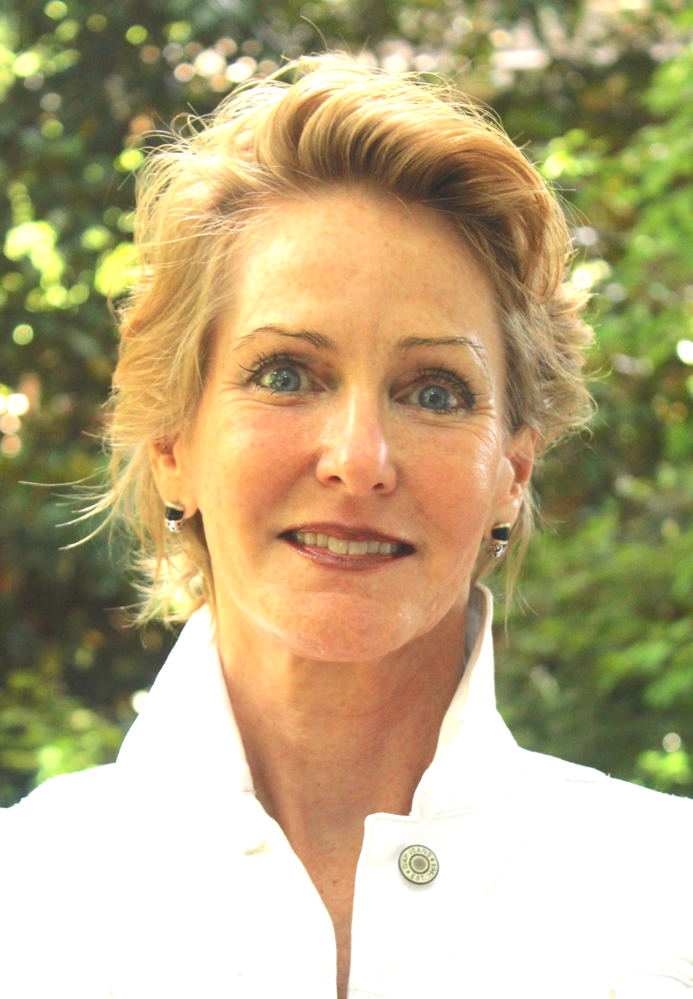
My heart broke for my children when I first read the 1998 CDC-Kaiser Permanente Adverse Childhood Experiences Study, mailed to me by a mentor in 2000. I wept about my high score (9) and then shoved the report in a drawer, resolving to not pass on the pain and to minimize my children’s ACEs. That report scared the hell out of me.
Years later, I plowed through the report again in earnest, and learned that most of my quirky behaviors: inability to focus, trouble with relationships, earlier fatalistic view, deep fears, etc, were likely due to developmental trauma at the hand of parents whose own lives had been severely affected by childhood trauma.
I’d been in recovery, in a program for children of alcoholics and their families, for many years at that time, and had learned how to be kinder and gentler with myself, as opposed to listening to my “inner parent” and beating myself down. I’d been taking medication for attention deficit disorder (ADD) so I could focus at work and hit deadlines — most of the time. But I hadn’t tied my need for medication to what had likely happened to my brain when I was in utero, when I likely experienced the toxic crush of my terrified mother’s adrenaline and cortisol as she carried me. My father was many things, among them, an abusive alcoholic.
Today I share great news: At 64, I continue to grow healthier thanks to the “resilience” part of ACEs science that explains and promotes actions we can take to become healthier as individuals, and as members of our families and communities. And that’s a relief, because research published in 2009 from the ACE Study showed that having six or more ACEs can chop 20 years off your life.
ACEs Connection launched in January 2012, and over the last eight years, has become one of the leaders in the ACEs movement, thanks to the tens of thousands of people and hundreds of communities who’ve joined and accelerated the spread of knowledge about childhood adversity. People in this movement have also developed innovative approaches using ACEs science to help people turn despair into hope, hate into love, and inspired them to pass on that knowledge and wisdom.
I have so many reasons for supporting ACEs Connection. One is so that pregnant women will take the ACE survey and connect the dots between their own ACEs and poor health outcomes for themselves and their children, and work to make things better.
Another reason I support ACEs Connection is to change the systems that perpetuate racism across all sectors, including medicine, as Black women are three to four times as likely to die in childbirth than White women, and Black babies are twice as likely to die than White babies.
I support ACEs Connection because we have the knowledge to solve our most intractable problems. And when I say “we”, I mean all the people who learn about ACEs science and join ACEs Connection to help grow a world that’s healthier that the one we live in now. At the moment, that’s nearly 48,000 influencers….and growing!
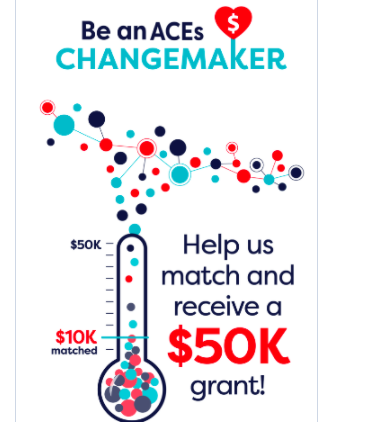
As a member of ACEs Connection, you’re invited to make a tax-deductible donation in any amount to our Changemakers Matching Grant campaign, and add your own “Why I Support ACEs Connection” essay here, on the main blog of ACEs Connection. Your essay will be identified as part of the campaign. If you believe the work of ACEs Connection has improved your life and the lives of people you care about, please join me in sharing a gift to help us raise $50,000 from our ACEs Connection community. That amount will be matched by a generous donor, who prefers to remain anonymous. The deadline for your tax deductible donation is December 31, 2020. Thank you in advance for your generous donation, your post, or both!
By Gene Nichol, The Charlotte Observer, December 28, 2020
It doesn’t happen as often as one might wish. But, on occasion, you can still be surprised by what someone says. For example, earlier this month, the Donald Trump-appointed Chair of the Federal Reserve, Jerome Powell, explained to the Senate Banking Committee:
“Disparate economic outcomes on the basis of race, have been with us for a very long time, they are a long-standing aspect of our economy, and there is a great risk that the pandemic is making them worse. Because the people who are most affected by the job losses are people in relatively low-paying parts of the service industries that happen to skew more to minorities and women, there is a real concern that if we don’t act as quickly as possible to support these people then we’ll leave behind an even more unequal situation. We need to do as much as we can to avoid exacerbating inequality.”
Seriously, the guy Bloomberg News calls “Wall Street’s Head of State” lectured the country on the challenges of economic justice. Man.
The traditional patterns of racial economic subordination Powell referenced have long dominated every component of life in North Carolina. Today, for example, twice as many African-American Tar Heels live in poverty as whites. The numbers are even worse for Black kids – nearly three times as many are poor as whites.
Racial income disparity is huge. But racial wealth disparity astonishes. Black households, on average, claim less than a tenth of the economic assets of white Tar Heel families. Racial minorities are dramatically more likely, in North Carolina, to be unemployed, uninsured, food insecure, housing insecure, and trapped in low wage work. Such defining disparities have existed throughout the entirety of our state’s history. Radical, systemic, disproportional racial economic impact, as Chairman Powell put it, has “been with us for a very long time.”
The desire to see other ACEs initiatives grow and flourish was evident at a recent meeting of the Resilient Columbus County (North Carolina) ACEs initiative when Mebane Boyd, executive director of the New Hanover Resiliency Task Force (also in North Carolina), shared with the Columbus County and neighboring Pender County groups how New Hanover created and works on its strategic plan.
In the spirit of sharing, Boyd agreed to let ACEs Connection post the strategic plan and the video ofthe meeting, so other new ACEs initiatives can learn from the New Hanover Resiliency Task Force’s work and experience.
“We are learning as we go,” Boyd said. “We just happen to have a couple of years’ head start on today’s beginning communities. We want to share what we’ve learned and are learning.”
In the spring of 2018, New Hanover County got a six-month planning grant from the Duke Endowment. Boyd was hired to be the six-month coordinator.
She joined a group of 10 or 15 people who were inspired by the screening of the documentary “Resilience” earlier that spring, and who wanted to get going on an initiative.
“The (New Hanover Regional) hospital, Community Care, Smart Start, Communities in Schools, the Department of Social Services, people in the court system and others saw the documentary and said, ‘Let’s stop talking and do something,’” Boyd said.
Their planning period paid off. The group started meeting regularly and opened the meetings up to anybody who wanted to come. “It was one of the best things we did,” Boyd said.
In the first phase of the plan, the group decided to engage and involve the community, agree on a timeline, and decide on which models to consider and invest in. They also looked at what data to collect on individual, organizational and systems levels. This remains an area of growth and learning.
Phase Two involves educating the community on the Pair of ACEs, the fact that there are adverse childhood experiences and adverse community experiences. ”We knew we needed to educate and be educated, to learn about what our community’s experiences were and are. We need to understand our unique adverse community environment,” Boyd said.
Phase Two also involves education about the impact of toxic stress and the Community Resiliency Model (CRM), a hands-on neurobiological training involving ACEs and brain science, to help people learn how to regulate their central nervous system and stay grounded during stressful situations.
Implementing Phase Three means helping organizations and providers become more trauma-informed and better able to deal with their own traumas and triggers.
“Most of the early (CRM) trainings centered on teachers, first responders, and health care workers. Until we are well, it is hard for us to take care of (other) people,” Boyd said.
Phase Four is training in trauma-informed and resilience-focused models for students, clients, parents, and the community.
Phase Five is implementing the trainings across all sectors of the community; this work will be ongoing.
Phase Six is community-level coaching and accountability, and work on funding strategies to continue to train and coach.
The phases look organized paper, but, Boyd said, “Nothing we do in human services is linear. If somebody new comes into the work, you have to educate them,” said Boyd, explaining that the group may have several phases of the work going on at the same time.
Quick to give credit to groups that helped develop the plan, Boyd was particularly complimentary of the New Hanover County Strategic Planning Department.
“We were able to use their expertise, and met many, many times, before coming up with the second page of the document. Some of us got frustrated. This took months. We would wonder, ‘Why are we talking about this again?’”
”Creating the plan was the work. Coming up with our common language was key to our progress. We needed to establish the community level goals, and to look at where we could make a difference.
“Racial equity runs through everything that we do,” she added. “In the last few months, we’ve realized what a challenge racial equity is, and we’ve realized that everything we do should be done through the filter of racial equity.”
Measuring success is also part of the work. Boyd said the group worked to develop Critical Success Factors, to “establish data points that can help tell us if what we are doing matters, if it is moving the needle.”
The group recently completed a steering committee retreat.
“Planning is never done and creating a strategic plan is something you are always working on,” she said. “Some of the work is immediate and some of it is long-term work that could be going on for 10 years or more.
“We are changing generational trauma. This is not work done in a short period of time. We knew we would be in it for the long haul. So we are now educating about trauma and racial disparity.”
She says a main factor in the success of this work is to keep it “trauma-informed and resiliency-focused.”
The group will know their hard work is paying off as they see more agencies looking through the trauma lens. An example? When more pediatrics practices are using ACEs screening, and more community members, having been through the trainings or hearing about them, are understanding their own biological responses to stress. Among other criteria for success are greater community understanding of ACEs science, more parents and providers being able to support children’s needs for social/emotional development and stress management, and delivery of equity training.
Boyd had these additional comments during the Q&A session:
On relationships: They are so important. If you were together and respectful and built your community, you are developing your relationships for further work. I spend a lot of my time inviting people to meetings, thanking them for coming. A lot of my time is spent on building relationships.
On the pace of the work: When you get together and convene, that is the work. Don’t be in a rush.
On who is needed to do the work: Work with the people who are there and committed. If you wait until everybody is at the table, you will never get it done.
On funding: You need money to pay a coordinator. We have received grants. The Department of Public Instruction provided money in 2018 that was used to train the trainers for the Community Resiliency Model, so about 30 people could attend the five-day training. We also have a part-time person doing all the movie screening and coordination of training. Task Force members are helping to get out the vote, and have been asked to contact legislators to ask for Medicaid expansion. We could use that (Medicaid expansion) money to help prevent ACEs, make lives better.
On the difference the work has made in the community: All 1,800 county employees have received at least a 90-minute CRM resilience training. They are not fully trained on CRM but have learned some CRM skills. County employees say staff members are now much more aware of their co-workers’ stress. They look in on each other, they know to ask, “How are you doing?” It helps to create a common language. It helps to normalize stress responses and push that message of having compassion and empathy for ourselves and our colleagues.
On subcommittees: Each subcommittee meets monthly. There are eight subcommittees for the New Hanover Resiliency Task Force:
Decades of funding expertise will come together to support rural resilience initiatives on June 9th from noon – 1:30 p.m. ET in a webinar hosted by the Campaign on Trauma Informed Policy and Practice (CTIPP) and PACEs Connection. Register now.
“We’re excited to present this group of three experts, who have worked in every corner of the United States, to help rural communities secure what more they can of the American Rescue Plan Act (ARPA) funding and opioid settlement funds, as well as other state and local funds. We’ll talk about available funding, zero in on challenges unique to rural communities, and find out how experts are helping,” said Jesse Kohler, CTIPP executive director.
Adrienne Elder, director of interagency projects at EB Consulting of Oklahoma City, Oklahoma, will share information about a statewide public-private partnership that includes more than 30 counties working with leadership from the Oklahoma Public Health Institute.
Dave Ellis is continuing his 28th year of consulting upon completion of his contract to serve as executive director of the Office of Resilience for the New Jersey Department of Children and Families. Ellis has run the first statewide resilience initiative in the country and is a veteran of securing funding for domestic violence, homelessness prevention, community engagement, diversity and equity, juvenile justice initiatives, and more.
Teresa Purcell of Longview, Washington, is a national political, communications, and organizing consultant working in rural America and with Black, Indigenous and people of color communities. She has worked in 34 states to help a wide variety of clients with strategic planning, program development and implementation, advocacy, civic engagement, and fundraising.
“This group of experts brings together a rich and successful track record of working with federal, state, and local funders and will share successes, insights, and answers to attendee questions,” said Kohler.
While news of mass shootings, such as the July 4th shooting at an Independence Day Parade in Highland Park, Illinois, dominates media feeds, community gun violence takes more lives and impacts more people in the United States.
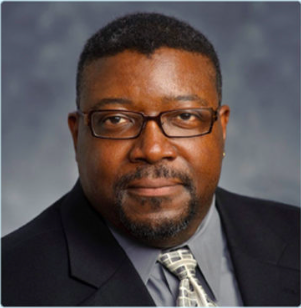
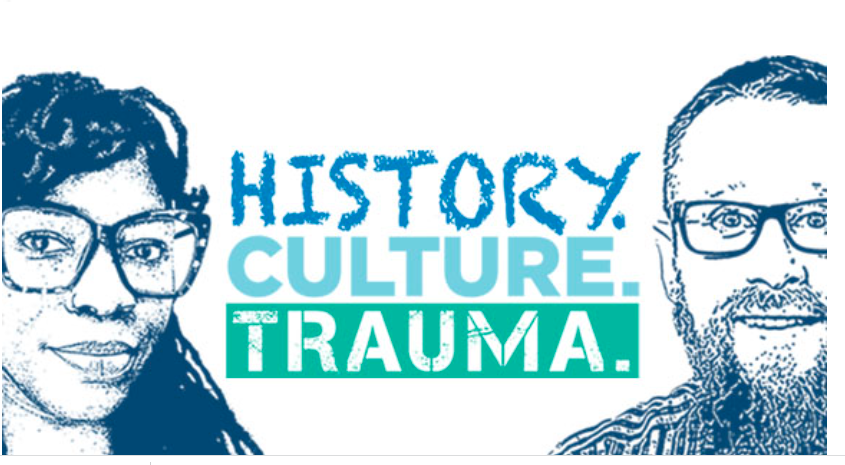
This week the PACEs Connection podcast History. Culture. Trauma, again focuses on gun violence in America, with a conversation departing from the focus on mass shootings, to instead look at community violence and solutions to community violence with policy analyst and activist Timothy Hughes.
“Whereas, active shooter situations and school shootings tend to dominate our mainstream news outlets, community gun violence is often not given as much attention,” said Ingrid Cockhren, PACEs Connection CEO and co-host of the podcast.
“Community violence overwhelmingly impacts low-income communities and communities of color. Mainstream news coverage of this type of violence seldom focuses on mental health, trauma or even real solutions. Instead, violence in these communities is often viewed through the lens of culture.” said Cockhren.
Hughes, who is currently a research fellow at The Mosaic Changemakers, is also commentator, columnist, community organizer, educator, human rights advocate, and public intellectual, working at the intersection of public policy and social justice. He’s been involved with Gideon’s Army in Nashville, Tennessee, and their group of community members called Violence Interrupters.
He recently appeared in a PACEs Connection webinar about gun violence with Cockhren, who has hosted several 2022 events to explore gun violence, including the first episode of the History, Culture, Trauma podcast in which she and PACEs Connection founder and publisher Jane Stevens discussed “How the News Media Suck at Violence Reporting” and how “integrating knowledge of the science of positive and adverse childhood experiences could help reduce and prevent violence, [and] help reduce systemic racism and its effects.”
“In this year alone, there have been more mass shootings in America than in any other year on record. Since 2020, America has been ravaged by a pandemic and endured political divide, nationwide protests and civil unrest. It is apparent that the collective traumas of the past two years have accelerated America’s already dire gun violence crisis,” said Cockhren.
According to statistics from Giffords, the gun violence information and prevention website founded by former congresswoman Gabrielle Giffords, herself a victim of gun violence, in 2020 gun deaths reached their highest level in at least 40 years. Citing the Centers for Disease Control, the site reported 45,222 deaths in 2020.
Further, firearm-related injuries became the leading cause of death in children ages 1 – 19, according to the 2020 statistics from The New England Journal of Medicine.
Tune in Thursday at 1 p.m. PT; 4 p.m. ET, to hear more of the discussion on the community gun violence as a social justice issue, and ways to reduce community gun violence.
To hear prior episodes via your favorite podcast service, use the links below.
Note: This funding opportunity is being posted as it appeared on theSubstance Abuse and Mental Health Services Administration (SAMSHA) Website.
Short Title
ReCAST
Initial AnnouncementNotice of Funding Opportunity (NOFO)
NOFO Number
SM-22-019
Posted on Grants.gov
Thursday, September 1, 2022
Application Due Date
Monday, October 17, 2022
Catalog of Federal Domestic Assistance (CFDA) Number
93.243
Intergovernmental Review (E.O. 12372)
Applicants must comply with E.O. 12372 if their state(s) participates. Review process recommendations from the State Single Point of Contact (SPOC) are due no later than 60 days after application deadline.
Public Health System Impact Statement (PHSIS) / Single State Agency Coordination
Applicants must send the PHSIS to appropriate State and local health agencies by application deadline. Comments from Single State Agency are due no later than 60 days after application deadline.Description
The purpose of this program is to promote resilience, trauma-informed approaches, and equity in communities that have recently faced civil unrest, community violence, and/or collective trauma within the past 24 months; and assist high-risk youth and families through the implementation of evidence-based violence prevention, and community youth engagement programs. SAMHSA expects ReCAST to be guided by a community-based coalition of residents, non-profit organizations, and other entities (e.g., health and human service providers, schools, institutions of higher education, faith-based organizations, businesses, state and local government, law enforcement, and employment, housing, and transportation services agencies).Eligibility
Eligible entities are States, political subdivisions of States, local municipalities (e.g., counties, cities, and local governments), public or private non-profit community-based organizations, Indian tribes, or tribal organizations (as defined in section 5304 of title 25), that have faced civil unrest, community violence and/or collective trauma.Award Information
Funding Mechanism
Grant
Anticipated Total Available Funding
$10,000,000
Anticipated Number of Awards
10
Anticipated Award Amount
$1,000,000 per year
Length of Project
Up to 4 years
Cost Sharing/Match Required?
No
Proposed budgets cannot exceed $1,000,000 in total costs (direct and indirect) in any year of the proposed project. Annual continuation awards will depend on the availability of funds, grantee progress in meeting project goals and objectives, timely submission of required data and reports, and compliance with all terms and conditions of award.
This program is being funded from the Bipartisan Safer Communities Act. SAMHSA has shortened the application submission period to less than 60 days to ensure the awards are issued consistent with the funding provisions within the law.Contact InformationProgram Issues
Jennifer Treger Center for Mental Health Services Substance Abuse and Mental Health Services Administration RECASTNOFOMHPB@samhsa.hhs.govGrants Management and Budget Issues
Office of Financial Resources, Division of Grants Management Substance Abuse and Mental Health Services Administration (240) 276-1400 FOACMHS@samhsa.hhs.gov
During this upcoming season of giving, we are making a special appeal. We are in deep financial straits. In a most un-trauma-informed move, a major foundation which had assured us that we would receive a second year of funding unexpectedly reversed course shortly before we were due to receive a $500,000 grant from them.
We’re fortunate to have a couple of funders who are providing support from January through December 2023. But we didn’t have enough funding remaining this year to take us through the end of this quarter, so we’ve cut our pay and time by 50%. If you’ve been through something like this, you know the hardship of making one paycheck last for two months. And almost all staff will be laid off for the month of December.
So, we’re modeling what we’ve written about for others for the last 11 years, quoting authority after authority about the need for people affected by trauma to “ask for help.”
We are asking you, our 57,300+ members, to make a donation, preferably, a monthly donation.
Because we’ve been funded by grants from generous donors over the last few years, we haven’t relied on donations. During a year-end funding campaign two years ago we received an unexpected matching gift of $50,000; you were kind enough to grow that to $105,000.
We are deeply grateful for that support, and for the $22,190 you donated over the last six months, since we began telling you of our situation. And now, as we enter the season of year-end giving, we ask for whatever you can give to assist PACEs Connection in its efforts to continue to solve our communities’ most intractable problems.
Given the current non-profit funding system, which tends to support organizations for only two or three years, we began planning six years ago to become self-supporting. That’s because we know that it will take communities 20 to 40 years to integrate policies and practices based on PACEs science. Earlier this year, we began accelerating those plans by diversifying our revenue streams.
We’re providing our expertise to create trauma-informed schools, trauma-informed workplaces that are anti-racist organizations, and helping local initiatives build partnerships to increase their funding and accelerate their growth.
We continue to recruit communities to join our Cooperative of Communities, which we launched in late 2019, only to see our progress delayed by COVID. The Coop offers unique and sophisticated tracking tools and other benefits to help community PACEs initiatives to accelerate growth, reduce ACEs and increase positive childhood experiences. Communities pay $5,000 a year for tools and benefits that would cost an individual community $80,000 to develop themselves.
Recruiting foundations to partner with us in our work. Besides the obvious consequence of losing much-needed funding, the loss of the $500,000 grant put us in the position of losing precious time to find another funder. Acquiring funding takes, on average, 18 months from first contact to money in the bank. Most funders won’t accept unsolicited requests for funding. You have to know someone who can provide an introduction.
Over the next couple of months, you won’t experience much of a difference in what you see from us. We’ll keep delivering the Daily Digest and Weekly Roundup, which we’ve provided for free for more than a decade. We’ll continue to provide support and training to the 440 or so cross-sector geographic communities and 40 or so interest-based communities that have free pages – their own mini-websites – on our site. We’ll keep offering our free Creating Resilient Communities trainings to the general public, and our Growing Resilient Communities trainings for managers of community initiatives.
We’ll be posting about our fundraising efforts, and asking some of you to post about what PACEs Connection has meant to you, your community, your growth and development as a human, parent, professional. If you’d like to share a video or a testimonial about the importance of our work, please do. We’d love to hear from you and ask that whether you post or not, to make a gift, preferably a monthly gift, to help us keep doing the work.
In the meantime, thank you for all you do in your life, your home, your community, your corner of the world, to help prevent and heal childhood trauma, to help build healthier, more resilient and compassionate communities.
SCIENCE-DRIVEN APPROACHES TO REDUCING INEQUITIES THROUGH PUBLIC HEALTH POLICY
Tuesday • December 6th • 1:30-3:00 ET
The National Prevention Science Coalition to Improve Lives (NPSC) will host a congressional briefing on deploying prevention strategies to improve racial equity, particularly in issue areas such as health and education. Research and experience provide guidance about what works to reduce racial disparities and improve health outcomes for all Americans. Despite the existence of strategies shown to reduce inequities and foster equitable practices, translating that knowledge into effective policies has lagged behind the science. Speakers in this briefing will present evidence-based prevention policies that reduce the conditions that perpetuate inequities and strengthen factors that protect against them.
During this session, national experts on this topic will present approaches to advance equity by implementing prevention-informed policies, especially in the areas of health and education. Speakers will discuss policies likely to have a population level impact and others that are targeted to specific social conditions within communities. They will also discuss how researchers and public sectors can work together to enact such change.
Many universal policies that aim to prevent negative outcomes for all people tend to benefit only certain segments of the population, leaving minority groups in particular with unequal access to needed services. The science of prevention offers solutions to this problem. To illustrate, Dr. Shelton will discuss how implementation evaluation strategies can provide a framework to identify and resolve the barriers to even-handed enactment of health policies. Also, implementation science can aid in our understanding of how prevention policies are enforced, further illuminating the root causes of health policy inequities.
Additional solution-based strategies work to reduce existing inequities by promoting health and well-being for specific populations. Dr. Iruka will discuss how policies focused on preservation, protection, and promotion can ensure that Black children and their families are able to thrive and have equal opportunities to live healthy lives. Her work not only provides actionable solutions to support Black families, but it is also a model for promoting equity for other negatively affected groups.
Dr. Johnson-Lawrence will demonstrate how successful partnerships between researchers and public officials can learn from policy challenges and failures and move forward to prevent repeated disaster and improve equitable outcomes. She will provide examples of using community-based approaches from the Flint water crisis to promote health improvements through existing health and community systems.
The pandemic exacerbated preexisting inequalities in rates of unemployment, food insecurity, violence, and mortality to name a few. Now is the time to ensure U.S. health policy is grounded in science-driven approaches to reduce economic, health, and social disparities for all people across the nation.
A mother and son living in a Walmart parking lot in North Dakota in 2012.Credit…Eugene Richards
By Matthew Desmond, The New York Times, March 9, 2023
In the past 50 years, scientists have mapped the entire human genome and eradicated smallpox. Here in the United States, infant-mortality rates and deaths from heart disease have fallen by roughly 70 percent, and the average American has gained almost a decade of life. Climate change was recognized as an existential threat. The internet was invented.
On the problem of poverty, though, there has been no real improvement — just a long stasis. As estimated by the federal government’s poverty line, 12.6 percent of the U.S. population was poor in 1970; two decades later, it was 13.5 percent; in 2010, it was 15.1 percent; and in 2019, it was 10.5 percent. To graph the share of Americans living in poverty over the past half-century amounts to drawing a line that resembles gently rolling hills. The line curves slightly up, then slightly down, then back up again over the years, staying steady through Democratic and Republican administrations, rising in recessions and falling in boom years.
What accounts for this lack of progress? It cannot be chalked up to how the poor are counted: Different measures spit out the same embarrassing result. When the government began reporting the Supplemental Poverty Measure in 2011, designed to overcome many of the flaws of the Official Poverty Measure, including not accounting for regional differences in costs of living and government benefits, the United States officially gained three million more poor people. Possible reductions in poverty from counting aid like food stamps and tax benefits were more than offset by recognizing how low-income people were burdened by rising housing and health care costs.
 Carey Sipp 9/22/207:58 PM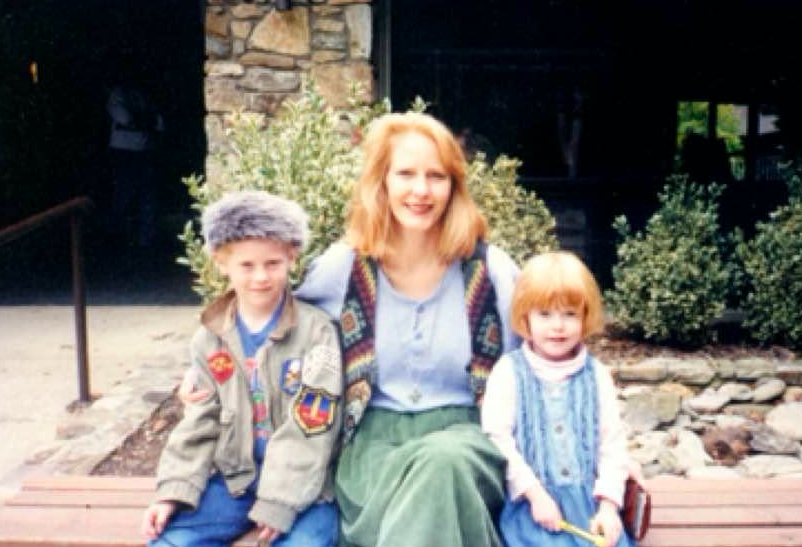
 ACEs Connection launched in January 2012, and over the last eight years, has become one of the leaders in the ACEs movement, thanks to the tens of thousands of people and hundreds of communities who’ve joined and accelerated the spread of knowledge about childhood adversity. People in this movement have also developed innovative approaches using ACEs science to help people turn despair into hope, hate into love, and inspired them to pass on that knowledge and wisdom.
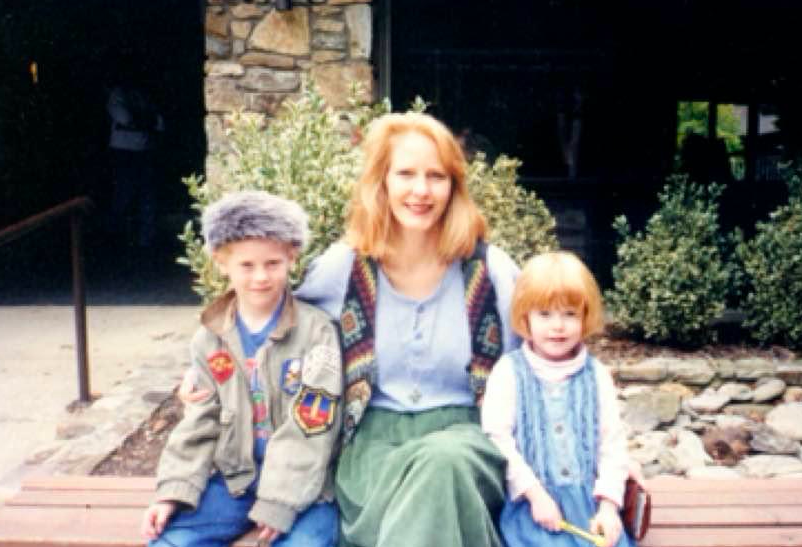




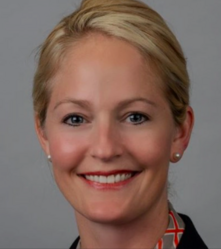 Adrienne Elder, director of interagency projects at EB Consulting of Oklahoma City, Oklahoma, will share information about a statewide public-private partnership that includes more than 30 counties working with leadership from the Oklahoma Public Health Institute.