Tag Archives: health

Positive Experiences Are Healing & Protective For Adults, Too — All STAR Recovery & Renewal Cruise — A “PAE”— Sets Sail May 1

Carey Sipp Carey Sipp 4/12/2611:44 AM

Emerging Research on Positive Adult Experiences Offers New Hope for Survivors of Trauma and Adversity

In the PACEs Connection community, we write and talk a lot about what infants and children need to thrive. Safe relationships. Consistent connection. A sense of belonging. The science of Positive Childhood Experiences — PCEs — has shown us that these early building blocks shape brain development, buffer the impact of adversity, and even help prevent adult mental illness.

But what about adults? What happens when those early positive experiences were missing — or when life’s adversities never stopped, and/or arrived later, in the form of toxic relationships — romantic, workplace, or otherwise — loss, trauma, or other sources of continuous toxic stress?

Positive Adult Experiences — PAEs — function remarkably similarly to Positive Childhood Experiences — PCEs

Emerging research published by the National Institutes of Health and Frontiers in Child and Adolescent Psychiatry offers a powerful and hopeful answer: positive experiences don’t stop mattering after childhood. Positive Adult Experiences — PAEs — function remarkably similarly to PCEs, reducing depression and anxiety, promoting resilience, and helping to buffer the impact of early adversity — even when adverse childhood experiences (ACEs) were high and positive childhood experiences were few.

“Healing — and preventing more adversity — are not just for children,” said Jamie Huysman, PsyD, LCSW, Founder and Executive Director of the STAR Network Foundation. “Adults who have experienced trauma — whether in childhood or later in life — can experience genuine turning points when they find safe, consistent, accepting community. The brain remains responsive to positive experiences across the entire lifespan. That is not just hopeful. That is science.”

Screenshot 2026-04-09 at 8.28.38 PM

Key positive adult experiences identified in the research include social connection and feeling genuinely understood and valued; mentorship and personal growth; community belonging and purposeful work; and active emotional healing — the kind of deep, courageous work that actively recovering survivors of toxic and abusive relationships know all too well.

“Positive childhood and adult experiences can become their own protective factors. That shift in the trajectory of a life — toward connection, belonging, and hope — has a way of attracting more of the positive. It can help break generational cycles of abuse, neglect, addiction, and the sometimes learned behaviors of helplessness and hopelessness. Healing in one generation plants seeds of healthy relationships and outcomes for the next,” offers Carey Sipp, author of “The TurnAround Mom”, a book on reparenting oneself and breaking generational cycles of addiction, neglect, and abuse.

Screenshot 2026-04-11 at 5.50.11 PM“Through decades of my own recovery and in years of volunteer work with fellow survivors, I’ve seen firsthand the healing that comes from adults learning to trust and be accepted by each other, to commiserate, share experience, strength, and hope, and to learn to laugh together,” said Sipp, Interim Editor-at-Large and Director of Upstream Strategies at PACEs Connection.

Studies show that adults with more PCEs experience measurably less depression and anxiety. While these experiences tend to have a stronger impact on younger adults, their benefits extend across the lifespan. And unlike the early years — when children depend entirely on the adults around them to provide positive experiences — adults can actively seek them out, build them, and offer them to one another.

Setting Sail for Mental Health Awareness Month

Screenshot 2026-04-09 at 8.46.37 PMThe STAR Network Foundation is putting that science into practice in a decidedly memorable way this May — with the All STAR Cruise, departing Miami on Friday, May 1, 2026, and bringing together Survivors of Toxic and Abusive Relationships (STARs), healers, advocates, and community members for four days of connection, conversation, and renewal at sea — returning early Monday, May 4.

A special gathering at the Atlantis resort in Nassau on Saturday, May 2, will feature STAR Network International Ambassador Richard Grannon leading raw, thought-provoking discussions on trauma recovery, building resilience, and reclaiming your life — conversations designed not just to inform, but to transform.

“Every moment of genuine connection aboard that ship is the science in action,” said Huysman. “When a survivor feels truly seen, truly heard, truly safe — that is a positive adult experience. That is healing. And those moments add up.”

“For the PACEs Connection community, whose work centers on understanding both the adverse and the positive experiences that shape human lives across the lifespan, the All STAR Community Cruise represents something larger than a weekend getaway. It is a living demonstration that healing is possible — and that no survivor has to walk that path alone,” said Huysman.

For more information about the All STAR Cruise, visit: https://lnkd.in/duWJKYcV

Key Research Links

About the STAR Network Foundation

The STAR Network Foundation is a worldwide 501(c)(3) organization dedicated to the support, treatment, and prevention of attachment disorders and narcissistic abuse. Through its free peer-to-peer, anonymous meetings each weekday, annual Scars to STARs Day Summit (coming up May 22; free registration is here), and community initiatives, STAR Network makes safe, consistent, accepting connection available worldwide to Survivors of Toxic and Abusive Relationships and complex PTSD post-traumatic stress disorder (PTSD).

About PACEs Connection

PACEs Connection — PACEs stands for Positive and Adverse Childhood Experiences — is a  62,425 member global network advancing the science of positive and adverse childhood experiences to prevent and heal trauma, build resilience, and support flourishing communities worldwide. For more information contact Dana Brown, Interim Executive Director, at dana.pacescommunities@gmail.com; or Carey Sipp, Interim Editor-at-Large and Director of Upstream Strategies and Relationships, at carey.pacescommunities@gmail.com

Nearly 30 Years After a Landmark Study Changed How the World Understands Childhood Trauma, a Global Summit Asks: What Comes Next?

Carey Sipp Carey Sipp 4/28/2611:16 PM

The Third Annual Scars to STARs Day Summit — Free, Virtual, and Open to the World — Register now for May 22, 2026

On May 22, 2026, thousands of survivors, scientists, clinicians, policymakers, educators, and community leaders from across the United States and around the world will gather — virtually and at no cost — for one of the most significant annual events in the global trauma recovery and prevention movement.

The third annual Scars to STARs Day® Summit: ACE Studies — The Next 30 Years, hosted by the STAR Network Foundation, takes place from 9:30 a.m. to 6:00 p.m. ET on the fourth Friday of May, held annually in honor of Mental Health Awareness Month.

Screenshot 2026-05-18 at 1.05.18 PMFree: Register now at Scars to STARs Summit 2026 – STAR Network.

Screenshot 2026-04-29 at 12.55.02 AM

Nearly 30 Years of Science — So Much Work to Do

The timing is not coincidental.

Nearly three decades have passed since Vincent J. Felitti, MD, FACP, then working with Kaiser Permanente, and Robert F. Anda, MD, MS, then a research scientist at the U.S. Centers for Disease Control and Prevention, published the landmark Adverse Childhood Experiences (ACEs) Study — one of the most consequential public health studies in American history.

Their findings revealed a striking, dose-dependent relationship between adverse childhood experiences and lifelong physical and mental health outcomes. At the population level, the higher a person’s ACE score, the greater their statistical risk of heart disease, cancer, addiction, mental illness, domestic violence, poverty, and premature death.

But the science has never been deterministic — a high ACE score is not a death sentence.

Not everyone with multiple ACEs will suffer those outcomes, and researchers have long sought to understand why. A landmark 2019 study on Positive Childhood Experiences — PCEs — helped answer that question, demonstrating that supportive relationships, community connection, and other positive experiences can buffer the impact of adversity and help explain why some people with significant ACE scores go on to live remarkably resilient, connected, and healthy lives.

The ACE Study has since generated thousands of follow-on studies worldwide. And yet, nearly 30 years later, it remains largely unknown outside the fields of education,  public health, medicine, and social services — far from the tipping point of public awareness needed to change the systems that perpetuate childhood adversity in the first place.

May 22nd is a day dedicated to helping change that.

Honoring the Scientists Who Started It All

Screenshot 2026-04-29 at 12.54.14 AMThe summit will open with a short film — The Legacy of the ACE Study and the Future It Made Possible — honoring Dr. Felitti, who will receive the 2026 STAR NeuroLeadership Award in a filmed presentation.

Dr. Anda will receive the STAR Global Impact Award for Public Health Impact in Trauma Science, presented virtually by The Honorable Patrick J. Kennedy, Co-Founder of The Kennedy Forum, former U.S. Representative, and recipient of the 2025 STAR NeuroLeadership Award.

A Day-Long Journey — From Science to Action

The summit is structured in three chapters — Understanding Trauma and Healing, Voices of Recovery, and Building the Next 30 Years — moving participants through a carefully designed arc from scientific grounding to personal reflection to collective commitment.

The program opens with a Global Prevention and Recovery Innovation Marketplace, where participants can connect in real time with organizations advancing trauma-informed care, youth resilience, addiction recovery, survivor support, and prevention innovation from around the world.

Featured speakers and sessions include:

The Honorable Patrick J. Kennedy, Co-Founder of The Kennedy Forum, delivering a keynote on leading the next 30 years of mental health systems reform.

Diana H. Fishbein, PhD, Senior Scientist at the Frank Porter Graham Child Development Institute at the University of North Carolina at Chapel Hill and Co-Founder of the National Prevention Science Coalition to Improve Lives, presenting What We Learned — and What Comes Next — a critical examination of how ACEs science has evolved and what it now demands of us.

Screenshot 2026-04-29 at 12.53.22 AMDr. Melissa T. Merrick, President and CEO of Prevent Child Abuse America and former Lead Scientist on the CDC ACE Study, presenting From Awareness to Prevention: Rewriting the Conditions for Childhood in America — reframing trauma not as individual failure but as a systems-level challenge and shared responsibility.

Mercie Josina DiGangi, DO, Regional Chair of the Child Abuse Prevention Program at Kaiser Permanente Southern California, presenting Your Brain on ACEs: Why the Past Lives in the Present — and How to Change It.

Jennifer Hays-Grudo, PhD and Amanda Sheffield Morris, PhD, both of Oklahoma State University, presenting From ACEs to PACEs: Defining the Next Era of Prevention — introducing the growing science of Positive Childhood Experiences and how supportive relationships and environments can buffer adversity and change life trajectories.

Jesse Kohler, Founder and President of The Change Campaign and former Executive Director of the Campaign for Trauma-Informed Policy and Practice, offering a survivor leadership reflection: When the System Failed Me — What I Chose to Build.

Michael J. Menard, Founder of United Against Childhood Trauma and author of the recently published Greater Than Gravity: How Childhood Trauma Is Pulling Down Humanity, presenting From Personal Tragedy to Global Movement.

A panel on Addiction, ACEs & the Brain, moderated by Doug Tieman, Chairman of the Board of the STAR Network Foundation, featuring clinical leaders from The Retreat, Ascension Recovery Services, Ashley Addiction Treatment, Turnbridge, and Caron Treatment Centers.

A panel on When Systems Work: Building Care Survivors Can Trust, moderated by Thomas G. Bognanno, Founder of Alliance Practice LLC, and Jamie Huysman, PsyD, LCSW, Founder and Executive Director of the STAR Network Foundation, featuring Dr. Mya O. Price, Executive Vice President and Chief Social Impact Officer of Creating Healthier Communities, and George Rapier III, MD, Chairman and CEO of WellMed Medical Management.

Richard Grannon, International Ambassador of the STAR Network Foundation, presenting Psychological Freedom: Breaking Cycles of Coercive Control.

Omer Golan, Founder and CEO of the MyWhatIf Foundation, offering a survivor leadership reflection: From Trauma to Transformation: Data to Dignity.

A Survivor-Centered Experience

Screenshot 2026-04-29 at 1.00.08 AMThroughout the day, the summit weaves together guided regulation and reset breaks — recognizing that engaging with trauma-related content requires care, and that healing happens not just through information but through the experience of safety, connection, and community.

The day will close with a solemn moment — The Empty Chair for the Children We Lost and the Children We Can Still Protect — followed by the signing of the ACEs Next 30 Declaration: A Global Commitment to the Next Generation, inviting participants worldwide to affirm their commitment to transforming trauma recovery, prevention, and resilience over the next three decades.

Free. Virtual. Global. May 22.

The Scars to STARs Day® Summit is free and open to anyone, anywhere in the world, with sessions designed for global participation across time zones.

This is not a conference. It is a movement. And it begins — again — on May 22.

Register now at Scars to STARs Summit 2026 – STAR Network.

For more information, visit the STAR Network Foundation at STAR Network – Become a Survivor of Toxic Abusive Relationships! and PACEs Connection at PACEs Connection.

About the STAR Network Foundation The STAR Network Foundation is a worldwide 501(c)(3) organization dedicated to the support, treatment, and prevention of attachment disorders and narcissistic abuse. Through its free peer-to-peer, anonymous meetings each weekday, the annual Scars to STARs Day Summit, and community initiatives, STAR Network makes safe, consistent, accepting connection available to Survivors of Toxic and Abusive Relationships and complex PTSD worldwide.

About PACEs Connection PACEs = positive and adverse childhood experiences, The organization is a 62,400+ member global online learning community and social network advancing the science of positive and adverse childhood experiences to prevent and heal trauma, build resilience, and support flourishing people and communities worldwide. STAR Network Foundation partners with PACEs Connection and is its fiscal sponsor.

Scars to STARS Day Summit Organizers

Screenshot 2026-04-29 at 12.56.17 AMScars to STARS Day Summit Sponsors and Partners

Screenshot 2026-05-15 at 5.48.12 AM

Attachments

Hide

Images (8)

Screenshot 2026-05-18 at 1.05.18 PM
Screenshot 2026-04-29 at 12.55.02 AM
Screenshot 2026-04-29 at 12.53.22 AM
Screenshot 2026-04-29 at 12.54.14 AM
Screenshot 2026-04-29 at 12.53.54 AM
Screenshot 2026-04-29 at 12.56.17 AM
Screenshot 2026-04-29 at 1.00.08 AM
Screenshot 2026-05-15 at 5.48.12 AM: Sponsors of Scars to STARs Day 2026

Files (1)

Scars to STARs Summit 2026 Agenda.pdf

Carey Smith Sipp

carey.pacescommunites@gmail.com

Seven States Now Tracking Positive Childhood Experiences — Join NJ Resilience Chief Rebecca Bryan, DNP, for PACEs Connection National Cooperatives and Community Managers May 12 to Discuss!

Carey Sipp Carey Sipp 5/2/261:13 PM

Special presentation and Q & A with Dr. Rebecca Bryan, Executive Director of the New Jersey Office of Resilience — Tuesday, May 12, 1:00 p.m. ET

For years, many of us in the PACEs science community have believed that positive childhood experiences — PCEs — are not just the other side of adverse childhood experiences (ACEs). The science tells us they are protective. They are preventive. And now, in a significant milestone for the science, PCEs are being measured as a part of the nation’s premier public health survey system.

“Essential, measurable, actionable”

PCEs, as an optional questions module, have been added to the Behavioral Risk Factor Surveillance System (BRFSS), the world’s largest, ongoing, state-based telephone survey system. Conducted since 1984 by the Centers for Disease Control and Prevention (CDC), BRFSS data is gathered in partnership with state health departments, and tracks health-related risk behaviors, chronic health conditions, and use of preventive services.

Measuring PCEs was first adopted by Wisconsin in 2015, and have since been included in at least five other states’ surveys in recent years. In addition to Wisconsin, states using all seven PCE items are Kansas, Montana, South Carolina, and New Jersey. Tennessee and California have added at least one PCE item.

“…gathering population-level data on the experiences that protect and heal — not just the ones that harm.’

“What’s important and exciting about PCEs being measured in the BRFSS is that, for the first time, we are gathering population-level data on the experiences that protect and heal — not just the ones that harm,” said Rebecca Bryan, DNP, NP, Executive Director of the New Jersey Department of Children and Families Office of Resilience. “It is a milestone for the science — and a signal that policymakers and public health leaders are beginning to see PCEs for what the research has long shown them to be: essential, measurable, and actionable.”

Screenshot 2026-05-02 at 2.49.23 PM

On Tuesday, May 12, at 1:00 p.m. ET, Bryan will join PACEs Connection’s monthly Community Manager and Cooperative of Communities meeting to share what this means — and what it can mean for communities across the country.

About Rebecca Bryan, DNP, NP

As  the Executive Director of the New Jersey Department of Children and Families Office of Resilience, Dr. Bryan’s role puts her at the forefront of translating PACEs science into policy and practice at the state level. A former primary care nurse practitioner with decades of experience, she is certified in Adult Learning and Lakeside Global Institute’s Trauma Competency, well-published in healthcare journals, a former adjunct professor, and a veteran of both the New Jersey and Philadelphia ACEs Task Forces.

Her compelling personal journey to “the root of why.”

“I do this work because it gets to what I like to call ‘the root of why,'” said Dr. Bryan. “As a former primary care NP, I had trusting, safe relationships spanning 16 years with adult patients — and yet could not get to root causes of issues like tobacco addiction, severe anxiety, and morbid obesity. I was never taught to screen for ACEs,” she said.

Her work with youth in Camden, New Jersey deepened that conviction. “I worked with kids who could write — and deliver at a SLAM (Synthesis, Literacy, Arts, Media poetry event)— deeply wise poetry, yet would get suspended and would have difficulty retaining new knowledge. ACEs science explained all of it,” she said.

Knowing ACEs was not enough: “Identities rooted in trauma.”

“Focusing solely on ACEs can lead to an identity rooted in trauma,” Dr. Bryan said. “PCEs co-exist with ACEs, have a mitigating impact on risks conferred by ACEs, and the body of research since 2019 is clearly demonstrating PCE impact on adult health and well-being. PCEs show us what to do — and create space to ask questions like, ‘What are the barriers to children experiencing safe and stable nurturing relationships?,'” she said.

Her image of that interplay is striking: “I have this image of childhood adversity landing in a nest of PCEs — which are a proxy for relational health — and the PCEs having the power to prevent adversity from embedding as trauma,” she said.

Screenshot 2026-05-02 at 3.30.08 PM

(Graphic – mezzosolutions.com)

Dr. Bryan will share data from the HOPE (Healthy Outcomes from Positive Experiences) research initiative at Tufts Medical Center, one of the leading bodies of work advancing our understanding of how positive experiences shape health and well-being across the lifespan.

About the Meeting

The PACEs Connection Community Manager and Cooperative of Communities monthly meeting brings together community managers for updates on PACEs Connection, PACEs communities, PACEs science, and the broader movement to prevent and heal childhood trauma worldwide. Meetings are one hour and held monthly.

Community managers and others who would like to attend are invited to email Dana Brown with their email address to be added to the list of invitees at dana.pacescommunities@gmail.com. Please put “PACEs Monthly Meeting” in the subject line.

WHAT: PACEs Connection Community Manager & County-wide Cooperative of Communities Facilitators Monthly Meeting featuring Dr. Rebecca Bryan TOPIC: Positive Childhood Experiences — What the Science Shows, What the Data Tells Us, and Why It Matters Now WHEN: Tuesday, May 12, 2026 | 1:00 p.m. ET WHERE: Virtual — by invitation RSVP: Email Dana Brown at dana.pacescommunities@gmail.com or carey.pacescommunities@gmail with your email address to receive the meeting link.

Positive Experiences Are Healing & Protective For Adults, Too — All STAR Recovery & Renewal Cruise — A “PAE”— Sets Sail May 1

(This blog posted on PACEs Connection on April 12, 2026.)

Emerging Research on Positive Adult Experiences Offers New Hope for Survivors of Trauma and Adversity

In the PACEs Connection community, we write and talk a lot about what infants and children need to thrive. Safe relationships. Consistent connection. A sense of belonging. The science of Positive Childhood Experiences — PCEs — has shown us that these early building blocks shape brain development, buffer the impact of adversity, and even help prevent adult mental illness.

But what about adults? What happens when those early positive experiences were missing — or when life’s adversities never stopped, and/or arrived later, in the form of toxic relationships — romantic, workplace, or otherwise — loss, trauma, or other sources of continuous toxic stress?

Positive Adult Experiences — PAEs — function remarkably similarly to Positive Childhood Experiences — PCEs

Emerging research published by the National Institutes of Health and Frontiers in Child and Adolescent Psychiatry offers a powerful and hopeful answer: positive experiences don’t stop mattering after childhood. Positive Adult Experiences — PAEs — function remarkably similarly to PCEs, reducing depression and anxiety, promoting resilience, and helping to buffer the impact of early adversity — even when adverse childhood experiences (ACEs) were high and positive childhood experiences were few.

“Healing — and preventing more adversity — are not just for children,” said Jamie Huysman, PsyD, LCSW, Founder and Executive Director of the STAR Network Foundation. “Adults who have experienced trauma — whether in childhood or later in life — can experience genuine turning points when they find safe, consistent, accepting community. The brain remains responsive to positive experiences across the entire lifespan. That is not just hopeful. That is science.”

Screenshot 2026-04-09 at 8.28.38 PM

Key positive adult experiences identified in the research include social connection and feeling genuinely understood and valued; mentorship and personal growth; community belonging and purposeful work; and active emotional healing — the kind of deep, courageous work that actively recovering survivors of toxic and abusive relationships know all too well.

“Positive childhood and adult experiences can become their own protective factors. That shift in the trajectory of a life — toward connection, belonging, and hope — has a way of attracting more of the positive. It can help break generational cycles of abuse, neglect, addiction, and the sometimes learned behaviors of helplessness and hopelessness. Healing in one generation plants seeds of healthy relationships and outcomes for the next,” offers Carey Sipp, author of “The TurnAround Mom”, a book on reparenting oneself and breaking generational cycles of addiction, neglect, and abuse.

Screenshot 2026-04-11 at 5.50.11 PM

“Through decades of my own recovery and in years of volunteer work with fellow survivors, I’ve seen firsthand the healing that comes from adults learning to trust and be accepted by each other, to commiserate, share experience, strength, and hope, and to learn to laugh together,” said Sipp, Interim Editor-at-Large and Director of Upstream Strategies at PACEs Connection.

Studies show that adults with more PCEs experience measurably less depression and anxiety. While these experiences tend to have a stronger impact on younger adults, their benefits extend across the lifespan. And unlike the early years — when children depend entirely on the adults around them to provide positive experiences — adults can actively seek them out, build them, and offer them to one another.

Setting Sail for Mental Health Awareness Month

Screenshot 2026-04-09 at 8.46.37 PMThe STAR Network Foundation is putting that science into practice in a decidedly memorable way this May — with the All STAR Cruise, departing Miami on Friday, May 1, 2026, and bringing together Survivors of Toxic and Abusive Relationships (STARs), healers, advocates, and community members for four days of connection, conversation, and renewal at sea — returning early Monday, May 4.

A special gathering at the Atlantis resort in Nassau on Saturday, May 2, will feature STAR Network International Ambassador Richard Grannon leading raw, thought-provoking discussions on trauma recovery, building resilience, and reclaiming your life — conversations designed not just to inform, but to transform.

“Every moment of genuine connection aboard that ship is the science in action,” said Huysman. “When a survivor feels truly seen, truly heard, truly safe — that is a positive adult experience. That is healing. And those moments add up.”

“For the PACEs Connection community, whose work centers on understanding both the adverse and the positive experiences that shape human lives across the lifespan, the All STAR Community Cruise represents something larger than a weekend getaway. It is a living demonstration that healing is possible — and that no survivor has to walk that path alone,” said Huysman.

For more information about the All STAR Cruise, visit: https://lnkd.in/duWJKYcV

Key Research Links

About the STAR Network Foundation

The STAR Network Foundation is a worldwide 501(c)(3) organization dedicated to the support, treatment, and prevention of attachment disorders and narcissistic abuse. Through its free peer-to-peer, anonymous meetings each weekday, annual Scars to STARs Day Summit (coming up May 22; free registration is here), and community initiatives, STAR Network makes safe, consistent, accepting connection available worldwide to Survivors of Toxic and Abusive Relationships and complex PTSD post-traumatic stress disorder (PTSD).

About PACEs Connection

PACEs Connection — PACEs stands for Positive and Adverse Childhood Experiences — is a  62,425 member global network advancing the science of positive and adverse childhood experiences to prevent and heal trauma, build resilience, and support flourishing communities worldwide. For more information contact Dana Brown, Interim Executive Director, at dana.pacescommunities@gmail.com; or Carey Sipp, Interim Editor-at-Large and Director of Upstream Strategies and Relationships, at carey.pacescommunities@gmail.com

A High ACE Score Is Not a Death Sentence. It’s an Invitation for Self Care and Reparenting! + ACEs Next 30 Summit

(Published on PACEs Connection on May 16, 2026)

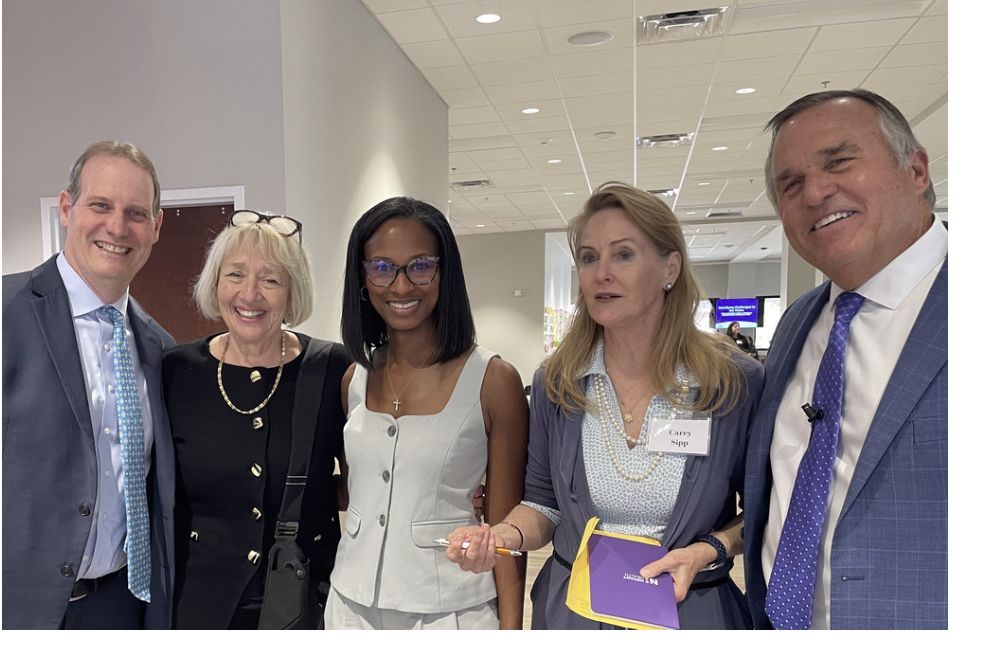
Photo from May 13, 2026 of Ben David, chief executive officer of the New Hanover County Community Justice CenterElaine Miller-Karas, key creator of the Community Resiliency Model (CRM) and co-founder of Trauma Resource InstituteJ’vanete Skiba, director, New Hanover County Resiliency Task Forcemyself, and Casey Gwinn, founder, Alliance for Hope International, co-founder, Camp Hope, on break at a strategic planning session for the New Hanover County Community Justice Center. Elaine visited Wilmington and Raleigh, North Carolina, from California to meet with business leaders and CRM trainers in the region and dropped by the planning session to meet Ben, Casey, and Catherine Johnson, president of Alliance for Hope International. This photo represents a few of the hundreds of thousands of people working upstream to prevent and heal trauma, to create the positive childhood and community experiences that help prevent next-generation trauma. Their work — and that of their predecessors over generations, including that of grandparents, teachers, coaches, neighbors, family friends, and more who have provided safe, stable, nurturing environments  for newborns and children enduring trauma — is a major reason why high ACE scores do not automatically equate, at the individual level, to negative outcomes. Your work — our work — matters!)

Reading the 1998 ACE Study in 1999, freaking out, doubling down on self-care


About 27 years ago, when I first learned about the science of adverse childhood experiences (ACEs) via the 1998 ACE Study, I was so devastated by my ACE score that I wept — and put the study in a drawer.

Fortunately, I’d already increased my activity in several supportive communities following a divorce, as I sought help rearing my two precious children as a single working mom.

About three years later, I took the ACE study out of the drawer. Brain science had come out with a lot more information on neuroplasticity — how we’re not “stuck” with the brain we’re born with, or that might have been harmed by ACEs. I started doing more research and writing on parenting, health, brain health, recovering from trauma, and ultimately, ACEs, and then positive and adverse childhood experiences (PACEs) science.

Reparenting and parenting

Fast forward through years of reparenting myself as I parented my children — with the belief that we needed to be in healthy communities where they could have as much exposure as possible to happy, healthy families and adults modeling great relationships. I encouraged my kids to be glad they had “other mothers and fathers” — lots of strong, positive influences in their lives.This was 20 years before the Positive Childhood Experiences (PCEs) study of 2019. But when it was published, it was deeply affirming of how relying on a “village” and asking for help, as instinct guided, had been the right habit.

We were NOT our ACE scores. My high ACEs didn’t mean I was doomed — as I’d so feared when I first read the 1998 study. And low ACEs didn’t mean anyone was “out of the woods.” We all need as many PCEs as possible.

Here is a truth I want every person with a high ACE score to hear: a high ACE score is not a death sentence. It is not a destiny. The ACEs study measures population-level risk — and at the population level, the implications are sobering. But populations are made up of individuals. And individuals have agency. There are outliers. There always have been.

Screenshot 2026-04-29 at 6.24.17 PM

The 2019 PCEs study and many subsequent studies on the power of PCEs affirm what many of us had already lived: positive childhood and community experiences are buffering and protective; that they can and do change trajectories. For people without those buffers — facing greater poverty, isolation, racism, inequity, and lack of healthcare and support — the risks the ACEs study describes are more likely to materialize. That is chief among the real injustices we must address.

For those of us who fell into or found community, who were held by neighbors and grandmothers and the parents of friends — those relationships were medicine.

Screenshot 2026-04-29 at 6.24.24 PM

I have had health challenges that line up perfectly with the assault on my developing brain and central nervous system — digestive, respiratory, and sleep issues. AND the communities my children and I were part of boosted our health and stability. Years of meditation taught me how to breathe and calmed my nervous system. My respiratory issues are now few and far between.
*My* children are now 33 and 36. Both are in terrific marriages. A first grandchild is due soon; he will be welcomed with and into tremendous love. I am in a safe, stable, nurturing relationship, surrounded by one of the most caring communities I’ve ever known.

#WeAreTheMedicine. Creating and being in community — and knowing we have agency — changes everything. Community is the preventive and antidote to trauma and the trauma of isolation, loneliness, “othering.”

People with high ACE scores are not broken. We are not necessarily destined for an early grave. The science tells us about risk. It does not tell us about about you and me!

                                                   *********************

Invitation to learn more, so much more, about positive and adverse childhood experiences on Friday, May 22nd. Register now for Scars to STARS Day, global summit on the future of ACEs Science.

Screenshot 2026-05-16 at 2.48.59 PM

Please join the PACEs Connection community by registering now for the “ACEs the Next 30 Years” Summit this Friday. We’ll be honoring the two principal co-authors of the 1998 ACE Study, Vincent Felitti, MD, and Robert Anda, MD, MS, and welcoming notable speakers including the Hon. Patrick Kennedy, co-founder of The Kennedy Forum; Melissa Merrick, PhD,  president of Prevent Child Abuse America; Diana Fishbein, PhD, founder and director of the National Prevention Science Coalition to Improve Lives; Jennifer Hays-Grudo, PhD and Amanda Sheffield Morris, PhD of the Oklahoma State University Center for Health Sciences, Center for Integrative Research on Childhood Adversity , presenting on ACEs to PACEs —  Defining the Next Era of Prevention; Jesse Kohler, founder and president of The Change Campaign; Michael Menard, founder of United Against Childhood Trauma; Jamie Huysman, PsyD, LCSW, founder and executive director, STAR Network Foundation, and Mercie Josina DiGangi, DO, regional chair of the Child Abuse Prevention Program at Kaiser Permanente, Southern California.

Screenshot 2026-05-16 at 2.54.35 PM

Free: Register now at Scars to STARs Summit 2026 – STAR Network. (STAR stands for Survivor of Toxic Abusive Relationships) Registration is free though a donation is encouraged. Download the agenda here to learn more!

*Some 10,000 people in New Hanover County have been trained to some degree in the Community Resiliency Model (CRM), proven to help users re-regulate and increase nervous system resiliency in response to stressful situations, including natural disasters, which is of great benefit in decision-making and providing care in times of crisis.

Screenshot 2026-04-29 at 6.24.11 PM
Screenshot 2026-04-29 at 6.24.01 PM
Screenshot 2026-04-29 at 6.14.53 PM

Attachments