By Justin A. Lavner, Ariel R. Hart, Sierra E. Carter, and Steven R.H. Beach, Journal of the American Academy of Child & Adolescent Psychiatry, May 18, 2021
Abstract
Objective
Black youth experience racial discrimination at high rates. This study sought to further understand the longitudinal effects of racial discrimination on their mental health by examining cross-lagged associations between perceived racial discrimination and depressive symptoms at the between-person (interindividual) level and the within-person (intraindividual) level.
Method
Three hundred and forty-six Black youth (Mage = 10.9 years) from the rural Southern United States reported racial discrimination and depressive symptoms four times over 24.5 months. A cross-lagged panel model (CLPM) was used to examine between-person concurrent and lagged effects, and a random intercept cross-lagged panel model (RI-CLPM) was used to examine within-person concurrent and lagged effects.
Results
There were significant concurrent associations at all waves in both models. Additionally, there were significant lagged effects from perceived racial discrimination to depressive symptoms but not from depressive symptoms to perceived racial discrimination in both models.
Conclusion
Youth experiencing higher levels of racial discrimination subsequently develop more depressive symptoms than youth experiencing less discrimination (between-person effects) and youth experiencing higher levels of discrimination relative to their own average subsequently report increases in depressive symptoms (within-person effects). These findings provide a rigorous test of conceptual models outlining the harmful effects of racial discrimination on mental health, add to a growing body of work documenting these effects among Black youth, and underscore the need for systemic changes to reduce the amount of discrimination Black youth experience and for interventions to promote resilience among Black youth in the face of cultural marginalization.
By Shanoor Seervai, The Commonwealth Fund, May 21, 2021
Many of us can recall a time we felt nervous about seeing a doctor. Maybe it was because we were wary about how much the visit would cost, or what a diagnosis would mean for our health. Now, imagine how much more stress you would feel if you had experienced trauma — from domestic violence or human trafficking, for example.
Trauma survivors are the people family medicine physician Anita Ravi, M.D., cares for. On the latest episode of The Dose podcast, Ravi and Keisha Walcott, one of her former patients, talk about how to design health systems for women and girls who have experienced gender-based violence. Ravi and Walcott explain how health, poverty, and trauma are interlinked and why providers must address all three.
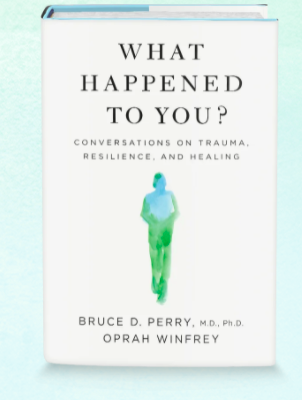
What do PACEs Connection and “What Happened to You?”, the new book by Oprah Winfrey and Bruce Perry, have in common?
Almost everything. That’s my conclusion after I finished listening to the book on Audible and re-reading parts of it on Kindle.
In the book, Winfrey, a world-class connector, journalist, entertainer, author, thought leader, actor, and philanthropist, teams up with her longtime friend Perry, a child psychiatrist, neuroscientist, and principal of the neurosequential model of brain-based therapy. They engage in a series of conversations about trauma, resilience, the power of relationships and community, healing, what they call post-traumatic wisdom, and what we need now.
With warmth and their easy familiarity with each other, they take us through an education about trauma that I believe the world is hungry for, explaining the science of adverse childhood experiences (ACEs) and why and how traumas have affected us. Perry does a masterful job of explaining that how we are loved as infants and children is likely to determine how we are able to love—or not love — as adults, with Winfrey giving pointed and moving examples. They truly ring almost all of the bells we at PACEs Connection hope to ring in our vision to create a world where all people thrive, and in our mission to prevent and heal trauma, and help individuals, families and communities create and build on the positive experiences that lead to strength and resilience.
Winfrey stuns us over and over with personal accounts of intensely painful personal traumas, and leaves us, throughout the book and especially at the powerful ending, with the hope that our traumas can help us become wise and powerful.
I honestly believed we would see a book or a series of O Network specials from Perry and Winfrey three years ago, not long after the “60 Minutes” interview when she and Perry talked about adverse childhood experiences and trauma-informed approaches. In previewing the interview, Winfrey told long-time friend and fellow journalist Gayle King of CBS that learning about ACEs Science and trauma-informed care “changes everything,” and that she’d “dance on tabletops” if that’s what it took to get people to pay attention to it.
Whatever moved them to share this life-changing work, this is my truth about it: “What Happened to You?” is a book that humanity desperately needs to help us remember, and understand, deep in our bones and DNA, that we are wired for connection and empathy, despite the economic and technological forces that can sometimes make them seem so far out of reach. It is a book I love and want to share widely, especially with parents, policymakers, educators, faith leaders, coaches, law enforcement, the medical community—actually, anyone and everyone—even young students, as I believe our knowing this information early on in life could help prevent many traumas to self and others.
Perhaps I am projecting as I listen to Perry talk about the unrealistic expectations with which society has burdened single mothers. Or I am connecting dots that aren’t there when I think that perhaps Perry and Winfrey could normalize the belief—even among the most hardened anti-welfare politicians—that reducing the overwhelm and stress of poverty, oppression, and multi-generational addiction and abuse is the right thing to do, because withholding support damages the brains of our nation’s children.
What do we, as a nation, love? What collectively inspires consensus?
I believe it is love for our children, and this book will help us remember that. It explains the importance of giving our children the best start possible—especially in the first two months of life—and could help spark healing relationships.
In “What Happened to You?” the two long-time friends advocate for nurturing brain development, and for the mental health, trauma education, and well being of their fellow Americans, the world. I believe that what they advocate for—community, acceptance, and a common understanding of the need to prevent trauma, promote regulation, relationships and reasoning—is vital to restoring and saving our collective humanity. They want us to ask, “What happened to you?” instead of “What’s wrong with you?” because asking the second question can traumatize already traumatized people with the implication that there is something bad or wrong with them, as opposed to there being something bad or wrong that happened to them.
That Perry and Winfrey are a powerful team is indisputable. When she focuses her attention on something, change happens. I believe her decades of work as a trusted Black journalist, daily coming into the homes of all kinds of people with intimate, often hard-to-hear stories of childhood abuse and uplifting stories of people who’ve overcome obstacles, helped set the stage for Barack Obama’s presidency, the Me Too Movement, and some Americans being more willing to have some difficult conversations.
But even as brilliant and straightforward as Perry and Winfrey are, it likely took a lot of work to make the book as approachable as it is. Its conversational style belies the volumes of information many readers are likely to absorb.
Help for even the most broken children
It is fascinating to hear Perry share, with the utmost respect, stories of people who’ve endured unimaginable trauma. He discusses his calm, easy way of relating with children by getting on the floor to color with them, by having very brief but frequent connections, by building trust, by observing and asking just the right slightly probing question at just the right moment. It’s clear that he knows exactly what amount and weight a relationship can take and when. With the help of Perry and his team, children who would seem too broken to mend are brought back to functioning by patiently following his brilliant neurosequential model of therapy.
Equally compelling, Winfrey reveals vulnerabilities that are searingly sad. Because I listened to the book, her velvety, deep voice was so warm and rich it cannot leave my mind. It haunts me as I recall revelations that were so painful, I needed to pull my car off the road or stop walking and sit down to catch my breath.
Among her most personal revelations were her grandmother’s intense beatings and her mother’s ongoing abandonment. She recalled standing with her mother at the age of six and feeling crushed by her mother’s agreement with her landlady to let “that dark-skinned-nappy-headed child” sleep outside on the porch on Winfrey’s first night in Milwaukee. That Winfrey knows the truth then—that she is absolutely alone—evokes feelings of empathy, anger, grief, fear.
Winfrey later reveals how she learned she’d never truly been “tucked into bed”. It was during the making of a movie when the director asked her to tuck a child into bed, and she realized she didn’t know that tucking in also means sharing affection instead of just arranging blankets, because no one ever tucked her in at night. I again had to stop the car to handle the shock and grief I felt for her.
In the final chapter of the book, Winfrey’s honesty, humility, and compassion are breathtaking and gave me chills, repeatedly, as she shared how she and her mother finally connected prior to her mother’s death. Have some tissues ready and know you are likely to be a stronger, better human for the privilege of hearing this account.
Hearing their easy conversation as Perry and Winfrey talk back and forth about the importance of community, relationships, regulation and education buffers the pain of the stories they share. They definitely found a rhythm in sharing concepts, examples, solutions.
Hearing Perry explain, through vivid and moving examples, how the body reacts to trauma, will hopefully open people up to be more compassionate about children who are dysregulated, people who are dysregulated, themselves when they are dysregulated.
Perry’s stories illustrate beautifully how we are wired for love—or not—and that how we are wired is projected onto the world. That he has figured out ways to help people heal, and that this takes years of healing work, is hopeful, daunting, and instructive. Don’t write off children who’ve suffered abuse.
A constant source of reassurance for me is that Oprah survives the abuse she shares, and that we know she’s oftentimes enjoying life after having done such a heroic and remarkable job of overcoming, thriving, and helping others.
First two months of life are critical
Which leads me to a couple of many profound moments in the book. First, about developmental trauma and the importance of the first two months of life, of mothers and babies developing a secure attachment.
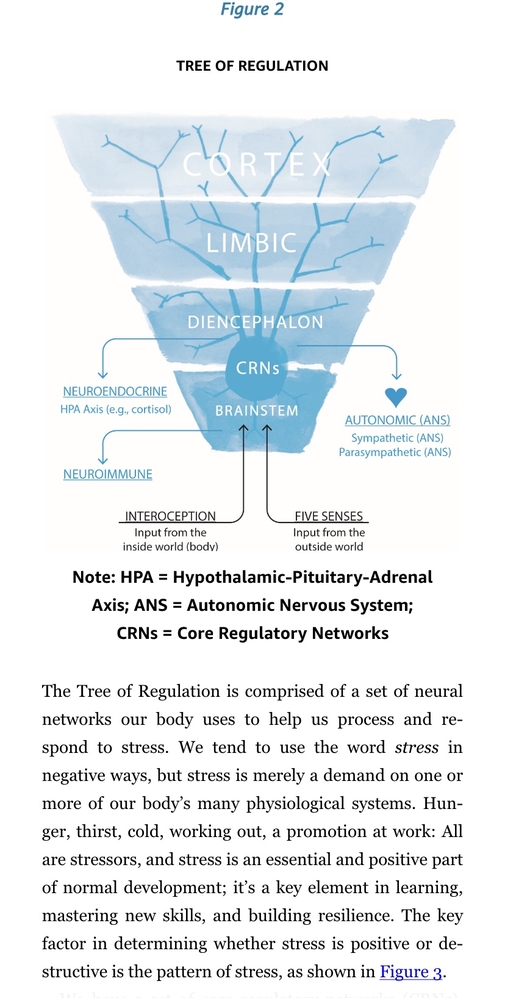
Perry writes, “The basic finding is that the experiences of the first two months of life have a disproportionately important impact on your long-term health and development. This has to do with the remarkably rapid growth of the brain early in life, and the organization of those all-important core regulatory networks.
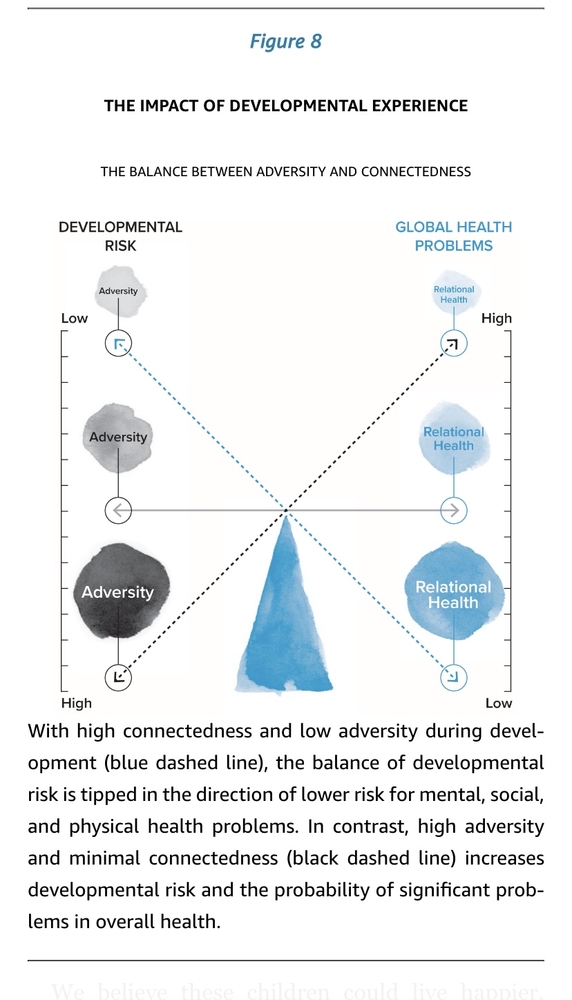
“If, in the first two months of life, a child experienced high adversity with minimal relational buffering but was then put into a healthier environment for the next twelve years, their outcomes were worse than the outcomes of children who had low adversity and healthy relational connection in the first two months but then spent the next twelve years with high adversity.
“Think of that: The child who has only two months of really bad experiences does worse than the child with almost twelve years of bad experiences, all because of the timing of the experiences.
“This sounds discouraging. But we believe that poor outcomes are not inevitable; in fact, we believe that this is a perfect example of why we need developmentally informed, trauma-aware systems.”
Perry invites readers to think back to conversations about how important attentive, responsive caregiving is in providing the organizing experiences for the infant’s stress-response systems.
“Remember that if the life experiences of the first two months include inconsistent or unpredictable stress, this pattern of activation creates a sensitized stress response. That leads to a cascade of problems—trauma related problems. And even when these children are no longer in high-risk settings, their problems have to be addressed by caregivers, pediatricians, mental health providers, and educators. But if these people misunderstand what’s going on, if these systems focus on “What is wrong with you?”—as unfortunately, they typically do—the children won’t get better. They will continue to struggle. Their emotional reactivity and behavior problems will be viewed without a developmental or trauma lens, which could lead to ineffective interventions.”
Racism and trauma
Another big aha is Perry’s take on racism and trauma. He says: “I believe that if you don’t recognize the built-in biases in yourself and the structural biases in your systems—biases regarding race, gender, sexual orientation—you can’t truly be trauma-informed. Marginalized peoples—excluded, minimized, shamed—are traumatized peoples, because as we’ve discussed, humans are fundamentally relational creatures. To be excluded or dehumanized in an organization, community, or society you are part of results in prolonged uncontrollable stress that is sensitizing. Marginalization is a fundamental trauma.
“This is why I believe that a truly trauma-informed system is an anti-racist system. The destructive effects of racial marginalizing are pervasive and severe. In North America, Australia, and New Zealand, for instance, Black, brown, and Indigenous children are more likely to be over diagnosed and overmedicated in mental health systems, removed from their homes to enter the child welfare system, suspended or expelled from school, and charged at school with truancy and ‘assault,’ with the result that they enter the juvenile-justice system in disproportionate ways.”
If people could learn this and take to heart that each “micro-aggression” is actually damaging the brains of their co-workers, children in classrooms, grocery stores, buses, street corners, shops, schools—anywhere and everywhere that children, people of color are treated as less-than in even the slightest way—perhaps we would stop this invisible, persistent torture that is costing all of society by preventing children from reaching their full potential.
All this is why I think Winfrey and Perry would so connect with the work done at PACEs Connection to build community, to educate about trauma, to track the work being done, to engage people in sharing the science of positive and childhood experiences, and to celebrate that work. I believe they would help share the new science of positive childhood experiences—how important it is for children to experience and enjoy community traditions, feel supported at home and at school, have supportive friends and have at least two non-parent adults who genuinely care about them. Winfrey is living proof of the impact teachers can have in lifting a child up and helping them believe in themselves when no one else does. She readily credits a specific grammar school teacher for seeing something special in her, for nurturing her love of learning, and inspiring confidence when no one else did.
I urge you to borrow or buy and read this book, and if you are a member of one of the 400+ geographic or interest-based communities on PACEs Connection, entreat your community members to have a book group about “What Happened to You?”, post about it, and email the link to me at csipp@pacesconnection.com.
Debt relief payments to farmers of color from the US Department of Agriculture were blocked nationwide Wednesday by a federal judge in Florida, the second halt on the payments as push back mounts against the assistance that some White farmers say is racially discriminatory.
Florida District Judge Marcia Morales Howard issued a preliminary injunction in a lawsuit brought by a White farmer alleging the debt relief program authorized under the $1.9 trillion stimulus bill that passed in Congress in response to the pandemic discriminates against him because of his race. It allocates $4 billion toward debt relief and direct payments of up to 120% of a “socially disadvantaged” farmer or rancher’s outstanding debt as of January 1, 2021.
A socially disadvantaged farmer or rancher is anyone in a group, who has been “subjected to racial or ethnic prejudice because of their identity as members of a group without regard to their individual qualities,” according to a House code. The USDA also said it would determine “on a case-by-case basis whether additional groups qualify under this definition in response to a written request with supporting explanation.”
Linda Johnson-Thomas’ grandfather worked at the Virginia Theological Seminary for more than a decade, first as a farm laborer before moving up to head janitor.
Her grandparents lived in a little white house on campus with their four children, including her mother. But until two years ago, she had no idea that her grandfather, John Samuel Thomas Jr., had been forced to work at the school in Alexandria, just outside of Washington, D.C.
“All I knew was that he grew up on the seminary,” said Johnson-Thomas, 65, who lives in Mitchellville, Maryland. “We knew there were slaves in Alexandria — but we didn’t know the specifics.”
By Anne Brice, Greater Good Magazine, June 18, 2021
Emiliana Simon-Thomas is the science director of the Greater Good Science Center, where she co-teaches The Science of Happiness, a free, eight-week online course that “explores the roots of a happy, meaningful life.” She earned her Ph.D. in psychology from UC Berkeley in 2004, studying how emotional and cognitive processes interact to shape behavior and brain activity.
In the interview below, Simon-Thomas talks about how humans are a collective species that thrives on collaboration. But power and privilege, she says, can corrupt anyone — even the best, most morally guided people. The good news? There’s an antidote.
A Fiat Vox podcast episode featuring this interview with Simon-Thomas was originally published on Berkeley News in 2017. This is a new version that has been rewritten and remixed.
Members of the four Cape Fear Area resiliency initiatives celebrate their joining the PACES Connection Cooperative of Communities and thank United Way – Cape Fear Area leadership for “leaning in” on the work being done to prevent and heal childhood trauma, and build on positive childhood experiences to create individual, family and community resilience.
The United Way-Cape Fear Area (UW-CFA) board of directors has voted to fund four North Carolina resiliency initiatives to join the PACEs Connection Cooperative of Communities.
“We wanted to find the best way to lean in on the work being done by the area’s resiliency task forces, and this was cut and dried as to the best way to show our support for the work,” said Tommy Taylor, executive director of the UW-CFA.
The four initiatives are Resilient Brunswick, Resilient Columbus, the New Hanover Resiliency Task Force and the Pender County Resiliency Task Force. Taylor, who has worked closely with each of the resiliency task forces, said supporting the organizations’ work to create more trauma-informed, healing centered communities aligns directly with the UW-CFA mission to leverage resources and improve the lives of local people.
“As a local, independently operated non-profit organization, we are uniquely positioned to neutrally assess the assets and needs of the people of the Cape Fear region, develop thoughtful solutions, and serve as a trusted steward of the resources and financial investments of the community,” he said.
“Each of these broad-based, cross-sector task forces is about preventing childhood trauma and its negative effects on long-term health. We want to heal trauma and create and build on positive childhood experiences in our communities so individuals, families, and communities themselves can grow in health, strength, and resilience. Their work to shine a light on ways racism and inequity hurt our communities, and to improve diversity, equity, inclusion, collaboration and opportunities, is work we believe in and are behind,” said Taylor.
Taylor was approached in early 2021 by the communities as they sought funding for a data tool that all four counties could use to measure their impact. Each community was also interested in access to the nationwide learning community hosted by PACEs Connection.
As members of the PACEs Connection Cooperative of communities, the four groups will join communities throughout the United States to help individuals and organizations learn best practices and develop policies to prevent re-traumatizing people already traumatized by the pandemic, systemic racism, poverty, environmental disasters and more. They will study what other communities are doing to eliminate systemic racism, poverty, and adverse childhood experiences, or ACEs. They may also share their best practices on those topics as well as, for example, how they are preparing to limit toxic stress in times of environmental traumas and natural disasters.
“We’ve watched the exemplary work being done in the Cape Fear area-—and all of North Carolina—with special interest, as these groups have worked collaboratively, and have terrific leadership throughout their communities,” said Jane Stevens, PACEs Connection founder and publisher.
“We believe counties coming into the Coop together as a region will have a synergistic effect on the work and outcomes in the area. The proof will be in the data collected in each county’s Community Resilience Tracker, one of the data tools used by Coop members. Through the Milestones questionnaires, each organization will answer questions about where they are on the path to becoming trauma-informed,” Stevens explained.
UW-CFA committed to fund the communities’ Coop memberships for a year at a time for two years, with plans to help secure corporate funders for year three. Each year’s Coop membership costs $5,000, a price members of the New Hanover Resiliency Task Force Data Committee leadership said is “a real value.”
“This work is big — transformational on the scale of the internet, electricity, the iPhone, social media and the concept of love,” Stevens said of the Coop. “We’re moving from a world that by and large uses blame, shame and punishment to change human behavior — which has resulted in our burden of seemingly intractable health, economic and social problems — to one that uses understanding, nurturing and healing, which has been shown to solve our most intractable problems.”
Strong local support
In North Carolina, officials including county supervisors and the Cape Fear area’s two district attorneys, Jon David, whose district comprises Brunswick, Bladen and Columbus counties, and and Ben David, whose district comprises New Hanover and Pender counties, have voiced strong support for the task forces and the groups deepening their work with the tools offered by the Coop.
(Note: This is the first of several stories about the four counties in North Carolina’s Cape Fear Region, their relationship with the United Way of the Cape Fear Area, how their work is improving lives of people in the region, and the impact of their joining the PACEs Connection Cooperative of Communities.)
By Cecily Sailer and Kelly West, Resolve Magazine, July 1, 2021
Karen Evans is executive director of the New Orleans Children and Youth Planning Board (CYPB), a coalition of adults and youth who work together to improve outcomes for children and youth in New Orleans Parish. Evans left a career in corporate training and development to work in child welfare, helping develop family centers in public schools and assisting nonprofits refining their programs to meet children and family’s needs. She spoke with Resolve Magazine about the work of the CYPB, efforts in the city to increase trauma-informed education and training, and a larger movement to care for and empower the city’s young people for the benefit of the entire community.
Can you tell us a little bit about the Children and Youth Planning Board and its work?
CYPB was born out of the need for the State of Louisiana to reform its juvenile justice system. We were set up to be the folks who take the symptoms [of trauma] and figure out how to patch over them.
Just before people started to take the pandemic seriously, Stacie Marshall slipped into the back of a conference room in Athens, Ga., and joined two dozen Black farmers in a marketing seminar called “Collards Aren’t the New Kale.”
She stood out, and not just because she was one of only two white people in the room. Ms. Marshall, 41, still had the long blond hair and good looks that won her the Miss Chattooga County title in 1998. The win came with scholarship money that got her to a tiny Baptist college and a life away from the small Appalachian valley where her family has farmed for more than 200 years.
Leading the seminar was Matthew Raiford, 53, a tall, magnetic Gullah Geechee chef and organic farmer who works the coastal Georgia land his forebears secured a decade after they were emancipated from slavery.
By Zara Abrams, American Psychological Association, July 1, 2021
James* was born to a mother who suffered from chronic depression and a substance use disorder. She never physically abused him, but she could not provide consistent care. As a result, he faced poverty, homelessness, and severe neglect throughout his childhood. At one point, James was temporarily removed from his mother’s care and placed in a foster home, where he witnessed family violence and experienced emotional abuse.
When James entered preschool, he faced significant mental and behavioral health problems, including aggressive behavior, difficulty regulating his emotions, and trouble forming healthy relationships with peers. Despite all these difficulties, he did not meet the diagnostic criteria for post-traumatic stress disorder (PTSD) when he was assessed by clinicians at ages 5, 9, and 16. (More than 70% of children treated by the National Child Traumatic Stress Network [NCTSN] do not meet the criteria [Purbeck, C. A., et al., NCTSN Core Data Set Report, 2021].) By the time James started high school, he had been diagnosed with oppositional defiant disorder (ODD), bipolar disorder, borderline personality disorder, and generalized anxiety disorder. He takes a cocktail of medications, but neither his diagnoses nor his treatments address the effects of his tumultuous early years.
 Carey Sipp 5/26/215:00 AM