Tag Archives: parenting

Early Relational Health Innovators Partner In Program Supported by PACEs Connection Cooperative of Communities Members in Twelve California Counties

Carey Sipp Carey Sipp 10/3/234:59 PM

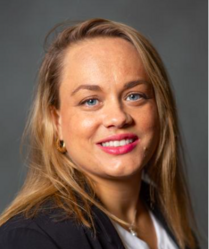
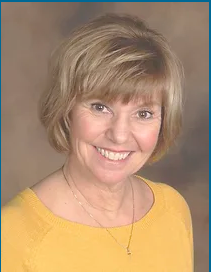
Christina Bethell, Ph.D, MBA, MPH, founder of the Child and Adolescent Health Measurement Initiative (CAHMI), principal author of the groundbreaking study on positive childhood experiences, and creator of the free Well Visit Planner, among other innovations.

Two internationally-respected leaders and innovators in complementary aspects of early relational health and childhood and maternal health equity recently launched a partnership they believe will benefit everyone from newborn babies and the mothers, fathers, grandparents, adoptive, kinship, foster parents and other primary caregivers who care for them, to pediatricians providing recommended well child visits, and communities focused on trauma prevention and resiliency building.
Screen Shot 2023-10-03 at 6.36.44 PM

Christina Bethell, PhD, MBA, MPH, and founder of the Child and Adolescent Health Measurement Initiative (CHAMI) and the EnACT! (Engagement in Action Framework) is cross-promoting her free Well Visit Planner, a web-based application to help families and physicians be better prepared for recommended well child visits, with Deborah McNelis, M. Ed, author and founder of “The First 60 Days” booklet and movement.

Bethell is also the principal author of a study on positive childhood experiences (PCEs) and their impact on preventing adult mental illness that led to the name change of ACEs Connection to PACEs Connection — for positive and adverse childhood experiences — in March of 2021.
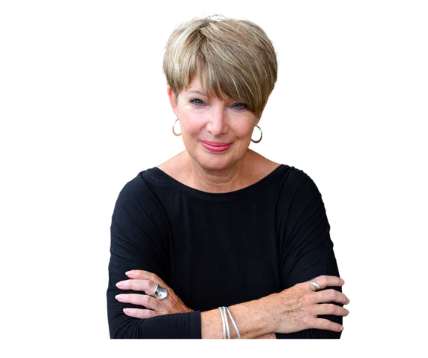
Screen Shot 2023-10-03 at 6.11.51 PM

McNelis is the founder of Brain Insights and creator of the Neuro-Nurturing® series of ringed booklets sharing age-appropriate activities paired with brain development insights for caregivers to use in everyday life with babies and children. These activities increase the likelihood of secure attachment and a foundation of early relational and physical health.

McNelis is also the author of a groundbreaking booklet, “The First 60 Days” (link is to a 12-page sample). The booklet and a movement she has started by the same name, are her heartfelt response to groundbreaking research by Dr. Bruce Duncan Perry and colleagues showing the negative developmental impact of toxic stress in the first two months of life, and the importance of practicing what she calls “Neuro-Nurturing®” during this influential time in  infant brain development.
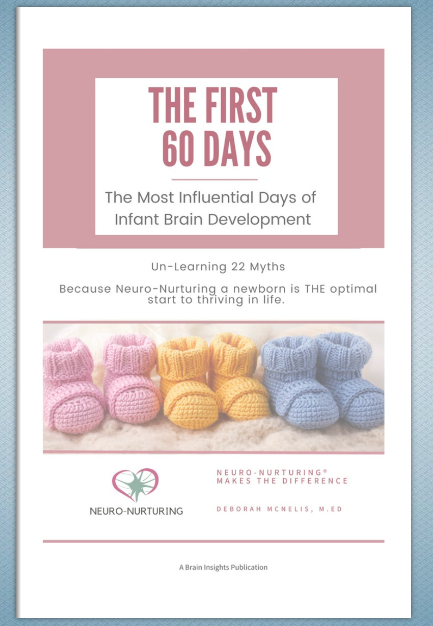

Screen Shot 2023-10-03 at 6.41.45 PM
The booklet dispels 22 potentially harmful myths to reassure and support new parents. A portion of each myth is told from the newborn’s point of view. Readers also learn what newborns need for establishing a secure attachment and overall optimal development from what McNelis refers to as,Neuro-Nurturing® Knowledge. “It is all based on brain science revealing what babies and their parents/caregivers really need,” McNelis said.

Details of ways the project’s partnership between Bethell and McNelis can benefit newborns, families, caregivers, communities, and PACEs Connection are spelled out in the attached one-sheet that is ready for download and distribution at resiliency initiative meetings across the country.
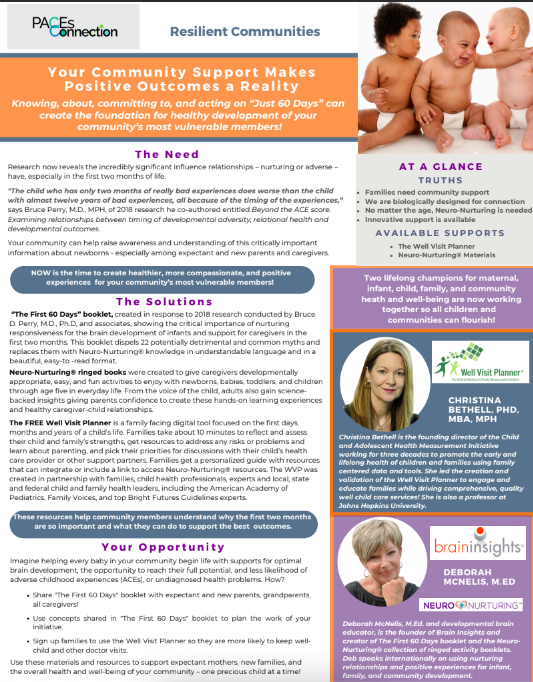
Screen Shot 2023-10-03 at 6.49.28 PM

The sheet shares information about Bethell and McNelis and their work thus far, and was created with support from Dana Brown, PACEs Connection PACEs science statewide facilitator, who is hoping that promoting the work directly to communities will create use of the Well Visit Planner and the Neuro-Nurturing® materials.
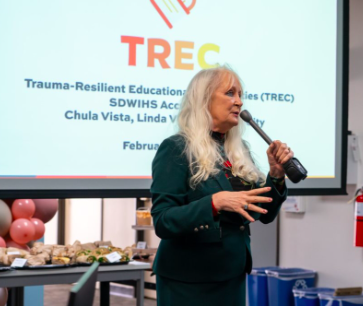
Screen Shot 2023-10-03 at 6.12.34 PM“Bethell and McNelis are dedicated to creating positive health equity, including child flourishing and family resilience. This is a terrific fit for any community,” said Brown.

“In California we have PACEs Connection cross-sector, resiliency focused communities in numerous counties. We’re starting out with the members of the PACEs Connection Cooperative of Communities. Our hope is that member organizations in 12 counties in the Cooperatives will share the information with the parents and caregivers for the families they serve, and that hospitals, clinics, and child-serving organizations – including home-visiting nurses – will help promote use of the Well Visit Planner and the Brain Insights materials,” said Brown.

Cross-sector community member organizations belonging to the Coops include schools, communities of faith, health clinics, child-and-family-serving organizations, businesses, hospitals, media representatives, law enforcement, county and city government offices, and more.

The twelve member counties are: Fresno, Los Angeles, Madera, Orange, Riverside, Sacramento, San Bernardino, Santa Barbara, San Diego, Sonoma, Tulare, and Yolo.

“We’ll know we’re succeeding if there is an increase in enrollments in the Well Visit Planner in these areas. This is important because by promoting well child visits, we increase the likelihood of families and physicians establishing a an ongoing relationship. Building on a trusted relationship, together they are more likely to be able to identify a developmental delay, postpartum depression, or  consequences of a challenge in the home that can be supported before a challenge becomes a crisis,” said Brown.

Screen Shot 2023-10-03 at 6.46.05 PM

“The hope is to continue to braid resources within communities — as they are interested — so there are lists of resources available for the pediatricians and other caregivers to share with families. We want to support parents, care providers, and communities in creating safe, stable, nurturing relationships and environments for every child, and believe these innovations, in combination with more to come, can help to do that,” said Brown.

“This project partnership and the fact that Deb is willing to discount her materials so they can be a potential fundraiser for communities, and is sharing with PACEs Connection profits from the sale of her materials — which are promoted on the Well Visit Planner site, which has the potential to reach millions of parents — bodes well for all involved,” said Brown.
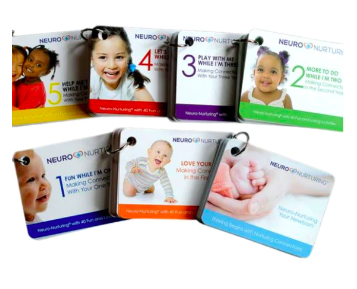
Screen Shot 2023-10-03 at 6.13.04 PM

According to McNelis, the ringed books are literally positive infant and childhood experiences parents and childcare providers alike can keep in their pockets and use throughout the day to engage little ones in activities that nurture optimal brain development. Across the series of books, there are scores of activities to stimulate fine and large motor development, language skills, thinking abilities, creativity, curiosity, self-awareness, and most importantly, connection with others.

State and child serving organizations have bought thousands of sets of the ringed books for parents in various programs.

“The First 60 Days” booklet and the ringed Neuro-Nurturing® series from newborn through age five, are available for bulk and individual purchase. Organizations seeking to customize the materials can opt to have their logo printed on the back cover, and can resell the materials at the retail price for fundraisers, in hospital and faith community gift shops, at health fairs and such, as is detailed in the attached one sheet,” said Brown.

“People wishing to access and use the Well Visit Planner with their infants and children need simply click on the link and enroll,” she added.

For more information about joining the PACEs Connection Cooperative of communities in California, reach out to Dana Brown at dbrown@pacesconnection.com. For Coop information the U.S. and territories, contact Mathew Portell, director of education and outreach, at mportell@pacesconnection.com.

Attachments

Hide

Images (8)

Screen Shot 2023-10-03 at 6.36.44 PM: Child and Adolescent Health Measurement Initiative logo
Screen Shot 2023-10-03 at 6.11.51 PM: Deborah McNelis, M.Ed.
Screen Shot 2023-10-03 at 6.41.45 PM: "The First 60 Days" booklet
Screen Shot 2023-10-03 at 6.12.34 PM: Dana Brown, PACEs Connection PACEs science statewide facilitator
Screen Shot 2023-10-03 at 6.13.04 PM: Neuro-Nurturing(R) Materials
Screen Shot 2023-10-03 at 6.49.28 PM: Download and share this one-sheet with your community
Screen Shot 2023-10-03 at 6.46.05 PM: Home page of the Well Visit Planner
Screen Shot 2023-10-03 at 6.30.31 PM: Christina Bethell, PhD. MBA, MPH

Files (1)

10.3.23 Community Support Flyer.pdf

Carey Smith Sipp

carey.pacescommunites@gmail.com

👍 2👏 1

Children Born in the Pandemic: Developmental and Family Challenges — How is Oklahoma Using ARPA Funds to Help?

Carey Sipp Carey Sipp 10/17/231:45 PM

While in many early reports it sounded as though babies born during the Pandemic would likely be affected by developmental delays, newer research shows mixed or fewer concerns.

There is no denying, though, that for families having new babies, or adopting, or providing foster care for babies during the Pandemic, there were additional stresses.

Join PACEs Connection for a free webinar October 19 from 12 p.m to 1:30 p.m. ET/ 9 a.m. – 10:30 PT, to explore how leaders in one state, and two PACES Connection senior staff members, have been addressing the challenges of welcoming a new baby – or multiple babies – during that time.

Please register here.

Trauma experts share their experiences of pregnancy and childbirth during the Pandemic

Screen Shot 2023-10-02 at 9.31.52 PMPACEs Connection CEO Ingrid Cockhren, leads, among multiple educational offerings, the PACEs Connection Historical Trauma in America series. She will share about historical trauma and the Racial Reckoning erupting during the Pandemic, as well as her personal experience of giving birth to twins – a girl and a boy – in November, 2021.

Screen Shot 2023-10-02 at 9.32.19 PMCockhren will be joined by Porter Jennings McGarity, PhD, LCSW, and PACEs Connection trauma-informed criminal Justice consultant and director of continuous quality improvement (CQI). Jennings-McGarity gave birth to two sons during the Pandemic.

How Oklahoma looks to support parents, caregivers, families, children

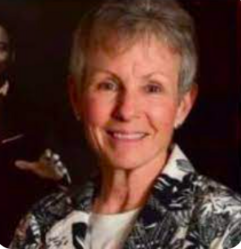
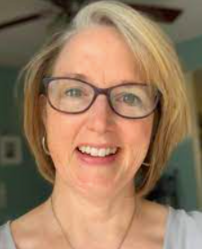
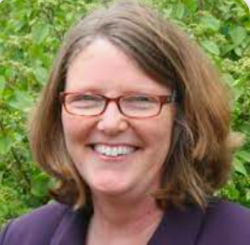
Screen Shot 2023-10-02 at 9.33.11 PMLinda Manaugh, chief program officer of the Potts Family Foundation, which is leading the work in Oklahoma, and Marlo Nash, a longtime consultant on early childhood and child welfare systems, will be joined by Laura Porter, international expert on the science of adverse childhood experiences,Screen Shot 2023-10-02 at 9.33.55 PM to discuss the work in Oklahoma.

Porter is the co-founder of ACE Interface, LLC. She, Manaugh and Nash have worked together to design, secure American Rescue Plan Act (ARPA) funding for, and implement the groundbreaking work in Oklahoma.

Screen Shot 2023-10-02 at 9.34.52 PMThe work involves research in 15 communities to learn more about how young children and families are doing, what their needs are, and how well their communities are supporting them.

How can PACEs Connection members help support families who welcomed babies during the Pandemic?

Screen Shot 2023-10-02 at 9.57.24 PMRounding out the webinar to share learning that can be used across all communities, Deborah McNelis, M.Ed, will share about ways to be supportive of babies born during the Pandemic, and their caregivers. McNelis is an early brain development specialists and the creator of resources to encourage positive childhood experiences in young families.

Register for the webinar here.

Full disclosure: McNelis donates to PACEs Connection five percent of net profits from related sales of her Neuro-Nurturing(R) materials from Brain Insights.

Attachments

Hide

Images (6)

Screen Shot 2023-10-02 at 9.31.52 PM: Ingrid Cockhren, PACEs Connection
Screen Shot 2023-10-02 at 9.32.19 PM: Porter Jennings-McGarity, PACEs Connection
Screen Shot 2023-10-02 at 9.33.11 PM: Linda Manaugh, Potts Family Foundation
Screen Shot 2023-10-02 at 9.33.55 PM: Marlo Nash
Screen Shot 2023-10-02 at 9.34.52 PM: Laura Porter, ACE Interface
Screen Shot 2023-10-02 at 9.57.24 PM: Deborah McNelis, Brain Insights

Carey Smith Sipp

carey.pacescommunites@gmail.com

“How to Handle with Care”: A fast read on a best practice your community can use to start helping kids ASAP!

Carey Sipp Carey Sipp 1/1/2412:23 PM

BOOK REVIEW


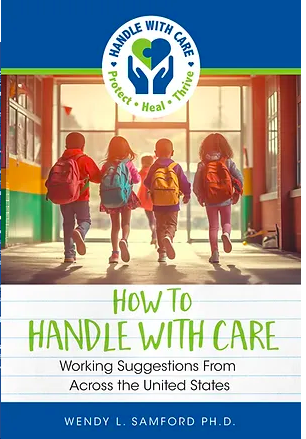
Screen Shot 2024-01-01 at 1.23.20 PM“How to Handle with Care”, a new book by author Wendy Samford, PhD, is  step-by-step instruction manual to create — in your community — a best practice that can help end the racially-motivated school-to-prison pipeline one child at a time, and quickly!

How?

By addressing the trauma of each child individually, with a cross-sector approach to supporting hurting children that has law enforcement working with educators all across the United States. (www.handlewithcarewv.org)

Simply put, if law enforcement comes into contact with a child in the course of duty, the name of the child and the words “Handle With Care” will be sent to the child’s school.

This simple message lets trauma-informed school personnel know that something happened to that child and to treat them with kindness.

Screen Shot 2024-01-01 at 1.29.44 PM“If additional services are needed for the child, the family is then informed and bridges are built from law enforcement to schools, and schools to community service agencies,” said Samford.

If administrators, faculty, and staff in the school know a child has had a hard night, they can help protect the child from added stresses the next day. For example, instead of having a child who was up in the middle of the night take a test, give an oral book report, or run the risk of acting out emotionally and getting in trouble for it, the child can be led to a quiet corner to rest.

Samford’s fast-read guide will show communities starved for ways to stop systemic trauma in education and juvenile law exactly what to do. Best of all, it’s in a book you can read in an afternoon, and follow step-by-step.

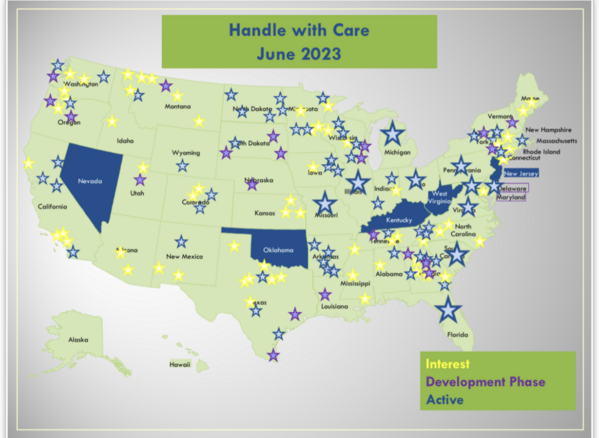
image 4Already across the country, there are at least five states that are actively using the program, and it is in development in many more states and counties, and there is active interest in the program in almost every state.
For the full report, find the book on AmazonBarnes & Noble, or any major book retailer.

For more information about the book, please contact Wendy Samford at www.wsamford.com

For more information about the Handle With Care program, contact Andrea Darr at  adarr@jbsinternational.com.

Attachments

Hide

Images (3)

Screen Shot 2024-01-01 at 1.23.20 PM: How To Handle With Care is available on Amazon and the Barnes & Noble websites
Screen Shot 2024-01-01 at 1.29.44 PM: Wendy Samford, PhD
image 4: Map showing states where Handle With Care is being implemented in the U.S.

Carey Smith Sipp

carey.pacescommunites@gmail.com

Learn how to bring “Neuro-Nurturing®” to your community! Free webinar with neurodevelopment and public health experts Friday, January 10 from 3-4 p.m. EST

Carey Sipp Carey Sipp 1/7/259:14 PM

REGISTER now and plan to join us Friday, January 10, 2025 from 2:00-3:00pm CTResearch on investing in early childhood development shows it to be the most influential, productive, and cost-effective strategy for establishing children on a path to strong self-regulation, well-developed executive function, and lasting resilience that will improve, in countless ways, their lives across the lifespan.”The first three years of development, and especially the first two or three months, are incredibly important for secure attachment and neurodevelopment,” said Bill Barberg, co-creator and lead organizer of a series of webinars on creating a Neuro-Nurturing® Ecosystem in your community.Screen Shot 2025-01-07 at 10.51.53 PMBarberg’s Population Health Learning Collaborative, with initial partners Deborah McNelis of Brain Insights and Carey Sipp of PACEs Connection, is teaming up with a growing coalition to simplify, accelerate, and support the journey of creatingNeuro-Nurturing® Ecosystems to help communities establish lasting connection and ongoing supports for pregnant women and new mothers, caregivers, and families with newborns.The growing number of organizations supporting the webinar series currently includes:NPSC – The National Prevention Science Coalition to Improve LivesPACEs ConnectionCTIPP – The Campaign on Trauma-Informed Policy and PracticeCAHMI – The Child and Adolescent Health Measurement InitiativeDecade of the Child – a national research and policy agenda focused on whole child health and wellbeing.REGISTER now and plan to join us Friday, January 10, 2025 from 2:00-3:00pm CT*This briefing will be recorded and sent to all registrants.Register now to learn ways to co-create and implement powerful upstream strategies to improve the education, health, wealth, and health equity of your community.     “We’re presenting a long-term strategy that can be done with many small steps by different organizations, with many of wins along the way,” said Barberg.”Our goal in this series of webinars is to share plans and resources so communities can build on the work of neurodevelopment experts, advocates, and leaders in practices and policies with regard to infants, child welfare, and families. We will help community leaders to take advantage of resources that you can add to this this high-impact approach to improve equity and positive early development outcomes,” Barberg explained.To support this effort to raise awareness of the importance of early relational health, and to learn ways to support early relational and optimal neurodevelopment in your community, please register now, and then please share information about the webinar with your colleagues.Plan to spend an hour on January 10th (or whenever you have time to watch the recording) to learn more about creating a Neuro-Nurturing® Ecosystem in your community.Building community and corporate support can improve the lives of new parents and caregivers, help their infants — your newest citizens — benefit from optimal early brain development, which pays health, mental and emotional health, and other dividends across the lifespan.Barberg says he expects most communities learning about the ecosystem will focus on building awareness and buy-in for the strategy during 2025 so they can be positioned for accelerating and expanding their positive impact with actual programs and events in 2026 and beyond.”The most critically important action we can take for pregnant and new parents and their precious newborns is to learn and share this information in hopes of reducing stress in the lives of new parents, increasing their ability to nurture and create the most brain-healthy start possible for their new baby. Starting this program, creating ways to track impact and scale it, will have terrific lasting impact for infants, parents, educators, and all who’re dedicated to supporting the best outcomes possible,” said Barberg.Here are three social media posts to help you spread the word:LinkedIn PostFacebook PostInstagram Post
This webinar is the first in a series of several webinars that will feature respected experts in early childhood development. Presenters (and collaborators) for the series will include:Christina Bethell, Ph.D., Professor at the Johns Hopkins Bloomberg School of Public Health and Founding Director of the Child and Adolescent Health Measurement Initiative.Diana (“Denni”) FishbeinPh.D., Senior Scientist, Franklin Porter Graham Child Development Institute at UNC-Chapel Hill, President & Co-Director of the National Prevention Science Coalition to Improve Lives.George Halvorson, Chair and CEO of the Institute for InterGroup Understanding; former CEO of six different health care delivery and financing organizations in the U.S. including Kaiser Permenente, where he served as chairman and CEO for more than 10 years. Author and child advocate.Deborah McNelis, M.Ed, early brain development expert, creator of the Neuro-Nurturing® model, author of “The First 60 Days” and the Neuro-Nurturing® series of developmentally appropriate ringed activity books loved and in use worldwide.And many more.Register for this first webinar and you’ll be invited to the subsequent ones in the series.

Neuro-Nuturing: Advancing Powerful Strategies for Lifelong Health and Black Birthing and Decade of the Child Initiatives webinar Thursday, Noon ET.

Carey Sipp Carey Sipp 5/20/251:07 AM

Can a 10-minute-old-baby actually learn something?

Can such a new and tiny being figure out “I’m like you and you’re like me?”

Beatrice Beebe, PhD, Columbia University and New York State Psychological Institute psychologist, shares research showing that babies can imitate expressions at 10-minutes-old!

“Early infancy is a critical developmental period,” says Dr. Beebe.

We’ll be sharing more of her video and wisdom in our Neuro-Nuturing: Advancing Powerful Strategies for Lifelong Health and Black Birthing and Decade of the Child Initiatives webinar this Thursday!

Join us May 22 from Noon – 12:30 p.m. ET for this free CHC: Creating Healthier Communities CHC University webinar featuring internationally-recognized subject-matter experts in early relational health.

Please click here to secure your registration.


🌎 How important is this information to the health of your organization? Your community? Our nation? The world?

🧠 How can learning more about how a baby’s brain develops help you and your team create healthier communities?

💕 Join us and learn how and why early relational health is the foundation of emotional, mental, and physical health and wellbeing — for improved lifelong health and wellbeing — and how an infant’s experiences literally shape the architecture of his or her brain for future trust, curiosity, ability to connect and relate, or, conversely, be more likely to experience fear, mistrust, and isolation.

We’ll also explore strategies for your organization, faith community, health care system, child- and family-serving organization to create and leverage “Neuro-Nurturing Ecosystems”, and engage more fathers in the birthing journey and early relational health.

Register now for this free webinar brought to you by CHC: Creating Healthier Communities in cooperation with Population Health Learning Collaborative and PACEs Connection.

“This webinar emphasizes proactive Neuro-Nurturing as a vital intervention for infant neurodevelopment and early relational health,” said Deborah McNelisM.Ed., author of “The First 60 Days: The Most Influential Days of Infant Brain Development”, who will highlight how early experiences shape lifelong health. Curated videos by Beatrice Beebe, PhD, Psychologist at Columbia University Department of Psychiatry and New York State Psychiatric Institute, will be shared  — including one of a 10-minute old infant already mimicking his father —  demonstrating the the importance of parent-infant attunement.

Screenshot 2025-05-13 at 4.10.31%u202FPM

In a proven example of scaling successful strategies for maternal and child health, Demetrius GeigerMPH, program manager for CHC: Creating Healthier Communities (CHC), will share about the impact of CHC’s Black Birthing Initiative.

Christina BethellPh.D., MBA, MPH, the Director of the Child & Adolescent Health Measurement Initiative (CAHMI) and public health professor at Johns Hopkins University will share frameworks and tools such as the Well Visit Planner, that show how to integrate Neuro-Nurturing and Whole Child Health Policy into healthcare systems across a state.

Screenshot 2025-05-13 at 4.26.30 PMDiana Fishbein, PhD,Nova Scholar, Nova Institute for Health; Senior Scientist, Frank Porter Graham Child Development Institute, University of North Carolina-Chapel Hill, and founder, president, and co-director of the National Prevention Science Coalition to Improve Lives, (NPSC), will share updates on THE DECADE OF THE CHILD initiative, a call for the “transformational change our children need that can be achieved by comprehensively supporting our families and communities through collaborations across all sectors of society.”

Screenshot 2025-05-13 at 4.11.08 PM

Bill Barberg, population health and system change expert, will share valuable approaches to implementing pragmatic, collaborative strategies for achieving positive impact at a community scale, highlighting strategies for engaging fathers in Neuro-Nurturing. Barberg is also founder of the Population Health Learning Collaborative.

Screenshot 2025-05-13 at 4.28.24 PMJoshua Liston Zawadi,founder of Dad Doula University, will share his approach for engaging fathers in the birthing journey and in supporting early childhood development.

The webinar will be moderated by Carey Sipp, webinar convener, director of nonprofit partnerships for CHC: Creating Healthier Communities, and volunteer director of strategic partnerships for PACEs Connection.

“This webinar promises to engage participants with expert insights and actionable strategies. We are thrilled to have assembled these nationally recognized leaders dedicated to early relational health, systems change, and child and parent advocacy for this event,” said Sipp.

Please click here to secure your registration.

Attachments

Hide

Videos (1)

copy_721DA2A1-6481-4604-8DFA-26520289991F

Founder of Brain Insights and Neuro-Nurturing Creator Author Deborah McNelis, 70, Dies After Battle with Cancer

Carey Sipp Carey Sipp 10/15/256:15 PM

(Author’s note – Deborah McNelis and I were dear friends, partners in advancing the concept of Neuro-Nurturing, and webinar buddies, having created and or participated in about 40 webinars since we met in April, 2023. We only knew each other for two-and-a-half years, but spent many hours together on the phone, Zoom, and on webinars as hosts, panelists, speakers, raising awareness of the lifelong protective value of advancing healthy early brain development. I loved and respected Deb deeply; she is sorely missed. All  involved with PACES Connection appreciated her generosity, enthusiasm for the mission, and support. We were on a parallel track to create a movement ensuring that all children – and inner children –  thrive by lifting up pregnant and newly-delivered mothers, new fathers, foster parents, caregivers, and community members by helping them understand their vital role, as emotionally regulated adults, in Neuro Nurturing healthy brain development. While I am not yet sure how her work will be continued, I know it will continue. As long as I am involved in PACEs Connection, the concept of Neuro Nurturing will be advanced to help prevent child abuse and neglect; to help promote positive maternal, infant, child, and community experiences. Greater likelihood of health and wellbeing across the lifespan begins with the foundational and consistent safety, stability, and nurture so vitally important to healthy infant and child brain development.)

IMG_7713Friend and supporter of PACEs Connection, and author of The First 60 Days (which highlights the importance of “Neuro-Nurturing” infants in the first two months of life), Deborah McNelis passed away last Friday after a sudden and brief battle with cancer. She had recently turned 70.

After discovering PACEs Connection via Twitter and LinkedIn, Deborah’s “The First 60 Days” booklet, now a book, was reviewed on PACEs Connection. She began posting on the social networking site, sharing opportunities for fellow members to learn more about “what babies need most” (for adults to understand the importance of early brain development) in her monthly e-newsletter, and participated in multiple webinars in support of PACEs Connection programs.

Her 2023 PACEs Connection conference presentation, “What if Babies Ran the Workplace,” explored how the world might change if babies were the CEOs: people wouldn’t come to work when sick or when they needed to care for a loved one, and they’d demand universal health care, paid family leave, and access to high quality childcare. In that talk, she made a compelling case for affordable, brain-boosting childcare, urging that childcare workers be treated as professionals they are.

A central tool in her work was her signature series of ringed books (“packets”), each containing 40 age-appropriate, developmentally matched activities paired with the neuroscience rationale behind them. Canadian publisher Redleaf Press contracted her to adapt materials to support infant’s and children’s transitions—from one activity to the next—with brain-friendly strategies.

Deb often said: “Most people don’t realize the signals babies give about overstimulation or boredom. It is important to honor their rhythms and make transitions—feeding to napping, play to rest—smooth and respectful of their internal states.”

Deborah’s career as an early childhood brain development expert spanned nearly 50 years. She often recalled that at age 19 she had a moment of clarity that started her on this path.

“I was watching a concert with little children. They were obviously adored and nurtured and enjoyed making music together. And I realized in that moment I wanted all children to experience being loved, expressive, and appreciated for their own uniqueness, and it dawned on me that not all the adults in children’s lives know what children really need most from them – that unconditional love and acceptance,” Deb said.

Her journey began as a kindergarten teacher. When parents asked how they might support their infants and toddlers at home, she first jotted ideas on 3×5 cards. Over time, she refined them into the handy pocket-sized ringed booklets—each offering activities and the “why behind the action”—to help parents and caregivers engage knowledgeably and confidently.

Screenshot 2025-10-15 at 7.59.32 PM

“For example, sorting sticks and rocks by size, shape, and color may not seem important. But sorting helps children develop the skills to be able to write, or develop other hand-to-eye coordination based skills. Every activity has a purpose,” Deb said.

Late in 2023,  Deb was contracted through PACEs Connection and Healthy Blue (North Carolina) to deliver a project supporting foster parents of young children. Over the course of 27 webinars (in collaboration with Carey Sipp, now volunteer co-director of PACEs Connection), she introduced participants to Neuro-Nurturing principles. The feedback included 100% of participants reporting at least some degree of increased confidence in parenting, and 97.4% saying they would recommend the webinar to other parents.

Screenshot 2025-10-15 at 7.12.17%u202FPM
Screenshot 2025-10-15 at 7.11.09 PM

Deborah McNelis was born in Minnesota on September 1, 1955.

A beloved mother, educator, author, and visionary founder of Brain Insights, Deb coined and popularized the term Neuro Nurturing—a philosophy of promoting early relational health and healthy brain development grounded equally in science and compassion.

As her daughter, Tracy Thompson, who collaborated with Deb from the very beginning, helping with research, writing, creating content and supporting her goals behind the scenes, said, “Through her writing, speaking, and workshops, she translated the miracle of early brain development into insights and doable practices. Her mission was always to make nurturing relationships and responsive care central to how we support every child and caregiver.”

Deb founded Brain Insights, LLC, in 2008. She launched the First 60 Days Movement about three years ago to emphasize the profound impact of the first two months of brain development after a study on the timing of adverse childhood experiences (ACEs) was published in 2019 and then written about by Bruce Perry, MD, in his 2021 book co-authored by Oprah Winfrey, “What Happened to You? Conversations on Trauma, Resilience, and Healing”.

Her Neuro Nurturing Interaction Packets, along with books and toolkits, reached families, educators, and communities across the U.S. and around the globe. According to braininsightsonline.com research, a total of more than 250,000 of these  ringed booklets and packets – in English and Spanish – are in use worldwide.

Screenshot 2025-10-15 at 7.52.13 PM

Her first fiction book, The Reminder, released just months ago, “speaks to the core of who we are—interweaving themes of essence, memory, and love. Her creative voice enriched many lives,” Tracy wrote in Deborah’s obituary.

Beyond her professional achievements, Deborah was cherished for her warmth, steady faith in human potential, and her rare ability to make complex science accessible and full of hope. She served on the boards of organizations including The Powerful ProjectThe Global Presence, and the Wellness for Children Initiative.

Deborah is survived by her daughters, Tracy (Schmid) Thompson and her husband, Jason, and Trisha (Schmid) Helchinger and her husband, Franz; her cherished grandchildren Benjamin, Zachary, Levi, Ava, and Max; and a wide circle of family and friends—siblings, uncles, cousins, nieces, nephews, and their families.

The family requests that those who wish to honor Deborah do so by making a gift in her name to early childhood development programs, PACEs Connection, or The Powerful Project.

As Tracy said,

“Her memory will live on in the countless children whose early lives were shaped by her vision—and in the many adults she inspired to nurture with purpose and love. Her legacy is a generation of children who know they are worthy of love, from the very beginning.”

What others who worked with her on the Neuro Nurturing webinars are saying about the passing of Deborah McNelis:

I join you in the shock, grief and sadness at Deb’s passing. I met Deb as a co-traveler on the long journey to anchor our systems in the truth that early life nurturance is how we can thrive even as life brings natural struggles.May we stay the course in her honor and light and continue to build an inescapable movement for transformation.

With gratitude for Deb and deep awareness of the mystery and profundity of this life we seek to nourish and protect!

– Christina Bethell, PhD, founder of the Child and Adolescent Health Measurement Initiative, professor, Johns Hopkins Bloomberg School of Public Health

When we prioritize early relational health and Neuro Nurturing, we equip parents and support persons to become the child’s first and strongest protective factor. A regulated, emotionally healthy caregiver fosters deeper bonds and richer interactions, laying the groundwork for how a child learns, loves, and thrives for a lifetime. Deb was a sweet and generous soul, and I was looking forward to connecting with her in person to advance the work of early relational health and Neuro Nurturing. Although our hearts are heavy, we will ensure her legacy lives on.

– Demetrius Geiger, MPH – Manager Social Impact programs, CHC: Creating Healthier Communities

Deborah McNelis was an amazing force of goodness and positivity. We will try to carry on with her work, with humility and homage in Deb’s honor.

– “Denni” Diana Fishbein, PhD, founder, director, and president of the National Prevention Science Coalition to Improve Lives, Senior Scientist in the FPG Child Development Institute at University of North Carolina

Links to selected stories by or about

Deborah McNelis

Attachments

Hide

Images (8)

Screenshot 2025-10-15 at 8.06.29 PM: Deborah McNelis with early relational health advocate George Halvorson in early, 2024
Screenshot 2025-10-15 at 7.12.17 PM
Screenshot 2025-10-15 at 7.11.09 PM
Screenshot 2025-10-15 at 7.10.50 PM
Screenshot 2025-10-15 at 7.52.13 PM
Screenshot 2025-10-15 at 7.52.29 PM
Screenshot 2025-10-15 at 7.59.32 PM
IMG_7713

Carey Smith Sipp

carey.pacescommunites@gmail.com

❤️ 2

Tags: Deb McNelisDemetrius Geiger, MPHGeorge HalvorsonCHC Creating Healthier CommunitiesChristina Bethell, PhDDeborah McNelisNeuro NurturingEarly Relational HealthBrain InsightsBrain DevelopmentDiana Fishbein, PhD

Views: 1,210

This Memorial Day: Imagine if Each World Leader Had to Hold a Sleeping Baby for 20 Minutes a Day?

(Originally posted on PACEs Connection May 25, 2026)

At a certain time each day, all world leaders are introduced to one of their newest constituents.

A young mother or perhaps a grandmother or father hands a sleeping newborn to each leader, who then sits quietly, holding the baby and feeling the weight of this new life in his or her arms. Perhaps there are no words spoken other than the name of the child, and where, in their mutual home nation, the baby is from.

Screenshot 2026-05-25 at 2.18.38 PM

There is only one photographer present. It is a quiet, solemn, awe-filled time — for about 20 minutes — for each of these leaders each day.

At the end of the 20 minutes of each leader holding the baby, studying his or her new face, feeling the warm breath of this new life, watching the tiny chest go up and down as they share space, time, and air — what a time this would be — each leader would carefully place their respective baby back into the waiting arms of his or her eager caregiver.

This could be a global oxytocin reset.

(Oxytocin is called the love hormone. People create it when they feel love. It is in all mammals and strengthens connection and bonding.)

Screenshot 2026-05-30 at 12.35.05 PM

This daily ritual could be global moments of regulation and consistent care — for the infants and the leaders, and ultimately, I believe, the planet, our fragile island home.

Screenshot 2026-05-25 at 2.19.31 PM

It would be care for each leader to have his or her central nervous system reset by stopping in the midst of whatever global crisis to breathe with, rock, or sway, and hold a part of the future for which he or she is responsible —in their hands.

I’ve dreamed of this idea for years. Just haven’t ever put it out here for people to react or respond to.

This Memorial Day, with so much global crisis and angst over wars, fuel, climate change, inequity, famine, disease, and on and on, it seemed like the right time to share this idea in print.

Perhaps it is because my family is expecting a little one.

This is the first grandchild for me. And I am praying for a safe and joyous arrival for his precious mother and father, and him. And am thus reflective and wishing the world were more welcoming.

Screenshot 2026-05-25 at 2.21.09 PM

And I am thinking of whether or not, if I were young again and of childbearing age, whether I would trust today’s global leaders to hold my newborn for 20 minutes? Much less hold their fate for a lifetime.

Perhaps if all leaders agreed to do this, and I were randomly chosen to share my child for 20 minutes on Day 321 of the “Global Reset Movement”, I could do it.

And I do believe posting photos of world leaders each day, faithfully honoring this global commitment, could someday replace the photos of war, of flag-draped coffins being met at airports, of another row of graves.

Imagine!

Screenshot 2026-05-25 at 2.20.34 PM