Author, activist, subject matter expert in science of positive and adverse childhood experiences (PACEs). Former PACEs Connection staffer. Laid off in December, 2023, but started working months earlier than that to find a way to save the social network, which was sunset by its first fiscal sponsor, TSNE, on April 26, 2024. Working as a volunteer with fellow staffer Dana Brown, we rehomed PACEs to our first fiscal sponsor, the National Prevention Science Coalition to Improve Lives, and relaunched in October, 2024. PACEs was rehomed -- with the full blessing of NPSC -- to the STAR Network Foundation, as it is believed SNF will provide technical, networking, and marketing support needed to revitalize the network. In the meantime, to preserve many of my own original blog posts as well as a smattering of the scores of articles I reposted (with proper citation) on PACEs through the years, I dredged up this incredibly neglected site to serve as a repository of a tiny percentage of the massive amounts of information shared on PACEs since its founding in January 12, 2012. Again, most of the stories are ones I am saving because I wrote or posted them, or are some of Jane Stevens' most-seen blogs, the ones that went viral. I know there are many I missed. My hope is that the revitalized PACEs Connection will have a page of all of Jane's posts through the years. Jane died November 30, 2025. She knew efforts were underway to stabilize and revitalize the network.
Further information about me? I am the mother of two adult children who have, thank God, broken generational cycles of addiction, neglect, and abuse.
View all posts by careysipp →
By Betsy Mason, Public Broadcasting Service, June 10, 2020
A quarter-century ago, social psychologist Anthony Greenwald of the University of Washington developed a test that exposed an uncomfortable aspect of the human mind: People have deep-seated biases of which they are completely unaware. And these hidden attitudes — known as implicit bias — influence the way we act toward each other, often with unintended discriminatory consequences.
Since then, Greenwald and his main collaborators, Mahzarin Banaji and Brian Nosek, have used the implicit association test to measure how fast and accurately people associate different social groups with qualities like good and bad. They have developed versions of the test to measure things such as unconscious attitudes about race, gender stereotypes and bias against older people. Those tests have revealed just how pervasive implicit bias is. (Project Implicit offers public versions of the tests on its website here.)
The researchers’ work has also shown how much implicit bias can shape social behavior and decision-making. Even people with the best intentions are influenced by these hidden attitudes, behaving in ways that can create disparities in hiring practices, student evaluations, law enforcement, criminal proceedings — pretty much anywhere people are making decisions that affect others. Such disparities can result from bias against certain groups, or favoritism toward other ones. Today, implicit bias is widely understood to be a cause of unintended discrimination that leads to racial, ethnic, socioeconomic and other inequalities.
Please join us for the community discussion of A Better Normal, our ongoing series in which we envision a future in which every community, organization and system has integrated practices based on ACEs science to create a better normal. The one we had wasn’t working very well.
“Grief/Family Trauma in the Time of COVID-19”
With Tian Dayton, PhD, psychologist, author. Moderated by ACEs Connection staff members Carey Sipp and Alison Cebulla
As Tian Dayton, PhD, writes, “The uncertainty and unpredictability that are part and parcel of COVID-19 over time can produce many of the same trauma symptoms as we see when treating PTSD. But in this case, we’re not talking about a one-time event with a clear beginning, middle and end. Rather the length and duration here are unclear and the finish line is constantly in motion. We hear conflicting information and don’t know who to trust. We worry about what our future and the future of those we love might hold. This kind of daily atmosphere can lead to a kind of ‘anticipatory grief’.”
Dayton shares this quote from Stacey Colino of US News and World Report: ”Pre-trauma stress is a phenomenon you won’t find in the Diagnostic and Statistical Manual of Mental Disorders (DSM-V). The symptoms are similar to post-traumatic stress disorder (including grief, sadness, worry, disturbing intrusive thoughts, sleep troubles and nightmares, and avoiding situations or activities that are reminiscent of the stressful event) but in this case, they stem from anticipatory anxiety about an event that may occur in the future.”
“The symptoms we’re describing here,” notes Dayton, “like anxiety, shock, disturbing thoughts and mood shifts can, if they remain unacknowledged or unattended to, morph into PTSD. Taking the time to work through the feelings that this period is bringing forth in us as they happen, can go a long way to acting as a preventative to later problems and life complications.”
During the discussion Dayton will strive to:
Cut through the emotional and psychological “red tape” of pre-trauma symptoms that might be keeping us immobilized.
Discuss anxiety or depression that may be leading us to act out in abusive or neglectful ways.
Look at symptoms that are making us want to eat, drink, or drug our way back to calm rather than adopt the healthy habits that will not only bring calm, but give us the life skills to carry forward that will enable us to change and grow.
Discuss the need to feel our feelings as we have them, so we can heal them, in the here and now, as having mini healings now may help us avoid the need for maxi healings later.
Discuss how pain from the past can get mixed up with today, leading us to be confused and overwhelmed.
Discuss how the present, the very real stress of today can take its toll on our peace of mind, as uncertainty, and conflicting reports as to what to do, can evoke our fight flight, freeze response.
Discuss the very significant anxiety about what the future will hold; what’s next? When will this be over and what will “over” look like? My world is changing; what does that mean for me?
Dayton will also help participants to look at the many faces of grief:
Anticipatory grief
Age correspondence reaction
Parental Inner Child Grief
Complicated grief/mourning
Inhibited grief
Cumulative grief
Collective grief
Normal grief
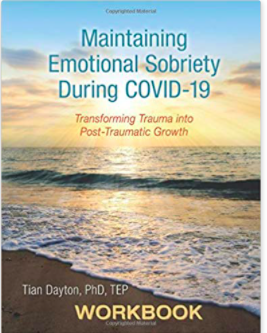
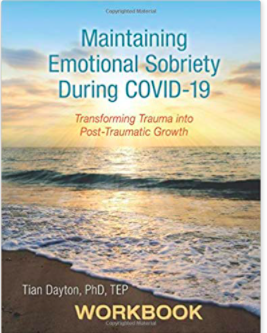
Dayton will also discuss post traumatic growth and share from her latest book, Maintaining Emotional Sobriety During COVID-19 and how it can help us see, as she says, “What’s getting triggered inside of you, as a window into your inner world, a way to get to know yourself, your coping styles and your manner of being in intimate relationships. You can learn. You can grow from adversity by meeting it with openness, humility and grace.”
Dayton is a Senior Fellow at The Meadows. She is the author of fifteen books including The Soulful Journey of Recovery, The ACoA Trauma Syndrome, Emotional Sobriety, Trauma and Addiction, Forgiving and Moving On andThe Living Stage. She has developed an approach for incorporating experiential work into treatment programs and group work, Relationship Trauma Repair RTR.
Dayton has a master’s degree in educational psychology and a PhD in clinical psychology and is a board certified trainer in psychodrama, sociometry and group psychotherapy. She is a certified Montessori teacher, and is the director of The New York Psychodrama Training Institute. A nationally renowned speaker, expert, and consultant in psychodrama, trauma and addiction, adult children of alcoholics (ACoAs) and self-help related issues, Dayton was on the faculty at NYU for eight years teaching psychodrama.
She is also a fellow of the American Society of Psychodrama, Sociometry and Group Psychotherapy ASGPP, and is a recipient of the Lifetime Achievement Award, Scholar’s Award, President’s Award and Gratitude Award. Dayton is the former editor-in-chief of the Journal of Psychodrama, Sociometry and Group Psychotherapy and a member of the professional standards committee. She is also the winner of The Mona Mansell Award and The Ackerman/Black Award, and has been a guest expert on NBC, CNN, MSNBC, Montel, Ricki Lake, John Walsh, Geraldo. Dayton blogs for Thrive Global and The Huffington Post.
By Hilary Brueck and Canela Lopez Business Insider June 19, 2020
Across the US, people of color are more likely to contract a dangerous case of the coronavirus, ending up in critical care, or dying from COVID-19.
Much has been made of the pre-existing conditions that undergird this racial disparity, such as higher rates of diabetes, asthma, lung disease, hypertension, and obesity in communities of color.
But the truth is that people of color are not naturally more likely to develop these conditions, or the coronavirus, but they are far more often subjected to health-affecting hardships than whites.
A government report in the UK found “historic racism and poorer experiences of healthcare or at work” put people of color at a higher risk of dying from the coronavirus. Experts told Business Insider the same is true in the US.
The coronavirus is killing a disproportionate share of Black and brown Americans, especially young ones.
As of June 6, the US Centers for Disease Control and Prevention has estimated that Black Americans aged 35-44 years old are 10 times more likely to die from COVID-19 (the illness caused by the coronavirus) than their white counterparts. Latinx people in the same age bracket are eight times more likely to die than whites.
Resilient Georgia recently presented a roundtable discussion, featuring a distinguished panel of professionals, on the trauma associated with racism and racial discrimination, as part of the Mental Fitness for Resilience Campaign.
The distinguished panel for this Georgia Public Broadcasting production included Dr. Patrice Harris, MD, MA, psychiatrist and the first African-American woman to be elected president of the American Medical Association; Dr. Terri McFadden, a General Pediatrician and a Professor in the Department of Pediatrics of the Emory University School of Medicine; Dr. Gene Brody, Distinguished Research Professor of Human Development and Family Science in the College of Family and Consumer Sciences at the University of Georgia, and Dr. Stan Sonu, physician in internal medicine and pediatrics, assistant professor at Emory School of Medicine and Adverse Childhood Experiences (ACEs) educator.
To watch the first roundtable discussion, with Dr. Brenda Fitzgerald, the Resilient Georgia Board Chair, to address statewide needs in mental health, wellness, and resiliency during the COVID-19 crisis.
By Ashish Valentine, National Public Radio, July 5, 2020 When the urban planner Robert Moses began building projects in New York during the 1920s, he bulldozed Black and Latino homes to make way for parks, and built highways through the middle of minority neighborhoods. According to one biography, Moses even made sure bridges on the parkways connecting New York City to beaches in Long Island were low enough to keep city buses — which would likely be carrying poor minorities — from passing underneath.
But Moses was no outlier. The highways and public spaces that shape our cities were often intentionally built at the expense of Black, Latino and other minority Americans.
Robert Bullard, a professor of urban planning and environmental policy at Texas Southern University, says race has played a central role in how cities across America developed – and in how they continue to grow.
“Transportation has always been embedded in civil rights and racism,” says Bullard. He points to Plessy v. Ferguson, the landmark 1896 Supreme Court case that upheld racial segregation in state laws. Homer Plessy, the plaintiff, was arrested for boarding a “whites-only” train car in New Orleans to protest segregation on Louisiana’s railways.
This world-renowned game designer has the tools you need to regain confidence in times of chaos, visualize your future and create positive change.
verizon.com, July 1, 2020 — Climate change, a global pandemic, racial injustice … in the face of a society in turmoil, how can we as individuals take better control of our lives and the future?
The answer might be found in video games.
Jane McGonigal, Ph.D. and world-renowned game designer, knows the benefits of video games from personal experience.
After a severe concussion in 2009, Jane couldn’t get out of bed for months. Vertigo, nausea, memory loss, headaches and mental fog plagued her daily, so doctors told her to rest. No running, no phone, no video games, just rest. As with so many others who experience thoughts of suicide as a result of brain trauma, Jane’s mind started to tell her, “You will never get better.” And she feared for her life.
Until one day she decided, “I’m either going to kill myself or turn this into a game.”
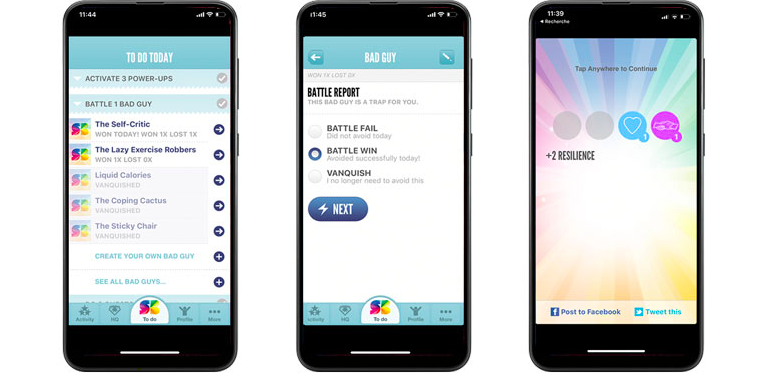
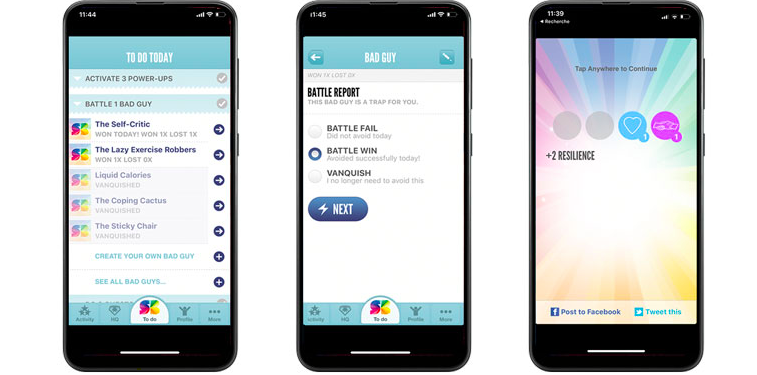
Jane knew from her 10 years of research that humans tackle challenges in video games with comparatively more creativity, determination and optimism than we do in real life. Plus, we have an easier time asking others for help. So she made a game out of her healing process, and SuperBetter was born.
ACEs champions Danette Glass of Alpharetta, Georgia, and Becky Haas, of Johnson City, Tennessee, work in different — yet similar — ways to see systems of care change to help prevent and heal adverse childhood experiences (ACEs) and to help individuals and communities increase resilience.
On Friday, July 24 at noon PDT/3 p.m. EDT, these friends and expert community organizers will share their approaches. Haas has worked from the inside out, most recently as the ACEs educator for a regional healthcare system and previously in a similar role with local law enforcement. Glass has often worked from the outside in, to improve systems of care or create her own to effect change.
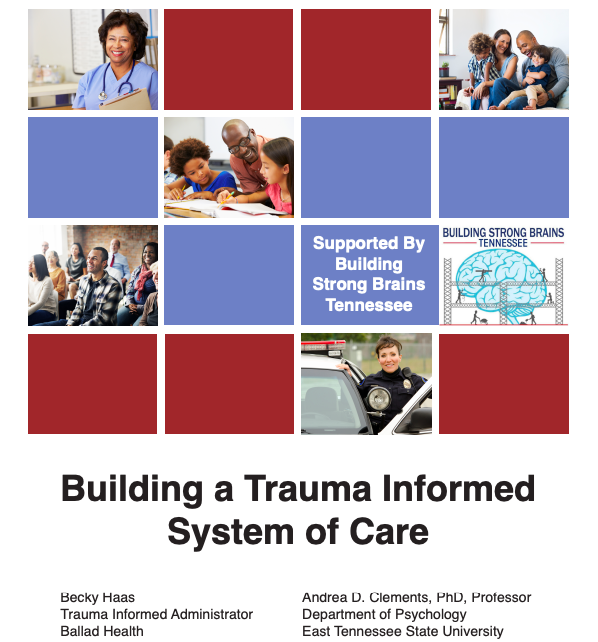
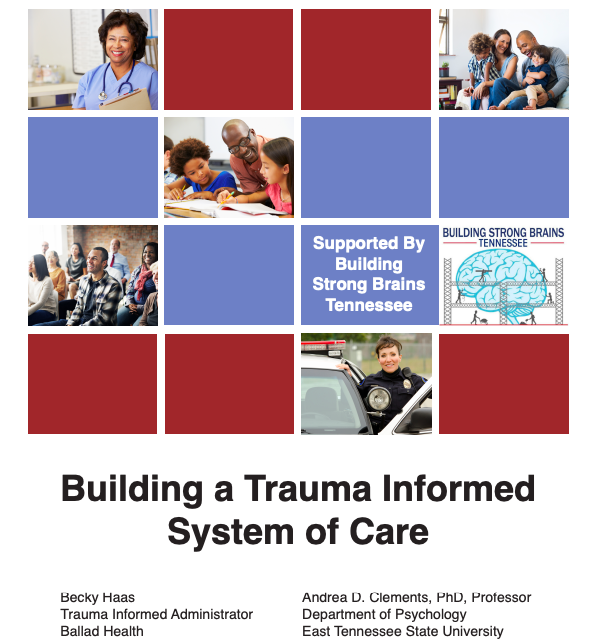
Haas, the author of a toolkit shared in ACEs Connection Growing Resilient Communities (Building a Trauma-Informed System of Care), learned about ACEs in 2014, while working with police to reduce drug-related and violent crime.
“Listening to stories of childhood abuse and neglect experienced by many in the justice system planted the thought in my mind that trauma was really the gateway drug. Though childhood trauma is not an excuse for drugs or crime, instead it now offered an explanation for it. I reasoned no one picks where they start in life and some of the hardship and abuse people experienced was through no fault of their own. Instead of communities focusing their efforts on a war on drugs (which those efforts don’t seem to be winning), we should shift our focus to a war on trauma…and so my journey began.”
Glass heard about the ACE Study in 2017 while working on a project for adjudicated youth that was funded by the Substance Abuse and Mental Health Services Administration. She realized the level of trauma exposure for young people was at an all-time high. The heightened level of family trauma and community trauma concerned her tremendously.
Following time in corporate America, Glass began her career as a consultant and community organizer. She now relies on decades of experience as well as tools from ACES Connection and tools she herself has created, such as a poverty simulator, to help community leaders, including elected officials, educators, healthcare providers and law enforcement, learn about the challenges of living in poverty and toxic childhood stress. Throughout her 30-year tenure in juvenile justice and youth development, Glass has worked with more than 30,000 teens, seeking to provide them with science, technology, engineering and math (STEM) skills to help them succeed. She also worked with youth to share what are now called “positive childhood experiences,” and consulted with the courts to help teens get needed services. She and her team also have been doing research on the inequity in health care for Black women who are, in some states, twice as likely to die in childbirth as White women.
Glass and Haas are bonded in part by their common missions of breaking down barriers and bringing greater loving kindness into the world. They are excited to come together to discuss how they are working from within and outside systems of care to help cross-sector groups improve individual and community resiliency.
“We hope people will take away how vitally important it is to create a more diverse, equitable and inclusive community — a ‘beloved community’ — especially right now, as things will get worse as a result of the COVID-19 pandemic,” says Glass.
“After the crisis, we are going to see an escalation of reported trauma exposure because right now young people in homes are not able to communicate the maltreatment they are experiencing,” she says. “Lack of accountability has left some young people vulnerable to being abused while school districts are in this virtual or digital learning setting.”
The coronavirus crisis also affects the mental health of parents, who are themselves traumatized. “And if they do not know how to manage or control their emotions in a positive manner, sometimes their children become the target of their frustration,” Glass says. “We need to be prepared to help. That’s a big part of what building community resilience is about: helping in the day-to-day and being prepared for traumas. That this is one of the greatest threats in modern times makes our work all the more urgent.”
To register for this A Better Normal webinar, please click here or use the link below.
ACEs initiative participants in communities where there is tension between the community and law enforcement will want to join Becky Haas in a compelling conversation on law enforcement, ACEs science, COVID-19 and the Black Lives Matter movement and protests. Haas is a nationally recognized adverse childhood experiences (ACEs) science initiative builder and trainer. She and colleagues Renee Wilson-Simmons, the head of the ACE Awareness Foundation of Memphis, Tennessee, and Maggi Duncan, executive director of the Tennessee Association of Chiefs of Police, will share a vision of trauma-informed law enforcement and answer your questions on Friday, July 31 at noon PDT; 3 p.m. EDT.
Wilson-Simmons and Haas will discuss, among other topics, how parents are the key to preventing many ACEs, and give an in-depth look at the ACE Awareness Foundation’s signature program, Universal Parenting Places (UPP), where parents can receive professional counseling, information, and emotional support for family-related issues or concerns, no matter how small.
Haas and Duncan will discuss how their mutual passion to reduce childhood trauma has led to their work on behalf of Tennessee Governor Bill Lee to launch, statewide, the Handle with Care (HWC) law, an innovative partnership with law enforcement and education.
In 2016, when Haas was working for the Johnson City Tennessee Police Department, staff was approached by HWC developer, Andrea Darr, about launching the program. Since Haas was simultaneously beginning to train her community about ACEs she knew that HWC was what they needed in her area of Tennessee, ravaged with opioid addiction, to help prevent trauma for children there.
Haas had started sharing ACEs science with her community shortly after learning about it in 2015. Getting the word about HWC was another step in a long path toward helping the state of Tennessee, and now communities throughout the United States, become more trauma-informed.
“When children have seen parents fighting, or acting out in other ways on drugs or alcohol, to the point that law enforcement comes to their home, these children are in no shape, emotionally, physically, or mentally, to perform at school the next day. This law helps prevent already traumatized kids from having to take tests or go through other stressors at school. There is little learning done when a child is not rested, fed, regulated, and connected to his or her teachers. This law is about not re-traumatizing already traumatized children, by forcing them to perform when they are wrung out and dysregulated,” Haas said.
“By having law enforcement communicating by email to the child’s school, with only the child’s name and the words ‘handle with care’ on the email, school administrators, teachers, and counselors now know to give a child who needs it some safe and nurturing space and time to rest and recover,” Haas said.
HWC was among many topics discussed when Haas and her partner in community building, Dr. Andrea Clements, a psychology professor at East Tennessee State University, hosted two governor’s wives, representatives from Tennessee and 20 other states at a Substance Abuse and Mental Health Services Administration forum (SAMHSA) forum in Johnson City in September 2018.
It was at that forum that several of Wilson-Simmons’ staff members from the ACE Awareness Foundation in Memphis shared about what they are doing with regard to the innovative UPP program, based on the work of international speaker Robin Karr-Morse, founder of “The Parenting Institute” based in Portland, Oregon.
Haas wanted to know more about this program with four sites in Memphis and one in Leland, Mississippi, and reached out to Wilson-Simmons.
During the webinar, Wilson-Simmons and Haas will discuss the work done by the ACE Awareness Foundation and the UPPs. She will also ask Wilson-Simmons to share the latest on the work the foundation is doing to develop a partnership with the City of Memphis to ensure that the city’s police officers and emergency medical technicians (EMTs) are aware of ACEs and the important work of the UPPs, and are prepared to share information about the UPPs and make informal referrals to the UPPs.
Webinar participants will also be invited to ask Wilson-Simmons questions about the origin of the partnership, and her advice on how such a partnership might be replicated.
Haas and Duncan met at the 2018 Tennessee Governor’s Summit, where Haas was speaking. Fellow Summit attendees from the Office of Criminal Justice Programs introduced the two women and Duncan, knowing of Haas’ work in crime reduction and with the Johnson City PD, she knew she wanted her assistance when the time came. Duncan and the TACP have been providing training on the West Virginia HWC model for a few years but now were ready to look at launching HWC throughout Tennessee and asked Haas to help train law enforcement. This program of the Tennessee Association of Police Chiefs was set to begin this past spring, but was tabled, for now, by COVID-19.
Today Haas consults with leaders in law enforcement, juvenile justice, corrections, education, healthcare, and communities of faith. Her work to help create groundbreaking programs, including Building Strong Brains Tennessee and the Building a Trauma Informed System of Care toolkit, has led her to speaking and meeting officials throughout the country.
Haas and Duncan say that during the webinar they will talk about how HWC is a good starting point for community sectors such as education, police, and child services to begin working together to the benefit of all. They will also
Discuss the importance of police understanding trauma/ACEs science
Share tools to help reduce trauma on-scene for children
Give examples of trauma-informed policing and officer self-care
Paint a picture of some solutions for what has been happening in policing for the last couple of months, since the death of George Floyd in Minneapolis, including the worldwide protests against police brutality and for defunding police forces
Do a reality check on the challenges of taking trauma-informed policies into a police department
Share the benefits of what an informed partnership between officers of the peace could mean for officers and communities
Click here to register for the Trauma-Informed Policing webinar.
The organizationZero To Threeestimates that in the U.S., a child is taken into the child welfare system every six seconds.
“Many of society’s most intractable problems can be traced back to childhood adversity. Being in the child welfare system increases the likelihood of more adversity and criminality. Baby court is a proven approach to healing the trauma of both child and parent, and breaking the cycle of maltreatment,” says Mimi Graham, Ed.D., director of the Florida State University Center for Prevention and Early Intervention Policy.
Join us for “A Better Normal” on Friday, Aug. 7 at noon PDT/3 p.m. EDT, when Graham will be talking about Florida’s Early Childhood Courts with Lynn Tepper, retired Early Childhood Court judge from Florida’s Sixth Judicial Circuit. This timely conversation happens as the U.S. House of Representatives prepares to learn more about Infant-Toddler Courts in the proposed new Strengthening America’s Families Act (SAFA).
“Healing parent and early childhood trauma has many benefits across the lifespan,” Graham says. “The small investment early produces a huge savings, not only in child welfare but in reducing later mental and physical health issues, addictions, criminality, and other negative consequences associated with toxic childhood stress.”
Florida’s Early Childhood Court, fondly known as “baby court”, has three unique parts: a trauma educated judge who holds monthly hearings with families; a multidisciplinary team who meets monthly to encourage families in their case plan; and an infant mental health clinician who provides child-parent therapy to heal trauma and strengthen the relationship.
“This integration of therapy and supports increases the likelihood of reunification with parents, getting families out of the system faster, but more importantly, reducing recurrence of abuse. With this model, you’re healing the underlying issue, which, for a family with generations of ACEs, is one of the best things happening to stop the cycle,” says Graham.
A recent recipient of the Medal of Honor Award from the Florida Bar Foundation for children’s advocacy and for spearheading the creation of Florida’s Early Childhood Court, Graham says the early childhood work also reduces later criminality.
“Research shows that the biggest predictor of criminality is a history of child welfare, especially sexual abuse in that system. Addressing trauma early and increasing healthy relationships buffer the toxic effects of early adversity,” said Graham.
Joining Graham on the webinar will be Judge Lynn Tepper. Retired in 2018, Tepper had served on the bench for more than three decades, and has received wide recognition for her trauma informed courtroom and dedicated service to families.
Tepper says she appreciates the improvements that Early Childhood Court has brought to dependency courts, as many traditional dependency cases have children with multiple foster family placements, often with abrupt transitions, and with little or no consideration of the importance of attachment and trauma.
“In Early Childhood Court, that abrupt transition doesn’t happen,” says Graham. “The judge knows the value of a child having a healthy attachment with the parent, and the trauma caused by separations, so we strive for the first placement to be the only placement,” says Graham.
Tepper adds, “Now, together with a trauma-informed team, we see babies and parents through a trauma lens, and the multi-generational cycle of trauma that brought children into my courtroom, people who are now parents or defendants or even grandparents, has a chance to stop. Early Childhood Courts help individuals live with more hope than fear. These courts make it possible to end the cycle of parent and early childhood trauma with this generation.”
During the webinar, Graham and Tepper and will discuss more about:
The growth of the Early Childhood Courts movement in Florida
The science behind the baby courts
Outcomes of children who go through baby courts as compared to regular courts
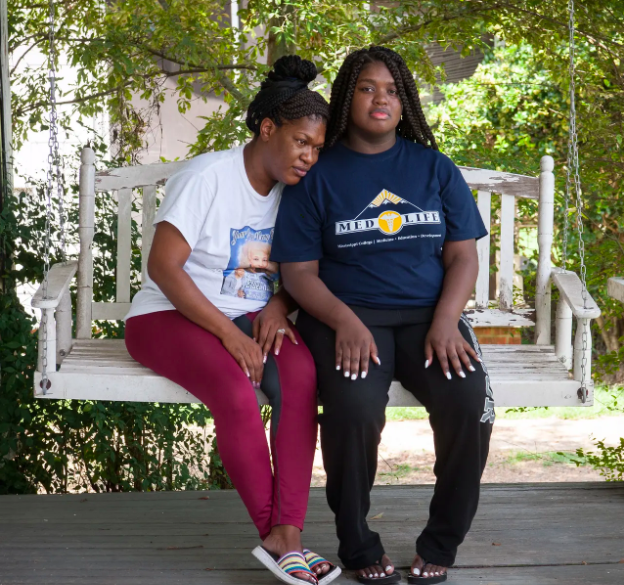
Monica McCasklill, left, and her daughter Kena Johnson, at their home in Greenwood, Missisppi. They respectively lost their grandmother and great grandmother, Ethel Huntley, to Covid-19. Huntley lived in a nearby nursing home and the family allege failings in her primary care. Photograph: Rory Doyle/The Guardian.
By Oliver Laughland, The Guardian, August 5, 2020 Poor access to healthcare, failed political leadership and the endurance of segregation and racism have contributed to a surge in deaths.
Lowndes county, Alabama
It was only two years ago that Pamela Rush travelled from Lowndes county, Alabama, to Washington DC to testify in front of a panel of US lawmakers, describing the conditions of crippling poverty and predatory lending in an area still blighted by generations of racial inequality.
“They charged me over $114,000 on a mobile home that’s falling apart,” she said. “I got raw sewage. I don’t have no money, I’m poor.”
And it was only last month that she died of Covid-19.
Her death from the virus, wrote the civil rights and moral movement campaigner the Rev William Barber, was “a death caused by structural poverty”.
The same could be said of many deaths in black belt counties in the deep south, where a combination of poor access to healthcare, failed political leadership and the endurance of segregation and generational racism has contributed to a surge in Covid-19 deaths in recent months.
As the rain pounded her raised front porch, Sandy Oliver, one of Rush’s best friends from high school, took a moment to reflect on those she had lost to Covid-19. Sitting in her rocking chair, she counted them in her head, gazing to the roof where an old ceiling fan whirred gently. “At least 10,” she said. “All within the last month and a half.”

 Carey Sipp 6/11/201:00 PM