‘Cumulative poverty over many years is the fourth leading cause of death in this country.’ Photograph: Bryan Olin Dozier/NurPhoto/Shutterstock
By Reverend William Barber and Gregg Gonsalves, The Guardian, June 22, 2023
Can you name the top 10 causes of death in America? Without too much trouble, most Americans could likely come up with some of them: cancer, heart disease, stroke, accidents. But it would come as a surprise to many to know that poverty is right up there with these other dreaded scourges – much higher, in fact, than many ills that have inspired investigative committees, major policy investments and sustained attention from the public and private sectors in American life.
A recent study by one of our colleagues shows that cumulative poverty over many years is the fourth leading cause of death in this country. Current poverty – just being poor right now – is seventh on that list, and it alone causes 10 times as many deaths as homicide, close to five times as many deaths as gun violence, and 2.5 times as many deaths as drug overdoses. Cumulative poverty that lingers year after year is associated with approximately 60% more deaths than current poverty, putting only heart disease, cancer and smoking-related deaths ahead in the number of Americans it kills.
But if this is true, why do we hear so much about crime rates, opioids and gun violence in America, but so little from our elected leaders about the crisis of poverty? Why is there no “Surgeon General’s Warning” on low-wage jobs? The relationship of poverty to disease and death is a well-established fact detailed in reports by the World Health Organization, the World Bank and our own government. But we as a people have become numb to the unnecessary deaths that are normalized by the ways we often think and talk about the economy in public life.
We’ve all heard of ‘generational curses’. But did you know that a growing body of research finds that it’s possible for trauma to pass through generations?
“This research implies that the experiences of your ancestors can have real impact on your physical and mental health,” says PACEs Connection CEO Ingrid Cockhren.
Cockhren co-hosts the “History. Culture. Trauma.” podcast with Mathew Portell, PACEs Connection director of education and outreach, on Thursday, June 29 at 1 p.m. PT; 4 p.m. ET.
In this encore episode, Cockhren and Portell discuss how trauma is passed from generation to generation, including in their own families. Cockhren says this phenomenon of your ancestors’ experiences having an impact on your physical and mental health is known as intergenerational transmission of trauma, and is part of the science of epigenetics.
“Research in this area dates back to the 1960’s when scientists were studying the effects of the Holocaust on descendants of survivors,” she explains.
Cockhren and Portell will also discuss what can be done to mitigate the impact of intergenerational transmission of trauma on families.
Find your podcast provider and click on the link below to listen in live on Thursday, June 29, at 1 p.m. PT; 4 p.m. ET, or to listen at your convenience visit:
The ITTI Care Project’s model. Image via ITTI Care.
By Katie Dukes, EdNc, June 26, 2023
Applications are now open to join the fifth and sixth cohorts of the Infant Toddler Trauma-Informed Care Project (ITTI Care), which trains early childhood professionals as coaches in trauma-informed care.
ITTI Care is a research project based out of Duke University and funded by North Carolina’s Division of Child Development and Early Education. The mission of the project is to support the wellness of the early childhood workforce, ensuring they feel “seen, heard, and held” in their workplaces. This equips them to provide the very best care to the children they teach, even when they face challenges in their own lives.
“I think that’s transformative work, because we are brain builders and it starts at birth,” said Natasha Brown, a coach from the third cohort who works as a birth-to-3 specialist at Child Care Resources Inc.
Jackson residents and supporters march with members of the Poor People’s Campaign of Mississippi to the Governor’s Mansion in Jackson, Miss., to protest water system problems, poverty and other issues, Oct. 10, 2022. Rogelio V. Solis, AP
Poor People’s Campaign: A National Call for Moral Revival – a revival of the 1968 movement launched by Martin Luther King Jr. – aims to highlight the dangers of poverty with a three-day congress on Capitol Hill starting Monday. Hundreds of leaders from over 30 states plan to demand elected officials address poverty in the United States, with participants highlighting a recent report that names poverty as one of the country’s leading risk factors related to death.
The event comes as pandemic-era provisions meant to help low-income families like the child tax credit and expanded Medicare coverage have reached their expiration dates.
This is the first in a series of blogs about what I believe to be some of the consequences – “negative” and “positive” – of positive and adverse childhood experiences (PACEs) across my lifespan. I share this as my healing journey takes another twisty turn for the better. I’d love to know if and how you believe your positive and adverse childhood experiences have affected your health.
I’ll post other installments as we at PACEs Connection continue to share the latest science, and stay focused on our work to connect and create healing communities. Subsequent topics may include insights on PACEs and finances, relationships, and parenting.
Please know my intention is not to offend anyone, or to make light of my own experiences, or to make light of the experiences of others. It is to share experiences in hopes of helping fellow travelers and wanting the world to know that the traumas being wrought upon us are in large part the results of broken values and systems in the collective that affect families and individuals — across the lifespan!
Physicians, policymakers, and business leaders need to know about the pain perpetuated and created by their reluctance to recognize and address childhood trauma as the root cause of most of our seemingly most intractable societal and personal challenges. We all live with collective “undigested trauma” and I believe that is why we are a nation and a people experiencing so much pain. The pain is trying to tell us all a lot. And I’ll say more about that in subsequent essays.
I do believe we are our own best healers, that laughter is some of the best medicine, and that being able to look back on adversity with curiosity, compassion, and grace adds years to our lives.
There is science to support those beliefs. Proof positive? I am still here, and look forward to sharing these and other findings with this “chosen family” of fellow members of PACEs Connection.
Happy 4th of July weekend. May it be truly liberating.
GUTS
Here’s the deal: I was born with gut issues. There are myriad reasons for it, probably, but the root cause of the root and sacral chakra block that keeps my guts twisted, turning, and sometimes frozen or burning, is likely trauma experienced when I was an itty-bitty fetus.
Adverse fetal experiences?
I say adverse birth experiences because my mother was the victim of horrific domestic violence while she carried me, and it sure didn’t get better when she had a baby girl instead of the hoped-for baby boy.
Anyway, that’s kind of root cause of why, at 5 a.m. on a Saturday morning, I am AWAKE. Doing cat-cow yoga moves. Breathing deeply into my bowels. Drinking MORE hot water. Taking the fistful of probiotics I take in the morning to complement the fistful of probiotics I take mid-day and the fistfull I take at night.
This is a 24-7 operation, trying to regulate my dysregulated guts. And it has been for much of my life. Oddly, while I was pregnant and pumped full of progesterone, and then breastfeeding and high on my own oxytocin, I didn’t have these issues. But that was more than 30 years ago. Those were the sweetest of days, despite all manner of other challenges.
But now it is about 5:45 a.m. I’ve done more yoga moves. I am sitting on the john with my feet up on a box to replicate the effect of using a “Squatty Potty”, a plastic footstool like thing I’d bought years ago after seeing it on SharkTank. As part of the sales pitch, the successful inventor revealed that the way Americans sit while toileting actually prevents a healthy bowel movement.
Go figure. Not having our bodies in a squatting position – as our hunter-gatherer nomadic ancestors did – isn’t good for us for many reasons. But that’s another gut report.
How many different simultaneous actions are happening here to support this effort?
All those probiotics are working in my frozen gut
I am massaging my part of my lower abdomen in a way that is supposed to help facilitate movement
I have been listening to the “Inner River” meditation in my “Flare Up Kit” on the Nerva app (I pay about $20 a month for it.) It is delightful. A lovely Australian lady hypnotizes me in 15 minutes to “relax my body” and calm my sympathetic nervous system the-heck -down so I can get to rest and digest and what I call DIVEST
I’ve been rocking gently, as that, too, is supposed to help
Prior to this magic moment, I sipped a cup of hot water
I also drank a tall-boy cup of “Bio Coffee” that tastes great with some stevia in it, and was created to help customers “love what it does to your body” because it’s formulated to help support gut health
Hours before this moment, I drank a few ounces of purified water into which I had dumped a scoop of “Calm” magnesium, which helps me sleep and has the side benefit of promoting “motility”
Prior to bed, I had also exercised, eaten a meal of organic turkey, organic jicama tortillas, and papaya. (I eat about six papayas a week because they are supposed to be so good for your guts). I had laughed some by watching the most recent episode of “Ted Lasso.” Laughter is great for guts
I had also had a long talk with a dear friend, which helped me have a sense of being supported and connected. (Relational health supports all health systems, but especially gut health. I think about this often as I eat dinner alone and don’t always relate to my food respectfully by taking time to savor it and thank the plant or creature whose energy I am consuming to stay alive. Note to self: ponder these things for a future essay!)
If I had a nickel for every dollar spent on different remedies for JUST my stomach issues over my lifetime, I might not be rich. But I’d be on the way.
A little bit of information (there is MUCH more) about PACEs science and gut health.
We know from the landmark Adverse Childhood Experiences (ACE) study published in 1998 by The Centers for Disease Control and Prevention and Kaiser Permenete, and written by personal heroes Vincent Felitte, MD, and Rob Anda, MD, that the more ACEs are stacked up in our history, the greater the likelihood of all manner of health issues. My score is eight out of the ten original ACEs.
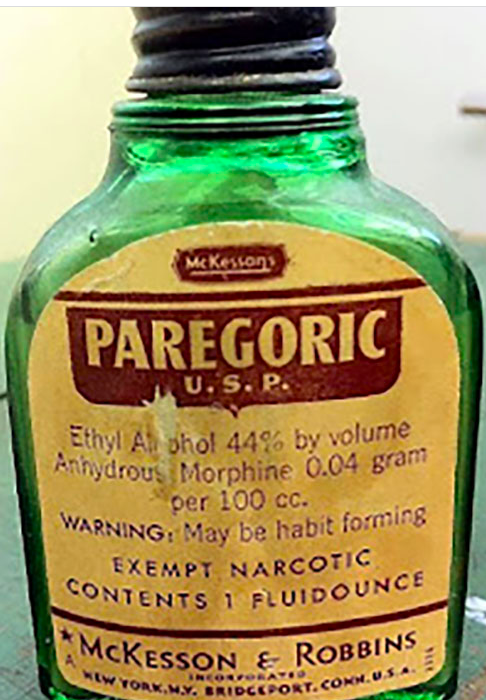
As a child there were visits to the pediatrician. And the memories of being given paregoric – opium – which tasted like licorice (I cannot stand that taste) and which my mother kept above the refrigerator.
I have no idea how often she pulled out the dropper to knock me out when I was a colicky baby and whiny toddler. Or how many times the cleaning ladies who took care of me much of the time from the age of early infancy until I became a latchkey kid, slipped it to me so they could have a moment’s peace to do the work they were hired to do.
I have imagined, since doing exhausting rounds of inner child work and putting it together that my maternal grandmother died at the same time my mother went back to work – when I was just six weeks old – that the instructions to the cleaning ladies, who were paid $4 a day and not treated very well, must have been to “cook, clean, iron, and oh, by-the-way, there’s a baby in there”.
So that must have been part of the reason I have almost always felt an undercurrent of loneliness. Because I was left at home with the cleaning lady at least three or four days a week while my mother was working and or taking part in her myriad civic duties. And the person hired to clean the house and do all those other chores and take care of me? How could she have had a lot of enthusiasm for the role, given that she was being paid less than a dollar an hour, was expected to do an inordinate number of tasks, and was likely missing her own children? It was a no-win situation and when I was older and learned more about how Black people were treated, that, too, made my stomach hurt. Still does.
Where the nurturing came into the equation.
Thank God I also know that I sometimes stayed with my paternal grandmother. She loved me deeply and taught me, from an early age, about being kind to people. She also taught me about bugs, flowers, gardening, canning, pickling, cooking, and the joy of shelling peas. She was a living, breathing positive childhood experience (PCE) for me.
But in between those lovely visits to her farm, and wonderful times watching my next door neighbor, Miss Minnie Anne, cook and garden, I was a pretty sickly child who got carsick on the way to school. And who would throw up at the first whiff of certain odors. In fact, as a third grader, I contributed mightily to the Great Maple Street Elementary School Chain Reaction Barf of 1964.
The Great Maple Street Elementary School Chain Reaction Barf of 1964.
I remember it as if it were a minute ago: Someone threw up in the hallway on the way back from the lunchroom. We’d had fish sticks, mashed potatoes and maybe turnip greens or peas for lunch. Something green. Anyway, the scent of fishy vomit floated my way.
My friend Sally stood in line in front of me as I projectile vomited into her waist-length, shiny brown hair.
Several other kids chucked on the person in front of them.
The school janitor was shoveling that minty sawdust-like stuff all over the hallway to try and mask the scent. It was a feast for all the senses: sight, smell, sound, the touch of the teachers pushing us against the wall and away from each other, and the lingering taste of, well, you know.
We all got to go home for the rest of the day.
While I know Sally forgave me for upchucking on her, I once advocated for her so vociferously that I got paddled by the principal.
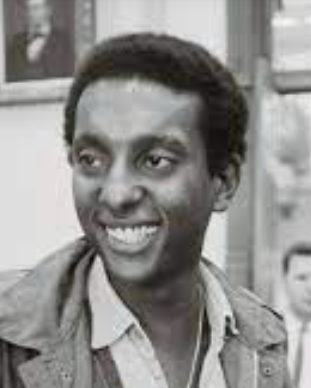
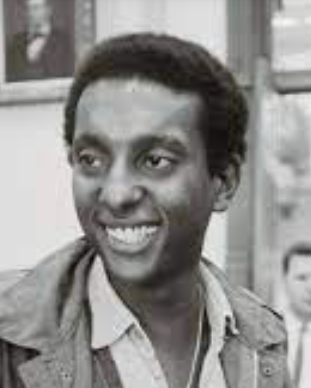
“A little Stokely Charmichael”
Perhaps I fought so hard on her behalf out of guilt for spewing bodily fluids onto her; perhaps it was because I started fighting for the underdog as a tiny child protecting my brother during my parent’s knock-down, drag-out, liquor-fueled (him, NOT her; thank God they weren’t both drinking!) fights.
Whatever the reason, later that year or the next, Sally had been out sick for a week or two, and was being forced to complete all of her homework in what other kids and I thought was an unre asonably short period of time. I circulated a petition about this being unfair, resulting in the paddling and my being called “a little Stokely Carmichael” by the principal, as he whacked my fifty or so pound self three or four times with a long wooden paddle. It even had holes in it to enhance the pain.
Stokely Carmichael was a civil rights leader. In pre-integration small-town Georgia, comparing me to a Black man threatening this old white principal’s way of life was NOT a compliment. It was a comparison that earned me more punishment at home.
My beloved little paternal grandmother – she probably weighed eighty-five pounds soaking wet – was courageous as hell, herself a victim of domestic violence and an advocate for the Black tenants to whom my grandfather rented run-down shanties. I’d like to think she was secretly proud of the principal’s comparison, though I am certain it mortified the rest of the family, most of whom did not hold me in favor for my questioning of the hymn, “Jesus Loves the Little Children” with its key line “red and yellow, black and white, they are precious in his sight. Jesus loves the little children of the world.” I wondered why, if Jesus loved everyone, we weren’t supposed to too?
A thrilling diagnosis.
I could go on about my guts as a kid, but I’ll fast forward to being 20 and having an “ulcerated area in my duodenum.” Truly, I was thrilled with the diagnosis, tendered by our trusted family doctor when I stayed in the hospital for tests and rest on a Christmas vacation home from college. Finally I had proof that I wasn’t making it all up, or, as my mother loved to say, “It is all in your head.”
She claimed I was faking it despite the fact that she drank about three bottles of Maalox a week to wash down the Anacin she took to help the tension headaches caused by the stress of her job working for a man she was terrified of, and living with a man she was terrified of because he would yank her hair out, punch her, throw her down steps, and threaten us with myriad weapons. Guns. Knives. Belts.
To make sure she knew whatever she did was worthless, he’d also sometimes trash the nice furniture she bought by slashing the surface of bedside tables with a hunting knife, punching or shooting holes in the wall, breaking glass to get into the door at all hours of the night, and literally pissing on the flowers she planted.
Yep. I think I came by my tender guts honestly.
Sometimes my mother would be doubled over in pain as she put on her makeup to go to work. Oh. And THAT smell would get to me, too. Because she had a port wine birthmark over half of her face, she literally cooked her “pancake” makeup each morning before applying it. Pancake makeup does not smell good first thing in the morning. Or ever.
She looked beautiful. But underneath that layer of makeup, and the starched white uniform, seamed white hose, and white oxford shoes she wore as her dental hygienist’s uniform, there was a riot of rage as dark and jagged as that birthmark that must have caused ungodly teasing in Depression-era Georgia and Alabama. It was probably part of the reason she felt as if she’d better say yes to my father’s proposal. About him? When she married him he was a World War II veteran who’d experienced his own share of trauma as a child whose father beat the hell out of him, and as a 18-year-old on a submarine in the Pacific during World War II. One story was that his best friend died right in front of him. My father had “hatch duty”. But one day the friend asked to open the hatch instead, and was killed the instant his head popped out in open air.
Multi-generational ACEs; medicine combinations; the bitter end of dark chocolate.
I now understand why my father suffered bouts of depression and anxiety, though I wish he’d had healthier ways of coping than jigger upon jigger of Early Times bourbon mixed with Coca-Cola, tons of my grandmother’s carbohydrate and fat-filled home cooking, relentless skirt chasing, and pound-downs on my mother when she sniffled, cleaned, didn’t cook what he wanted, complained about his wild spending or carousing, or didn’t properly clean and freeze the dove and quail he killed and brought home and left for her to “dress” because he was too smashed to do it himself.
Yep. Dead birds, bird guts and feathers, frozen little bird bodies suspended in ice in plastic containers in a deep freezer full of all manner of ice-encased fish and fowl.
Those could get me gagging too.
But I digress.
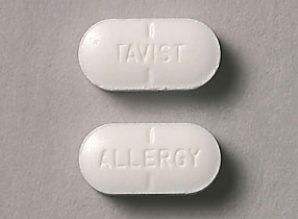
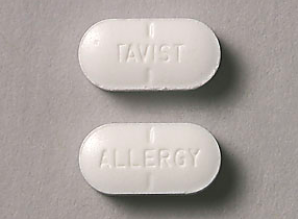
Yes. I’ve had a lifetime of gut issues I medicated with combinations of allergy medicine – because seasonal allergies and the resulting post-nasal drip (Sorry, but for folks with lots of ACEs, there are often issues with hyper-responses to allergens) – and the latest prescription for stomach ulcers. Tagamet and Tavist? That was a great combination, I explained to my doctor when I was in my early twenties. I don’t think he’d made the connection, yet, between allergies, post-nasal drip, and the Spring and Fall flare ups with gut pain and nausea until I explained why I needed both prescriptions.
Over the years there were endoscopies. Colonoscopies.The self-medicating power of the bubbles in beer. The realization that dairy was off the table. The realization that nightshade vegetables were off the table. The realization that gluten, too, was off the table. And then the horrific and deeply painful grief when one of my most favorite foods of all times – dark chocolate – was literally off the table and pretty much out of my life unless I wanted to pay dearly for having savored a bite or two of what had been a staple: four or five bars of Green & Black’s 85% organic chocolate a week. Almost a bar a day. For YEARS.
That loss came when the Damdemic hit, and I suddenly regressed into a primal fear of feeling incredibly unsafe in my own home, and in my own body, where the fire in my belly burned as if I’d swallowed a molten bowling ball.
Next report: Damndemic guts, masked horror, “Better Normals”, ACEs to PACEs, and the road to recovery being paved with many efforts.
The cabin of John and Priscilla Hemings, who were enslaved at Monticello, Thomas Jefferson’s plantation in Charlottesville, Va.Credit…Damon Winter/The New York Times
By James Bouie, opinion columnist, The New York Times, Tuesday, July 4, 2023 — Read today, the Declaration of Independence is a freedom document. It stands for absolute human equality and represents the highest ideals of the American republic. On July 4, we celebrate it as much as we celebrate independence itself.
But as scholars like Garry Wills and Pauline Maier have made clear, this relative consensus on the meaning and significance of the Declaration is the product of political, ideological and social developments over time.
“During the first fifteen years following its adoption,” Maier writes in “American Scripture: Making the Declaration of Independence,” “the Declaration of Independence seems to have been all but forgotten, particularly within the United States, except as the means by which Americans announced their separation from Great Britain.”
The Declaration as we understand it was forged by struggle. Not the struggle with Britain but the struggle within the independent United States for freedom and equality against the weight of the Constitution and the American political system. As you might imagine, the key that shaped our understanding of the Declaration was the fight to end slavery.
“The antislavery movement was not,” the historian Alexander Tsesiswrites, “a creation of the Revolution.” Nevertheless, the ideology of the revolution was “inspirational enough to hearten Black petitioners, soldiers and litigants to protest against the resilience of hereditary bondage.” And in that movement, as well as those it spawned, the Declaration of Independence would stand, in the words of the historian David Brion Davis, as a “touchstone” and “sacred scripture” for opponents of slavery.
Examples of this use of the Declaration abound. As early as 1776, we have a pamphlet by Lemuel Haynes, a free Black Congregational minister in Vermont, titled “Liberty Further Extended: Or Free Thoughts on the Illegality of Slave-Keeping.” Haynes begins by quoting the Declaration of Independence and then, embracing the language of natural rights, goes on to assert that “an African” has an “undeniable right to his Liberty: Consequently, the practice of Slave-keeping, which so much abounds indthis Land is illicit.”
Although he does not directly quote the Declaration, the author of “Sermon on the Present Situation of the Affairs of America and Great Britain” — who identified himself only as “A Black Whig” — seemed to echo the American independence document in 1781 when he wrote: “Next to life is liberty, and when oppression and tyranny are violent they cause the parties oppressed to make some resistance, let them be ever so feeble.” From here, he asked the American revolutionaries to follow their own fight for freedom with the emancipation of the slaves. “And now my virtuous fellow citizens, let me entreat you, that, after you have rid yourselves of the British yoke, that you will also emancipate those who have been all their life time subject to bondage.”
While news of mass shootings, such as the July 3 shooting deaths of five men in Philadelphia, mirror the rash of shootings in 2022 and dominate media feeds, community gun violence takes more lives and impacts more people in the United States.
This week the PACEs Connection podcast History. Culture. Trauma, again focuses on gun violence in America, with a conversation departing from the focus on mass shootings, to instead look at community violence and solutions to community violence with policy analyst and activist Timothy Hughes.
“Whereas, active shooter situations and school shootings tend to dominate our mainstream news outlets, community gun violence is often not given as much attention,” said Ingrid Cockhren, PACEs Connection CEO and co-host of the podcast.
“Community violence overwhelmingly impacts low-income communities and communities of color. Mainstream news coverage of this type of violence seldom focuses on mental health, trauma or even real solutions. Instead, violence in these communities is often viewed through the lens of culture.” said Cockhren.
Hughes, who currently serves as a policy consultant at Black Clergy Collaborative of Memphis, is also commentator, columnist, community organizer, educator, human rights advocate, and public intellectual. He works at the intersection of public policy and social justice and has been involved with Gideon’s Army in Nashville, Tennessee, and their group of community members called Violence Interrupters.
Hughes appeared in a PACEs Connection webinar about gun violence with Cockhren, who hosted several 2022 events to explore gun violence, including the first episode of the History, Culture, Trauma podcast in which she and PACEs Connection founder and publisher Jane Stevens discussed “How the News Media Suck at Violence Reporting” and how “integrating knowledge of the science of positive and adverse childhood experiences could help reduce and prevent violence,(and) help reduce systemic racism and its effects.”
“In this year (2023), there have been more mass shootings in America than in any other year on record. As of May 8, 2023, there had been 131 mass shootings with four or more people wounded or killed so far as compared to 113 at the same time last year. Since 2020, America has been ravaged by a pandemic and endured political divide, nationwide protests and civil unrest. It is apparent that the collective traumas have accelerated America’s already dire gun violence crisis,” said Cockhren.
Tune in Thursday at 1 p.m. PT; 4 p.m. ET, to hear more of the discussion on the community gun violence as a social justice issue, and ways to reduce community gun violence.
Photo Credit: Walt Stoneburner, Flickr Creative Commons
By Michelle Crouch, The Charlotte Ledger, July 5, 2023 — With foster homes in short supply, more than 55 children over the past year have spent at least one night sleeping on an air mattress in a Mecklenburg government conference room; “It’s as bad as it’s ever been.”
Dozens of children have been forced to sleep on the floor of Mecklenburg County offices over the past year because of a severe shortage of foster homes and crisis beds, according to the county Department of Social Services.
The children, who come into county custody after allegations of abuse, neglect or abandonment, sleep on air mattresses in two conference rooms, said Charles Bradley, the county’s youth and family services division director.
Bradley said the situation is “as bad as it’s ever been” in his 19 years at the department.
Since July 2022, 55 foster children have slept in county offices, he said. Most are age 12 and older, Bradley said, but a few have been younger. Some have stayed as long as a few weeks.
“Any night they are in the office is an unfortunate situation because we know each and every one of our children that come to us has a history of trauma, abuse or neglect,” Bradley said. “We are in desperate need of more foster families to step up and welcome children into their hearts and their homes.”
By Alix Woolard, Photo: Radu Florin/Unsplash, The Conversation, July 5, 2023
You have probably heard of “fight or flight” responses to distressing situations. You may also be familiar with the tendency to “freeze”. But there is another defence or survival strategy a person can have: “fawn”.
When our brain perceives a threat in our environment, our sympathetic nervous system takes over and a person can experience any one or combination of the four F responses.
What are the four Fs?
The fawn response usually occurs when a person is being attacked in some way, and they try to appease or placate their attacker to protect themselves.
Dopamine is part of an ancient neural pathway that ensures human survival. It is also part of the reason it is so hard to stop playing a video game or pass up a cupcake. Meredith Miotke /for NPR
By Michaeleen Doucleff, National Public Radio (NPR), June 12, 2023
Back when my daughter was a toddler, I would make a joke about my phone: “It’s a drug for her,” I’d say to my husband. “You can’t even show it to her without causing a tantrum.”
She had the same reaction to cupcakes and ice cream at birthday parties. And as she grew older, another craving set in: cartoons on my computer.
Every night, when it was time to turn off the screen and get ready for bed, I would hear an endless stream of “But Mamas.” “But Mama, just five more minutes. But Mama, after this one show … but Mama … but Mama … but Mama.”
 Carey Sipp 6/26/232:19 PM