Tag Archives: books

Dan Press traces how legal work for Native Americans led to advocacy to uproot trauma

Carey Sipp Carey Sipp 10/6/221:20 PM

Note – We’re reposting this PACEs Science Champion feature by Laurie Udesky, from November 16, 2021, to share more about the life and work of Dan Press, who died yesterday. He was our remarkable friend and partner in preventing and healing adverse childhood experiences (ACEs) and promoting healthier, more compassionate, more resilient communities. Please see this post by Jesse Kohler for more information about Press, his life and legacy.

In 1964, Dan Press was in his first year of law school and was not liking it; he wanted a way out. He applied for a volunteer spot with AmeriCorps VISTA, the domestic version of the Peace Corps, and was intrigued by a position on an Indian reservation.
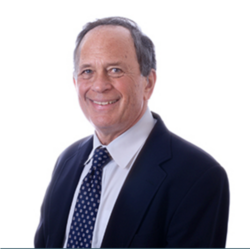
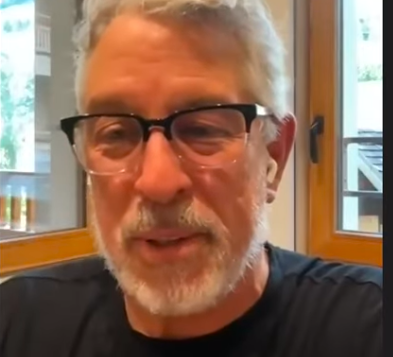
DanPress
Dan Press

“I knew nothing about Indians, but it sounded like a good opportunity,” says Press, who was raised in Flushing, in the Queens borough of New York City. “So, I signed up and the next thing I knew I was on a plane to Montana,” he says.

It was a move that changed the course of his life.

Press, an attorney and now 78 years old, has spent his entire working life fighting on behalf of Indian tribes. He helped found the Tribal Employment Rights Office in 1977, which now has 300 offices around the country. His first legal battles involved pushing for enforcement of laws passed a half a century earlier to give Native Americans preference in hiring for employment on Indian lands brought by outside agencies and firms, but until Press challenged practices and won, those laws were largely ignored.

During his long legal career from working for The Navajo-Hopi Legal Services Program for the Navajo Nation in Arizona to his work at Van Ness Feldman, a law firm in Washington, D.C., he’s also counseled Indian tribes in advancing legislation that’s resulted in hundreds of millions of dollars in land settlements and the procurement of new health facilities. He helped found the first intertribal bank in the nation. Press has also been a champion of promoting trauma-informed initiatives, which in 2018 earned him a Public Advocacy award from the International Society for Traumatic Stress Studies for “Outstanding and Fundamental Contributions to Advancing the Social Understanding of Trauma.” In addition, he is the author of “A How-To Handbook on Creating Comprehensive, Integrated Trauma-Informed Initiatives in Native American Communities.”

Press is the general and legislative counsel for the Campaign for Trauma-Informed Policy and Practice (CTIPP), which helps local, county and state initiatives advocate for legislation to expand trauma-informed practices across the country. He also served as general counsel for The Roundtable on Native American Trauma-informed Initiatives. Both organizations are pro bono clients of his law firm. He has taught classes on tribal government at Columbia University, including “The Holocaust and Genocide in America”, in which students looked at common themes that arose in the genocides of Native Americans and of Jews.

On his first foray into Indian land in Montana, Press tutored children and coached basketball on the Crow Indian Reservation in the southern part of the state. While there, he was approached by Joseph Medicine Crow, the last living war chief of the Crow tribe, an oral historian and writer, who chronicled the living stories of the Crow. Medicine Crow asked Press to translate Crow treaties with the federal government into everyday language. (Medicine Crow, who won a Presidential Medal of Freedom for his war time service during WW II and for his work chronicling Crow history, died in 2016). The project was a turning point for Press. “It made me interested in Indian law,” he recalls.

Fortuitously, a couple he met in Montana who had just graduated from Yale Law School, which had coursework focused on law and society, helped him transfer from Columbia Law School to Yale, where he finished law school two years later in 1968. He then headed to the Navajo Indian Reservation in Window Rock, Arizona to take a job with The Navajo-Hopi Legal Services Program. He shed his urban roots enough to buy a horse, help friends herd cattle in his spare time, and he also attended native ceremonies.
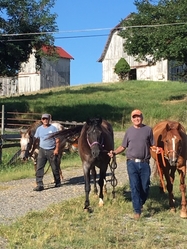
Dan Press with horses August 2019
strolling with horses

That experience with the legal services program gave Press a window into the lives of the people he was representing. “We knew there was a lot of beauty out there; there were a lot of beautiful traditions and wonderful people who weren’t reaching their full potential,” he says. Press got involved in employment law, “because I thought if people had jobs, that would help them overcome some of the problems like alcoholism and suicide and other major problems that people suffered on the reservation.”

That employment work, pushing for Indians to have preference in employment over non-Indians for jobs brought into the reservation, led to the establishment of the first Tribal Employment Rights Office in Window Rock. Although there were laws to give that preference, explains Press, “nobody every enforced them.”

When Press moved to Washington, eventually taking a job at the law firm Van Ness Feldman where he spent more than three decades, he continued to fight for Indian preference in employment.

“We had battles with federal agencies who said, ‘You can’t tell our federal contractors or grantees what to do.’ Now we had to show that tribal sovereign authority was stronger than any of those federal regulations. And that tribes could tell federal contractors they have to comply with Indian preference requirements of the tribe. So, a lot of it was fighting to assert tribal sovereignty, which at that point, was still a very new concept.”

As a result of Press’s efforts to push and maintain enforcement of Indian preference law, some 300 Tribal Employment Rights Offices have sprung up around the country.

Despite these victories, Press was beginning to understand that improving employment rights among native people did not mean—as he had hoped—that the societal problems on Indian reservations would go away.

“By around 2010, I started getting very disillusioned. I noticed that 40 years after I’d left the Navajo reservation, the problems that I thought would gradually dissipate were still as bad as ever—the alcoholism and the suicide and all of the other health and social problems that the tribes lead the country in,” he recalls.

He took the problem to his Columbia University students in the first course he taught on Indian tribal government.

“The issue I put before the students is how do we explain all of this dysfunctionality that we see on reservations? Why haven’t those problems decreased? We’ve seen an increase in college graduates, we’ve seen an increase in economic status, but we still have huge unemployment problems, huge substance use problems, huge suicide problems, high school dropout problems,” he says.

It was his students, says Press, who first introduced him to the concept of intergenerational and historical trauma in 2011. They had worked with professors in the university’s psychology department who were investigating how trauma from stress caused changes in genes in mice that were passed down from one generation to the next. (For an example of research around generational trauma and epigenetics, see this study. For research on Holocaust survivors and epigenetics, see this study.)

“It was after that class that I became persuaded that historical trauma was by far the most viable explanation for all for a lot of the problems that you see on reservations,” Press says.

Around the same time as the class, Press’ wife emailed him a study that she thought he should read. It was the landmark Centers for Disease Control and Prevention/Kaiser Permanente Adverse Childhood Experience Study (ACE Study) that tied 10 types of childhood trauma, such as living with a family member who’s addicted to alcohol or is depressed, with chronic disease in adulthood. The ACE Study and subsequent research also showed links between childhood trauma and alcohol and drug abuse in adulthood.

“So, I read it and thought, ‘It really connects the dots between historical trauma and these other forms of trauma’,” says Press. “I began studying more about it and I became a convert, and thought it was one of the most important studies out there.”

In 2014, a phone call with a former client would send Press on his current path. The call was with Native American psychologist, Dr. Tami DeCoteau, whom he describes as his “guru on trauma,” who called Press up one day and said, “I never mentioned it, but I used to babysit for Senator Heidi Heitkamp from North Dakota, and she just called me and said: ‘Let’s have coffee. I want to just pick your brain on what issues I should be dealing with.’”

Press suggested that DeCoteau ask Heitkamp to hold a roundtable discussion on historical trauma in Indian country. Heitkamp, who said it was consistent with her interest in issues affecting children, agreed.

Press and DeCoteau brought together about 25 people in 2014 to speak, including PACEs Connection’s Elizabeth Prewitt, who described the ACE Study. DeCoteau spoke about the experience of trauma on Indian reservations, and representatives from the Menominee tribe in Wisconsin talked about their cross-sector work in implementing trauma-informed practices. (See this PACEs Connection story for more on this meeting.)

Heitkamp stayed put for a full hour of the three-hour roundtable, recalls Press. “Getting a senator to sit the whole hour was amazing… But as she walked out, she said, ‘I’ve walked out of this hearing room for the Senate Committee on Indian Affairs depressed so many times because of all the problems people have described. This is the first time I’m walking out optimistic that maybe we have a solution!’”

That meeting gave rise to The Roundtable on Native American Trauma-informed Initiatives in 2016. While the group, led by leaders volunteering their time, including Press, is no longer active, it held meetings to inform government officials about the merits of trauma-informed programs. It also organized conferences for Native Americans, including one entitled: Calling Upon the Warrior Spirit to Heal Historical Trauma Conference and Ceremony in 2018.

In 2017, Heitkamp, along with Illinois Senator Dick Durbin, introduced the Trauma-Informed Care for Children and Families Act of 2017. Provisions of the legislation were later included in legislation signed into law in 2018 to address the nation’s burgeoning opioid epidemic. Until she lost her reelection bid to the Senate in 2019, Press says that Heitkamp remained a staunch supporter of legislation to advance trauma-informed policy.

Around the same time, Press was introduced to Dr. Sandra Bloom, a psychiatrist who was among a group of clinicians who developed a trauma-informed practices protocol known as the Sanctuary model, which has been widely disseminated around the country in schools and organizations, and Dr. Andrea Blanch, the president and director of the Center for Religious Tolerance, who trains service agencies and communities in trauma-informed practices. The two told Press of their interest in forming a national organization with leaders from across sectors to spread the word about trauma-informed practices. They just needed a place large enough to hold the meeting. Press offered up a room at his law firm.

That conversation sparked the formation of the Campaign for Trauma-Informed Policy and Practice, and Press, who was winding down his legal practice, jumped in. CTIPP focuses on advocating for legislation that incorporates the science of positive and adverse childhood experiences (PACEs science) into federal programs and serves as a forum for trauma-informed coalitions to share ideas and resources. In February 2020, just before the COVID-19 pandemic took hold, CTIPP launched the National Trauma Campaign, which is focused on recruiting advocates for trauma-informed legislation in every Congressional district. (See the attached slide deck to learn more about the work of CTIPP.)

That effort has already produced results. “When we first started, there was really just Senator Durbin and Senator Heitkamp. Now there are probably a half dozen senators who have introduced trauma-informed legislation,” says Press. In June, Senators Durbin and Shelley Capito of West Virginia, and others introduced the Rise from Trauma Act, which would infuse trauma-informed policies into federal programs. The bill would also provide funding for community-level work on trauma-informed practices. That bill hasn’t moved yet, says Press. But he has hopes about the reconciliation bill (a.k.a. Build Back Better, click here for PACEs Connection story), which is before the House of Representatives for a vote, and includes $2.5 billion in funding, which could go towards trauma-informed community coalitions.

If that happens, he says, “we’ll achieve one of our most important goals, which is to get funding to these local coalitions because they’re springing up all over the country and you see them on PACEs Connection. But the thing they all struggle with is funding. We have a lot of great volunteers, but we don’t have funding to hire full-time staff. So as the reconciliation bill passes with the Senate for the first time, there’ll be a funding source for local trauma-informed coalitions, and that would be a huge, huge, huge win.”

Press points to the appropriations bill report that just came out of the U.S. House of Representatives as another sign of progress. It included 30 different items in which funding was provided for trauma-informed related programs.

Reflecting next steps, Press says, it’s really all about education. “We know how to help people who have suffered trauma. We know how to prevent trauma. It’s really the education piece that is the biggest barrier. If we get in front of every state legislator, every congressperson, every governor for a half an hour, and go through the [positive and adverse childhood experiences] science, I think all of the barriers would just fall like crazy.”

Carey Smith Sipp

carey.pacescommunites@gmail.com
❤️ 2

‘Girls on the Brink’ Author Donna Jackson Nakazawa on this week’s History. Culture. Trauma. podcast

Carey Sipp Carey Sipp 10/25/223:32 PM

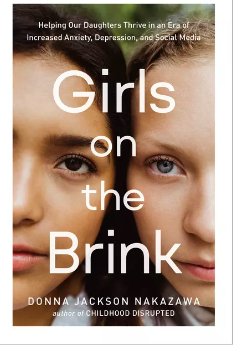
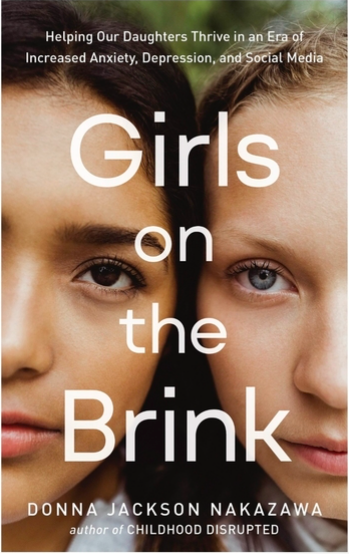
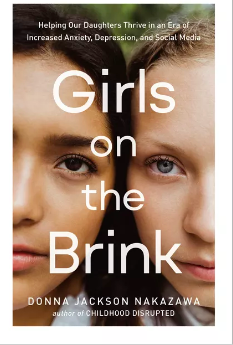
Donna Jackson Nakazawa, author of six books and longtime friend of PACEs Connection, joins the History. Culture. Trauma. podcast this week in an excerpt from the launch of her sixth book, “Girls on the Brink—Helping our Daughters Thrive in an Era of Increased Anxiety, Depression and Social Media.”

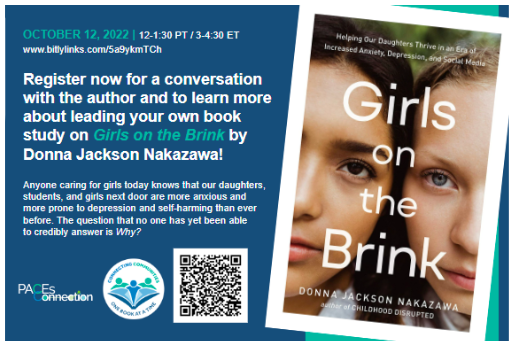
Screen Shot 2022-10-12 at 1.25.13 PM“Anyone caring for girls today knows that our daughters, students, and girls next door are more anxious and more prone to depression and self-harming than ever before,” said Nakazawa. But the question that seemed to have no answer was: “Why?” That’s why Nakazawa wrote the book, which she called a true labor of love.

The podcast comprises excerpts from a recent discussion among Nakazawa and PACEs Connection staff members Carey Sipp and Natalie Audage. Nakazawa noted that this time is especially challenging for girls. She cited the cultural challenges of social media and peer pressure as well as scientific evidence of hormonal and other biological changes in girls that are a cause for concern.

“The earlier onset of puberty mixes badly with the unchecked bloom of social media and cultural misogyny,” Nakazawa explained. “When this toxic clash occurs during the critical neurodevelopmental window of adolescence, it can alter the female stress-immune response in ways that derail healthy emotional development.”

Screen Shot 2022-10-25 at 5.28.25 PMThe interview also focused on several of the 15 “antidotes” Nakazawa offers in this highly acclaimed book, as well as which factors in research on positive childhood experiences are most likely to help girls become secure and confident young women. Antidotes fall into three categories and include three on “the building blocks of good parent-child connection, and the importance of family connection,” six antidotes for “making her home a safe space,” and six antidotes to “bring in what the wider community can provide.” The interview honed in on at least one antidote from each of the three categories, including making it a good experience when your daughter turns to you, the importance of “wonder”, and encouraging a sense of mastery.

Nakazawa is an award winning science journalist, public speaker, and author of “The Last Best Cure”, in which she chronicled her year-long journey to health. “Childhood Disrupted” was born from the author’s own search to better understand the role her own childhood adversity played in the chronic health issues she faced as an adult.

Nakazawa lectures nationwide and has appeared on the TODAY Show, National Public Radio, and ABC News. Her work has been featured on the cover of Parade, in Time Magazine, USA Today Weekend, Parenting, and Psychology Today. She has been a regular contributor to More and her research has been covered by The Washington Post, Glamour, Ladies Home Journal, and AARP: the Magazine. Donna blogs regularly for Psychology Today.

The book is the second selection of the PACEs Connection Connecting Communities One Book at a Time book study. The first selection was “What Happened to You?” by Dr. Bruce Perry and Oprah Winfrey. More than 130 book studies formed as the result of the new initiative to communities together around books that help us have critical conversations about positive and adverse childhood experiences, racism, inequity, and how communities can prevent and heal trauma and create resiliency.

Tune into the interview broadcast at 1 p.m. PT; 4 p.m. ET on Thursday, October 27 here.

Or join one of the podcast links below:

Show Links

Attachments

Hide

Images (3)

Screen Shot 2022-10-12 at 1.25.13 PM
Screen Shot 2022-09-22 at 12.29.27 PM
Screen Shot 2022-10-25 at 5.28.25 PM

Carey Smith Sipp

carey.pacescommunites@gmail.com
Sofiya Asedrem supports PACEs Connection to help address root causes in her fast-growing Florida community & make mental health a human right.

Carey Sipp Carey Sipp 12/14/2210:30 AM

Note: PACEs Connection is in dire financial straits. We need you, our almost 58,000 members, to help cover the loss of foundation funding that was promised and did not come through. Unfortunately, staff pay and hours have had to be cut for December. The good news is that, since sounding the alarm this summer, we’ve raised more than $52,000. Thank you to all who’ve donated. To get a sense of who your fellow members are, who is donating, and why, please read and share this seventh in a series of donor profiles. Now that you know we need your help, please join Sofiya Asedrem and make a generous donationto PACEs Connection!

Sofiya Asedrem is busy. She manages the Creating a Resilient Community (CRC) Network convened out of the Peace and Justice Institute at Valencia College and the PACEs Connection Central Florida website that advances and reports on all the work. There’s also a CRC conference each spring that brings in people from all over the country, and myriad other educational events throughout the year.

Screen Shot 2022-12-12 at 3.23.18 PM

Deadly weather challenges and epic growth in her international community demand all of her skills. Her education—a bachelor’s degree in international affairs at the George Washington University where she was sponsored twice by the U.S. Department of State, and a master’s degree in political science from the University of Central Florida—is foundational to her success in community development. She also relies heavily on her expertise in mental health and trauma, women’s empowerment and gender issues, environmental sustainability, peace studies, and agricultural programs.

Another support in her work? The impact of PACEs Connection.

“PACEs Connection has been an immense factor in the growth of our group (the CRC Network),” she says. “We have been able to grow to over 500 members and 250 organizations in just three years.” The group is a cross-sector collective impact movement transforming the region into one of prevention, hope, healing and resilience for all, she continues. It provides space for information sharing as well as providing many opportunities for growth and networking/learning from other communities and experts around the nation.

I was motivated to become involved with PACEs Connection because I saw opportunities for growth both internally (as a mother, wife, daughter, sister, etc.) and externally–as a working professional looking to help my organization and community along the journey of becoming trauma-informed,” she says. “With its future-oriented initiatives and scientific and expertise-led approach, PACEs Connection is a go-to resource.”

Changing the world with PACEs science

How does Asedrem see PACEs science making a difference in the world?

“My local community is facing so many challenges that are a microcosm of the world’s challenges—from the pandemic, to recent hurricanes, to community violence and economic disparities,’ she says.

“I hope PACEs science will change my community and the world by providing an awareness of positive and adverse childhood experiences, teaching individuals how to heal from toxic stress, and welcoming others to approach fellow humans in a way that is more trauma-informed,” she says. “By learning about PACEs science, I think we will be able to realize the goal of making mental health a human right and public good. As a result, we will see greater social well-being—providing people with the opportunity to live healthy, meaningful lives and contribute to the greater good of our communities.”

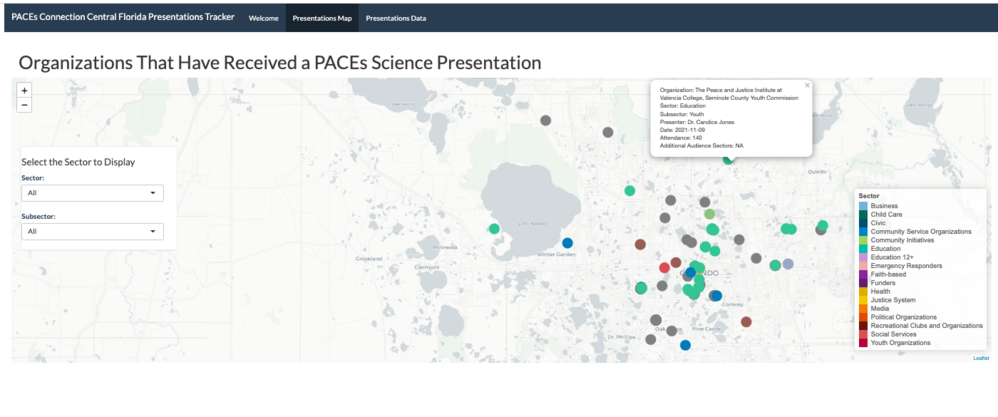
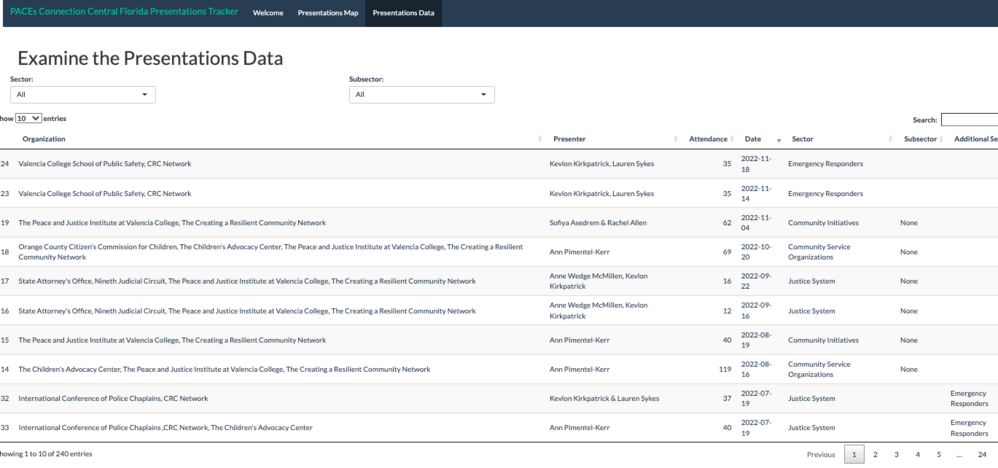
Asedrem is one of several members of the CRC Network to have given multiple PACEs science presentations in the community.  All told, members of the Network, led by Peace and Justice Institute director Rachel Allen, have made some 240 presentations over the last four years!

Screen Shot 2022-12-12 at 2.48.35 PM
Screen Shot 2022-12-12 at 3.31.38 PM

A paradigm shift to a trauma-informed culture.

Asedrem supports PACEs Connection because it is one of the organizations actively dedicated to creating a paradigm shift to create a culture founded on the science of positive and adverse childhood experiences, and whose policies and practices are expressed in trauma-informed ways.

“By investing in PACEs Connection, members of our community can help communities address the root causes of some of the deep challenges we all face,” she adds.

Asedrem leverages her PACE Connection website to get the word out about resources and events. Within a day of Hurricane Ian’s record destruction, Asedrem hadposted a blog on PACEs Connection full of resources for her community, and leveraged the ability to share her blog out on other social media in calling her fellow Central Floridians to “look for the helpers.”

Asedrem encourages fellow members of PACEs Connection to join her in making a generous, tax-deductible donation to PACEs Connection here.

If you’d prefer to mail your gift rather than give it online, here’s how…

mail iconMake check payable to:

TSNE (Third Sector New England, our fiscal sponsor) and write PACEs Connection Donation on the memo line.

Mail check to:

PACEs Connection, c/o TSNE, 89 South Street, Suite 700, Boston, MA 02111

information iconMaking a wire transfer or need Tax ID information?

Please contact Carey Sipp, Director of Strategic Partnerships, at

Sofiya Asedrem supports PACEs Connection to help address root causes in her fast-growing Florida community & make mental health a human right.

Carey Sipp Carey Sipp 12/14/2210:30 AM

Note: PACEs Connection is in dire financial straits. We need you, our almost 58,000 members, to help cover the loss of foundation funding that was promised and did not come through. Unfortunately, staff pay and hours have had to be cut for December. The good news is that, since sounding the alarm this summer, we’ve raised more than $52,000. Thank you to all who’ve donated. To get a sense of who your fellow members are, who is donating, and why, please read and share this seventh in a series of donor profiles. Now that you know we need your help, please join Sofiya Asedrem and make a generous donationto PACEs Connection!

Sofiya Asedrem is busy. She manages the Creating a Resilient Community (CRC) Network convened out of the Peace and Justice Institute at Valencia College and the PACEs Connection Central Florida website that advances and reports on all the work. There’s also a CRC conference each spring that brings in people from all over the country, and myriad other educational events throughout the year.

Screen Shot 2022-12-12 at 3.23.18 PM

Deadly weather challenges and epic growth in her international community demand all of her skills. Her education—a bachelor’s degree in international affairs at the George Washington University where she was sponsored twice by the U.S. Department of State, and a master’s degree in political science from the University of Central Florida—is foundational to her success in community development. She also relies heavily on her expertise in mental health and trauma, women’s empowerment and gender issues, environmental sustainability, peace studies, and agricultural programs.

Another support in her work? The impact of PACEs Connection.

“PACEs Connection has been an immense factor in the growth of our group (the CRC Network),” she says. “We have been able to grow to over 500 members and 250 organizations in just three years.” The group is a cross-sector collective impact movement transforming the region into one of prevention, hope, healing and resilience for all, she continues. It provides space for information sharing as well as providing many opportunities for growth and networking/learning from other communities and experts around the nation.

I was motivated to become involved with PACEs Connection because I saw opportunities for growth both internally (as a mother, wife, daughter, sister, etc.) and externally–as a working professional looking to help my organization and community along the journey of becoming trauma-informed,” she says. “With its future-oriented initiatives and scientific and expertise-led approach, PACEs Connection is a go-to resource.”

Changing the world with PACEs science

How does Asedrem see PACEs science making a difference in the world?

“My local community is facing so many challenges that are a microcosm of the world’s challenges—from the pandemic, to recent hurricanes, to community violence and economic disparities,’ she says.

“I hope PACEs science will change my community and the world by providing an awareness of positive and adverse childhood experiences, teaching individuals how to heal from toxic stress, and welcoming others to approach fellow humans in a way that is more trauma-informed,” she says. “By learning about PACEs science, I think we will be able to realize the goal of making mental health a human right and public good. As a result, we will see greater social well-being—providing people with the opportunity to live healthy, meaningful lives and contribute to the greater good of our communities.”

Asedrem is one of several members of the CRC Network to have given multiple PACEs science presentations in the community.  All told, members of the Network, led by Peace and Justice Institute director Rachel Allen, have made some 240 presentations over the last four years!

Screen Shot 2022-12-12 at 2.48.35 PM
Screen Shot 2022-12-12 at 3.31.38 PM

A paradigm shift to a trauma-informed culture.

Asedrem supports PACEs Connection because it is one of the organizations actively dedicated to creating a paradigm shift to create a culture founded on the science of positive and adverse childhood experiences, and whose policies and practices are expressed in trauma-informed ways.

“By investing in PACEs Connection, members of our community can help communities address the root causes of some of the deep challenges we all face,” she adds.

Asedrem leverages her PACE Connection website to get the word out about resources and events. Within a day of Hurricane Ian’s record destruction, Asedrem hadposted a blog on PACEs Connection full of resources for her community, and leveraged the ability to share her blog out on other social media in calling her fellow Central Floridians to “look for the helpers.”

Asedrem encourages fellow members of PACEs Connection to join her in making a generous, tax-deductible donation to PACEs Connection here.

If you’d prefer to mail your gift rather than give it online, here’s how…

mail iconMake check payable to:

TSNE (Third Sector New England, our fiscal sponsor) and write PACEs Connection Donation on the memo line.

Mail check to:

PACEs Connection, c/o TSNE, 89 South Street, Suite 700, Boston, MA 02111

information iconMaking a wire transfer or need Tax ID information?

Please contact Carey Sipp, Director of Strategic Partnerships, at

Sofiya Asedrem supports PACEs Connection to help address root causes in her fast-growing Florida community & make mental health a human right.

Carey Sipp Carey Sipp 12/14/2210:30 AM

Note: PACEs Connection is in dire financial straits. We need you, our almost 58,000 members, to help cover the loss of foundation funding that was promised and did not come through. Unfortunately, staff pay and hours have had to be cut for December. The good news is that, since sounding the alarm this summer, we’ve raised more than $52,000. Thank you to all who’ve donated. To get a sense of who your fellow members are, who is donating, and why, please read and share this seventh in a series of donor profiles. Now that you know we need your help, please join Sofiya Asedrem and make a generous donationto PACEs Connection!

Sofiya Asedrem is busy. She manages the Creating a Resilient Community (CRC) Network convened out of the Peace and Justice Institute at Valencia College and the PACEs Connection Central Florida website that advances and reports on all the work. There’s also a CRC conference each spring that brings in people from all over the country, and myriad other educational events throughout the year.

Screen Shot 2022-12-12 at 3.23.18 PM

Deadly weather challenges and epic growth in her international community demand all of her skills. Her education—a bachelor’s degree in international affairs at the George Washington University where she was sponsored twice by the U.S. Department of State, and a master’s degree in political science from the University of Central Florida—is foundational to her success in community development. She also relies heavily on her expertise in mental health and trauma, women’s empowerment and gender issues, environmental sustainability, peace studies, and agricultural programs.

Another support in her work? The impact of PACEs Connection.

“PACEs Connection has been an immense factor in the growth of our group (the CRC Network),” she says. “We have been able to grow to over 500 members and 250 organizations in just three years.” The group is a cross-sector collective impact movement transforming the region into one of prevention, hope, healing and resilience for all, she continues. It provides space for information sharing as well as providing many opportunities for growth and networking/learning from other communities and experts around the nation.

I was motivated to become involved with PACEs Connection because I saw opportunities for growth both internally (as a mother, wife, daughter, sister, etc.) and externally–as a working professional looking to help my organization and community along the journey of becoming trauma-informed,” she says. “With its future-oriented initiatives and scientific and expertise-led approach, PACEs Connection is a go-to resource.”

Changing the world with PACEs science

How does Asedrem see PACEs science making a difference in the world?

“My local community is facing so many challenges that are a microcosm of the world’s challenges—from the pandemic, to recent hurricanes, to community violence and economic disparities,’ she says.

“I hope PACEs science will change my community and the world by providing an awareness of positive and adverse childhood experiences, teaching individuals how to heal from toxic stress, and welcoming others to approach fellow humans in a way that is more trauma-informed,” she says. “By learning about PACEs science, I think we will be able to realize the goal of making mental health a human right and public good. As a result, we will see greater social well-being—providing people with the opportunity to live healthy, meaningful lives and contribute to the greater good of our communities.”

Asedrem is one of several members of the CRC Network to have given multiple PACEs science presentations in the community.  All told, members of the Network, led by Peace and Justice Institute director Rachel Allen, have made some 240 presentations over the last four years!

Screen Shot 2022-12-12 at 2.48.35 PM
Screen Shot 2022-12-12 at 3.31.38 PM

A paradigm shift to a trauma-informed culture.

Asedrem supports PACEs Connection because it is one of the organizations actively dedicated to creating a paradigm shift to create a culture founded on the science of positive and adverse childhood experiences, and whose policies and practices are expressed in trauma-informed ways.

“By investing in PACEs Connection, members of our community can help communities address the root causes of some of the deep challenges we all face,” she adds.

Asedrem leverages her PACE Connection website to get the word out about resources and events. Within a day of Hurricane Ian’s record destruction, Asedrem hadposted a blog on PACEs Connection full of resources for her community, and leveraged the ability to share her blog out on other social media in calling her fellow Central Floridians to “look for the helpers.”

Asedrem encourages fellow members of PACEs Connection to join her in making a generous, tax-deductible donation to PACEs Connection here.

If you’d prefer to mail your gift rather than give it online, here’s how…

mail iconMake check payable to:

TSNE (Third Sector New England, our fiscal sponsor) and write PACEs Connection Donation on the memo line.

Mail check to:

PACEs Connection, c/o TSNE, 89 South Street, Suite 700, Boston, MA 02111

information iconMaking a wire transfer or need Tax ID information?

Please contact Carey Sipp, Director of Strategic Partnerships, at

Encore ‘History. Culture. Trauma.’ podcast begins Black History Month with author Bruce Perry discussing historical trauma & ‘What Happened to You?’

Carey Sipp Carey Sipp 1/31/233:45 PM

“What Happened to You?” – the book and the question – speak to the PACEs Connection commitment to explore and share our nation’s history of trauma, racism, genocide and colonization. We begin Black History Month 2023, with an encore discussion by Bruce Perry, co-author of The New York Times Best-seller, “What Happened to You? Conversations on Trauma, Resilience and Healing.”

In this episode, Perry and podcast hosts Ingrid Cockhren, CEO of PACEs Connection, and Mathew Portell, director of outreach and education, discuss the importance of learning about  our past to understand how the United States is in such a state of collective trauma at this time in our nation’s history.

Screen Shot 2023-01-31 at 5.40.15 PM“If you don’t understand history,” said Perry, “you’re never going to understand trauma. And if you don’t understand trauma, you’re never going to understand history. And this is part of our problem as a field.”

Tune in Thursday at 1 p.m. PT  to hear Perry, Cockhren, and Portell address the history of colonialism, treatment of Indigenous people, and the kidnapping and enslavement of Africans that are such a part of the ongoing history and historical trauma of the United States.

Cockhren and Portell interviewed Perry about the book, which he wrote with author Oprah Winfrey in July 2022, as a part of the launch celebration for the PACEs Connection Connecting Communities One Book At A Time book study initiative.

“You know, we are living in systems that are fundamentally colonial in construction,” Perry said. “And colonialism basically means I’m going to come into your space, your place, and I’m going to take your things and I’m going to make you feel privileged if I give you a little bit of it back.”

Historical perspectives about trauma deserve “as much attention and funding and support” as is given to people studying the effects of a drug on post traumatic stress disorder (PTSD), or the effects of other treatments, he said.

For more information about this podcast, you can watch the full interview here.

Perry leads the Neurosequential Network, is senior fellow of The Child Trauma Academy, and adjunct professor in the departments of psychiatry and behavioral sciences at the Feinberg School of Medicine at Northwestern University in Chicago and the School of Allied Health, College of Science, Health and Engineering, La Trobe University, Melbourne, Victoria Australia.

To listen to Thursday’s podcast at 1 p.m. PT, 4 p.m. ET,  or whenever, as it is an encore episode, please clickhere.

Show Links

Encore ‘History. Culture. Trauma.’ podcast begins Black History Month with author Bruce Perry discussing historical trauma & ‘What Happened to You?’

Carey Sipp Carey Sipp 1/31/233:45 PM

“What Happened to You?” – the book and the question – speak to the PACEs Connection commitment to explore and share our nation’s history of trauma, racism, genocide and colonization. We begin Black History Month 2023, with an encore discussion by Bruce Perry, co-author of The New York Times Best-seller, “What Happened to You? Conversations on Trauma, Resilience and Healing.”

In this episode, Perry and podcast hosts Ingrid Cockhren, CEO of PACEs Connection, and Mathew Portell, director of outreach and education, discuss the importance of learning about  our past to understand how the United States is in such a state of collective trauma at this time in our nation’s history.

Screen Shot 2023-01-31 at 5.40.15 PM“If you don’t understand history,” said Perry, “you’re never going to understand trauma. And if you don’t understand trauma, you’re never going to understand history. And this is part of our problem as a field.”

Tune in Thursday at 1 p.m. PT  to hear Perry, Cockhren, and Portell address the history of colonialism, treatment of Indigenous people, and the kidnapping and enslavement of Africans that are such a part of the ongoing history and historical trauma of the United States.

Cockhren and Portell interviewed Perry about the book, which he wrote with author Oprah Winfrey in July 2022, as a part of the launch celebration for the PACEs Connection Connecting Communities One Book At A Time book study initiative.

“You know, we are living in systems that are fundamentally colonial in construction,” Perry said. “And colonialism basically means I’m going to come into your space, your place, and I’m going to take your things and I’m going to make you feel privileged if I give you a little bit of it back.”

Historical perspectives about trauma deserve “as much attention and funding and support” as is given to people studying the effects of a drug on post traumatic stress disorder (PTSD), or the effects of other treatments, he said.

For more information about this podcast, you can watch the full interview here.

Perry leads the Neurosequential Network, is senior fellow of The Child Trauma Academy, and adjunct professor in the departments of psychiatry and behavioral sciences at the Feinberg School of Medicine at Northwestern University in Chicago and the School of Allied Health, College of Science, Health and Engineering, La Trobe University, Melbourne, Victoria Australia.

To listen to Thursday’s podcast at 1 p.m. PT, 4 p.m. ET,  or whenever, as it is an encore episode, please clickhere.

Show Links

How much would the NAS poverty reduction packages reduce referrals to CPS and foster care placements? Would they reduce racial disproportionality in child welfare? (nasonline.org).

Carey Sipp Carey Sipp 3/17/237:51 PM

Because of a collaboration with Columbia University and UW-Madison, we have answers to these questions.

By Peter Peter Pecora, Casey Family Programs, March 17, 2023 –

Overview

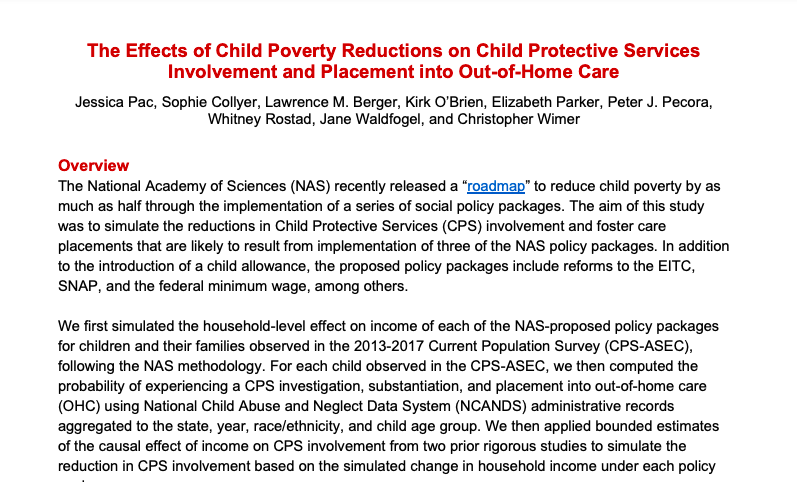
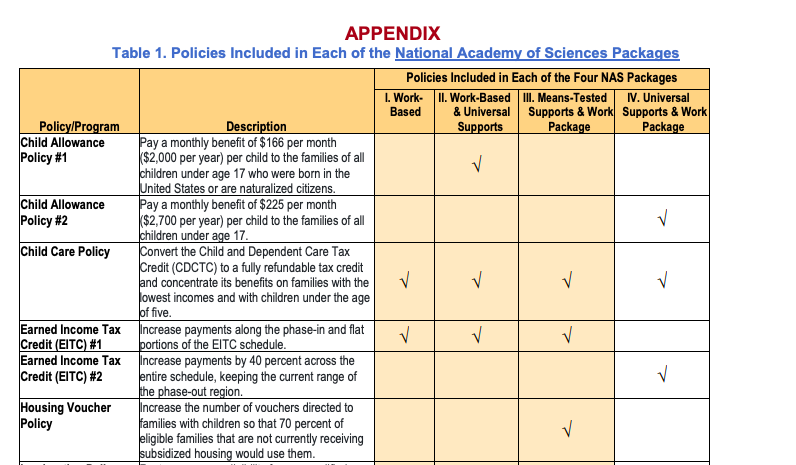
The National Academy of Sciences (NAS) recently released a “roadmap” to reduce child poverty by as much as half through the implementation of a series of social policy packages. The aim of this study was to simulate the reductions in Child Protective Services (CPS) involvement and foster care placements that are likely to result from implementation of three of the NAS policy packages. In addition to the introduction of a child allowance, the proposed policy packages include reforms to the EITC, SNAP, and the federal minimum wage, among others. (The NAS poverty reduction packages are summarized on page 2 of the study abstract document, and pp. 79-80 in the article.)

Reduction in CPS Investigations

Depending on the policy package and simulation specifications modeled, we find that the child poverty reductions expected under the NAS recommendations have the potential to reduce CPS investigations by 11.3% (Package 2, low threshold) to 36.4% (Package 4, high threshold) — constituting approximately 386,000 to 1.2 million fewer CPS investigations per year.

Moreover, we find particularly large reductions in CPS involvement that would reduce racial disproportionality substantially.  We estimate an 18.7 to 42.8 percent reduction in investigations for Black children, and 13.3 to 47.6 percent for Hispanic children, compared to 6.7 to 27.9 percent for white children.

Reduction in Out-Of-Home Care Placements

Our simulated effects on CPS involvement imply that 16,000 to 23,000 fewer children would be removed from their home and placed in out-of-home care each year.

The project purchased a special license so that this article can be shared with anyone.

Reference:

Pac, J., Collyer, S., Berger, L.M., O’Brien, K., Parker, E., Pecora, P.J., Rostad, W., Waldfogel, J. & Wimer, C. (2023). The effects of child poverty reductions on child protective services involvement and placement into out-of-home care. Social Services Review,97(1), 43-91.

Attachments:

Pac et al_ 2023 Effects of NAS Poverty Reduction Packages on CPS referrals and Foster Care Placements_Soc Serv Review.pdf

Columbia_UW-Madison_Casey Family Programs Poverty Reduction Study Abstract_3-16-23.pdf

For more information, contact:

Peter J. Pecora

Managing Director of Research Services

Pronouns: He/His

P 206.270.4936

ppecora@casey.org

casey family programs | casey.org

Attachments

Hide

Images (2)

Screen Shot 2023-03-17 at 9.37.17 PM
Screen Shot 2023-03-17 at 9.35.50 PM

Files (2)

Columbia_UW-Madison_Casey Family Programs Poverty Reduction Study Abstract_3-16-23.pdf

Pac et al_ 2023 Effects of NAS Poverty Reduction Packages on CPS referrals and Foster Care Placements_Soc Serv Review.pdf

Carey Smith Sipp

carey.pacescommunites@gmail.com
👍 2

How America Manufactures Poverty [newyorker.com]

Carey Sipp Carey Sipp 3/15/231:00 PM

“We typically don’t talk about poverty as a condition that benefits some of us,” Desmond writes in his morally charged manifesto. “It seems we prefer more absolving theories of the problem.”Photograph by Philip Montgomery for The New Yorker

By Margaret Talbot, The New Yorker, March 13, 2023

“Books about poverty tend to be books about the poor,” the sociologist Matthew Desmond writes in “Poverty, by America” (Crown). That’s true whether the motivation is to blame the poor for their lot—chronicling the supposed pathologies creating a “culture of poverty”—or, more commonly nowadays, to generate empathy via detailed ethnographies of survival and agency amid deprivation. It was true of the first books that set out to systematically map and measure poverty, such as the Victorian reformer Charles Booth’s seventeen-volume “Life and Labour of the People in London,” and of Progressive Era attempts to rattle the consciences of the well-off, like Jacob Riis’s document of New York tenement life, “How the Other Half Lives.”

When Michael Harrington wrote his 1962 classic, “The Other America,” a work of morally charged narrative nonfiction often credited with helping to inspire the War on Poverty, his aim was to reveal the “socially invisible” poor to the rest of America. A cocoon of postwar prosperity and complacency, he wrote, blinkered “middle-class women coming in from Suburbia on a rare trip,” who might “catch the merest glimpse of the other America on the way to an evening at the theater”; it also blinkered “the business or professional man,” who might “drive along the fringes of slums in a car or bus” without regarding it as “an important experience.” The book’s dominant rhetorical modes, as Harrington’s biographer Maurice Isserman notes, were paradox and revelation. If the scales were pulled from the eyes of his well-meaning readers, they would see, in the shadows of American plenty, tens of millions of poor people, whom Harrington catalogued and described: rural poor, city-dwelling slum poor, alcoholic skid-row poor, and so on—all of them urgently needing the help of the government and liberal élites. Even a book like Charles Murray’s “Losing Ground,” an influential neocon attack on “welfare dependency,” from 1984, focussed on the poor themselves, if only so that Murray might make an argument about how they had immiserated themselves by adapting to anti-poverty policies.

[Please click here to read more.]

Carey Smith Sipp

carey.pacescommunites@gmail.com
Join us for ‘History. Culture. Trauma.’ encore podcast — Thursday 1PM PT with “Girls on the Brink” author Donna Jackson Nakazawa

Carey Sipp Carey Sipp 6/6/232:56 PM

A headline earlier this year said it simply: Social Media is Devastating Girls Mental Health.Donna Jackson Nakazawa, an award-winning science journalist and the author of seven books exploring the intersection of neuroscience, immunology, and human emotion, is featured in this week’s episode of History  Culture. Trauma, and explains the crisis facing today’s girls as being a biologically rooted phenomenon, and more, and offers solutions to the crisis that has many parents wondering what they can do.“The earlier onset of puberty mixes badly with the unchecked bloom of social media and cultural misogyny. When this toxic clash occurs during the critical neurodevelopmental window of adolescence, it can alter the female stress-immune response in ways that derail healthy emotional development,” explains Nakazawa.Screen Shot 2023-06-06 at 4.50.27 PMThis week’s encore episode of History. Culture. Trauma. is an excerpt from a recorded interview of Nakazawa conducted by PACEs Connection team members Carey Sipp and Natalie Audage in October, 2022, as a part of  the PACEs Connection Connecting Communities One Book at a Time initiative. The initiative featured her latest book Girls on the Brink: Helping Our Daughters Thrive in an Era of Increased Anxiety, Depression, and Social Media. The book was published last October.In this interview,  Nakazawa focuses on the impact of modern society on adolescent girls. “Anyone caring for girls today knows that our daughters, students, and girls next door are more anxious and more prone to depression and self-harming than ever before. The question that no one has yet been able to credibly answer is “Why?”Screen Shot 2023-06-06 at 4.47.40 PMNakazawa was clear that while she sees much to worry about girls’ mental health today, she also has hope. She offers 15 antidotes or “strategies for raising emotionally healthy girls” in the book and spoke about a several of them during the webinar from which this interview is gleaned. (See below for resources, including a link to the longer webinar interview in which she details the strategies.)Antidotes fall into three categories and include three on “the building blocks of good parent-child connection, and the importance of family connection,” six antidotes for “making her home a safe space,” and six antidotes to “bring in what the wider community can provide.” The longer webinar interview honed in on at least one antidote from each of the three categories, including making it a good experience when your daughter turns to you, the importance of “wonder”, and encouraging a sense of mastery.Jackson Nakazawa has appeared on The Today Show and NPR, and is a regular speaker at universities, including the Harvard Division of Science Library Series, Rutgers University, Johns Hopkins, Learning and the Brain, and the Andrew Weil Center for Integrative Medicine at the University of Arizona. She is also the creator and founder of the narrative writing-to-heal program, which uses a process called Neural Re-Narrating to help participants recognize and override their brain’s old thought patterns and internalized stories.

Listen to “History. Culture. Trauma.” here online on Thursday, or access this, or prior podcasts, at the podcast service of your choice listed below.

Additional resources related to our book study of “Girls on the Brink”

  1. You can still view the recording of the Girls on the Brink October 12 webinar!
  2. Nakazawa and her team created a Book Club Kit for people interested in leading Girls on the Brink book studies.

‘History. Culture. Trauma.’ podcast: Encore interview with Dr. Bruce Perry on historical trauma and ‘What Happened to You?’ Thurs. 1 p.m. PT; 4 p.m. ET

Carey Sipp Carey Sipp 6/20/231:55 PM

As a reflection on the past weekend’s celebration of Juneteenth, and the historical trauma of chattel slavery influencing our lives today, this week’s episode of the History. Culture. Trauma podcast is an excerpt from a recorded interview of Dr. Bruce Perry conducted by hosts Ingrid Cockhren, PACEs Connection CEO,  and Mathew Portell, director of education and outreach, in June, 2022.

In this interview Perry discusses, within the context of historical trauma, his #1 New York Times Bestseller “What Happened to You? Conversations on Trauma, Resilience, and Healing” (2021), which he co-authored with Oprah Winfrey.

“If you don’t understand history, you’re never going to understand trauma. And if you don’t understand trauma, you’re never going to understand history. And this is part of our problem as a field,” said Perry in the wide-ranging interview discussing  the intersecting fields of trauma and historical trauma.

“There are some really exciting and important things that are happening in the area of historical trauma,” said Perry. He addressed the history of colonialism, treatment of indigenous people, kidnapping and enslavement that are such a part of the history and historical trauma of the United States.

“You know, we are living in systems that are fundamentally colonial in construction,” he said. “And colonialism basically means I’m going to come into your space, your place, and I’m going to take your things and I’m going to make you feel privileged, if I give you a little bit of it back.”

Screen Shot 2023-06-20 at 3.53.23 PM
Historical perspectives about trauma deserve “as much attention and funding and support” as is given to people studying the effects of a drug on post traumatic stress disorder (PTSD), or the effects of other treatments, he said.

Perry is the principal of the Neurosequential Network, senior fellow of The Child Trauma Academy and adjunct professor in the Departments of Psychiatry and Behavioral Sciences at the Feinberg School of Medicine at Northwestern University in Chicago and the School of Allied Health, College of Science, Health and Engineering, La Trobe University, Melbourne, Victoria Australia.

According to his website, “Over the last thirty years, Dr. Perry has been an active teacher, clinician and researcher in children’s mental health and the neurosciences holding a variety of academic positions. His work on the impact of abuse, neglect and trauma on the developing brain has impacted clinical practice, programs and policy across the world. Dr. Perry is the author, with Maia Szalavitz, of “The Boy Who Was Raised As A Dog”, a bestselling book based on his work with maltreated children, and “Born For Love: Why Empathy is Essential and Endangered”.

Perry, a native of Bismarck, North Dakota, earned his undergraduate degree at Stanford University and Amherst College. He attended medical and graduate school at Northwestern University, receiving both M.D. and Ph.D. degrees, and completed a residency in general psychiatry at Yale University School of Medicine and a fellowship in Child and Adolescent Psychiatry at The University of Chicago.

To listen to Thursday’s podcast at 1 p.m. PT, 4 p.m. ET, click here.

To hear prior episodes via your favorite podcast service, use the links below.

To watch the complete webinar, visit the PACEs Connection YouTube channel here.

Join us for ‘History. Culture. Trauma.’ encore podcast — Thursday 1PM PT with “Girls on the Brink” author Donna Jackson Nakazawa

Carey Sipp Carey Sipp 11/7/233:16 PM

A headline earlier this year said it simply: Social Media is Devastating Teen’s Mental Health.Donna Jackson Nakazawa, an award-winning science journalist and the author of seven books exploring the intersection of neuroscience, immunology, and human emotion, is featured in this week’s encore episode of History  Culture. Trauma.Jackson Nakazawa explains the crisis facing today’s girls as being a biologically -rooted phenomenon, and more, and offers solutions to the crisis that has many parents wondering what they can do.“The earlier onset of puberty mixes badly with the unchecked bloom of social media and cultural misogyny. When this toxic clash occurs during the critical neurodevelopmental window of adolescence, it can alter the female stress-immune response in ways that derail healthy emotional development,” explains Nakazawa.Screen Shot 2023-06-06 at 4.50.27 PMThis week’s episode of History. Culture. Trauma. is an excerpt from a recorded interview of Jackson Nakazawa conducted by PACEs Connection team members Carey Sipp and Natalie Audage in October, 2022, as a part of  the PACEs Connection Connecting Communities One Book at a Time initiative. The initiative featured Jackson Nakazawa’s latest book, Girls on the Brink: Helping Our Daughters Thrive in an Era of Increased Anxiety, Depression, and Social Media. The book was published last October.In the interview, Jackson Nakazawa focuses on the impact of modern society on adolescent girls. “Anyone caring for girls today knows that our daughters, students, and girls next door are more anxious and more prone to depression and self-harming than ever before. The question that no one has yet been able to credibly answer is “Why?”Screen Shot 2023-06-06 at 4.47.40 PMJackson Nakazawa was clear that while she sees much to worry about girls’ mental health today, she also has hope. She offers 15 antidotes or “strategies for raising emotionally healthy girls” in the book and spoke about a several of them during the webinar from which this interview is gleaned. (See below for resources, including a link to the longer webinar interview in which she details the strategies.)Antidotes fall into three categories and include three on “the building blocks of good parent-child connection, and the importance of family connection,” six antidotes for “making her home a safe space,” and six antidotes to “bring in what the wider community can provide.” The longer webinar interview honed in on at least one antidote from each of the three categories, including making it a good experience when your daughter turns to you, the importance of “wonder”, and encouraging a sense of mastery.Jackson Nakazawa has appeared on The Today Show and NPR, and is a regular speaker at universities, including the Harvard Division of Science Library Series, Rutgers University, Johns Hopkins, Learning and the Brain, and the Andrew Weil Center for Integrative Medicine at the University of Arizona. She is also the creator and founder of the narrative writing-to-heal program, which uses a process called Neural Re-Narrating to help participants recognize and override their brain’s old thought patterns and internalized stories.

Listen to “History. Culture. Trauma.” here online on Thursday, or access this, or prior podcasts, at the podcast service of your choice listed below.

Additional resources related to our book study of “Girls on the Brink”

  1. You can still view the recording of the Girls on the Brink October 12 webinar!
  2. Nakazawa and her team created a Book Club Kit for people interested in leading Girls on the Brink book studies.