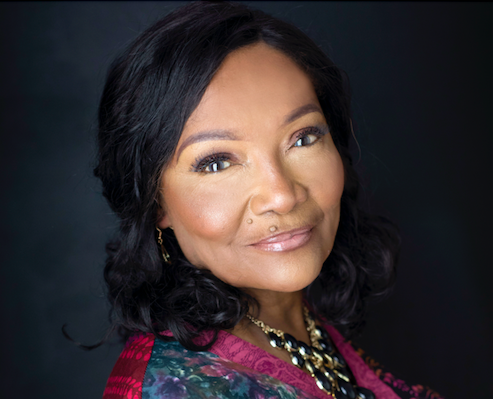
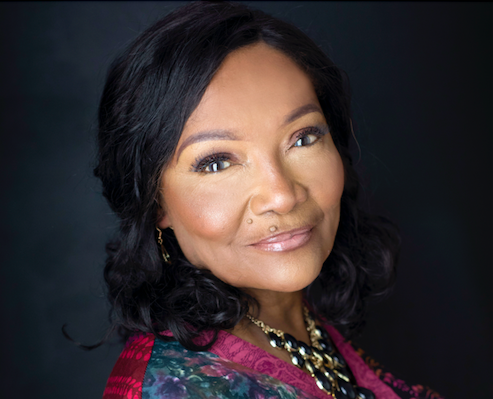
AC Care Alliance care navigator Nikki High, left, visits with a client family at her home in Gardena, California. Photo: Harrison Hill
By Heather Stringer, California Health Care Foundation, August 25, 2023
Leslie Arnold’s 87-year-old mother was diagnosed with Alzheimer’s disease 10 years ago, and caring for her has become increasingly difficult as the disease has progressed. Sometimes his mother is resistant to changing out of soiled clothes or going to bed, and she stays up reorganizing dishes in kitchen cabinets throughout the night.
Arnold lives near his mother’s house in Gardena, in the South Bay area of Los Angeles County, where he takes turns with his two brothers caring for her for a week at a time. During his shifts, Arnold cooks, cleans, shops, and takes his mother to doctor’s appointments. He is also careful to keep the door locked so she doesn’t leave the house unsupervised and get lost.
His brothers, who both live out of state, pay out-of-pocket for a home health aide 21 hours a week. Despite the fact that their mother served in the Air Force, the sons’ repeated efforts to secure assistance through the Veterans Administration (VA) and Medi-Cal have been unsuccessful.
Amidst reports ofincreased stress,mental health problems, absenteeism, depression, anxiety, and suicidality, America’s students are well into the 2023-24 school year. Will schools that have taken a trauma-informed approach to student mental health see their students fare better in the coming year? Does it make a difference to have students in trauma-sensitive schools?
History. Culture. Trauma. podcast hosts Ingrid Cockhren, CEO of PACEs Connection, and Mathew Portell, director of education and outreach, take a look at the importance of trauma-informed or trauma-sensitive schools with Tyisha Noise, D.Ed., episode this Thursday at 1 p.m. PT; 4 p.m. ET.
Together they will dig into the paradigm shifts needed to help students grapple with the stress of the global pandemic, our nation’s racial reckoning, polarized political climate, the increase in school shootings, and more.
“It’s clear that reducing stress in schools is essential for student, staff, and community wellbeing,” said Cockhren. “We’ll delve into many possible solutions, from decreasing class sizes to teaching stress-management techniques that can empower students, and more,” Cockhren added.
Noise is a board member and the chief academic officer of Liberia Forward, a leadership development organization.
An educator from South Central Los Angeles, Noise received her undergraduate degree in urban and regional studies from Cornell University, a master’s degree in clinical psychology from Pepperdine University, and her doctor of education degree in educational leadership from Azusa Pacific University. She also has a master of science in teaching students with disabilities from Pace University.
Noise is the daughter of a teenage mother who says she learned first-hand the value of an education. Although born into poverty and growing up in neighborhoods with gangs and drug abuse all around, school became not just a way for Noise to make her mother proud: it became an adventure and eventually an escape to a new life. Noise’s pursuit of education has taken her across continents from North America to Europe – Italy, France, Greece, UK, the Middle East – Israel and Jordan, Egypt and various islands in the Caribbean.
Tune in here live on Thursday at 1 p.m. PDT; 4 p.m. EDT
Don’t Die of Ignorance billboard, part of an Aids awareness campaign from 1987. Photograph: Ltd/REX/Shutterstock
By Mabel Banfield-Nwachi, The Guardian, September 16, 2023
Cancer charities and health campaigners are calling for a return to hard-hitting advertisements – common in the 1980s, 1990s and early 2000s – to help tackle public health problems. Below are some of the key public health ads of past decades.
The 1987 Aids awareness campaign, Don’t aid Aids, was the Thatcher government’s response to the emerging public health crisis. The advertising campaign, broadcast on TV, billboards and in leaflets sent out to every home, is sometimes referred to as the Don’t Die of Ignorance campaign, or the Tombstone campaign.
The TV commercial starts with an explosion, followed by discordant music. Then an industrial drill bores into rock before the word “Aids” is chiselled into the polished surface of a granite tombstone. A Don’t Die of Ignorance leaflet drops on to the headstone, along with a bouquet of white lilies.
The National Training and Technical Assistance Center for Child, Youth, and Family Mental Health (NTTAC), is a PACEs Connection partner in the important discussion of healing-centered youth engagement.
This week Joshua Smith, a juvenile justice advocate and peer support expert for NTTAC joins History. Culture. podcast hosts Ingrid Cockhren, PACEs Connection CEO, and Mathew Portell, director of education and outreach, to discuss the latest healing-centered approaches and how they are the next level of trauma-informed care.
Smith is a Washington State Certified Peer Counselor, Connecticut Connection for Addiction Recovery (CARR) Coach, and Teen Mental Health First Aid Facilitator.
NTTAC is a SAMHSA-funded initiative providing states, tribes, and communities with training and technical assistance (TTA) on children’s behavioral health. The organization works to ensure all young people and families get the support they need to thrive by increasing access to, effectiveness of, and dissemination of evidence-based mental health services for young people (ages 0-21) and their families, including young people experiencing serious mental illness or serious emotional disturbance (SMI/SED).
Tune in here on Thursday at 1 p.m. PT; 4 p.m. ET, for this live episode!
According to estimates, up to 70,000 daycare facilities could close, causing three million child care slots to vanish. Credit: Camilla Forte/ The Hechinger Report
by Lisa M. Hamilton September 28, 2023 (Opinion) The Hechinger Report
(Lisa M. Hamilton is the president and chief executive officer of the Annie E. Casey Foundation.)
Millions of working parents will face a child care emergency after pandemic-era federal funding ends Sept. 30, just two days from now.
Whether you are one of the affected parents or not, you will feel the impact on our nation’s workforce and economy.
According to estimates, up to 70,000 daycare facilities could close, causing three million child care slots to vanish. This is a loss of educational opportunity for children, but also a devastating loss of support for millions of working parents who may have to leave their jobs.
All of us will surely feel the resulting blow to our economy if a projected $9 billion-plus in earnings is lost.
Sadly, this is just the latest failure in a child care system that has been broken for decades.
As The Casey Foundation recently highlighted in our 2023 KIDS COUNT®Data Book, shortcomings of the child care system already cost the country $122 billion a year in lost wages, tax revenue and productivity.
We cannot allow these cascading consequences to continue.
Every other country with an economy comparable to ours has created a sustainable system that better meets the needs of families, employers and child care workers.
It’s time for policymakers to explore immediate solutions. We know they exist: Every other country with an economy comparable to ours has created a sustainable system that better meets the needs of families, employers and child care workers.
Moreover, we already have evidence in our own economy of what can work. For example, home-based providers are more likely to operate during non-traditional hours, when shift workers, single parents and student parents need them. One thing we can do right away is to increase access to affordable startup and expansion capital for new and existing home-based centers.
A robust, reliable care system requires investment. Average public spending on child care among the comparatively wealthy Organization for Economic Cooperation and Development (OECD) nations is $16,000 a year per child.
The United States invests a mere $500 per child. How can we invest so little in our future workforce? In the leaders of tomorrow?
Families are working hard to meet their needs but costs continue to rise, putting quality care beyond their reach. Child care costs in the U.S. averaged $10,600 a year in 2021, according to an analysis by the advocacy organization Child Care Aware. That’s 10 percent of a couple’s average income — or 35 percent of a single parent’s income.
In at least 34 states, care for the youngest children is more expensive than in-state college tuition.
What support does exist for families is difficult to get and insufficient. As a result, only one out of every six U.S. children eligible for public subsidies receives them.
Women, single parents, parents in poverty, families of color and immigrant families carry the heaviest burden of this crisis: An analysis of 2017 data indicated center-based care for two children absorbed 26 percent of a white working mother’s median household income. For Latino, American Indian or Alaska Native, and Black working mothers, those figures were 42 percent, 51 percent and 56 percent, respectively.
These figures demonstrate how the cost of care can make it almost impossible for a household to meet other basic needs like housing, food and transportation — which all continue to escalate in cost.
In spite of this, providers themselves, almost all women and disproportionately women of color, are barely staying afloat, operating on one percent margins.
No wonder so many are expected to close their doors starting next month.
In August, more than 1,500 state lawmakers from across the country gathered in Indianapolis for the annual National Conference of State Legislatures summit.
We heard Republicans and Democrats agree that something must be done to address the child care crisis.
They know the fallout will keep us from moving forward, from filling jobs and from ensuring that children are safe and thriving while their parents are working or completing their own education.
It’s time to channel that consensus into urgent action and real solutions.
This is a time for creativity and thinking big among both the private and public sector. The Casey Foundation urges lawmakers to invest in the child care sector, starting with these steps:
Congress should reauthorize and strengthen the Child Care and Development Block Grant Act. The main reason we didn’t lose 75,000 child care centers and 3 million slots during the pandemic was the $40 billion allocated to strengthen the child care sector in the American Rescue Plan Act. We now have evidence that these investments work.
Public and private leaders should work together specifically to improve infrastructure for home-based child care providers. Start by increasing access to affordable startup and expansion capital.
Governors and legislators should encourage the higher education and business communities to take steps such as co-locating child care at work and learning sites to reduce transportation challenges.
The underpinnings of our families and our economy are too important for our elected officials to continue to ignore what is happening. The pandemic sharpened our understanding of the issues. There are good models to follow.
Now is the moment for generational action to ensure children, parents and guardians, providers and employers are never again standing at the edge of a cliff, looking for a bridge to safety, and wondering whose kids will make it to the other side and whose will be left behind.
This story about the child care funding cliff was produced byThe Hechinger Report, a nonprofit, independent news organization focused on inequality and innovation in education. Sign up for theHechinger newsletter.
Visionary social systems scholar Riane Eisler at her home in Carmel, Calif. Credit: Don Eddy
By Madhusree Mukerjee, Scientific American, September 28, 2023
Why are some societies warlike, and why are some peaceable? New scholarship suggests that societies can be arranged in a spectrum ranging from domination-based to partnership-based. Every relationship in a dominator society, whether between parent and child, husband and wife, political leader and citizen or citizen and noncitizen, is authoritarian and coercive, whereas in a partnership society, relationships are life-sustaining and egalitarian. Further, dominator societies—the canonical example of which is Nazi Germany—are warlike and propelled by trauma, whereas partnership societies are more caring and peaceable. And childhood experiences help explain how such societies arise and perpetuate themselves.
Social systems scientist Riane Eisler, one of the most original thinkers of our time, and anthropologist Douglas Fry pull together insights from psychology, social science, anthropology, neuroscience and history to make this case in the book Nurturing Our Humanity(Oxford University Press, 2019). “This whole-system approach,” Eisler says, “recognizes that families do not arise in a vacuum but are embedded in, affect and are affected by the larger culture or subculture of which they are part.”
Can empathetic, healing centered workplaces change the entire culture of a community? A nation? What would a healing centered workplace look like, offer, and change?
“Following the Pandemic, there was a ‘Great Resignation’ of people leaving the workplace, in large part, because many of our people don’t make a living wage. Many of our workplaces, unlike those in most other industrialized nations, don’t offer paid family leave and other family-supporting benefits. This is part of what we’ll explore. We’ll also look at what we as individuals can do to apply Manning’s five steps to the trauma we face in the workplace,” said Portell.
About Katharine Manning
Katharine Manning has worked on issues of trauma and victimization for more than 25 years. Her book, “The Empathetic Workplace: Five Steps to a Compassionate, Calm, and Confident Response to Trauma on the Job” was published by HarperCollins Leadership in 2021.
Manning is president of Blackbird DC, Training and Consultation on Empathy at Work, and is a former senior attorney advisor with the Executive Office for United States Attorneys. For fifteen years Manning guided the Justice Department through its response to victims in cases ranging from terrorism to large-scale financial fraud to child exploitation. Some of the cases she advised on include the Boston Marathon bombing, the Pulse nightclub and South Carolina AME church shootings, the uprising in Charlottesville, the Madoff investment fraud, and the federal case against Larry Nassar, doctor for the U.S. Women’s Olympic Gymnastics team.
Manning now uses her expertise to help organizations prepare for and respond to the challenges they face involving employees and clients who may be in trauma. A member of the bar in Washington, D.C. and California, Manning also served as an attorney with the law firm Pillsbury Winthrop in San Francisco, where she represented Fortune 500 companies in class actions, insurance, and media cases. She is a graduate of Smith College and the University of Virginia School of Law and teaches at American University and in the Master’s in Trauma-Informed Leadership Program at Dominican University.
Click on this link to listen in Thursday, October 5 at 1 p.m. PT; 4 p.m. ET, or listen at your convenience by accessing this encore podcast via the providers listed below.
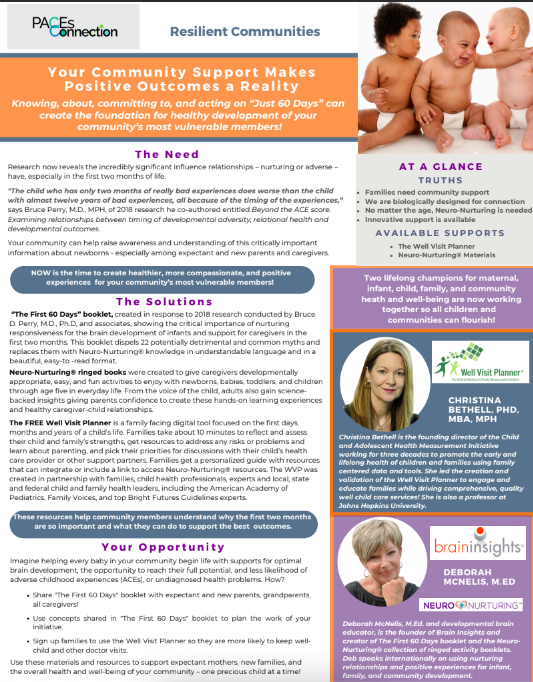
Christina Bethell, Ph.D, MBA, MPH, founder of the Child and Adolescent Health Measurement Initiative (CAHMI), principal author of the groundbreaking study on positive childhood experiences, and creator of the free Well Visit Planner, among other innovations.
Two internationally-respected leaders and innovators in complementary aspects of early relational health and childhood and maternal health equity recently launched a partnership they believe will benefit everyone from newborn babies and the mothers, fathers, grandparents, adoptive, kinship, foster parents and other primary caregivers who care for them, to pediatricians providing recommended well child visits, and communities focused on trauma prevention and resiliency building.
Christina Bethell, PhD, MBA, MPH, and founder of the Child and Adolescent Health Measurement Initiative (CHAMI) and the EnACT! (Engagement in Action Framework) is cross-promoting her free Well Visit Planner, a web-based application to help families and physicians be better prepared for recommended well child visits, with Deborah McNelis, M. Ed, author and founder of “The First 60 Days” booklet and movement.
Bethell is also the principal author of a study on positive childhood experiences (PCEs) and their impact on preventing adult mental illness that led to the name change of ACEs Connection to PACEs Connection — for positive and adverse childhood experiences — in March of 2021.
McNelis is the founder of Brain Insights and creator of the Neuro-Nurturing® series of ringed booklets sharing age-appropriate activities paired with brain development insights for caregivers to use in everyday life with babies and children. These activities increase the likelihood of secure attachment and a foundation of early relational and physical health.
McNelis is also the author of a groundbreaking booklet, “The First 60 Days” (link is to a 12-page sample). The booklet and a movement she has started by the same name, are her heartfelt response to groundbreaking research by Dr. Bruce Duncan Perry and colleagues showing the negative developmental impact of toxic stress in the first two months of life, and the importance of practicing what she calls “Neuro-Nurturing®” during this influential time in infant brain development.
The booklet dispels 22 potentially harmful myths to reassure and support new parents. A portion of each myth is told from the newborn’s point of view. Readers also learn what newborns need for establishing a secure attachment and overall optimal development from what McNelis refers to as,Neuro-Nurturing® Knowledge. “It is all based on brain science revealing what babies and their parents/caregivers really need,” McNelis said.
Details of ways the project’s partnership between Bethell and McNelis can benefit newborns, families, caregivers, communities, and PACEs Connection are spelled out in the attached one-sheet that is ready for download and distribution at resiliency initiative meetings across the country.
The sheet shares information about Bethell and McNelis and their work thus far, and was created with support from Dana Brown, PACEs Connection PACEs science statewide facilitator, who is hoping that promoting the work directly to communities will create use of the Well Visit Planner and the Neuro-Nurturing® materials.
“Bethell and McNelis are dedicated to creating positive health equity, including child flourishing and family resilience. This is a terrific fit for any community,” said Brown.
“In California we have PACEs Connection cross-sector, resiliency focused communities in numerous counties. We’re starting out with the members of the PACEs Connection Cooperative of Communities. Our hope is that member organizations in 12 counties in the Cooperatives will share the information with the parents and caregivers for the families they serve, and that hospitals, clinics, and child-serving organizations – including home-visiting nurses – will help promote use of the Well Visit Planner and the Brain Insights materials,” said Brown.
Cross-sector community member organizations belonging to the Coops include schools, communities of faith, health clinics, child-and-family-serving organizations, businesses, hospitals, media representatives, law enforcement, county and city government offices, and more.
The twelve member counties are: Fresno, Los Angeles, Madera, Orange, Riverside, Sacramento, San Bernardino, Santa Barbara, San Diego, Sonoma, Tulare, and Yolo.
“We’ll know we’re succeeding if there is an increase in enrollments in the Well Visit Planner in these areas. This is important because by promoting well child visits, we increase the likelihood of families and physicians establishing a an ongoing relationship. Building on a trusted relationship, together they are more likely to be able to identify a developmental delay, postpartum depression, or consequences of a challenge in the home that can be supported before a challenge becomes a crisis,” said Brown.
“The hope is to continue to braid resources within communities — as they are interested — so there are lists of resources available for the pediatricians and other caregivers to share with families. We want to support parents, care providers, and communities in creating safe, stable, nurturing relationships and environments for every child, and believe these innovations, in combination with more to come, can help to do that,” said Brown.
“This project partnership and the fact that Deb is willing to discount her materials so they can be a potential fundraiser for communities, and is sharing with PACEs Connection profits from the sale of her materials — which are promoted on the Well Visit Planner site, which has the potential to reach millions of parents — bodes well for all involved,” said Brown.
According to McNelis, the ringed books are literally positive infant and childhood experiences parents and childcare providers alike can keep in their pockets and use throughout the day to engage little ones in activities that nurture optimal brain development. Across the series of books, there are scores of activities to stimulate fine and large motor development, language skills, thinking abilities, creativity, curiosity, self-awareness, and most importantly, connection with others.
State and child serving organizations have bought thousands of sets of the ringed books for parents in various programs.
“The First 60 Days” booklet and the ringed Neuro-Nurturing® series from newborn through age five, are available for bulk and individual purchase. Organizations seeking to customize the materials can opt to have their logo printed on the back cover, and can resell the materials at the retail price for fundraisers, in hospital and faith community gift shops, at health fairs and such, as is detailed in the attached one sheet,” said Brown.
“People wishing to access and use the Well Visit Planner with their infants and children need simply click on the link and enroll,” she added.
For more information about joining the PACEs Connection Cooperative of communities in California, reach out to Dana Brown at dbrown@pacesconnection.com. For Coop information the U.S. and territories, contact Mathew Portell, director of education and outreach, at mportell@pacesconnection.com.
In this Thursday’s episode, Agnes Woodward uses her knowledge of historical trauma and the healing power of the arts to raise awareness of the adversity Indigenous women face. She also discusses how indigenous women can heal themselves, their families, and future generations.
About Agnes Woodward:
Beginning in 2013, Agnes Woodward often awakened in the middle of the night to check that all doors in her house were locked and her five children were safe. Thanks to knowledge about the science of adverse childhood experiences, she later realized her fears were symptoms of trauma related to her childhood and those of her parents.
Woodward experienced domestic violence and outright racism growing up as a Plains Cree from Kawacatoose First Nation, in Saskatchewan, Canada. She also was the child of generational trauma as she later discovered her parents’ histories as survivors of the Canadian government’s brutal assimilation actions.
A 17-year resident of the Fort Berthold Indian Reservation in central North Dakota, Woodward says that trauma balanced by activism to promote Indigenous rights was in her blood. Her father, born in 1944, was removed by the Royal Canadian Mounted Police from his home when he was just seven years old. He was kept in residential schools until he was able to leave at the age of 15. Only in recent years has he begun to share the traumatic experiences of his time at the school and his many escape attempts. (To read the rest of this blog post by Sylvia Paull, please click here.)
To hear this encore episode of History. Culture. Trauma., please click here.
Pilot is for DEIB professional development with Yolo County, California, Division of Health and Human Services
As the first phase of PACEs Connection’s consulting engagement with Yolo County, California, draws to a close, CEO Ingrid Cockhren is announcing the launch of the organization’s Sustaining Resilient Communities (SRC) initiative, expanding services to include consulting and professional development for counties, cities, corporations, and government agencies.
“We’ve branched into a new area in supporting and sustaining communities by developing and leading a series of trainings for the Yolo County Health and Human Services staff. The work began in December 2022, to facilitate awareness building, capacity development, and operationalization of racial equity, diversity, inclusion, and belonging (DEIB), and trauma-informed principles in the workplace,” said Cockhren.
“We hoped to increase understanding of core DEIB and trauma-informed principles and to see a demonstrated commitment from staff to racial equity, DEIB, and trauma-informed practices. I’ve done this work for several years, in other roles, and it is good to offer it through PACEs Connection now, as we have the capability and experience. It fits in our overall strategy not only to serve our members in ways they’ve said they need help but in our efforts to expand the awareness beyond community organizations to state agencies, corporations, and other entities to support our goal of this being a worldwide movement. ” she added.
Yolo County’s lead contact for the work, Tessa Smith, diversity, equity, and inclusion coordinator for the Health and Human Services Agency, would agree that the work is being achieved.
“We’re working with 760 employees in this training. Some of them may be in the managerial track, and some of them may be in the general track. Success here will look like better leadership-to-staff relationships, better colleague-to-colleague relationships, better service and service outcomes, or treatment outcomes for the people we serve. From a trauma-informed approach we are learning not to assume or judge another person’s stories or experience by the chapter of their story we came in on,” said Smith.
The work has included a leadership track to help leadership identify and practice effective ways to talk about racial equity as well as intersectionality and privilege. PACEs staff also helped Yolo leadership learn about the role of trauma on the nervous system and practices and policies to help create a trauma-responsive workplace, and how to support racial equity practices come alive in the work across teams.
“Our hope was that we would generate empathy for each of us, in our own humanity, and then work a different way in a different way, stay in service to each other and the community. These ideas used to be only for behavioral health, but now it’s for everybody, the whole agency, and for anybody that does any business with us, that we have a shared language, a shared vision and shared goals,” said Smith.
She said it was important that the groups address communications issues that come from lack of knowledge and lack of understanding about “how we intersect as people, and about what should be everybody’s basic human rights.
“Any group has got its own history of trauma that they bring. When we start talking about history, we knew it could be hard with leadership. That history was 400 years in the making, and people today need to understand this. So the historical trauma training for leadership was important,” said Smith.
“If anybody can talk about a hard subject and not have people running from the room screaming, it will be Ingrid (Cockhren) and Mathew (Portell, PACEs Connection director of education and outreach). We have plans to reinforce this training, because people need to hear things over and over again. So this needed to NOT be a ‘one and done training.’ We worked it out so that people would have a piece of this training every month, to keep it constantly in their thought processes,” Smith explained.
Smith says doing this training can be delicate work sometimes.
“It takes someone who has an understanding of what that feels like in a person’s body, mind and spirit, and that’s what you get from Paces Connection. You get that actual linkage back to somebody who can speak to the humanity of all of this, and that kept the conversations on the rails,” she said.
Smith also shared the challenges of this initiative.
“This is really hard work. Facing history and ourselves can be jarring. I think organizations need to be prepared for the sensitivities of their staff because all staff are on a spectrum of what it means to be trauma- and DEIB-informed with some being prepared to do the work and some being pulled along reluctantly into the present and future,” Smith said.
“So our approach in our agency right now is that we have got to take care of ourselves in order to be able to give the best service to our clients and the people that we serve. That means being an inclusive space where everybody feels like they belong, where we appreciate diversity. And the way people show up is as a healthy and good team that’s being trauma informed,” she said.
Among other benefits of doing the work?
Smith says, “It’s helped us in recruiting. People hear we are doing this work and they are much more interested in wanting to work with us.”
The work has also included multiple sessions on trauma-informed care and psychological safety in the workforce, becoming anti-biased and culturally responsive, and exploring the historical trauma specific to Yolo County and surrounding areas.
PACEs Connection is also providing training videos on a number of topics including health, mental health, child welfare, education, criminal justice and other social determinants of health, the historical trauma of the region with regard to LGBTQI+, migrant workers, Native American peoples, immigrants, and refugees, and the Substance Abuse and Mental Health Services Administration (SAMSHA) trauma-informed principles and practices.
 Carey Sipp 9/13/231:00 PM
 This week Joshua Smith, a juvenile justice advocate and peer support expert for NTTAC joins History. Culture. podcast hosts Ingrid Cockhren, PACEs Connection CEO, and Mathew Portell, director of education and outreach, to discuss the latest healing-centered approaches and how they are the next level of trauma-informed care.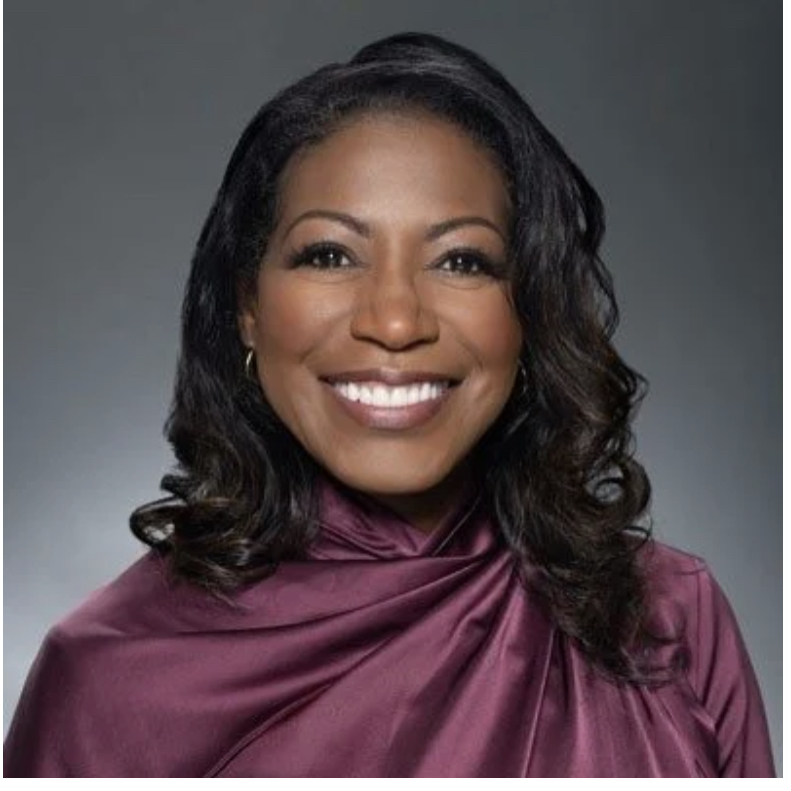








 “We’ve branched into a new area in supporting and sustaining communities by developing and leading a series of trainings for the Yolo County Health and Human Services staff. The work began in December 2022, to facilitate awareness building, capacity development, and operationalization of racial equity, diversity, inclusion, and belonging (DEIB), and trauma-informed principles in the workplace,” said Cockhren.