While in many early reports it sounded as though babies born during the Pandemic would likely be affected by developmental delays, newer research shows mixed or fewer concerns.
There is no denying, though, that for families having new babies, or adopting, or providing foster care for babies during the Pandemic, there were additional stresses.
Join PACEs Connection for a free webinar October 19 from 12 p.m to 1:30 p.m. ET/ 9 a.m. – 10:30 PT, to explore how leaders in one state, and two PACES Connection senior staff members, have been addressing the challenges of welcoming a new baby – or multiple babies – during that time.
Trauma experts share their experiences of pregnancy and childbirth during the Pandemic
PACEs Connection CEO Ingrid Cockhren, leads, among multiple educational offerings, the PACEs Connection Historical Trauma in America series. She will share about historical trauma and the Racial Reckoning erupting during the Pandemic, as well as her personal experience of giving birth to twins – a girl and a boy – in November, 2021.
Cockhren will be joined by Porter Jennings McGarity, PhD, LCSW, and PACEs Connection trauma-informed criminal Justice consultant and director of continuous quality improvement (CQI). Jennings-McGarity gave birth to two sons during the Pandemic.
How Oklahoma looks to support parents, caregivers, families, children
Linda Manaugh, chief program officer of the Potts Family Foundation, which is leading the work in Oklahoma, and Marlo Nash, a longtime consultant on early childhood and child welfare systems, will be joined by Laura Porter, international expert on the science of adverse childhood experiences, to discuss the work in Oklahoma.
Porter is the co-founder of ACE Interface, LLC. She, Manaugh and Nash have worked together to design, secure American Rescue Plan Act (ARPA) funding for, and implement the groundbreaking work in Oklahoma.
The work involves research in 15 communities to learn more about how young children and families are doing, what their needs are, and how well their communities are supporting them.
How can PACEs Connection members help support families who welcomed babies during the Pandemic?
Rounding out the webinar to share learning that can be used across all communities, Deborah McNelis, M.Ed, will share about ways to be supportive of babies born during the Pandemic, and their caregivers. McNelis is an early brain development specialists and the creator of resources to encourage positive childhood experiences in young families.
Full disclosure: McNelis donates to PACEs Connection five percent of net profits from related sales of her Neuro-Nurturing(R) materials from Brain Insights.
Candice Valenzuela, whose 2022 podcast was among the most popular episodes last year, joins hosts Ingrid Cockhren, PACEs Connection CEO, and Mathew Portell, director of education and outreach, this Thursday at 1 p.m. PDT; 4 p.m. ET, to discuss the importance of healing intergenerational trauma.
“How can parents ensure that generational issues do not continue to impact future generations?” is one of the questions to be addressed in this live episode.
“This topic is especially important for parents who have a background of historical trauma, including slavery, and genocide,” said Cockhren.
Valenzuela’s last episode focused on self-care and minority mental health, and addressed how, according to Cockhren, “Self-care has become a buzzword when discussing solutions to the mental health crisis in BIPOC communities.”
Valenzuela, who describes herself as a “parent, a pet owner, a friend, a survivor, a geek, and a nature lover,” says, “I have learned that no professional titles will ever reflect all of who I am or my worth. I strive to be human before I strive to be a worker. I identify as Black, Indigenous, Queer and working-class allied.
“Professionally, I have been working at the crossroads of education, justice and community healing for 16 years. I have extensive experience in mindfulness, trauma informed care, anti-oppressive practices, cultural competency, liberatory education and youth empowerment,” she adds.
Valenzeula holds a bachelor’s degree in humanities, an master’s degree in East-West psychology, a masters’ degree in counseling psychology, and a 200-hour certificate in mindful yoga through the Niroga Institute.
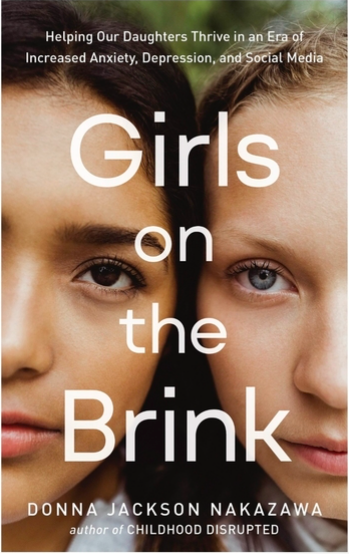
Adolescent girls are experiencing extreme levels of trauma and adversity, especially African American, Hispanic/Latina and Indigenous girls, as we discussed with author Donna Jackson Nakazawa last year when her book “Girls on the Brink—Helping our Daughters Thrive in an Era of Increased Anxiety, Depression and Social Media.” launched. This week host Ingrid Cockhren, CEO of PACEs Connection, will touch on those topics and more with guest Vernisha Crawford, who discusses the lives of girls of color and the intersectionality of racism and sexism in this encore podcast.Crawford is the CEO of Trauma Informed Institute, and has educated 15,000+ working professionals, helped secure and manage over $12 million, and has directly served hundreds of families. Her work has is in demand across many sectors and countries worldwide.Crawford earned her bachelor’s degree in sociology from the University of North Carolina Charlotte and a master’s degree in leadership from Grand Canyon University. She is a certified trauma informed executive coach, a certified health & wellness coach, a master level certified professional life coach, a business coach, and Scrum Master.As she pursues her Ph.D. in General Psychology with a specialization in trauma and disaster relief, Crawford says her most significant learning is being the mother of an elementary school-aged daughter.Crawford is also the Founder of the BYE Foundation, a 501c3 organization which she says offers a unique approach to systems change work by addressing equity gaps in funding, data, research, capacity building, and wellness.A guest facilitator at Davidson College, Belmont, Vanderbilt, and Fisk universities, Crawford has served as a member of the Early Childhood Executive Committee for Mecklenburg County, the North Carolina ACES Task Force Advisory Board, the North Carolina Juvenile Justice Behavioral Health Committee, the Charlotte Lab School Board, and the Charlotte Community Board for The Gathering Spot.In her free time, Crawford works with her passion project @DanceHerSize, a wellness program teaching women and girls about the eight dimensions of wellness through dance and exercise.Tune into the show here at 1 p.m. PT; 4 p.m. ET Thursday, October 26.Show LinksListen in Apple PodcastsListen in Google PodcastsListen on TuneInListen on iHeartRadioListen on SpotifyLike us on FaceBookConnect on LinkedInFollow on TwitterFollow on InstagramBookmark This ShowiTunes FeedGoogle FeedSubscribe to RSS Feed
The Rev. Deanna Hollas is the gun violence prevention ministry coordinator with the Presbyterian Peace Fellowship, a founding member of the Everytown for Gun Safety Interfaith Advisory Council, and the co-founder of Retreat House Spirituality Center. Her congregation is in Dallas, TX. In light of the recent mass shooting in Lewiston, Maine—this week’s “History. Culture. Trauma.” podcast is an encore episode of the conversation between Hollas and PACEs Connection CEO Ingrid Cockhren on June 2, 2022.
“Gun violence prevention activists are celebrating a step in the right direction with the passing of The Bipartisan Safer Communities Act, Hollas said Tuesday of the act being signed into law Saturday by President Joe Biden.
“This is the first time in 26 years that Congress has passed major gun safety legislation and I especially want to thank my own senator, John Cornyn (R-TX) for leading this effort,” Hollas said. “While this legislation will save lives, we know there is still more work to be done to keep communities safe from gun violence.”.
Of the Supreme Court’s ruling last year against the State of New York regarding its concealed-carry law, Hollas said, “The Supreme Court is out of touch with the overwhelming majority of Americans who support gun safety measures. This decision will make Americans less safe as we know where there are more guns, there is more gun violence.
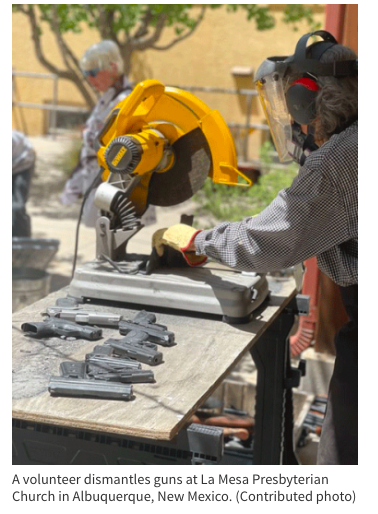
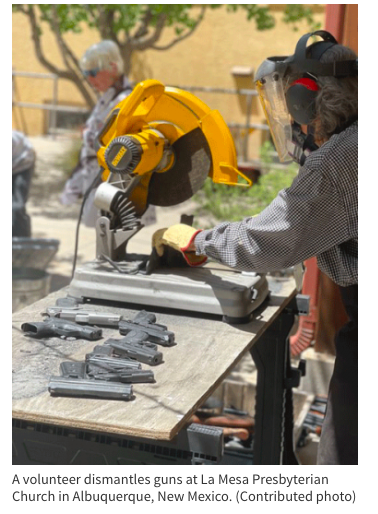
On June 10, Hollas’s vision for the first National Guns to Gardens Day became a reality with scores of congregations and organizations across the nation collecting hundreds of guns to be ground up and turned into garden tools.
According to her biography, “Rev. Hollas empowers and equips individuals and congregations across the Presbyterian Church (USA) denomination to embody Jesus’s call to love God and love thy our neighbor by being informed and active in the prevention of gun violence.”
The Rev. Hollas holds a Master of Divinity from Perkins School of Theology and a Diploma in the Art of Spiritual Direction from San Francisco Theological Seminary.
A headline earlier this year said it simply: Social Media is Devastating Teen’s Mental Health.Donna Jackson Nakazawa, an award-winning science journalist and the author of seven books exploring the intersection of neuroscience, immunology, and human emotion, is featured in this week’s encore episode of History Culture. Trauma.Jackson Nakazawa explains the crisis facing today’s girls as being a biologically -rooted phenomenon, and more, and offers solutions to the crisis that has many parents wondering what they can do.“The earlier onset of puberty mixes badly with the unchecked bloom of social media and cultural misogyny. When this toxic clash occurs during the critical neurodevelopmental window of adolescence, it can alter the female stress-immune response in ways that derail healthy emotional development,” explains Nakazawa.This week’s episode of History. Culture. Trauma. is an excerpt from a recorded interview of Jackson Nakazawa conducted by PACEs Connection team members Carey Sipp and Natalie Audage in October, 2022, as a part of the PACEs Connection Connecting Communities One Book at a Time initiative. The initiative featured Jackson Nakazawa’s latest book, Girls on the Brink:Helping Our Daughters Thrive in an Era of Increased Anxiety, Depression, and Social Media. The book was published last October.In the interview, Jackson Nakazawa focuses on the impact of modern society on adolescent girls. “Anyone caring for girls today knows that our daughters, students, and girls next door are more anxious and more prone to depression and self-harming than ever before. The question that no one has yet been able to credibly answer is “Why?”Jackson Nakazawa was clear that while she sees much to worry about girls’ mental health today, she also has hope. She offers 15 antidotes or “strategies for raising emotionally healthy girls” in the book and spoke about a several of them during the webinar from which this interview is gleaned. (See below for resources, including a link to the longer webinar interview in which she details the strategies.)Antidotes fall into three categories and include three on “the building blocks of good parent-child connection, and the importance of family connection,” six antidotes for “making her home a safe space,” and six antidotes to “bring in what the wider community can provide.” The longer webinar interview honed in on at least one antidote from each of the three categories, including making it a good experience when your daughter turns to you, the importance of “wonder”, and encouraging a sense of mastery.Jackson Nakazawa has appeared on The Today Show and NPR, and is a regular speaker at universities, including the Harvard Division of Science Library Series, Rutgers University, Johns Hopkins, Learning and the Brain, and the Andrew Weil Center for Integrative Medicine at the University of Arizona. She is also the creator and founder of the narrative writing-to-heal program, which uses a process called Neural Re-Narrating to help participants recognize and override their brain’s old thought patterns and internalized stories.
Listen to “History. Culture. Trauma.” here online on Thursday, or access this, or prior podcasts, at the podcast service of your choice listed below.
How traumatizing is it when something that is supposed to be a support ends up evoking trauma?
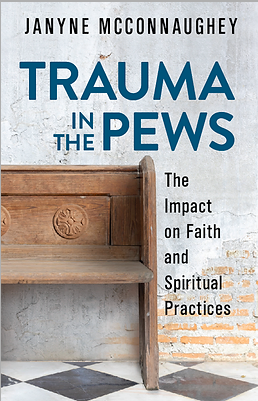
Tune into this Thursday’s History. Culture. Trauma. podcast at 1 p.m. PT; 4 p.m., ET, when guest Janyne McConnaughey, PhD, will talk with hosts Ingrid Cockhren, CEO of PACEs Connection, and Mathew Portell about how shame and blame theology, and the stigmatization of mental health supports, can inflict trauma.
“A supportive community can serve as a primary catalyst for healing individual and collective trauma,” said Portell, PACEs Connection director of communities. He grew up as the son of a minister, and has talked with McConnaughey about their mutual experiences in the church.
McConnaughey will discuss her latest book, “Trauma in the Pews: The Impact on Faith and Spiritual Practices”, and her extensive work as a trauma-informed author and speaker. The book draws on her 33-year career training teachers and ministry workers at colleges and universities, as well as her life-long involvement in church ministry.
McConnaughey began her healing from the impact of her childhood trauma at the age of 61. Realizing that healing was possible for survivors, she’s written two other books describing the effects of childhood trauma and the paths to healing that changed her life.
McConnaughey holds a PhD in educational leadership and innovation from Colorado State University–Denver and currently serves as president of the board of directors for the Attachment & Trauma Network (ATN).
She is also a distinguished visiting professor at Tabor College. She and her husband live with their rescue dog, Weber, south of Seattle, where they enjoy exploring the Pacific Northwest and spending time with their children and grandchildren.
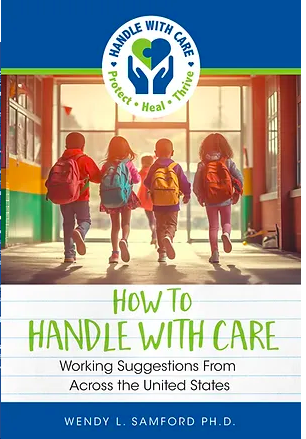
“How to Handle with Care”, a new book by author Wendy Samford, PhD, is step-by-step instruction manual to create — in your community — a best practice that can help end the racially-motivated school-to-prison pipeline one child at a time, and quickly!
How?
By addressing the trauma of each child individually, with a cross-sector approach to supporting hurting children that has law enforcement working with educators all across the United States. (www.handlewithcarewv.org)
Simply put, if law enforcement comes into contact with a child in the course of duty, the name of the child and the words “Handle With Care” will be sent to the child’s school.
This simple message lets trauma-informed school personnel know that something happened to that child and to treat them with kindness.
“If additional services are needed for the child, the family is then informed and bridges are built from law enforcement to schools, and schools to community service agencies,” said Samford.
If administrators, faculty, and staff in the school know a child has had a hard night, they can help protect the child from added stresses the next day. For example, instead of having a child who was up in the middle of the night take a test, give an oral book report, or run the risk of acting out emotionally and getting in trouble for it, the child can be led to a quiet corner to rest.
Samford’s fast-read guide will show communities starved for ways to stop systemic trauma in education and juvenile law exactly what to do. Best of all, it’s in a book you can read in an afternoon, and follow step-by-step.
Already across the country, there are at least five states that are actively using the program, and it is in development in many more states and counties, and there is active interest in the program in almost every state.
For the full report, find the book on Amazon, Barnes & Noble, or any major book retailer.
For more information about the book, please contact Wendy Samford at www.wsamford.com
For more information about the Handle With Care program, contact Andrea Darr at adarr@jbsinternational.com.
(Author’s note: Photo is of Jeff Linkebach, EdD, founder of The Montana Institute, and me following a three-hour long brainstorming lunch recently at the Whole Foods in Bozeman, Montana. I’d gone to visit my two adult children in the area. Linkenbach and his family have made their home there for more than 30 years.
Linkenbach and I connected several years ago via PACEs Connection as he is one of the co-founders of the HOPE (Health Outcomes from Positive Experiences) research. The Montana Institute’s research, based on the Science of the Positive Framework, is where HOPE (Health Outcomes from Positive Experiences) emerged through a Montana Institute project in Wisconsin focusing on positive community norms that gave rise to the 2019 Positive Childhood Experiences study.
It was an honor to spend time with this transformational leader and educator who created and started researching, writing, and teaching about “The Science of the Positive” more than 30 years ago.
I firmly believe our nation – at the community level – must look for ways to build positive experiences – that are culturally appropriate and community led – into the lives of our people, especially our children. That four of the seven Positive Childhood Experiences happen in community is reflective of the power of experiences and relationships, and in my mind, represents an incredible opportunity to slow the velocity of increasing adverse childhood experiences (ACEs) and adverse community experiences.
Preventive measures are primary and should include creating the buffering experiences that help developing brains of children build synapses for trust, joy, relationships, curiosity, and seeking positive experiences.
Full disclosure: I’ll be attending many of the lunch-and-learn events starting February 5 as a guest of the Institute.)
—
There is still time to register for the world’s premiere event on leveraging the power of positive experiences (PCEs, or the “P” in PACEs Connection!) to improve public health, led by The Montana Institute and this virtual “lunch-and-learn” Winter version of the prestigious Montana Summer Institute.
Linkenbach, who with several influential research scientists and child advocates co-authored the seminal 2019 paper “Positive Childhood Experiences and Adult Mental and Relational Health in a Statewide Sample” is featuring the study’s lead scientist and author, Christina Bethell, PhD, as the closing speaker for week’s impressive lineup of virtual lunchtime gatherings.
☼ MONDAY, Feb. 5th – Carla Ritz, Managing Director of The Montana Institute. The Science of the Positive and How Positive Experiences Increase Health
☼ TUESDAY, Feb. 6th – Ali Crandall, PhD, MPH, Associate Professor of Public Health at Brigham Young University. The Latest Research on Positive Adult Experiences and Mental Health
☼ WEDNESDAY, Feb. 7th – Sara Thompson, Director of Training and Communications and Jeff Linkenbach, Founding Director of The Montana Institute. How Positive Community Norms Can Increase Positive Experiences — and Why it Matters
☼ THURSDAY, Feb. 8th – Yvonne Jackson, MBA, CEO of SocialEDG. Positive Experiences and Equity: How EDI and Joy Can and Must Coexist
☼ FRIDAY, Feb. 9th – Christina Bethell, PhD, MPH, MBA, Director, Child and Adolescent Health Measurement Initiative and Professor at Johns Hopkins Bloomberg School of Public Health. We Are the Medicine: Building Relational Systems of Care to Promote the Early and Lifelong Flourishing of Children and Families
Sessions will be presented live at: 1:00pm-2:00pm EST 12:00pm-1:00pm CST 11:00am-12:00pm MST 10:00am-11:00am PST
Recordings will be available to registered attendees for 30 days following the event.
For more information on how The Montana Institute is continuing to research and explore Positive Experiences beyond a focus on childhood, and to learn about the in-person Summer Institute, visit the website.
In 1982, the Syrian government besieged the city of Hama, killing tens of thousands of its own citizens in sectarian violence. Four decades later, rebels used the memory of the massacre to help inspire the toppling of the Assad family that had overseen the operation.
But there is another lasting effect of the attack, hidden deep in the genes of Syrian families. The grandchildren of women who were pregnant during the siege — grandchildren who never experienced such violence themselves — nonetheless bear marks of it in their genomes. Passed down through their mothers, this genetic imprint offers the first human evidence of a phenomenon previously documented only in animals: The genetic transmission of stress across multiple generations.
“The idea that trauma and violence can have repercussions into future generations should help people be more empathetic, help policymakers pay more attention to the problem of violence,” said Connie Mulligan, Ph.D., a professor of Anthropology and the Genetics Institute at the University of Florida and senior author of the new study. “It could even help explain some of the seemingly unbreakable intergenerational cycles of abuse and poverty and trauma that we see around the world, including in the U.S.”
To continue reading this article from UF News, please click the link below:
Former PACEs Connection employees Dana Brown (L) with Vincent Felitti, MD, co-author of the 1998 Adverse Childhood Experiences study, and Carey Sipp (R) in San Diego in January, 2024.
The last few months have been quite challenging, but we pushed, persevered, and didn’t give up hope.
The “we” is Carey Sipp and Dana Brown. We were long-time staff members of PACEs Connection determined to reinstate the website and the resources and information we provide to communities after the platform went dormant in April when our funding stream dried up.
We both vowed to do whatever we could to keep PACEsConnection.com from slipping away because imparting information about the lifelong effects of positive and adverse childhood experiences and ways to promote nurturing conditions for children, families, and communities is too important to leave to chance. So over the last six months, we’ve spent countless hours working to keep the site and the organization alive.
With encouragement and support from two key organizations—National Prevention Science Coalition to Improve Lives (NPSC) and PACEs Connection’s former fiscal sponsor, Third Sector New England (TSNE)—as well as from many individual supporters—PACEs Connection’s doors are again open!
Our new mission-aligned home!
“We understood the importance of PACEs Connection to have a nonprofit organizational home with similar goals under which it could operate and bring in funding to continue its work,” Diana Fishbein tells us. Dr. Fishbein is founder and co-director of NPSC.
“NPSC and PACEs Connection had worked well together on several projects over the last couple of years, so having PACEs Connection become a division of NPSC made perfect sense,” Dr. Fishbein added.
(Graphic is an example of our work together on the 2022 webinar series on Building a National Movement to Prevent Trauma and Foster Resilience. To access invaluable resources from the series, click here!)
As its website shows, NPSC is “a professional organization dedicated to translating scientific knowledge from the field of prevention science into effective and sustainable practices, systems and policies.”
Among the 70+ organizations affiliated with NPSC is the Campaign on Trauma Informed Policy and Practice (CTIPP), with which PACEs Connection has partnered for several years to advance the trauma-informed movement.
“We are thrilled that Jesse Kohler, who sits on the NPSC board and is executive director of CTIPP, will be the board liaison with PACEs Connection,” Dr. Fishbein adds.
We are happy and grateful to continue the work with CTIPP and Jesse Kohler, too!
We welcome back our 60,900 members engaged in the important work to prevent ACEs and promote health and wellbeing!
Amidst the celebration of being back, we must also share this reality: We’re not out of the woods yet.
Our previous fiscal sponsor (TSNE) is kind enough to keep the social networking platform that drives PACEsConnection.com running until November 11. By November 5 (allowing time to process funds), we’ll need nearly $15K for PACEs Connection to stay afloat until March 31, 2025.
We’ve already heard from prior donors that they are ready to support the cause but we need more. The donor button is accessible here!Know, too, that your donation is tax deductible, as NPSC is a federally-recognized 501 (c) (3) non-profit organization.
Also, several content contributors we’ve alerted are planning and preparing posts to gin up support for PACEs
Dr. Lori Dorfman, director of the Berkeley Media Studies Group, a project of the Public Health Institute, was delighted to hear news of PACEs Connection’s revitalization, and is eager to see the network continue to grow and thrive.
“BMSG has conducted research on media portrayals of ACEs science for many years. BMSG found that the number of (ACEs) stories increased dramatically after 2012 – the year science journalist Jane Stevens founded the social network comprising ACEs Too High and ACEs Connection – especially in local and regional news outlets, even though the number of stories was low compared to other topics, particularly considering how impactful ACEs are,” said Dr. Dorfman.
As we think about new blog posts and resources to add to our Resource Center, the research on media coverage and subsequent studies are on the list to help show how important news coverage is to expanding awareness of the science.
Every blog post our members share on social media helps build awareness of the need to prevent and heal trauma; to foster resilience.
Support, patience, and some of what’s ahead!
You can support PACEs Connection today by making an online donationhere, or mailing a check made out to the National Prevention Science Coalition to Improve Lives – with “PACEs Connection” on the memo line – in care of Dana Brown, 4364 Bonita Road, PMB322, Bonita, CA 91902. To make a wire transfer or other type of gift, please email Carey Sipp at carey.pacescommunities@gmail.com to receive NPSC’s wire transfer or other electronic funds transfer information. No amount is too small!
We ask you to be patient with us as we update our social networking site. There are broken links and scores of communities with new leadership. We’ve also been working on a business and sustainable funding plan so we can overhaul the site, be paid for our efforts, and hire staff as needed.
We are determined to continue to raise awareness of the impacts of adverse and positive childhood experiences. The benefits of preventing trauma and increasing positive experiences must be considered in all of our decision making, especially by parents, educators, child-serving entities, and policymakers. All organizations, including those in healthcare, business, education, childcare, and all levels of government, need to be aware of the causes and effects of trauma and well-tested approaches to prevent it.
Dr. Fishbein agrees: “We are excited about the opportunity afforded us to play a role in keeping this vitally important social network—the primary source of news and connection in the trauma prevention community—online and leveraged to further the movement to prevent trauma and build resilience.”
For more information aboutthe origins ofPACEs Connection and the history of the relationship between Vincent Felitti, MD, co-author of the 1998 Adverse Childhood Experiences Study, and Jane Stevens, founder of PACEs Connection, please clickhereor visit ourHistory of PACEs Connection.
 Carey Sipp 10/17/231:45 PM
 PACEs Connection CEO Ingrid Cockhren, leads, among multiple educational offerings, the PACEs Connection Historical Trauma in America series. She will share about historical trauma and the Racial Reckoning erupting during the Pandemic, as well as her personal experience of giving birth to twins – a girl and a boy – in November, 2021.
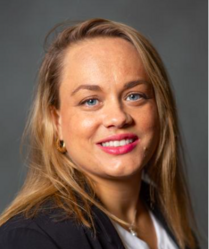 Cockhren will be joined by Porter Jennings McGarity, PhD, LCSW, and PACEs Connection trauma-informed criminal Justice consultant and director of continuous quality improvement (CQI). Jennings-McGarity gave birth to two sons during the Pandemic.
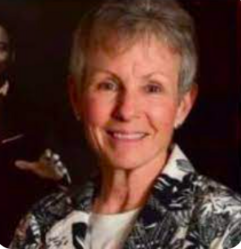 Linda Manaugh, chief program officer of the Potts Family Foundation, which is leading the work in Oklahoma, and Marlo Nash, a longtime consultant on early childhood and child welfare systems, will be joined by Laura Porter, international expert on the science of adverse childhood experiences,
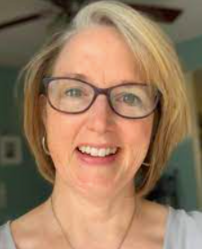 to discuss the work in Oklahoma.
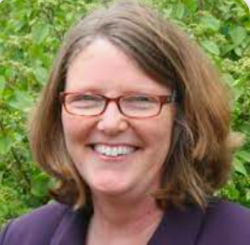 The work involves research in 15 communities to learn more about how young children and families are doing, what their needs are, and how well their communities are supporting them.
 Rounding out the webinar to share learning that can be used across all communities, Deborah McNelis, M.Ed, will share about ways to be supportive of babies born during the Pandemic, and their caregivers. McNelis is an early brain development specialists and the creator of resources to encourage positive childhood experiences in young families.





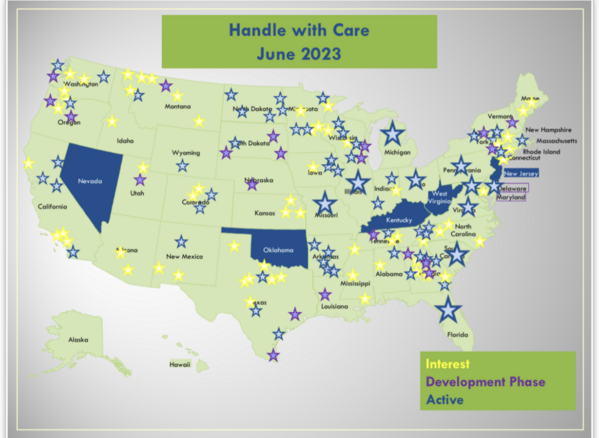 Already across the country, there are at least five states that are actively using the program, and it is in development in many more states and counties, and there is active interest in the program in almost every state.