Tag Archives: mental-health

Got ACEs? CPTSD? Is a toxic abusive relationship (TAR) part of your past or now? Here’s free help!

Carey Sipp Carey Sipp 7/2/257:17 AM

(Activation warning. This is a first-person opinion piece sharing my thoughts on toxic abusive relationships [TAR] and a relatively new 12-step program, TAR Anon, which offers free, solution-oriented, acceptance-based, and psychologically-safe Zoom meetings from 6-7 PM ET on Mondays and Wednesdays, and from 12 Noon-1 PM ET on Fridays. This is a warning regarding potentially activating language, so you can choose whether or not you wish to continue reading. Further, I extend the activation warning to the program’s TAR Tales, where TAR Anon members share their stories.)

Screenshot 2025-07-02 at 12.12.06 AM

(Illustration from the STAR Network Foundation Instagram site.)

If there are adverse childhood experiences (ACEs) in your past, chances are good that you’ve been in a relationship with what Dr. Jamie Huysman, creator of the rapidly-growing 12-step program TAR Anon (Toxic Abusive Relationships Anonymous), calls a toxic abuser.

Screenshot 2025-07-01 at 10.38.52 PMHuysman, a licensed clinical social worker (LCSW) and psychologist, is the founder and executive director of STAR Network Foundation, Inc., a 501(c)(3) nonprofit organization which incudes TAR Anon® and several other programs.

The  STAR Network™ is rising in myriad ways.

Hearing Huysman speak regularly in TAR Anon meetings since being introduced to him about six weeks ago, it’s clear to me that he lives the organization’s mission to educate, energize, and empower people by giving them access to programs such as TAR Anon.

Meeting Huysman’s team, attending the two-year-old STAR Network’s “Scars to STARs” global online conference in May, and seeing the impressive list of the organization’s allies provides further evidence of the energy and gravitas backing the campaign to raise worldwide awareness of and treatment for the millions of people “whose emotional reality has been distorted by TAR”.

Organizations listed as STAR Network allies include the CPTSD Foundation, the National Association of Social Workers, Caron, WeHealUs,  WellMed Emotional Support Response Team, and the Polyvagal Institute. Organizations shown below were among those sponsoring or supporting via social media, the SCARs to STARs Day in May.

Screenshot 2025-07-02 at 1.41.45 PM

Screenshot 2025-07-01 at 10.38.40 PMAlso heavily involved is mental health advocate, author, and former U.S. Congressman Patrick Kennedy, who delivered the keynote address at Scars to STARs Day. During his speech, Kennedy – who grew up with the trauma and tragedy of losing to two high-profile uncles to assassinations, family addictions including his mother’s alcoholism, and the intensity of a father who advocated for mental health parity while at the same time self-medicating his grief with alcohol – writes and speaks passionately about his own struggles with bipolar disorder and substance abuse.

The Need for TAR Anon

With one-in-four children in America growing up in a home with at least one parent who has a substance abuse disorder, one-in-five Americans living with some type of mental illness each year, 63.9% of U.S. adults reporting at least one ACE, and 17.3% reporting four or more ACEs, it’s likely most of us have had some experience with traumatic abusive relationships.

This is NOT to say that all people with mental illness or substance abuse disorder are or become toxic abusers. Far from it. Though it has been my experience – and well documented in research and reporting – that when people are depressed, anxious, at the effect of a substance or addictive behaviors, or are experiencing the challenges of mental illness, harsh words, neglect, and addictive behaviors can be among the consequences faced by the troubled person with regard to their own self-talk, as well as proximate family members and friends.

What pushes irritability and lack of awareness of the impact of one’s negative behavior into a diagnosis such as narcissism, borderline personality disorder, or Cluster B personality, as defined in the Diagnostic and Statistical Manual of Mental Disorder, 5th Edition (DSM-5) is a more consistent, pervasive, and intentional pattern of hurtful actions and personality traits that significantly impact relationships and the well-being of others.

TAR Anon is raising awareness of the prevalence of and solutions for these challenges.

Huysman shares in TAR Anon meetings that globally, approximately one-in-eight people have a personality disorder. Estimates in the U.S. are higher, with reports varying between being 10-15%. Regardless of the diagnosis assigned to the abuser, in the 12-Step TAR Anon meetings, the person in recovery from abuse is the most important person in the room.

As a person with an ACE score of nine, I can legitimately say there have been some toxic abusers in my life. I have been in therapy for Complex Post-Traumatic Stress Disorder (CPTSD) off and on for many years, and have the entire alphabet soup of different treatment methodologies in my recovery from early and ongoing relational trauma. My toolbox includes CBT (Cognitive Behavioral Therapy), DBT (Dialectical Behavior Therapy), EMDR (Eye Movement Desensitization and Reprocessing), IFS (Internal Family Systems Therapy), years of neurofeedback, two rounds of trans-cranial magnetic stimulation, countless hours of meditation, and a litany of different anonymous programs I will not share to protect my own anonymity, and the sanctity of the programs themselves.

With TAR Anon being a meeting ground for people from many different programs, or none, and toxic abusive relationships being evident in so many public places in our lives today, I am sharing information about this program and my involvement in it for the greater good.

Further, as TAR Anon is also a relapse prevention model that works well as a complement to all other 12-step programs, it can be used as a great primary or companion program.

Out of respect for the privacy of all people, and because dwelling on the past can be its own form of abuse, my toxic abusers will not be mentioned. It’s how I respond to myself and to them that is the most important aspect of this recovery.

Among the most important lessons learned from years of recovery and realizations that come with it, is that as an adult, I am not a victim and that my brain, and I, can change!

Looking back and realizing that even as a little kid I chose toxic friends, I see that the last 20 years have been way different and have given me great hope. Among the realizations that helped me change my thinking was learning that the brain has neuroplasticity — the ability to change throughout life.

This knowledge was and is incredibly freeing. I’ve seen the positive impact of changing my thought patterns, seeing clearly that I wasn’t stuck with the brain I was born with or had trained, as an infant and child by circumstance, to expect toxic inconsistency and unpredictability.

I learned to reparent myself and accept life-changing healing and support. Changing thought patterns is healing and life-changing, and many of the books, workbooks, and practices that have been so helpful to me over years of self-care are listed as resources in the thrice-weekly TAR Anon meetings, including The Body Keeps the Score by Bessel van der Kolk, MD, and Complex PTSD, From Surviving to Thriving by Pete Walker.

I’ve also learned through years of therapy, recovery, neurofeedback, meditation, journaling, being in community with sane people who love me, purposeful work I love, exercise, singing in choirs, spirituality, reparenting myself, parenting my children, and spending time in nature, that these resiliency boosters and the right dose of an antidepressant have helped me rewire my brain.

I am now much better at discerning and avoiding toxic people and relationships. The best part of this shift is developing a growth mindset, which has actually helped me attract the kind of people and opportunities that bring me joy and healthy relationships.

Screenshot 2025-07-02 at 12.14.54 AM

Had TAR Anon existed years ago, I might have learned much of this sooner, not had to do so much research, and could have saved many thousands of dollars in therapy.

Screenshot 2025-07-02 at 8.36.15 AM

The great news is that this 12-Step program now exists, and I believe it can be a tremendous accelerator, comfort, teacher, friend, and compassionate partner in recovery from all types of ACEs, from the original 10 in the 1998 Kaiser Permanente and CDC (Centers for Disease Control and Prevention) study, to the more expansive and inclusive ones shared in this brilliant illustration created by the North Carolina Partnership for Children.

Screenshot 2025-07-06 at 4.22.54 PM

It is also said that TAR Anon is the only 12-step program whose primary purpose is to help people recover from attachment disorders and CPTSD.

Other important messages I believe one can take from the TAR Anon meetings:

For most toxic abusers, it’s not their fault. They may have been born into homes where inconsistency, lack of nurturing, unpredictable care, domestic violence, mental illness, substance abuse, physical, verbal, or sexual abuse, neglect, or the death or loss of a parent – resulted in their own anxious, preoccupied, dismissive-avoidant, or fearful-avoidant (disorganized) attachment styles.

This toxic environment led them to adapt to survive. Adaptations could include, but are not limited to manipulation, dishonesty, abuse, cruelty, and/or addictions to substances or behaviors. They may have seen their parents and caregivers model changing roles as persecutors, rescuers, and victims. The childhood adaptations that helped them survive made it harder for them to attach in a healthy way. That attachment style followed them into adulthood, where it wreaked havoc on the abuser themselves as well as the people with whom they had relationships.

And guess what? The same could be said for most victims of toxic abusers.

Sadly, to feel safe, many of us who grew up in chaos subconsciously recreate the familiar, even if what we are recreating is toxic.

Many of us reared in toxic environments fell into the abuser-rescuer-victim cycle until we got some help recognizing the pattern. If help was not available, we might have become or married alcoholics, become gamblers, spenders, workaholics, hoarders, or the type of over-achiever who lands in the hospital from exhaustion, illness, or an epic burnout. I’ve been there.

In over 31 years of 12-step work, I learned early on to take an inventory of my resentments and fears, seeking for my part in any situation where I had a conflict, and looking for the pattern of my behavior so I could help disrupt it. I have also learned the value of accepting input from others to disrupt destructive behavior patterns.

Gratefully, I also learned this in Cognitive Behavioral Therapy (CBT) decades ago. In it, I was able to look at a situation and separate my thoughts, feelings, body sensations, and actions IN WRITING, so I didn’t collapse a story and miss the way I allowed my thoughts to create my emotions, the way I felt, and the way I reacted instead of responded. It’s true that if we knew how powerful our thoughts are, we would be very careful about what we choose to think about, or allow into our precious minds.

TAR Anon can help accelerate learning about complex or childhood post-traumatic stress disorder (CPTSD) in an anonymous and psychologically-safe online environment, with caring and TAR Anon-trained meeting facilitators. TAR Anon leaders and attendees are people who are there to listen and support each other.

TAR Anon meetings teach us that we repeat behavioral patterns from early, insecure attachments because it is what we know – and on some level, it feels safe. Even sleeping on broken glass can feel familiar and safe if that is what you knew as an infant and child. In meetings, though, we see how we need to form new behaviors to leave destructive behaviors behind. Learning and forming new behaviors may come through “aha” moments – feeling emotions, learning to love ourselves, and recognizing and avoiding toxic people. These are steps on the path to greater well-being.

Among the saddest facts I’ve learned from studying ACEs science, the science of positive childhood experiences (PCEs), and early relational health, is that children living in emotionally toxic environments (what I call toxic intensity) will often learn adaptive behaviors to survive. Some of the behaviors that can become “hardwired” in infants and children include:

  • disassociating or disappearing themselves to avoid attracting the attention of an abuser;
  • becoming a caretaker and/or protector of a perpetrator or perpetrators;
  • people-pleasing to avoid conflict or punishment;
  • overachieving and perfectionism designed to evoke positive attention and praise;
  • eating for comfort and gaining weight and/or developing anorexia or bulimia to have a sense of control and/or to avoid attracting – consciously or subconsciously – sexual advances; or
  • becoming controlling and manipulative to create a sense of safety or being in control.

With early childhood trauma (ages zero to three), and no experience of consistent nurture, the developing brain can be so harmed by the toxic stress hormones of cortisol and adrenaline that its function and structure are affected. Some infants and toddlers are actually wired to be fearful, distrustful, isolating, and chaos-seeking instead of being trusting, curious, and connection-seeking. This is why I advocate for, write, and speak so much about the need for early relational health as the basis of health and well-being across the lifespan, and share this seminal video of Bruce Perry, MD, with “What Happened to You: Conversations on Trauma, Resilience, and Healing” co-author Oprah Winfrey.

Though it is infinitely better to prevent toxic abuse by supporting pregnant women and new mothers and caregivers, their infants, and children to receive “neuro-nurturing” there is hope that people who have struggled with negative effects from a toxic childhood can find help and can change thought patterns. Factors are so variable though — severity of trauma, the environment, access to support and a sense of safety, exposure to positive childhood experiences, and on and on — one cannot make generalities about who can make such changes and to what degree. I only know what has worked for me and helped to lift me from multi-generational depression, abuse, and addiction, “one day at a time” dependent on my self and spiritual care.

The Hope of Recovery

I do believe there is hope for people who grew up in abuse as well as abusers who find their way into a 12-Step program, become willing to work a program, and who grow in the safety and acceptance of the program’s participants, because I have experienced and witnessed this over many years.

People can realize positive shifts in personality from programs including, but not limited to:

  • Alcoholics Anonymous (AA) and Narcotics Anonymous (NA) can help people who abuse substances see how their substance abuse affects their lives, families, and careers, and learn how to live “happy, joyous, and free” lives without the substance;
  • Adult Children of Alcoholics can help people who have grown up in relationships with addicted persons learn to reparent themselves by recognizing and practicing healthy behaviors (ACOA’s Yellow Workbook is terrific; working it with a friend from the program can be a game-changer.);
  • Al-Anon and Co-Dependents Anonymous (CoDA) can provide guidance and support for those in relationships with people who are addicted to substances or behaviors; or
  • Other anonymous groups addressing sex/love/romance addiction, over-spending, over-eating, and gambling can help abusers understand how these maladaptive behaviors may have started generations ago.

(Note: Addiction is often linked to likely epigenetic and genetic factors. In the interest of space and time, I am not addressing that topic here.)

As stated previously, I’ve been a member of multiple 12-Step programs; one for more than 30 years. Through the years the comfort, safety, security, friendships, and reparenting these programs have offered have helped me to rewire my brain. They have inspired and fueled me toward the designation I am most proud of in my life, that of Cycle Breaker.

I also believe the childbirth education (the Bradley Method) and early relational health support from the La Leche League I had, along with parenting classes, decades of therapy, journaling, 12-step meetings, and being blessed to have two precious children whom I swore would not grow up in the same toxic intensity as my brother and me, put me on the path to follow the steps I wrote about in my book, The TurnAround Mom: How an Abuse and Addiction Survivor Stopped the Toxic Cycle for Her Family – and How You Can, Too!

Screenshot 2025-07-02 at 9.00.42 AMAt the behest of one of the editors of this blog post, I am sharing a bit about my book. Its chapter titles offer a glimpse at some reparenting advice that worked for me, and incorporate so much of what I’ve learned over the years and attempted to crystalize and share in the book. I believe they also fit with what is being shared in TAR Anon. (Note: I don’t receive any income from the book and encourage you, if you wish to purchase it, to buy it used.)

  1. Live a Life of Extreme Self-Care
  2. Build a Strong Support Structure
  3. Create a Sane and Strong Family Life
  4. Establish and Keep Strong Boundaries
  5. Make Better Decisions
  6. Spend Your Precious Resources Wisely – Energy, Time, Money
  7. Attract Healthy Relationships
  8. Avoid Toxic Intensity
  9. Practice Peace: Rushing is Abusive
  10. Honor Your Family’s Future

All of this is to say: We don’t have to pass toxic behaviors on to our children. People can change. And I believe TAR Anon is a tool that can help anyone who has experienced ACEs begin a healing journey.

I believe that TAR Anon and the many programs the STAR Network is advancing can accelerate the change we want to see. And I believe this work will resonate with many here on PACEs Connection.

While I wish TAR Anon had been around earlier, I’m glad it’s here now and am thrilled to share it and reiterate that it meets online three times a week:
Screenshot 2025-07-01 at 10.37.01 PM

Mondays and Wednesdays from 6:00 – 7:00 PM Eastern Time and

Fridays from 12:00 Noon – 1:00 PM Eastern Time

While meetings are free, just as in any other 12-step meeting  STAR Network Foundation accepts and gently encourages donations. The foundation is a 501 (c) (3) organization, so gifts are tax-deductible.

While attendees are required to register to join the virtual meetings, they do not have to share their real name or appear on video. Meetings are anonymous, and anonymity is practiced as an integral part of this program of recovery.

One final bonus to these meetings, and one that has been incredibly helpful to me.

Each meeting closes with breath work to help calm the central nervous system and help it go from the reactive, flight-fight-freeze-fawn state to a state of rest and digest, wherein we can access our thinking brain and not be run by our emotions. Instead, after just four rounds of breathing in for four seconds, holding the breath for seven seconds, and then blowing the breath out hard through the mouth for eight seconds — about 80 seconds in all — the nervous system and body shift to the “parasympathetic” or more relaxed state. The extended exhale helps slow the heart rate, lower blood pressure, and quiet the mind.

I know it has been a help to me. Since I started attending the meetings and practicing the 4-7-8 breath work, chronic painful stomach issues that have plagued me most of my life have lessened greatly.

Here’s a link to a recording of the practice.

Screenshot 2025-07-02 at 1.48.56 PM

For more information, please visit TAR Anon.

Additional resources below include TAR Anon’s 12 steps, promises, and several of the videos found on the STAR Network Foundation’s Instagram page. New animations are added frequently.

Screenshot 2025-07-01 at 10.41.59 PM
Screenshot 2025-07-01 at 10.42.10 PM
Screenshot 2025-07-01 at 10.42.42 PM
Screenshot 2025-07-01 at 10.42.52 PM

New iterations of these fabulous and wise animations are shared frequently on the STAR Network Foundation Instagram site.

Screenshot 2025-07-02 at 12.19.04 AM
Screenshot 2025-07-02 at 12.12.06 AM
Screenshot 2025-07-02 at 12.12.21 AM
Screenshot 2025-07-02 at 12.13.23 AM
Screenshot 2025-07-02 at 12.12.38 AM
Screenshot 2025-07-02 at 12.14.21 AM
Screenshot 2025-07-02 at 12.15.38 AM

Attachments

Hide

Images (21)

Jamie Huysman, PhD
Screenshot 2025-07-01 at 10.38.40 PM: The Hon. Patrick Kennedy
Screenshot 2025-07-02 at 8.36.15 AM
Screenshot 2025-07-01 at 10.37.01 PM
Screenshot 2025-07-02 at 1.41.45 PM
Screenshot 2025-07-06 at 4.22.54 PM
Screenshot 2025-07-01 at 10.41.59 PM
Screenshot 2025-07-01 at 10.42.10 PM
Screenshot 2025-07-01 at 10.42.42 PM
Screenshot 2025-07-01 at 10.42.52 PM
Screenshot 2025-07-02 at 12.19.04 AM
Screenshot 2025-07-02 at 12.12.06 AM
Screenshot 2025-07-02 at 12.12.21 AM
Screenshot 2025-07-02 at 12.13.23 AM
Screenshot 2025-07-02 at 12.12.38 AM
Screenshot 2025-07-02 at 12.14.21 AM
Screenshot 2025-07-02 at 12.14.54 AM
Screenshot 2025-07-02 at 12.15.38 AM
Screenshot 2025-07-02 at 9.00.42 AM
Screenshot 2025-07-02 at 1.41.45 PM
Screenshot 2025-07-02 at 1.48.56 PM

Files (1)

Authentic Insider – TAR Anon Pathway to Recovery 06.17.2025.docx

Carey Smith Sipp

carey.pacescommunites@gmail.com

Founder of Brain Insights and Neuro-Nurturing Creator Author Deborah McNelis, 70, Dies After Battle with Cancer

Carey Sipp Carey Sipp 10/15/256:15 PM

(Author’s note – Deborah McNelis and I were dear friends, partners in advancing the concept of Neuro-Nurturing, and webinar buddies, having created and or participated in about 40 webinars since we met in April, 2023. We only knew each other for two-and-a-half years, but spent many hours together on the phone, Zoom, and on webinars as hosts, panelists, speakers, raising awareness of the lifelong protective value of advancing healthy early brain development. I loved and respected Deb deeply; she is sorely missed. All  involved with PACES Connection appreciated her generosity, enthusiasm for the mission, and support. We were on a parallel track to create a movement ensuring that all children – and inner children –  thrive by lifting up pregnant and newly-delivered mothers, new fathers, foster parents, caregivers, and community members by helping them understand their vital role, as emotionally regulated adults, in Neuro Nurturing healthy brain development. While I am not yet sure how her work will be continued, I know it will continue. As long as I am involved in PACEs Connection, the concept of Neuro Nurturing will be advanced to help prevent child abuse and neglect; to help promote positive maternal, infant, child, and community experiences. Greater likelihood of health and wellbeing across the lifespan begins with the foundational and consistent safety, stability, and nurture so vitally important to healthy infant and child brain development.)

IMG_7713Friend and supporter of PACEs Connection, and author of The First 60 Days (which highlights the importance of “Neuro-Nurturing” infants in the first two months of life), Deborah McNelis passed away last Friday after a sudden and brief battle with cancer. She had recently turned 70.

After discovering PACEs Connection via Twitter and LinkedIn, Deborah’s “The First 60 Days” booklet, now a book, was reviewed on PACEs Connection. She began posting on the social networking site, sharing opportunities for fellow members to learn more about “what babies need most” (for adults to understand the importance of early brain development) in her monthly e-newsletter, and participated in multiple webinars in support of PACEs Connection programs.

Her 2023 PACEs Connection conference presentation, “What if Babies Ran the Workplace,” explored how the world might change if babies were the CEOs: people wouldn’t come to work when sick or when they needed to care for a loved one, and they’d demand universal health care, paid family leave, and access to high quality childcare. In that talk, she made a compelling case for affordable, brain-boosting childcare, urging that childcare workers be treated as professionals they are.

A central tool in her work was her signature series of ringed books (“packets”), each containing 40 age-appropriate, developmentally matched activities paired with the neuroscience rationale behind them. Canadian publisher Redleaf Press contracted her to adapt materials to support infant’s and children’s transitions—from one activity to the next—with brain-friendly strategies.

Deb often said: “Most people don’t realize the signals babies give about overstimulation or boredom. It is important to honor their rhythms and make transitions—feeding to napping, play to rest—smooth and respectful of their internal states.”

Deborah’s career as an early childhood brain development expert spanned nearly 50 years. She often recalled that at age 19 she had a moment of clarity that started her on this path.

“I was watching a concert with little children. They were obviously adored and nurtured and enjoyed making music together. And I realized in that moment I wanted all children to experience being loved, expressive, and appreciated for their own uniqueness, and it dawned on me that not all the adults in children’s lives know what children really need most from them – that unconditional love and acceptance,” Deb said.

Her journey began as a kindergarten teacher. When parents asked how they might support their infants and toddlers at home, she first jotted ideas on 3×5 cards. Over time, she refined them into the handy pocket-sized ringed booklets—each offering activities and the “why behind the action”—to help parents and caregivers engage knowledgeably and confidently.

Screenshot 2025-10-15 at 7.59.32 PM

“For example, sorting sticks and rocks by size, shape, and color may not seem important. But sorting helps children develop the skills to be able to write, or develop other hand-to-eye coordination based skills. Every activity has a purpose,” Deb said.

Late in 2023,  Deb was contracted through PACEs Connection and Healthy Blue (North Carolina) to deliver a project supporting foster parents of young children. Over the course of 27 webinars (in collaboration with Carey Sipp, now volunteer co-director of PACEs Connection), she introduced participants to Neuro-Nurturing principles. The feedback included 100% of participants reporting at least some degree of increased confidence in parenting, and 97.4% saying they would recommend the webinar to other parents.

Screenshot 2025-10-15 at 7.12.17%u202FPM
Screenshot 2025-10-15 at 7.11.09 PM

Deborah McNelis was born in Minnesota on September 1, 1955.

A beloved mother, educator, author, and visionary founder of Brain Insights, Deb coined and popularized the term Neuro Nurturing—a philosophy of promoting early relational health and healthy brain development grounded equally in science and compassion.

As her daughter, Tracy Thompson, who collaborated with Deb from the very beginning, helping with research, writing, creating content and supporting her goals behind the scenes, said, “Through her writing, speaking, and workshops, she translated the miracle of early brain development into insights and doable practices. Her mission was always to make nurturing relationships and responsive care central to how we support every child and caregiver.”

Deb founded Brain Insights, LLC, in 2008. She launched the First 60 Days Movement about three years ago to emphasize the profound impact of the first two months of brain development after a study on the timing of adverse childhood experiences (ACEs) was published in 2019 and then written about by Bruce Perry, MD, in his 2021 book co-authored by Oprah Winfrey, “What Happened to You? Conversations on Trauma, Resilience, and Healing”.

Her Neuro Nurturing Interaction Packets, along with books and toolkits, reached families, educators, and communities across the U.S. and around the globe. According to braininsightsonline.com research, a total of more than 250,000 of these  ringed booklets and packets – in English and Spanish – are in use worldwide.

Screenshot 2025-10-15 at 7.52.13 PM

Her first fiction book, The Reminder, released just months ago, “speaks to the core of who we are—interweaving themes of essence, memory, and love. Her creative voice enriched many lives,” Tracy wrote in Deborah’s obituary.

Beyond her professional achievements, Deborah was cherished for her warmth, steady faith in human potential, and her rare ability to make complex science accessible and full of hope. She served on the boards of organizations including The Powerful Project, The Global Presence, and the Wellness for Children Initiative.

Deborah is survived by her daughters, Tracy (Schmid) Thompson and her husband, Jason, and Trisha (Schmid) Helchinger and her husband, Franz; her cherished grandchildren Benjamin, Zachary, Levi, Ava, and Max; and a wide circle of family and friends—siblings, uncles, cousins, nieces, nephews, and their families.

The family requests that those who wish to honor Deborah do so by making a gift in her name to early childhood development programs, PACEs Connection, or The Powerful Project.

As Tracy said,

“Her memory will live on in the countless children whose early lives were shaped by her vision—and in the many adults she inspired to nurture with purpose and love. Her legacy is a generation of children who know they are worthy of love, from the very beginning.”

What others who worked with her on the Neuro Nurturing webinars are saying about the passing of Deborah McNelis:

I join you in the shock, grief and sadness at Deb’s passing. I met Deb as a co-traveler on the long journey to anchor our systems in the truth that early life nurturance is how we can thrive even as life brings natural struggles.May we stay the course in her honor and light and continue to build an inescapable movement for transformation.

With gratitude for Deb and deep awareness of the mystery and profundity of this life we seek to nourish and protect!

– Christina Bethell, PhD, founder of the Child and Adolescent Health Measurement Initiative, professor, Johns Hopkins Bloomberg School of Public Health

When we prioritize early relational health and Neuro Nurturing, we equip parents and support persons to become the child’s first and strongest protective factor. A regulated, emotionally healthy caregiver fosters deeper bonds and richer interactions, laying the groundwork for how a child learns, loves, and thrives for a lifetime. Deb was a sweet and generous soul, and I was looking forward to connecting with her in person to advance the work of early relational health and Neuro Nurturing. Although our hearts are heavy, we will ensure her legacy lives on.

– Demetrius Geiger, MPH – Manager Social Impact programs, CHC: Creating Healthier Communities

Deborah McNelis was an amazing force of goodness and positivity. We will try to carry on with her work, with humility and homage in Deb’s honor.

– “Denni” Diana Fishbein, PhD, founder, director, and president of the National Prevention Science Coalition to Improve Lives, Senior Scientist in the FPG Child Development Institute at University of North Carolina

Links to selected stories by or about

Deborah McNelis

Attachments

Hide

Images (8)

Screenshot 2025-10-15 at 8.06.29 PM: Deborah McNelis with early relational health advocate George Halvorson in early, 2024
Screenshot 2025-10-15 at 7.12.17 PM
Screenshot 2025-10-15 at 7.11.09 PM
Screenshot 2025-10-15 at 7.10.50 PM
Screenshot 2025-10-15 at 7.52.13 PM
Screenshot 2025-10-15 at 7.52.29 PM
Screenshot 2025-10-15 at 7.59.32 PM
IMG_7713

Carey Smith Sipp

carey.pacescommunites@gmail.com

❤️ 2

Tags: Deb McNelis, Demetrius Geiger, MPH, George Halvorson, CHC Creating Healthier Communities, Christina Bethell, PhD, Deborah McNelis, Neuro Nurturing, Early Relational Health, Brain Insights, Brain Development, Diana Fishbein, PhD

Views: 1,210

Thinking of all of us working to prevent and heal trauma; build resilience and child flourishing.

Carey Sipp Carey Sipp 1/23/265:52 AM

IMG_8762

A personal note:

Thank you, leaders and members of resiliency task forces, PACEs communities, and people just discovering the connection between childhood trauma and positive experiences and life outcomes, for helping raise awareness of the vital and undeniable connection between positive and adverse childhood experiences and lifelong health consequences of both.

Thank you to all who keep sharing ACEs science, who keep sharing the science of positive and adverse childhood experiences (PACEs). Who keep reminding people that what is predicable is preventable. And that child flourishing, too, is possible.

We know those positive experiences of belonging, feeling safe, being in a safe, stable, nurturing environment, feeling as if someone in your family has your back, having friends, experiencing community traditions, having two people other than one’s parents — that these are among the positive childhood experiences that help counter the adversity. And can help prevent adult mental illness.

Thank you to all the PACEs Connection members and community leaders who keep speaking truth to power about the science. The 1998 Adverse Childhood Experiences Study and the 2019 study on the impact of positive childhood experiences on adult mental health. And for those also promoting the 2018 study Bruce Perry, MD, PhD, MPA, did on the TIMING of ACEs, and how important consistent nurture is, especially the first two months of life, to infant brain development and laying a foundation for optimal brain development. Truly, early relational health is foundational to lifelong health and wellbeing.

Times are terrifying, sad, outrageous, exasperating, and more, to say the least. And yet I know so many leaders of resilient communities who are keeping their meetings going. Adding members to their task forces, taking on new projects to go way the heck upstream to prevent and hopefully heal trauma; to bring positive experiences to their communities by supporting pregnant and newly delivered women, families, schools, people across the lifespan.

This is a personal thank you. We see you. We love seeing you post in your communities and share about your meetings, plans, programs.

Thank you. Your sharing these lights inspires others. And may well be the single act of kindness that prevents or helps begin healing, or helps set someone toward nurturing a child or family. Or community.  

Thank you. It has been a hard, hard couple of years, for myriad reasons including the loss of dear friends, mentors, leaders.

Thank you for keeping the work going. Thank you. Thank you to fellow volunteer co-director of PACEs Connection Dana Brown, and our fiscal sponsor and partners at National Prevention Science Coalition to Improve Lives, Diana Fishbein, PhD, and Jess Bair. Thank you to Alliance Practice Partners who continue to advise and help guide the work, and beloved donors, who we will name in full soon and who include Dr. Jamie Huysman of STAR Network Foundation; Harriet Stein, MD; The Parallel Foundation; Jeoffry Gordon, MD; The Langeloth Foundation and many more, who, again, will be named soon in a formal thank you.

Carey Sipp

Volunteer Co-Director

PACEs Connection

Vincent J. Felitti, MD, Co-Principal Investigator of the Landmark ACEs Study, Receives Prestigious STAR NeuroLeadership Award

Carey Sipp Carey Sipp 4/5/2612:00 PM

Felitti and Co-Principal Investigator Robert F. Anda, MD, to Be Celebrated at May 22 Virtual Global Summit Marking Nearly 30 Years of Adverse Childhood Experiences Science

Nearly three decades after publishing one of the most consequential public health studies in American history, Vincent J. Felitti, MD, FACP, has been recognized with the 2026 STAR NeuroLeadership Award, presented by the STAR Network Foundation — and will be honored at the same virtual gathering as his co-principal investigator, Robert F. Anda, MD, MS, who will receive the same award at the third annual Scars to STARs Day Summit: The ACEs Next 30 Years Global Leadership Gathering, taking place on May 22, 2026, during Mental Health Awareness Month.

Scars to STARs Day Summit — STARS for Survivors of Toxic and Abusive Relationships — is among the most significant annual gatherings in the global trauma recovery and prevention movement. Hosted by the STAR Network Foundation, the 2026 summit brings together scientists, clinicians, survivors, policymakers, practitioners, educators, and community leaders from across the United States and around the world — all participating virtually — to explore how science, lived experience, and systems innovation can break cycles of trauma and protect the next generation. Dr. Felitti will be featured in an opening film honoring the legacy of the ACEs Study and the science that has helped the world better understand the impact of childhood adversity.

The event is a free, online summit. Early registration is encouraged and is available at this link.

Dr. Felitti received the  award in San Diego, California on February 9, 2026. Dr. Anda, former Senior Scientist at the CDC, will receive the STAR NeuroLeadership Award — [to be confirmed: at the May 22 summit or separately] — presented virtually by The Honorable Patrick J. Kennedy, Founder of The Kennedy Forum and recipient of the 2025 STAR NeuroLeadership Award.

A Study That Changed Everything — For Those Who Know About It

The 1998 ACEs Study — published jointly by Kaiser Permanente and the U.S. Centers for Disease Control and Prevention — revealed a striking and dose-dependent relationship between adverse childhood experiences, including abuse, neglect, and household dysfunction, and lifelong physical and mental health outcomes. The higher a person’s ACE score, the greater their risk of heart disease, cancer, addiction, mental illness, domestic violence, poverty, and premature death.

The study has since generated thousands of follow-on studies worldwide and fundamentally reshaped how scientists, clinicians, and an emerging community of practitioners understand the root causes of society’s most seemingly intractable challenges. And yet, despite being published by two of the nation’s most trusted health institutions, it remains largely unknown outside the fields of public health, medicine, and social services. The science that could help explain — and prevent — generation after generation of child abuse, neglect, addiction, poverty, mental illness, and violence has not yet reached the critical mass of leaders needed to act on it.

The  landmark 2019 study onPositive Childhood Experiences added a powerful and hopeful dimension to the science — finding that positive childhood and community experiences have a meaningful buffering effect against the impact of ACEs, and that seven specific positive childhood experiences are associated with a protective effect against adult mental illness. It was in recognition of this growing body of science that the network formerly known as ACEs Connection renamed itself PACEs Connection — with the “P” standing for positive — reflecting a commitment not only to understanding and healing adversity, but to actively cultivating the experiences that build resilience and prevent harm.

“The ACEs study is one of the most important pieces of public health research ever published,” said Carey Sipp, Editor-at-Large and Director of Upstream Strategies at PACEs Connection, the global network that has served for more than a decade as the connective tissue of the ACEs science movement to prevent and heal trauma, foster individual, family, and community resilience. “Dr. Felitti and Dr. Anda gave the world a roadmap. The work of all of us is to make sure a significant number of people use it — and that it is used to overhaul the very systems that perpetuate trauma.”

“PACEs Connection has been honored to serve as a gathering place, a library, and a connector for this movement,” said Dana Brown, Interim Executive Director of PACEs Connection. “Honoring Dr. Felitti and Dr. Anda at this summit is a recognition not just of their science, but of the millions of survivors whose lives that science has helped explain — and whose healing it continues to inform.”

“The STAR Network Foundation is proud to honor the scientists whose work gave the world a new lens through which to understand human suffering — and human resilience,” said Jamie Huysman, PsyD, LCSW, Founder and Executive Director of the STAR Network Foundation. “Bringing together this coalition of organizations to advance the next 30 years of ACEs science is exactly the kind of collective action this moment demands.”

About the STAR NeuroLeadership Award

The STAR SuperNova NeuroLeadership award is given for “neuroLeadership in trauma-informed care and recovery’.  Previous recipient: Patrick J. Kennedy (2025).

Scars to STARs  – A Landmark Gathering for the Next 30 Years

The May 22 virtual summit will feature a distinguished faculty of leaders working at the intersections of trauma science, recovery, prevention, and systems change, including:

  • Jamie Huysman, PsyD, LCSW, Founder and Executive Director, STAR Network Foundation
  • Diana H. Fishbein, PhD, Founder and Co-Director, National Prevention Science Coalition to Improve Lives
  • George Rapier III, MD, Chairman and CEO, WellMed Medical Management
  • Jesse Kohler, former Executive Director, Campaign for Trauma-Informed Policy and Practice and Founder, The Change Campaign
  • Michael J. Menard, author of Greater Than Gravity: How Childhood Trauma Is Pulling Down Humanity and Founder, United Against Childhood Trauma
  • Glenn R. Schiraldi, PhD, Founder, Resilience Training International [confirm full title]
  • Thomas G. Bognanno, Principal, Alliance Practice LLC

At the close of the summit, leaders of PACEs Connection will announce its revitalization as a global community platform, supported by a coalition of partner organizations committed to advancing the next 30 years of ACEs science.

Organizations in early conversations include:

About PACEs Connection

PACEs Connection — PACEs stands for positive and adverse childhood experiences — is a 63,000+ member global network advancing the science of positive and adverse childhood experiences to prevent and heal trauma, build resilience, and support flourishing communities worldwide.

About the STAR Network Foundation

The STAR Network Foundation is a global organization dedicated to advancing trauma recovery, prevention, and survivor leadership. The annual Scars to STARs Day Summit is its flagship convening, bringing together survivors and leaders from across the world to accelerate trauma-informed systems change.

For more information contact: Carey Sipp Editor-at-Large & Director of Upstream Strategies, PACEs Connection carey.pacescommunities@gmail.com | or Dana Brown, Interim Executive Director of PACEs Connection at dana.pacescommunities@gmail.com dana.pacescommunities@gmail.com

Carey Smith Sipp

carey.pacescommunites@gmail.com

Positive Experiences Are Healing & Protective For Adults, Too — All STAR Recovery & Renewal Cruise — A “PAE”— Sets Sail May 1

Carey Sipp Carey Sipp 4/12/2611:44 AM

Emerging Research on Positive Adult Experiences Offers New Hope for Survivors of Trauma and Adversity

In the PACEs Connection community, we write and talk a lot about what infants and children need to thrive. Safe relationships. Consistent connection. A sense of belonging. The science of Positive Childhood Experiences — PCEs — has shown us that these early building blocks shape brain development, buffer the impact of adversity, and even help prevent adult mental illness.

But what about adults? What happens when those early positive experiences were missing — or when life’s adversities never stopped, and/or arrived later, in the form of toxic relationships — romantic, workplace, or otherwise — loss, trauma, or other sources of continuous toxic stress?

Positive Adult Experiences — PAEs — function remarkably similarly to Positive Childhood Experiences — PCEs

Emerging research published by the National Institutes of Health and Frontiers in Child and Adolescent Psychiatry offers a powerful and hopeful answer: positive experiences don’t stop mattering after childhood. Positive Adult Experiences — PAEs — function remarkably similarly to PCEs, reducing depression and anxiety, promoting resilience, and helping to buffer the impact of early adversity — even when adverse childhood experiences (ACEs) were high and positive childhood experiences were few.

“Healing — and preventing more adversity — are not just for children,” said Jamie Huysman, PsyD, LCSW, Founder and Executive Director of the STAR Network Foundation. “Adults who have experienced trauma — whether in childhood or later in life — can experience genuine turning points when they find safe, consistent, accepting community. The brain remains responsive to positive experiences across the entire lifespan. That is not just hopeful. That is science.”

Screenshot 2026-04-09 at 8.28.38 PM

Key positive adult experiences identified in the research include social connection and feeling genuinely understood and valued; mentorship and personal growth; community belonging and purposeful work; and active emotional healing — the kind of deep, courageous work that actively recovering survivors of toxic and abusive relationships know all too well.

“Positive childhood and adult experiences can become their own protective factors. That shift in the trajectory of a life — toward connection, belonging, and hope — has a way of attracting more of the positive. It can help break generational cycles of abuse, neglect, addiction, and the sometimes learned behaviors of helplessness and hopelessness. Healing in one generation plants seeds of healthy relationships and outcomes for the next,” offers Carey Sipp, author of “The TurnAround Mom”, a book on reparenting oneself and breaking generational cycles of addiction, neglect, and abuse.

Screenshot 2026-04-11 at 5.50.11 PM“Through decades of my own recovery and in years of volunteer work with fellow survivors, I’ve seen firsthand the healing that comes from adults learning to trust and be accepted by each other, to commiserate, share experience, strength, and hope, and to learn to laugh together,” said Sipp, Interim Editor-at-Large and Director of Upstream Strategies at PACEs Connection.

Studies show that adults with more PCEs experience measurably less depression and anxiety. While these experiences tend to have a stronger impact on younger adults, their benefits extend across the lifespan. And unlike the early years — when children depend entirely on the adults around them to provide positive experiences — adults can actively seek them out, build them, and offer them to one another.

Setting Sail for Mental Health Awareness Month

Screenshot 2026-04-09 at 8.46.37 PMThe STAR Network Foundation is putting that science into practice in a decidedly memorable way this May — with the All STAR Cruise, departing Miami on Friday, May 1, 2026, and bringing together Survivors of Toxic and Abusive Relationships (STARs), healers, advocates, and community members for four days of connection, conversation, and renewal at sea — returning early Monday, May 4.

A special gathering at the Atlantis resort in Nassau on Saturday, May 2, will feature STAR Network International Ambassador Richard Grannon leading raw, thought-provoking discussions on trauma recovery, building resilience, and reclaiming your life — conversations designed not just to inform, but to transform.

“Every moment of genuine connection aboard that ship is the science in action,” said Huysman. “When a survivor feels truly seen, truly heard, truly safe — that is a positive adult experience. That is healing. And those moments add up.”

“For the PACEs Connection community, whose work centers on understanding both the adverse and the positive experiences that shape human lives across the lifespan, the All STAR Community Cruise represents something larger than a weekend getaway. It is a living demonstration that healing is possible — and that no survivor has to walk that path alone,” said Huysman.

For more information about the All STAR Cruise, visit: https://lnkd.in/duWJKYcV

Key Research Links

About the STAR Network Foundation

The STAR Network Foundation is a worldwide 501(c)(3) organization dedicated to the support, treatment, and prevention of attachment disorders and narcissistic abuse. Through its free peer-to-peer, anonymous meetings each weekday, annual Scars to STARs Day Summit (coming up May 22; free registration is here), and community initiatives, STAR Network makes safe, consistent, accepting connection available worldwide to Survivors of Toxic and Abusive Relationships and complex PTSD post-traumatic stress disorder (PTSD).

About PACEs Connection

PACEs Connection — PACEs stands for Positive and Adverse Childhood Experiences — is a  62,425 member global network advancing the science of positive and adverse childhood experiences to prevent and heal trauma, build resilience, and support flourishing communities worldwide. For more information contact Dana Brown, Interim Executive Director, at dana.pacescommunities@gmail.com; or Carey Sipp, Interim Editor-at-Large and Director of Upstream Strategies and Relationships, at carey.pacescommunities@gmail.com

Nearly 30 Years After a Landmark Study Changed How the World Understands Childhood Trauma, a Global Summit Asks: What Comes Next?

Carey Sipp Carey Sipp 4/28/2611:16 PM

The Third Annual Scars to STARs Day Summit — Free, Virtual, and Open to the World — Register now for May 22, 2026

On May 22, 2026, thousands of survivors, scientists, clinicians, policymakers, educators, and community leaders from across the United States and around the world will gather — virtually and at no cost — for one of the most significant annual events in the global trauma recovery and prevention movement.

The third annual Scars to STARs Day® Summit: ACE Studies — The Next 30 Years, hosted by the STAR Network Foundation, takes place from 9:30 a.m. to 6:00 p.m. ET on the fourth Friday of May, held annually in honor of Mental Health Awareness Month.

Screenshot 2026-05-18 at 1.05.18 PMFree: Register now at Scars to STARs Summit 2026 – STAR Network.

Screenshot 2026-04-29 at 12.55.02 AM

Nearly 30 Years of Science — So Much Work to Do

The timing is not coincidental.

Nearly three decades have passed since Vincent J. Felitti, MD, FACP, then working with Kaiser Permanente, and Robert F. Anda, MD, MS, then a research scientist at the U.S. Centers for Disease Control and Prevention, published the landmark Adverse Childhood Experiences (ACEs) Study — one of the most consequential public health studies in American history.

Their findings revealed a striking, dose-dependent relationship between adverse childhood experiences and lifelong physical and mental health outcomes. At the population level, the higher a person’s ACE score, the greater their statistical risk of heart disease, cancer, addiction, mental illness, domestic violence, poverty, and premature death.

But the science has never been deterministic — a high ACE score is not a death sentence.

Not everyone with multiple ACEs will suffer those outcomes, and researchers have long sought to understand why. A landmark 2019 study on Positive Childhood Experiences — PCEs — helped answer that question, demonstrating that supportive relationships, community connection, and other positive experiences can buffer the impact of adversity and help explain why some people with significant ACE scores go on to live remarkably resilient, connected, and healthy lives.

The ACE Study has since generated thousands of follow-on studies worldwide. And yet, nearly 30 years later, it remains largely unknown outside the fields of education,  public health, medicine, and social services — far from the tipping point of public awareness needed to change the systems that perpetuate childhood adversity in the first place.

May 22nd is a day dedicated to helping change that.

Honoring the Scientists Who Started It All

Screenshot 2026-04-29 at 12.54.14 AMThe summit will open with a short film — The Legacy of the ACE Study and the Future It Made Possible — honoring Dr. Felitti, who will receive the 2026 STAR NeuroLeadership Award in a filmed presentation.

Dr. Anda will receive the STAR Global Impact Award for Public Health Impact in Trauma Science, presented virtually by The Honorable Patrick J. Kennedy, Co-Founder of The Kennedy Forum, former U.S. Representative, and recipient of the 2025 STAR NeuroLeadership Award.

A Day-Long Journey — From Science to Action

The summit is structured in three chapters — Understanding Trauma and Healing, Voices of Recovery, and Building the Next 30 Years — moving participants through a carefully designed arc from scientific grounding to personal reflection to collective commitment.

The program opens with a Global Prevention and Recovery Innovation Marketplace, where participants can connect in real time with organizations advancing trauma-informed care, youth resilience, addiction recovery, survivor support, and prevention innovation from around the world.

Featured speakers and sessions include:

The Honorable Patrick J. Kennedy, Co-Founder of The Kennedy Forum, delivering a keynote on leading the next 30 years of mental health systems reform.

Diana H. Fishbein, PhD, Senior Scientist at the Frank Porter Graham Child Development Institute at the University of North Carolina at Chapel Hill and Co-Founder of the National Prevention Science Coalition to Improve Lives, presenting What We Learned — and What Comes Next — a critical examination of how ACEs science has evolved and what it now demands of us.

Screenshot 2026-04-29 at 12.53.22 AMDr. Melissa T. Merrick, President and CEO of Prevent Child Abuse America and former Lead Scientist on the CDC ACE Study, presenting From Awareness to Prevention: Rewriting the Conditions for Childhood in America — reframing trauma not as individual failure but as a systems-level challenge and shared responsibility.

Mercie Josina DiGangi, DO, Regional Chair of the Child Abuse Prevention Program at Kaiser Permanente Southern California, presenting Your Brain on ACEs: Why the Past Lives in the Present — and How to Change It.

Jennifer Hays-Grudo, PhD and Amanda Sheffield Morris, PhD, both of Oklahoma State University, presenting From ACEs to PACEs: Defining the Next Era of Prevention — introducing the growing science of Positive Childhood Experiences and how supportive relationships and environments can buffer adversity and change life trajectories.

Jesse Kohler, Founder and President of The Change Campaign and former Executive Director of the Campaign for Trauma-Informed Policy and Practice, offering a survivor leadership reflection: When the System Failed Me — What I Chose to Build.

Michael J. Menard, Founder of United Against Childhood Trauma and author of the recently published Greater Than Gravity: How Childhood Trauma Is Pulling Down Humanity, presenting From Personal Tragedy to Global Movement.

A panel on Addiction, ACEs & the Brain, moderated by Doug Tieman, Chairman of the Board of the STAR Network Foundation, featuring clinical leaders from The Retreat, Ascension Recovery Services, Ashley Addiction Treatment, Turnbridge, and Caron Treatment Centers.

A panel on When Systems Work: Building Care Survivors Can Trust, moderated by Thomas G. Bognanno, Founder of Alliance Practice LLC, and Jamie Huysman, PsyD, LCSW, Founder and Executive Director of the STAR Network Foundation, featuring Dr. Mya O. Price, Executive Vice President and Chief Social Impact Officer of Creating Healthier Communities, and George Rapier III, MD, Chairman and CEO of WellMed Medical Management.

Richard Grannon, International Ambassador of the STAR Network Foundation, presenting Psychological Freedom: Breaking Cycles of Coercive Control.

Omer Golan, Founder and CEO of the MyWhatIf Foundation, offering a survivor leadership reflection: From Trauma to Transformation: Data to Dignity.

A Survivor-Centered Experience

Screenshot 2026-04-29 at 1.00.08 AMThroughout the day, the summit weaves together guided regulation and reset breaks — recognizing that engaging with trauma-related content requires care, and that healing happens not just through information but through the experience of safety, connection, and community.

The day will close with a solemn moment — The Empty Chair for the Children We Lost and the Children We Can Still Protect — followed by the signing of the ACEs Next 30 Declaration: A Global Commitment to the Next Generation, inviting participants worldwide to affirm their commitment to transforming trauma recovery, prevention, and resilience over the next three decades.

Free. Virtual. Global. May 22.

The Scars to STARs Day® Summit is free and open to anyone, anywhere in the world, with sessions designed for global participation across time zones.

This is not a conference. It is a movement. And it begins — again — on May 22.

Register now at Scars to STARs Summit 2026 – STAR Network.

For more information, visit the STAR Network Foundation at STAR Network – Become a Survivor of Toxic Abusive Relationships! and PACEs Connection at PACEs Connection.

About the STAR Network Foundation The STAR Network Foundation is a worldwide 501(c)(3) organization dedicated to the support, treatment, and prevention of attachment disorders and narcissistic abuse. Through its free peer-to-peer, anonymous meetings each weekday, the annual Scars to STARs Day Summit, and community initiatives, STAR Network makes safe, consistent, accepting connection available to Survivors of Toxic and Abusive Relationships and complex PTSD worldwide.

About PACEs Connection PACEs = positive and adverse childhood experiences, The organization is a 62,400+ member global online learning community and social network advancing the science of positive and adverse childhood experiences to prevent and heal trauma, build resilience, and support flourishing people and communities worldwide. STAR Network Foundation partners with PACEs Connection and is its fiscal sponsor.

Scars to STARS Day Summit Organizers

Screenshot 2026-04-29 at 12.56.17 AMScars to STARS Day Summit Sponsors and Partners

Screenshot 2026-05-15 at 5.48.12 AM

Attachments

Hide

Images (8)

Screenshot 2026-05-18 at 1.05.18 PM
Screenshot 2026-04-29 at 12.55.02 AM
Screenshot 2026-04-29 at 12.53.22 AM
Screenshot 2026-04-29 at 12.54.14 AM
Screenshot 2026-04-29 at 12.53.54 AM
Screenshot 2026-04-29 at 12.56.17 AM
Screenshot 2026-04-29 at 1.00.08 AM
Screenshot 2026-05-15 at 5.48.12 AM: Sponsors of Scars to STARs Day 2026

Files (1)

Scars to STARs Summit 2026 Agenda.pdf

Carey Smith Sipp

carey.pacescommunites@gmail.com

Seven States Now Tracking Positive Childhood Experiences — Join NJ Resilience Chief Rebecca Bryan, DNP, for PACEs Connection National Cooperatives and Community Managers May 12 to Discuss!

Carey Sipp Carey Sipp 5/2/261:13 PM

Special presentation and Q & A with Dr. Rebecca Bryan, Executive Director of the New Jersey Office of Resilience — Tuesday, May 12, 1:00 p.m. ET

For years, many of us in the PACEs science community have believed that positive childhood experiences — PCEs — are not just the other side of adverse childhood experiences (ACEs). The science tells us they are protective. They are preventive. And now, in a significant milestone for the science, PCEs are being measured as a part of the nation’s premier public health survey system.

“Essential, measurable, actionable”

PCEs, as an optional questions module, have been added to the Behavioral Risk Factor Surveillance System (BRFSS), the world’s largest, ongoing, state-based telephone survey system. Conducted since 1984 by the Centers for Disease Control and Prevention (CDC), BRFSS data is gathered in partnership with state health departments, and tracks health-related risk behaviors, chronic health conditions, and use of preventive services.

Measuring PCEs was first adopted by Wisconsin in 2015, and have since been included in at least five other states’ surveys in recent years. In addition to Wisconsin, states using all seven PCE items are Kansas, Montana, South Carolina, and New Jersey. Tennessee and California have added at least one PCE item.

“…gathering population-level data on the experiences that protect and heal — not just the ones that harm.’

“What’s important and exciting about PCEs being measured in the BRFSS is that, for the first time, we are gathering population-level data on the experiences that protect and heal — not just the ones that harm,” said Rebecca Bryan, DNP, NP, Executive Director of the New Jersey Department of Children and Families Office of Resilience. “It is a milestone for the science — and a signal that policymakers and public health leaders are beginning to see PCEs for what the research has long shown them to be: essential, measurable, and actionable.”

Screenshot 2026-05-02 at 2.49.23 PM

On Tuesday, May 12, at 1:00 p.m. ET, Bryan will join PACEs Connection’s monthly Community Manager and Cooperative of Communities meeting to share what this means — and what it can mean for communities across the country.

About Rebecca Bryan, DNP, NP

As  the Executive Director of the New Jersey Department of Children and Families Office of Resilience, Dr. Bryan’s role puts her at the forefront of translating PACEs science into policy and practice at the state level. A former primary care nurse practitioner with decades of experience, she is certified in Adult Learning and Lakeside Global Institute’s Trauma Competency, well-published in healthcare journals, a former adjunct professor, and a veteran of both the New Jersey and Philadelphia ACEs Task Forces.

Her compelling personal journey to “the root of why.”

“I do this work because it gets to what I like to call ‘the root of why,'” said Dr. Bryan. “As a former primary care NP, I had trusting, safe relationships spanning 16 years with adult patients — and yet could not get to root causes of issues like tobacco addiction, severe anxiety, and morbid obesity. I was never taught to screen for ACEs,” she said.

Her work with youth in Camden, New Jersey deepened that conviction. “I worked with kids who could write — and deliver at a SLAM (Synthesis, Literacy, Arts, Media poetry event)— deeply wise poetry, yet would get suspended and would have difficulty retaining new knowledge. ACEs science explained all of it,” she said.

Knowing ACEs was not enough: “Identities rooted in trauma.”

“Focusing solely on ACEs can lead to an identity rooted in trauma,” Dr. Bryan said. “PCEs co-exist with ACEs, have a mitigating impact on risks conferred by ACEs, and the body of research since 2019 is clearly demonstrating PCE impact on adult health and well-being. PCEs show us what to do — and create space to ask questions like, ‘What are the barriers to children experiencing safe and stable nurturing relationships?,'” she said.

Her image of that interplay is striking: “I have this image of childhood adversity landing in a nest of PCEs — which are a proxy for relational health — and the PCEs having the power to prevent adversity from embedding as trauma,” she said.

Screenshot 2026-05-02 at 3.30.08 PM

(Graphic – mezzosolutions.com)

Dr. Bryan will share data from the HOPE (Healthy Outcomes from Positive Experiences) research initiative at Tufts Medical Center, one of the leading bodies of work advancing our understanding of how positive experiences shape health and well-being across the lifespan.

About the Meeting

The PACEs Connection Community Manager and Cooperative of Communities monthly meeting brings together community managers for updates on PACEs Connection, PACEs communities, PACEs science, and the broader movement to prevent and heal childhood trauma worldwide. Meetings are one hour and held monthly.

Community managers and others who would like to attend are invited to email Dana Brown with their email address to be added to the list of invitees at dana.pacescommunities@gmail.com. Please put “PACEs Monthly Meeting” in the subject line.

WHAT: PACEs Connection Community Manager & County-wide Cooperative of Communities Facilitators Monthly Meeting featuring Dr. Rebecca Bryan TOPIC: Positive Childhood Experiences — What the Science Shows, What the Data Tells Us, and Why It Matters Now WHEN: Tuesday, May 12, 2026 | 1:00 p.m. ET WHERE: Virtual — by invitation RSVP: Email Dana Brown at dana.pacescommunities@gmail.com or carey.pacescommunities@gmail with your email address to receive the meeting link.

Positive Experiences Are Healing & Protective For Adults, Too — All STAR Recovery & Renewal Cruise — A “PAE”— Sets Sail May 1

(This blog posted on PACEs Connection on April 12, 2026.)

Emerging Research on Positive Adult Experiences Offers New Hope for Survivors of Trauma and Adversity

In the PACEs Connection community, we write and talk a lot about what infants and children need to thrive. Safe relationships. Consistent connection. A sense of belonging. The science of Positive Childhood Experiences — PCEs — has shown us that these early building blocks shape brain development, buffer the impact of adversity, and even help prevent adult mental illness.

But what about adults? What happens when those early positive experiences were missing — or when life’s adversities never stopped, and/or arrived later, in the form of toxic relationships — romantic, workplace, or otherwise — loss, trauma, or other sources of continuous toxic stress?

Positive Adult Experiences — PAEs — function remarkably similarly to Positive Childhood Experiences — PCEs

Emerging research published by the National Institutes of Health and Frontiers in Child and Adolescent Psychiatry offers a powerful and hopeful answer: positive experiences don’t stop mattering after childhood. Positive Adult Experiences — PAEs — function remarkably similarly to PCEs, reducing depression and anxiety, promoting resilience, and helping to buffer the impact of early adversity — even when adverse childhood experiences (ACEs) were high and positive childhood experiences were few.

“Healing — and preventing more adversity — are not just for children,” said Jamie Huysman, PsyD, LCSW, Founder and Executive Director of the STAR Network Foundation. “Adults who have experienced trauma — whether in childhood or later in life — can experience genuine turning points when they find safe, consistent, accepting community. The brain remains responsive to positive experiences across the entire lifespan. That is not just hopeful. That is science.”

Screenshot 2026-04-09 at 8.28.38 PM

Key positive adult experiences identified in the research include social connection and feeling genuinely understood and valued; mentorship and personal growth; community belonging and purposeful work; and active emotional healing — the kind of deep, courageous work that actively recovering survivors of toxic and abusive relationships know all too well.

“Positive childhood and adult experiences can become their own protective factors. That shift in the trajectory of a life — toward connection, belonging, and hope — has a way of attracting more of the positive. It can help break generational cycles of abuse, neglect, addiction, and the sometimes learned behaviors of helplessness and hopelessness. Healing in one generation plants seeds of healthy relationships and outcomes for the next,” offers Carey Sipp, author of “The TurnAround Mom”, a book on reparenting oneself and breaking generational cycles of addiction, neglect, and abuse.

Screenshot 2026-04-11 at 5.50.11 PM

“Through decades of my own recovery and in years of volunteer work with fellow survivors, I’ve seen firsthand the healing that comes from adults learning to trust and be accepted by each other, to commiserate, share experience, strength, and hope, and to learn to laugh together,” said Sipp, Interim Editor-at-Large and Director of Upstream Strategies at PACEs Connection.

Studies show that adults with more PCEs experience measurably less depression and anxiety. While these experiences tend to have a stronger impact on younger adults, their benefits extend across the lifespan. And unlike the early years — when children depend entirely on the adults around them to provide positive experiences — adults can actively seek them out, build them, and offer them to one another.

Setting Sail for Mental Health Awareness Month

Screenshot 2026-04-09 at 8.46.37 PMThe STAR Network Foundation is putting that science into practice in a decidedly memorable way this May — with the All STAR Cruise, departing Miami on Friday, May 1, 2026, and bringing together Survivors of Toxic and Abusive Relationships (STARs), healers, advocates, and community members for four days of connection, conversation, and renewal at sea — returning early Monday, May 4.

A special gathering at the Atlantis resort in Nassau on Saturday, May 2, will feature STAR Network International Ambassador Richard Grannon leading raw, thought-provoking discussions on trauma recovery, building resilience, and reclaiming your life — conversations designed not just to inform, but to transform.

“Every moment of genuine connection aboard that ship is the science in action,” said Huysman. “When a survivor feels truly seen, truly heard, truly safe — that is a positive adult experience. That is healing. And those moments add up.”

“For the PACEs Connection community, whose work centers on understanding both the adverse and the positive experiences that shape human lives across the lifespan, the All STAR Community Cruise represents something larger than a weekend getaway. It is a living demonstration that healing is possible — and that no survivor has to walk that path alone,” said Huysman.

For more information about the All STAR Cruise, visit: https://lnkd.in/duWJKYcV

Key Research Links

About the STAR Network Foundation

The STAR Network Foundation is a worldwide 501(c)(3) organization dedicated to the support, treatment, and prevention of attachment disorders and narcissistic abuse. Through its free peer-to-peer, anonymous meetings each weekday, annual Scars to STARs Day Summit (coming up May 22; free registration is here), and community initiatives, STAR Network makes safe, consistent, accepting connection available worldwide to Survivors of Toxic and Abusive Relationships and complex PTSD post-traumatic stress disorder (PTSD).

About PACEs Connection

PACEs Connection — PACEs stands for Positive and Adverse Childhood Experiences — is a  62,425 member global network advancing the science of positive and adverse childhood experiences to prevent and heal trauma, build resilience, and support flourishing communities worldwide. For more information contact Dana Brown, Interim Executive Director, at dana.pacescommunities@gmail.com; or Carey Sipp, Interim Editor-at-Large and Director of Upstream Strategies and Relationships, at carey.pacescommunities@gmail.com

A High ACE Score Is Not a Death Sentence. It’s an Invitation for Self Care and Reparenting! + ACEs Next 30 Summit

(Published on PACEs Connection on May 16, 2026)

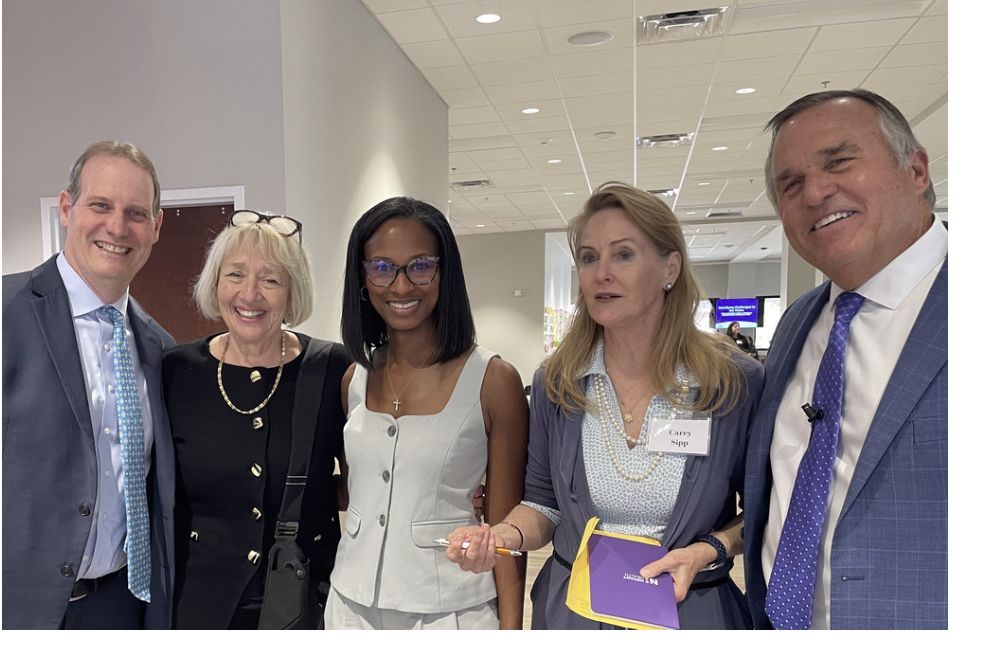
Photo from May 13, 2026 of Ben David, chief executive officer of the New Hanover County Community Justice Center; Elaine Miller-Karas, key creator of the Community Resiliency Model (CRM) and co-founder of Trauma Resource Institute; J’vanete Skiba, director, New Hanover County Resiliency Task Force; myself, and Casey Gwinn, founder, Alliance for Hope International, co-founder, Camp Hope, on break at a strategic planning session for the New Hanover County Community Justice Center. Elaine visited Wilmington and Raleigh, North Carolina, from California to meet with business leaders and CRM trainers in the region and dropped by the planning session to meet Ben, Casey, and Catherine Johnson, president of Alliance for Hope International. This photo represents a few of the hundreds of thousands of people working upstream to prevent and heal trauma, to create the positive childhood and community experiences that help prevent next-generation trauma. Their work — and that of their predecessors over generations, including that of grandparents, teachers, coaches, neighbors, family friends, and more who have provided safe, stable, nurturing environments  for newborns and children enduring trauma — is a major reason why high ACE scores do not automatically equate, at the individual level, to negative outcomes. Your work — our work — matters!)

Reading the 1998 ACE Study in 1999, freaking out, doubling down on self-care


About 27 years ago, when I first learned about the science of adverse childhood experiences (ACEs) via the 1998 ACE Study, I was so devastated by my ACE score that I wept — and put the study in a drawer.

Fortunately, I’d already increased my activity in several supportive communities following a divorce, as I sought help rearing my two precious children as a single working mom.

About three years later, I took the ACE study out of the drawer. Brain science had come out with a lot more information on neuroplasticity — how we’re not “stuck” with the brain we’re born with, or that might have been harmed by ACEs. I started doing more research and writing on parenting, health, brain health, recovering from trauma, and ultimately, ACEs, and then positive and adverse childhood experiences (PACEs) science.

Reparenting and parenting

Fast forward through years of reparenting myself as I parented my children — with the belief that we needed to be in healthy communities where they could have as much exposure as possible to happy, healthy families and adults modeling great relationships. I encouraged my kids to be glad they had “other mothers and fathers” — lots of strong, positive influences in their lives.This was 20 years before the Positive Childhood Experiences (PCEs) study of 2019. But when it was published, it was deeply affirming of how relying on a “village” and asking for help, as instinct guided, had been the right habit.

We were NOT our ACE scores. My high ACEs didn’t mean I was doomed — as I’d so feared when I first read the 1998 study. And low ACEs didn’t mean anyone was “out of the woods.” We all need as many PCEs as possible.

Here is a truth I want every person with a high ACE score to hear: a high ACE score is not a death sentence. It is not a destiny. The ACEs study measures population-level risk — and at the population level, the implications are sobering. But populations are made up of individuals. And individuals have agency. There are outliers. There always have been.

Screenshot 2026-04-29 at 6.24.17 PM

The 2019 PCEs study and many subsequent studies on the power of PCEs affirm what many of us had already lived: positive childhood and community experiences are buffering and protective; that they can and do change trajectories. For people without those buffers — facing greater poverty, isolation, racism, inequity, and lack of healthcare and support — the risks the ACEs study describes are more likely to materialize. That is chief among the real injustices we must address.

For those of us who fell into or found community, who were held by neighbors and grandmothers and the parents of friends — those relationships were medicine.

Screenshot 2026-04-29 at 6.24.24 PM

I have had health challenges that line up perfectly with the assault on my developing brain and central nervous system — digestive, respiratory, and sleep issues. AND the communities my children and I were part of boosted our health and stability. Years of meditation taught me how to breathe and calmed my nervous system. My respiratory issues are now few and far between.
*My* children are now 33 and 36. Both are in terrific marriages. A first grandchild is due soon; he will be welcomed with and into tremendous love. I am in a safe, stable, nurturing relationship, surrounded by one of the most caring communities I’ve ever known.

#WeAreTheMedicine. Creating and being in community — and knowing we have agency — changes everything. Community is the preventive and antidote to trauma and the trauma of isolation, loneliness, “othering.”

People with high ACE scores are not broken. We are not necessarily destined for an early grave. The science tells us about risk. It does not tell us about about you and me!

                                                   *********************

Invitation to learn more, so much more, about positive and adverse childhood experiences on Friday, May 22nd. Register now for Scars to STARS Day, global summit on the future of ACEs Science.

Screenshot 2026-05-16 at 2.48.59 PM

Please join the PACEs Connection community by registering now for the “ACEs the Next 30 Years” Summit this Friday. We’ll be honoring the two principal co-authors of the 1998 ACE Study, Vincent Felitti, MD, and Robert Anda, MD, MS, and welcoming notable speakers including the Hon. Patrick Kennedy, co-founder of The Kennedy Forum; Melissa Merrick, PhD,  president of Prevent Child Abuse America; Diana Fishbein, PhD, founder and director of the National Prevention Science Coalition to Improve Lives; Jennifer Hays-Grudo, PhD and Amanda Sheffield Morris, PhD of the Oklahoma State University Center for Health Sciences, Center for Integrative Research on Childhood Adversity , presenting on ACEs to PACEs —  Defining the Next Era of Prevention; Jesse Kohler, founder and president of The Change Campaign; Michael Menard, founder of United Against Childhood Trauma; Jamie Huysman, PsyD, LCSW, founder and executive director, STAR Network Foundation, and Mercie Josina DiGangi, DO, regional chair of the Child Abuse Prevention Program at Kaiser Permanente, Southern California.

Screenshot 2026-05-16 at 2.54.35 PM

Free: Register now at Scars to STARs Summit 2026 – STAR Network. (STAR stands for Survivor of Toxic Abusive Relationships) Registration is free though a donation is encouraged. Download the agenda here to learn more!

*Some 10,000 people in New Hanover County have been trained to some degree in the Community Resiliency Model (CRM), proven to help users re-regulate and increase nervous system resiliency in response to stressful situations, including natural disasters, which is of great benefit in decision-making and providing care in times of crisis.

Screenshot 2026-04-29 at 6.24.11 PM
Screenshot 2026-04-29 at 6.24.01 PM
Screenshot 2026-04-29 at 6.14.53 PM

Attachments