Category Archives: Uncategorized

Childhood Trauma Can Manifest Without Parents Even Knowing [newsweek.com]

Carey Sipp Carey Sipp 10/17/2210:00 AM

By Aristos Georgiou, Photo: Stock image, Newsweek, October 15, 2022

Childhood trauma occurs more often than you might think and if it goes unaddressed, the potential consequences can be devastating, affecting the individual’s life well into adulthood.

Nothing matters more to a parent or caregiver than their child’s happiness and wellbeing. But dealing with a child who has been traumatized can be a challenging experience and often the the signs may go unnoticed.

In her book, Has Your Child Been Traumatized?, clinical psychologist Dr. Melissa Goldberg-Mintz reveals how parents can recognize the signs and symptoms of trauma in their children, while providing advice on how they can support them on their path to recovery.

[Please click here to read more.]

Carey Smith Sipp

carey.pacescommunites@gmail.com

Adverse Childhood Experiences Led to Poorer Mental Health During Pandemic [islandernews.com]

Carey Sipp Carey Sipp 10/18/2211:00 AM

By Physician’s Briefing Staff, Islander News, October 14, 2022

Experience of adverse childhood experiences (ACEs) was associated with poorer mental health and increased suicidal behaviors during the pandemic, according to research published in the Oct. 14 issue of the U.S. Centers for Disease Control and Prevention Morbidity and Mortality Weekly Report.

Kayla N. Anderson, Ph.D., M.P.H., from the CDC in Atlanta, and colleagues used data from the 2021 Adolescent Behaviors and Experiences Survey to examine associations between ACEs occurring during the pandemic and mental health or suicidal behaviors among U.S. high school students.

The researchers found that experience of one to two ACEs was associated with poorer mental health and increased suicidal behaviors; with additional ACE exposure, these deleterious outcomes increased. Adolescents who reported four or more ACEs during the pandemic had a prevalence of poor current mental health that was four times as high as those without ACEs during the pandemic, after adjustment for demographic characteristics; the prevalence of past-year suicide attempts was 25 times as high. Higher prevalences of poor mental health and suicidal behaviors was seen for experience of specific ACE types (e.g., emotional abuse).

[Please click here to read more.]

Carey Smith Sipp

carey.pacescommunites@gmail.com

An urgent and important request for year-end giving from PACEs Connection

Carey Sipp Carey Sipp 10/18/222:42 PM

During this upcoming season of giving, we are making a special appeal. We are in deep financial straits. In a most un-trauma-informed move, a major foundation which had assured us that we would receive a second year of funding unexpectedly reversed course shortly before we were due to receive a $500,000 grant from them.

We’re fortunate to have a couple of funders who are providing support from January through December 2023. But we didn’t have enough funding remaining this year to take us through the end of this quarter, so we’ve cut our pay and time by 50%. If you’ve been through something like this, you know the hardship of making one paycheck last for two months. And almost all staff will be laid off for the month of December.

So, we’re modeling what we’ve written about for others for the last 11 years, quoting authority after authority about the need for people affected by trauma to “ask for help.”

We are asking you, our 57,300+ members, to make a donation, preferably, a monthly donation.

Because we’ve been funded by grants from generous donors over the last few years, we haven’t relied on donations. During a year-end funding campaign two years ago we received an unexpected matching gift of $50,000; you were kind enough to grow that to $105,000.

We are deeply grateful for that support, and for the $22,190 you donated over the last six months, since we began telling you of our situation. And now, as we enter the season of year-end giving, we ask for whatever you can give to assist PACEs Connection in its efforts to continue to solve our communities’ most intractable problems.

Given the current non-profit funding system, which tends to support organizations for only two or three years, we began planning six years ago to become self-supporting. That’s because we know that it will take communities 20 to 40 years to integrate policies and practices based on PACEs science. Earlier this year, we began accelerating those plans by diversifying our revenue streams.

  • We’re offering paid events (after doing more than 100 free webinars in 2020 and 2021), including a much-anticipated Collective Grief, Collective Healing conference.
  • We’re providing our expertise to create trauma-informed schools, trauma-informed workplaces that are anti-racist organizations, and helping local initiatives build partnerships to increase their funding and accelerate their growth.
  • We continue to recruit communities to join our Cooperative of Communities, which we launched in late 2019, only to see our progress delayed by COVID. The Coop offers unique and sophisticated tracking tools and other benefits to help community PACEs initiatives to accelerate growth, reduce ACEs and increase positive childhood experiences. Communities pay $5,000 a year for tools and benefits that would cost an individual community $80,000 to develop themselves.
  • Recruiting foundations to partner with us in our work. Besides the obvious consequence of losing much-needed funding, the loss of the $500,000 grant put us in the position of losing precious time to find another funder. Acquiring funding takes, on average, 18 months from first contact to money in the bank. Most funders won’t accept unsolicited requests for funding. You have to know someone who can provide an introduction.

Over the next couple of months, you won’t experience much of a difference in what you see from us. We’ll keep delivering the Daily Digest and Weekly Roundup, which we’ve provided for free for more than a decade. We’ll continue to provide support and training to the 440 or so cross-sector geographic communities and 40 or so interest-based communities that have free pages – their own mini-websites – on our site. We’ll keep offering our free Creating Resilient Communities trainings to the general public, and our Growing Resilient Communities trainings for managers of community initiatives.

We’ll be posting about our fundraising efforts, and asking some of you to post about what PACEs Connection has meant to you, your community, your growth and development as a human, parent, professional. If you’d like to share a video or a testimonial about the importance of our work, please do. We’d love to hear from you and ask that whether you post or not, to make a gift, preferably a monthly gift, to help us keep doing the work.

You can make your tax-deductible gift here. You can post a blog yourself (here are instructions for a blog.)

In the meantime, thank you for all you do in your life, your home, your community, your corner of the world, to help prevent and heal childhood trauma, to help build healthier, more resilient and compassionate communities.

Carey Sipp

Director of Strategic Partnerships

PACEs Connection

Attachments

Hide

Images (1)

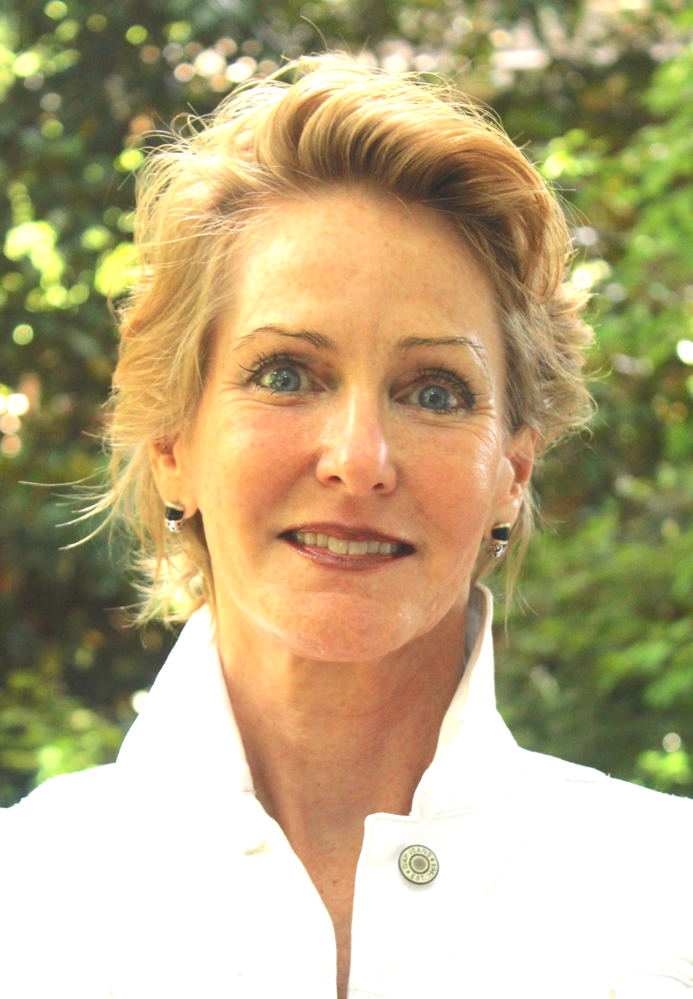
Carey Headshot 7.16.: Carey Sipp, Director of Strategic Partnerships

Carey Smith Sipp

carey.pacescommunites@gmail.com

She’s Inheriting Millions. She Wants Her Wealth Taxed Away. [nytimes.com]

Carey Sipp Carey Sipp 10/24/2210:02 AM

By Emma Bubola, Photo: Mashid Mohadjerin/The New York Times, The New York Times, October 21, 2022

By the time her extraordinarily wealthy grandmother died last month, Marlene Engelhorn already knew who she wanted to be the ultimate beneficiary of the enormous inheritance coming her way: the tax man.

“The dream scenario is I get taxed,” said Ms. Engelhorn, the co-founder of a group called Tax Me Now.

Ms. Engelhorn, a 30-year-old who grew up in Vienna, is part of a growing movement of young, leftist millionaires who say they want governments to take a much larger share of their inherited wealth, arguing that these unearned fortunes should be democratically allocated by the state.

For more than a year, Ms. Engelhorn has been campaigning for tax policies that would redistribute her eight-figure windfall — and anyone else’s.

[Please click here to read more.]

Carey Smith Sipp

carey.pacescommunites@gmail.com

Views: 508

See Everything the White House Wanted, and Everything It Got [nytimes.com]

Carey Sipp Carey Sipp 10/25/2211:17 AM

By Aatish Bhatia, Francesca Paris, and Margot Sanger-Katz, The New York Times, October 25, 2022

The first two years of the Biden administration have included huge legislative victories: a major bipartisan infrastructure deal, a technology bill, a veterans’ health bill, a gun safety bill, and a package of new investments in climate and health care.

Of course, President Biden didn’t get everything he wanted; no president does. Even with these major bills, he has fallen substantially short of some of his legislative goals.

With the midterms less than three weeks away, The Upshot examined the president’s policy goals and Congress’s successes in previously unreported detail. We matched every single line of spending and revenue in the jobs and families plans from Mr. Biden’s 2022 budget with cost estimates for the five large policy bills passed by Congress in the last year.

[Please click here to read more.]

Carey Smith Sipp

carey.pacescommunites@gmail.com

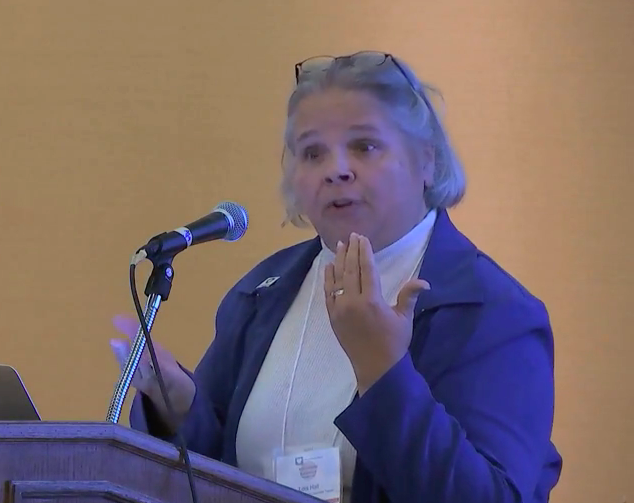
Donor Lois Hall says PACEs Connection is ‘proof of where hope is brought in communities’

Carey Sipp Carey Sipp 10/25/222:53 PM

Note: PACEs Connection is in dire financial straits. A funder who’d promised $500,000 reversed course and we are asking for help, from you, our 57,400+ members, to help cover the loss. Pay and hours have been cut for our staff – most of us will be laid-off for the month of December. Since sounding the alarm this summer, we’ve raised about $22,000. To get a sense of who your fellow members are, who is donating, and why, please enjoy our first in a series of donor profiles, and be like Lois: Now that you know we need your help, please make a generous donationto PACEs Connection!

“I love PACEs Connection—and the thought that it might go away was not only frightening—but sad. Where else would I find the things I get from PACES Connection, all in one place?”—Lois Hall, grief recovery specialist

When Lois Hall first learned about the science of adverse childhood experiences (ACEs) in 1998, it made complete sense. “That study, and all the ensuing research and analysis proves that grief/change/loss—in the broadest terms—is indeed the root of almost all (if not all) of our ills as individuals, communities and… our world,” she says.

She would know as well as anyone. Hall, past executive director of the Ohio Public Health Association, has been doing Grief Recovery Method programs and training for more than two decades. She’s been in the field of public health for more than 40 years.

“I took my Grief Recovery Method (GRM) training in 1998 and saw the important role of grief/loss/change in the basics of all we do in public health. I remember in my training thinking, ‘We have a program and brochure for all of these topics—but they’re not working.’ In public health we weren’t getting to ‘the heart’ of those topics—obesity, smoking, alcoholism, abuse, drug use, suicide, violence, etc.,” she says.Screen Shot 2022-10-25 at 4.44.51 PM

The week after her GRM training, a colleague gave a presentation at a staff meeting on the CDC-Kaiser Permanente Adverse Childhood Experiences Study.

“Bingo! All the pieces came together,” she recalls. “I literally sat in that staff meeting and cried, because it is indeed those things that happen to us in childhood that impact us throughout our lives—till death.”

Screen Shot 2022-10-22 at 5.46.36 PM As an “early adopter,” Hall began referencing the ACE Study into her work as national trainer and technical assistance consultant at the Grief Recovery Institute.

“I look to PACES Connection for proof of where hope is brought in communities…”

“When I do Grief Recovery Method training for the Grief Recovery Institute,” she explains, I always conclude by telling the new trainees that while they came to become Grief Recovery Method specialists, I’m sending them out as that AND as ‘hope-bringers’ to a pretty hopeless-seeming world.

She gives PACEs Connection much credit for the hope she has.

“I look to PACES Connection for proof of where hope is brought in communities, data that proves the impact of PACEs and interventions that can help bring that hope, in addition to our programs, of course.

“I love PACEs Connection—and the thought that it might go away was not only frightening—but sad. Where else would I find the things I get from PACES Connection, all in one place? I just didn’t want to imagine not having it,” she says.

Hall counts on PACEs Connection for what’s in the name of the organization: Connection. “Working for a small company there’s no ‘chatting around the water fountain’ about what we’ve heard or seen in journals or other articles,” she explains. “I count on PACES Connection for that.”

Hall relies on the resources, information, and the Weekly Roundup as among her primary sources of continued learning and staying current on PACE research and practice. “For me to stay informed and current, PACEs Connection is my ‘community of like-minded professionals and advocates,” she says.

“And ‘being involved’ also means I have chosen to make a financial donation,” Hall points out, adding, “Why should other members of PACES Connection provide financial support?  If not us, then who?”

Resources:

Lois Hall bio on Grief Recovery Institute website

The Free Grief Recovery Method Guide For Loss Ebook

The Grief Recovery Handbook – for a limited time, free for the price of shipping.


To make your donation to PACEs Connection, please click here.

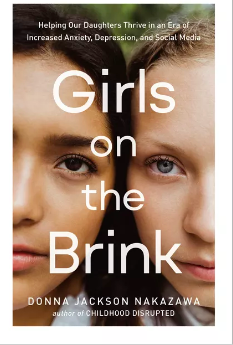
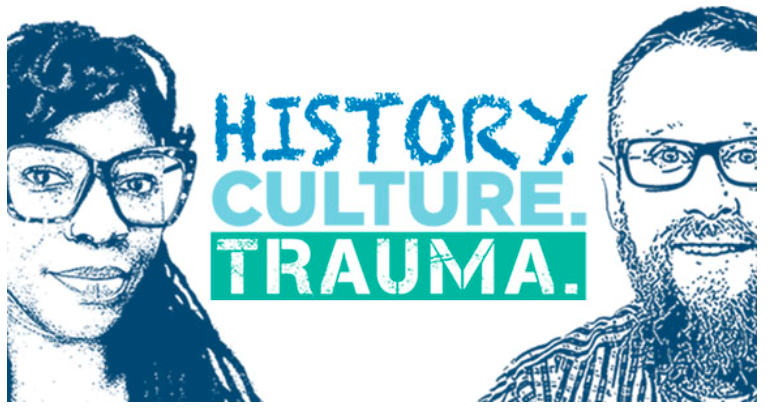
‘Girls on the Brink’ Author Donna Jackson Nakazawa on this week’s History. Culture. Trauma. podcast

Carey Sipp Carey Sipp 10/25/223:32 PM

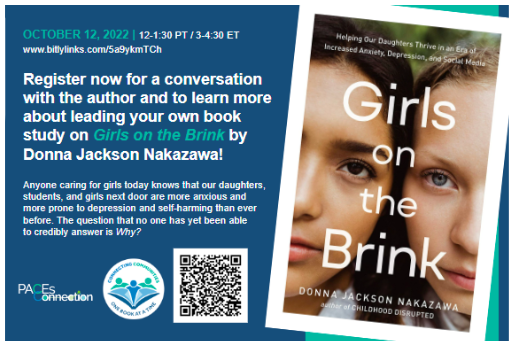
Donna Jackson Nakazawa, author of six books and longtime friend of PACEs Connection, joins the History. Culture. Trauma. podcast this week in an excerpt from the launch of her sixth book, “Girls on the Brink—Helping our Daughters Thrive in an Era of Increased Anxiety, Depression and Social Media.”

Screen Shot 2022-10-12 at 1.25.13 PM“Anyone caring for girls today knows that our daughters, students, and girls next door are more anxious and more prone to depression and self-harming than ever before,” said Nakazawa. But the question that seemed to have no answer was: “Why?” That’s why Nakazawa wrote the book, which she called a true labor of love.

The podcast comprises excerpts from a recent discussion among Nakazawa and PACEs Connection staff members Carey Sipp and Natalie Audage. Nakazawa noted that this time is especially challenging for girls. She cited the cultural challenges of social media and peer pressure as well as scientific evidence of hormonal and other biological changes in girls that are a cause for concern.

“The earlier onset of puberty mixes badly with the unchecked bloom of social media and cultural misogyny,” Nakazawa explained. “When this toxic clash occurs during the critical neurodevelopmental window of adolescence, it can alter the female stress-immune response in ways that derail healthy emotional development.”

Screen Shot 2022-10-25 at 5.28.25 PMThe interview also focused on several of the 15 “antidotes” Nakazawa offers in this highly acclaimed book, as well as which factors in research on positive childhood experiences are most likely to help girls become secure and confident young women. Antidotes fall into three categories and include three on “the building blocks of good parent-child connection, and the importance of family connection,” six antidotes for “making her home a safe space,” and six antidotes to “bring in what the wider community can provide.” The interview honed in on at least one antidote from each of the three categories, including making it a good experience when your daughter turns to you, the importance of “wonder”, and encouraging a sense of mastery.

Nakazawa is an award winning science journalist, public speaker, and author of “The Last Best Cure”, in which she chronicled her year-long journey to health. “Childhood Disrupted” was born from the author’s own search to better understand the role her own childhood adversity played in the chronic health issues she faced as an adult.

Nakazawa lectures nationwide and has appeared on the TODAY Show, National Public Radio, and ABC News. Her work has been featured on the cover of Parade, in Time Magazine, USA Today Weekend, Parenting, and Psychology Today. She has been a regular contributor to More and her research has been covered by The Washington Post, Glamour, Ladies Home Journal, and AARP: the Magazine. Donna blogs regularly for Psychology Today.

The book is the second selection of the PACEs Connection Connecting Communities One Book at a Time book study. The first selection was “What Happened to You?” by Dr. Bruce Perry and Oprah Winfrey. More than 130 book studies formed as the result of the new initiative to communities together around books that help us have critical conversations about positive and adverse childhood experiences, racism, inequity, and how communities can prevent and heal trauma and create resiliency.

Tune into the interview broadcast at 1 p.m. PT; 4 p.m. ET on Thursday, October 27 here.

Or join one of the podcast links below:

Show Links

Attachments

Hide

Images (3)

Screen Shot 2022-10-12 at 1.25.13 PM
Screen Shot 2022-09-22 at 12.29.27 PM
Screen Shot 2022-10-25 at 5.28.25 PM

Carey Smith Sipp

carey.pacescommunites@gmail.com

Universal Basic Income Has Been Tested Repeatedly. It Works. Will America Ever Embrace It? [washingtonpost.com]

Carey Sipp Carey Sipp 10/28/2210:00 AM

By Megan Greenwell, Photo Illustration: The Washington Post, The Washington Post, October 24, 2022

In January 2019, Zohna Everett was sitting in an airport when her phone rang. On the other end of the line, a voice informed her that she had been randomly chosen to receive $500 a month as part of something called the Stockton Economic Empowerment Demonstration.

When Everett had first heard about SEED a few weeks earlier, she’d wondered if it might be a scam, as things that sound too good to be true often are. Her pastor assured her that it was real — that 125 residents of poor neighborhoods in Stockton, Calif., would receive money as part of a groundbreaking experiment. When she got the call, Everett thought she was receiving a one-time payment, which was thrilling enough. Then the woman on the phone told her she’d receive $500 every month for a year and a half, with no strings attached. She nearly collapsed from joy right there in the airport.

Suddenly, Everett — who in 2018 had lost her job as a Department of Defense logistics specialist, had subsequently tried to make ends meet by driving for DoorDash, then had taken out significant unsubsidized loans to attend college online in a bid to improve her employment prospects — saw a path back to stability. She would be able to cover her car payments and the rent, to keep her phone on without giving up her monthly tithe to her church.

[Please click here to read more.]

Carey Smith Sipp

carey.pacescommunites@gmail.com

Highly-honored school nurse and nurse educator Robin Cogan calls PACEs Connection her ‘north star’; urges each member’s support!

Carey Sipp Carey Sipp 11/1/222:07 PM

Note: PACEs Connection is in dire financial straits. We are asking for support, from you, our 57,505 members, to help cover the loss of foundation funding that was promised and did not come through. Pay and hours have been cut for our staff—most of us will be laid off for the month of December. Another grant will pick up in January. Since sounding the alarm this summer, we’ve raised about $24,000. To get a sense of who your fellow members are, who is donating and why, please enjoy and share this second post in a series of donor profiles, and be like Robin: Please make a generous donation to PACEs Connection!

“PACEs Connection has been my north star for credible information about the science, research, and lived expertise that is centered on healing our most intractable problems,” says Robin Cogan, a nationally certified school nurse (NCSN) in an elementary school clinic in Camden, New Jersey.

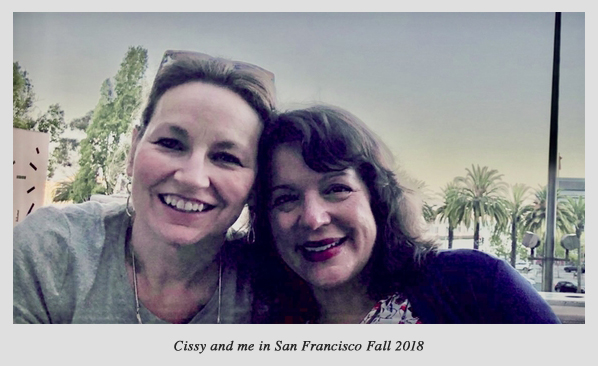
Cissy & Cogan San Francisco Fall 2018

Cogan and former PACEs Connection employee and current blogger Cissy White met in person at the 2018 ACEs Conference in San Francisco after connecting on (then) ACEs Connection and Twitter!


She found PACEs Connection following the death of her father.

“He was a complex man who died from a hemorrhagic stroke, directly linked to the trauma he suffered as a 12-year-old boy witnessing the death of his entire family,’’ she explains. “He was buried on the 60th anniversary of the murders. I was on a quest to understand the life and death of my father, and found it through the research provided in the treasure trove of information available on PACEs Connection.”

Generational trauma

Cogan’s family has experienced the trauma of two mass shootings with both survivors and victims. A niece of Cogan’s was involved in a school shooting several years ago, and survived in the same way her grandfather survived in the mass shooting of his family seven decades earlier: She hid in a closet.

“Generational trauma was my original reason for digging deeper into the science of ACEs,” Cogan says. “It is my goal to do everything in my capacity as a school nurse and family-member survivor to end gun violence through public health measures which drive me to share this work. PACEs science holds the key by reducing and working to eliminate childhood adversity, especially exposure to violence. That will change the world.”

Headaches and stomach aches

As a clinical coordinator in the school nurse specialty program where she teaches at the Rutgers School of Nursing in Camden, Cogan has shared her passion and expertise in school nursing with hundreds of college students who follow in her footsteps to be, oftentimes, the one person who understands what’s happening when a child shows up at a school clinic with the fifth headache of the month; the third stomach ache of the week. She knows trauma is likely the root cause of many of those headaches and stomach aches.

Her work on the faculty in the School Nurse Certificate Program at Rutgers University-Camden School of Nursing earned her the 2018 Rutgers University – Camden Chancellor’s Teaching Excellence Award for Part-time Faculty.

“The Relentless School Nurse”Screen Shot 2022-11-01 at 3.57.36 PM

Cogan is also a prolific writer. Her weekly “Relentless School Nurse” posts were named “Top Nursing Blog” in 2020 on her website by the same name. Cogan also authors a monthly column in “My American Nurse”, the official journal of the American Nurses Association, and is the recipient of multiple awards for her work in school nursing and population health, including the 2019 and 2020 National Association of School Nurses President’s Award and the New Jersey Department of Health 2017 Population Health Hero Award. She was also named the 2018 National Certified School Nurse (NCSN) School Nurse of the Year, and the 2017 Johnson & Johnson School Nurse of the Year.

“Our gifts back…will bring more light..”

As for her generous support of PACEs Connection, Cogan says, “For so long the content of PACEs Connection has been open-access and I am sure that will continue. But answering this call for support is the least that we can provide for all that has been given by the organization.

“When you look at the structure behind PACEs Connection, you realize how few devoted people are providing so much content, research, opportunities for community building, and space to exhale in this complex world. I have given over the years, but realize that if each of us gave even a small amount, the collective impact would be a game-changer for PACEs Connection,” she adds.

”I appreciate that PACEs Connection lifts up community-inspired solutions by engaging grassroots groups working to heal their communities,” she says. “It  has been a focal hub for learning, growing, and amplifying the science of positive and adverse childhood experiences. Our gifts back will be used to bring more light into this world in great need of healing.”

Cogan encourages fellow members of PACEs Connection to join her in making a generous, tax-deductible donation to PACEs Connection here.

mail iconIf you’d prefer to mail your gift rather than give it online, here’s how…

Make check payable to:
TSNE (Third Sector New England, our fiscal sponsor) and write PACEs Connection Donation on the memo line.

Mail check to:
PACEs Connection, c/o TSNE, 89 South Street, Suite 700, Boston, MA 02111

information iconMaking a wire transfer or need Tax ID information?

Please contact Carey Sipp, Director of Strategic Partnerships, at csipp@pacesconnection.com

Jeoff Gordon sees PACEs science, PACEs Connection playing a vital role in ‘relieving some of the most anguishing pain in our society.’

Carey Sipp Carey Sipp 11/8/2211:46 AM

Note: PACEs Connection is in dire financial straits. We are asking for support, from you, our 57,586 members, to help cover the loss of foundation funding that was promised and did not come through. Pay and hours have been cut for our staff—most of us will be laid off for the month of December. Another grant will pick up in January, but we will still be underfunded. Since sounding the alarm this summer, we’ve raised about $26,000. Thankfully, about 25% of new donors are making monthly donations. To get a sense of who your fellow members are, who is donating and why, please enjoy and share this third post in a series of donor profiles, and be like Jeoff Gordon: Please make a generous donation to PACEs Connection!

Dr. Jeoffry Gordon learned about the CDC-Kaiser Permanente Adverse Childhood Experiences Study when he attended a talk in 2003 by the study’s co-principle investigator, Dr. Vincent Felliti.

“But I had no understanding of the terrible consequences of child abuse trauma until 15 years later when I started seeing patients in a clinic for the homeless, where it was a common condition,” says Gordon, a retired family physician and PACEs Connection supporter and activist.

Gordon, who practiced family medicine for 40 years in San Diego, California, attended some of the most elite schools in the nation: Harvard College, Case Western Reserve University School of Medicine, Harvard Medical Service at Boston City Hospital for his medical internship,  and Tulane University for a master’s of public health.

“…a tragic, soul-searing experience…”

“I was always up to date in cardiology, endocrinology, neurology, etc.,” he says, “but never heard the phrase ‘trauma-informed care’ until the last year I saw patients, in 2019. It was then I started connecting the effects of child abuse, neglect and trauma. I saw what can be a tragic, soul-searing experience, affecting physical health, mental health, and social capacity.”

Does he wish he’d known about the connection to childhood adversity and health outcomes earlier? Does he wish there had been the information and a resource such as PACEs Connection when he was practicing family medicine?

“Absolutely,” he says. “Although I certainly ‘knew’ about child abuse and ACEs, my lack of clinical appreciation and insight must have frequently led to inadequate evaluation and treatment of many patients with both psychological and physical illnesses. I learned this several years after I retired when a former patient contacted me for records to support his disability application. I had administered an ACEs questionnaire to him and he had a high score, but I had treated him like any other patient with anxiety and depression with ineffective meds and never applied PACES science.”

The relationship between inequity, racism, and trauma.

Active in social justice issues for decades, Gordon has a keen sense of the relationship between inequity, racism, and trauma. “I got involved in child abuse mitigation and prevention because I felt in this space I could relieve some of the worst and most anguishing pain in our society,” he says.

Gordon would know. He has been an outspoken member of the California Citizens Review Panel on Critical Incidents (child abuse homicides) for three years, posting multiple times on PACEs Connection in support of this work and legislation to support it.

“I think it is an obligation, and more than a privilege, to support PACEs Connection during this period of financial stress.”

“PACEs Connection has made an amazing national contribution to dealing with ACEs,” he explains, “connecting survivors to survivors, connecting therapists to therapists, connecting survivors to therapists, promoting medical and counseling education, catalyzing many community-based intervention programs, and sponsoring many educational sessions. I think it is an obligation, and more than a privilege, to support PACEs Connection during this period of financial stress.”

Gordon considers himself to be an unaffiliated, freelance community advocate and activist trying to remediate years of disregard and public avoidance of the tragedies of child abuse and neglect.

Expanding the appreciation of the epidemic of child abuse; recommending that friends become involved in PACEs Connection.

“I am working to expand the appreciation of the epidemic of child abuse and child abuse trauma especially within the medical professions, especially psychiatry,” he points out, “and promoting the application of PACEs knowledge throughout all medical specialties. I also work on expanding resources devoted to this problem at all levels of government. I am especially concerned and active trying to repair the inattention and chaos in California around the tragic issue of child homicides due to abuse or neglect.”

When it comes to recommending that friends and colleagues become involved in PACEs Connection, Gordon says: “I think every researcher and professional providing therapy to people who have experienced maltreatment, people who are traumatized, does not do an adequate job if they are not also working to bring attention, in the public square, to the ongoing tragedies generated by childhood trauma.”

Gordon encourages fellow members of PACEs Connection to join hm in making a generous, tax-deductible donation to PACEs Connection here.

mail iconIf you’d prefer to mail your gift rather than give it online, here’s how…

Make check payable to:
TSNE (Third Sector New England, our fiscal sponsor) and write PACEs Connection Donation on the memo line.

Mail check to:
PACEs Connection, c/o TSNE, 89 South Street, Suite 700, Boston, MA 02111

information iconMaking a wire transfer or need Tax ID information?

Please contact Carey Sipp, Director of Strategic Partnerships, at csipp@pacesconnection.com

Carey Smith Sipp

carey.pacescommunites@gmail.com