Almost nine years ago, over the course of four days, I let my doctor send me home from his office three times before I almost died of pneumonia. I spent two weeks in the hospital; it took many months to fully recover. It was a life-changing experience, and I continue to learn from it.
About three years ago a physician’s assistant skipped a basic, obvious test for a 17-year-old with swollen glands. Twelve hours later, in the emergency room, physicians glanced at my daughter, diagnosed mononucleosis, and confirmed it shortly thereafter with a “spot mono test.” The greater danger though, came from a severe reaction to antibiotics, medication my daughter would never have taken had the mono test been done at the doctor’s office. The horrifically painful reaction could have killed her.
Despite the fact that I’ve helped in marketing and fundraising for more than a dozen medical entities, including a hospital safety consultancy, in my 30+year career, it’s taken years of a different type of recovery to realize that no physician has what it takes for me to care for my family and myself. That requires the self-awareness, trust in my own intuition, and courage to risk evoking anger in someone in “authority” by calling them into question, if need be. That type of courage comes from becoming an emotionally healthy adult.
As a person healing from abuse, I must work doubly hard to stay in the moment and not let fears from the past keep me from doing “the next right thing.” An overwhelming fear of authority, desire to “people please,” and a sometimes crippling self-doubt can prevent me from questioning others, especially if I am not taking great care of myself; if I am not “living in the moment.”
“I am a real bulldog when it comes to advocating for my mom,” I said to the staff at the infusion clinic where my mother was to receive three pints of blood recently. The staff wanted to give her all three pints on the same day. My gut told me that at almost 87, my mom, who had just lost her husband to Alzheimer’s the night before, and has been weakened for years by an autoimmune disorder, did not need to be in that clinic for 16 hours straight. When, three days later, we received her diagnosis of congestive heart failure, the doctor said we’d made a good choice to stretch the procedures over two days.
My mother, daughter, and I survived each of those medical crises. I wonder, though, had I known more or followed my intuition earlier when my daughter and I were sick, if our outcomes could have been better.
By the time we got to my mom’s situation, I knew that relying solely on medical professionals does not ensure the best care. More important was learning how to trust my instincts and speak up. This is equally important for the millions upon millions of addiction and abuse survivors. We, especially, need to remember these bottom lines:
1. We need to practice “extreme self-care,” and try to stay out of the hospital; our health is already compromised by the stress of “adverse childhood experiences.”
2. If we do go to the hospital, just like everyone else, we need an advocate friend or family member to help us watch what’s going on – right down to asking hospital staff if they’ve washed their hands before we’re touched. We must value ourselves and have the courage to ask for help.
3. If you yourself are filled with the self-doubt, insecurity, and fear of authority that can come from growing up in addiction and abuse, these emotions can keep you from getting the best care for yourself and your loved ones. This is a good time to learn more about emotional healing that can help you, and your loved ones, learn how to speak up and become healthier on all counts.
There is not a surgical procedure that can cure the more than 30 million children of alcoholics who live, as I do at times, affected by some or all of the 14 characteristics of adult children of alcoholics called “The Laundry List,” by the ACOA fellowship. If there were such a surgical procedure, it could save our health care system literally billions upon billions of dollars from family addiction and abuse passed on from generation to generation. Addictions to alcohol, food, drugs, cigarettes, and harmful behavioral addictions to sex, gambling, spending, pornography, and toxic relationships, cost our health care system more than any other single condition.
The most amazing thing? One of the most effective treatments for these addictions, and the co-addictions suffered by the family members, is free. It just takes the courage to find a support group such as Alcoholics Anonymous, Al-Anon, Adult Children of Alcoholics, Overeaters Anonymous, or the like. Again, the meetings are free. You can even call a toll-free number and attend meetings in complete anonymity, via a conference call.
Nine years ago, had I not prayed for the strength to stand up and ask for what I believed I needed – a surgical procedure to remove fluid from my lungs – I may well have died. I had to trust God, and my own God-given intelligence and courage to speak up.
The big lesson: recovery really does save lives, one day at a time, whether we’re in the hospital, or at the kitchen table.
Carey Sipp’s first book, The TurnAround Mom – How an Abuse and Addiction Survivor Stopped the Toxic Cycle for Her Family, and How You Can, Too, guides fellow “children of chaos” to create the kind of sane and loving home life that helps prevent next-generation addiction and abuse. Her book is available here.
Stacey Breitmann, trauma survivor, mom, military wife, neurofeedback advocate and coach.
“I want to see as many troubled families and individuals as possible – especially people such as I, who have experienced multiple Adverse Childhood Experiences (ACEs) – have access to neurofeedback. It has changed my life by changing my brain. I grew up in a horrific situation, never able to trust being safe. Stress would take me back to that childhood place of feeling terrified. Neurofeedback helped me become more rational, as my brain was trained to function with less stress. Now that I am not in constant panic, I can see the parts of our lives that are not going the way we want them to go and can look at these challenges with clarity and openness instead of fear and blame, shame, or guilt,” says Stacey Breitmann, trauma survivor, mom, military wife, and neurofeedback advocate.
For the Breitmann family in North Georgia, the last few years have been intensely stressful. Todd, a Lt. Col. in the Air Force for 24 years, retired in 2012, and fell into depression and anxiety when his military career came to an end. In an attempt to change the mood by changing the focus and location, the family bought a farm, sold it, tried life in a Winnebago for a couple of years while homeschooling their daughters on the road. Finally, when they settled in North Georgia in 2016, family stresses and Todd’s depression became so crippling that he became suicidal. Residential treatment seemed to be the best option.
In Todd’s absence, his wife Stacey did what good military wives do: She ran the household – as the mom and the dad. But the stress of being left behind this time were life-threatening for her too. Her fears that Todd might take his life during treatment drove Stacey beyond depression into being suicidal, too.
To read the rest of this post by Carey Sipp, ACEs Connection SE Regional Community Facilitator, click here.
When you first hear about it, it sounds unlikely, fact that something that happened to someone in utero, at the age of two months, or four years, or any time in childhood, is what is killing them as an adult, or making them want to die, or making them want to hurt themselves or others.
Yet the connection between childhood trauma and adult disease, mental illness, addiction, suicide, violence – most all of society’s ills – is as irrefutable as the myriad truths revealed about it in the CDC-Kaiser Permanente Adverse Childhood Experiences Study (ACE Study). The groundbreaking research shows that the more childhood trauma you experience, the greater your likelihood of having serious illness, social and emotional problems — a life punctuated with trauma and drama.
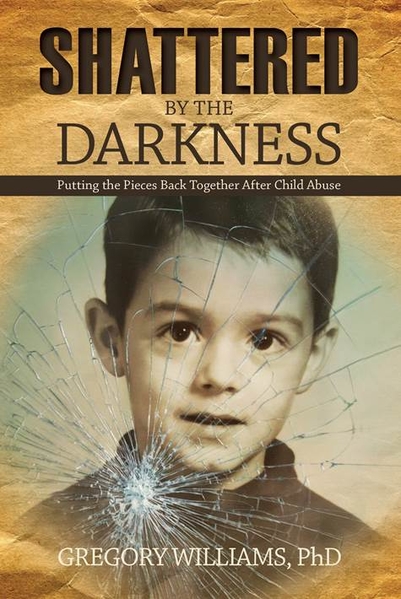
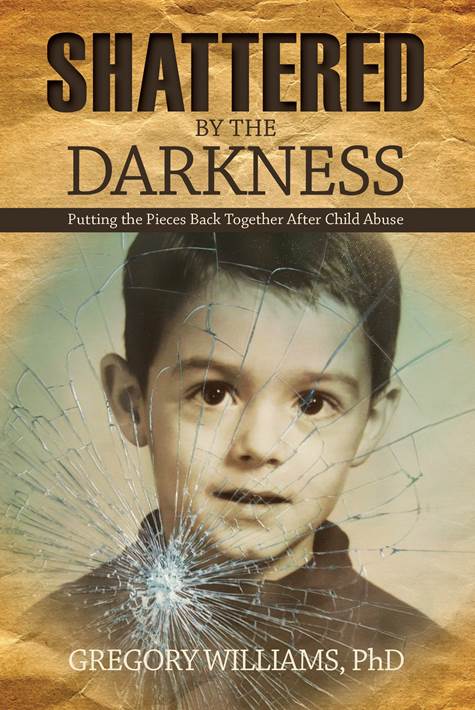
Gregory Williams learned about the ACE Study around the same time he started telling people about his childhood trauma. That he learned about it as he began speaking his truth is no accident. That the science explained so much about his life and touches so many aspects of it – personally and professionally – has made him passionate about spreading the word about ACEs science. His passion is, for many reasons, an incredible gift to the world.
A little background on ACEs science
The original ACE Study queried more than 17,000 people in San Diego in the mid 1990s. The participants — mostly white, college-educated, all with jobs and great health care — completed a questionnaire of nearly 200 questions about their health and wellbeing. Researchers distilled the results of those questions to 10 types of childhood trauma that most people had experienced as children in their families, up to age 18. Five questions asked about physical, emotional or sexual abuse, and emotional or physical neglect. Five more asked about family dysfunction – violence against the mother, parental separation, mental illness, alcoholism or other addiction, and incarceration of a family member.
The study showed that 64% of the respondents had at least one ACE (adverse childhood experience), and that ACEs usually did not occur alone; if you have one ACE, there’s an 87% chance you have two or more. For the 12% of respondents with an ACE score of four, the consequences proved serious and expensive: The likelihood of chronic pulmonary lung disease increases 390 percent; hepatitis, 240 percent; depression 460 percent; alcoholism, 700 percent; attempted suicide, 1,220 percent. For people with an ACE score of 6 or higher, the risks are grave, literally. Their lifespan is shortened by 20 years.
The ACE Study produced 70 research papers and led to 37 US states doing their own ACE surveys, which produced similar results. Several nations and cities, as well as hundreds of organizations, have also done ACE surveys. The ACE Study has led to more than 1,000 research publications that show the link between ACEs and all types of disease, including auto-immune diseases, skin cancer, diseases of the eye, etc. — each supporting the original finding that childhood trauma causes adult disease and dysfunction.
There are many reasons why this is the case. A big part of it, though, can be explained by brain science and physiology. Toxic stress harms the structure and function of the brains of children. Basically, children with high ACE scores become “wired” for “flight, fight, freeze” behavior, and their lives – with higher incidence of illness, violence, drama, risky behavior, and trauma – are the living proof.
In addition to the fact that the wiring — the connections of brain cells (synapses) – becomes more developed in the parts of the brain that deal with survival than the parts of the brain that deal with long-term planning, the stress hormones of cortisol and adrenaline flooding a stressed body cause, over time, increased inflammation of all organ systems. At the cellular level, constant stress is like an ongoing chemical boil in the body. Kids who are constantly exposed to toxic stress are likely to grow into teens and adults whose brains and bodies are set to react to everyday challenges with fight, flight, or freeze fear. Think of an engine constantly revved at the highest revolution per minute. Such an engine is likely to break down more frequently and burn out more quickly.
The ACE Study was developed by two visionary physicians courageous enough to risk their reputations to make the connection between toxic stress and adult health issues. The life work of Drs. Vincent Felitti and Robert Anda, the study helps make sense of some of what has happened to Gregory in the decades since the day, as a 17-year-old with strength and a voice, he looked his father in the eye and told him to STOP the horrific sexual abuse he had experienced daily for 13 years.
Childhood trauma makes some people sick; it makes others want to die. Gregory helps get this point across by sharing the truths of his resulting heart condition, surgery, and challenges with suicidality, obsessive-compulsive disorder (OCD), post-traumatic stress disorder (PTSD), insomnia, and perfectionism.
Borrowed time, buffering factors, resilience, hope.
Gregory, with an ACE score of 8, also knows he would be living on borrowed time, and would most likely be dead, were it not for his also being an example of another aspect of the science: how buffering factors – in his case, caring relatives – helped offset some of the negative physiological consequences of the abuse, helping him become somewhat resilient, which he will share more about in subsequent work.
How Gregory survived the pain, shame, guilt, fear, and the physical manifestations of those emotions – the toxic stew of stress hormones that eat away at every cell in the body – can be explained, in part, perhaps, by research on resilience, another part of ACEs science.
Resilience research shows what helps people build the ability to respond to adversity and survive. We know from these studies what a profoundly positive impact that one consistently caring adult can have on a child who is being abused.
That Gregory survived is a miracle. That he had caring adults in his life, I believe, made all the difference. Even though, perhaps, they didn’t know what was going on, an aunt and uncle whom Gregory saw several times a week from the ages of four through about age eight, provided a home base of safety and stability, love and some joy in the midst of the terror you’ll read about soon.
I tell you this because despite Gregory’s story being so horrific, it is because of who he is as a person who somehow maintained optimism, that this is also a story of hope and triumph over adversity. His recognition of the people who loved him as a child is to me one of the most important parts of his story. It is also a call to action to all of us to look for opportunities to be that caring adult for a child, and to be the caring adult to question why a child is upset, is acting out, or is not thriving.
Explanations, divine timing, how speaking his truth is saving Gregory’s life, and will help save the lives of others.
For Greg, discovering ACEs science – information shared with him by a close friend and physician at Baylor College of Medicine – was a life-changing moment. ACEs science might explain why a valve in his heart had given way and needed to be repaired when he was 48. It certainly explained why he suffered from OCD. The science helped make sense of why he could not sleep – his hypervigilance – even though it’s been 38 years since the last time his father abused him. Even after his father’s death in 2002.
Yes, darkness had always brought fear, but Gregory’s new understanding of the physical effects of that fear – the impact of cortisol, adrenaline, and other stress hormones — helped him make sense of his health and mental health issues, and also inspired him to speak the truth about what happened to him to anyone who would listen, and especially to physicians. That Gregory works with and hires physicians is one more amazing aspect of his remarkable and profoundly important story.
For Gregory, speaking his truth is saving his life. When abuse survivors cannot tell the truth, cannot share their stories, or when their stories are not believed, the results can be toxic. The stress of trauma builds up in the body. There is much science to support the statement best summed up as the title of a best-selling book on toxic stress and trauma: The Body Keeps The Score.* Gregory’s failing heart valve is an anecdotal case in point.
Out of respect to his mother, Gregory did not share his story publicly, until her passing in 2017. It was when he was able to share his story without fear of harming his mother that this next phase of Gregory’s life’s work was revealed, and began in earnest.
Though I’ve not met Gregory in person, and have only known him for a few months, I know we share a bond that covers lifetimes and a faith that is as deep and wide, as we are both abuse survivors and know, without a lot of elaboration, much about what comes with that experience.
We both know that it is remarkable that we’ve survived into our fifties and sixties. It is fair to say that we both believe our meeting, and my connecting Gregory to his publisher, is no accident.
And then there is the way Gregory and I met, which is as the result of my being offered the dream position of opening up the southeastern United States to help build communities for an organization that advances ACEs science. I’d hoped for that opportunity for five years before the funding came for me to be hired by ACEs Connection, an international social network dedicated to advancing ACEs science, preventing and healing childhood trauma, and building resilience. It was through his research and finding ACEs Connection that Gregory found my address and included me in a mass emailing about his book. I was one of a handful of people who answered the email.
I answered his request for ideas about how to help him get the word out about his book because I wanted to help, and I because wanted to know more about someone who would share the most intimate, sad, dark corners of his life with others, yet who looked so happy about doing it.
Speaking with Gregory, I immediately understood: After having the story bottled up for decades, his being able to speak and write about his abuse is cathartic, healing, and again, is literally saving his life.
It is nothing short of incredible to me though, that in less than seven months since I answered Gregory’s introductory email, Gregory’s self-published book sold more than 100,000 copies, his book is now being published and distributed by a major publishing house (Health Communications, which published a book of mine 11 years ago), he is working on his own radio show (Breaking the Silence), and he is creating, via the book, radio show, his website, and his work with me to take ACEs science into medical schools, an important space for others to be heard, believed, and affirmed.
Further, Gregory is playing an important role in his own community by managing the Baylor College of Medicine ACEs Connection community site. That site is one of more than 170 geographic community sites supporting ACEs initiatives in those communities. Among the sectors represented are pediatrics, education, justice, social work and more. Their members meet and look for ways to bring ACEs science and trauma-informed practices into their communities. Doing so helps communities in many ways, as evidence shows improved school attendance and grades, decreased crime, improved health outcomes and more in areas communities that have been keeping track of the effects of this work. ACEs Connection would welcome your community group into our growing community of communities which includes neighborhoods, cities, regions, states, and nations dedicated to preventing and healing trauma.
Gregory’s work, and the work of ACEs Connection, is creating the space for millions of people – and thousands of physicians – to be educated, engaged, and offered the chance to become activists to help prevent childhood trauma and its devastating lifelong impacts.
That Gregory has the trust, respect, and attention of physicians can change medicine, and more.
Gregory’s experiences are likely to have special impact on the lives of the one in four girls and one in five boys who are victims of sexual abuse. For millions upon millions of adult men and women survivors, Gregory’s story and awareness of ACEs science will help explain the “why” of so many of their lifelong physical and mental health challenges, and why their lives – our lives – have seemed, or been, harder than most. For many of us who experienced a high load of toxic stress, our brains were literally wired to create and be attracted to more toxic stress. This revelation will, I hope, inspire a tremendous amount of self-empathy, and empathy from and for others. Yes, the old saw is true: Hurt people do hurt people. Understanding the why behind the hurts, the addiction, the impulsivity, the violence, can help stop the pain, shame, guilt, and hurt.
My hope is that Gregory’s story will help prevent sexual abuse and other childhood traumas, and I know that is his greatest hope, too.
That Gregory speaks to physicians, has their respect, trust, and attention, and has the complete backing of his employer, the Baylor College of Medicine, is especially heartening to me, and to others who advocate for medical professionals to recognize childhood trauma as the root cause of most all adult disease, most all social ills.
I know we both want to
see the science of childhood trauma and resilience research taught in medical schools, so physicians can better understand why a patient is suffering from a stress-related illness, and, in addition to prescribing traditional medical interventions, can also offer recommendations and supports that may help reverse the damage done by years of toxic stress. Imagine a prescription to “spend a day in nature” or “go help coach a little league baseball team” or “join a choral group”? Physicians who are prescribing just such “therapies” are seeing success in programs to prevent opioid addiction relapse, depression, and more.
see physicians ask what’s going on “at home,” and ask, even if informally, questions about their patients’ trauma history, even if it is on an ACE survey that only shows the total score and is not included in a medical record,
see obstetricians, gynecologists, pediatricians, and family practice physicians ask pregnant women about their own childhood trauma, as studies show that pregnant women who are aware of their own childhood traumas, and of the impact of childhood trauma, are less likely to experience post-natal depression or to abuse their children.
see kindergartens, elementary, middle and high schools become places where children aren’t shamed and blamed for acting out and asked, “What’s wrong with you?” but are instead asked, “What’s happened to you? How can I help?” and where their parents are not shamed or blamed, either. When parents understand more about the lifelong health consequences of trauma, the likelihood of children being traumatized decreases; children who feel safer at home do better in school.
help people learn that the body is resilient, our brains and bodies want to heal. Given understanding, acceptance, community, and information about resilience research, people with high ACEs scores can develop greater resilience as individuals, and in their families, workplaces, and communities.
see communities foster groups of laypeople and professionals from all sectors, including education, medicine, justice, the arts, mental health, and housing, to identify and prevent trauma including structural racism and income, health, and education inequality, as racism and poverty are as every bit as stressful and toxic to a child as any other type of abuse.
Though we didn’t know each other through our years of parenting – Gregory has two adult sons and three grandchildren, and I have a son and a daughter – we both vowed to stop the cycles of abuse with our own children. We are both grateful to have relatively healthy, happy adult children, and worked hard and mindfully to prevent cycles of addiction and abuse.
That Gregory works for a leading medical institution that supports his promulgating ACEs science is no accident. That I work for an organization that is all about preventing and healing childhood trauma; building resilience, creating a trauma-informed world, is no accident. Again, our faith is affirmed as we marvel at the timing!
I hope that helping to bring this book into the light, and Gregory’s using his radio show, prodigious talents as a writer, speaker, and interviewer, as well as his leadership position at Baylor College of Medicine, will raise awareness among doctors, nurses, therapists, social workers, teachers, law enforcement officers and policymakers of the need to learn and teach all professions about the devastating consequences of childhood trauma. I hope policymakers will hear the alarm to understand that policies that punish people for the addictions and behaviors that are the direct result of childhood trauma do not help, but instead further traumatize already traumatized people.
I hope Gregory’s audience is wide, loyal, accepting, and encouraging.
I truly believe Gregory will change the world by taking this book into medical schools and teaching physicians and nurses about the root cause of most adult illness: childhood trauma. He understands and makes clear that while the sexual abuse was the most dramatic part of his trauma, that the secrecy, isolation, neglect, verbal, and other physical abuse was deadly as well. This is, indeed, important information to share as policymakers learn about creating schools, hospitals, businesses, cities, states, nations that are about preventing and healing childhood trauma, and building resilience. As we face, in our communities, adverse community experiences including structural racism, bullying, income inequality, and, in our world, increasing numbers of adverse climate experiences – the loss of homes, livelihood, a way of life – as the result of wildfires, storms, floods and other natural disasters, I hope we will become gentler with each other and more mindful of protecting our environment, our natural resources.
I look forward to Gregory’s subsequent books about how he is continuing to heal, as I believe he will shed light on childhood trauma and its impact across the lifespan. He will educate a new generation of physicians and allied health professionals about ACEs science and resilience research and findings, and share ways patients can use their own agency to find life solutions that do not include addiction and risky behaviors to handle their fears.
ACEs scores and “obits” and hopes
In the effort to demystify, remove stigma, and help prevent AIDs some 30 years ago, families started sharing that their loved ones had died of acquired immune deficiency (AIDS). Some shame was lifted. Acceptance was more widespread. Empathy helped spur funding research into cures, and campaigns to raise awareness. Education, and prevention, helped slow the spread of the disease.
As suicide has become epidemic, many families of loved ones are choosing to share, in obituaries, the cause of death as suicide, in hopes of raising awareness, reducing the stigma, encouraging others to get help.
Someday perhaps ACEs scores will be listed in obituaries, in hopes of people understanding the direct correlation between childhood trauma and adult disease and premature death. As a woman in my early sixties, I’ve lost many friends who had high ACE scores, and am watching others suffer from chronic diseases that are, no doubt, related to their ACEs. I know I want my ACE score listed in my obituary, not as a point of shame or pride, but in hopes of its being a “teachable moment.” I also want to include information about resilience research, as in, “despite having an ACE score of 8, Sipp credited her long life to the exercise, diet, community work, and other healthy endeavors that were part of resilience research, an evidence-based way of helping to reduce the impact of ACEs, which she practiced and promoted as a part of her work.”
That Gregory and I have both been able to share our truths, learn about ACEs science and resilience research, and find joy and purpose in helping to prevent childhood trauma will, I hope, prevent our obituaries from being published any time soon! I hope that is true, too, for the millions who will experience “aha moments” as they learn the truths about the importance of our preventing trauma in the lives of others, be it by preventing blame, shame, bullying, racism, and violence, or by our promoting health, acceptance, empathy and love, especially toward children and their families. As families and communities heal, I believe we will heal the earth. Learning and teaching ourselves how to be kinder and gentler to ourselves, each other, our earth? There is nothing more sacred; no work more vitally important.
*The Body Keeps the Score Brain, Mind, and Body in the Healing of Trauma by Bessel Van der Kolk, MD, 2014
The artwork is an original piece titled “Someone at the Door” by Chicago artist Ken Shaw. I bought it about 35 years ago.
(The first part of this piece was written in-the-moment, as an email to a friend following what, for me, was a traumatic experience. The second part of this piece was written about 10 days later, as part of a healing reflection. It occurs to me that this experience, and the reflections, might help someone else experiencing trauma and/or seeking compassion for self or others.)
PART 1 – AN EMAIL TO A FRIEND AFTER THE TRAUMA.
A woman just banged on my door and damn-near broke it down. It scared the bejesus out of me. F*#k. Half-asleep I opened the door. She was looking for Jake. No Jake here.
I talked to her for a couple of seconds and then she reached into her purse for God-knows-what. THAT’S WHEN I FREAKED. Was she reaching for a gun or a knife? I didn’t know. I closed the door. She pushed and pushed against it, but I finally got it closed and locked.
Then she got mad. And started yelling and then kicking the door. Kicking the door. Kicking the door.
Heart in my throat. I found my phone and called the police.
They arrived and found her next door, banging on that front door, looking for Jake.
They got her down the steps and have been out in the street with her for 15 minutes. God. CPTSD (Complex Post Traumatic Stress Disorder) City.
Drunk, doped, and psycho people freak me out.
I was already agitated having gone to sleep worried about the political tension between the USA and Iran. These existential threats weigh heavy on me. Potential war. Australia burning out of control. Floods swamping the South. Then there is my dog, Cosmo, barking, barking, barking.
My heart is pounding out of my chest.
Writing this is helping me calm down.
I am here. It is now.
I’ll play Scrabble on my phone. I’ve read that playing a game after a traumatic event can help prevent Post Traumatic Stress Disorder (PTSD). I wonder if it can help folks who, like me, already have Complex PTSD and don’t want it to get worse because of some random-ass occurrence like a large and apparently out-of-control woman trying to break down your door while accusing you of harboring a guy named Jake?
Okay. Breathe deeply. I wonder if the police will check on me or not. Damn. I could be having a heart attack and they wouldn’t even know. And I could do something about that. I could call them and say, “Please come check on me.” Okay. My heart rate is slowing down a bit.
Damn. I had gone to bed early because I didn’t sleep well the last two nights. Both nights I’d checked my phone during the night. That is not a smart thing to do when I want a good night’s rest. I flunk sleep hygiene.
Well, the police left. I don’t know what happened to that woman.
She was about 5’9 and probably weighed 180. I’d opened the door thinking it was my housemate’s son banging on the door. Maybe he and his mom had driven straight through the night and were back from their trip.
I’m so damned glad I got the door closed. She just kept kicking it. For about two minutes she kept kicking on it. I cannot believe the police didn’t ask me if I wanted to press charges. I get that pressing charges would just extend the trauma. But they didn’t even come back up the steps to check on me or call. Nada.
What a weenie I am. There are people in flood zones, fire zones, war zones and I’m freaking out because a tanked-up human tried to kick the door down. But, trauma is trauma. A friend would remind me not to diminish how terrified I was; I am. Again, she reached into her purse, I thought she had a gun. Guns terrify me. Absolutely terrify me. Mention them and sometimes I can smell gun oil.
Okay. I am gonna be alright. I’m gonna play Scrabble for a few rounds. I suck at
Scrabble. I’ll do it anyway. I’ll get up and dance to discharge all this adrenaline. I remember the Community Resiliency Model (CRM) advice and push against the wall. This helps.
I put my back against the wall and breathe and push, using my thigh muscles to really press in. I turn around and face the wall and push, push, push on the wall.
This helps. I jump up and down. I do pushups.
I have power and agency. I am strong and I’m in my body. This helps. I have choices. I have choices.
I can drink water and eat and go to the bathroom and turn on music or a movie or write. I have choices. I am alive and I have choices. It is 2 a.m. or so and I can write some more and I have choices. Thank God for choices.
PART 2 – A FEW DAYS LATER:
I look back on the whole experience of the woman at my door and I am overwhelmed with compassion for myself as a little girl. When I was a child, my father, who was a traumatized human himself, would often wake us all up in the middle of the night after a night of drinking. He fought with my mom. He had a hair-trigger temper. He grabbed her by her hair, twisted her arm behind her back. Smacked her.
One time he broke the glass to get into the back door.
Another time there were gunshots.
Guns were always around and, in my mind, were a constant threat. I was always afraid that he would use one on Mother or himself or on all of us. Or one of our pets.
And so as I reflected on the recent night and all of those nights as a terrified, helpless child, I felt tremendous compassion for myself that I went through that kind of trauma and drama night after night. And that day after day I would want to go back to sleep and not go to school because I was so very tired. But Mother always pushed me to get dressed and out the door to school so she could go to work.
Never, that I remember, did we ever stay home after one of those crazy nights.
So that little me would go to school. Lots of times I would get carsick on the way to school, get there, go in, and have a hard time not throwing up.
It wasn’t until third grade, when I began to have sleepovers at friends’ houses, that I got my first glimpse that other people’s dads didn’t break into their homes in the middle of the night.
In addition to feeling tremendous compassion for my younger self, I thought about the woman who tried to kick the door down. I began having compassion for her. Hell, if some things in my life hadn’t gone SO WELL, I could have been her.
I also know the experience of this woman coming to my door was random, not intentional, as the adverse experiences in my childhood were. I began wondering how she ended up in this neighborhood. She is somebody — a daughter, sister, aunt, niece, maybe even a mom — and she is NOT her behavior. She could have just been out for a cocktail and somebody could have slipped a “Mickey” into her drink. Or she could have been out drinking because she was in horrific grief. We never know why people do random, sometimes bizarre things.
My dad? I feel compassion for him too. I have for years, thank God. I’ve felt compassion for both of my parents. I think he drank and acted out because he was in pain from his childhood trauma, and from World War II, when, as a young submariner, there is no telling what kind of fear he experienced.
His trauma doesn’t excuse his violence. But seeking to understand the roots of his behavior has softened my heart and helped me to forgive and move on and to have, sometimes for long stretches, healthy relationships with men I have loved.
I am grateful that I can look at my father and mother, both of whom terrified me, with compassion. They were also terrified and terrorizing. Like the woman at my door.
And THAT is the whole point of integrating this new knowledge about ACEs science into our lives, right? A “turnaround”?
Somebody in the cycle has to stop and connect with the reality that the behavior of someone who is acting out – drinking or raging or whatever – is not about us.
It is about the person who is acting out and something that happened to them, some pain they are expressing in a way that is the best way they can in the moment. And probably most of their acting out is a cry for help. I have to remember that.
And in my job with ACEs Connection, I know I have to remember this and move forward with compassion, and model this to the people with whom I work. I want to show people how to not traumatize and terrorize already traumatized people. And that is why I need to practice self care, compassion, and compassion for others.
Days later, as my body still works to settle down after those flight-fight-freeze moments of terror, this means I treat myself gently.
Christine Cissy WhiteIt’s not trauma-informed unless it’s informed by trauma survivors.
Carey: What an important, beautiful and clear piece of writing to show the then/now/then/now push and pull when it comes to our responses, reactions, and how we relate to ourselves during and after current fear and trauma. It all gets tangled and intertwined. I appreciate you sharing your responses and how you calibrated over time. I especially love your current compassion for the child you were who didn’t have the same knowledge, resources, languages, and tools and then the compassion for others past and present, including those who caused your fear. That moved me so much. Keep writing!
I wish I had my NFB machine I’m gonna get. If you wanted, I would come find you and I would do all I could to help. I’m so sorry.
Tina – That is so sweet!
I love neurofeedback and have been doing it for two years. My NFB provider in Wilmington saw me two days later and it was a big help. I go weekly. Used to go twice a week. NFB is a big part of my self-care program! We should talk. We will talk. Thank you!
And I am doing well. Have wonderful friends here. A good EMDR therapist. I reached out for help. Looked at what went “right” that night (police here quickly; support from friends; I knew to practice extreme self care; it was random and I live in a normally extreme light peaceful neighborhood; etc.)
Dana BrownInterim (Volunteer) Executive Director PACEs Connection
Dearest Carey: Thank you for your courageous, insightful, wise words, Carey Sipp. Your reflective thoughts carry a lifetime of pain, abuse, fear, hope, compassion, and love.
Compassion with self, and others in our lives who we have a relationship with, and folks in the public we don’t know well, permeates through your blog. Highlighting “voice and choice” when you didn’t have a voice (childhood – woman banging on your door) and your life’s evolution to deeply knowing you have choices (self-soothing strategies, the “turnaround”, the CRM model) will plant seeds of hope within all who read your piece.
Much Love and Light surrounding you, Carey, as your healing journey continues. I love you dearly…
TraumaInformedJobs.com is a new job board for the trauma and resilience communities. PACEs Connection members can save 10% on posting with code PACES10
Please join us for the community discussion of A Better Normal, our ongoing series in which we envision a future in which every community, organization and system has integrated practices based on ACEs science to create a better normal. The one we had wasn’t working very well.
“Grief/Family Trauma in the Time of COVID-19”
With Tian Dayton, PhD, psychologist, author. Moderated by ACEs Connection staff members Carey Sipp and Alison Cebulla
As Tian Dayton, PhD, writes, “The uncertainty and unpredictability that are part and parcel of COVID-19 over time can produce many of the same trauma symptoms as we see when treating PTSD. But in this case, we’re not talking about a one-time event with a clear beginning, middle and end. Rather the length and duration here are unclear and the finish line is constantly in motion. We hear conflicting information and don’t know who to trust. We worry about what our future and the future of those we love might hold. This kind of daily atmosphere can lead to a kind of ‘anticipatory grief’.”
Dayton shares this quote from Stacey Colino of US News and World Report: ”Pre-trauma stress is a phenomenon you won’t find in the Diagnostic and Statistical Manual of Mental Disorders (DSM-V). The symptoms are similar to post-traumatic stress disorder (including grief, sadness, worry, disturbing intrusive thoughts, sleep troubles and nightmares, and avoiding situations or activities that are reminiscent of the stressful event) but in this case, they stem from anticipatory anxiety about an event that may occur in the future.”
“The symptoms we’re describing here,” notes Dayton, “like anxiety, shock, disturbing thoughts and mood shifts can, if they remain unacknowledged or unattended to, morph into PTSD. Taking the time to work through the feelings that this period is bringing forth in us as they happen, can go a long way to acting as a preventative to later problems and life complications.”
During the discussion Dayton will strive to:
Cut through the emotional and psychological “red tape” of pre-trauma symptoms that might be keeping us immobilized.
Discuss anxiety or depression that may be leading us to act out in abusive or neglectful ways.
Look at symptoms that are making us want to eat, drink, or drug our way back to calm rather than adopt the healthy habits that will not only bring calm, but give us the life skills to carry forward that will enable us to change and grow.
Discuss the need to feel our feelings as we have them, so we can heal them, in the here and now, as having mini healings now may help us avoid the need for maxi healings later.
Discuss how pain from the past can get mixed up with today, leading us to be confused and overwhelmed.
Discuss how the present, the very real stress of today can take its toll on our peace of mind, as uncertainty, and conflicting reports as to what to do, can evoke our fight flight, freeze response.
Discuss the very significant anxiety about what the future will hold; what’s next? When will this be over and what will “over” look like? My world is changing; what does that mean for me?
Dayton will also help participants to look at the many faces of grief:
Anticipatory grief
Age correspondence reaction
Parental Inner Child Grief
Complicated grief/mourning
Inhibited grief
Cumulative grief
Collective grief
Normal grief
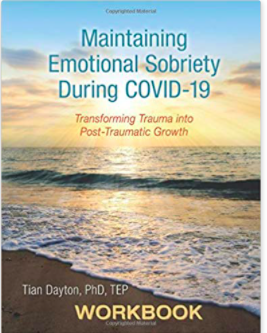
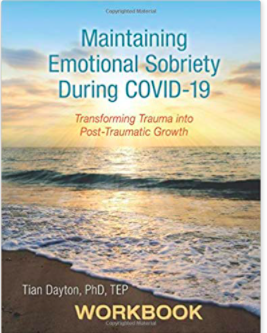
Dayton will also discuss post traumatic growth and share from her latest book, Maintaining Emotional Sobriety During COVID-19 and how it can help us see, as she says, “What’s getting triggered inside of you, as a window into your inner world, a way to get to know yourself, your coping styles and your manner of being in intimate relationships. You can learn. You can grow from adversity by meeting it with openness, humility and grace.”
Dayton is a Senior Fellow at The Meadows. She is the author of fifteen books including The Soulful Journey of Recovery, The ACoA Trauma Syndrome, Emotional Sobriety, Trauma and Addiction, Forgiving and Moving On andThe Living Stage. She has developed an approach for incorporating experiential work into treatment programs and group work, Relationship Trauma Repair RTR.
Dayton has a master’s degree in educational psychology and a PhD in clinical psychology and is a board certified trainer in psychodrama, sociometry and group psychotherapy. She is a certified Montessori teacher, and is the director of The New York Psychodrama Training Institute. A nationally renowned speaker, expert, and consultant in psychodrama, trauma and addiction, adult children of alcoholics (ACoAs) and self-help related issues, Dayton was on the faculty at NYU for eight years teaching psychodrama.
She is also a fellow of the American Society of Psychodrama, Sociometry and Group Psychotherapy ASGPP, and is a recipient of the Lifetime Achievement Award, Scholar’s Award, President’s Award and Gratitude Award. Dayton is the former editor-in-chief of the Journal of Psychodrama, Sociometry and Group Psychotherapy and a member of the professional standards committee. She is also the winner of The Mona Mansell Award and The Ackerman/Black Award, and has been a guest expert on NBC, CNN, MSNBC, Montel, Ricki Lake, John Walsh, Geraldo. Dayton blogs for Thrive Global and The Huffington Post.
ACEs champions Danette Glass of Alpharetta, Georgia, and Becky Haas, of Johnson City, Tennessee, work in different — yet similar — ways to see systems of care change to help prevent and heal adverse childhood experiences (ACEs) and to help individuals and communities increase resilience.
On Friday, July 24 at noon PDT/3 p.m. EDT, these friends and expert community organizers will share their approaches. Haas has worked from the inside out, most recently as the ACEs educator for a regional healthcare system and previously in a similar role with local law enforcement. Glass has often worked from the outside in, to improve systems of care or create her own to effect change.
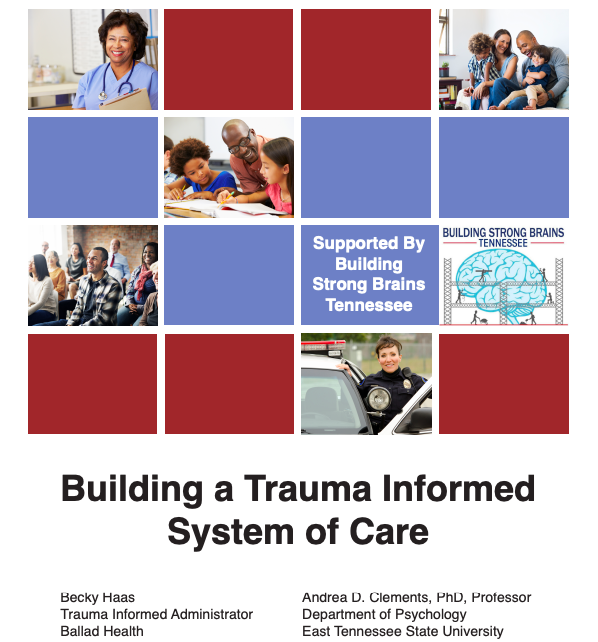
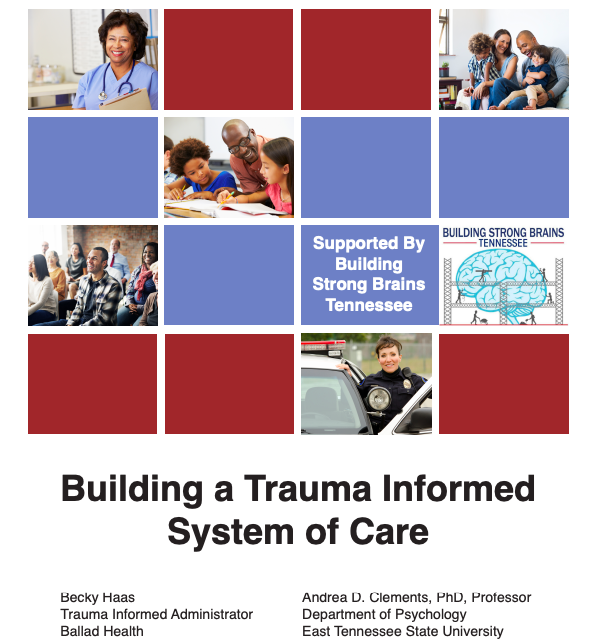
Haas, the author of a toolkit shared in ACEs Connection Growing Resilient Communities (Building a Trauma-Informed System of Care), learned about ACEs in 2014, while working with police to reduce drug-related and violent crime.
“Listening to stories of childhood abuse and neglect experienced by many in the justice system planted the thought in my mind that trauma was really the gateway drug. Though childhood trauma is not an excuse for drugs or crime, instead it now offered an explanation for it. I reasoned no one picks where they start in life and some of the hardship and abuse people experienced was through no fault of their own. Instead of communities focusing their efforts on a war on drugs (which those efforts don’t seem to be winning), we should shift our focus to a war on trauma…and so my journey began.”
Glass heard about the ACE Study in 2017 while working on a project for adjudicated youth that was funded by the Substance Abuse and Mental Health Services Administration. She realized the level of trauma exposure for young people was at an all-time high. The heightened level of family trauma and community trauma concerned her tremendously.
Following time in corporate America, Glass began her career as a consultant and community organizer. She now relies on decades of experience as well as tools from ACES Connection and tools she herself has created, such as a poverty simulator, to help community leaders, including elected officials, educators, healthcare providers and law enforcement, learn about the challenges of living in poverty and toxic childhood stress. Throughout her 30-year tenure in juvenile justice and youth development, Glass has worked with more than 30,000 teens, seeking to provide them with science, technology, engineering and math (STEM) skills to help them succeed. She also worked with youth to share what are now called “positive childhood experiences,” and consulted with the courts to help teens get needed services. She and her team also have been doing research on the inequity in health care for Black women who are, in some states, twice as likely to die in childbirth as White women.
Glass and Haas are bonded in part by their common missions of breaking down barriers and bringing greater loving kindness into the world. They are excited to come together to discuss how they are working from within and outside systems of care to help cross-sector groups improve individual and community resiliency.
“We hope people will take away how vitally important it is to create a more diverse, equitable and inclusive community — a ‘beloved community’ — especially right now, as things will get worse as a result of the COVID-19 pandemic,” says Glass.
“After the crisis, we are going to see an escalation of reported trauma exposure because right now young people in homes are not able to communicate the maltreatment they are experiencing,” she says. “Lack of accountability has left some young people vulnerable to being abused while school districts are in this virtual or digital learning setting.”
The coronavirus crisis also affects the mental health of parents, who are themselves traumatized. “And if they do not know how to manage or control their emotions in a positive manner, sometimes their children become the target of their frustration,” Glass says. “We need to be prepared to help. That’s a big part of what building community resilience is about: helping in the day-to-day and being prepared for traumas. That this is one of the greatest threats in modern times makes our work all the more urgent.”
To register for this A Better Normal webinar, please click here or use the link below.
ACEs initiative participants in communities where there is tension between the community and law enforcement will want to join Becky Haas in a compelling conversation on law enforcement, ACEs science, COVID-19 and the Black Lives Matter movement and protests. Haas is a nationally recognized adverse childhood experiences (ACEs) science initiative builder and trainer. She and colleagues Renee Wilson-Simmons, the head of the ACE Awareness Foundation of Memphis, Tennessee, and Maggi Duncan, executive director of the Tennessee Association of Chiefs of Police, will share a vision of trauma-informed law enforcement and answer your questions on Friday, July 31 at noon PDT; 3 p.m. EDT.
Wilson-Simmons and Haas will discuss, among other topics, how parents are the key to preventing many ACEs, and give an in-depth look at the ACE Awareness Foundation’s signature program, Universal Parenting Places (UPP), where parents can receive professional counseling, information, and emotional support for family-related issues or concerns, no matter how small.
Haas and Duncan will discuss how their mutual passion to reduce childhood trauma has led to their work on behalf of Tennessee Governor Bill Lee to launch, statewide, the Handle with Care (HWC) law, an innovative partnership with law enforcement and education.
In 2016, when Haas was working for the Johnson City Tennessee Police Department, staff was approached by HWC developer, Andrea Darr, about launching the program. Since Haas was simultaneously beginning to train her community about ACEs she knew that HWC was what they needed in her area of Tennessee, ravaged with opioid addiction, to help prevent trauma for children there.
Haas had started sharing ACEs science with her community shortly after learning about it in 2015. Getting the word about HWC was another step in a long path toward helping the state of Tennessee, and now communities throughout the United States, become more trauma-informed.
“When children have seen parents fighting, or acting out in other ways on drugs or alcohol, to the point that law enforcement comes to their home, these children are in no shape, emotionally, physically, or mentally, to perform at school the next day. This law helps prevent already traumatized kids from having to take tests or go through other stressors at school. There is little learning done when a child is not rested, fed, regulated, and connected to his or her teachers. This law is about not re-traumatizing already traumatized children, by forcing them to perform when they are wrung out and dysregulated,” Haas said.
“By having law enforcement communicating by email to the child’s school, with only the child’s name and the words ‘handle with care’ on the email, school administrators, teachers, and counselors now know to give a child who needs it some safe and nurturing space and time to rest and recover,” Haas said.
HWC was among many topics discussed when Haas and her partner in community building, Dr. Andrea Clements, a psychology professor at East Tennessee State University, hosted two governor’s wives, representatives from Tennessee and 20 other states at a Substance Abuse and Mental Health Services Administration forum (SAMHSA) forum in Johnson City in September 2018.
It was at that forum that several of Wilson-Simmons’ staff members from the ACE Awareness Foundation in Memphis shared about what they are doing with regard to the innovative UPP program, based on the work of international speaker Robin Karr-Morse, founder of “The Parenting Institute” based in Portland, Oregon.
Haas wanted to know more about this program with four sites in Memphis and one in Leland, Mississippi, and reached out to Wilson-Simmons.
During the webinar, Wilson-Simmons and Haas will discuss the work done by the ACE Awareness Foundation and the UPPs. She will also ask Wilson-Simmons to share the latest on the work the foundation is doing to develop a partnership with the City of Memphis to ensure that the city’s police officers and emergency medical technicians (EMTs) are aware of ACEs and the important work of the UPPs, and are prepared to share information about the UPPs and make informal referrals to the UPPs.
Webinar participants will also be invited to ask Wilson-Simmons questions about the origin of the partnership, and her advice on how such a partnership might be replicated.
Haas and Duncan met at the 2018 Tennessee Governor’s Summit, where Haas was speaking. Fellow Summit attendees from the Office of Criminal Justice Programs introduced the two women and Duncan, knowing of Haas’ work in crime reduction and with the Johnson City PD, she knew she wanted her assistance when the time came. Duncan and the TACP have been providing training on the West Virginia HWC model for a few years but now were ready to look at launching HWC throughout Tennessee and asked Haas to help train law enforcement. This program of the Tennessee Association of Police Chiefs was set to begin this past spring, but was tabled, for now, by COVID-19.
Today Haas consults with leaders in law enforcement, juvenile justice, corrections, education, healthcare, and communities of faith. Her work to help create groundbreaking programs, including Building Strong Brains Tennessee and the Building a Trauma Informed System of Care toolkit, has led her to speaking and meeting officials throughout the country.
Haas and Duncan say that during the webinar they will talk about how HWC is a good starting point for community sectors such as education, police, and child services to begin working together to the benefit of all. They will also
Discuss the importance of police understanding trauma/ACEs science
Share tools to help reduce trauma on-scene for children
Give examples of trauma-informed policing and officer self-care
Paint a picture of some solutions for what has been happening in policing for the last couple of months, since the death of George Floyd in Minneapolis, including the worldwide protests against police brutality and for defunding police forces
Do a reality check on the challenges of taking trauma-informed policies into a police department
Share the benefits of what an informed partnership between officers of the peace could mean for officers and communities
Click here to register for the Trauma-Informed Policing webinar.
The organizationZero To Threeestimates that in the U.S., a child is taken into the child welfare system every six seconds.
“Many of society’s most intractable problems can be traced back to childhood adversity. Being in the child welfare system increases the likelihood of more adversity and criminality. Baby court is a proven approach to healing the trauma of both child and parent, and breaking the cycle of maltreatment,” says Mimi Graham, Ed.D., director of the Florida State University Center for Prevention and Early Intervention Policy.
Join us for “A Better Normal” on Friday, Aug. 7 at noon PDT/3 p.m. EDT, when Graham will be talking about Florida’s Early Childhood Courts with Lynn Tepper, retired Early Childhood Court judge from Florida’s Sixth Judicial Circuit. This timely conversation happens as the U.S. House of Representatives prepares to learn more about Infant-Toddler Courts in the proposed new Strengthening America’s Families Act (SAFA).
“Healing parent and early childhood trauma has many benefits across the lifespan,” Graham says. “The small investment early produces a huge savings, not only in child welfare but in reducing later mental and physical health issues, addictions, criminality, and other negative consequences associated with toxic childhood stress.”
Florida’s Early Childhood Court, fondly known as “baby court”, has three unique parts: a trauma educated judge who holds monthly hearings with families; a multidisciplinary team who meets monthly to encourage families in their case plan; and an infant mental health clinician who provides child-parent therapy to heal trauma and strengthen the relationship.
“This integration of therapy and supports increases the likelihood of reunification with parents, getting families out of the system faster, but more importantly, reducing recurrence of abuse. With this model, you’re healing the underlying issue, which, for a family with generations of ACEs, is one of the best things happening to stop the cycle,” says Graham.
A recent recipient of the Medal of Honor Award from the Florida Bar Foundation for children’s advocacy and for spearheading the creation of Florida’s Early Childhood Court, Graham says the early childhood work also reduces later criminality.
“Research shows that the biggest predictor of criminality is a history of child welfare, especially sexual abuse in that system. Addressing trauma early and increasing healthy relationships buffer the toxic effects of early adversity,” said Graham.
Joining Graham on the webinar will be Judge Lynn Tepper. Retired in 2018, Tepper had served on the bench for more than three decades, and has received wide recognition for her trauma informed courtroom and dedicated service to families.
Tepper says she appreciates the improvements that Early Childhood Court has brought to dependency courts, as many traditional dependency cases have children with multiple foster family placements, often with abrupt transitions, and with little or no consideration of the importance of attachment and trauma.
“In Early Childhood Court, that abrupt transition doesn’t happen,” says Graham. “The judge knows the value of a child having a healthy attachment with the parent, and the trauma caused by separations, so we strive for the first placement to be the only placement,” says Graham.
Tepper adds, “Now, together with a trauma-informed team, we see babies and parents through a trauma lens, and the multi-generational cycle of trauma that brought children into my courtroom, people who are now parents or defendants or even grandparents, has a chance to stop. Early Childhood Courts help individuals live with more hope than fear. These courts make it possible to end the cycle of parent and early childhood trauma with this generation.”
During the webinar, Graham and Tepper and will discuss more about:
The growth of the Early Childhood Courts movement in Florida
The science behind the baby courts
Outcomes of children who go through baby courts as compared to regular courts
Southeastern ACEs Connection and national CTIPP leaders on the quarterly leader call welcomed guest speaker Rebecca Lewis-Pankratz (top left) for their quarterly call. Also among those present were (top row l-r) Carey Sipp, Jesse Kohler, Jesse Hardin, (second row, l-r) Patti Tiberi, Mebane Boyd, Jen Drake-Croft, Dan Press, (third row, l-r) Mimi Graham, Christopher Freeze, Margaret Stagmeier, (fourth row, l-r) Emily Marsh, Liz Peterson, Alyssa Koziarski and Janet Pozmantier. Also present was Caitlin LaVine. Dorothy Oppenheiser was among those calling in for the meeting.
Learning ways to help people walk out of the trauma of multi-generational poverty and abuse to create their own destinies and build new lives, representatives from 10 Southeastern states met last week to hear inspiring remarks from a formerly impoverished mom of three sons.
Participants on the ACEs Connection/CTIPP Southeastern Leaders call also updated the group about work being done in their states.
Rebecca Lewis-Pankratz, who transformed her own life and is now an educational and poverty consultant, was the educational speaker. Dan Press, general counsel for CTIPP (the Campaign for Trauma Informed Policy and Practice), said his “mind was blown” by Lewis-Pankratz’s story and methodology for helping people leave behind generational poverty and trauma.
“What you are saying is revolutionary,” he said. “All lobbyists in (Washington) D.C. will grit their teeth when they hear this. They say people whose brains are disabled by poverty aren’t going to be able to get out of poverty.”
Walking families out of poverty
Lewis-Pankratz’s story mesmerized those on the call, as they heard her explain the impact of trusting, stable relationships on her growth. She talked about living with three little boys in a $1,000 mobile home “that should have been condemned” as she struggled to complete a four-year degree and keep her kids in diapers.
“That trailer was what stood between me and homelessness. I’d been working nights as a bartender and had been in college almost a decade to get a degree and become a high school art teacher. I’d been clean and sober for about seven months, but bone-crushing poverty kept spinning me back,” she said.
Things started shifting when Lewis-Pankratz went to a church for some free diapers.
“A lady there took a shine to me. I told her I wanted to give back so other moms could get the same help. She pointed to a flyer about a class on getting out of poverty and I asked her what they could teach me that I was not already doing. But I figured this lady had been giving me free diapers so I had better sign up.
“When I bumped up against people working to get people out of generational poverty, my world changed. I got a position at that nonprofit,” she said. Later, she left to start a ministry of her own.
“In college I learned about the science of brain architecture – that by five your brain is set. Zero to five years was not good for me. And I had a strong history of using alcohol and drugs. But I got involved in this nonprofit that was really intentional about building relationships between people in poverty and middle-class people as a way of helping poor people get out of poverty.
“So I was surrounded by middle-class women supporting me. And I began to see a way forward, to feel less reactive, to be able to walk into large groups of people. I realized something was happening to my brain,” Lewis-Pankratz said.
She explained that in looking at the brain science of poverty and the brain science of trauma, “the pictures of the brains are the same. The brain doesn’t know whether it is in war or abuse, the brain is just stressed.”
Families in poverty “are always in toxic stress, always spending more time in survival,” she said.
“I have eight ACEs and my mom has nine,” Lewis-Pankratz said. “I was working with 35 families and all but one had high ACEs scores. When I fell into the science of resilience, I found my brain healing at the age of 37, and it was because of relationships people had created for me before they knew me. The science of resilience became my hope, as I learned it was all about relationships,” she said.
Over the last nine years, Lewis-Pankratz has helped teachers and administrators in hundreds of schools learn about ACEs and brain science. She has personally nurtured trusting relationships to help 90 families walk out of poverty.
Carey Sipp, Southeastern Community Facilitator for ACEs Connection, noted that there were two people on the call whose work is about stabilizing families by building trust and relationships. She connected Lewis-Pankratz in Kansas to Margaret Stagmeier, who started a revolutionary “edu-housing” program in Georgia, saying she looked forward to seeing what these two innovative thinkers can do together to provide traumatized people with opportunities to become stable, and improve the lives of their children and themselves.
“When people know stability and safety, when they are in relationship with people who have middle-class lives, who will help them gain confidence in themselves, we are preventing trauma, healing trauma, building resilience,” Sipp said. “I look forward to the day all communities are consciously doing this kind of work.”
State updates
Others on the call shared these updates from their states:
Alabama:
Emily Marsh, public and governmental affairs manager at the Alabama Department of Child Abuse and Neglect, reported that the state’s mental health grant in Alabama has been extended through 2021.
The Department of Mental Health funded training on trauma-informed care, ACEs science, strengthening families, and protective factors at home. she said. Her group did 22 trainings from June-September, and next year will target workers in mental health as well as teachers, law enforcement and counselors.
Marsh said the Department of Mental Health had been complimentary of the work done. “We will continue to partner with the Alabama Network of Family Resources, so this is good news.”
Florida:
Mimi Graham, Ph. D., director of The Center for Prevention and Early Intervention Policy at Florida State University, said that she and Andy Blanch, Ph.D, president and director of the Center for Religious Tolerance, will speak next May on CTIPP’s national call about a new tool, created in Florida, for trauma assessments.
“There are agencies that say they are trauma informed, but they are separating breastfeeding moms from babies, or children from parents. This new tool for trauma assessment of agencies (reviewing agencies in person in addition to other assessments) will help agencies become more trauma informed,” Graham said.
Georgia:
Resilient Georgia’s executive director Emily Anne Vall, Ph.D. was not on the call but she sent a report outlining highlights of work going on in the state. She said the eight Resilient Georgia regional grantees are doing fantastic work in their communities.
They are currently meeting with stakeholders from across the state to identify partners that can work together to create action plans for their next two rounds of grantees.
“The Resilient Georgia Trauma Informed Training Road Map is up and running, and available for all states to peruse. A copy of the survey they sent out that informed this work is on this webpage, too,” Vall wrote.
Margaret Stagmeier, founder and board chair of Star-C, a nonprofit working to stabilize rents and transiency in workforce housing communities, spoke briefly about her work with the residents at two of the blighted properties she bought, repaired and cleaned up. “When we started, we didn’t realize how traumatized these families are,” she said. “Since we began putting the lens of ACEs (adverse childhood experiences) over the community, I now understand what better to do. First get rid of crime. Then get an after-school program with social emotional learning,” she listed as a couple of the steps along the path of helping families, apartment complexes, and nearby schools become more stable.
Kentucky:
Carey Sipp, Southeastern Community Facilitator for ACEs Connection, shared that work to build a statewide structure in Kentucky is underway. Meetings with leaders from Kentucky Youth Advocates and other organizations are scheduled for the second week of January.
Mississippi:
Chris Freeze, a trauma-informed business consultant, will soon be working with statewide community manager Jackie Chatmon, System of Care project director at the Mississippi Department of Mental Health, to further activate the state.
North Carolina:
Mebane Boyd, executive director of the New Hanover Resiliency Task Force, said the Resilient North Carolina Collaborative is meeting with trauma-informed leaders throughout the state to coordinate advocacy efforts, to “find a way to align our advocacy and prioritize what might be best, so we are all asking for the same thing.” She said the group will be doing a training in early 2021 on how to do advocacy, who to contact, when and how to organize.
CTIPP general counsel Press said North Carolina’s Sen. Richard Burr will be either the chair of the Senate Health, Education, and Labor Committee or the ranking minority leader of that committee, depending on what happens in the upcoming Senate runoffs in Georgia. “Either way, he will be influential, and we need trauma-informed programs to educate him and his staffers,” Press said. There will be a call with North Carolina leaders the first week in January to put together a strategy to reach out to Burr.
South Carolina:
Alyssa Koziarsky, research and evaluation assistant at the Children’s Trust of South Carolina, said the Children’s Trust, which leads the South Carolina ACE initiative, is sharing its COVID-19 Impact on Children’s Well-Being Data Snapshot.
The report discusses disparities in housing, health care, and economic opportunities, and sheds light on the importance of protective factors. “We have been working on this for months,” she said. “Now we are providing advocacy steps for how to provide local supports. We are excited about this and will be sharing it out with legislators in January.’’
Tennessee:
Jennifer Drake Croft, director of child well-being at the Tennessee Commission on Children and Youth, said there is a new phase of strategic planning for the state’s signature Building Strong Brains Tennessee program. The goal is to establish Tennessee as a national model for how a state can promote culture change in early childhood, based on a philosophy that preventing and mitigating adverse childhood experiences, and their impact, is the most promising approach to helping Tennessee children lead productive, healthy lives and ensuring the future prosperity of the state.
The group is bracing for the possibility of major funding cuts. There are now some 1,252 diverse sector trainers for the Building Strong Brains program, representing all 95 counties in the state. The Department of Education has received approval for a second cohort of schools to become trauma-informed, the Department of Health has been through strategic planning and named ACEs as a priority, and the Building Strong Brains program will now be shared as part of training for foster parents.
Croft said Tennessee has been invited to the National Governors Association meeting to share a presentation on their work in adverse childhood experiences. She also said that East Tennessee State University has founded the Strong BRAIN (Building Resilience through ACEs Informed Networking) Institute, which is an ACEs Center of Excellence working with organizations to transform policies, procedures, and philosophies to promote resilience and mitigate the effects of ACEs.
The Commission on Children and Youth is executing a social media campaign following the success of last year’s campaign, which reached 500,000 people. The new campaign will raise awareness of the importance of brain development and preventing toxic stress. “We will be publishing a toolkit that people from other states can adopt for their use – this is coming,” Croft said.
Among updates from Nashville, Croft said that Ingrid Cockhren, ACEs Connection Community Facilitator for the Midwest and Tennessee, has been doing a community education series for parents, and that the ACE Nashville team, with some 400 members, is focusing on equity within the membership and the leadership team.
Texas:
Janet Pozmantier, nonprofit consultant and trainer, and Jullian Gaut, social worker, have been working with Sipp to create a survey that will live on the Texas ACEs Connection site. A link to the survey will be emailed to the more than 1,000 Texas members of ACEs Connection, to help leaders identify and connect with ACEs initiatives throughout the state.
Kohler said that there is a social media campaign to help CTIPP add to the number of people signing versions of the letter. “If you still want to sign on, just email me to be added,” he said. His email address is jesse@traumacampaign.org.
Press encouraged attendees to alert him if they know of any state legislators who are trauma informed, as he would like to invite them to join the CTIPP Community Action Network.
Federal funding update
Press urged the group to try to secure some of the money that states and communities soon will be getting through the resolution of opioid lawsuits.
“You should start looking into this,” he said. “Right now, most of the money will be spent on people who have already suffered. Some of this funding needs to be spent on preventing trauma, and on building resilience. You are encouraged to find out where the money is going and get in there and advocate for a portion to be used for prevention and for resilience building.”
Press also shared that CTIPP is exploring ways to finance trauma-informed programs that don’t rely on government funding, because governments are running out of money. “One of the things we need is evidence that trauma-informed programs save money,” he said. “We know schools implementing trauma-informed programs have fewer discipline issues and less teacher turnover, fewer security guards, and more kids in seats, so they receive more money because attendance is better.
“We are having trouble finding good hard data. If any of you have actual hard data, we think we have people ready to invest in trauma-informed programs that can be paid back over time.”
Monthly call schedule
Here are the upcoming calls, with educational topics, for the CTIPP Community Action Network (CAN). Calls are the third Wednesday of each month from 2-3:30 p.m. EST, except for January 2021, as that’s the day Joe Biden and Kamala Harris will be inaugurated.
Jan. 27 – East Tennessee State University and Southern Oregon University are becoming trauma informed; representatives from the two schools will share what they are doing to facilitate the transitions.
Feb. 17 – Delaware First Lady Tracey Quillen Carney will talk about Delaware’s becoming the first trauma-informed state in the U.S.
March 17 – A representative from England’s WAVE Trust will discuss the initiative working to reduce child abuse by 70 percent in 10 years, and how Great Britain and the U.S. can work together.
April 21 – Rebecca Lewis-Pankratz will elaborate on how she and her organization are helping some 235 families break out of the multi-generational cycle of poverty and trauma.
May 19 – Mimi Graham and Andy Blanch will share information about a new program involving in-person trauma assessments of agencies to help them become more trauma-informed.
Upcoming SE leader calls
The next ACEs Connection SE Leader quarterly call is scheduled for Tuesday, March 2. Subsequent calls will be on for June 15, September 21, and December 21. All calls are from 2:30-4 p.m. EST.
To learn more about CTIPP, Rebecca Lewis-Pankratz, or Margaret Stagmeier:
Author, speaker and neuroscience educator Sarah Peyton is a friend to ACEs Connection. When I asked her recently to speak to the importance acknowledging the grief and trauma most of us are feeling during COVID-19, as we see the number of deaths increase and as people we know fall victim to the disease, she welcomed the opportunity.
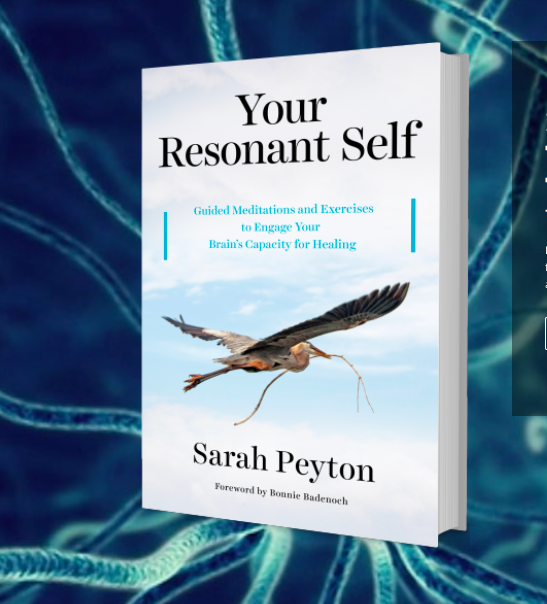
I wanted to ask Sarah to do this because recently, as I was listening to her “Your Resonant Self, Guided Meditations and Exercises to Engage Your Brain’s Capacity for Healing,”, it clicked for me what has been missing as a trauma survivor during the pandemic.
Sarah was telling the story of Nepalese boy soldiers who went off to civil war. The 2010 research showed that the boys who “came back to a welcome from their communities ended up with fewer signs of post-traumatic stress. But the boys who went off to the same war, fought shoulder to shoulder with those other boys, and came back to communities that turned their backs on them had much higher levels of post-traumatic stress.”
“This research helps us to understand that trauma is less defined by what happens to us than it is by how we are received afterward,” Sarah writes.
Acknowledgement of the trauma of having been in a war was the difference for the Nepalese boys.
The night before the inauguration, when President-elect Joe Biden with his wife, Jill, and Vice President-elect Kamala Harris with her husband, Doug Emhoff, held their somber memorial for the 400,000 Americans who had died during the pandemic, it was healing because it was acknowledgement. Seeing those deaths marked by 400 luminarias, one for each 100 victims, was healing because the truth was being seen, shared.
Having our country’s leadership acknowledge the pain and the loss we’ve seen day in and day out allowed us to breathe a collective sigh of grief and relief. Our grief is real. Most of us feel it. As Biden said, “…to heal, we must remember.”
As a trauma survivor, I was in my sixties before I began to embody the importance of grieving for myself about the trauma and the losses I’d experienced as the result of trauma. Trauma has cost me in terms of how well I did in school, in relationships, in my career, in my finances.
Sarah Peyton’s beautiful book, recommended to me by colleague Cissy White, has been a touchstone. Each time I’ve pulled it up to take another read or listen, I process a bit more.
How are you doing? Does it help you to know that some leaders are genuinely sorry for what we are all going through?
 Carey Sipp 2/16/183:02 PM
 Karen ClemmerMember