Dr. Chan Hellman, leading researcher in the power of hope to improve lives of impoverished children and families who have experienced abuse and neglect, Justice Dawn Beam, and Christopher Freeze, co-chair of Mississippi ACEs Connection, on day three of presentations by Hellman to judges and staff members of Mississippi’s Youth Courts.
“Hope is a better predictor of college success than the ACT or the SAT score” was one of the startling comments made by Chan Hellman, Ph.D., in the first of three trainings on the Power of Hope shared with members of the Youth Courts in Mississippi this week.
Hellman is a leading researcher in the power of hope to improve the lives of impoverished children and families who have experienced abuse and neglect. And the court-focused training programs where he presented are themselves a hope realized by Justice Dawn Beam, co-chair of the state’s Commission on Children’s Justice.
The 1,200 employees taking the one-day training work with abused and neglected children in the Youth Courts. Sessions were scheduled for Pearl, Oxford, and Gulfport.
“There is this real thirst for how we can make systemic change in our state,” Justice Beam said as she introduced Hellman at the first session.
Participants included judges and court staff, Department of Child Protection Services leaders and social workers; Department of Education school attendance officers; and representatives from the Department of Human Services, the Department of Mental Health, and various child advocacy centers and service providers. Youth Court teams from each jurisdiction will participate as groups in the interactive training.
Resident Jurist John N. Hudson of Natchez, who is among the staff helping to lead the training, said that hope needs to be infused from the top down in all Youth Court settings. “We want everything that touches this court to be hope-centered – on the juvenile delinquency side, on the child protection side – so that when we bring those social workers into the courtroom, when we bring those juvenile counselors in the courtroom, their message is: We are about hope here.”
Hellman, of Tulsa, Oklahoma, is a professor of social work at the University of Oklahoma and director of The Hope Research Center. His research is focused on hope as a psychological strength, helping children and adults overcome trauma and adversity. He is the co-author of the book “Hope Rising: How the Science of Hope Can Change Your Life.”
His approach includes teaching people to do three things:
set desirable goals
identify viable pathways to goals, finding solutions to the problems that stand in the way
maintain the willpower to pursue those goals.
“Hope is the belief that the future will be better, and you have the power to make it so,” Hellman said. Here are other highlights of his remarks:
Imagination is the instrument of hope.
Hope begets hope.
Increased hope is an indicator of well-being.
The opposite of hope is apathy.
We can teach and nurture hope.
The collective hope of a group is a predictor of a group’s ability to achieve goals.
The biggest thing we can do for children is to let them know they matter.
The program agenda and training material are available here.
The Commission on Children’s Justice established Programs of HOPE to continue to address child neglect prevention. The idea is to create pathways of hope for children and families.
“We are committed to help them improve their lives,” Justice Beam said. “We believe this is possible one person, one family, one community at a time.”
The presentations are part of the Court Improvement Program. The programs are sponsored by the Commission on Children’s Justice and Casey Family Programs in cooperation with the Mississippi Judicial College.
Therapist and anti-spanking advocate Robbyn Peters Bennett
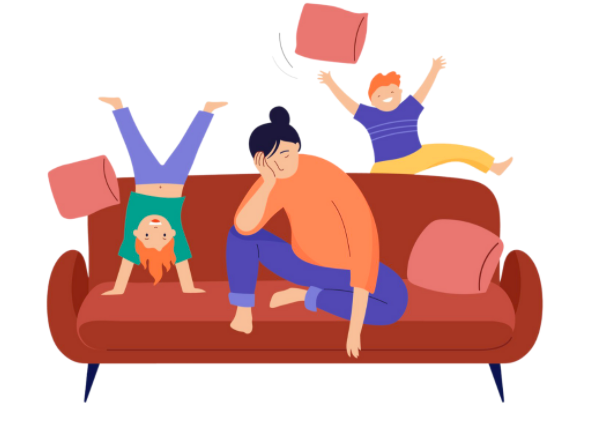
Three therapists have teamed up to lp with overwhelmed, stressed parents by offering a free workshop each remaining day this week: Pandemic Parenting!
Robbyn Peters Bennett from Portland, Oregon, Lori Petro from Philadelphia, Pennsylvania, and Amy Bryant from Decatur, Georgia, organized the event to help parents who have been struggling during the pandemic. Here are the details on what they’re offering and how to attend.
Background:
Bennett said recent research shows the alarming negative impact that chronic pandemic stress has had on children and their parents. Several studies have shown:
A majority of parents (52%) said financial stress and social isolation are getting in their way of parenting
1 in 5 said they spanked/slapped their child at least once in the past two weeks, and 12% did it more often
4 in 10 parents shouted at their child in the past two weeks
1 in 5 said they are shouting and spanking more often
“Probably one of the most stressful aspects of the pandemic has been the breakdown of community support for families,” Bennett said. “Parents feel isolated, overwhelmed, burdened with the task of also being their child’s teacher while continuing to hold a full-time job and of course many are struggling with financial worry and feeling isolated. We are shouting across the street to our neighbors and trying to connect through the muffled sounds of face masks. Children have few social interactions and are more dysregulated as a result.
“So my colleagues and I wanted to create a “Community of Care,” said Bennett.
“This parenting event is trauma-informed and is structured to support parents in a way that respects their need for connection, movement, meditation, and science-based parenting support,” said Bennett.
What is it?
The event runs April 20-24, and sessions are free. Each day parents receive a free learning module in their inbox that includes:
movement and meditation videos to prepare for, integrate and process all the learning and experiences
parent stories to inspire and connect
multiple interview sessions to help parents better understand child development, stress responses, and what children – and parents – need to feel more connected and less overwhelmed
Organizers also are offering a live event each night for a modest fee of $25. These events are aimed at helping create a feeling of community and fun, and the fee will help Bennett and her partners create more events in the future.
Who can attend
The workshop is designed for parents, grandparents and anyone who loves children and would like to feel more supported in caring for them. So that can be teachers, coaches, ministers and daycare providers as well.
Live events:
April 20:
Ask the Warden: What Makes Kids Delinquent? Led by George Davis, M.D.
It is amazing how many parents use harsh punishment (even though they don’t want to) out of fear for their children and a strong commitment to keep their child out of trouble. There will be a live Q&A with Davis, the former director of the New Mexico Juvenile Justice system. He is publishing some amazing research on delinquency and adverse childhood experiences.
April 21
Movement Medicine: Calming the Nervous System through Therapeutic Movement. Led by somatic therapist David Mooney
Experience the restorative practice of movement so parents feel better and are better resourced
April 22
Game Night! Movement for Regulation, led by occupational therapist Tinsley Martin
Children/s challenging behaviors are often driven by dysregulation – so mirroring their feelings or talking logically to them isn’t enough. This session is a playful approach to helping children regulate their nervous system and emotion — and parents will feel better too.
April 23
Game Night! Play to Connect, led by Sheena Hill, Parenting Works
There just isn’t enough fun right now! This is a way to join community and play and connect and simply feel good.
April 24
Addressing Our Triggers, led by psychologist Lynyetta Willis, Ph.D.
Feeling activated into flight-fight-freeze is the new normal for a lot of parents who simply have too much stress and not enough support. This session will help parents feel more connected to themselves and will give them some tools to help with their own reactivity.
Additional speakers:
What to say when you wanna say, “Do as you’re told!” with Mr. Chazz Lewis, M.S.
Mr. Chazz, an inspirational parenting coach on TikTok, talks about why it is difficult for dads, especially, to give up fear based parenting
Feeling overwhelmed by your toddler? How to set limits that meet your own needs, with Devon Kuntzman
Practical helping parents know what to expect of toddlers and how to help them develop impulse control.
How to deal with irritable and defiant kids, with Robbyn Peters Bennett, LPC, CMHS
Addressing trauma specifically and how to work with children who are often dysregulated and may be thought of as oppositional defiant.
The link between juvenile delinquency and discipline, with George Davis, M.D.
Davis talks about his second ACEs study with children in the juvenile justice system.
What’s my kid supposed to be learning? Trauma-sensitive approach to helping kids learn during a pandemic, with Erin Hambrick, PhD
Parents have intense expectations about child’s academic progress during the pandemic. Hambrick, from the ChildTrauma Academy, talks about how to prioritize your child’s learning needs and how to deal with the school who may lack a trauma-informed lens.
Building lifelong relationships with kids and teens (and why it matters), with DeAntwann “DJ” Johnson
How to stay close to your teenagers, when they need you the most!
Tools to identify and release triggers, with Lynyetta Willis, Ph.D.
We are all feeling triggered more than usual these days. Willis helps us sort through and validate our triggers.
Others include:
Communicating with neurodiverse kids and teens, with Lori Petro
When kids steal: supporting your child’s inner guide, with Vivek Patel
What grumpy kids need, with Sheena Hill
Tired of nagging? Untriggering to parent the next generation, with Iris Chen
When siblings hit: setting limits that nurture empathy, with Laura Markham
Desired outcome:
Bennett said the therapists’ goal is to help parents feel more connected and supported by community, and to feel more regulated themselves so that parenting is easier. “We want to raise awareness on the dangers of harsh parenting. A recent study showed that getting angry, hitting, or yelling at children when they are little is linked to inhibited brain development. We know that tending to the connection between the parent and child is the most powerful way to ensure the well-being of children into the future. We want to help parents understand how to deal with challenging behaviors, but also provide them with the care and support they need so that their nervous system can manage it. If we want parents to do better, we have to help them feel better!”
If parents can’t find time to watch all the videos during these five days, they can access all the seminars for free until the end of the month. If they want to hang on to them longer, they only need to pay $25.
Therapist and anti-spanking advocate Robbyn Peters Bennett
Three therapists have teamed up to help with overwhelmed, stressed parents by offering a free workshop each remaining day this week: Pandemic Parenting!
Robbyn Peters Bennett from Portland, Oregon, Lori Petro from Philadelphia, Pennsylvania, and Amy Bryant from Decatur, Georgia, organized the event to help parents who have been struggling during the pandemic. Here are the details on what they’re offering and how to attend.
Background:
Bennett said recent research shows the alarming negative impact that chronic pandemic stress has had on children and their parents. Several studies have shown:
A majority of parents (52%) said financial stress and social isolation are getting in their way of parenting
1 in 5 said they spanked/slapped their child at least once in the past two weeks, and 12% did it more often
4 in 10 parents shouted at their child in the past two weeks
1 in 5 said they are shouting and spanking more often
“Probably one of the most stressful aspects of the pandemic has been the breakdown of community support for families,” Bennett said. “Parents feel isolated, overwhelmed, burdened with the task of also being their child’s teacher while continuing to hold a full-time job and of course many are struggling with financial worry and feeling isolated. We are shouting across the street to our neighbors and trying to connect through the muffled sounds of face masks. Children have few social interactions and are more dysregulated as a result.
“So my colleagues and I wanted to create a “Community of Care,” said Bennett.
“This parenting event is trauma-informed and is structured to support parents in a way that respects their need for connection, movement, meditation, and science-based parenting support,” said Bennett.
What is it?
The event runs April 20-24, and sessions are free. Each day parents receive a free learning module in their inbox that includes:
movement and meditation videos to prepare for, integrate and process all the learning and experiences
parent stories to inspire and connect
multiple interview sessions to help parents better understand child development, stress responses, and what children – and parents – need to feel more connected and less overwhelmed
Organizers also are offering a live event each night for a modest fee of $25. These events are aimed at helping create a feeling of community and fun, and the fee will help Bennett and her partners create more events in the future.
Who can attend
The workshop is designed for parents, grandparents and anyone who loves children and would like to feel more supported in caring for them. So that can be teachers, coaches, ministers and daycare providers as well.
Live events:
April 20:
Ask the Warden: What Makes Kids Delinquent? Led by George Davis, M.D.
It is amazing how many parents use harsh punishment (even though they don’t want to) out of fear for their children and a strong commitment to keep their child out of trouble. There will be a live Q&A with Davis, the former director of the New Mexico Juvenile Justice system. He is publishing some amazing research on delinquency and adverse childhood experiences.
April 21
Movement Medicine: Calming the Nervous System through Therapeutic Movement. Led by somatic therapist David Mooney
Experience the restorative practice of movement so parents feel better and are better resourced
April 22
Game Night! Movement for Regulation, led by occupational therapist Tinsley Martin
Children/s challenging behaviors are often driven by dysregulation – so mirroring their feelings or talking logically to them isn’t enough. This session is a playful approach to helping children regulate their nervous system and emotion — and parents will feel better too.
April 23
Game Night! Play to Connect, led by Sheena Hill, Parenting Works
There just isn’t enough fun right now! This is a way to join community and play and connect and simply feel good.
April 24
Addressing Our Triggers, led by psychologist Lynyetta Willis, Ph.D.
Feeling activated into flight-fight-freeze is the new normal for a lot of parents who simply have too much stress and not enough support. This session will help parents feel more connected to themselves and will give them some tools to help with their own reactivity.
Additional speakers:
What to say when you wanna say, “Do as you’re told!” with Mr. Chazz Lewis, M.S.
Mr. Chazz, an inspirational parenting coach on TikTok, talks about why it is difficult for dads, especially, to give up fear based parenting
Feeling overwhelmed by your toddler? How to set limits that meet your own needs, with Devon Kuntzman
Practical helping parents know what to expect of toddlers and how to help them develop impulse control.
How to deal with irritable and defiant kids, with Robbyn Peters Bennett, LPC, CMHS
Addressing trauma specifically and how to work with children who are often dysregulated and may be thought of as oppositional defiant.
The link between juvenile delinquency and discipline, with George Davis, M.D.
Davis talks about his second ACEs study with children in the juvenile justice system.
What’s my kid supposed to be learning? Trauma-sensitive approach to helping kids learn during a pandemic, with Erin Hambrick, PhD
Parents have intense expectations about child’s academic progress during the pandemic. Hambrick, from the ChildTrauma Academy, talks about how to prioritize your child’s learning needs and how to deal with the school who may lack a trauma-informed lens.
Building lifelong relationships with kids and teens (and why it matters), with DeAntwann “DJ” Johnson
How to stay close to your teenagers, when they need you the most!
Tools to identify and release triggers, with Lynyetta Willis, Ph.D.
We are all feeling triggered more than usual these days. Willis helps us sort through and validate our triggers.
Others include:
Communicating with neurodiverse kids and teens, with Lori Petro
When kids steal: supporting your child’s inner guide, with Vivek Patel
What grumpy kids need, with Sheena Hill
Tired of nagging? Untriggering to parent the next generation, with Iris Chen
When siblings hit: setting limits that nurture empathy, with Laura Markham
Desired outcome:
Bennett said the therapists’ goal is to help parents feel more connected and supported by community, and to feel more regulated themselves so that parenting is easier. “We want to raise awareness on the dangers of harsh parenting. A recent study showed that getting angry, hitting, or yelling at children when they are little is linked to inhibited brain development. We know that tending to the connection between the parent and child is the most powerful way to ensure the well-being of children into the future. We want to help parents understand how to deal with challenging behaviors, but also provide them with the care and support they need so that their nervous system can manage it. If we want parents to do better, we have to help them feel better!”
If parents can’t find time to watch all the videos during these five days, they can access all the seminars for free until the end of the month. If they want to hang on to them longer, they only need to pay $25.
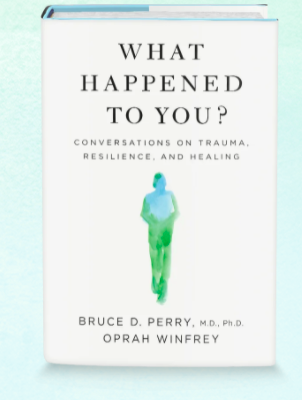
What do PACEs Connection and “What Happened to You?”, the new book by Oprah Winfrey and Bruce Perry, have in common?
Almost everything. That’s my conclusion after I finished listening to the book on Audible and re-reading parts of it on Kindle.
In the book, Winfrey, a world-class connector, journalist, entertainer, author, thought leader, actor, and philanthropist, teams up with her longtime friend Perry, a child psychiatrist, neuroscientist, and principal of the neurosequential model of brain-based therapy. They engage in a series of conversations about trauma, resilience, the power of relationships and community, healing, what they call post-traumatic wisdom, and what we need now.
With warmth and their easy familiarity with each other, they take us through an education about trauma that I believe the world is hungry for, explaining the science of adverse childhood experiences (ACEs) and why and how traumas have affected us. Perry does a masterful job of explaining that how we are loved as infants and children is likely to determine how we are able to love—or not love — as adults, with Winfrey giving pointed and moving examples. They truly ring almost all of the bells we at PACEs Connection hope to ring in our vision to create a world where all people thrive, and in our mission to prevent and heal trauma, and help individuals, families and communities create and build on the positive experiences that lead to strength and resilience.
Winfrey stuns us over and over with personal accounts of intensely painful personal traumas, and leaves us, throughout the book and especially at the powerful ending, with the hope that our traumas can help us become wise and powerful.
I honestly believed we would see a book or a series of O Network specials from Perry and Winfrey three years ago, not long after the “60 Minutes” interview when she and Perry talked about adverse childhood experiences and trauma-informed approaches. In previewing the interview, Winfrey told long-time friend and fellow journalist Gayle King of CBS that learning about ACEs Science and trauma-informed care “changes everything,” and that she’d “dance on tabletops” if that’s what it took to get people to pay attention to it.
Whatever moved them to share this life-changing work, this is my truth about it: “What Happened to You?” is a book that humanity desperately needs to help us remember, and understand, deep in our bones and DNA, that we are wired for connection and empathy, despite the economic and technological forces that can sometimes make them seem so far out of reach. It is a book I love and want to share widely, especially with parents, policymakers, educators, faith leaders, coaches, law enforcement, the medical community—actually, anyone and everyone—even young students, as I believe our knowing this information early on in life could help prevent many traumas to self and others.
Perhaps I am projecting as I listen to Perry talk about the unrealistic expectations with which society has burdened single mothers. Or I am connecting dots that aren’t there when I think that perhaps Perry and Winfrey could normalize the belief—even among the most hardened anti-welfare politicians—that reducing the overwhelm and stress of poverty, oppression, and multi-generational addiction and abuse is the right thing to do, because withholding support damages the brains of our nation’s children.
What do we, as a nation, love? What collectively inspires consensus?
I believe it is love for our children, and this book will help us remember that. It explains the importance of giving our children the best start possible—especially in the first two months of life—and could help spark healing relationships.
In “What Happened to You?” the two long-time friends advocate for nurturing brain development, and for the mental health, trauma education, and well being of their fellow Americans, the world. I believe that what they advocate for—community, acceptance, and a common understanding of the need to prevent trauma, promote regulation, relationships and reasoning—is vital to restoring and saving our collective humanity. They want us to ask, “What happened to you?” instead of “What’s wrong with you?” because asking the second question can traumatize already traumatized people with the implication that there is something bad or wrong with them, as opposed to there being something bad or wrong that happened to them.
That Perry and Winfrey are a powerful team is indisputable. When she focuses her attention on something, change happens. I believe her decades of work as a trusted Black journalist, daily coming into the homes of all kinds of people with intimate, often hard-to-hear stories of childhood abuse and uplifting stories of people who’ve overcome obstacles, helped set the stage for Barack Obama’s presidency, the Me Too Movement, and some Americans being more willing to have some difficult conversations.
But even as brilliant and straightforward as Perry and Winfrey are, it likely took a lot of work to make the book as approachable as it is. Its conversational style belies the volumes of information many readers are likely to absorb.
Help for even the most broken children
It is fascinating to hear Perry share, with the utmost respect, stories of people who’ve endured unimaginable trauma. He discusses his calm, easy way of relating with children by getting on the floor to color with them, by having very brief but frequent connections, by building trust, by observing and asking just the right slightly probing question at just the right moment. It’s clear that he knows exactly what amount and weight a relationship can take and when. With the help of Perry and his team, children who would seem too broken to mend are brought back to functioning by patiently following his brilliant neurosequential model of therapy.
Equally compelling, Winfrey reveals vulnerabilities that are searingly sad. Because I listened to the book, her velvety, deep voice was so warm and rich it cannot leave my mind. It haunts me as I recall revelations that were so painful, I needed to pull my car off the road or stop walking and sit down to catch my breath.
Among her most personal revelations were her grandmother’s intense beatings and her mother’s ongoing abandonment. She recalled standing with her mother at the age of six and feeling crushed by her mother’s agreement with her landlady to let “that dark-skinned-nappy-headed child” sleep outside on the porch on Winfrey’s first night in Milwaukee. That Winfrey knows the truth then—that she is absolutely alone—evokes feelings of empathy, anger, grief, fear.
Winfrey later reveals how she learned she’d never truly been “tucked into bed”. It was during the making of a movie when the director asked her to tuck a child into bed, and she realized she didn’t know that tucking in also means sharing affection instead of just arranging blankets, because no one ever tucked her in at night. I again had to stop the car to handle the shock and grief I felt for her.
In the final chapter of the book, Winfrey’s honesty, humility, and compassion are breathtaking and gave me chills, repeatedly, as she shared how she and her mother finally connected prior to her mother’s death. Have some tissues ready and know you are likely to be a stronger, better human for the privilege of hearing this account.
Hearing their easy conversation as Perry and Winfrey talk back and forth about the importance of community, relationships, regulation and education buffers the pain of the stories they share. They definitely found a rhythm in sharing concepts, examples, solutions.
Hearing Perry explain, through vivid and moving examples, how the body reacts to trauma, will hopefully open people up to be more compassionate about children who are dysregulated, people who are dysregulated, themselves when they are dysregulated.
Perry’s stories illustrate beautifully how we are wired for love—or not—and that how we are wired is projected onto the world. That he has figured out ways to help people heal, and that this takes years of healing work, is hopeful, daunting, and instructive. Don’t write off children who’ve suffered abuse.
A constant source of reassurance for me is that Oprah survives the abuse she shares, and that we know she’s oftentimes enjoying life after having done such a heroic and remarkable job of overcoming, thriving, and helping others.
First two months of life are critical
Which leads me to a couple of many profound moments in the book. First, about developmental trauma and the importance of the first two months of life, of mothers and babies developing a secure attachment.
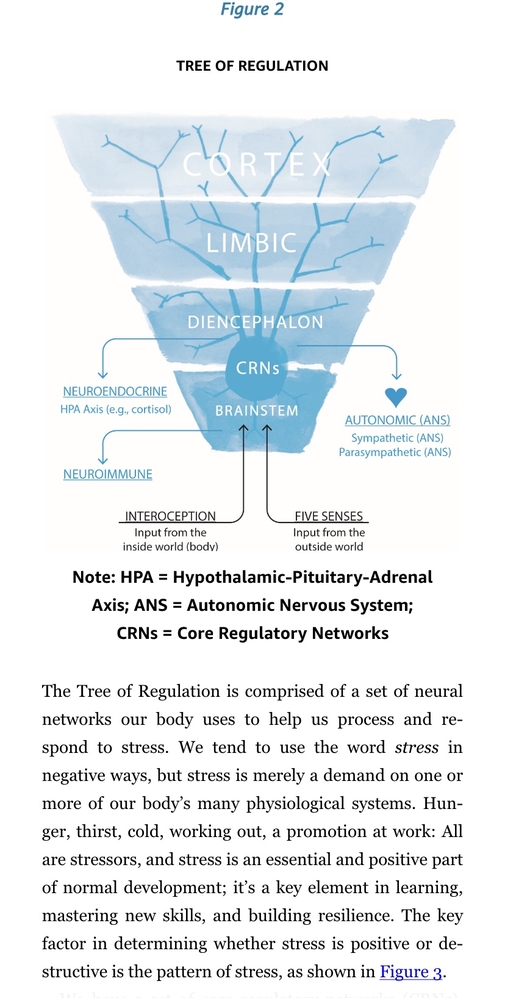
Perry writes, “The basic finding is that the experiences of the first two months of life have a disproportionately important impact on your long-term health and development. This has to do with the remarkably rapid growth of the brain early in life, and the organization of those all-important core regulatory networks.
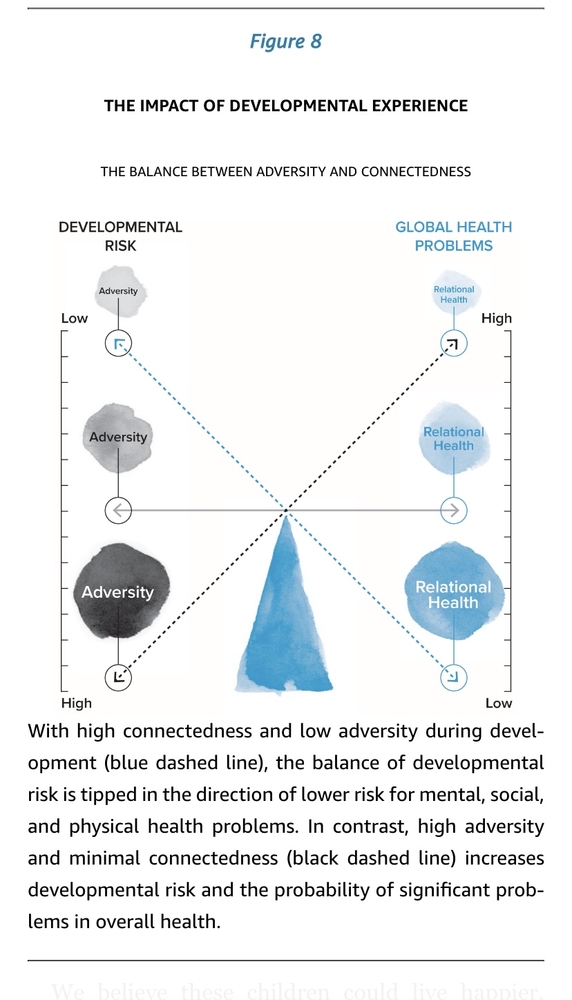
“If, in the first two months of life, a child experienced high adversity with minimal relational buffering but was then put into a healthier environment for the next twelve years, their outcomes were worse than the outcomes of children who had low adversity and healthy relational connection in the first two months but then spent the next twelve years with high adversity.
“Think of that: The child who has only two months of really bad experiences does worse than the child with almost twelve years of bad experiences, all because of the timing of the experiences.
“This sounds discouraging. But we believe that poor outcomes are not inevitable; in fact, we believe that this is a perfect example of why we need developmentally informed, trauma-aware systems.”
Perry invites readers to think back to conversations about how important attentive, responsive caregiving is in providing the organizing experiences for the infant’s stress-response systems.
“Remember that if the life experiences of the first two months include inconsistent or unpredictable stress, this pattern of activation creates a sensitized stress response. That leads to a cascade of problems—trauma related problems. And even when these children are no longer in high-risk settings, their problems have to be addressed by caregivers, pediatricians, mental health providers, and educators. But if these people misunderstand what’s going on, if these systems focus on “What is wrong with you?”—as unfortunately, they typically do—the children won’t get better. They will continue to struggle. Their emotional reactivity and behavior problems will be viewed without a developmental or trauma lens, which could lead to ineffective interventions.”
Racism and trauma
Another big aha is Perry’s take on racism and trauma. He says: “I believe that if you don’t recognize the built-in biases in yourself and the structural biases in your systems—biases regarding race, gender, sexual orientation—you can’t truly be trauma-informed. Marginalized peoples—excluded, minimized, shamed—are traumatized peoples, because as we’ve discussed, humans are fundamentally relational creatures. To be excluded or dehumanized in an organization, community, or society you are part of results in prolonged uncontrollable stress that is sensitizing. Marginalization is a fundamental trauma.
“This is why I believe that a truly trauma-informed system is an anti-racist system. The destructive effects of racial marginalizing are pervasive and severe. In North America, Australia, and New Zealand, for instance, Black, brown, and Indigenous children are more likely to be over diagnosed and overmedicated in mental health systems, removed from their homes to enter the child welfare system, suspended or expelled from school, and charged at school with truancy and ‘assault,’ with the result that they enter the juvenile-justice system in disproportionate ways.”
If people could learn this and take to heart that each “micro-aggression” is actually damaging the brains of their co-workers, children in classrooms, grocery stores, buses, street corners, shops, schools—anywhere and everywhere that children, people of color are treated as less-than in even the slightest way—perhaps we would stop this invisible, persistent torture that is costing all of society by preventing children from reaching their full potential.
All this is why I think Winfrey and Perry would so connect with the work done at PACEs Connection to build community, to educate about trauma, to track the work being done, to engage people in sharing the science of positive and childhood experiences, and to celebrate that work. I believe they would help share the new science of positive childhood experiences—how important it is for children to experience and enjoy community traditions, feel supported at home and at school, have supportive friends and have at least two non-parent adults who genuinely care about them. Winfrey is living proof of the impact teachers can have in lifting a child up and helping them believe in themselves when no one else does. She readily credits a specific grammar school teacher for seeing something special in her, for nurturing her love of learning, and inspiring confidence when no one else did.
I urge you to borrow or buy and read this book, and if you are a member of one of the 400+ geographic or interest-based communities on PACEs Connection, entreat your community members to have a book group about “What Happened to You?”, post about it, and email the link to me at csipp@pacesconnection.com.
Leaders of PACEs science initiatives in four North Carolina counties are eager to begin measuring the impact of their work to solve the most intractable problems in their respective communities.
Tommy Taylor
“Each of these broad-based, cross-sector task forces is about preventing childhood trauma and its negative effects on long-term health. We want to heal trauma and create and build on positive childhood experiences in our communities so individuals, families, and communities themselves can grow in health, strength, and resilience. Their work to shine a light on ways racism and inequity hurt our communities, and to improve diversity, equity, inclusion, collaboration and opportunities, is work we believe in and are behind,” said Tommy Taylor, executive director of the United Way of Cape Fear Area, who has worked closely with each of the resiliency task forces.
Task forces are in four counties: New Hanover, Brunswick, Pender and Columbus.
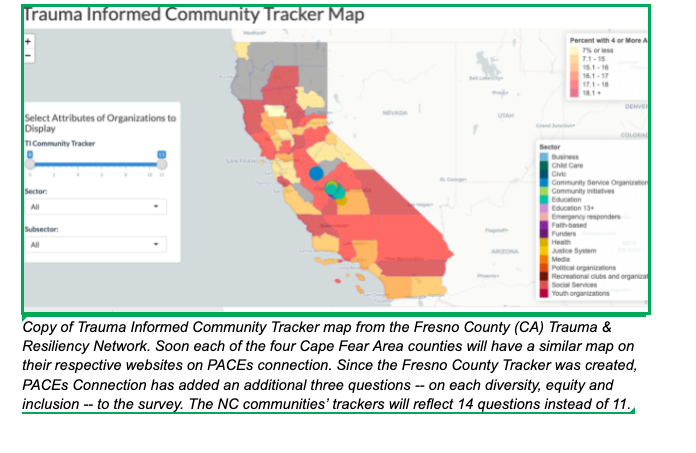
Soon, leaders of each resiliency effort will send a 14-question Milestones Survey, part of the PACES Connection Community Resilience Tracker, to organizations in each county that are participating in their respective resilience initiatives. The results of the survey will tell them how far these organizations have come on their path to becoming trauma-informed and healing-centered.
They are able to undertake this measurement because the United Way of Cape Fear Area is underwriting their access to the sophisticated data tools offered to members of the PACEs Connection Cooperative of Communities. As part of the Coop, they will join other affiliates not only in tracking their progress, but also in network leadership training; learning collaboratives on subjects such as trauma-informed education; and in-depth training in how diversity, equity and inclusion intertwine with the science of positive and adverse childhood experiences. They will also be able to collaborate with fellow members of the Coop to share what works and what doesn’t to develop a community that integrates practices and policies based on PACEs science.
According to Jane Stevens, founder and publisher of PACEs Connection, who was with the Cape Fear Area community managers and members of their communities last week for the announcement of their joining the Coop, the first part of the data gathering process is also prescriptive.
“Milestones survey questions are prescriptive, in that going through them gives organization leaders a path to achieve goals that will actually help the organization and its employees improve relationships, safely explore causes of employee turnover and likely improve employee and customer, client, or patient satisfaction,” she said.
“The second part of the data work is the sector surveys. Using publicly available data, including some from the Cape Fear Collective, we will be able to show part of the impact of having trauma-informed policies and practices in schools, healthcare, law enforcement and other sectors,” Stevens said.
Joining the PACEs Connection Cooperative of Communities is another step along the long and sustained path that the counties are taking to educate all citizens about the science of PACEs.
“In New Hanover County, community members have taken these trainings to help them function better in times of stress, whether it’s daily stressors at home, secondary trauma from working with traumatized children or adults, or natural disasters like hurricanes, tornadoes, or even the pandemic,” said Boyd.
A primary focus of the New Hanover County Resiliency Task Force’s work for almost three years, the CRM and R4R trainings offer an overview of the science of adverse childhood experiences, an understanding of the biology of stress and how the body and brain function—or don’t function—during traumatic stress.
J’vanete Skiba
“Most importantly,” said J’vanete Skiba, acting director of the New Hanover County Resiliency Task Force, herself a CRM trainer, “the trainings show people how to move their brains and bodies from the state of flight, fight, freeze, where they can add to the trauma of themselves and others, to a regulated state, where they can access their reasoning brain to think, plan, and de-escalate trauma.”
“I’m thankful for the time our community took to create an action plan that could be applied to our many systems,” said Boyd. “The CRM and R4R trainings were a critical part of ‘taking care of the providers’ goal first before we began educating the general public about ways to manage stress. We realized very early on that those who were providing services in our communities were being traumatized at work themselves, and that unless those providing services were well, we couldn’t provide helpful, trauma-informed services to the thousands in our community. That’s why we put so much emphasis on these trainings first.”
Community managers Lauren Clark in Brunswick County; Amy Read in Pender County, who are also certified to teach CRM, and Selena Rowell and Jai Robinson in Columbus County, have also been leading efforts in their respective counties to make these trainings available.
Further, just as in New Hanover County, they have used documentaries such as “Resilience” or “Paper Tigers” to help community members learn about trauma, its impact, and how working together to prevent and heal trauma leads to healthier individuals and communities.
Last week’s announcement of the UW-CFA funding for the four counties to join the Cooperative of Communities was made after months of work by the community managers of each group to build their memberships and vet the tools and benefits of the Coop. They worked with members and member organizations to discern priorities, create plans, and gather membership agreements pledging involvement in the work to advance trauma-informed policies, as these documents must be signed for an organization to participate in the Milestones Survey.
Accelerating change
“The data tools will reveal extremely valuable information that can show progress and accelerate change,” said Stevens. “This information can ultimately be used to help calculate how much money a community is saving by integrating practices based on PACEs science.”
Task force leaders say the ultimate goal is to have the trauma-informed, healing-centered practices integrated deeper into each sector and organization in the communities. With the Coop survey tools to track and document what is working and how well, the efforts are more likely to be sustainable over time, showing an ongoing return on investments.
PACEs Connection is a nonprofit organization founded in 2012 to advance the science of positive and adverse childhood experiences (PACEs) and unite the people, organizations, systems and communities in the worldwide PACEs movement in solving our most intractable problems. The PACEs Connection social network serves as the movement’s main information exchange and resource, providing support for hundreds of local, state and national PACEs initiatives. It recently surpassed 52,000 members worldwide, and offers a free community site and assistance to some 400 geographic and more than 40 interest-based communities.
This is the second of a series of articles about the four resiliency initiatives from the Cape Fear Area of North Carolina joining the Cooperative of Communities, and the involvement of the United Way of the Cape Fear Area in each of the county’s efforts.
For more information about the PACEs Connection Cooperative of Communities, please contact the Community Facilitator for your geographic region of the country.
US Communities
Northeast, Mid-Atlantic, & Southwest states Contact: Alison Cebulla
Following a brief mindfulness check-in, PACEs Connection staff meetings begin with the review of our Vision, Mission, and Values statements, as well as our Equity and Inclusion Statement. At a recent meeting, top row, L-R, Ingrid Cockhren, Carey Sipp, Donielle Prince, Jane Stevens. Middle row, L-R, John Flores, Porter Jennings-McGarity, Jenna Quinn, Gail Kennedy. Bottom row, L-R, Rafael Maravilla, Natalie Audage, Alison Cebulla, Samantha Sangenito.
A couple of times last week I felt my body downshift to a more comfortable lower gear, the way it has several thousand times over the course of 26 years. This happens when I’ve “claimed” my seat at meetings for people recovering from having lived in the chaos and trauma of addiction, or in meetings for people who want help with their own addictions.
Many recovery meetings open with the oft-quoted Serenity Prayer, which asks petitioners to be granted “the serenity to accept the things we cannot change, the courage to change the things we need can, and the wisdom to know the difference.” We read the beautiful Promises of Alcoholics Anonymous, or a version of it appropriate to whatever group is meeting, along with the Twelve Steps and Twelve Traditions.
This “meeting norm” of reading through the mission of why we are there, the vision of what we’ll gain if we “keep coming back” and the 24 behavioral milestones of theTwelve Steps and the Twelve Traditions has served, for my central nervous system, as a signal to let down. Relax. Open my mind. Open my heart. Trust it is safe to be where I am and who I am and to speak my peace. Here I am welcomed, accepted, loved, appreciated before I am even known. Though I may be only tolerated by some, love and kindness is the code. With spiritual help I won’t “act out” or ask for special treatment as here I am “a worker among workers.” Though were I to act out, my loving accountability partners would likely not do so much judging as they would gently nudge to help me remember to look for “my part” in whatever is setting me off. It is a model for living that I love and treasure. And it helps the group focus, center, get in sync, and oftentimes come to a collective gratitude.
Gratitude was the feeling I had last week when at two PACEs Connection meetings. The first was a meeting with a couple of statewide organizers, one of whom had been through a harrowing week of family illness. The other was our weekly PACEs Connection staff update during which several of us expressed disappointment and exasperation about the increase in COVID-19 cases. Both meetings began by reading, out loud, the PACEs Connection Vision and Mission statements as well as our Values and our Equity and Inclusion Statement.
Our Vision
A resilient world where all people thrive.
Our Mission
The human and digital catalyst that grows and supports the worldwide PACEs and resilience movement, and tells its authentic stories.
Equity & Inclusion Statement
PACEs Connection is an anti-racist organization committed to the pursuit of social justice.
In our work to promote resilience and prevent and mitigate ACEs, we will intentionally embrace and uplift people who have historically not had a seat at the table. PACEs Connection will celebrate the voices and tell the stories of people who have been barred from decision making and who have shouldered the burden of systemic and economic oppression as the result of genocide, slavery, family separation, forced relocation, mass incarceration, red lining and all other practices, policies and institutions that have traumatized marginalized groups. These groups include people of color, people living with mental health and substance use challenges, people living with disabilities, and members of the LGBTQI community.
Our Values
As individuals and as an organization, it is our intention and daily practice to encourage and model these core values:
Integrity. Transparency.
Equity. Inclusion.
Empathy. Compassion.
Joy. Celebration.
Courage.
Integrity. Transparency. We manage through trust not control. To create trust and an accountable environment where everyone feels they can say what needs to be said when it needs to be said, we maintain an environment free from hidden agendas or conditions, accompanied by full information and no fear of retaliation. We speak directly, do what we say we will do and have pure motives. We contribute authentically and participate fully. We are leaders and we model leadership at every level.
Equity. Inclusion. We regularly examine our roles in perpetuating inequitable systems and work to change inequitable practices, structures and policies that contribute to ACEs, and maintain an environment where everyone is welcomed, respected, supported and valued.
Empathy. Compassion. We value empathy, which validates the experiences of others and is born from compassion.
Joy. Celebration. We cultivate resilience and equanimity by sharing the truth of our stories and celebrating our lessons learned and our successes.
Courage. Knowing that we, ourselves, are the foundation for our success and the key to achieving our vision, we encourage and provide opportunities for personal growth and professional advancement and satisfaction. Our courage is grounded in the body and is a measure of our heartfelt participation in life, with one another, and with our work.
Something about reading these grounding, encouraging, compelling words centered us.
In several meetings of PACEs Connection communities in the Southeast, where I am our organization’s regional coordinator, readers begin with their own community’s vision and mission statements. They take a few minutes to check in and establish their meeting norms, including one person speaking at a time, staying on topic, etc.
The communities that open meetings with their vision, mission and some form of meeting norms tend to advance their PACEs science movements with focus and energy. There is purpose, cooperation, energy, effectiveness.
Does your community begin its meetings with a vision and mission, or words that unify and inspire your members? If you do, please post them in the comments. With more than 400 communities on PACEs Connection, I’d love to learn about the different ways we all begin.
How we end—in a world where all people thrive—depends on how we begin.
To me, this is a given: The 10 minutes we take to start our meetings are vitally important to help us start on the same page, to share a mental model of what we’re working for, to work together for our common goal.
Thank you for all you do in your home, community, and the world to help prevent and heal trauma, and to lead us toward a more healing-centered and just society.
Mental health among healthcare workers and other vulnerable groups during the COVID-19 pandemic and coronavirus outbreaks: a rapid systematic review [journals.plos.org]
By Eleonora P. Uphoff, Chiara Lombardo, Gordon Johnston et al., PLOS ONE, August 4, 2021
Abstract
Introduction
Although most countries and healthcare systems worldwide have been affected by the COVID-19 pandemic, some groups of the population may be more vulnerable to detrimental effects of the pandemic on mental health than others. The aim of this systematic review was to synthesise evidence currently available from systematic reviews on the impact of COVID-19 and other coronavirus outbreaks on mental health for groups of the population thought to be at increased risk of detrimental mental health impacts.
Materials and methods
We conducted a systematic review of reviews on adults and children residing in a country affected by a coronavirus outbreak and belonging to a group considered to be at risk of experiencing mental health inequalities. Data were collected on symptoms or diagnoses of any mental health condition, quality of life, suicide or attempted suicide. The protocol for this systematic review was registered in the online PROSPERO database prior to commencing the review (https://www.crd.york.ac.uk/pro….php?RecordID=194264).
Results
We included 25 systematic reviews. Most reviews included primary studies of hospital workers from multiple countries. Reviews reported variable estimates for the burden of symptoms of mental health problems among acute healthcare workers, COVID-19 patients with physical comorbidities, and children and adolescents. No evaluations of interventions were identified. Risk- and protective factors, mostly for healthcare workers, showed the importance of personal factors, the work environment, and social networks for mental health.
Conclusions
This review of reviews based on primary studies conducted in the early months of the COVID-19 pandemic shows a lack of evidence on mental health interventions and mental health impacts on vulnerable groups in the population.
Our version of a “Path to a Just Society” is our first attempt at creating a common language and identifying points along the path to a just society.
The Race and Equity workgroup of PACEs Connection started the project in early 2021, following a staff meeting where we realized that we, our organization and the movement needed this. We think it can help all of us gauge where we are, where we want to be, and what’s needed to get to the next level of integrating practices and policies based on the science of positive and adverse childhood experiences (PACEs).
Over the last few months, we discussed and refined, opened the discussion to our entire staff, and then went outside the organization for more feedback.
There are a lot of terms used in describing the world we are in and the world we want to live in: trauma-informed, healing-centered, self-healing. We took the long view of where we want to see society and what it would take to get there. We developed this tool as a starting point for many conversations and actions to accelerate the PACEs science movement to prevent and heal trauma, help individuals, families, organizations, systems and communities—our world—flourish.
We hope this is useful, not only for the leaders of our 450+ communities and for the 53,000+ members of PACEs Connection, but also for everyone in the PACEs movement. Our goal is to see every organization in every community, as well as every system, integrate PACEs science into their individual and organizational lives. If you want to see how PACEs Connection has integrated these concepts into our organization, go to PACEsConnectionInfo.com.
While the tool is being introduced Thursday during the second webinar in our Historical Trauma in America series, we don’t see this as the final iteration. It’s a starting point.
We know there are many terms used to describe this work and the stages of it. Many people have provided ideas, and we welcome more. We’d love to hear from you. Please post your ideas in the comments section below this story.
Over the next few months, we will continue to work on this, and then share next iterations during upcoming presentations in our Historical Trauma in America series. For now, we invite PACEs Connection community leaders to download the infographic and distribute the piece to your members for their own use in sharing the work they are doing. Thank you for partnering with us in the essential work of creating a just society,
The Path to a Just Society infographic is available in both English and Spanish.
WOW! So love this infographic – Very clear cut and action-oriented! I especially value the wording… We need to intentionally “act on” being TI, vs “saying” we are when our words/actions may not reflect it.
Thanks for your hard work on this, friends. I would have loved to have seen reference to the science of hope and the importance of hope in well-being so much published research but this is really a great graphic.
TraumaInformedJobs.com is a new job board for the trauma and resilience communities. PACEs Connection members can save 10% on posting with code PACES10
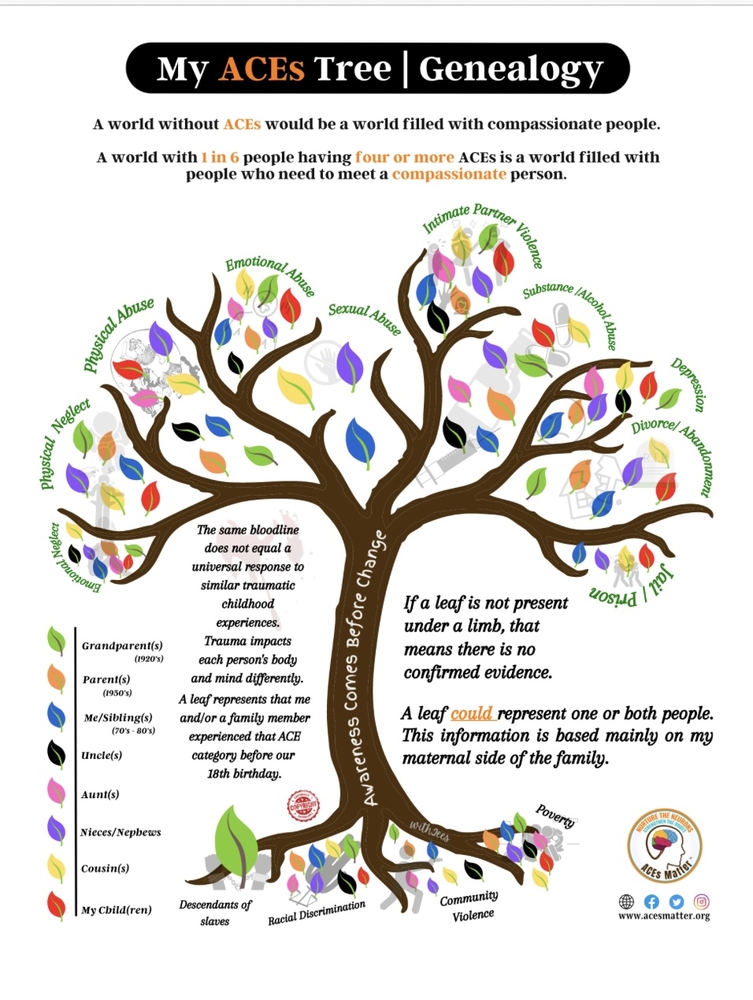
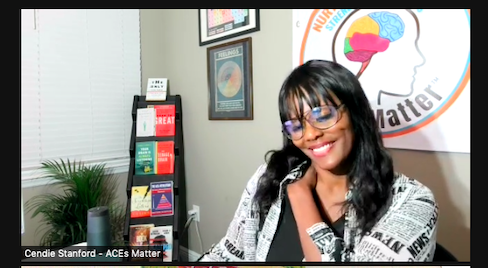
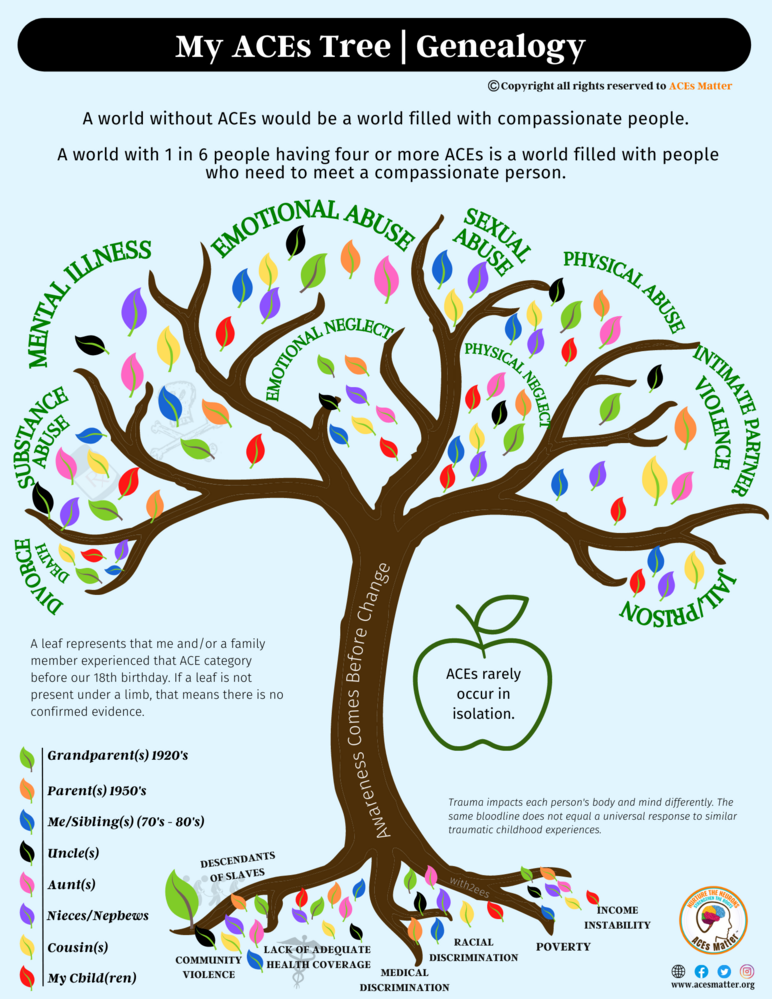
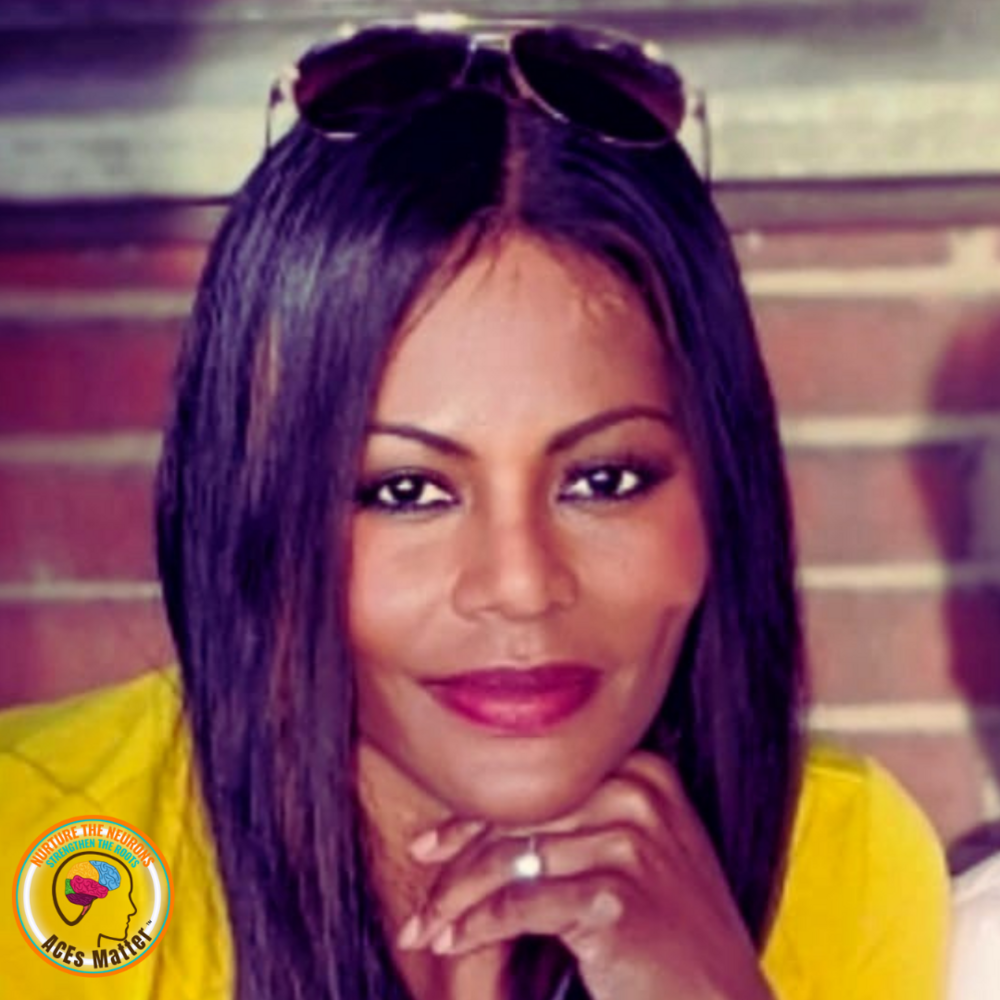
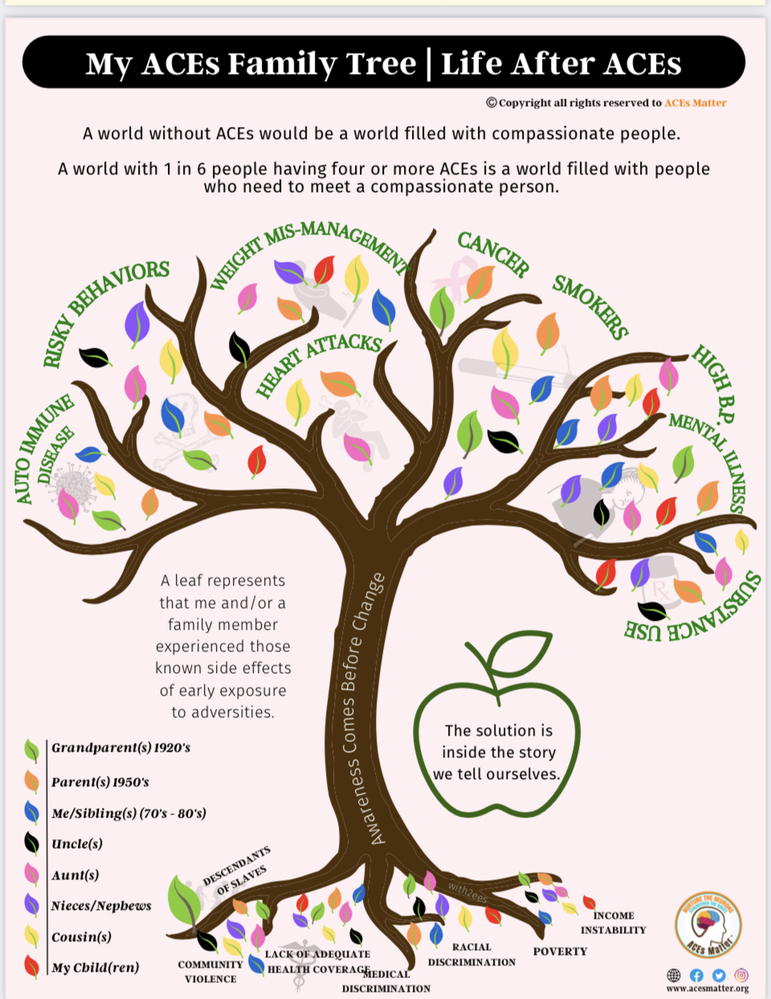
This stunning illustration shows how adverse childhood experiences (ACEs) affected the family of Cendie Stanford, a former school principal, artist, and executive director of her own nonprofit, ACEs Matter. For a larger image, scroll to bottom of post.
Cendie Stanford says that ever since she first learned about ACEs (adverse childhood experiences) science and read Dr. Nadine Burke Harris’s, The Deepest Well, in 2020, she’d been thinking about her own upbringing—which included at least 10 ACEs. She feels strongly that everyone needs to know what she knew about what adversity does to people, because it “explains why people behave the way they behave.”
So Stanford, who lives in Winter Park, Florida, established a nonprofit organization, ACEs Matter, to help get the word out. She was especially interested in reaching neighborhoods where she believed many volunteer ACEs educators wouldn’t want to go, because of crime, danger, and poverty.
She learned everything she could about the science. She logged into PACEs Connection to make connections to identify support and other places she could get help. She also set about putting together a board of directors who could help guide and support her in her goal of educating the most vulnerable people in underserved populations in the seven states in which she’s starting out: Arizona, Florida, Georgia, Louisiana, Mississippi, Missouri, and Texas.
Then earlier this month, she held her first board meeting.
Technical glitches didn’t matter
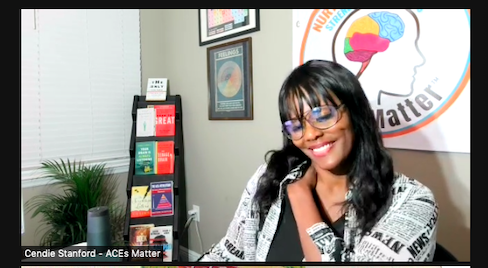
“I was really nervous about the meeting because I was bringing six people together for the very first time to figure out how they could help with ACES Matter,” she said. “And if anything could go wrong, it did.
“I had six very professional, very educated individuals waiting on me on a Sunday, on a holiday, and there were problems with Zoom. And it was in that moment, with so many technical problems and all these people waiting on me, that I didn’t feel judged.”
It was a moment that called her to stop and share this realization with her board.
“We were talking about the importance of vulnerable communities hearing about ACEs,” she says. “And in that moment, they didn’t care about the sound not working. They didn’t care about the PowerPoint. They were compassionate. And I just felt so loved. And that’s how the (ACEs genealogy) drawing was inspired because when one in six people have four or more ACEs—which I knew on that call included me and at least one other person—I was met with compassionate people.
“In that moment, I said that people need to understand that sometimes there are not enough compassionate people. So in a world with so many of us with these high adversity scores, we live in a world filled with people who need to meet a compassionate person,” she says.
Her board, comprising professionals from the medical industry, educators, technology administrators, and leaders in the spiritual sectors, agreed with her assessment, bringing their professional expertise as well as their own lived childhood experiences to the table.
The next day—Martin Luther King Day—she was inspired to create her “My ACEs Genealogy Tree.” She hopes this resource will help her bring the science of adverse childhood experiences to life for others.
“I’d been thinking about this family tree for almost two years now. And I knew it was going to be a visual because when people can see stuff like that and see themselves in it, it’s so much more powerful than just the words or the data. It’s what had been on my heart, and I think I turned it out in a couple of hours. And it was the most rewarding experience for me to create that illustration,” she says.
“Doing this was just eye-opening,” she continues. “It confirmed all of these feelings that had been bubbling up inside of me that ACEs science is just deeper than our family tree, that it (trauma) was really ingrained in the roots. There’s a lot of work that needs to be done and there is a solution.”
And that solution begins with spreading the word.
“This is life-saving information; we need to share it with everybody we know. Now.”
Stanford talks about a childhood friend who shares about PACEs science whenever possible.
“My friend was home on a family visit in the neighborhood where we grew up, and a 4-year-old child was gunned down,” she recalls. “My friend stayed to attend the funeral of the child and ran into the mayor. In questioning him, she found he had never heard about ACEs, and wanted more information. She also ended up running into a news reporter and faith leaders who wanted to know more.
“We know we should have somebody inside of every community talking about ACEs, and creating safe spaces for people to have this conversation,” she says. “Yes, the conversation can be activating, but it can also be catastrophic if we don’t bring it up.”
This is part one of a three-part series. Next: My ACEs family tree: Life after ACEs.
This is the second of two stunning illustrations showing how adverse childhood experiences (ACEs) affected the family of Cendie Stanford, founder of the nonprofit ACEs Matter. Each leaf represents a family member affected by ACEs, and the health consequences they suffered.
When Cendie Stanford, founder and president of ACEs Matter, finished drawing “My ACEs Tree—Genealogy”—she saw clearly the remarkable number of ACEs her grandparents, parents, children and extended family had experienced. The second tree—Life after ACEs—shows how horrifically ACEs played out in their lives.
Yet when she studied the devastating stories of pain and suffering told in the tree leaves, “I felt at peace,” she says. “There was no racing in my heart. There was not a physical reaction to it, when I looked at what ACEs had done to my family, because when I think about the people who have passed, I now have a better understanding of why it happened, why they had cancer, depression, problems with weight management and risky behaviors.”
‘Everybody I know needs this.’
For Stanford, just learning about ACEs science two years ago, and the fact that her score of “10 plus” did not bode well for her future health, was enough to have her turn over a new leaf in self care. “Since I’ve started learning about ACEs,” she says, “I am encouraged to eat better. Meditate. Exercise. I know it’s hard for people to take on self care sometimes, because we didn’t grow up seeing people do those things. I’d never seen anybody that I know meditating.”
She knows this is not the case for many people, that “information is not transformation.” It’s not guaranteed to bring the behavior changes to give up cigarettes, fried foods, sweets, and many other comforts that, consumed habitually, may be very useful to cope with the consequences of ACEs, but are, in the long run, harmful.
She wants people in underserved communities to create a tree like this for themselves, “so they can decide whether or not they want to do something about it,” she says. “Everyone deserves to know about ACEs, so they can make choices, so they can be inspired to help improve their health; practice self care, help rewire their nervous system. So they can maybe help kids and adults learn how to be calm and become regulated without becoming violent, or looking for a cigarette, or food, or a drug or drink” she says. “Brains can change at any age, and our bodies want to heal.”
Transformation requires more than just information.
“Helping people in underserved communities work on their own genealogy by drawing their own ACEs trees may help people open up. People in vulnerable populations don’t feel like it’s safe to talk about feelings. But even if these conversations can be activating, I believe being able to have people create and share their own family tree will show that we all have a lot in common, and need to take some action to improve our health. I hope we all see that not having the conversation is catastrophic,” says Stanford.
“Awareness will lead us to change. I know it is going to take some time. But what we can’t do is just wait for the people in these underserved communities to come to us. Right now we have to find representatives who’ll take this information into the communities, and help people figure out how to calm these kids’ nervous systems, so kids stop killing kids. Something needs to be done so these kids learn how to self regulate, so people get healthier and live better, and longer,” she explains.
Stanford says she plans to prioritize her work in neighborhoods in the zip codes she and her ACEs Matter board of directors are in the process of identifying. “People are advertising their depression every day on social media. You can look at people’s status updates and see that they are hurting,” she adds.
Her next step is to involve representatives from all types of organizations, or sectors, by taking her “ACEs trees” to business and industries as well as into the schools, faith communities, health clinics, first responders and more, in each neighborhood prioritized.
“If businesses—for example, grocery store companies—understand this (the effects of ACEs) and address it,” Stanford explains, “their employees’ productivity could be improved. They’re hiring a lot of these people who are coming to work with adversities, especially if they are in communities where there’s high violence. This is affecting their workers and their shoppers. So if they focused on preventing trauma and promoting resilience, the benefits to their communities could be life-changing, and life-saving.
“Every report I read says communities need to be involved,” she continues. “And that’s what ACEs Matter feels like it can do, just by giving people the tools to take ACEs awareness into the communities and start the conversation. Let’s see where that goes.”
The solutions are right here.
“We need to do what PACEs Connection is talking about, to get communities invested in their people, and build PACEs initiatives in communities, because healthy people are the product of an ACEs aware, resilient community. Let’s invest in these communities because the active community members can pass the knowledge down generation after generation, and stop ACEs and the bad health outcomes from being compounded generation upon generation,” says Stanford.
“I mean, the solutions are right there for us,” she continues. “We just need to make sure that everybody gets invited to the conversation, and then they get to decide what they do with the information, right?”
This is part two of a three-part series.Part one: My ACEs tree: Geneology.Part three: How positive childhood experiences, including those in the family and the community, helped her.
Next week’s illustration and story? Putting it together: At 16, Cendie endured a trauma that could have killed her. In her third illustration, she’ll share how positive childhood experiences (PCEs)—including positive community experiences—helped her go on with life, recover, and become an advocate for the science of positive and adverse childhood experiences.
Cendie, Thank you for sharing your journey. This is a beautiful and powerfully moving tool. Do you have plans to make this shareable or reproducible as a resource?
We also appreciate so much your creativity, passion, and love of the science.
Your sharing your own adverse childhood experiences story, and your family’s story, in these clear pictures of the WHY ACEs Matter, is a gift.
Thanks for putting yourself and your story and passion out into the world. I cannot wait to see what happens to these, and to your third illustration, which we’ll share next week! I believe they will help us all as we use them to help establish connection and create community.
Caleb Campbell, ex-NFL player, is a mental health advocate and consultant on trauma-informed leadership.
Each year millions of Americans face the reality of living with mental health struggles. The collective trauma of COVID-19 has exasperated our country’s mental health crisis. May is Mental Health Awareness Month. In honor of this designation, History. Culture. Trauma. podcast co-hosts Ingrid Cockhren, CEO of PACEs Connection, and Mathew Portell, director of communities, have spoken with guests about our nation’s science, support, education, advocacy, and policies focused on mental health.
This Thursday, May 26, Cockhren and Portell will examine the history of mental health responses in this country with mental health advocate Caleb Campbell, who went from West Point Military Academy to the National Football League and eventually became a mental health advocate and consultant on trauma-informed leadership.
Campbell says his journey brought him to understand mental health, trauma, stress, and ”how it plays out in life.”
In 2008, Campbell graduated from the United States Military Academy at West Point and was commissioned as an officer in the United States Army with 972 other cadets. The difference between Campbell and his classmates was that while the majority of them were sent to war, Campbell went to the NFL.
Campbell says he didn’t know at the time that he was about to fight his own battle—his own inner war—and it would almost cost him his life. As a survivor of mental health challenges, Campbell says it is his passion and mission to deliver an authentic and actionable message.
Drawing from his deep well of personal stories around being a West Point graduate, former U.S. Army officer, and an ex-NFL athlete, Campbell says he hopes to help leaders increase their inner capacity so that they can expand their leadership capabilities and deepen their impact.
Co-hosts Cockhren and Portell say Campbell’s message around leadership expansion is timely and important as more and more leaders face unprecedented amounts of stress and pressure.
To listen Thursday, May 26 at 4 p.m. ET; 1 p.m. PT, tune in here.
 Carey Sipp 4/15/218:11 AM
 of the most stressful aspects of the pandemic has been the breakdown of community support for families,” Bennett said. “Parents feel isolated, overwhelmed, burdened with the task of also being their child’s teacher while continuing to hold a full-time job and of course many are struggling with financial worry and feeling isolated. We are shouting across the street to our neighbors and trying to connect through the muffled sounds of face masks. Children have few social interactions and are more dysregulated as a result.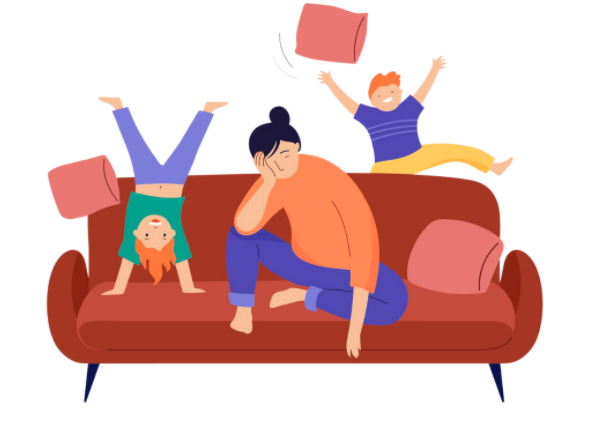

 lp with overwhelmed, stressed parents by offering a free workshop each remaining day this week: Pandemic Parenting!











 Technical glitches didn’t matter