Category Archives: Uncategorized

How America Manufactures Poverty [newyorker.com]

Carey Sipp Carey Sipp 3/15/231:00 PM

“We typically don’t talk about poverty as a condition that benefits some of us,” Desmond writes in his morally charged manifesto. “It seems we prefer more absolving theories of the problem.”Photograph by Philip Montgomery for The New Yorker

By Margaret Talbot, The New Yorker, March 13, 2023

“Books about poverty tend to be books about the poor,” the sociologist Matthew Desmond writes in “Poverty, by America” (Crown). That’s true whether the motivation is to blame the poor for their lot—chronicling the supposed pathologies creating a “culture of poverty”—or, more commonly nowadays, to generate empathy via detailed ethnographies of survival and agency amid deprivation. It was true of the first books that set out to systematically map and measure poverty, such as the Victorian reformer Charles Booth’s seventeen-volume “Life and Labour of the People in London,” and of Progressive Era attempts to rattle the consciences of the well-off, like Jacob Riis’s document of New York tenement life, “How the Other Half Lives.”

When Michael Harrington wrote his 1962 classic, “The Other America,” a work of morally charged narrative nonfiction often credited with helping to inspire the War on Poverty, his aim was to reveal the “socially invisible” poor to the rest of America. A cocoon of postwar prosperity and complacency, he wrote, blinkered “middle-class women coming in from Suburbia on a rare trip,” who might “catch the merest glimpse of the other America on the way to an evening at the theater”; it also blinkered “the business or professional man,” who might “drive along the fringes of slums in a car or bus” without regarding it as “an important experience.” The book’s dominant rhetorical modes, as Harrington’s biographer Maurice Isserman notes, were paradox and revelation. If the scales were pulled from the eyes of his well-meaning readers, they would see, in the shadows of American plenty, tens of millions of poor people, whom Harrington catalogued and described: rural poor, city-dwelling slum poor, alcoholic skid-row poor, and so on—all of them urgently needing the help of the government and liberal élites. Even a book like Charles Murray’s “Losing Ground,” an influential neocon attack on “welfare dependency,” from 1984, focussed on the poor themselves, if only so that Murray might make an argument about how they had immiserated themselves by adapting to anti-poverty policies.

[Please click here to read more.]

Carey Smith Sipp

carey.pacescommunites@gmail.com

Equity in education: Creating a haven for anti-racist work in early childhood [researchfeatures.com]

Carey Sipp Carey Sipp 3/19/231:00 PM

Interactive, creative play is an important aspect of early development. Xxxxxxxxxxxxxxxx/Shutterstock.com

By Jen Neitzel and Ebonyse Mead, Research Features, March 13, 2023

In recent years we have witnessed debates that all children, regardless of their background, should be entitled to equal opportunities in education, and that early educators have a responsibility to encourage this. The message that educators must be critical of their received opinions and reflective of their practice through learning is central to the ethos of the Educational Equity Institute and its proponents, Drs Jen Neitzel and Ebonyse Mead, based in and across the USA. Research Features was privileged to discuss the genesis and mission of the Educational Equity Institute, and the validity of other approaches drawn from their longstanding careers in the field of early childhood education.

Could you please tell us what led to the Educational Equity Institute’s founding?

Jen: When I was a Researcher and Technical Assistance Provider at FPG Child Development Institute at UNC-Chapel Hill, I got engaged in racial equity work and became more interested in providing training and other services to educational organizations. So, I started the Educational Equity Institute. Ebonyse was doing similar work; however, we did not know of each other. She and I met when we submitted almost identical proposals on implicit bias to an early-childhood conference in North Carolina. They asked if we would work together, and we both said, ‘yes’. We did not meet in person until the day of the training, and it was like we had known each other forever. It was a natural partnership for Ebonyse to join me as the President of the Educational Equity Institute, and we have been working together since then to build and develop it.

[Please click here to read more.]

Carey Smith Sipp

carey.pacescommunites@gmail.com

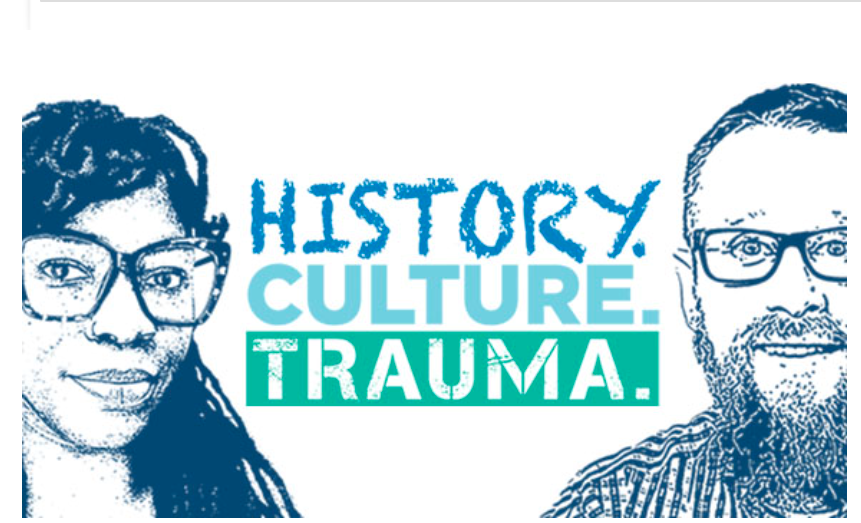
Elaine Miller-Karas shares worldwide resiliency efforts and more on PACEs Connection podcast — History. Culture. Trauma. — March 23!

Carey Sipp Carey Sipp 3/21/231:34 PM

In consideration of Women’s History month, the History. Culture. Trauma. podcasts for entire month of March are dedicated to the women creating a legacy in the worldwide PACEs movement.

In this episode, co-hosts Ingrid Cockhren, CEO of PACEs Connection, and Mathew Portell, director of education and outreach,  talk with Elaine Miller-Karas, LCSW, an author, lecturer, consultant, radio show host, internationally recognized trauma therapist and social entrepreneur.

Miller-Karas is the co-founder and director of innovation at the Trauma Resource Institute, and founding member of the International Transformational Resilience Coalition.

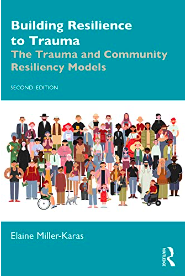
Screen Shot 2023-03-21 at 3.18.29 PMShe is the author of Building Resiliency to Trauma, the Trauma and Community Resiliency Models (2023) – (Note, this is a new edition, released March 14, 2023.)

As her biography states, Miller-Karas is committed to bringing accessible and affordable interventions and cultivating individual and community well-being—based on neuroscience and the biology of the human nervous system—to communities worldwide.

Her models have been introduced to over 75 countries. She has presented at the Skoll World Forum, Resiliency 2020 and 2021 and the United Nations. Her book was selected by the United Nations and Taylor and Francis’ curated on-line library as one of the innovations helping meet the United Nations Sustainable Development Goals. https://www.taylorfrancis.com/sdgo.

Miller-Karas is a senior consultant to Emory University’s SEE (social, emotional, ethical) Learning program, inspired and launched by His Holiness the Dalai Lama. She also is consults with the and Medgar and Myrlie Evers Foundation to help create a virtual curriculum of the US Civil Rights Movement. Her radio talk show Resiliency Within, Building Resiliency during unprecedented times is on VoiceAmerica.

Listen Live Thursday, March 23 at 1 p.m. PT.

Show Links

Attachments

Hide

Images (1)

Screen Shot 2023-03-21 at 3.18.29 PM: The Trauma and Community Resiliency Models - Second Edition 2023

Carey Smith Sipp

carey.pacescommunites@gmail.com

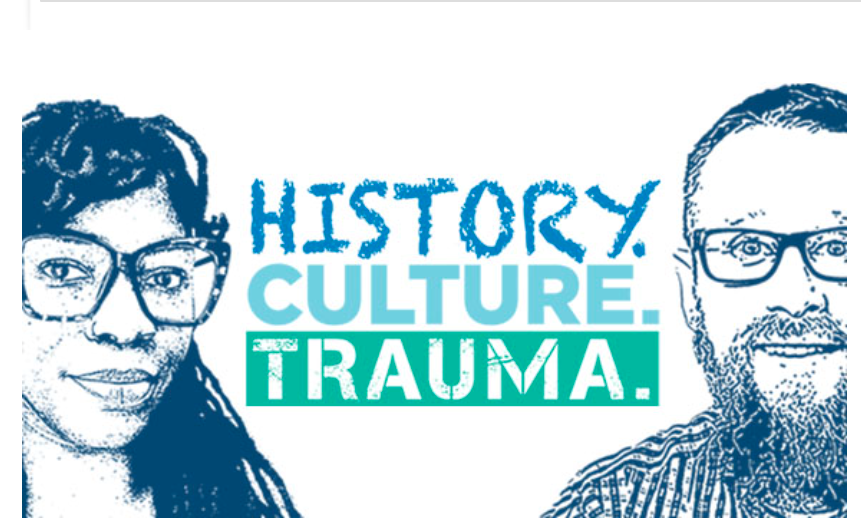
Women of the PACEs Movement: Janet Pozmantier, author, therapist and early childhood development expert on teaching children parenting skills on Thursday’s History. Culture. Trauma. podcast.

Carey Sipp Carey Sipp 3/28/232:31 PM

Should we teach children parenting skills?

Janet Pozmantier, a licensed professional counselor, marriage and family therapist, play therapist, award-winning author, curriculum developer, trainer, and child advocate specializing in primary prevention programming, believes we should.

Screen Shot 2023-03-28 at 4.30.06 PM

In this last episode honoring Women’s History Month, we will explore the importance of teaching children about their own development and positive discipline techniques that might prepare them to be mentally healthy future parents. The hope for this teaching is to diminish the risk of children  passing on dysfunctional or abusive parenting techniques that may have been used in their homes.

Pozmantier, who has created and successfully implemented child abuse prevention, relationship, parenting, mental health, trauma, and youth suicide prevention education curricula for children, youth, and adults is the co-author of a book on early childhood development (The First Years, DK Publishing, 2001).

She was instrumental in establishing several children’s advocacy organizations in Houston and served as the founding director of the Center for School Behavioral Health at Mental Health America of Greater Houston.

Pozmantier has spoken at local, state, and national conferences and specializes in “hands-on,” interactive presentations.

She is a recipient of the Unsung Hero Award from Children at Risk, the Distinguished Service Award from ChildBuilders, and the Trainer of the Year Award from Texas Association for the Education of Young Children.

Pozmantier is also a certified Mental Health First Aid Trainer (Youth and Adult), a certified Training Specialist for Mind Matters, and an American Leadership Forum Senior Fellow. As a consultant, she provides strategic planning, board and staff development, specialized trainings, and other services for non-profit organizations.

Tune in here on Thursday at 1 p.m. PT; 4 p.m. ET.

Or find the History. Culture. Trauma. podcast on your favorite podcast source.

Attachments

Hide

Images (1)

Screen Shot 2023-03-28 at 4.30.06 PM

Carey Smith Sipp

carey.pacescommunites@gmail.com

The True Link Between Early Trauma and Adult Mental Health [psychologytoday.com]

Carey Sipp Carey Sipp 4/3/231:00 PM

By David Rettew, Psychology Today, February 22, 2023


The last decade of the 1990s was often labeled the “Decade of the Brain,” as many mental health clinicians and researchers emphasized biological and genetic factors as contributing to both mental health and illness. Over the last 15 or so years however, the pendulum has swung the other way, with a lot of focus on the role of traumatic and adverse experiences as the primary contributors to mental health disorders. Included in the expanded definition of adverse experiences are societal factors, often called social determinants of health, that include things such as poverty, racism, and lack of access to safe and healthy environments.

And as occurs routinely these days, the discussion about the causes underlying mental health problems has become infused with politics, which tends to lead to a more polarized debate. While there are always exceptions, the political left is often credited or blamed for pushing this concentration on the negative impacts of trauma.

The introduction of the trauma-informed care (TIC) model has brought with it not only changes in clinical understanding and treatment but also the need to alter our language and institutional practices in an effort to be more “trauma-informed.” This effort has met with some pushback, often from right-leaning individuals who complain that the definition of trauma has been watered down from its original intentions. Many of these folks also grumble about any insistence to be more sensitive in their language as part of the larger rebellion against “wokeness.”

[Please click here to read more.]

Carey Smith Sipp

carey.pacescommunites@gmail.com

Our first few years as a child can determine the rest of our lives [theguardian.com]

Carey Sipp Carey Sipp 4/6/231:00 PM

By Beverley Barnett-Jones, Photo: Janine Wiedel Photolibrary/Alamy/Guardian Design, The Guardian, April 3, 2023

During pregnancy and then from birth to five years old, the critical foundations for our adult lives are built. Early childhood is the period when we are learning to understand that we have our own thoughts and feelings, and that others do too. This stage in life helps us to build the scaffolding for our future adult wellbeing.

To grow well and to be able to cope with the inevitable challenges life throws at us, we are reliant on this capacity being maximised during those early years. It is of benefit not just on an individual level, but also for our roles within our family, our community and indeed our whole society.

In adolescence, there is another period of significant development and rapid growth – and it is then that the emotional and social scaffolding already in place is really tested. I know from my work with vulnerable young people and adults that in adolescence a tremendous amount of positive change can happen, as the brain is, as the experts say, “plastic”, with the potential to reshape and change through the experience of relational connections.

[Please click here to read more.]

Carey Smith Sipp

carey.pacescommunites@gmail.com

America’s decline in life expectancy speaks volumes about our problems [latimes.com]

Carey Sipp Carey Sipp 4/10/233:30 PM

By Michael Hiltzik, Image: From article, Los Angeles Times, April 5, 2023

Years of widening economic inequality, compounded by the pandemic and political storm and stress, have given Americans the impression that the country is on the wrong track. Now there’s empirical data to show just how far the country has run off the rails: Life expectancies have been falling.

The Centers for Disease Control and Prevention reported last year that life expectancy at birth fell in 2021 to its lowest level since 1996, a decline of nearly a year on average from 2020. That was after a decline by 1.8 years from 2019 to 2020, producing the worst two-year decline since 1921-23.

These figures open a window on a set of pathologies unique to America among developed countries.

[Please click here to read more.]

Carey Smith Sipp

carey.pacescommunites@gmail.com

Views: 297

Add Comment

“Please help this AMAZING resource stay strong!” Spotlight on Our Monthly Donors: Meet Kerrie Ackerson

Carey Sipp Carey Sipp 4/11/2312:45 PM

“These are some of my favorite people and me at from a recent conference,” said PACEs Connection monthly donor Kerrie Ackerson. From left to right—Ginger Healy from the Attachment Trauma Network,  Kerrie’s sister “my (little) big sister Stacey (our family’s brave teacher)”,  trauma informed educators and advocates Jim Sporleder, Lara Kain, Jodi Place, and Ackerson.

The number of donors giving to PACEs Connection with a monthly gift is increasing.

“While we’ve added about 15 new monthly donors recently, and we are grateful for them, it would be good to see more of our members — and visitors — supporting our work to prevent and heal trauma,” said Ingrid Cockhren, PACEs Connection CEO.

With more than 58,000 members of this networking community, and with the staff needed to support the site, the communities, the newsletters, our podcasts, webinars, and conferences, Cockhren is asking members to sign on to make a monthly donation.

“If just ten percent of you made an automatic monthly donation of $10, you could help us cover a substantial portion of our budget,” said Cockhren.

Please consider following in the footsteps of supporter Kerrie Ackerson, who shares below her reasons for making a monthly gift to PACEs Connection.

  1. Name: Kerrie Ackerson
  2. Occupation: Writer
  3. Connection to PACEs Connection/PACEs science? Survivor, foster mom, adoptive momauntie, wife of a nurse who survived COVID.
  4. Do you work in the field? My career started as a literacy volunteer in an institution for adults who committed violent crimes and were found “not guilty by reason of mental disease or defect.” From there I worked at a maximum-security prison for adults who were too violent and/or actively psychotic to be placed in a “normal” prison. Later I worked in county human services and ran the juvenile court division including a shelter facility, a secure detention center, youth probation offices, and a diversion program. My most recent 12 years were spent at an educational service agency in Wisconsin working in the areas of youth mental health and school safety.
  5. How did you find out about PACEs Connection? One day I got an email inviting me to a webinar that was being done by a woman named Lara Kain from Los Angeles. SHE BLEW MY MIND with PACES science. I was telling my sister about this fabulous woman, and she said –“That’s funny, I used to work with someone with that same name in Madison.” It was the same person! Crazy, small, world.  We both have followed Lara ever since (including following her during her time at PACES Connection).
  6. Were you surprised to find this resource? Yes. The best contacts I have ever met are all followers of PACES, and I was shocked to find such a wonderful source of important information AND such fabulous humans all in one place.
  7. What part of PACEs Connection do you like best? I like it all. I’ve benefitted from Ingrid’s regional historical perspectives on racial trauma, Mathew’s podcasts, countless webinars, blog posts, and now every time I get my weekly PACES email I end up losing a LOT of time reading the stories and “clicking deeper.”
  8. How do you use PACEs Connection? There is so much valuable information, research, resources and more that PACES puts out. As a grant writer, reading the weekly RoundUp keeps me at the front of the field and keeps information at my fingertips.
  9. Do you read the Weekly RoundUp (enewsletter)?Yes.
  10. Do you share stories from the Weekly RoundUp? Yes.
  11. Do you belong to a resiliency initiative? I do not. I help to run a Trauma Training Project for school professionals across Wisconsin in partnership with Dr. Bruce Perry’s Neurosequential Network, and I find that quite energizing. But I don’t belong to a formal resiliency initiative…unless you count my 16 person “Trauma Peeps” text group which provides a safe haven where we can say things that could get us in trouble if we yelled them out into the universe. 😊
  12. What prompted you to support PACEs Connection with your gift?The incredible value that I get from PACES made me a supporter. When I heard the initiative was truly self-funded and needed support, I wanted to do what I could.
  13. What keeps you giving as a monthly donor? The value of the content and the people.
  14. What would you tell others, to encourage them to support PACEs Connection on a monthly basis? Please help this AMAZING resource stay strong. If you aren’t involved, get involved, it is life-changing.

15. What is your greatest hope for what happens with PACEs science? That we end child abuse? Create equity? Eliminate racism? Do away with poverty?  Create a trauma-informed and healing-centered planet? Gosh, I’d like it if ANY of those things could happen. As I now know (thanks to PACES) all of those things are intricately connected. If I could wish one thing for all humans, it would be true connection. As I just heard Dr. Perry say the other day on a podcast, “Connection is at the core of all human success, and all human need—to be connected and belong to a community of people.” We are in a pandemic of loneliness and disconnection, and the state of our world reflects that. PACES works every day to change that, and I am so appreciative of the work you all do.

Ackerson encourages fellow members of PACEs Connection to join her in making a generous, tax-deductible donation to PACEs Connection here.

mail iconIf you’d prefer to mail your gift rather than give it online, here’s how…

Make check payable to:
TSNE (Third Sector New England, our fiscal sponsor) and write PACEs Connection Donation on the memo line.

Mail check to:
PACEs Connection, c/o TSNE, 89 South Street, Suite 700, Boston, MA 02111

information iconMaking a wire transfer or need Tax ID information?

Please contact Carey Sipp, Director of Strategic Partnerships, at csipp@pacesconnection.com

Carey Smith Sipp

carey.pacescommunites@gmail
FSU center director wins Lawton Chiles Advocacy Award for work supporting children (news.fsu.edu/news/university-news)


Carey Sipp Carey Sipp 4/12/2311:39 PM
 

Stanley Lynch, chief medical officer of United Healthcare Community Plan, Mimi Graham, director of the Center for Prevention and Early Intervention Policy, Jim Clark, provost and executive vice president for Academic Affairs at Florida State University.
BY: MARK BLACKWELL THOMAS | PUBLISHED:  |
Mimi Graham, director of the Center for Prevention and Early Intervention Policy (CPEIP) at Florida State University, is the winner of the 2023 Lawton Chiles Advocacy Award.
Through 34 years at FSU, Graham’s work has aimed to improve the health of children, particularly from conception through the first 1,000 days of life.
“Mimi Graham has been an extraordinary advocate for children throughout her entire career,” said Vice President for Research Stacey Patterson. “Her research and advocacy have effectively addressed some of society’s most challenging issues related to infants, young children and teens. This award is a deserving recognition of her work, which she never sees as complete.”
Former Florida Governor Lawton Chiles started CPEIP to improve maternal and child health outcomes. Graham’s accomplishments there include leading a statewide infant mental health movement helping to build clinical capacity, co-founding the Florida Association for Infant Mental Health in 2000 and infusing infant mental health into programs across the state. That work includes ensuring judges in Florida’s Early Childhood Courts are trauma-educated and better equipped to address the needs of young children.
“I’m so proud to receive this award named after Governor Chiles, whose vision still inspires my work,” Graham said. “Making Florida a better place for kids is something we should all strive for. We know that through investments in trauma-informed systems and early interventions, we can break multi-generational cycles of abuse and set children up to have healthy lives.”
Graham added: “We need to continue to work to ensure that our state prioritizes these investments in children so that every kid has the resources and care they need to succeed.”
Under Graham, CPEIP has embarked upon a multitude of programs and initiatives including the “Partners for a Healthy Baby” home visiting curriculum, which has served over 20 million families and provides research-based guidance to help expectant families have healthy pregnancies.
CPEIP has attracted more than $100 million in grants for FSU since launching in 1992.
For more information, visit the Chiles Advocacy Award.
Carey Smith Sipp
carey.pacescommunites@gmail.com
👍 1

Donor Spotlight: Social Worker Becky Green “Imagine if the systems that shape our lives…were trauma-informed? This is the work that the PACEs Connection does, but only with our support.”

Carey Sipp Carey Sipp 4/13/238:23 AM

Social worker and PACEs Connection supporter Becky Green hiking with her partner, Kerry Toner (l) and good friend Paul Gerlitz (r).

The number of donors giving to PACEs Connection with a monthly gift is increasing.

“While we’ve added about 16 new monthly donors recently, and we are grateful for them, it would be good to see more of our members — and visitors — supporting our work to prevent and heal trauma,” said Ingrid Cockhren, PACEs Connection CEO.

With more than 58,000 members of this networking community, and with the staff needed to support the site, the communities, the newsletters, our podcasts, webinars, and conferences, Cockhren is asking members to sign on right now to make a monthly donation.

“If just ten percent of you made an automatic monthly donation of $10, you could help us cover a substantial portion of our budget,” said Cockhren.

If you would like to be featured as a monthly donor, please send an email to Carey Sipp, director of strategic partnerships, with “Donor Spotlight” in the subject line to answer the 15 questions and let your fellow community members know more about you, how you use PACEs Connection, why you support the work.

Please consider following in the footsteps of social worker and supporter Becky Green, who shares below her reasons for making her monthly gift to PACEs Connection.

  1. Name:Becky Green
  2. Occupation:I’m a social worker by training, my current role is Director of Trauma Informed Care and Integrated Services for an outpatient behavioral health organization called South Shore Guidance Center in Freeport, NY.
  3. Connection to PACEs Connection/PACEs science?I’m a student of PACEs science, I relate to it personally and use PACEs Connection as a key source of information in my work.
  4. Do you work in the field?Yes!  I have the amazing privilege of helping an outpatient behavioral health organization become more trauma-informed, using PACEs science.
  5. How did you find out about PACEs Connection?I stumbled across the ACES study around 10 years ago, and immediately was blown away by the science linking psychological trauma to physical health outcomes. At the time, I was giving trauma-informed care trainings to a variety of audiences, including medical providers and students, and I knew how important it was for those audiences to understand the science. I would often refer folks to the ACES Too High website for more resources, and then discovered PACEs Connection through that resource.
  6. Were you surprised to find this resource?I’ll say yes, simply because it is such a gift that this incredible resource freely exists.
  7. What part of PACEs Connection do you like best?The Resource Center is my go-to.
  8. How do you use PACEs Connection?I use PACEs Connection to stay current on trauma-related research, trainings, content, etc.  I often will visit the Resource Center (my favorite section) when I’m putting together a training or updating our internal trauma-informed care resource directory.
  9. Do you read the Weekly RoundUp?Yes!
  10. Do you share stories from the Weekly RoundUp?Yes, I’ll often forward specific stories or articles from the Weekly RoundUp to our staff.
  11. Do you belong to a resiliency initiative?I joined several of the PACEs Connection communities when I first started in my role (like Books! Educational Videos! Documentaries! and others) but admittedly, am not as active as I would like to be in those spaces.  I’m not a big social media person in general, so I tend to use other aspects of PACEs Connection more.
  12. What prompted you to support PACEs Connection with your monthly gifts?I think PACEs science is so incredibly vital to so many areas, and PACEs Connection does such a good job as reliable clearinghouse of information and connection.
  13. What keeps you giving as a monthly donor? If I can play a small part to support such vital work, I am in.
  14. What would you tell others, to encourage them to support PACEs Connection on a monthly basis? Imagine if we lived in a world where we all truly understood the connections between the adverse experiences we have as children and lives we lead as adults…imagine if we lived in a world where we had adequate resources to support children and their families to prevent or minimize those ACES, and also to support adults in truly healing from them…imagine if the systems that shape our lives (schools, healthcare, social services, etc) were trauma-informed…this is the work that the PACEs Connection does, but only with our support.
  15. What is your greatest hope for what happens with PACEs science? That we end child abuse? Create equity? Eliminate racism? Do away with poverty?  Create a trauma-informed and healing-centered planet?Oof.  That is a hard question, PACEs science has the ability to positively influence so many things wrong with our world.  Yes to all the examples named and a million others.

Green encourages fellow members of PACEs Connection to join her in making a generous, tax-deductible donation to PACEs Connection here.

mail iconIf you’d prefer to mail your gift rather than give it online, here’s how…

Make check payable to:
TSNE (Third Sector New England, our fiscal sponsor) and write PACEs Connection Donation on the memo line.

Mail check to:
PACEs Connection, c/o TSNE, 89 South Street, Suite 700, Boston, MA 02111

information iconMaking a wire transfer or need Tax ID information?

Please contact Carey Sipp, Director of Strategic Partnerships, at csipp@pacesconnection.com

Carey Smith Sipp

carey.pacescommunites@gmail.com