Amidst reports ofincreased stress,mental health problems, absenteeism, depression, anxiety, and suicidality, America’s students are well into the 2023-24 school year. Will schools that have taken a trauma-informed approach to student mental health see their students fare better in the coming year? Does it make a difference to have students in trauma-sensitive schools?
History. Culture. Trauma. podcast hosts Ingrid Cockhren, CEO of PACEs Connection, and Mathew Portell, director of education and outreach, take a look at the importance of trauma-informed or trauma-sensitive schools with Tyisha Noise, D.Ed., episode this Thursday at 1 p.m. PT; 4 p.m. ET.
Together they will dig into the paradigm shifts needed to help students grapple with the stress of the global pandemic, our nation’s racial reckoning, polarized political climate, the increase in school shootings, and more.
“It’s clear that reducing stress in schools is essential for student, staff, and community wellbeing,” said Cockhren. “We’ll delve into many possible solutions, from decreasing class sizes to teaching stress-management techniques that can empower students, and more,” Cockhren added.
Noise is a board member and the chief academic officer of Liberia Forward, a leadership development organization.
An educator from South Central Los Angeles, Noise received her undergraduate degree in urban and regional studies from Cornell University, a master’s degree in clinical psychology from Pepperdine University, and her doctor of education degree in educational leadership from Azusa Pacific University. She also has a master of science in teaching students with disabilities from Pace University.
Noise is the daughter of a teenage mother who says she learned first-hand the value of an education. Although born into poverty and growing up in neighborhoods with gangs and drug abuse all around, school became not just a way for Noise to make her mother proud: it became an adventure and eventually an escape to a new life. Noise’s pursuit of education has taken her across continents from North America to Europe – Italy, France, Greece, UK, the Middle East – Israel and Jordan, Egypt and various islands in the Caribbean.
Tune in here live on Thursday at 1 p.m. PDT; 4 p.m. EDT
According to estimates, up to 70,000 daycare facilities could close, causing three million child care slots to vanish. Credit: Camilla Forte/ The Hechinger Report
by Lisa M. Hamilton September 28, 2023 (Opinion) The Hechinger Report
(Lisa M. Hamilton is the president and chief executive officer of the Annie E. Casey Foundation.)
Millions of working parents will face a child care emergency after pandemic-era federal funding ends Sept. 30, just two days from now.
Whether you are one of the affected parents or not, you will feel the impact on our nation’s workforce and economy.
According to estimates, up to 70,000 daycare facilities could close, causing three million child care slots to vanish. This is a loss of educational opportunity for children, but also a devastating loss of support for millions of working parents who may have to leave their jobs.
All of us will surely feel the resulting blow to our economy if a projected $9 billion-plus in earnings is lost.
Sadly, this is just the latest failure in a child care system that has been broken for decades.
As The Casey Foundation recently highlighted in our 2023 KIDS COUNT®Data Book, shortcomings of the child care system already cost the country $122 billion a year in lost wages, tax revenue and productivity.
We cannot allow these cascading consequences to continue.
Every other country with an economy comparable to ours has created a sustainable system that better meets the needs of families, employers and child care workers.
It’s time for policymakers to explore immediate solutions. We know they exist: Every other country with an economy comparable to ours has created a sustainable system that better meets the needs of families, employers and child care workers.
Moreover, we already have evidence in our own economy of what can work. For example, home-based providers are more likely to operate during non-traditional hours, when shift workers, single parents and student parents need them. One thing we can do right away is to increase access to affordable startup and expansion capital for new and existing home-based centers.
A robust, reliable care system requires investment. Average public spending on child care among the comparatively wealthy Organization for Economic Cooperation and Development (OECD) nations is $16,000 a year per child.
The United States invests a mere $500 per child. How can we invest so little in our future workforce? In the leaders of tomorrow?
Families are working hard to meet their needs but costs continue to rise, putting quality care beyond their reach. Child care costs in the U.S. averaged $10,600 a year in 2021, according to an analysis by the advocacy organization Child Care Aware. That’s 10 percent of a couple’s average income — or 35 percent of a single parent’s income.
In at least 34 states, care for the youngest children is more expensive than in-state college tuition.
What support does exist for families is difficult to get and insufficient. As a result, only one out of every six U.S. children eligible for public subsidies receives them.
Women, single parents, parents in poverty, families of color and immigrant families carry the heaviest burden of this crisis: An analysis of 2017 data indicated center-based care for two children absorbed 26 percent of a white working mother’s median household income. For Latino, American Indian or Alaska Native, and Black working mothers, those figures were 42 percent, 51 percent and 56 percent, respectively.
These figures demonstrate how the cost of care can make it almost impossible for a household to meet other basic needs like housing, food and transportation — which all continue to escalate in cost.
In spite of this, providers themselves, almost all women and disproportionately women of color, are barely staying afloat, operating on one percent margins.
No wonder so many are expected to close their doors starting next month.
In August, more than 1,500 state lawmakers from across the country gathered in Indianapolis for the annual National Conference of State Legislatures summit.
We heard Republicans and Democrats agree that something must be done to address the child care crisis.
They know the fallout will keep us from moving forward, from filling jobs and from ensuring that children are safe and thriving while their parents are working or completing their own education.
It’s time to channel that consensus into urgent action and real solutions.
This is a time for creativity and thinking big among both the private and public sector. The Casey Foundation urges lawmakers to invest in the child care sector, starting with these steps:
Congress should reauthorize and strengthen the Child Care and Development Block Grant Act. The main reason we didn’t lose 75,000 child care centers and 3 million slots during the pandemic was the $40 billion allocated to strengthen the child care sector in the American Rescue Plan Act. We now have evidence that these investments work.
Public and private leaders should work together specifically to improve infrastructure for home-based child care providers. Start by increasing access to affordable startup and expansion capital.
Governors and legislators should encourage the higher education and business communities to take steps such as co-locating child care at work and learning sites to reduce transportation challenges.
The underpinnings of our families and our economy are too important for our elected officials to continue to ignore what is happening. The pandemic sharpened our understanding of the issues. There are good models to follow.
Now is the moment for generational action to ensure children, parents and guardians, providers and employers are never again standing at the edge of a cliff, looking for a bridge to safety, and wondering whose kids will make it to the other side and whose will be left behind.
This story about the child care funding cliff was produced byThe Hechinger Report, a nonprofit, independent news organization focused on inequality and innovation in education. Sign up for theHechinger newsletter.
Christina Bethell, Ph.D, MBA, MPH, founder of the Child and Adolescent Health Measurement Initiative (CAHMI), principal author of the groundbreaking study on positive childhood experiences, and creator of the free Well Visit Planner, among other innovations.
Two internationally-respected leaders and innovators in complementary aspects of early relational health and childhood and maternal health equity recently launched a partnership they believe will benefit everyone from newborn babies and the mothers, fathers, grandparents, adoptive, kinship, foster parents and other primary caregivers who care for them, to pediatricians providing recommended well child visits, and communities focused on trauma prevention and resiliency building.
Christina Bethell, PhD, MBA, MPH, and founder of the Child and Adolescent Health Measurement Initiative (CHAMI) and the EnACT! (Engagement in Action Framework) is cross-promoting her free Well Visit Planner, a web-based application to help families and physicians be better prepared for recommended well child visits, with Deborah McNelis, M. Ed, author and founder of “The First 60 Days” booklet and movement.
Bethell is also the principal author of a study on positive childhood experiences (PCEs) and their impact on preventing adult mental illness that led to the name change of ACEs Connection to PACEs Connection — for positive and adverse childhood experiences — in March of 2021.
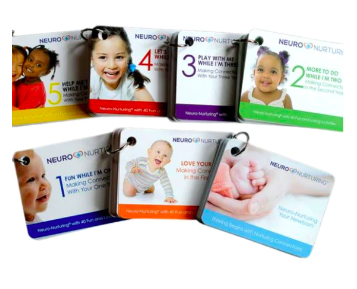
McNelis is the founder of Brain Insights and creator of the Neuro-Nurturing® series of ringed booklets sharing age-appropriate activities paired with brain development insights for caregivers to use in everyday life with babies and children. These activities increase the likelihood of secure attachment and a foundation of early relational and physical health.
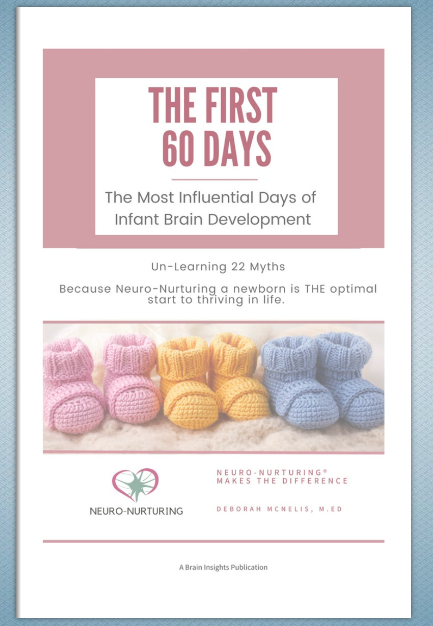
McNelis is also the author of a groundbreaking booklet, “The First 60 Days” (link is to a 12-page sample). The booklet and a movement she has started by the same name, are her heartfelt response to groundbreaking research by Dr. Bruce Duncan Perry and colleagues showing the negative developmental impact of toxic stress in the first two months of life, and the importance of practicing what she calls “Neuro-Nurturing®” during this influential time in infant brain development.
The booklet dispels 22 potentially harmful myths to reassure and support new parents. A portion of each myth is told from the newborn’s point of view. Readers also learn what newborns need for establishing a secure attachment and overall optimal development from what McNelis refers to as,Neuro-Nurturing® Knowledge. “It is all based on brain science revealing what babies and their parents/caregivers really need,” McNelis said.
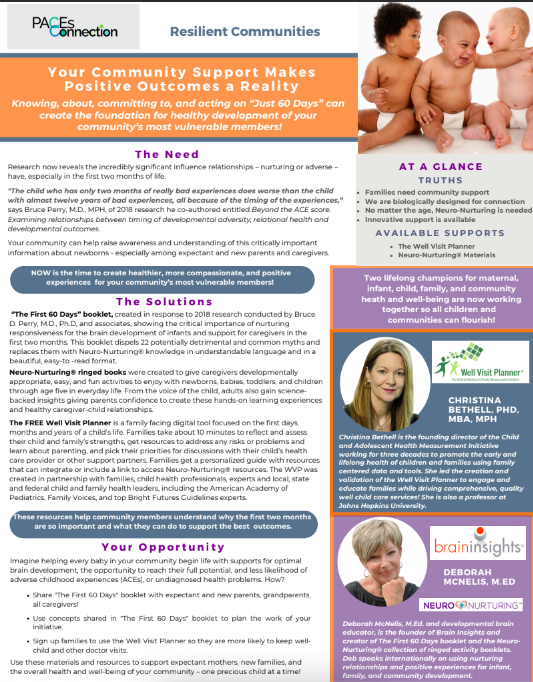
Details of ways the project’s partnership between Bethell and McNelis can benefit newborns, families, caregivers, communities, and PACEs Connection are spelled out in the attached one-sheet that is ready for download and distribution at resiliency initiative meetings across the country.
The sheet shares information about Bethell and McNelis and their work thus far, and was created with support from Dana Brown, PACEs Connection PACEs science statewide facilitator, who is hoping that promoting the work directly to communities will create use of the Well Visit Planner and the Neuro-Nurturing® materials.
“Bethell and McNelis are dedicated to creating positive health equity, including child flourishing and family resilience. This is a terrific fit for any community,” said Brown.
“In California we have PACEs Connection cross-sector, resiliency focused communities in numerous counties. We’re starting out with the members of the PACEs Connection Cooperative of Communities. Our hope is that member organizations in 12 counties in the Cooperatives will share the information with the parents and caregivers for the families they serve, and that hospitals, clinics, and child-serving organizations – including home-visiting nurses – will help promote use of the Well Visit Planner and the Brain Insights materials,” said Brown.
Cross-sector community member organizations belonging to the Coops include schools, communities of faith, health clinics, child-and-family-serving organizations, businesses, hospitals, media representatives, law enforcement, county and city government offices, and more.
The twelve member counties are: Fresno, Los Angeles, Madera, Orange, Riverside, Sacramento, San Bernardino, Santa Barbara, San Diego, Sonoma, Tulare, and Yolo.
“We’ll know we’re succeeding if there is an increase in enrollments in the Well Visit Planner in these areas. This is important because by promoting well child visits, we increase the likelihood of families and physicians establishing a an ongoing relationship. Building on a trusted relationship, together they are more likely to be able to identify a developmental delay, postpartum depression, or consequences of a challenge in the home that can be supported before a challenge becomes a crisis,” said Brown.
“The hope is to continue to braid resources within communities — as they are interested — so there are lists of resources available for the pediatricians and other caregivers to share with families. We want to support parents, care providers, and communities in creating safe, stable, nurturing relationships and environments for every child, and believe these innovations, in combination with more to come, can help to do that,” said Brown.
“This project partnership and the fact that Deb is willing to discount her materials so they can be a potential fundraiser for communities, and is sharing with PACEs Connection profits from the sale of her materials — which are promoted on the Well Visit Planner site, which has the potential to reach millions of parents — bodes well for all involved,” said Brown.
According to McNelis, the ringed books are literally positive infant and childhood experiences parents and childcare providers alike can keep in their pockets and use throughout the day to engage little ones in activities that nurture optimal brain development. Across the series of books, there are scores of activities to stimulate fine and large motor development, language skills, thinking abilities, creativity, curiosity, self-awareness, and most importantly, connection with others.
State and child serving organizations have bought thousands of sets of the ringed books for parents in various programs.
“The First 60 Days” booklet and the ringed Neuro-Nurturing® series from newborn through age five, are available for bulk and individual purchase. Organizations seeking to customize the materials can opt to have their logo printed on the back cover, and can resell the materials at the retail price for fundraisers, in hospital and faith community gift shops, at health fairs and such, as is detailed in the attached one sheet,” said Brown.
“People wishing to access and use the Well Visit Planner with their infants and children need simply click on the link and enroll,” she added.
For more information about joining the PACEs Connection Cooperative of communities in California, reach out to Dana Brown at dbrown@pacesconnection.com. For Coop information the U.S. and territories, contact Mathew Portell, director of education and outreach, at mportell@pacesconnection.com.
Pilot is for DEIB professional development with Yolo County, California, Division of Health and Human Services
As the first phase of PACEs Connection’s consulting engagement with Yolo County, California, draws to a close, CEO Ingrid Cockhren is announcing the launch of the organization’s Sustaining Resilient Communities (SRC) initiative, expanding services to include consulting and professional development for counties, cities, corporations, and government agencies.
“We’ve branched into a new area in supporting and sustaining communities by developing and leading a series of trainings for the Yolo County Health and Human Services staff. The work began in December 2022, to facilitate awareness building, capacity development, and operationalization of racial equity, diversity, inclusion, and belonging (DEIB), and trauma-informed principles in the workplace,” said Cockhren.
“We hoped to increase understanding of core DEIB and trauma-informed principles and to see a demonstrated commitment from staff to racial equity, DEIB, and trauma-informed practices. I’ve done this work for several years, in other roles, and it is good to offer it through PACEs Connection now, as we have the capability and experience. It fits in our overall strategy not only to serve our members in ways they’ve said they need help but in our efforts to expand the awareness beyond community organizations to state agencies, corporations, and other entities to support our goal of this being a worldwide movement. ” she added.
Yolo County’s lead contact for the work, Tessa Smith, diversity, equity, and inclusion coordinator for the Health and Human Services Agency, would agree that the work is being achieved.
“We’re working with 760 employees in this training. Some of them may be in the managerial track, and some of them may be in the general track. Success here will look like better leadership-to-staff relationships, better colleague-to-colleague relationships, better service and service outcomes, or treatment outcomes for the people we serve. From a trauma-informed approach we are learning not to assume or judge another person’s stories or experience by the chapter of their story we came in on,” said Smith.
The work has included a leadership track to help leadership identify and practice effective ways to talk about racial equity as well as intersectionality and privilege. PACEs staff also helped Yolo leadership learn about the role of trauma on the nervous system and practices and policies to help create a trauma-responsive workplace, and how to support racial equity practices come alive in the work across teams.
“Our hope was that we would generate empathy for each of us, in our own humanity, and then work a different way in a different way, stay in service to each other and the community. These ideas used to be only for behavioral health, but now it’s for everybody, the whole agency, and for anybody that does any business with us, that we have a shared language, a shared vision and shared goals,” said Smith.
She said it was important that the groups address communications issues that come from lack of knowledge and lack of understanding about “how we intersect as people, and about what should be everybody’s basic human rights.
“Any group has got its own history of trauma that they bring. When we start talking about history, we knew it could be hard with leadership. That history was 400 years in the making, and people today need to understand this. So the historical trauma training for leadership was important,” said Smith.
“If anybody can talk about a hard subject and not have people running from the room screaming, it will be Ingrid (Cockhren) and Mathew (Portell, PACEs Connection director of education and outreach). We have plans to reinforce this training, because people need to hear things over and over again. So this needed to NOT be a ‘one and done training.’ We worked it out so that people would have a piece of this training every month, to keep it constantly in their thought processes,” Smith explained.
Smith says doing this training can be delicate work sometimes.
“It takes someone who has an understanding of what that feels like in a person’s body, mind and spirit, and that’s what you get from Paces Connection. You get that actual linkage back to somebody who can speak to the humanity of all of this, and that kept the conversations on the rails,” she said.
Smith also shared the challenges of this initiative.
“This is really hard work. Facing history and ourselves can be jarring. I think organizations need to be prepared for the sensitivities of their staff because all staff are on a spectrum of what it means to be trauma- and DEIB-informed with some being prepared to do the work and some being pulled along reluctantly into the present and future,” Smith said.
“So our approach in our agency right now is that we have got to take care of ourselves in order to be able to give the best service to our clients and the people that we serve. That means being an inclusive space where everybody feels like they belong, where we appreciate diversity. And the way people show up is as a healthy and good team that’s being trauma informed,” she said.
Among other benefits of doing the work?
Smith says, “It’s helped us in recruiting. People hear we are doing this work and they are much more interested in wanting to work with us.”
The work has also included multiple sessions on trauma-informed care and psychological safety in the workforce, becoming anti-biased and culturally responsive, and exploring the historical trauma specific to Yolo County and surrounding areas.
PACEs Connection is also providing training videos on a number of topics including health, mental health, child welfare, education, criminal justice and other social determinants of health, the historical trauma of the region with regard to LGBTQI+, migrant workers, Native American peoples, immigrants, and refugees, and the Substance Abuse and Mental Health Services Administration (SAMSHA) trauma-informed principles and practices.
“How to Handle with Care”, a new book by author Wendy Samford, PhD, is step-by-step instruction manual to create — in your community — a best practice that can help end the racially-motivated school-to-prison pipeline one child at a time, and quickly!
How?
By addressing the trauma of each child individually, with a cross-sector approach to supporting hurting children that has law enforcement working with educators all across the United States. (www.handlewithcarewv.org)
Simply put, if law enforcement comes into contact with a child in the course of duty, the name of the child and the words “Handle With Care” will be sent to the child’s school.
This simple message lets trauma-informed school personnel know that something happened to that child and to treat them with kindness.
“If additional services are needed for the child, the family is then informed and bridges are built from law enforcement to schools, and schools to community service agencies,” said Samford.
If administrators, faculty, and staff in the school know a child has had a hard night, they can help protect the child from added stresses the next day. For example, instead of having a child who was up in the middle of the night take a test, give an oral book report, or run the risk of acting out emotionally and getting in trouble for it, the child can be led to a quiet corner to rest.
Samford’s fast-read guide will show communities starved for ways to stop systemic trauma in education and juvenile law exactly what to do. Best of all, it’s in a book you can read in an afternoon, and follow step-by-step.
Already across the country, there are at least five states that are actively using the program, and it is in development in many more states and counties, and there is active interest in the program in almost every state.
For the full report, find the book on Amazon, Barnes & Noble, or any major book retailer.
For more information about the book, please contact Wendy Samford at www.wsamford.com
For more information about the Handle With Care program, contact Andrea Darr at adarr@jbsinternational.com.
A movement to motivate the incoming administration to proclaim the next 10 years as the DECADE OF THE CHILD is being led and launched by the National Prevention Science Coalition to Improve Lives, (NPSC) with support from PACEs Connection and a growing list of research, public, behavioral, and mental health-oriented organizations, as well as nonprofits supporting child advocacy, policy, and social justice.
“Our nation is failing its children. Despite our economic power, millions of children in the United States face grim realities. We need an unprecedented mobilization—a comprehensive, coordinated strategy to prioritize the health and well-being of every child in America, said Diana Fishbein, PhD, founder, president, and co-director of NPSC, in announcing news of the movement.
“We will seek congressional support for both policy change and dollars to be allocated to the National Institute for Health (NIH) for whole child health and wellbeing research, and are launching the movement to unite people, organizations, and agencies to mobilize an unprecedented national movement. We are working to end the deficiencies and disparities in child health and wellbeing, and envision future generations of happy, healthy, and productive children and adults” said Fishbein.
A general description of the initiative can be found on the NPSC website. NPSC intends to invoke the same process used to proclaim the Decade of the Brain in the 1990s.
“We would like to be able to document widespread support for creating this movement. Your organizational and individual endorsement could make a critical difference. Our list of supportive organizations, foundations, societies, and individuals is rapidly growing, which is a heartening sign. We would love to see as many of the almost 61,000 individual members of PACEs Connection sign on as possible,” said Fishbein.
“Our hope is that you will indicate your individual support and possibly also that of your organization for the Decade of the Child on our website. We are not asking for money; we just want to marshal the power of organizations, institutions, foundations, communities, and individuals to spread the word about the value of this initiative, so please repost this PACEs Connection story using the social media icons below the post” Fishbein said.
Organizations may also customize a request for individual members to endorse the movement by using materials on the NPSC site. They may also send out a more generic request if desired.
“It is past time for the ‘Decade of the Child’ as too many of our children are suffering. We need all people concerned about the health and wellbeing of our nation’s children to be involved in bringing others on board to help,” said Fishbein.
Organizational endorsements will be updated frequently on the NPSC website. They are, as of October 23, 2024
Pacific Institute for Research and Evaluation (PIRE)
Applied Prevention Science International
Integrated Care for Kids/InCK Marks Network
HEDCO Institute for Evidence-Based Educational Practice
Association for Positive Behavior Support (APBS)
itotheN | Intergenerational Impact
Positive Childhood Alliance North Carolina
Institute for Research and Development “Utrip”
Partnership to End Addiction
Blueprints for Healthy Youth Development
Campaign for Trauma-Informed Policy & Practice
Center for Whole Health Learning in K-12
Association For Behavior Analysis International
Nova Institute for Health
Global Alliance for Behavioral Health & Social Justice
Please help us save the Resource Center with your tax-deductible gift today, here.
With the December 31, 2024, deadline looming for payment to maintain the PACEs Connection Resource Center, we hope you’ll help protect this invaluable benefit of your free membership and put supporting PACEs Connection at the top of your list.
“There’s not another resource like this,” said Dana Brown, one of two former PACEs Connection employees working as volunteers to keep the site going since it was revitalized in October, after it had been shut down in April 2024, for lack of funding. Please make your tax-deductible gift today, here.
“The Resource Center represents 13 years of collecting and curating peer-reviewed scientific journal articles and reports, videos, presentations, and more,” said Carey Sipp, the second former PACEs Connection staffer working to secure funding necessary to keep PACEs Connection up and running.
“Several years ago we started including ‘Research Corner’ reports edited by our dear friend and supporter Harise Stein, MD, of Stanford University, who sends a monthly report of the most recent articles on the effects of abuse, as well as summaries of the abstracts and links to research articles that address only adverse childhood experiences (ACEs), positive childhood experiences (PCEs) and the science of positive and adverse childhood experiences (PACEs),” said Sipp.
“Saving, in one place, this information about the lifelong effects of positive and adverse childhood experiences—and ways to promote nurturing conditions for children, families, and communities—is too important to leave to chance,” Sipp added.
With encouragement and support from the National Prevention Science Coalition to Improve Lives (NPSC) and PACEs Connection’s former fiscal sponsor, Third Sector New England (TSNE)—as well as from many individual supporters—Brown and Sipp helped re-home PACEs Connection to NPSC in September 2024. NPSC now serves as the fiscal sponsor and governing body for PACEs Connection.
Thank you to each of you who donated to PACEs Connection and supported the successful payment to our learning management system, Crowdstack, by November 11th! Your financial support was appreciated tremendously as we collectively raised the $ 14,778.81 needed to maintain our social networking site.
We need your help to continue raising awareness.
The Resource Center is built on a separate technology platform from PACEs Connection, but is linked to it. The platform, “LibGuides” touts itself as being “librarian-first platform for a digital-first world” and is used by libraries and learning institutions worldwide. The annual fee for maintaining the PACEs Connection Resource Center is $3500, due December 31, 2024, or the Resource Center goes down.
“Thanks to the brilliance of PACEs Connection founder Jane Stevens, we’ve offered all the resources here at PACEs Connection at no charge for the last 13 years, and have made posting blogs about conferences, workshops, and consulting services free on the site since its inception,” said Brown.
“There are now more than 61,000 members of this social networking site. We hope our members – especially business owner members who’ve benefited from the years of free publicity PACEs Connection has provided—will support us during this season of year-end giving,” she added.
You can support PACEs Connection today by making an online donationhere, or mailing a check made out to the National Prevention Science Coalition to Improve Lives – with “PACEs Connection” on the memo line – in care of Dana Brown, 4364 Bonita Road, PMB322, Bonita, CA 91902. To make a wire transfer or other type of gift, please email Carey Sipp at carey.pacescommunities@gmail.com to receive NPSC’s wire transfer or other electronic funds transfer information. No amount is too small!
REGISTER now and plan to join us Friday, January 10, 2025 from 2:00-3:00pm CTResearch on investing in early childhood development shows it to be the most influential, productive, and cost-effective strategy for establishing children on a path to strong self-regulation, well-developed executive function, and lasting resilience that will improve, in countless ways, their lives across the lifespan.”The first three years of development, and especially the first two or three months, are incredibly important for secure attachment and neurodevelopment,” said Bill Barberg, co-creator and lead organizer of a series of webinars on creating a Neuro-Nurturing® Ecosystem in your community.Barberg’s Population Health Learning Collaborative, with initial partners Deborah McNelis of Brain Insights and Carey Sipp of PACEs Connection, is teaming up with a growing coalition to simplify, accelerate, and support the journey of creatingNeuro-Nurturing® Ecosystems to help communities establish lasting connection and ongoing supports for pregnant women and new mothers, caregivers, and families with newborns.The growing number of organizations supporting the webinar series currently includes:NPSC – The National Prevention Science Coalition to Improve LivesPACEs ConnectionCTIPP – The Campaign on Trauma-Informed Policy and PracticeCAHMI – The Child and Adolescent Health Measurement InitiativeDecade of the Child – a national research and policy agenda focused on whole child health and wellbeing.REGISTER now and plan to join us Friday, January 10, 2025 from 2:00-3:00pm CT*This briefing will be recorded and sent to all registrants.Register now to learn ways to co-create and implement powerful upstream strategies to improve the education, health, wealth, and health equity of your community. “We’re presenting a long-term strategy that can be done with many small steps by different organizations, with many of wins along the way,” said Barberg.”Our goal in this series of webinars is to share plans and resources so communities can build on the work of neurodevelopment experts, advocates, and leaders in practices and policies with regard to infants, child welfare, and families. We will help community leaders to take advantage of resources that you can add to this this high-impact approach to improve equity and positive early development outcomes,” Barberg explained.To support this effort to raise awareness of the importance of early relational health, and to learn ways to support early relational and optimal neurodevelopment in your community, please register now, and then please share information about the webinar with your colleagues.Plan to spend an hour on January 10th (or whenever you have time to watch the recording) to learn more about creating a Neuro-Nurturing® Ecosystem in your community.Building community and corporate support can improve the lives of new parents and caregivers, help their infants — your newest citizens — benefit from optimal early brain development, which pays health, mental and emotional health, and other dividends across the lifespan.Barberg says he expects most communities learning about the ecosystem will focus on building awareness and buy-in for the strategy during 2025 so they can be positioned for accelerating and expanding their positive impact with actual programs and events in 2026 and beyond.”The most critically important action we can take for pregnant and new parents and their precious newborns is to learn and share this information in hopes of reducing stress in the lives of new parents, increasing their ability to nurture and create the most brain-healthy start possible for their new baby. Starting this program, creating ways to track impact and scale it, will have terrific lasting impact for infants, parents, educators, and all who’re dedicated to supporting the best outcomes possible,” said Barberg.Here are three social media posts to help you spread the word:LinkedIn PostFacebook PostInstagram Post
This webinar is the first in a series of several webinars that will feature respected experts in early childhood development. Presenters (and collaborators) for the series will include:Christina Bethell, Ph.D., Professor at the Johns Hopkins Bloomberg School of Public Health and Founding Director of the Child and Adolescent Health Measurement Initiative.Diana (“Denni”) Fishbein, Ph.D., Senior Scientist, Franklin Porter Graham Child Development Institute at UNC-Chapel Hill, President & Co-Director of the National Prevention Science Coalition to Improve Lives.George Halvorson, Chair and CEO of the Institute for InterGroup Understanding; former CEO of six different health care delivery and financing organizations in the U.S. including Kaiser Permenente, where he served as chairman and CEO for more than 10 years. Author and child advocate.Deborah McNelis, M.Ed, early brain development expert, creator of the Neuro-Nurturing® model, author of “The First 60 Days” and the Neuro-Nurturing® series of developmentally appropriate ringed activity books loved and in use worldwide.And many more.Register for this first webinar and you’ll be invited to the subsequent ones in the series.
Full disclosure: In case there are questions as to why I’m posting this personal post and then subsequent blog posts from an organization called CHC: Creating Healthier Communities (CHC) and its CEO and president, Jean Accius, PhD., please allow me to explain.
(Fellow volunteers Dana Brown, Rafael Maravilla, and me on a recent Zoom call about revitalizing PACEs Connection.)
In addition to my volunteer role with PACEs Connection alongside fellow volunteers Dana Brown and Rafael Maravilla, I recently accepted a full-time role with Creating Healthier Communities (CHCImpact.org) as the director of nonprofit partnerships.
CHC leadership knows of my volunteer role in revitalizing PACEs Connection. I work Monday – Thursday for CHC; Fridays and some weekends and evenings I’m often in meetings or working with Dana and Rafael on PACEs Connection.
CHC, a nearly 70-year-old organization, helps nonprofits achieve their missions by bringing communities, nonprofits, and businesses together, with the goal of improving the health and wellbeing of every person in every community through collaboration for scalable, sustainable solutions that drive real, lasting change.
(Sound familiar? It reminds me of our hopes for the PACEs Connection cross-sector communities when the organization was founded in 2012, and now, as Dana Brown, Rafael Maravilla, and I work to revitalize it. Just sayin’.)
More about CHC: Creating Healthier Communities
CHC helped found the workplace-giving campaign for federal employees — the Combined Federal Campaign (CFC) — in 1961, and since then has helped raise more than $8.6 billion through the CFC.
We also manage workplace giving campaigns for scores of states across the U.S. and for several hundred corporations.
CHC distributes funds and resources to some 5,000 nonprofits each year, and officially partners with 1,400 state, local, and chapter nonprofit organizations to help them maximize the funds they receive from annual workplace giving campaigns. We leverage seasoned support to help many of the world’s leading nonprofits steward donors (when donors allow contact), maximize positive exposure, and take advantage of volunteering, speaking, and tabling opportunities when possible.
With a focus on health equity, CHC also secures and manages grants for various community-based campaigns such as our Black Birthing Initiative, and another focused on preventing cervical and breast cancer in minorities.
Why does this matter? What’s the connection?
I share this information because it was always a dream at PACEs Connection to help resilient communities secure funds, become sustainable, and grow. We did help some communities achieve those objectives, but we didn’t do it to scale as hoped. The work ground down after layoffs in 2023 and to a halt when PACEs Connection was sunset by its fiscal sponsor in April 2024. Since then, Dana Brown and I have secured a new fiscal sponsor (more on that here, with gratitude to our new fiscal sponsor, National Prevention Science Coalition), and we are committed to moving forward. Supporting PACEs Connection resilient communities is one of our objectives.
Today I am hoping some of you are with resiliency task forces that have grown, have become 501(c)(3) organizations, and would like to know more about how to become a nonprofit partner with CHC, as this could be a way to help some of our communities raise awareness, and raise funds.
If you’re part of a resiliency task force that is a 501(c)(3) organization, I encourage you to explore a partnership with CHC. This could be an easy and low-cost way (there are application fees after the first year; the first year is free) to raise awareness and funds for your community efforts.
Equally as important?
We hope to raise awareness among CHC’s member organizations about the importance of leveraging PACEs science to address overarching challenges, while at the same time creating science-based solutions. PACEs Connection stands ready to continue as a nexus for shared information and opportunities for healthier communities.That has always been a big part of our why.
Opportunities for nonprofit members of PACEs Connection
Here is a link to the CHC website to begin the application process. (Note: final application happens in the third quarter of each year, just prior to the launch of workplace giving campaigns.)
Organizational requirements for partnership include an IRS 990 designation and form; 501(c)(3) status; and a board-approved non-discrimination policy.
Many states and campaigns require an organization to also have a current audit. Please note: this is a “long-game” strategy, as to be included in the 2026 workplace-giving campaigns for funds likely distributed in 2027, organizations must apply in August and September 2025. So again, this is not a quick fix. But one thing is certain: organizations that don’t apply won’t receive funds. So it is worth the time and the free enrollment the first year to see if your organization and its mission resonate with workplace donors.
Too, when donors choose to share their contact information, nonprofits have the opportunity to grow relationships and steward new donors. Fees are based on the number of state campaigns an organization goes into and on the funds raised. My CHC colleague Shelby Speth and I will be happy to talk with you about this. Please email me at csipp@chcimpact.org to set up an appointment.
Introducing Jean Accius, PhD, President and CEO of CHC
It is with these thoughts in mind that I share information about the opportunity for working with CHC, and that I will begin sharing blog posts by CHC CEO and president Jean Accius, PhD.
We are all working toward the same objective: creating healthier communities.
Jean is a thought leader on social determinants of health, public health, health equity, aging, and more. He is a frequent speaker at leading health-related think tanks and on podcasts and webinars. I will post his blogs as well as fact-based information pieces from the CHC website. Among recent posts of interest to nonprofit organizations are:
Coming full circle with CHC — There is a bit of a history!
Again, our hope at PACEs Connection was always to help our cross-sector communities grow — in the number of communities started, the number of members each community engaged, and in the connections that could support the communities in various ways with funding, braided services to prevent and heal trauma, and to promote positive childhood and community experiences, by providing educational opportunities with speakers, webinars, and more.
Our hope endured even as PACEs Connection faced funding challenges and was sunset in 2024. We are here to keep the PACEs science movement alive, and to encourage the growth of our existing interest- and geographic-based communities (more than 450 and counting).
If you have any questions about this, please know my motives are purely to lift up the nonprofit organizations whose members belong to PACEs Connection, and to introduce them to an organization that could help them raise funds through workplace giving, as is the case with many of the nation’s leading nonprofits that work with CHC already, including St. Jude Children’s Research Hospital, The March of Dimes, The Children’s National Hospital Foundation, Doctors Without Borders, and the Alzheimer’s Association.
One quick historical aside: Ironically, several years ago PACEs leadership approached CHC about working together. Apparently, the timing wasn’t right then. My hope is that the stars are aligned now for a terrific partnership with CHC, and with other organizations that can become strategic allies with PACEs Connection. We believe CHC can be a terrific partner as we help PACEs Connection nonprofit members grow and thrive in our work to prevent and heal trauma, and to build healthier communities by emphasizing the preventive and protective value of positive childhood, community, and workplace experiences.
Again, to learn more about partnering with CHC to raise funds via workplace giving campaigns, please email me at csipp@chcimpact.org.
For PACEs Connection-related matters, Dana Brown and I are available at
Please join top researchers and leaders in the movement to create Neuro Nurturing Ecosystems in support of maternal, infant, family and community health TODAY, March 14th, for an information-packed webinar co-sponsored, in part, by PACEs Connection and its fiscal sponsor, the National Prevention Science Coalition.REGISTER now to attend this free webinar, the second in a series that has received scores of five-star reviews.National leaders in early relational health, health equity, and more will share on the importance of Neuro-Nurturing infants to support positive pathways to health and wellbeing and preventing and healing trauma. We will also hear the latest on the Black Birthing Initiative led by Creating Healthier Communities (CHCImpact.org)This webinar shares valuable information on practical strategies for community coalitions to be part of a national (and international) movement that can influence the health and wellbeing of a population of healthier babies across the lifespan.Click to below to learn more about the expert presenters and webinar details.
Compelling research indicates that improvements in infant neurodevelopment and Early Relational Health (ERH) could reduce the need for massive amounts of future spending on healthcare, mental health services, and programs related to poverty or crime.
“Everyone wins when infants are nurtured in the environments and with connections that help them develop self-regulation, executive function, and the precursors to literacy and more advanced learning,”said Bill Barberg, longtime international public health consultant and lead coordinator of the series.“This webinar will share insights from top researchers and strategists about practical actions we can take to help individuals, neighborhoods, and communities adopt a wide range of Neuro-Nurturing practices and supports. “Now is the time to put the science we’ve learned into practice at the scale we need to improve the wellbeing of today’s infants and the future’s adults,” said Barberg.”Communities supporting pregnant women and new parents and caregivers in these natural, loving practices can help create entire populations of babies whose brains are nurtured for optimal health and development across the lifespan,” Barberg added.
Friday, March 14th, 2025 | 3:00 PM – 4:00 PM Eastern TimeREGISTER*This briefing will be recorded and sent to all registrants.**While it is not necessary to view the first webinar in the series to get the value from this second webinar, we encourage you toview the recording from January 10th.
 Carey Sipp 9/19/232:17 PM
 “It’s clear that reducing stress in schools is essential for student, staff, and community wellbeing,” said Cockhren. “We’ll delve into many possible solutions, from decreasing class sizes to teaching stress-management techniques that can empower students, and more,” Cockhren added.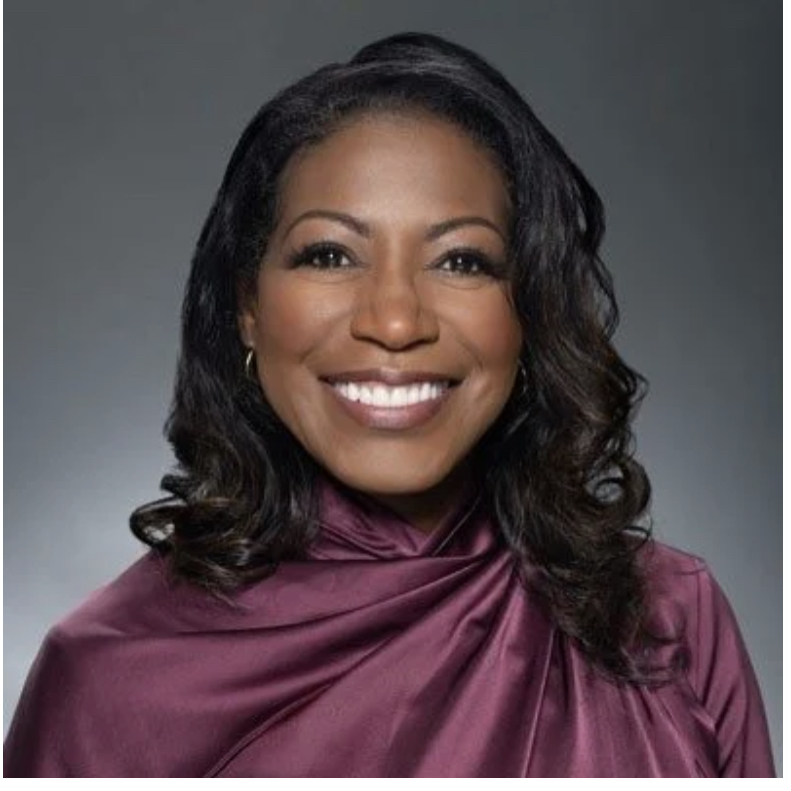




 “We’ve branched into a new area in supporting and sustaining communities by developing and leading a series of trainings for the Yolo County Health and Human Services staff. The work began in December 2022, to facilitate awareness building, capacity development, and operationalization of racial equity, diversity, inclusion, and belonging (DEIB), and trauma-informed principles in the workplace,” said Cockhren.





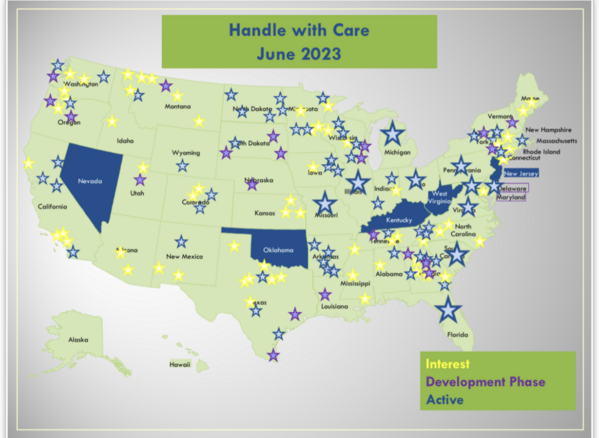 Already across the country, there are at least five states that are actively using the program, and it is in development in many more states and counties, and there is active interest in the program in almost every state.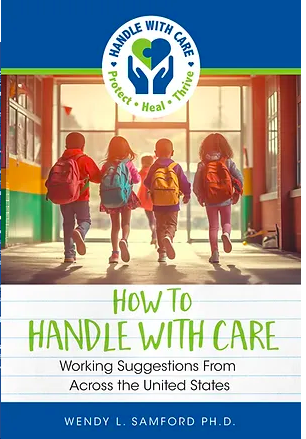


 CHC, a nearly 70-year-old organization, helps nonprofits achieve their missions by bringing communities, nonprofits, and businesses together, with the goal of improving the health and wellbeing of every person in every community through collaboration for scalable, sustainable solutions that drive real, lasting change.


