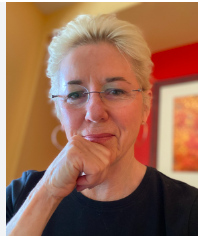
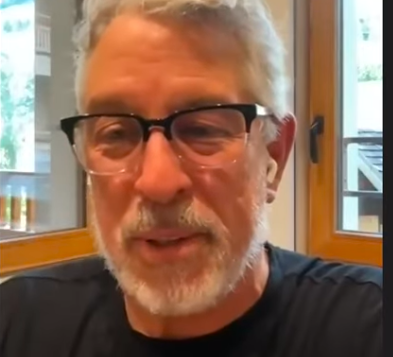
Note: PACEs Connection is in dire financial straits. We are asking for support, from you, our57,586 members, to help cover the loss of foundation funding that was promised and didnot come through. Pay and hours have been cut for our staff—most of us will be laid off for the month ofDecember. Another grant will pick up in January, but we will still be underfunded. Since sounding the alarm this summer,we’ve raisedabout $26,000. Thankfully, about 25% of new donors are making monthly donations. To geta sense of who your fellow members are, who is donating and why, please enjoy and share this thirdpost in a series of donor profiles, and be likeJeoff Gordon:Pleasemake a generous donationto PACEs Connection!
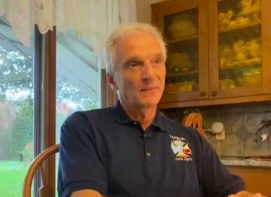
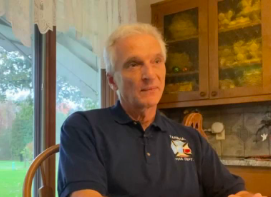
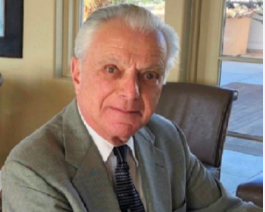
Dr. Jeoffry Gordon learned about the CDC-Kaiser Permanente Adverse Childhood Experiences Study when he attended a talk in 2003 by the study’s co-principle investigator, Dr. Vincent Felliti.
“But I had no understanding of the terrible consequences of child abuse trauma until 15 years later when I started seeing patients in a clinic for the homeless, where it was a common condition,” says Gordon, a retired family physician and PACEs Connection supporter and activist.
Gordon, who practiced family medicine for 40 years in San Diego, California, attended some of the most elite schools in the nation: Harvard College, Case Western Reserve University School of Medicine, Harvard Medical Service at Boston City Hospital for his medical internship, and Tulane University for a master’s of public health.
“…a tragic, soul-searing experience…”
“I was always up to date in cardiology, endocrinology, neurology, etc.,” he says, “but never heard the phrase ‘trauma-informed care’ until the last year I saw patients, in 2019. It was then I started connecting the effects of child abuse, neglect and trauma. I saw what can be a tragic, soul-searing experience, affecting physical health, mental health, and social capacity.”
Does he wish he’d known about the connection to childhood adversity and health outcomes earlier? Does he wish there had been the information and a resource such as PACEs Connection when he was practicing family medicine?
“Absolutely,” he says. “Although I certainly ‘knew’ about child abuse and ACEs, my lack of clinical appreciation and insight must have frequently led to inadequate evaluation and treatment of many patients with both psychological and physical illnesses. I learned this several years after I retired when a former patient contacted me for records to support his disability application. I had administered an ACEs questionnaire to him and he had a high score, but I had treated him like any other patient with anxiety and depression with ineffective meds and never applied PACES science.”
The relationship between inequity, racism, and trauma.
Active in social justice issues for decades, Gordon has a keen sense of the relationship between inequity, racism, and trauma. “I got involved in child abuse mitigation and prevention because I felt in this space I could relieve some of the worst and most anguishing pain in our society,” he says.
Gordon would know. He has been an outspoken member of the California Citizens Review Panel on Critical Incidents (child abuse homicides) for three years, posting multiple times on PACEs Connection in support of this work and legislation to support it.
“I think it is an obligation, and more than a privilege, to support PACEs Connection during this period of financial stress.”
“PACEs Connection has made an amazing national contribution to dealing with ACEs,” he explains, “connecting survivors to survivors, connecting therapists to therapists, connecting survivors to therapists, promoting medical and counseling education, catalyzing many community-based intervention programs, and sponsoring many educational sessions. I think it is an obligation, and more than a privilege, to support PACEs Connection during this period of financial stress.”
Gordon considers himself to be an unaffiliated, freelance community advocate and activist trying to remediate years of disregard and public avoidance of the tragedies of child abuse and neglect.
Expanding the appreciation of the epidemic of child abuse; recommending that friends become involved in PACEs Connection.
“I am working to expand the appreciation of the epidemic of child abuse and child abuse trauma especially within the medical professions, especially psychiatry,” he points out, “and promoting the application of PACEs knowledge throughout all medical specialties. I also work on expanding resources devoted to this problem at all levels of government. I am especially concerned and active trying to repair the inattention and chaos in California around the tragic issue of child homicides due to abuse or neglect.”
When it comes to recommending that friends and colleagues become involved in PACEs Connection, Gordon says: “I think every researcher and professional providing therapy to people who have experienced maltreatment, people who are traumatized, does not do an adequate job if they are not also working to bring attention, in the public square, to the ongoing tragedies generated by childhood trauma.”
Gordon encourages fellow members of PACEs Connection to join hm in making a generous, tax-deductible donation to PACEs Connection here.
If you’d prefer to mail your gift rather than give it online, here’s how…
Make check payable to: TSNE (Third Sector New England, our fiscal sponsor) and write PACEs Connection Donation on the memo line.
Mail check to: PACEs Connection, c/o TSNE, 89 South Street, Suite 700, Boston, MA 02111
Making a wire transfer or need Tax ID information?
Note: PACEs Connection is in dire financial straits. We need you, our 57,651 members, to helpcover the loss of foundation funding that was promised and did not come through. Unfortunately, pay and hours have had to be cut for our staff. Most of uswill be laid-off for the month of December. The good news is that, since sounding the alarm thisSummer,we’ve raised $46,000! Thank you to all who’ve donated. To get a sense of who yourfellow members are, who is donating, and why, please read and share this fourth in a seriesof donor profiles. Now that you know we need your help, please join Peter Chiavetta andmake agenerousdonationto PACEs Connection!
Peter Chiavetta said he knew what he wanted to do when he was three years old.
“When I was three,” says Chiavetta, now 70, “there was a threat of nuclear war. Everyone was scared. And I knew then I wanted to save the world.”
At 21, Chiavetta witnessed a horrific car crash, one he himself was almost in. As he stood watching a victim, not knowing how to help, he knew he had to learn how to save people’s lives in emergencies. So he became a volunteer emergency medical technician (EMT) at the Farnham New York Fire Department & Seneca Volunteer Fire/EMs Department.
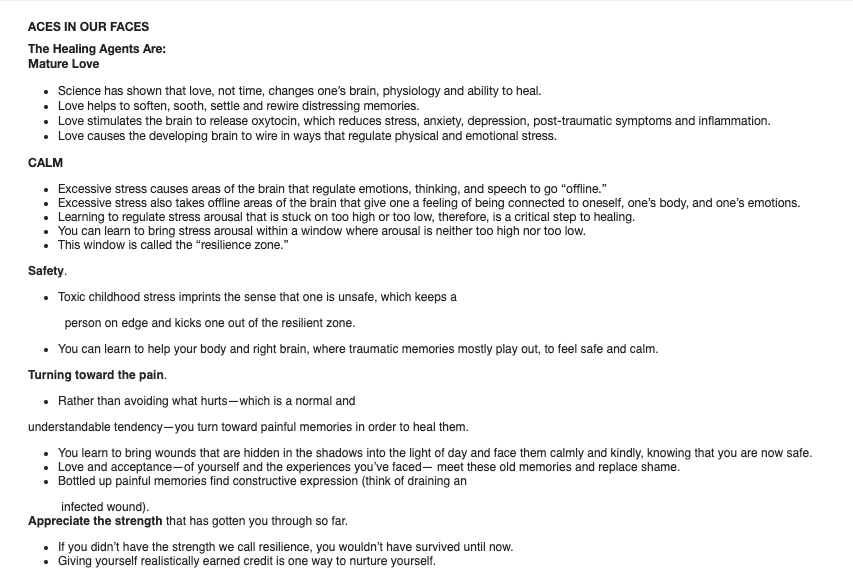
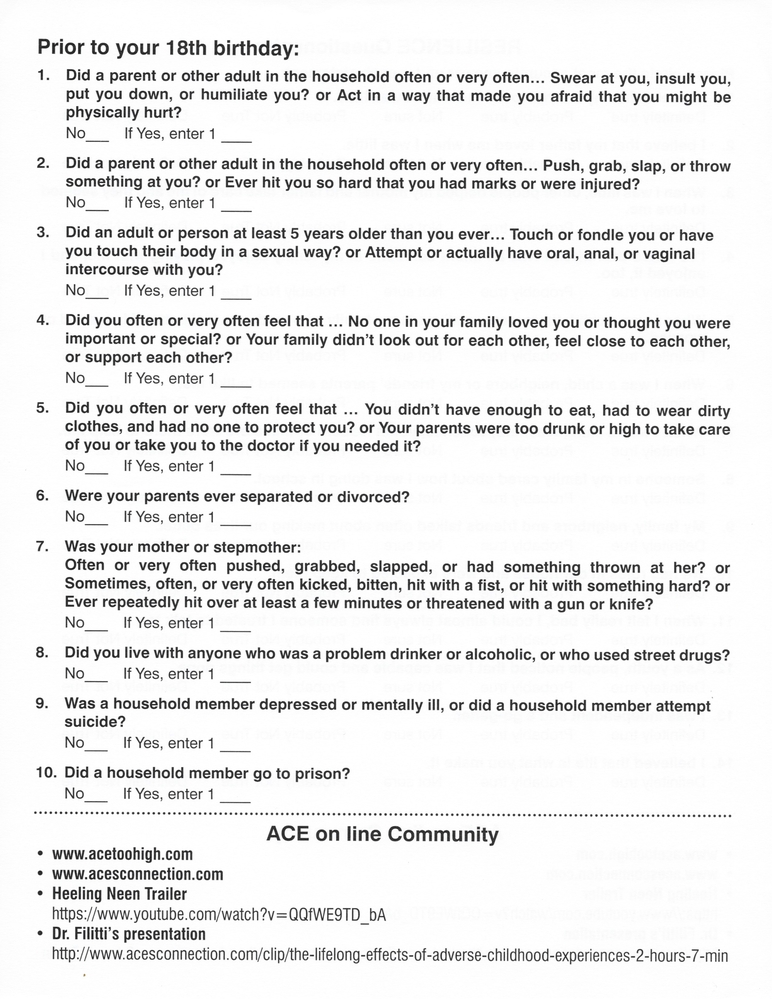
Fast forward 40 years and many emergencies later. That’s when Chiavetta stumbled on the Adverse Childhood Experience survey (ACEs) study, (CDC-Kaiser Permanente Adverse Childhood Experiences Study). It was then he knew he’d found the way to do what he’d wanted to do since he was that three-year-old child.
“I always said if I found a way to help this country continue, I would support it. The PACEs science movement is that movement.”
For Chiavetta, the ACE Study was the “aha” moment he needed to connect the dots between people having challenging childhoods and then experiencing chronic health problems as adults. And he saw no reason to not help people connect the dots…in his family catering business, with his family, in medical offices and town meetings, and on his most familiar turf—the back of an ambulance.
Learning about the ACE Study in 2014 put it all together for Chiavetta, who is, to his knowledge, the only EMT in the country spreading the news about PACEs science in a formal way, on almost every call.
Chiavetta counts connecting with Jane Stevens, founder and publisher of then ACEs Connection, now PACEs Connection, as a turning point for him.
“Jane brought, in ACEs Connection, the information, community, tools, courage, and more,” he says. All of which help Chiavetta on his quest to make the science mainstream, a matter of course everywhere, all the time, and make Chiavetta an ardent supporter of PACEs Connection.
“I always said that If I found a movement that I would help this country continue, that I would support it. The PACEs science movement is that movement. It can keep this country going—the understanding, forgiveness, help and hope it brings. And PACEs Connection leads the movement, because it can help people understand that the accidents they’re in, the diseases they have, they are not their fault,” Chiavetta says.
“I now know how to look at everything through a trauma lens, and can help people. I ask a motorcycle accident victim about his childhood while we’re in the back of an ambulance. I hear he’s had a rough childhood. I can say, ‘Man, I hear you’ve had a tough life and an even tougher childhood. It’s not your fault. And this accident is not your fault,’’’ he said.
“I tell him he’s not alone, and that he should have been protected, cared for and loved. It’s that easy to help someone,” Chiavetta says.
Planting seeds for patients to understand the impact of trauma on their children.
He believes it is that easy to help people begin to see that they want their children to have better lives, to plant the seed of their wanting their children to know the love, protection and security they may have missed.
“I support PACEs Connection because of what it has given back to me—the information to help people forgive themselves and start their lives with a new understanding of how they are where they are,” he says. “I am helping them. ”
Though Chiavetta does far more than have moments of connection in a speeding ambulance.
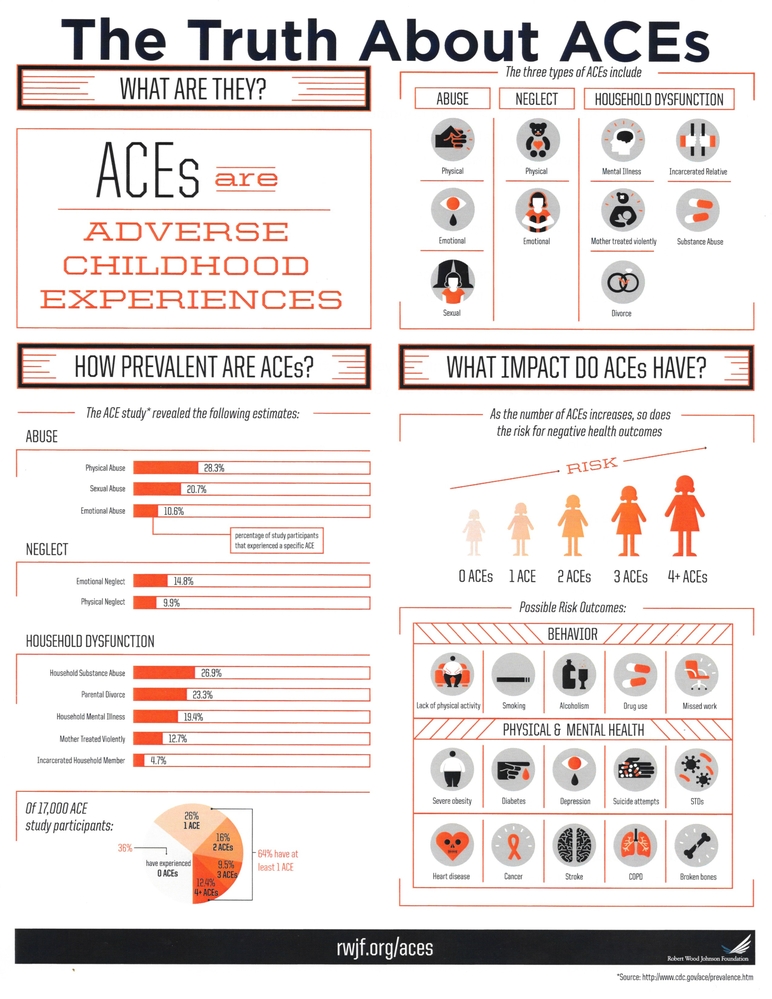
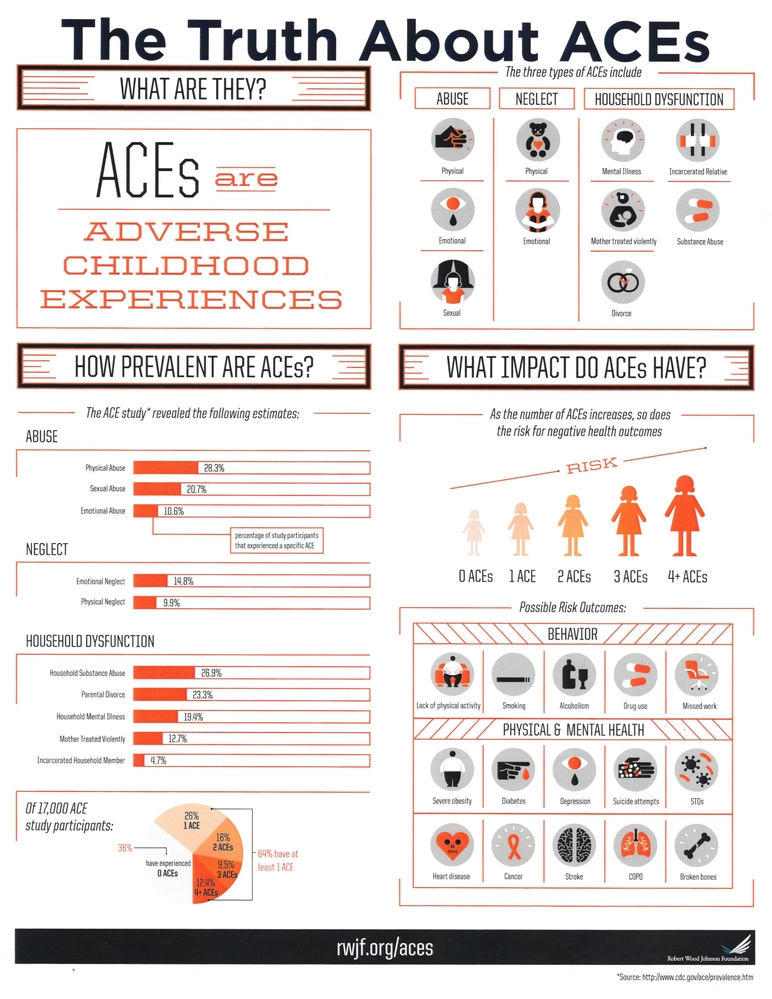
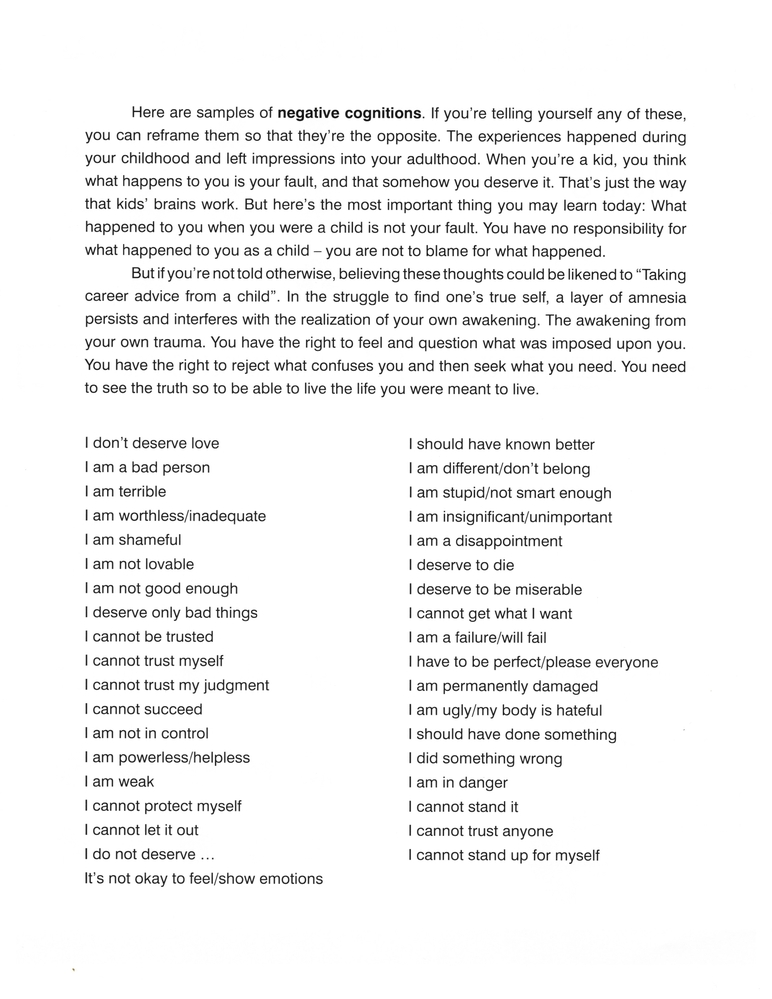
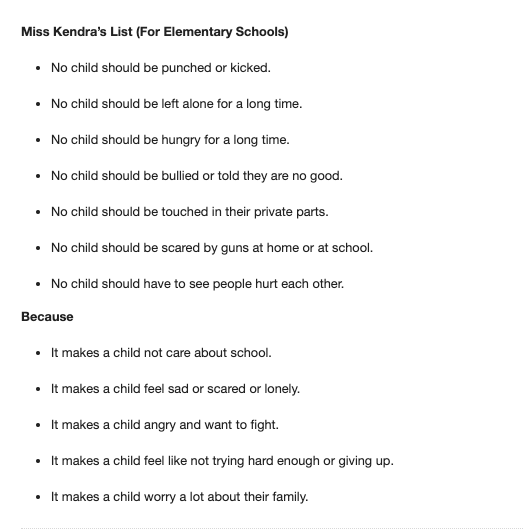
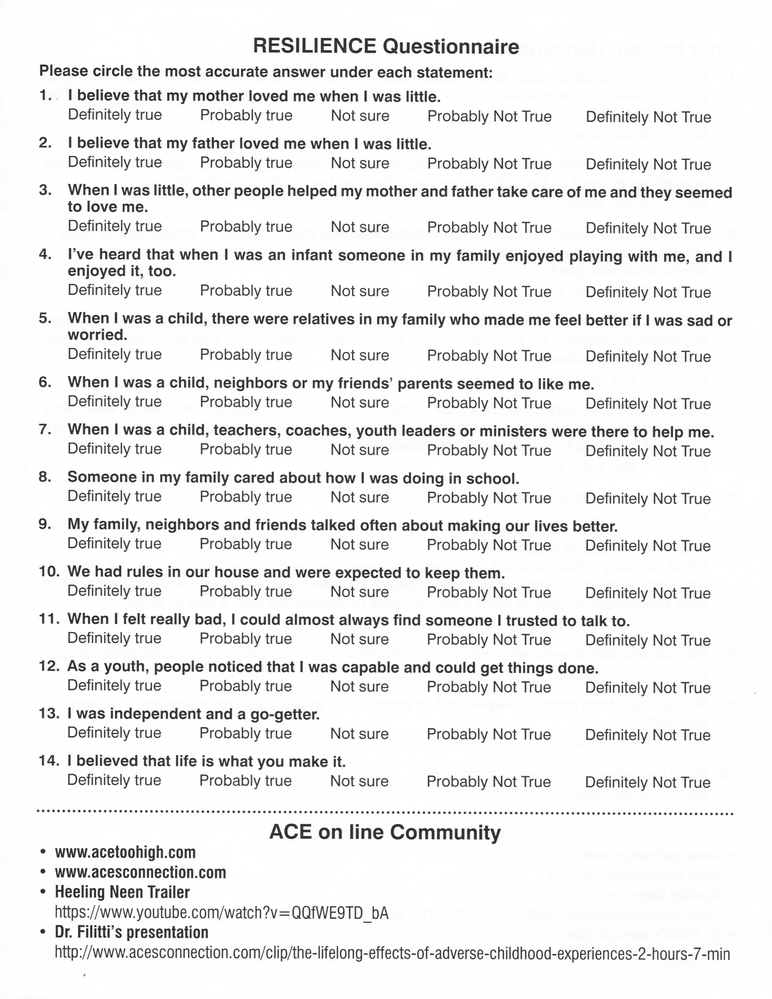
He has a handout he shares, goes over it with patients, and checks on them in the hospital. He estimates that he’s shared his eight-page handout (shared below) with more than a thousand people over the years.
He’s not saving the world in a grand, single swoop, but he is helping to change the world for those patients. He has a brief chat with each that helps them connect their childhood trauma with why their lives have turned out the way they have, and what they can do to help turn things around. And then he hands them easy-to-understand bits of the science, along with some inspiration. He believes some of this sharing is taken to heart.
“I recently had coffee with an old friend, and she said she wanted me to know how much what I have done over the years has helped our town, with working for better safety in getting four-way stops instead of lights, and in helping share this information about ACEs. It felt good,” he says.
For Chiavetta, the benefit of PACEs Connection has been getting the word out on the science and tracking how it is changing the world. It also validates him as he takes the science with him into hospitals and board rooms.
Documentation and dissemination—outside the comfort zone.
“We are tracking the integration of PACEs into the workplace. It’s not in the culture yet, but seeing the work go into the workplace gives us hope,” he says.
“PACEs Connection has documented that and it helps feed the hope that we will eventually see the integration occur throughout our culture. I’m on a call on Mondays with other people who want to apply what they know about PACEs science in the workplace, and they experience pushback as they try to get trauma-informed care going. Having PACEs Connection helps keep us going. It’s the documentation and the dissemination of what we know. It gives us validity. It helps us step outside of our comfort zone to push for a more trauma-informed world.”
How does he hope PACEs science will change the world?
“So many young people who are stuck think they don’t deserve to have better lives,” he explains. “This science helps people realize they don’t have to live this life—there is an alternative. I’ve heard it said that ‘traumatized people stand on the grave of dreams.’ Traumatized people have dreams, but don’t know how to access them. I think this information helps people access those dreams. It helps prevent more trauma. It helps them realize the struggle is on the inside.”
“I wish some politician would get up and say ‘I want one year of paid paternity leave.’ One year of paid paternity leave would turn the world upside down,” he explains. “I wish they’d ask for it and go into the ‘why’ of talking about the importance of secure attachment, safe, stable, nurturing environments. PACEs Connection helps get ideas such as that out there.”
“It’s too early for this shining star to die.”
Why should other members of PACEs Connection provide financial support to our organization?
Chiavetta is straightforward in his answer.
“It’s too early for a shining star to die,” he says. “We really need to perpetuate the efforts of PACEs Connection. It can become extinct. When trauma-informed care first started in western New York, people poured everything into it, and it failed. And then it got resurrected again. But the original founders of it lost traction. They had all the enthusiasm in the world and lost traction.
“I feel like we’re showing people the door to save themselves, and people are still running back into the fire. It is very important that PACEs Connection keep going—that it be that light, be that open door. This is the direction.”
Chiavetta encourages fellow members of PACEs Connection to join him in making a generous, tax-deductible donation to PACEs Connectionhere.
If you’d prefer to mail your gift rather than give it online, here’s how…
Make check payable to: TSNE (Third Sector New England, our fiscal sponsor) and write PACEs Connection Donation on the memo line.
Mail check to: PACEs Connection, c/o TSNE, 89 South Street, Suite 700, Boston, MA 02111
Making a wire transfer or need Tax ID information?
SCIENCE-DRIVEN APPROACHES TO REDUCING INEQUITIES THROUGH PUBLIC HEALTH POLICY
Tuesday • December 6th • 1:30-3:00 ET
The National Prevention Science Coalition to Improve Lives (NPSC) will host a congressional briefing on deploying prevention strategies to improve racial equity, particularly in issue areas such as health and education. Research and experience provide guidance about what works to reduce racial disparities and improve health outcomes for all Americans. Despite the existence of strategies shown to reduce inequities and foster equitable practices, translating that knowledge into effective policies has lagged behind the science. Speakers in this briefing will present evidence-based prevention policies that reduce the conditions that perpetuate inequities and strengthen factors that protect against them.
During this session, national experts on this topic will present approaches to advance equity by implementing prevention-informed policies, especially in the areas of health and education. Speakers will discuss policies likely to have a population level impact and others that are targeted to specific social conditions within communities. They will also discuss how researchers and public sectors can work together to enact such change.
Many universal policies that aim to prevent negative outcomes for all people tend to benefit only certain segments of the population, leaving minority groups in particular with unequal access to needed services. The science of prevention offers solutions to this problem. To illustrate, Dr. Shelton will discuss how implementation evaluation strategies can provide a framework to identify and resolve the barriers to even-handed enactment of health policies. Also, implementation science can aid in our understanding of how prevention policies are enforced, further illuminating the root causes of health policy inequities.
Additional solution-based strategies work to reduce existing inequities by promoting health and well-being for specific populations. Dr. Iruka will discuss how policies focused on preservation, protection, and promotion can ensure that Black children and their families are able to thrive and have equal opportunities to live healthy lives. Her work not only provides actionable solutions to support Black families, but it is also a model for promoting equity for other negatively affected groups.
Dr. Johnson-Lawrence will demonstrate how successful partnerships between researchers and public officials can learn from policy challenges and failures and move forward to prevent repeated disaster and improve equitable outcomes. She will provide examples of using community-based approaches from the Flint water crisis to promote health improvements through existing health and community systems.
The pandemic exacerbated preexisting inequalities in rates of unemployment, food insecurity, violence, and mortality to name a few. Now is the time to ensure U.S. health policy is grounded in science-driven approaches to reduce economic, health, and social disparities for all people across the nation.
It is time, as a society, to stop separating mental health from physical health.
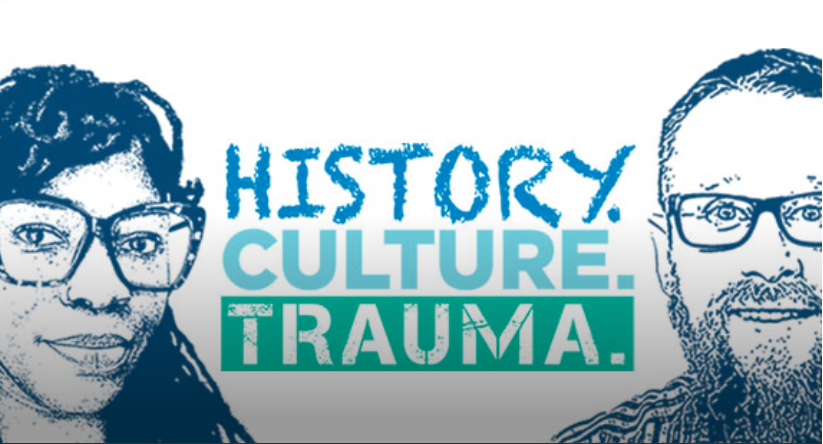
“Research has found that there is credibility to the term ‘mind-body connection’. There is a clear link between our thoughts, feelings, emotions and our physical body. At this point, should we, as a society, stop separating mental health and physical health? Are they not one in the same?” said Ingrid Cockhren, PACEs Connection CEO and co-host of the podcast History. Culture. Trauma.
She and guest Dr. Donielle Prince, PACEs Connection’s director of statewide initiatives, will tackle the topic for the encore broadcast of this episode on Thurs, Dec. 1 at 1 p.m. PT; 4 p.m. ET.
Prince, a former child therapist, relies on her extensive training and more than 20 years’ experience as a program evaluator of education, community-based youth programming, mental health, and the intersections of the disciplines as she and Cockhren discuss the mind-body connection.
Prince’s core expertise is in creating programs and initiatives that yield potential for change. Her work has included evaluating youth development studies, trauma-informed training, educational equity focused programs and curriculum evaluation.
“In the community, Prince’s experience with research, policy, and reform is reflected in her deep commitment to advocating for social justice,” said Cockhren.
In her role contributing to and coordinating the PACEs Connection Creating Resilient Communities Accelerator, Prince supports PACEs Connection’s mission to help start and grow statewide and local community resilience initiatives.
Prince has mentored youth, including first-time offending juveniles and foster youth. She’s also been involved in community-based organizing against state violence, educational inequity, and lack of access to mental health supports, particularly for members of marginalized communities.
Prince was raised in such a marginalized community, in East Palo Alto, California, located in Silicon Valley. She currently lives in Sacramento, CA.
Prince’s educational experience includes extensive studies in education, counseling psychology, human development, and race and racism. She earned her bachelor’s degree from Wellesley College, her master’s in education from the University of Pennsylvania, and her doctorate from Stanford University. She has been on staff at PACEs Connection since 2017.
To listen to Thursday’s podcast at 1 p.m. PT, 4 p.m. ET, click here.
To hear prior episodes via your favorite podcast service, use the links below.
Note: PACEs Connection is in dire financial straits. We need you, our almost 58,000members,to help cover the loss of foundation funding that was promised and didnotcome through. Unfortunately, staff pay and hours have had to be cut for December. Thegood news is that, since sounding the alarm this summer,we’ve raisedmore than$52,000. Thank you to all who’ve donated. To get a sense of who your fellow membersare, who is donating, and why, please read and share this seventh in a seriesofdonor profiles. Now that you know we need your help, please join Sofiya Asedremandmake agenerousdonationto PACEs Connection!
Sofiya Asedrem is busy. She manages the Creating a Resilient Community (CRC) Network convened out of the Peace and Justice Institute at Valencia College and the PACEs Connection Central Florida website that advances and reports on all the work. There’s also a CRC conference each spring that brings in people from all over the country, and myriad other educational events throughout the year.
Deadly weather challenges and epic growth in her international community demand all of her skills. Her education—a bachelor’s degree in international affairs at the George Washington University where she was sponsored twice by the U.S. Department of State, and a master’s degree in political science from the University of Central Florida—is foundational to her success in community development. She also relies heavily on her expertise in mental health and trauma, women’s empowerment and gender issues, environmental sustainability, peace studies, and agricultural programs.
Another support in her work? The impact of PACEs Connection.
“PACEs Connection has been an immense factor in the growth of our group (the CRC Network),” she says. “We have been able to grow to over 500 members and 250 organizations in just three years.” The group is a cross-sector collective impact movement transforming the region into one of prevention, hope, healing and resilience for all, she continues. It provides space for information sharing as well as providing many opportunities for growth and networking/learning from other communities and experts around the nation.
“I was motivated to become involved with PACEs Connection because I saw opportunities for growth both internally (as a mother, wife, daughter, sister, etc.) and externally–as a working professional looking to help my organization and community along the journey of becoming trauma-informed,” she says. “With its future-oriented initiatives and scientific and expertise-led approach, PACEs Connection is a go-to resource.”
Changing the world with PACEs science
How does Asedrem see PACEs science making a difference in the world?
“My local community is facing so many challenges that are a microcosm of the world’s challenges—from the pandemic, to recent hurricanes, to community violence and economic disparities,’ she says.
“I hope PACEs science will change my community and the world by providing an awareness of positive and adverse childhood experiences, teaching individuals how to heal from toxic stress, and welcoming others to approach fellow humans in a way that is more trauma-informed,” she says. “By learning about PACEs science, I think we will be able to realize the goal of making mental health a human right and public good. As a result, we will see greater social well-being—providing people with the opportunity to live healthy, meaningful lives and contribute to the greater good of our communities.”
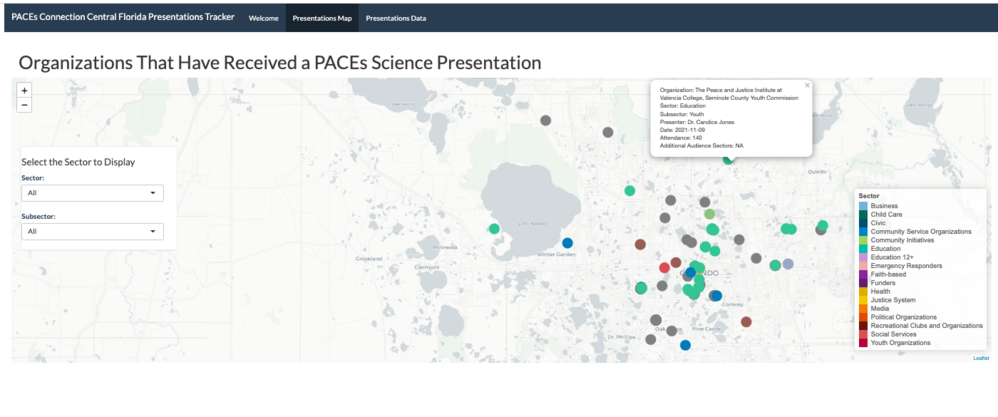
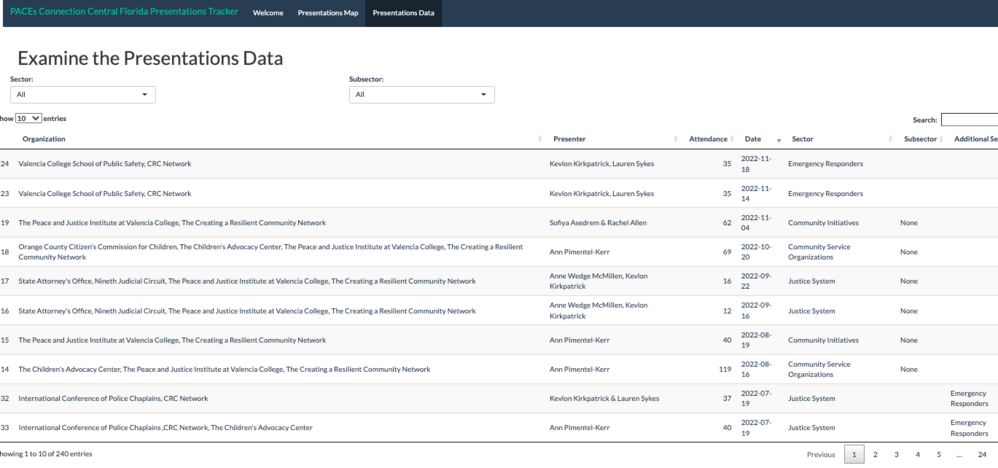
Asedrem is one of several members of the CRC Network to have given multiple PACEs science presentations in the community. All told, members of the Network, led by Peace and Justice Institute director Rachel Allen, have made some 240 presentations over the last four years!
A paradigm shift to a trauma-informed culture.
Asedrem supports PACEs Connection because it is one of the organizations actively dedicated to creating a paradigm shift to create a culture founded on the science of positive and adverse childhood experiences, and whose policies and practices are expressed in trauma-informed ways.
“By investing in PACEs Connection, members of our community can help communities address the root causes of some of the deep challenges we all face,” she adds.
Asedrem leverages her PACE Connection website to get the word out about resources and events. Within a day of Hurricane Ian’s record destruction, Asedrem hadposted a blog on PACEs Connection full of resources for her community, and leveraged the ability to share her blog out on other social media in calling her fellow Central Floridians to “look for the helpers.”
Asedrem encourages fellow members of PACEs Connection to join her in making a generous, tax-deductible donation to PACEs Connectionhere.
If you’d prefer to mail your gift rather than give it online, here’s how…
Make check payable to:
TSNE (Third Sector New England, our fiscal sponsor) and write PACEs Connection Donation on the memo line.
Mail check to:
PACEs Connection, c/o TSNE, 89 South Street, Suite 700, Boston, MA 02111
Making a wire transfer or need Tax ID information?
Please contact Carey Sipp, Director of Strategic Partnerships, at
Note: PACEs Connection is in dire financial straits. We need you, our almost 58,000members,to help cover the loss of foundation funding that was promised and didnotcome through. Unfortunately, staff pay and hours have had to be cut for December. Thegood news is that, since sounding the alarm this summer,we’ve raisedmore than$52,000. Thank you to all who’ve donated. To get a sense of who your fellow membersare, who is donating, and why, please read and share this seventh in a seriesofdonor profiles. Now that you know we need your help, please join Sofiya Asedremandmake agenerousdonationto PACEs Connection!
Sofiya Asedrem is busy. She manages the Creating a Resilient Community (CRC) Network convened out of the Peace and Justice Institute at Valencia College and the PACEs Connection Central Florida website that advances and reports on all the work. There’s also a CRC conference each spring that brings in people from all over the country, and myriad other educational events throughout the year.
Deadly weather challenges and epic growth in her international community demand all of her skills. Her education—a bachelor’s degree in international affairs at the George Washington University where she was sponsored twice by the U.S. Department of State, and a master’s degree in political science from the University of Central Florida—is foundational to her success in community development. She also relies heavily on her expertise in mental health and trauma, women’s empowerment and gender issues, environmental sustainability, peace studies, and agricultural programs.
Another support in her work? The impact of PACEs Connection.
“PACEs Connection has been an immense factor in the growth of our group (the CRC Network),” she says. “We have been able to grow to over 500 members and 250 organizations in just three years.” The group is a cross-sector collective impact movement transforming the region into one of prevention, hope, healing and resilience for all, she continues. It provides space for information sharing as well as providing many opportunities for growth and networking/learning from other communities and experts around the nation.
“I was motivated to become involved with PACEs Connection because I saw opportunities for growth both internally (as a mother, wife, daughter, sister, etc.) and externally–as a working professional looking to help my organization and community along the journey of becoming trauma-informed,” she says. “With its future-oriented initiatives and scientific and expertise-led approach, PACEs Connection is a go-to resource.”
Changing the world with PACEs science
How does Asedrem see PACEs science making a difference in the world?
“My local community is facing so many challenges that are a microcosm of the world’s challenges—from the pandemic, to recent hurricanes, to community violence and economic disparities,’ she says.
“I hope PACEs science will change my community and the world by providing an awareness of positive and adverse childhood experiences, teaching individuals how to heal from toxic stress, and welcoming others to approach fellow humans in a way that is more trauma-informed,” she says. “By learning about PACEs science, I think we will be able to realize the goal of making mental health a human right and public good. As a result, we will see greater social well-being—providing people with the opportunity to live healthy, meaningful lives and contribute to the greater good of our communities.”
Asedrem is one of several members of the CRC Network to have given multiple PACEs science presentations in the community. All told, members of the Network, led by Peace and Justice Institute director Rachel Allen, have made some 240 presentations over the last four years!
A paradigm shift to a trauma-informed culture.
Asedrem supports PACEs Connection because it is one of the organizations actively dedicated to creating a paradigm shift to create a culture founded on the science of positive and adverse childhood experiences, and whose policies and practices are expressed in trauma-informed ways.
“By investing in PACEs Connection, members of our community can help communities address the root causes of some of the deep challenges we all face,” she adds.
Asedrem leverages her PACE Connection website to get the word out about resources and events. Within a day of Hurricane Ian’s record destruction, Asedrem hadposted a blog on PACEs Connection full of resources for her community, and leveraged the ability to share her blog out on other social media in calling her fellow Central Floridians to “look for the helpers.”
Asedrem encourages fellow members of PACEs Connection to join her in making a generous, tax-deductible donation to PACEs Connectionhere.
If you’d prefer to mail your gift rather than give it online, here’s how…
Make check payable to:
TSNE (Third Sector New England, our fiscal sponsor) and write PACEs Connection Donation on the memo line.
Mail check to:
PACEs Connection, c/o TSNE, 89 South Street, Suite 700, Boston, MA 02111
Making a wire transfer or need Tax ID information?
Please contact Carey Sipp, Director of Strategic Partnerships, at
Sofiya Asedrem supports PACEs Connection to help address root causes in her fast-growing Florida community & make mental health a human right.
Note: PACEs Connection is in dire financial straits. We need you, our almost 58,000members,to help cover the loss of foundation funding that was promised and didnotcome through. Unfortunately, staff pay and hours have had to be cut for December. Thegood news is that, since sounding the alarm this summer,we’ve raisedmore than$52,000. Thank you to all who’ve donated. To get a sense of who your fellow membersare, who is donating, and why, please read and share this seventh in a seriesofdonor profiles. Now that you know we need your help, please join Sofiya Asedremandmake agenerousdonationto PACEs Connection!
Sofiya Asedrem is busy. She manages the Creating a Resilient Community (CRC) Network convened out of the Peace and Justice Institute at Valencia College and the PACEs Connection Central Florida website that advances and reports on all the work. There’s also a CRC conference each spring that brings in people from all over the country, and myriad other educational events throughout the year.
Deadly weather challenges and epic growth in her international community demand all of her skills. Her education—a bachelor’s degree in international affairs at the George Washington University where she was sponsored twice by the U.S. Department of State, and a master’s degree in political science from the University of Central Florida—is foundational to her success in community development. She also relies heavily on her expertise in mental health and trauma, women’s empowerment and gender issues, environmental sustainability, peace studies, and agricultural programs.
Another support in her work? The impact of PACEs Connection.
“PACEs Connection has been an immense factor in the growth of our group (the CRC Network),” she says. “We have been able to grow to over 500 members and 250 organizations in just three years.” The group is a cross-sector collective impact movement transforming the region into one of prevention, hope, healing and resilience for all, she continues. It provides space for information sharing as well as providing many opportunities for growth and networking/learning from other communities and experts around the nation.
“I was motivated to become involved with PACEs Connection because I saw opportunities for growth both internally (as a mother, wife, daughter, sister, etc.) and externally–as a working professional looking to help my organization and community along the journey of becoming trauma-informed,” she says. “With its future-oriented initiatives and scientific and expertise-led approach, PACEs Connection is a go-to resource.”
Changing the world with PACEs science
How does Asedrem see PACEs science making a difference in the world?
“My local community is facing so many challenges that are a microcosm of the world’s challenges—from the pandemic, to recent hurricanes, to community violence and economic disparities,’ she says.
“I hope PACEs science will change my community and the world by providing an awareness of positive and adverse childhood experiences, teaching individuals how to heal from toxic stress, and welcoming others to approach fellow humans in a way that is more trauma-informed,” she says. “By learning about PACEs science, I think we will be able to realize the goal of making mental health a human right and public good. As a result, we will see greater social well-being—providing people with the opportunity to live healthy, meaningful lives and contribute to the greater good of our communities.”
Asedrem is one of several members of the CRC Network to have given multiple PACEs science presentations in the community. All told, members of the Network, led by Peace and Justice Institute director Rachel Allen, have made some 240 presentations over the last four years!
A paradigm shift to a trauma-informed culture.
Asedrem supports PACEs Connection because it is one of the organizations actively dedicated to creating a paradigm shift to create a culture founded on the science of positive and adverse childhood experiences, and whose policies and practices are expressed in trauma-informed ways.
“By investing in PACEs Connection, members of our community can help communities address the root causes of some of the deep challenges we all face,” she adds.
Asedrem leverages her PACE Connection website to get the word out about resources and events. Within a day of Hurricane Ian’s record destruction, Asedrem hadposted a blog on PACEs Connection full of resources for her community, and leveraged the ability to share her blog out on other social media in calling her fellow Central Floridians to “look for the helpers.”
Asedrem encourages fellow members of PACEs Connection to join her in making a generous, tax-deductible donation to PACEs Connectionhere.
If you’d prefer to mail your gift rather than give it online, here’s how…
Make check payable to:
TSNE (Third Sector New England, our fiscal sponsor) and write PACEs Connection Donation on the memo line.
Mail check to:
PACEs Connection, c/o TSNE, 89 South Street, Suite 700, Boston, MA 02111
Making a wire transfer or need Tax ID information?
Please contact Carey Sipp, Director of Strategic Partnerships, at
(Note: I was looking through some old essays and found this one I wrote for a wellness website exactly 10 years ago. With a couple of updates, it still rings true to my decades-long commitment to breaking cycles of addiction and abuse.)
It’s as omnipresent as bad Christmas music: that vague sense of dread for people who are related to an active addict at holiday time.
“I don’t know when he’ll do it, but I know it’s a matter of time before he’ll drink too much and make an ass out of himself.”
“I used to love Christmas. Then I married into a family with an alcoholic who manages to suck the joy out of every gathering; everyone is so worried that she’ll fall, or pass out, or cuss somebody out. Even if she behaves, everyone else is so busy trying to control everything that there’s bound to be a blowup. It happens every year!”
“It’s hell living with a food addict. They obsess over not binging, then they binge, and then they get mad as hell at anyone and everyone as if we MADE them eat.”
A solution to this family tradition of carried pain and shame isn’t what most folks want to hear. We want a quick fix and the ability to continue blaming and shaming “the person with the problem.”
But judging someone else, and the resulting blame or shame, fear or control, isn’t helping anyone. Especially not the co-addict, or codependent — the “para-addict” — who begins to act like the alcoholic, drug addict, food addict, or whomever, without even using the substance.
Addiction is, after all, a family disease, meaning everyone is touched by it.
I’ve heard it said that codependence kills more people than alcoholism ever thought about killing. And I believe it. The stress of living with someone active in an addiction — be it alcohol, drugs, food, sex, spending, work, gossip, whatever — is overwhelming, unless we seek help. Even with help it is a challenge.
I have found relief from the effects of growing up with this pain through a support group for families and friends of alcoholics.
For the last 28 years this group — with meetings online, down the street, on the phone, and all over the world — has meant respite and a reset. I am grateful for this gathering of friends and strangers who share a common concern and learn a common solution: to keep the focus on themselves.
By learning more about caring for ourselves; repeatedly hearing that we didn’t cause the problem, we cannot control it, and we cannot cure it; by learning to be gentle with ourselves and others, we slowly but surely begin to find some joy.
The support group speaks of our “turning our will and our lives over to a power greater than ourselves.” For me, the Higher Power is a quartet of love, nature, gratitude, and peace. And I have leaned so heavily into them over the years that despite multiple challenges I can maintain, most of the time, “the peace that passes all understanding.”
People who’re addicted, and the people who live with and love them, often change behaviors in an instant. They can be happy one minute, and then irritable and lashing out the next. They can cast a pall over what should be a time of celebration and love.
They can trash your holiday — or motivate you to make a change within yourself.
Hurting people hurt people. Hurt people hurt people.
To keep from joining an addict in hurting the ones you love, take time out to nurture yourself. Give Al-Anon or Alateen a try for six meetings. See if the acceptance, hope, and peace doesn’t bring you a sense of relief.
It can’t hurt. And it may just help stop the hurting.
Jane Stevens and Vincent Felitti at the 2018 National ACEs Conference in San Francisco, CA
Note: This week is the final in our year-end giving campaign. PACEs Connection in dire financial straits. We need you, our 57,837 members, to helpcover the loss of foundation funding that was promised and did not come through. Unfortunately, pay and hours have had to be cut for our staff. Most of ushave beenlaid off for the month of December. The good news is that, since sounding the alarm thissummer,we’ve raised more than $65,000,thanksto all of you who have donated. To get a sense of who is donating and why, please read this post, one of a seriesof donor profiles. Please join Dr. Vincent Felitti and PACEs Connection founder Jane Stevens tomake agenerousdonationto PACEs Connection!
What if I told you you’re probably reading this post in this blog because of a mistake in a weight loss clinic in 1985, and a horrific shipboard explosion in the Antarctic ocean in 1998?
The doctor’s mistake-turned-revelation and a relentless reporter’s outrage and commitment to “get the science to everybody” can also be credited, at least in part, for sparking:
ACE surveys in every state;
Thousands of studies on the impact of childhood adversity subsequent to the original 1998 study, and those studies being shared, widely;
Your PACEs Connection social network of more than 57,730 members;
More than 440 cross-sector geographic communities working to prevent and heal childhood adversity to build a healthier, more compassionate world where all thrive;
More than 40 interest-based communities including those dedicated to infusing the science into the justice system, communities of faith, foster care, medical, nursing and allied health schools, and those supporting parents, survivors, the LGBTQI community;
Amazing work by people and organizations integrating ACEs science, including schools that have integrated policies and practices based on the the science of positive and adverse childhood experiences, and no longer need to expel or suspend students; Safe Babies courts—family courts whose judges and staff are trained in the science of childhood adversity—that see 90 percent of the kids who come through suffer no further abuse; Plymouth County, Massachusetts, where law enforcement, rehab centers, and hospitals work together in a cross-sector program that has resulted in a 26% drop in opioid deaths v. an 84% increase in deaths in surrounding counties. Batterers’ intervention courses that reduce recidivism from 60% to less than 5%
Hundreds of thousands of people dedicating their lives and careers to ending and healing childhood trauma—including me.
Two decades-long stories intertwine and today make the same request: support PACEs Connection
The turning point in Felitti’s quest came by accident. The physician was running through yet another series of questions with yet another obesity program patient: How much did you weigh when you were born? How much did you weigh when you started first grade? How much did you weigh when you entered high school? How old were you when you became sexually active? How old were you when you married?
“I misspoke,” he recalls, probably out of discomfort in asking about when she became sexually active – although physicians are given plenty of training in examining body parts without hesitation, they’re given little support in talking about what patients do with some of those body parts. “Instead of asking, “How old were you when you were first sexually active,” I asked, “How much did you weigh when you were first sexually active?’ The patient, a woman, answered, ‘Forty pounds.’”
He didn’t understand what he was hearing. He misspoke the question again. She gave the same answer, burst into tears and added, “It was when I was four years old, with my father.”
Two months after the first ACE Study was published, Jane Stevens, a science journalist, boarded the Aurora Australis, a research icebreaker, in Hobart, Australia, for a seven-week research expedition into the Antarctic winter sea ice. Her mission: Chronicle the expedition with words, photos, and video for the Discovery Channel’s website. Several days into the voyage, in the middle of the night, the ship’s main engine exploded to leave the ship and its expeditioners and crew stranded hundreds of miles from safe harbor with no hope of rescue. In Mayday at the Bottom of the World, Stevens tells the story of how the trauma of the explosion awakened and coalesced memories of her childhood abuse—including sexual and verbal abuse. And how learning about the ACE Study in 2004 changed her life trajectory.
Her first reaction to the ACE Study: Somebody’s making this up.
Somebody’s making up that adversity in childhood leads to the adult onset of most chronic diseases and mental illnesses, and is at the root of violent behavior, whether by a perpetrator or a victim.
Somebody’s making up the finding that most people have one or more of the 10 adverse childhood experiences that were measured in the study. And that if you have four “ACEs,” your likelihood of becoming an alcoholic increases 700% compared with people who have an “ACE score” of zero. And that your likelihood of attempting suicide increases 1,200%. And that your risk of a heart attack doubles and of lung cancer triples.
Felitti and Stevens first met in 2004 when Stevens interviewed him and Anda for an article about the link between ACEs and obesity, which was published in the Sacramento Bee’s Sunday Forum section in 2005. (Several years ago, the Bee deleted all articles written by freelance writers, so the only link that exists is on the NoSpank site: https://nospank.net/stevens.htm.)
Loose connections begin tightening.
Over the next several years, the loose connections between Felitti and Stevens began tightening. Felitti, Anda and their fellow researchers released one study after another. The co-authors made presentations about their work to anyone who would listen, especially to the medical community to which they belonged, but weren’t getting much traction. Stevens moved on through the journalism world, ending up as an online news executive and occasionally writing an article about the latest ACE Study paper.
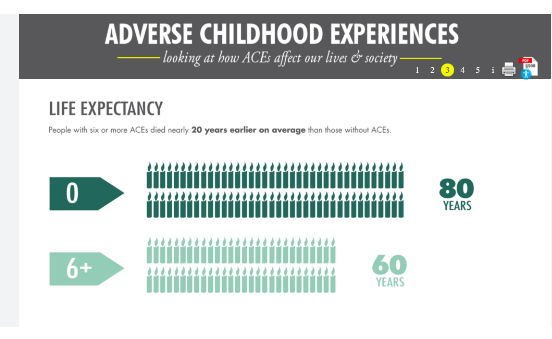
But there was one piece of research that compelled me to leave a solid career as an online news executive. It was the 2009 finding that people with six or more of the 10 ACEs in the original study — including abuse and neglect — are at a higher risk of dying 20 years prematurely than people with zero ACEs.
That’s me: seven ACEs.
In
Felitti had emailed everyone in his contact list about the site.
In January 2012, Stevens launched ACEs Connection, which in March 2021 became PACEs Connection, to add the latest research about “positive” childhood experiences. It comprised ACEsTooHigh.com, a news site for the general public, and the social network ACEsConnection.com (now PACEsConnection.com), for people who were actively engaged in integrating ACEs science into their personal, family, organizational and community lives.
As she went to sleep the night after the launch, a grim thought occurred: What if nobody joins ACEsConnection? She woke up the next morning to see 200 new members. Felitti had emailed everyone in his contact list about the site. A year later, there were 1,000 members, and membership has been galloping along ever since to reach 57,730 today.
It’s difficult to pinpoint exactly what drove the explosion of interest in ACEs science (or PACEs science, which we define as epidemiology, neurobiology, health consequences, epigenetic or historical trauma, and resilience research of positive and adverse childhood experiences) because the increase in the number of articles, research publications and projects to integrate ACEs science began accelerating in 2012 and hasn’t stopped. But it was definitely the combination of:
the mind-bending results of the ACE Study put together by Felitti and Anda, two people who complemented each other in their brilliance;
their tireless efforts to engage the health community even when it dismissed the science;
and ACEs Connection taking advantage of the magic of social networking to light the fire under people who immediately grokked the science and began spreading it among their own networks.
“It has been of extraordinary importance, the worldwide effect she has had.”
Felitti officially retired from Kaiser Permanente in 2001. He was still involved in the ACE Study until 2018, when it was ended; he stayed active in an obesity reduction program at Kaiser for several years, and, until COVID hit, traveled the world to consult and do presentations about ACEs science. He recently moved to a retirement community in California, and remains active in the PACEs movement. Anda left the CDC to found ACE Interface with Laura Porter, an early pioneer who introduced the ACE Study to a network of more than 40 communities in Washington State. The two have done hundreds of train-the-trainer workshops about what they call NEAR science—neurobiology, epigenetics, adverse childhood experiences, and resilience—in cities and states around the country.
“It is not surprising to me that PACEs Connection has created a worldwide movement because Jane Stevens, in addition to being a really superb writer, knew how to present this information in a way that would disseminate it widely,” says Felitti. “It has been of extraordinary importance, the worldwide effect she has had.”
“…home for the growing community of survivors, trauma professionals…”
Both Stevens and Felitti are glad there is a home for the growing community of survivors, trauma professionals, parents trying to stop cycles of family addiction and abuse, pediatricians, mental health workers, educators, nurses, judges and others looking for resources to solve the most intractable problems in their communities.
When asked about the impact of PACEs Connection on the spread of information about the connection between childhood trauma and adult disease, and why people should support PACEs Connection, Felitti says: “They’ve built a database with a worldwide membership, mainly in the US, but clearly worldwide, but even more important, it is the transmission of that information about positive and adverse childhood experiences (that is important).
“PACEs Connection has pages that have been seen by millions of viewers who are not regular members of PACEs Connection,” Felitti continues. “Viewers are being sent these pages by friends, colleagues. The implication is truly worldwide coverage.”
“I can’t imagine a better way of honoring Dr. Felitti than to make sure his work is shared,” says Stevens.
“Supporting PACEs Connection helps people from all walks of life with the resources and information that they can use. It helps survivors experience the freedom that comes from learning they are not alone, that they are not at fault for how they coped with their childhood adversity. They didn’t cause or deserve the abuse, and together we can heal from it.
“I hope all who have been touched by the work that Dr. Felitti and I have done to use PACEs science to prevent and heal trauma will remember PACEs Connection on Giving Tuesday. I hope you will join us and make a generous donation to continue our work to create a world where all children have the opportunity to thrive.”
Felitti and Stevens encourage fellow members of PACEs Connection to join them in making a generous, tax-deductible donation to PACEs Connectionhere.
If you’d prefer to mail your gift rather than give it online, here’s how…
Make check payable to: TSNE (Third Sector New England, our fiscal sponsor) and write PACEs Connection Donation on the memo line.
Mail check to: PACEs Connection, c/o TSNE, 89 South Street, Suite 700, Boston, MA 02111
Making a wire transfer or need Tax ID information?
A recent photo of Lisa Hofmeister (second from left) with her family.
Note: PACEs Connection is in dire financial straits. We need you, our almost 58,000members,to help us cover the loss of foundation funding that was promised and didnot come through. Unfortunately, staff pay and hours were cut for December.
The good news is that, since sounding the alarm this summer,we’ve raisedmore than$65,000 thanks to all of your who donated. To get a sense of who your fellow membersare, who is donating, and why, please read and share this eighth in a seriesofdonor profiles. Now that you know we need your help, please join LisaHofmeister—who, with her mother and brother has made a family gift to PACEsConnection for the last three years—andmake agenerous tax-deductible year-enddonation.
Most people are stunned when they first learn about PACEs science. Lisa Hofmeister is no exception.
With a degree in psychology, a career in healthcare information technology, and a personal interest in equity and restorative justice, Hofmeister was surprised when she heard about the CDC-Kaiser Permanente Adverse Childhood Experiences Study.
“It seemed as though I should have known about this earlier,” she says of the ground-breaking research that was first published in 1998.
Since discovering ACEs Connection, now PACEs Connection, Hofmeister has been an avid follower and supporter of the organization and the PACEs science movement to prevent and heal childhood adversity, and to build healthier and more resilient families and communities.
“Our family chooses a charitable organization to support every year, so I was eager to suggest PACEs Connection, especially given our family’s interest in social justice and grassroots community organizing”, she continues. “I see PACEs Connection as the scaffolding behind a movement—perhaps the most important public health movement of our time. It allows passionate, talented people to collaborate, share inspiration, and innovate by imitating what works.”.
Q: What motivated you to become involved in PACEs Connection?
A: “In 2019 after a local trauma therapist’s presentation about ACEs, brain science, and resilience, I went from complete ignorance to near-obsession. I couldn’t stop thinking about it and couldn’t find enough people to marvel about this powerful ‘root cause’ discovery with me. So I was thrilled to learn that PACEs Connection was already on the case, thoughtfully creating a network and a platform for sharing new research and ideas.”
Q: How do you hope PACEs science will change the world?
A: “I do believe PACEs science can bring paradigm-shifting and compassionate change to a world that desperately needs it. My hope is that, together, we can promote it in a way that invites others to be curious and hopeful in this time of extreme polarization. It has great potential to heal and unite us.”
Q: Why should other members of PACEs Connection provide financial support to our organization?
A: “Sometimes I worry that the sheer volume of PACEs-related groups dilutes the good work that people are doing, and makes it confusing. I admire how PACEs Connection is clearly trying to avoid working in a silo, partnering with groups like CTIPP (Campaign forTrauma Informed Policy and Practice) and providing a platform to connect. This is an invaluable service.”
Q: What is your involvement in a PACEs community?
A: “I recently got connected with the Trauma-Informed Healthcare Education and Research (TIHCER) Community on PACEs Connection and am looking forward to hearing ideas about bringing trauma-informed care into the realm of the electronic health record. I’m also hoping to connect with Wisconsin-based groups focused on trauma-informed care in education.”
Hofmeister encourages fellow members of PACEs Connection to join her in making a generous, tax-deductible donation to PACEs Connectionhere.
If you’d prefer to mail your gift rather than give it online, here’s how…
Make check payable to:
TSNE (Third Sector New England, our fiscal sponsor) and write PACEs Connection Donation on the memo line.
Mail check to:
PACEs Connection,
c/o TSNE, 89 South Street
Suite 700
Boston, MA 02111
Making a wire transfer or need Tax ID information?
A recent photo of Lisa Hofmeister (second from left) with her family.
Note: PACEs Connection is in dire financial straits. We need you, our almost 58,000members,to help us cover the loss of foundation funding that was promised and didnot come through. Unfortunately, staff pay and hours were cut for December.
The good news is that, since sounding the alarm this summer,we’ve raisedmore than$65,000 thanks to all of your who donated. To get a sense of who your fellow membersare, who is donating, and why, please read and share this eighth in a seriesofdonor profiles. Now that you know we need your help, please join LisaHofmeister—who, with her mother and brother has made a family gift to PACEsConnection for the last three years—andmake agenerous tax-deductible year-enddonation.
Most people are stunned when they first learn about PACEs science. Lisa Hofmeister is no exception.
With a degree in psychology, a career in healthcare information technology, and a personal interest in equity and restorative justice, Hofmeister was surprised when she heard about the CDC-Kaiser Permanente Adverse Childhood Experiences Study.
“It seemed as though I should have known about this earlier,” she says of the ground-breaking research that was first published in 1998.
Since discovering ACEs Connection, now PACEs Connection, Hofmeister has been an avid follower and supporter of the organization and the PACEs science movement to prevent and heal childhood adversity, and to build healthier and more resilient families and communities.
“Our family chooses a charitable organization to support every year, so I was eager to suggest PACEs Connection, especially given our family’s interest in social justice and grassroots community organizing”, she continues. “I see PACEs Connection as the scaffolding behind a movement—perhaps the most important public health movement of our time. It allows passionate, talented people to collaborate, share inspiration, and innovate by imitating what works.”.
Q: What motivated you to become involved in PACEs Connection?
A: “In 2019 after a local trauma therapist’s presentation about ACEs, brain science, and resilience, I went from complete ignorance to near-obsession. I couldn’t stop thinking about it and couldn’t find enough people to marvel about this powerful ‘root cause’ discovery with me. So I was thrilled to learn that PACEs Connection was already on the case, thoughtfully creating a network and a platform for sharing new research and ideas.”
Q: How do you hope PACEs science will change the world?
A: “I do believe PACEs science can bring paradigm-shifting and compassionate change to a world that desperately needs it. My hope is that, together, we can promote it in a way that invites others to be curious and hopeful in this time of extreme polarization. It has great potential to heal and unite us.”
Q: Why should other members of PACEs Connection provide financial support to our organization?
A: “Sometimes I worry that the sheer volume of PACEs-related groups dilutes the good work that people are doing, and makes it confusing. I admire how PACEs Connection is clearly trying to avoid working in a silo, partnering with groups like CTIPP (Campaign forTrauma Informed Policy and Practice) and providing a platform to connect. This is an invaluable service.”
Q: What is your involvement in a PACEs community?
A: “I recently got connected with the Trauma-Informed Healthcare Education and Research (TIHCER) Community on PACEs Connection and am looking forward to hearing ideas about bringing trauma-informed care into the realm of the electronic health record. I’m also hoping to connect with Wisconsin-based groups focused on trauma-informed care in education.”
Hofmeister encourages fellow members of PACEs Connection to join her in making a generous, tax-deductible donation to PACEs Connectionhere.
If you’d prefer to mail your gift rather than give it online, here’s how…
Make check payable to:
TSNE (Third Sector New England, our fiscal sponsor) and write PACEs Connection Donation on the memo line.
Mail check to:
PACEs Connection,
c/o TSNE, 89 South Street
Suite 700
Boston, MA 02111
Making a wire transfer or need Tax ID information?
“What Happened to You?” – the book and the question – speak to the PACEs Connection commitment to explore and share our nation’s history of trauma, racism, genocide and colonization. We begin Black History Month 2023, with an encore discussion by Bruce Perry, co-author of The New York Times Best-seller, “What Happened to You? Conversations on Trauma, Resilience and Healing.”
In this episode, Perry and podcast hosts Ingrid Cockhren, CEO of PACEs Connection, and Mathew Portell, director of outreach and education, discuss the importance of learning about our past to understand how the United States is in such a state of collective trauma at this time in our nation’s history.
“If you don’t understand history,” said Perry, “you’re never going to understand trauma. And if you don’t understand trauma, you’re never going to understand history. And this is part of our problem as a field.”
Tune in Thursday at 1 p.m. PT to hear Perry, Cockhren, and Portell address the history of colonialism, treatment of Indigenous people, and the kidnapping and enslavement of Africans that are such a part of the ongoing history and historical trauma of the United States.
Cockhren and Portell interviewed Perry about the book, which he wrote with author Oprah Winfrey in July 2022, as a part of the launch celebration for the PACEs Connection Connecting Communities One Book At A Time book study initiative.
“You know, we are living in systems that are fundamentally colonial in construction,” Perry said. “And colonialism basically means I’m going to come into your space, your place, and I’m going to take your things and I’m going to make you feel privileged if I give you a little bit of it back.”
Historical perspectives about trauma deserve “as much attention and funding and support” as is given to people studying the effects of a drug on post traumatic stress disorder (PTSD), or the effects of other treatments, he said.
For more information about this podcast, you can watch the full interview here.
Perry leads the Neurosequential Network, is senior fellow of The Child Trauma Academy, and adjunct professor in the departments of psychiatry and behavioral sciences at the Feinberg School of Medicine at Northwestern University in Chicago and the School of Allied Health, College of Science, Health and Engineering, La Trobe University, Melbourne, Victoria Australia.
To listen to Thursday’s podcast at 1 p.m. PT, 4 p.m. ET, or whenever, as it is an encore episode, please clickhere.
“What Happened to You?” – the book and the question – speak to the PACEs Connection commitment to explore and share our nation’s history of trauma, racism, genocide and colonization. We begin Black History Month 2023, with an encore discussion by Bruce Perry, co-author of The New York Times Best-seller, “What Happened to You? Conversations on Trauma, Resilience and Healing.”
In this episode, Perry and podcast hosts Ingrid Cockhren, CEO of PACEs Connection, and Mathew Portell, director of outreach and education, discuss the importance of learning about our past to understand how the United States is in such a state of collective trauma at this time in our nation’s history.
“If you don’t understand history,” said Perry, “you’re never going to understand trauma. And if you don’t understand trauma, you’re never going to understand history. And this is part of our problem as a field.”
Tune in Thursday at 1 p.m. PT to hear Perry, Cockhren, and Portell address the history of colonialism, treatment of Indigenous people, and the kidnapping and enslavement of Africans that are such a part of the ongoing history and historical trauma of the United States.
Cockhren and Portell interviewed Perry about the book, which he wrote with author Oprah Winfrey in July 2022, as a part of the launch celebration for the PACEs Connection Connecting Communities One Book At A Time book study initiative.
“You know, we are living in systems that are fundamentally colonial in construction,” Perry said. “And colonialism basically means I’m going to come into your space, your place, and I’m going to take your things and I’m going to make you feel privileged if I give you a little bit of it back.”
Historical perspectives about trauma deserve “as much attention and funding and support” as is given to people studying the effects of a drug on post traumatic stress disorder (PTSD), or the effects of other treatments, he said.
For more information about this podcast, you can watch the full interview here.
Perry leads the Neurosequential Network, is senior fellow of The Child Trauma Academy, and adjunct professor in the departments of psychiatry and behavioral sciences at the Feinberg School of Medicine at Northwestern University in Chicago and the School of Allied Health, College of Science, Health and Engineering, La Trobe University, Melbourne, Victoria Australia.
To listen to Thursday’s podcast at 1 p.m. PT, 4 p.m. ET, or whenever, as it is an encore episode, please clickhere.
 Carey Sipp 11/8/2211:46 AM
 If you’d prefer to mail your gift rather than give it online, here’s how…
 Making a wire transfer or need Tax ID information?