Note: PACEs Connection is in dire financial straits. We need you, our almost 58,000members,to help cover the loss of foundation funding that was promised and didnotcome through. Unfortunately, staff pay and hours have had to be cut for December. Thegood news is that, since sounding the alarm this summer,we’ve raisedmore than$52,000. Thank you to all who’ve donated. To get a sense of who your fellow membersare, who is donating, and why, please read and share this seventh in a seriesofdonor profiles. Now that you know we need your help, please join Sofiya Asedremandmake agenerousdonationto PACEs Connection!
Sofiya Asedrem is busy. She manages the Creating a Resilient Community (CRC) Network convened out of the Peace and Justice Institute at Valencia College and the PACEs Connection Central Florida website that advances and reports on all the work. There’s also a CRC conference each spring that brings in people from all over the country, and myriad other educational events throughout the year.
Deadly weather challenges and epic growth in her international community demand all of her skills. Her education—a bachelor’s degree in international affairs at the George Washington University where she was sponsored twice by the U.S. Department of State, and a master’s degree in political science from the University of Central Florida—is foundational to her success in community development. She also relies heavily on her expertise in mental health and trauma, women’s empowerment and gender issues, environmental sustainability, peace studies, and agricultural programs.
Another support in her work? The impact of PACEs Connection.
“PACEs Connection has been an immense factor in the growth of our group (the CRC Network),” she says. “We have been able to grow to over 500 members and 250 organizations in just three years.” The group is a cross-sector collective impact movement transforming the region into one of prevention, hope, healing and resilience for all, she continues. It provides space for information sharing as well as providing many opportunities for growth and networking/learning from other communities and experts around the nation.
“I was motivated to become involved with PACEs Connection because I saw opportunities for growth both internally (as a mother, wife, daughter, sister, etc.) and externally–as a working professional looking to help my organization and community along the journey of becoming trauma-informed,” she says. “With its future-oriented initiatives and scientific and expertise-led approach, PACEs Connection is a go-to resource.”
Changing the world with PACEs science
How does Asedrem see PACEs science making a difference in the world?
“My local community is facing so many challenges that are a microcosm of the world’s challenges—from the pandemic, to recent hurricanes, to community violence and economic disparities,’ she says.
“I hope PACEs science will change my community and the world by providing an awareness of positive and adverse childhood experiences, teaching individuals how to heal from toxic stress, and welcoming others to approach fellow humans in a way that is more trauma-informed,” she says. “By learning about PACEs science, I think we will be able to realize the goal of making mental health a human right and public good. As a result, we will see greater social well-being—providing people with the opportunity to live healthy, meaningful lives and contribute to the greater good of our communities.”
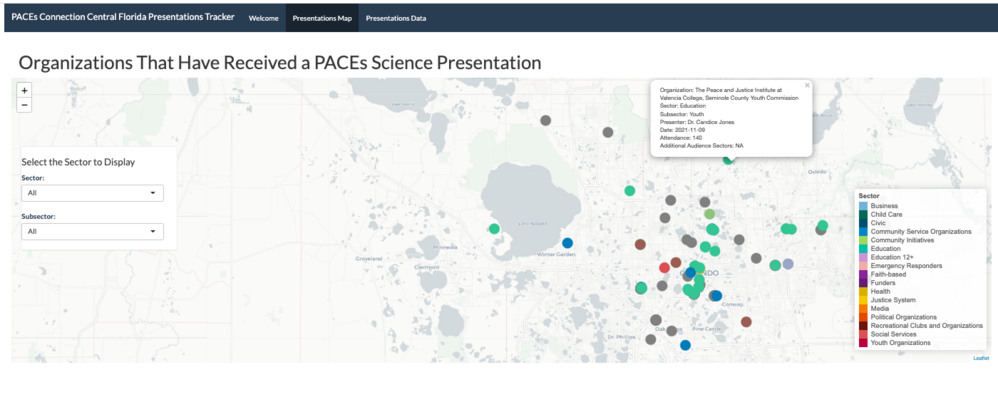
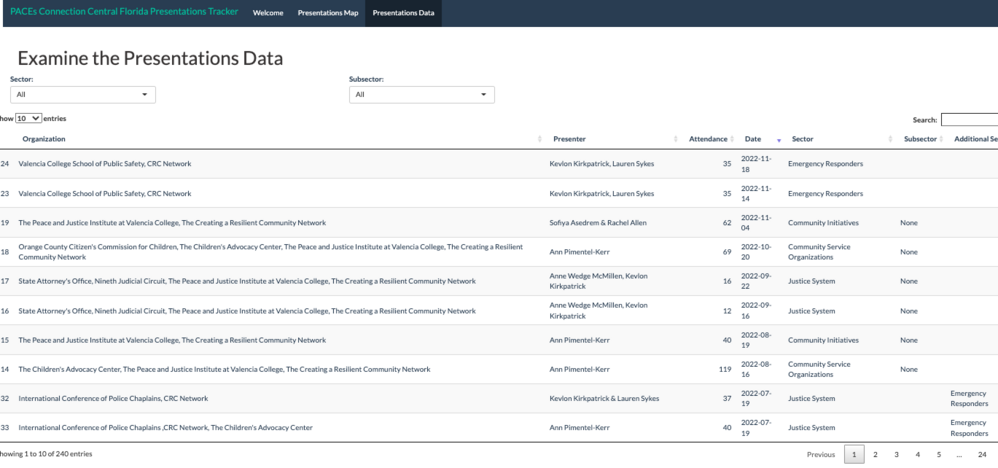
Asedrem is one of several members of the CRC Network to have given multiple PACEs science presentations in the community. All told, members of the Network, led by Peace and Justice Institute director Rachel Allen, have made some 240 presentations over the last four years!
A paradigm shift to a trauma-informed culture.
Asedrem supports PACEs Connection because it is one of the organizations actively dedicated to creating a paradigm shift to create a culture founded on the science of positive and adverse childhood experiences, and whose policies and practices are expressed in trauma-informed ways.
“By investing in PACEs Connection, members of our community can help communities address the root causes of some of the deep challenges we all face,” she adds.
Asedrem leverages her PACE Connection website to get the word out about resources and events. Within a day of Hurricane Ian’s record destruction, Asedrem hadposted a blog on PACEs Connection full of resources for her community, and leveraged the ability to share her blog out on other social media in calling her fellow Central Floridians to “look for the helpers.”
Asedrem encourages fellow members of PACEs Connection to join her in making a generous, tax-deductible donation to PACEs Connectionhere.
If you’d prefer to mail your gift rather than give it online, here’s how…
Make check payable to:
TSNE (Third Sector New England, our fiscal sponsor) and write PACEs Connection Donation on the memo line.
Mail check to:
PACEs Connection, c/o TSNE, 89 South Street, Suite 700, Boston, MA 02111
Making a wire transfer or need Tax ID information?
Please contact Carey Sipp, Director of Strategic Partnerships, at
Sofiya Asedrem supports PACEs Connection to help address root causes in her fast-growing Florida community & make mental health a human right.
Note: PACEs Connection is in dire financial straits. We need you, our almost 58,000members,to help cover the loss of foundation funding that was promised and didnotcome through. Unfortunately, staff pay and hours have had to be cut for December. Thegood news is that, since sounding the alarm this summer,we’ve raisedmore than$52,000. Thank you to all who’ve donated. To get a sense of who your fellow membersare, who is donating, and why, please read and share this seventh in a seriesofdonor profiles. Now that you know we need your help, please join Sofiya Asedremandmake agenerousdonationto PACEs Connection!
Sofiya Asedrem is busy. She manages the Creating a Resilient Community (CRC) Network convened out of the Peace and Justice Institute at Valencia College and the PACEs Connection Central Florida website that advances and reports on all the work. There’s also a CRC conference each spring that brings in people from all over the country, and myriad other educational events throughout the year.
Deadly weather challenges and epic growth in her international community demand all of her skills. Her education—a bachelor’s degree in international affairs at the George Washington University where she was sponsored twice by the U.S. Department of State, and a master’s degree in political science from the University of Central Florida—is foundational to her success in community development. She also relies heavily on her expertise in mental health and trauma, women’s empowerment and gender issues, environmental sustainability, peace studies, and agricultural programs.
Another support in her work? The impact of PACEs Connection.
“PACEs Connection has been an immense factor in the growth of our group (the CRC Network),” she says. “We have been able to grow to over 500 members and 250 organizations in just three years.” The group is a cross-sector collective impact movement transforming the region into one of prevention, hope, healing and resilience for all, she continues. It provides space for information sharing as well as providing many opportunities for growth and networking/learning from other communities and experts around the nation.
“I was motivated to become involved with PACEs Connection because I saw opportunities for growth both internally (as a mother, wife, daughter, sister, etc.) and externally–as a working professional looking to help my organization and community along the journey of becoming trauma-informed,” she says. “With its future-oriented initiatives and scientific and expertise-led approach, PACEs Connection is a go-to resource.”
Changing the world with PACEs science
How does Asedrem see PACEs science making a difference in the world?
“My local community is facing so many challenges that are a microcosm of the world’s challenges—from the pandemic, to recent hurricanes, to community violence and economic disparities,’ she says.
“I hope PACEs science will change my community and the world by providing an awareness of positive and adverse childhood experiences, teaching individuals how to heal from toxic stress, and welcoming others to approach fellow humans in a way that is more trauma-informed,” she says. “By learning about PACEs science, I think we will be able to realize the goal of making mental health a human right and public good. As a result, we will see greater social well-being—providing people with the opportunity to live healthy, meaningful lives and contribute to the greater good of our communities.”
Asedrem is one of several members of the CRC Network to have given multiple PACEs science presentations in the community. All told, members of the Network, led by Peace and Justice Institute director Rachel Allen, have made some 240 presentations over the last four years!
A paradigm shift to a trauma-informed culture.
Asedrem supports PACEs Connection because it is one of the organizations actively dedicated to creating a paradigm shift to create a culture founded on the science of positive and adverse childhood experiences, and whose policies and practices are expressed in trauma-informed ways.
“By investing in PACEs Connection, members of our community can help communities address the root causes of some of the deep challenges we all face,” she adds.
Asedrem leverages her PACE Connection website to get the word out about resources and events. Within a day of Hurricane Ian’s record destruction, Asedrem hadposted a blog on PACEs Connection full of resources for her community, and leveraged the ability to share her blog out on other social media in calling her fellow Central Floridians to “look for the helpers.”
Asedrem encourages fellow members of PACEs Connection to join her in making a generous, tax-deductible donation to PACEs Connectionhere.
If you’d prefer to mail your gift rather than give it online, here’s how…
Make check payable to:
TSNE (Third Sector New England, our fiscal sponsor) and write PACEs Connection Donation on the memo line.
Mail check to:
PACEs Connection, c/o TSNE, 89 South Street, Suite 700, Boston, MA 02111
Making a wire transfer or need Tax ID information?
Please contact Carey Sipp, Director of Strategic Partnerships, at
(Note: I was looking through some old essays and found this one I wrote for a wellness website exactly 10 years ago. With a couple of updates, it still rings true to my decades-long commitment to breaking cycles of addiction and abuse.)
It’s as omnipresent as bad Christmas music: that vague sense of dread for people who are related to an active addict at holiday time.
“I don’t know when he’ll do it, but I know it’s a matter of time before he’ll drink too much and make an ass out of himself.”
“I used to love Christmas. Then I married into a family with an alcoholic who manages to suck the joy out of every gathering; everyone is so worried that she’ll fall, or pass out, or cuss somebody out. Even if she behaves, everyone else is so busy trying to control everything that there’s bound to be a blowup. It happens every year!”
“It’s hell living with a food addict. They obsess over not binging, then they binge, and then they get mad as hell at anyone and everyone as if we MADE them eat.”
A solution to this family tradition of carried pain and shame isn’t what most folks want to hear. We want a quick fix and the ability to continue blaming and shaming “the person with the problem.”
But judging someone else, and the resulting blame or shame, fear or control, isn’t helping anyone. Especially not the co-addict, or codependent — the “para-addict” — who begins to act like the alcoholic, drug addict, food addict, or whomever, without even using the substance.
Addiction is, after all, a family disease, meaning everyone is touched by it.
I’ve heard it said that codependence kills more people than alcoholism ever thought about killing. And I believe it. The stress of living with someone active in an addiction — be it alcohol, drugs, food, sex, spending, work, gossip, whatever — is overwhelming, unless we seek help. Even with help it is a challenge.
I have found relief from the effects of growing up with this pain through a support group for families and friends of alcoholics.
For the last 28 years this group — with meetings online, down the street, on the phone, and all over the world — has meant respite and a reset. I am grateful for this gathering of friends and strangers who share a common concern and learn a common solution: to keep the focus on themselves.
By learning more about caring for ourselves; repeatedly hearing that we didn’t cause the problem, we cannot control it, and we cannot cure it; by learning to be gentle with ourselves and others, we slowly but surely begin to find some joy.
The support group speaks of our “turning our will and our lives over to a power greater than ourselves.” For me, the Higher Power is a quartet of love, nature, gratitude, and peace. And I have leaned so heavily into them over the years that despite multiple challenges I can maintain, most of the time, “the peace that passes all understanding.”
People who’re addicted, and the people who live with and love them, often change behaviors in an instant. They can be happy one minute, and then irritable and lashing out the next. They can cast a pall over what should be a time of celebration and love.
They can trash your holiday — or motivate you to make a change within yourself.
Hurting people hurt people. Hurt people hurt people.
To keep from joining an addict in hurting the ones you love, take time out to nurture yourself. Give Al-Anon or Alateen a try for six meetings. See if the acceptance, hope, and peace doesn’t bring you a sense of relief.
It can’t hurt. And it may just help stop the hurting.
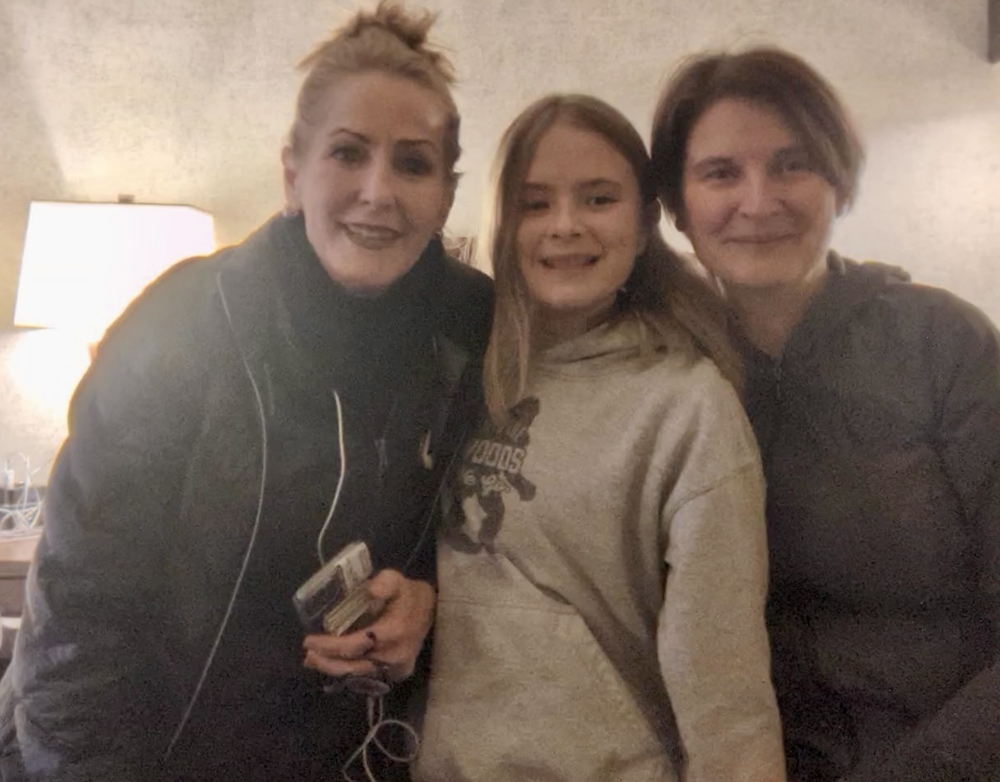
A recent photo of Lisa Hofmeister (second from left) with her family.
Note: PACEs Connection is in dire financial straits. We need you, our almost 58,000members,to help us cover the loss of foundation funding that was promised and didnot come through. Unfortunately, staff pay and hours were cut for December.
The good news is that, since sounding the alarm this summer,we’ve raisedmore than$65,000 thanks to all of your who donated. To get a sense of who your fellow membersare, who is donating, and why, please read and share this eighth in a seriesofdonor profiles. Now that you know we need your help, please join LisaHofmeister—who, with her mother and brother has made a family gift to PACEsConnection for the last three years—andmake agenerous tax-deductible year-enddonation.
Most people are stunned when they first learn about PACEs science. Lisa Hofmeister is no exception.
With a degree in psychology, a career in healthcare information technology, and a personal interest in equity and restorative justice, Hofmeister was surprised when she heard about the CDC-Kaiser Permanente Adverse Childhood Experiences Study.
“It seemed as though I should have known about this earlier,” she says of the ground-breaking research that was first published in 1998.
Since discovering ACEs Connection, now PACEs Connection, Hofmeister has been an avid follower and supporter of the organization and the PACEs science movement to prevent and heal childhood adversity, and to build healthier and more resilient families and communities.
“Our family chooses a charitable organization to support every year, so I was eager to suggest PACEs Connection, especially given our family’s interest in social justice and grassroots community organizing”, she continues. “I see PACEs Connection as the scaffolding behind a movement—perhaps the most important public health movement of our time. It allows passionate, talented people to collaborate, share inspiration, and innovate by imitating what works.”.
Q: What motivated you to become involved in PACEs Connection?
A: “In 2019 after a local trauma therapist’s presentation about ACEs, brain science, and resilience, I went from complete ignorance to near-obsession. I couldn’t stop thinking about it and couldn’t find enough people to marvel about this powerful ‘root cause’ discovery with me. So I was thrilled to learn that PACEs Connection was already on the case, thoughtfully creating a network and a platform for sharing new research and ideas.”
Q: How do you hope PACEs science will change the world?
A: “I do believe PACEs science can bring paradigm-shifting and compassionate change to a world that desperately needs it. My hope is that, together, we can promote it in a way that invites others to be curious and hopeful in this time of extreme polarization. It has great potential to heal and unite us.”
Q: Why should other members of PACEs Connection provide financial support to our organization?
A: “Sometimes I worry that the sheer volume of PACEs-related groups dilutes the good work that people are doing, and makes it confusing. I admire how PACEs Connection is clearly trying to avoid working in a silo, partnering with groups like CTIPP (Campaign forTrauma Informed Policy and Practice) and providing a platform to connect. This is an invaluable service.”
Q: What is your involvement in a PACEs community?
A: “I recently got connected with the Trauma-Informed Healthcare Education and Research (TIHCER) Community on PACEs Connection and am looking forward to hearing ideas about bringing trauma-informed care into the realm of the electronic health record. I’m also hoping to connect with Wisconsin-based groups focused on trauma-informed care in education.”
Hofmeister encourages fellow members of PACEs Connection to join her in making a generous, tax-deductible donation to PACEs Connectionhere.
If you’d prefer to mail your gift rather than give it online, here’s how…
Make check payable to:
TSNE (Third Sector New England, our fiscal sponsor) and write PACEs Connection Donation on the memo line.
Mail check to:
PACEs Connection,
c/o TSNE, 89 South Street
Suite 700
Boston, MA 02111
Making a wire transfer or need Tax ID information?
“What Happened to You?” – the book and the question – speak to the PACEs Connection commitment to explore and share our nation’s history of trauma, racism, genocide and colonization. We begin Black History Month 2023, with an encore discussion by Bruce Perry, co-author of The New York Times Best-seller, “What Happened to You? Conversations on Trauma, Resilience and Healing.”
In this episode, Perry and podcast hosts Ingrid Cockhren, CEO of PACEs Connection, and Mathew Portell, director of outreach and education, discuss the importance of learning about our past to understand how the United States is in such a state of collective trauma at this time in our nation’s history.
“If you don’t understand history,” said Perry, “you’re never going to understand trauma. And if you don’t understand trauma, you’re never going to understand history. And this is part of our problem as a field.”
Tune in Thursday at 1 p.m. PT to hear Perry, Cockhren, and Portell address the history of colonialism, treatment of Indigenous people, and the kidnapping and enslavement of Africans that are such a part of the ongoing history and historical trauma of the United States.
Cockhren and Portell interviewed Perry about the book, which he wrote with author Oprah Winfrey in July 2022, as a part of the launch celebration for the PACEs Connection Connecting Communities One Book At A Time book study initiative.
“You know, we are living in systems that are fundamentally colonial in construction,” Perry said. “And colonialism basically means I’m going to come into your space, your place, and I’m going to take your things and I’m going to make you feel privileged if I give you a little bit of it back.”
Historical perspectives about trauma deserve “as much attention and funding and support” as is given to people studying the effects of a drug on post traumatic stress disorder (PTSD), or the effects of other treatments, he said.
For more information about this podcast, you can watch the full interview here.
Perry leads the Neurosequential Network, is senior fellow of The Child Trauma Academy, and adjunct professor in the departments of psychiatry and behavioral sciences at the Feinberg School of Medicine at Northwestern University in Chicago and the School of Allied Health, College of Science, Health and Engineering, La Trobe University, Melbourne, Victoria Australia.
To listen to Thursday’s podcast at 1 p.m. PT, 4 p.m. ET, or whenever, as it is an encore episode, please clickhere.
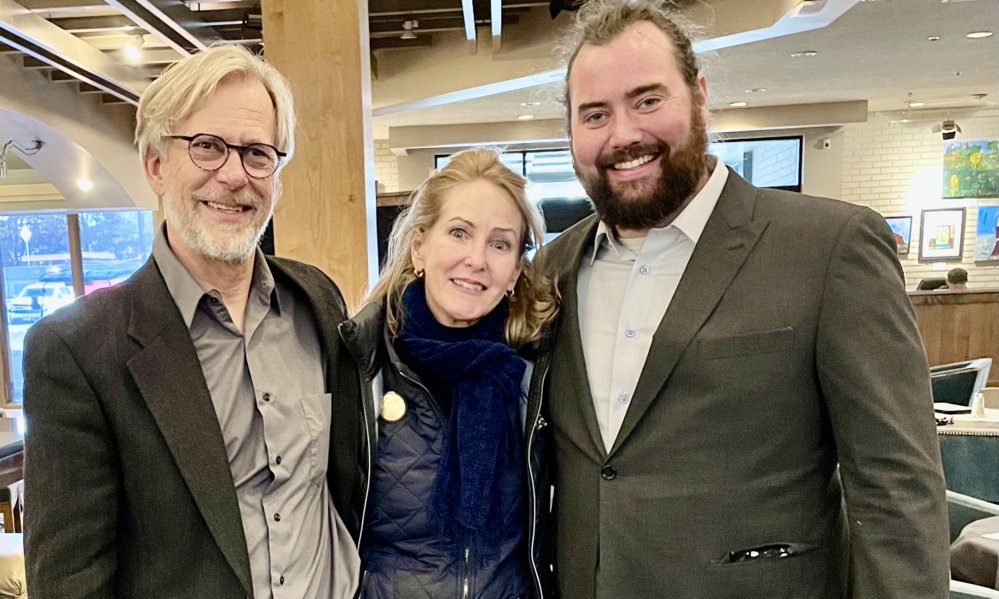
Bill Foxcroft, executive director of the Idaho Head Start Association and me with Tommy Sheridan, deputy director of the National Head Start Association.
There’s some irony in asking for help after giving a talk on asking for help.
I’ll explain.
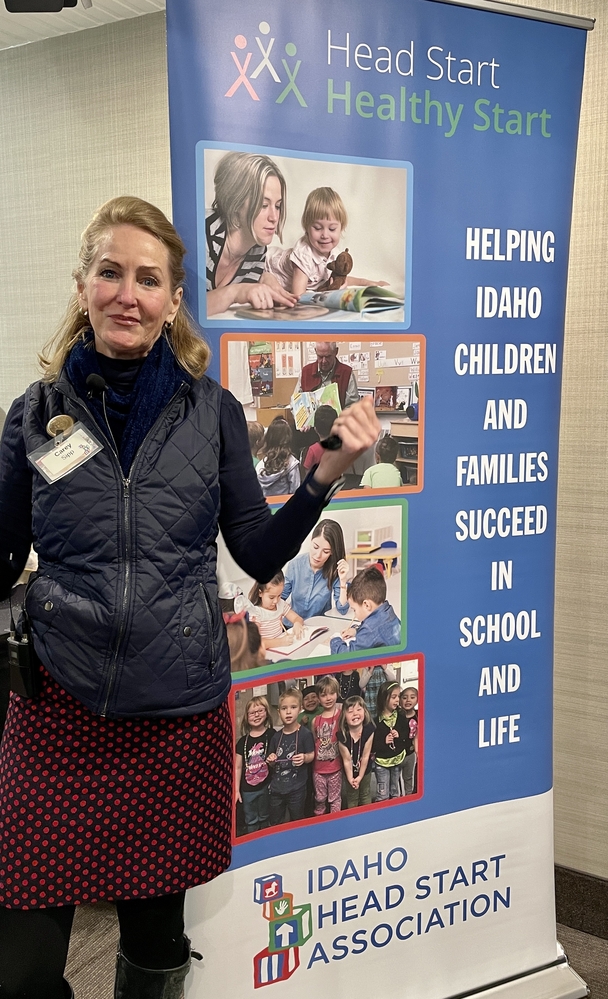
Sitting at the airport in Salt Lake City, two talks for the Idaho Head Start Association completed, I was glancing through the evaluations of my talks—95% were 8+. Whew. Apparently the topic—how asking for help as a single mother of two helped save my family and me—resonated with staff, teachers, and parents in the Head Start program in Idaho.
I loved the audience, love the organization, and am a long-time proponent of early childhood education, intervention, and support. The National Head Start program has served more than 36 million children over its 58-year history. Today more than a million children attend Head Start programs, which employ more than 257,000 people! The talks and new friendships made in Boise were affirming for myself as well.
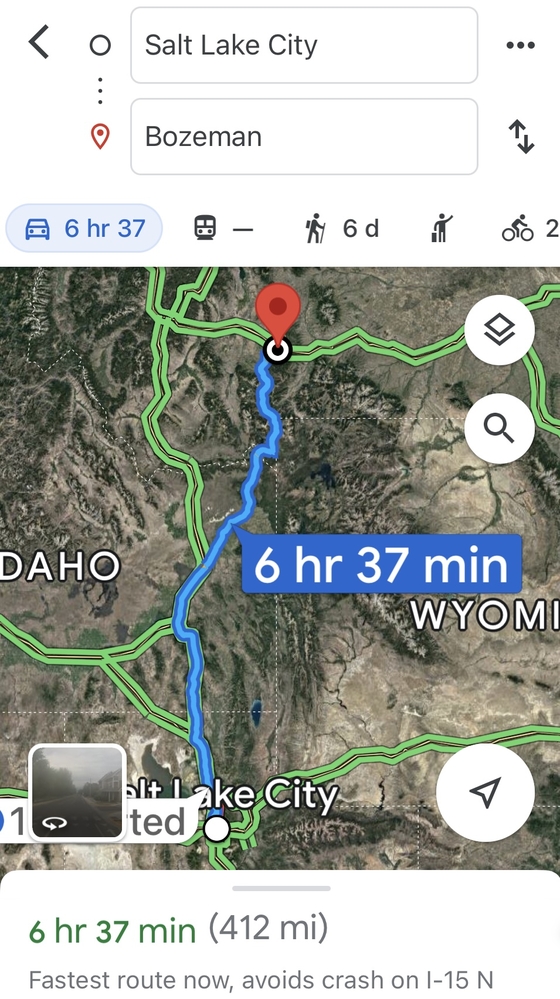
Next stop? Bozeman, Montana, for a brief visit with my grown children, their respective significant others, and my grandpuppies. It would be my first-ever foray into the “Treasure State” in the worst part of the winter. It was supposed to be -17 degrees in Bozeman when I landed.
When I looked up from the evaluations, I noticed the woman sitting next to me doing something I recognized, and said: “I know that move. You’re checking on a child sleeping behind that column, aren’t you?”
Yes, she replied and told me that she and her daughter, age 11, had been traveling all day from Belgium, where they’d spent time with her parents. We laughed about a similar experience I’d had with my daughter when she was about the same age—we’d spent the night under a desk at the Portland airport waiting to catch a flight to Atlanta.
Geraldine—by that time we’d exchanged names—agreed to watch my things while I went to the ladies’ room. When I returned, she said our flight had been canceled, and that she’d booked the last room at the airport Radisson. I gave her a thumbs up and said I was going to look for an alternate fight.
Maybe I could fly into Billings tonight.
Or rent a car. It was a six-hour-plus drive. The roads were rough. No dice.
No flights to Billings, either.
I started zigging and zagging over the map of Montana to see what else could work, and thought about Helena. It wasn’t that far from Bozeman. Meanwhile the line to the Delta service desk, which was about 100-people deep when I got to the gate, had about 200 people waiting impatiently.
Then, jackpot. There was a flight to Helena—a 90-minute drive from Bozeman—the next morning. Better still,I booked a seat.
I told Geraldine and she started checking availability for the same flight. A few minutes later, she and her daughter, Nelle, booked their seats.
Relief in the air, I made a big ask: Would Geraldine be willing to split the cost of the room and perhaps she, her daughter and I could have a Salt Lake City girls’ night sleepover?
I didn’t know the extent of Geraldine’s world traveling experience at that time, but I could tell she’d sized me up. In the little bit of conversation that we’d had—I’d told her I was coming from giving a talk to the Idaho Head Start Association and that I was eager to see my adult children in Bozeman for the first time in months—she’d decided I was a safe risk. She said yes, and I said I’d pay for the ride to the hotel.
Long story short: We did have the last room at the Airport Radisson. It had two queen-sized beds. Nelle and Geraldine bedded down quickly; they’d had a long day. I sent a few messages to the kids, confirming everything, did an abbreviated cleanup, and went to sleep around 1 a.m., grateful to be in a clean bed instead of trying to sleep in a chair at the airport.
Geraldine, Nelle, and me before heading back to the airport, after our pop-up girls-only Salt Lake City slumber party!
At 6:30 a.m. we headed back to the airport. While waiting, Geraldine and I shared more bits of personal histories. She’d been a college recruiter, and had traveled throughout China, India, and Malaysia before having children. We talked a bit about having daughters, and how grateful I was that my daughter is not a pre-teen at this time when the news about teenage girls and the post-pandemic pressures they are feeling with social media and more, is a great cause of concern. These facts are well-documented in a book I recommended to Geraldine, Girls on the Brink by author and friend Donna Jackson Nakazawa.
When we boarded the plane, our conversation ended; our seats were far apart. After landing, we hugged and thanked each other. My daughter arrived to whisk me away; Geraldine’s husband came to pick up his wife and daughter. And our adventure seemed to come to an end.
But I decided there was something to be learned from writing about this experience.
Later, I texted Geraldine to ask if she was okay if I wrote a story about what we’d experienced in the last 14 or so hours, if I only used their first names and sent it to her first. She was good with that.
And here we are.
I’m back from a great experience of meeting wonderful people who work with Head Start, and spending an incredibly sweet time with my children, during which I thanked them for living so close to each other.
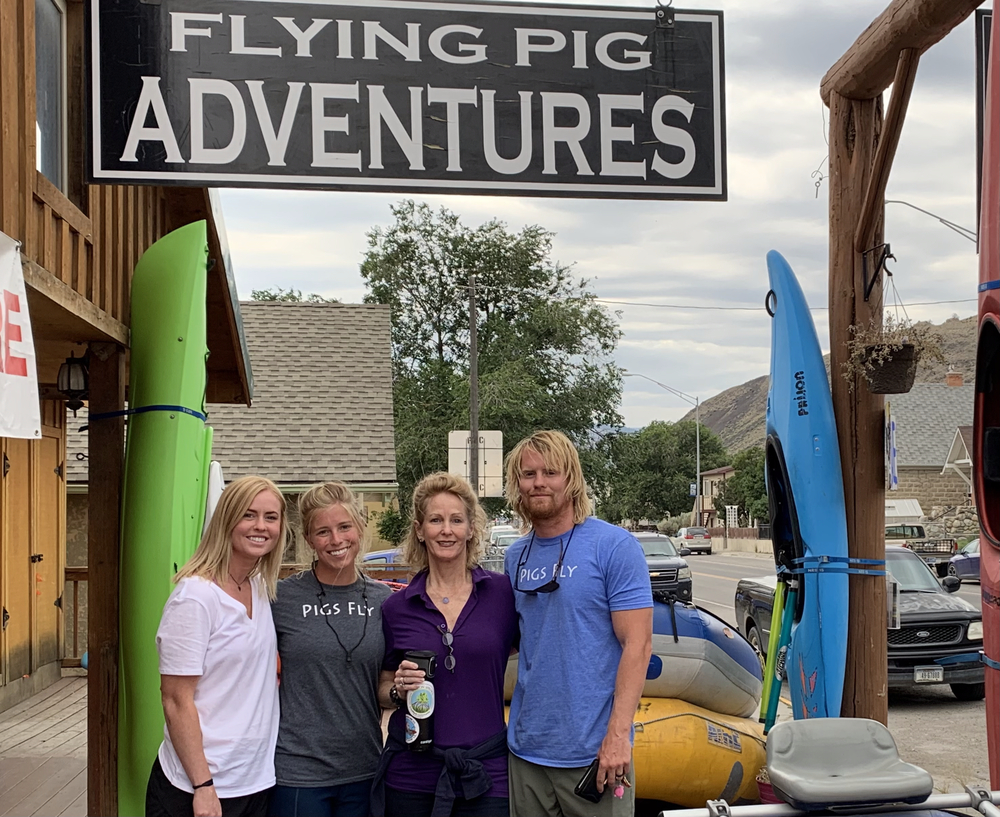
They’d always been close, so when Patrick left Georgia for Montana six years ago, Louisa, who also loves the outdoors, followed suit. They have been rock-solid supports for each other. They know how to ask each other for help when they need it, and they know how to offer support in healthy ways. This served them well when Patrick and a friend of his bought a white-water rafting business, and Louisa helped him with bookings and more for several summers.
There was so much gratitude gained during this brief adventure.
Gratitude for my health, my children and their great relationships with their significant others and amazing dogs. Gratitude that I had enjoyed giving the talks I gave and that they were so well received. Gratitude for the confidence to ask for help and that I’d listened when people along the way told me that asking for help is a sign of maturity. Gratitude that I’d made new connections with people who were enthusiastic about the work being done at PACEs Connection, and how well it aligns with work being done by the thousands of employees at Head Start who are eager, too, to prevent and heal trauma.
Writing this blog was a kind of gift to myself on this March day, which is also my birthday. It is also a way of marking and celebrating these new friendships and possibilities, and affirming the fact that we’re never too old to ask for help, or to have a pop-up, girls-only slumber party.
“We typically don’t talk about poverty as a condition that benefits some of us,” Desmond writes in his morally charged manifesto. “It seems we prefer more absolving theories of the problem.”Photograph by Philip Montgomery for The New Yorker
By Margaret Talbot, The New Yorker, March 13, 2023
“Books about poverty tend to be books about the poor,” the sociologist Matthew Desmond writes in “Poverty, by America” (Crown). That’s true whether the motivation is to blame the poor for their lot—chronicling the supposed pathologies creating a “culture of poverty”—or, more commonly nowadays, to generate empathy via detailed ethnographies of survival and agency amid deprivation. It was true of the first books that set out to systematically map and measure poverty, such as the Victorian reformer Charles Booth’s seventeen-volume “Life and Labour of the People in London,” and of Progressive Era attempts to rattle the consciences of the well-off, like Jacob Riis’s document of New York tenement life, “How the Other Half Lives.”
When Michael Harrington wrote his 1962 classic, “The Other America,” a work of morally charged narrative nonfiction often credited with helping to inspire the War on Poverty, his aim was to reveal the “socially invisible” poor to the rest of America. A cocoon of postwar prosperity and complacency, he wrote, blinkered “middle-class women coming in from Suburbia on a rare trip,” who might “catch the merest glimpse of the other America on the way to an evening at the theater”; it also blinkered “the business or professional man,” who might “drive along the fringes of slums in a car or bus” without regarding it as “an important experience.” The book’s dominant rhetorical modes, as Harrington’s biographer Maurice Isserman notes, were paradox and revelation. If the scales were pulled from the eyes of his well-meaning readers, they would see, in the shadows of American plenty, tens of millions of poor people, whom Harrington catalogued and described: rural poor, city-dwelling slum poor, alcoholic skid-row poor, and so on—all of them urgently needing the help of the government and liberal élites. Even a book like Charles Murray’s “Losing Ground,” an influential neocon attack on “welfare dependency,” from 1984, focussed on the poor themselves, if only so that Murray might make an argument about how they had immiserated themselves by adapting to anti-poverty policies.
“These are some of my favorite people and me at from a recent conference,” said PACEs Connection monthly donor Kerrie Ackerson. From left to right—Ginger Healy from the Attachment Trauma Network, Kerrie’s sister “my (little) big sister Stacey (our family’s brave teacher)”, trauma informed educators and advocates Jim Sporleder, Lara Kain, Jodi Place, and Ackerson.
The number of donors giving to PACEs Connection with a monthly gift is increasing.
“While we’ve added about 15 new monthly donors recently, and we are grateful for them, it would be good to see more of our members — and visitors — supporting our work to prevent and heal trauma,” said Ingrid Cockhren, PACEs Connection CEO.
With more than 58,000 members of this networking community, and with the staff needed to support the site, the communities, the newsletters, our podcasts, webinars, and conferences, Cockhren is asking members to sign on to make a monthly donation.
“If just ten percent of you made an automatic monthly donation of $10, you could help us cover a substantial portion of our budget,” said Cockhren.
Please consider following in the footsteps of supporter Kerrie Ackerson, who shares below her reasons for making a monthly gift to PACEs Connection.
Name:Kerrie Ackerson
Occupation:Writer
Connection to PACEs Connection/PACEs science?Survivor, foster mom, adoptive mom, auntie, wife of a nurse who survived COVID.
Do you work in the field?My career started as a literacy volunteer in an institution for adults who committed violent crimes and were found “not guilty by reason of mental disease or defect.” From there I worked at a maximum-security prison for adults who were too violent and/or actively psychotic to be placed in a “normal” prison. Later I worked in county human services and ran the juvenile court division including a shelter facility, a secure detention center, youth probation offices, and a diversion program. My most recent 12 years were spent at an educational service agency in Wisconsin working in the areas of youth mental health and school safety.
How did you find out about PACEs Connection?One day I got an email inviting me to a webinar that was being done by a woman named Lara Kain from Los Angeles. SHE BLEW MY MIND with PACES science. I was telling my sister about this fabulous woman, and she said –“That’s funny, I used to work with someone with that same name in Madison.” It was the same person! Crazy, small, world. We both have followed Lara ever since (including following her during her time at PACES Connection).
Were you surprised to find this resource?Yes. The best contacts I have ever met are all followers of PACES, and I was shocked to find such a wonderful source of important information AND such fabulous humans all in one place.
What part of PACEs Connection do you like best?I like it all. I’ve benefitted from Ingrid’s regional historical perspectives on racial trauma, Mathew’s podcasts, countless webinars, blog posts, and now every time I get my weekly PACES email I end up losing a LOT of time reading the stories and “clicking deeper.”
How do you use PACEs Connection?There is so much valuable information, research, resources and more that PACES puts out. As a grant writer, reading the weekly RoundUp keeps me at the front of the field and keeps information at my fingertips.
Do you read the Weekly RoundUp (enewsletter)?Yes.
Do you share stories from the Weekly RoundUp?Yes.
Do you belong to a resiliency initiative?I do not. I help to run a Trauma Training Project for school professionals across Wisconsin in partnership with Dr. Bruce Perry’s Neurosequential Network, and I find that quite energizing. But I don’t belong to a formal resiliency initiative…unless you count my 16 person “Trauma Peeps” text group which provides a safe haven where we can say things that could get us in trouble if we yelled them out into the universe. 😊
What prompted you to support PACEs Connection with your gift?The incredible value that I get from PACES made me a supporter. When I heard the initiative was truly self-funded and needed support, I wanted to do what I could.
What keeps you giving as a monthly donor?The value of the content and the people.
What would you tell others, to encourage them to support PACEs Connection on a monthly basis?Please help this AMAZING resource stay strong. If you aren’t involved, get involved, it is life-changing.
15. What is your greatest hope for what happens with PACEs science? That we end child abuse? Create equity? Eliminate racism? Do away with poverty? Create a trauma-informed and healing-centered planet?Gosh, I’d like it if ANY of those things could happen. As I now know (thanks to PACES) all of those things are intricately connected. If I could wish one thing for all humans, it would be true connection. As I just heard Dr. Perry say the other day on a podcast, “Connection is at the core of all human success, and all human need—to be connected and belong to a community of people.” We are in a pandemic of loneliness and disconnection, and the state of our world reflects that. PACES works every day to change that, and I am so appreciative of the work you all do.
Ackerson encourages fellow members of PACEs Connection to join her in making a generous, tax-deductible donation to PACEs Connectionhere.
If you’d prefer to mail your gift rather than give it online, here’s how…
Make check payable to: TSNE (Third Sector New England, our fiscal sponsor) and write PACEs Connection Donation on the memo line.
Mail check to: PACEs Connection, c/o TSNE, 89 South Street, Suite 700, Boston, MA 02111
Making a wire transfer or need Tax ID information?
Each year millions of Americans face the reality of living with mental health struggles. The collective trauma of COVID-19 has exasperated our country’s mental health crisis.
In honor of May’s designation as Mental Health Awareness Month, co-hosts of the History. Culture. Trauma. podcasts Ingrid Cockhren, CEO of PACEs Connection, and Mathew Portell, director of communities, speak with guests about our country’s science, support, education, advocacy, and policies focused on mental health.
This week’s episode—at 1 pm PT, 4 pm ET, Thursday—features an encore of an interview with Rebecca Lewis-Pankratz.
Lewis-Pankratz is a learning centers director and poverty consultant. She regularly speaks on rural poverty and systems, including foster care, and how they affected her journey.
Despite growing up in addiction and poverty, Lewis-Pankratz was able, against all odds, to fight her way out of poverty. Her journey from the trailer park where she was living with her three young sons began in 2011 when she connected with a local poverty resolution project.
Lewis-Pankratz later went to work for that non-profit, and went on to build multiple projects like it to help more families.
More about Rebecca Lewis-Pankratz
Today Lewis-Pankratz works with communities and schools across the US to solve poverty and heal trauma. She does this by helping caring leaders create sustainable ecosystems of resilience based on building better relationships.
In 2015, Lewis-Pankratz started working with public education and ignited a trauma-informed schools movement in her state and beyond. From her experience of trauma and poverty, and by accessing buffering relationships, Lewis-Pankratz healed from both poverty and addiction and continues to light the path for others.
Lewis-Pankratz and her team have partnered with Youth Core Ministries out of Greensburg, Kansas, to establish and sustain poverty resolution projects across Kansas and Illinois. Currently, they are working with over 200 families who are systematically building their paths out of poverty. Lewis-Pankratz is widely known in Kansas and across the United States for her extensive work in building trauma-informed schools.
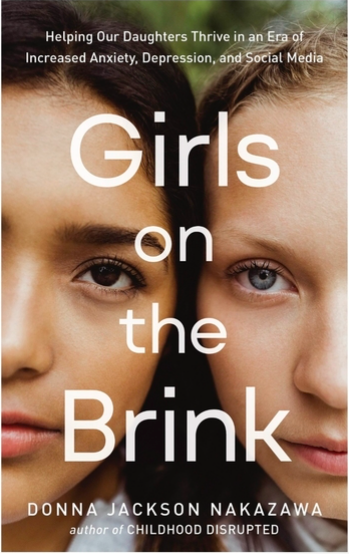
A headline earlier this year said it simply: Social Media is Devastating Girls Mental Health.Donna Jackson Nakazawa, an award-winning science journalist and the author of seven books exploring the intersection of neuroscience, immunology, and human emotion, is featured in this week’s episode of History Culture. Trauma, and explains the crisis facing today’s girls as being a biologically rooted phenomenon, and more, and offers solutions to the crisis that has many parents wondering what they can do.“The earlier onset of puberty mixes badly with the unchecked bloom of social media and cultural misogyny. When this toxic clash occurs during the critical neurodevelopmental window of adolescence, it can alter the female stress-immune response in ways that derail healthy emotional development,” explains Nakazawa.This week’s encore episode of History. Culture. Trauma. is an excerpt from a recorded interview of Nakazawa conducted by PACEs Connection team members Carey Sipp and Natalie Audage in October, 2022, as a part of the PACEs Connection Connecting Communities One Book at a Time initiative. The initiative featured her latest book Girls on the Brink:Helping Our Daughters Thrive in an Era of Increased Anxiety, Depression, and Social Media. The book was published last October.In this interview, Nakazawa focuses on the impact of modern society on adolescent girls. “Anyone caring for girls today knows that our daughters, students, and girls next door are more anxious and more prone to depression and self-harming than ever before. The question that no one has yet been able to credibly answer is “Why?”Nakazawa was clear that while she sees much to worry about girls’ mental health today, she also has hope. She offers 15 antidotes or “strategies for raising emotionally healthy girls” in the book and spoke about a several of them during the webinar from which this interview is gleaned. (See below for resources, including a link to the longer webinar interview in which she details the strategies.)Antidotes fall into three categories and include three on “the building blocks of good parent-child connection, and the importance of family connection,” six antidotes for “making her home a safe space,” and six antidotes to “bring in what the wider community can provide.” The longer webinar interview honed in on at least one antidote from each of the three categories, including making it a good experience when your daughter turns to you, the importance of “wonder”, and encouraging a sense of mastery.Jackson Nakazawa has appeared on The Today Show and NPR, and is a regular speaker at universities, including the Harvard Division of Science Library Series, Rutgers University, Johns Hopkins, Learning and the Brain, and the Andrew Weil Center for Integrative Medicine at the University of Arizona. She is also the creator and founder of the narrative writing-to-heal program, which uses a process called Neural Re-Narrating to help participants recognize and override their brain’s old thought patterns and internalized stories.
Listen to “History. Culture. Trauma.” here online on Thursday, or access this, or prior podcasts, at the podcast service of your choice listed below.
 Carey Sipp 12/14/2210:30 AM
 Make check payable to:
 Making a wire transfer or need Tax ID information?





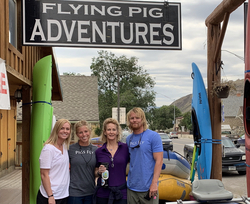 They’d always been close, so when Patrick left Georgia for Montana six years ago, Louisa, who also loves the outdoors, followed suit. They have been rock-solid supports for each other. They know how to ask each other for help when they need it, and they know how to offer support in healthy ways. This served them well when Patrick and a friend of his bought a white-water rafting business, and Louisa helped him with bookings and more for several summers.