Tag Archives: writing

Register now: The Future of Work: Envisioning a Healing-Centered Workplace June 13-15 

Carey Sipp Carey Sipp 6/6/235:53 PM

Could a workplace actually help prevent trauma and help people heal?

If you are burned out, tired of a toxic workplace, looking to join the Great Resignation, or, if you’re an employer, if looking for ways to prevent a mass exodus and retain valued employees, you are not alone.

The last three years have seen the pandemic, racial unrest,  environmental traumas, increases in poverty, major policy and political shifts, and the effect these existential threats have on our stress levels. These collective traumas have inevitably affected our tolerance for challenges to our lives, livelihoods, and wellbeing.

To explore the future of work; ways work both contributes to our stress and could in fact be a means of promoting wellbeing, PACEs Connection called on experts from the fields of PACEs science, human resources, public policy, infant and child development, trauma-informed leadership and more for a deep look into the workplace and we were met with these topics to consider:

  • A History of Work – Paid and Unpaid Labor in America
  • Nurturance: The Fundamental Condition Every Human Needs to Thrive
  • Do Policies Create Poverty, Child Abuse, and Neglect ?
  • What If Babies Ran the Workplace?
  • Compassion Fatigue
  • Toxic Workplaces
  • Trauma Informed – Being Embraced by Every Professional Sector
  • Partnering across Georgia to Create Trauma Informed, Inclusive Workplaces
  • The American Laborer
  • Empathetic Leadership: Toward a Workplace that is Human-Centered and Trauma-Informed.
  • Reimagining Workplaces, the Role of Wellness
  • How One Organization is Tracking and Recognizing Organizations that are Becoming More Trauma Informed.

PACEs Connection will explore these topics and more for three afternoons next week, and invites you to register here now for the conference, taking place from noon – 5:00 p.m. ET, June 13 – 15. Tickets range from $150 for a single day to $399 for the full conference. Conference sessions will be recorded and offered for sale at a later date.

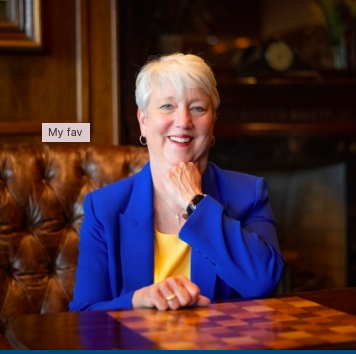
Screen Shot 2023-06-06 at 7.10.55 PMJoin PACEs Connection CEO Ingrid Cockhren and authors and leaders from the field of PACEs science, human resources and trauma-informed leadership as they share historical and late-breaking perspectives on work and trauma, our economy, the dignity of work, lived experiences, the impact of policy, who’s looking to create “trauma-informed workplaces”, and the future of work.

How would we work in a “Just Society”, where all are valued equally? The healing-centered workplace – and the disruptions it will take to create it  – will happen through community.

Descriptions of each day:

Day 1: The Great Resignation: How did we get here? How is it that we created and now perpetuate a system that values the work of some and denigrates the work of others? How did we get to the point of The Great Resignation? When and how will it stop? How does historical trauma in America affect the way we work– and overwork – ourselves and each other?
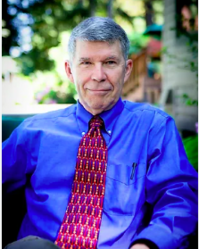
Screen Shot 2023-06-06 at 7.05.59 PMWhat about economics, racism, and poverty and their impact on how we work?

How do current policies and practices encourage child abuse and neglect?

What if BABIES ran the workplace?

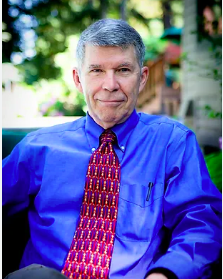
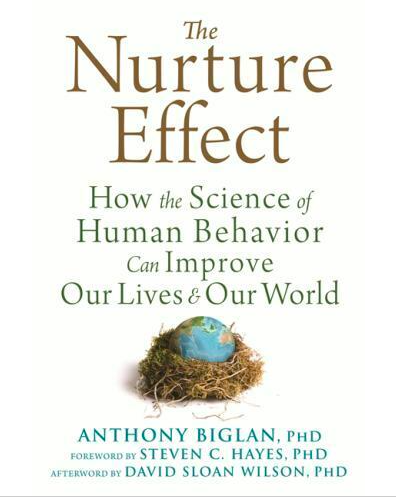
Speakers will include Cockhren, an expert on historical trauma in America, and author Tony Biglan, PhD, a Senior Scientist at Oregon Research Institute and the Co-Director of the Promise Neighborhood Research Consortium. Dr. Biglan has been conducting research on the development and prevention of child and adolescent problem behavior for the past 30 years. His books include, The Nurture Effect, How the Science of Human Behavior Can Improve Our Lives and Our World; and Rebooting Capitalism: How We Can Forge a Society That Works for Everyone.
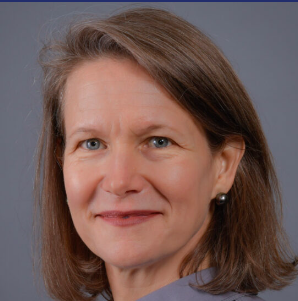
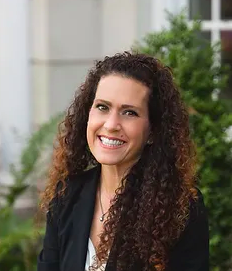
Screen Shot 2023-06-06 at 7.20.31 PMClare Anderson, MSW, Senior Policy Fellow at Chapin Hall at the University of Chicago, will share research on the economics of child abuse and neglect, and how some polices perpetuate poverty.

Screen Shot 2023-06-06 at 7.00.14 PMDeborah McNelis, M.Ed, author, The First 60 Days and The Neuro-Nurturing ® Interactive Packet Series for new parents, founder, Brain Insights will share what the workplace would look like if babies ran it!

Day 2: Change starts here: Toxic stress, burnout, and work life balance. We have to look at where we are  – as individuals – with toxic stress, burnout, and work life balance.  What are the lived experiences of people who’ve survived toxic workplaces? Racism on the job? Microaggressions for being LGBTQI? Loss of employment or income due to lack of quality affordable childcare? What are the lived experiences of people in places where new parents are given time off, and high quality childcare is state-sponsored, as is healthcare? How are states handling the mental health crisis and creating trauma-informed, inclusive workplaces? Is diversity, equity, inclusivity, and belonging work the solution?
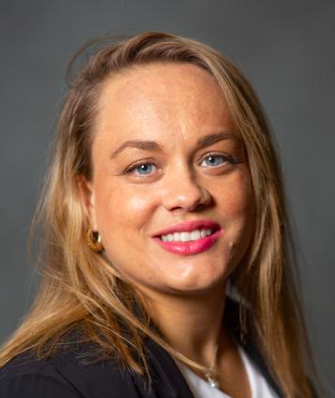
Screen Shot 2023-06-06 at 7.11.50 PMSpeakers will include Porter Jennings-McGarity, PhD, LCSW, PACEs Connection Director of Community Data + Continuous Quality Improvement and Trauma-Informed Criminal Justice Consultant, Alison Cebulla, Healthy Workplaces Consultant, and Becky Haas, internationally recognized advocate, trainer, and organizational coach on using a trauma-informed approach.

Guided by her direct practice experience in the child welfare system, Dr. Jennings-McGarity’s scholarly agenda includes empirical research related to secondary trauma and burnout in the child-welfare system, including co-authorship of a peer-reviewed research paper on compassion satisfaction published in the Journal of Social Service Research.
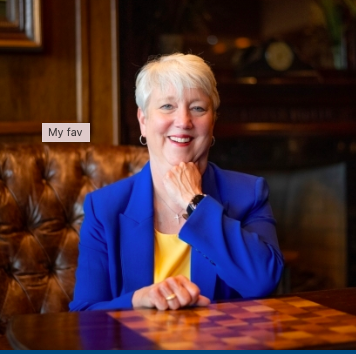
Screen Shot 2023-06-06 at 7.19.02 PMHaas is the co-author of  the Building a Trauma Informed System of Care Toolkit for the Tennessee Department of Children’s Services. It details a blueprint for creating community resilience, as featured in PACEs Connection, Growing Resilient Communities 2.1, and has been recommended as a “practical tool” in Johns Hopkins, Progress in Community Health Partnerships: Research, Education, and Action.
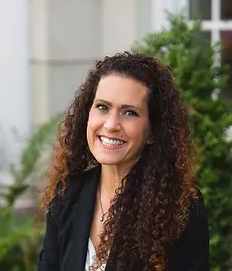
Screen Shot 2023-06-06 at 6.58.34 PMEmily Anne Vall, Ph.D. and executive director of Resilient Georgia, and Jenn Graham, founder and CEO of Inclusivv  will discuss how Resilient Georgia has created several tools, resources and opportunities that all partners can take advantage of to create a more trauma informed workplace culture and recognize secondary trauma and/or empathy fatigue.

Screen Shot 2023-06-06 at 6.59.43 PM

Vall and Graham will also discuss ways  regional coalitions have bolstered this work through workplace training opportunities, leadership opportunities, and courageous conversations. They will also share more about the work of  Inclusivv across Georgia to embrace workplace culture and inclusivity.

Day 3: The Future of Work – Envisioning a healing-centered workplace and just society. Diversity, equity and inclusion, and health and wellness. What does work look like in a “Just Society”?  Do we value – or not value – the sacredness of work? How do we pay people what they’re worth? How do we ensure that people are able to do work they love? How will it be when all work is honored and valued, when all are assured an income that makes truly living – being able to afford the basics of housing, food, clothing, transportation, education, and healthcare as a given, but also earning enough to enjoy life’s pleasures of vacations, entertainment, free time? Will we actually be more productive? Can we create enough trust in the workplace to ask for empathy? Who is monitoring what organizations become trauma-informed, what does that mean, and how do we find out which workplaces are “Family Forward”?
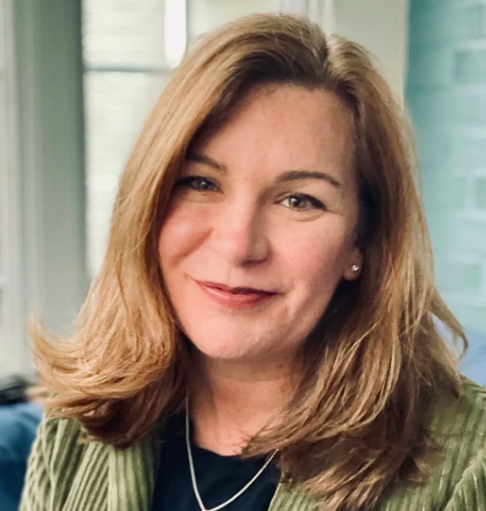
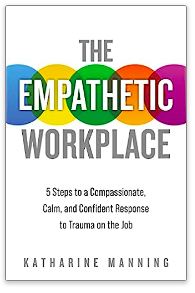
Screen Shot 2023-06-06 at 7.06.38 PMSpeakers will include Katharine Manning, author of The Empathetic Workplace, and Vernisha Crawford, CEO of theTrauma-Informed Institute, as well as Lisa Finaldi, Community Engagement Leader at the North Carolina Early Childhood Foundation, which recently began certifying “Family Forward” workplaces.

Manning has worked on issues of trauma and victimization for more than 25 years. As a senior attorney advisor with the Executive Office for United States Attorneys, for fifteen years, Manning guided the Justice Department through its response to victims in cases ranging from terrorism to large-scale financial fraud to child exploitation.

Screen Shot 2023-06-06 at 7.07.05 PMCrawford’s Trauma-Informed Institute certifies leaders as trauma-informed professionals to reduce workplace trauma and prioritize wellness. Her presentation will emphasize the non-negotiable nature of wellness in our lives, and how prioritizing our physical, mental, and emotional well-being impacts personal and professional success.
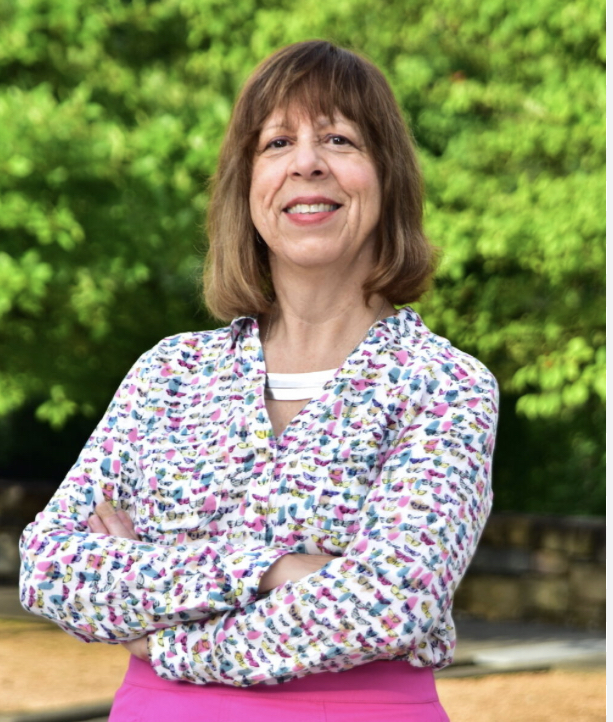
IMG_6635

Finaldi, Community Engagement Leader at the North Carolina Early Childhood Foundation, has led the charge on creating Family Forward NC, an initiative to “improve children’s health and well-being and keep North Carolina’s businesses competitive”.  The program is “employer-led change to increase access to research-based, family-friendly practices — big and small — that improve workplace productivity, recruitment and retention; grow a strong economy; and support children’s healthy development.”

At the end of each day’s presentations, a panel discussion with the speakers will give speakers and attendees alike the opportunity to make comments and ask questions.


For current and future sponsorship packages and other information, contact Carey Sipp, PACEs Connection, director of strategic partnerships, at csipp@pacesconnection.com.

Register here now for Healing Centered Workplaces: The Future of Work conference, taking place from noon – 5:00 p.m. ET, June 13 – 15. Tickets range from $150 for a single day to $399 for the full conference. Conference sessions will be recorded and offered for sale at a later date.

Attachments

Hide

Images (13)

Screen Shot 2023-06-06 at 7.10.55 PM: Ingrid Cockhren, PACEs Connection CEO
Screen Shot 2023-06-06 at 7.05.59 PM: Anthony Biglan, PhD
Screen Shot 2023-06-06 at 7.07.54 PM
Screen Shot 2023-06-06 at 7.20.31 PM: Clare Anderson, Senior Policy Fellow, Chapin Hall at the University of Chicago
Screen Shot 2023-06-06 at 7.00.14 PM: Deborah McNelis, M.Ed.
Screen Shot 2023-06-06 at 7.11.50 PM: Porter Jennings-McGarity, PhD, Director of Continuous Quality Improvement,  and Justice Consultant, PACEs Connection
Screen Shot 2023-06-06 at 7.19.02 PM
Screen Shot 2023-06-06 at 6.58.34 PM: Emily Anne Vall, PhD, Executive Director, Resilient Georgia
Screen Shot 2023-06-06 at 6.59.43 PM: Jenn Graham, Exclusivv
Screen Shot 2023-06-06 at 7.06.38 PM: Katharine Manning, Author, The Empathetic Workplace
Screen Shot 2023-06-06 at 7.08.15 PM
Screen Shot 2023-06-06 at 7.07.05 PM: Vernisha Crawford, CEO, Trauma Informed Institute
IMG_6635: Lisa Finaldi, Community Engagement Leader, North Carolina Early Childhood Foundation

‘History. Culture. Trauma.’ podcast: Encore interview with Dr. Bruce Perry on historical trauma and ‘What Happened to You?’ Thurs. 1 p.m. PT; 4 p.m. ET

Carey Sipp Carey Sipp 6/20/231:55 PM

As a reflection on the past weekend’s celebration of Juneteenth, and the historical trauma of chattel slavery influencing our lives today, this week’s episode of the History. Culture. Trauma podcast is an excerpt from a recorded interview of Dr. Bruce Perry conducted by hosts Ingrid Cockhren, PACEs Connection CEO,  and Mathew Portell, director of education and outreach, in June, 2022.

In this interview Perry discusses, within the context of historical trauma, his #1 New York Times Bestseller “What Happened to You? Conversations on Trauma, Resilience, and Healing” (2021), which he co-authored with Oprah Winfrey.

“If you don’t understand history, you’re never going to understand trauma. And if you don’t understand trauma, you’re never going to understand history. And this is part of our problem as a field,” said Perry in the wide-ranging interview discussing  the intersecting fields of trauma and historical trauma.

“There are some really exciting and important things that are happening in the area of historical trauma,” said Perry. He addressed the history of colonialism, treatment of indigenous people, kidnapping and enslavement that are such a part of the history and historical trauma of the United States.

“You know, we are living in systems that are fundamentally colonial in construction,” he said. “And colonialism basically means I’m going to come into your space, your place, and I’m going to take your things and I’m going to make you feel privileged, if I give you a little bit of it back.”

Screen Shot 2023-06-20 at 3.53.23 PM
Historical perspectives about trauma deserve “as much attention and funding and support” as is given to people studying the effects of a drug on post traumatic stress disorder (PTSD), or the effects of other treatments, he said.

Perry is the principal of the Neurosequential Network, senior fellow of The Child Trauma Academy and adjunct professor in the Departments of Psychiatry and Behavioral Sciences at the Feinberg School of Medicine at Northwestern University in Chicago and the School of Allied Health, College of Science, Health and Engineering, La Trobe University, Melbourne, Victoria Australia.

According to his website, “Over the last thirty years, Dr. Perry has been an active teacher, clinician and researcher in children’s mental health and the neurosciences holding a variety of academic positions. His work on the impact of abuse, neglect and trauma on the developing brain has impacted clinical practice, programs and policy across the world. Dr. Perry is the author, with Maia Szalavitz, of “The Boy Who Was Raised As A Dog”, a bestselling book based on his work with maltreated children, and “Born For Love: Why Empathy is Essential and Endangered”.

Perry, a native of Bismarck, North Dakota, earned his undergraduate degree at Stanford University and Amherst College. He attended medical and graduate school at Northwestern University, receiving both M.D. and Ph.D. degrees, and completed a residency in general psychiatry at Yale University School of Medicine and a fellowship in Child and Adolescent Psychiatry at The University of Chicago.

To listen to Thursday’s podcast at 1 p.m. PT, 4 p.m. ET, click here.

To hear prior episodes via your favorite podcast service, use the links below.

To watch the complete webinar, visit the PACEs Connection YouTube channel here.

Constipation nation? Damndemic guts and PACEs science. Anybody else on the john at 5 a.m. being hypnotized by their IBS App?

Carey Sipp Carey Sipp 6/29/236:23 PM

This is the first in a series of blogs about what I believe to be some of the consequences – “negative” and “positive” – of positive and adverse childhood experiences (PACEs) across my lifespan. I share this as my healing journey takes another twisty turn for the better. I’d love to know if and how you believe your positive and adverse childhood experiences have affected your health.

I’ll post other installments as we at PACEs Connection continue to share the latest science, and stay focused on our work to connect and create healing communities. Subsequent topics may include insights on PACEs and finances, relationships, and parenting.

Please know my intention is not to offend anyone, or to make light of my own experiences, or to make light of the experiences of others. It is to share experiences in hopes of helping fellow travelers and wanting the world to know that the traumas being wrought upon us are in large part the results of broken values and systems in the collective that affect families and individuals — across the lifespan!

Physicians, policymakers, and business leaders need to know about the pain perpetuated and created by their reluctance to recognize and address childhood trauma as the root cause of most of our seemingly most intractable societal and personal challenges. We all live with collective “undigested trauma” and I believe that is why we are a nation and a people experiencing so much pain. The pain is trying to tell us all a lot. And I’ll say more about that in subsequent essays.

I do believe we are our own best healers, that laughter is some of the best medicine, and that being able to look back on adversity with curiosity, compassion, and grace adds years to our lives.

There is science to support those beliefs. Proof positive? I am still here, and look forward to sharing these and other findings with this “chosen family” of fellow members of PACEs Connection.

Happy 4th of July weekend. May it be truly liberating.

IMG_2842

GUTS

Here’s the deal: I was born with gut issues. There are myriad reasons for it, probably, but the root cause of the root and sacral chakra block that keeps my guts twisted, turning, and sometimes frozen or  burning, is likely trauma experienced when I was an itty-bitty fetus.

Adverse fetal experiences?

I say adverse birth experiences because my mother was the victim of horrific domestic violence while she carried me, and it sure didn’t get better when she had a baby girl instead of the hoped-for baby boy.

Anyway, that’s kind of root cause of why, at 5 a.m. on a Saturday morning, I am AWAKE. Doing cat-cow yoga moves. Breathing deeply into my bowels. Drinking MORE hot water. Taking the fistful of probiotics I take in the morning to complement the fistful of probiotics I take mid-day and the fistfull I take at night.

This is a 24-7 operation, trying to regulate my dysregulated guts. And it has been for much of my life. Oddly, while I was pregnant and pumped full of progesterone, and then breastfeeding and high on my own oxytocin, I didn’t have these issues. But that was more than 30 years ago. Those were the sweetest of days, despite all manner of other challenges.

But now it is about 5:45 a.m. I’ve done more yoga moves. I am sitting on the john with my feet up on a box to replicate the effect of using a “Squatty Potty”, a plastic footstool like thing I’d bought years ago after seeing it on SharkTank.  As part of the sales pitch, the successful inventor revealed that the way Americans sit while toileting actually prevents a healthy bowel movement.

Go figure. Not having our bodies in a squatting position – as our hunter-gatherer nomadic ancestors did – isn’t good for us for many reasons. But that’s another gut report.

How many different simultaneous actions are happening here to support this effort?

  1. All those probiotics are working in my frozen gut
  2. I am massaging my part of my lower abdomen in a way that is supposed to help facilitate movement
  3. I have been listening to the “Inner River” meditation in my “Flare Up Kit” on the Nerva app (I pay about $20 a month for it.)  It is delightful. A lovely Australian lady hypnotizes me in 15 minutes to “relax my body” and calm my sympathetic nervous system the-heck -down so I can get to rest and digest and what I call DIVEST
  4. I’ve been rocking gently, as that, too, is supposed to help
  5. Prior to this magic moment, I sipped a cup of hot water
  6. I also drank a tall-boy cup of “Bio Coffee” that tastes great with some stevia in it, and was created to help customers “love what it does to your body” because it’s formulated to help support gut health
  7. Hours before this moment, I drank a few ounces of purified water into which I had dumped a scoop of “Calm” magnesium, which helps me sleep and has the side benefit of promoting “motility”
  8. Prior to bed, I had also exercised, eaten a meal of organic turkey, organic jicama tortillas, and papaya. (I eat about six papayas a week because they are supposed to be so good for your guts). I had laughed some by watching the most recent episode of “Ted Lasso.” Laughter is great for guts
  9. I had also had a long talk with a dear friend, which helped me have a sense of being supported and connected. (Relational health supports all health systems, but especially gut health. I think about this often as I eat dinner alone and don’t always relate to my food respectfully by taking time to savor it and thank the plant or creature whose energy I am consuming to stay alive. Note to self: ponder these things for a future essay!)

If I had a nickel for every dollar spent on different remedies for JUST my stomach issues over my lifetime, I might not be rich. But I’d be on the way.

A little bit of information (there is MUCH more) about PACEs science and gut health.

We know from the landmark Adverse Childhood Experiences (ACE) study published in 1998 by The Centers for Disease Control and Prevention and Kaiser Permenete, and written by personal heroes Vincent Felitte, MD, and Rob Anda, MD, that the more ACEs are stacked up in our history, the greater the likelihood of all manner of health issues. My score is eight out of the ten original ACEs.

Subsequent studies looking specifically at gut health show the correlation between gastrointestinal issues and ACEs. The dose-related response truths hold up. The more ACEs, the greater the likelihood of gut trouble. (I am also telling this story because I want to raise awareness of the connection between ACEs and all manner of issues, but also because I want to contribute to raising awareness of the correlation so maybe, just maybe, the next gut doctor I go to will know the rationale for asking patients to answer the ACE questionnaire!)

Baby and little kid guts. Opium?

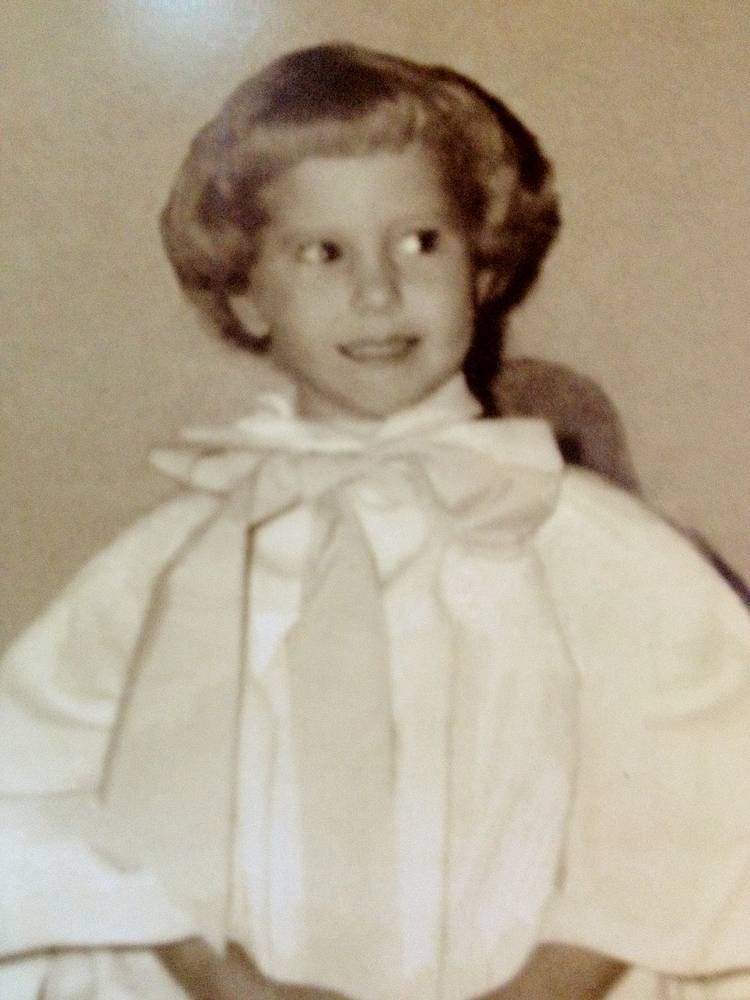
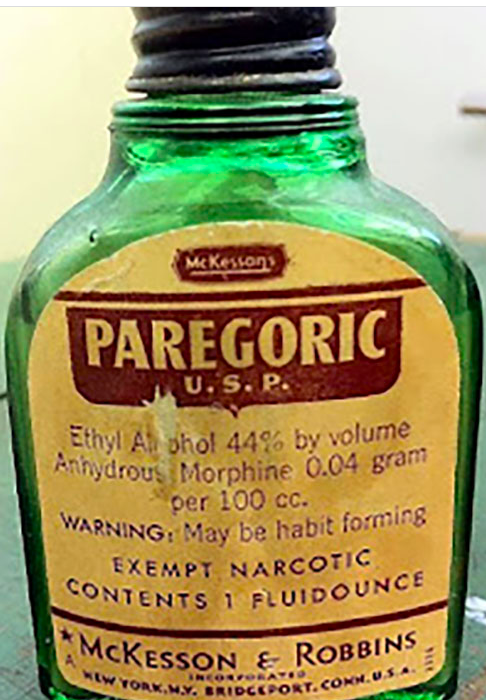
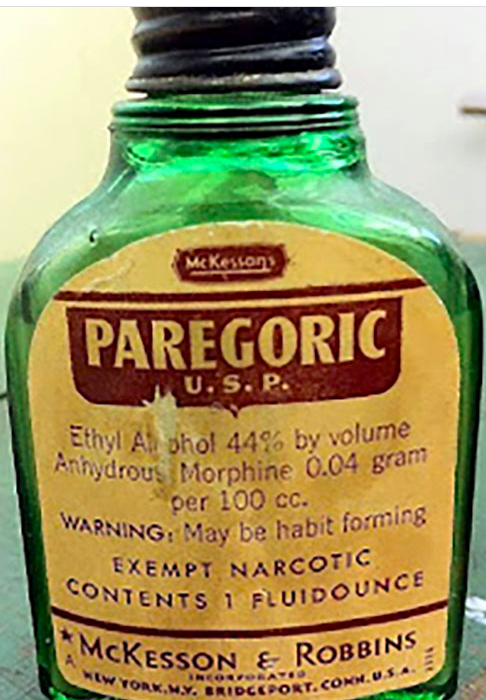
As a child there were visits to the pediatrician. And the memories of being given paregoric – opium – which tasted like licorice (I cannot stand that taste) and which my mother kept above the refrigerator.

Screen Shot 2023-06-30 at 3.35.35 PM

I have no idea how often she pulled out the dropper to knock me out when I was a colicky baby and whiny toddler. Or how many times the cleaning ladies who took care of me much of the time from the age of early infancy until I became a latchkey kid, slipped it to me so they could have a moment’s peace to do the work they were hired to do.

I have imagined, since doing exhausting rounds of inner child work and putting it together that my maternal grandmother died at the same time my mother went back to work – when I was just six weeks old – that the instructions to the cleaning ladies, who were paid $4 a day and not treated very well, must have been to “cook, clean, iron, and oh, by-the-way, there’s a baby in there”.

So that must have been part of the reason I have almost always felt an undercurrent of loneliness. Because I was left at home with the cleaning lady at least  three or four days a week while my mother was working and or taking part in her myriad civic duties. And the person hired to clean the house and do all those other chores and take care of me? How could she have had a lot of enthusiasm for the role, given that she was being paid less than a dollar an hour, was expected to do an inordinate number of tasks, and was likely missing her own children? It was a no-win situation and when I was older and learned more about how Black people were treated, that, too, made my stomach hurt. Still does.

Where the nurturing came into the equation.

Thank God I also know that I sometimes stayed with my paternal grandmother. She loved me deeply and taught me, from an early age, about being kind to people. She also taught me about bugs, flowers, gardening, canning, pickling, cooking, and the joy of shelling peas. She was a living, breathing positive childhood experience (PCE) for me.

But in between those lovely visits to her farm, and wonderful times watching  my next door neighbor, Miss Minnie Anne, cook and garden, I was a pretty sickly child who got carsick on the way to school. And who would throw up at the first whiff of certain odors. In fact, as a third grader, I contributed mightily to the Great Maple Street Elementary School Chain Reaction Barf of 1964.

The Great Maple Street Elementary School Chain Reaction Barf of 1964.

I remember it as if it were a minute ago: Someone threw up in the hallway on the way back from the lunchroom. We’d had fish sticks, mashed potatoes and maybe turnip greens or peas for lunch. Something green. Anyway, the scent of fishy vomit floated my way.

My friend Sally stood in line in front of me as I projectile vomited into her waist-length, shiny brown hair.

Several other kids chucked on the person in front of them.

The school janitor was shoveling that minty sawdust-like stuff all over the hallway to try and mask the scent. It was a feast for all the senses: sight, smell, sound, the touch of the teachers pushing us against the wall and away from each other, and the lingering taste of, well, you know.

We all got to go home for the rest of the day.

While I know Sally forgave me for upchucking on her, I once advocated for her so vociferously that I got paddled by the principal.

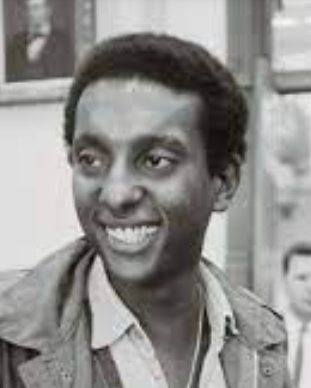
“A little Stokely Charmichael”

Perhaps I fought so hard on her behalf out of guilt for spewing bodily fluids onto her; perhaps it was because I started fighting for the underdog as a tiny child protecting my brother during my parent’s knock-down, drag-out, liquor-fueled (him, NOT her; thank God they weren’t both drinking!) fights.

Whatever the reason, later that year or the next, Sally had been out sick for a week or two, and was being forced to complete all of her homework in what other kids and I thought was an unre
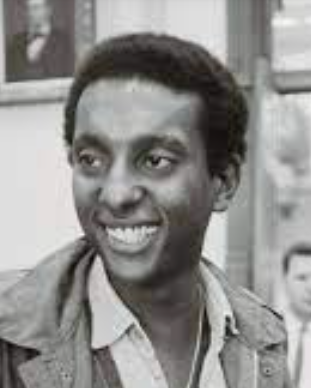
asonably short period of time. I circulated a petition about this being unfair, resulting in the paddling and my being called “a little Stokely Carmichael” by the principal, as he whacked my fifty or so pound self three or four times with a long wooden paddle. It even had holes in it to enhance the pain.

Screen Shot 2023-06-30 at 3.40.41 PM

Stokely Carmichael was a civil rights leader. In pre-integration small-town Georgia, comparing me to a Black man threatening this old white principal’s way of life was NOT a compliment. It was a comparison that earned me more punishment at home.

My beloved  little paternal grandmother – she probably weighed eighty-five pounds soaking wet – was courageous as hell, herself a victim of domestic violence and an advocate for the Black tenants to whom my grandfather rented run-down shanties. I’d like to think she was secretly proud of the principal’s comparison, though I am certain it mortified the rest of the family, most of whom did not hold me in favor for my questioning of the hymn, “Jesus Loves the Little Children” with its key line “red and yellow, black and white, they are precious in his sight. Jesus loves the little children of the world.” I wondered why, if Jesus loved everyone, we weren’t supposed to too?

A thrilling diagnosis.

I could go on about my guts as a kid, but I’ll fast forward to being 20 and having an “ulcerated area in my duodenum.” Truly, I was thrilled with the diagnosis, tendered by our trusted family doctor when I stayed in the hospital for tests and rest on a Christmas vacation home from college. Finally I had proof that I wasn’t making it all up, or, as my mother loved to say, “It is all in your head.”

She claimed I was faking it despite the fact that she drank about three bottles of Maalox a week to wash down the Anacin she took to help the tension headaches caused by the stress of her job working for a man she was terrified of, and living with a man she was terrified of because he would yank her hair out, punch her, throw her down steps, and threaten us with myriad weapons. Guns. Knives. Belts.

To make sure she knew whatever she did was worthless, he’d also sometimes trash the nice furniture she bought by slashing the surface of bedside tables with a hunting knife, punching or shooting holes in the wall, breaking glass to get into the door at all hours of the night, and literally pissing on the flowers she planted.

Yep. I think I came by my tender guts honestly.

Sometimes my mother would be doubled over in pain as she put on her makeup to go to work. Oh. And THAT smell would get to me, too. Because she had a port wine birthmark over half of her face, she literally cooked her “pancake” makeup each morning before applying it. Pancake makeup does not smell good first thing in the morning. Or ever.

She looked beautiful. But underneath that layer of makeup, and the starched white uniform, seamed white hose, and white oxford shoes she wore as her dental hygienist’s uniform, there was a riot of rage as dark and jagged as that birthmark that must have caused ungodly teasing in Depression-era Georgia and Alabama. It was probably part of the reason she felt as if she’d better say yes to my father’s proposal. About him? When she married him he was a World War II veteran who’d experienced his own share of trauma as a child whose father beat the hell out of him, and as a 18-year-old on a submarine in the Pacific during World War II. One story was that his best friend died right in front of him. My father had “hatch duty”. But one day the friend asked to open the hatch instead, and was killed the instant his head popped out in open air.

Multi-generational ACEs; medicine combinations; the bitter end of dark chocolate.

I now understand why my father suffered bouts of depression and anxiety, though I wish he’d had healthier ways of coping than jigger upon jigger of Early Times bourbon mixed with Coca-Cola, tons of my grandmother’s carbohydrate and fat-filled home cooking, relentless skirt chasing, and pound-downs on my mother when she sniffled, cleaned, didn’t cook what he wanted, complained about his wild spending or carousing, or didn’t properly clean and freeze the dove and quail he killed and brought home and left for her to “dress” because he was too smashed to do it himself.

Yep. Dead birds, bird guts and feathers, frozen little bird bodies suspended in ice in plastic containers in a deep freezer full of all manner of ice-encased fish and fowl.

Those could get me gagging too.

But I digress.

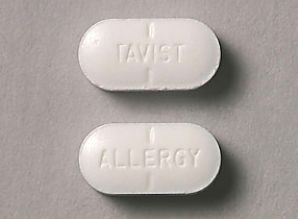
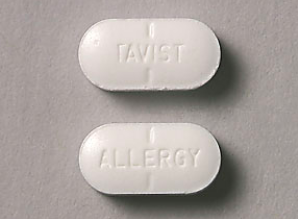
Yes. I’ve had a lifetime of gut issues I medicated with combinations of allergy medicine – because seasonal allergies and the resulting post-nasal drip (Sorry, but for folks with lots of ACEs, there are often issues with hyper-responses to allergens) – and the latest prescription for stomach ulcers. Tagamet and Tavist? That was a great combination, I explained to my doctor when I was in my early twenties. I don’t think he’d made the connection, yet, between allergies, post-nasal drip, and the Spring and Fall flare ups with gut pain and nausea until I explained why I needed both prescriptions.

Screen Shot 2023-06-30 at 3.49.07 PMOver the years there were endoscopies. Colonoscopies.The self-medicating power of the bubbles in beer. The realization that dairy was off the table. The realization that nightshade vegetables were off the table. The realization that gluten, too, was off the table. And then the horrific and deeply painful grief when one of my most favorite foods of all times – dark chocolate – was literally off the table and pretty much out of my life unless I wanted to pay dearly for having savored a bite or two of what had been a staple: four or five bars of Green & Black’s 85% organic chocolate a week. Almost a bar a day. For YEARS.

That loss came when the Damdemic hit, and I suddenly regressed into a primal fear of feeling incredibly unsafe in my own home, and in my own body, where the fire in my belly burned as if I’d swallowed a molten bowling ball.

Next report: Damndemic guts, masked horror, “Better Normals”, ACEs to PACEs, and the road to recovery being paved with many efforts.

Attachments

Hide

Images (4)

IMG_2842
Screen Shot 2023-06-30 at 3.35.35 PM
Screen Shot 2023-06-30 at 3.40.41 PM
Screen Shot 2023-06-30 at 3.49.07 PM

Carey Smith Sipp

carey.pacescommunites@gmail.com

❤️ 4👏 2

A special request from the staff at PACEs Connection

Carey Sipp Carey Sipp 8/22/2311:30 AM

Photo above is of the PACEs Connection staff as we said goodbye to Jane Stevens, PACEs Connection founder and former CEO and publisher, on her transitioning to her new role as publisher of ACEsTooHigh, which was spun off from PACEs Connection on May 1. The eight staff members left in this photo curate and maintain the website, calendar, enewsletters, podcasts, webinars, maps, schedule of Creating Resilient Communities classes, membership profiles and more! They are, top row, l-r, Kahshanna Evans, director of Creating Resilient Communities; Carey Sipp, director of strategic partnerships; Jane Stevens, founder and former CEO, now retired; second row, l-r, Ingrid Cockhren, CEO; Rafael Maravilla, network manager, and Mathew Portell, director of education and outreach; third row, l-r, Jenna Quinn, program coordinator, environmental justice consultant; Porter Jennings McGarity, director of continuous quality improvement and community data, and Tawana Irvin, chief administrative officer.

“As long as I have worked here, I’ve only met two of my colleagues in person. There will always be a barrier that exists when the only way you are able to communicate with someone is through a screen.”

Did you know PACEs Connection …

  • Is a community of communities that’s raised awareness of the science of adverse childhood experiences (ACEs) for 11 years? In 2020, when we changed the name to PACEs Connection, we started cementing the importance of positive and adverse childhood experiences (PACEs) across all sectors, including journalism, policy and legislation, medicine, education and law enforcement, as well as the faith-based, parenting, LGBTQAI+ communities, and more. Our community of communities is now almost 60,000 strong!
  • Is home to 400 cross-sector (involving at least three sectors, such as education, healthcare, communities of faith, government) geographic, and 40 interest-based sub-communities. Tied together by our site, the communities help members find each other, promote their work on their respective free websites, leverage the network, use our social media tools, and more, to learn and share information.
  • Brings you the latest news on PACEs science viaour e-newsletters, the stories we write, the plethora of articles, videos, and resources we curate and post daily, and the monthly Research Corner, filled with the latest peer-reviewed scientific journal articles shared with us by Dr. Harise Stein, a medical doctor and Stanford University professor. We also create and share our ownwebinars andconferences, our History. Culture. Trauma. podcasts, our Historical Trauma in America series, plus the 25 Creating Resilient Communities (CRC) educational webinars staff members present each month. We also offer  – again, at no charge – our Resource Center, modeled after those used in public libraries, and offering a wealth of free resources (many in Spanish and English) used by schools, parenting groups, community outreach programs, colleges, universities, physicians’ offices and more.
  • Connects members of our Cooperative of Communities for our coast-to-coast think tank, and gives members access to your posts, questions, conference and event promotions, comments, and more. It’s a platform we monitor closely to keep as a safe space for our members – including ourselves. It’s also a tool members use  to calendar, market,  and build businesses, promote themselves as subject matter experts, and promote podcasts, workshops, conferences, goods and services. We are delighted to have played a role in your success! With that thought in mind, this is also where we recently shared news of our own offerings in professional development and consulting, and invited you to reach out to Ingrid Cockhren, our CEO, for more information on our services, which started with diversity, equity, inclusion, and belonging work.
  • Is actually run by a lean and scrappy team of just eight dedicated individuals? That’s right. All of this work, and more, is done by just eight people!

Surprised?

We know this work is important to many of our almost 60,000 members, because you, too, share blog posts about your work, your events, your experiences.

We are your conveners, offering this home to post and process, to relate, to learn how to regulate, and reason, and to find members in your own state – and possibly right down the street – who care about the same concerns you do!

Here, each month, there are more than 2.5 million page views!

Some of our members may well have been able to launch or sustain businesses in large part because PACEs Connection has helped them get the word out about trainings, podcasts, webinars, books, public speaking, recovery programs, and more.

Again, this is a service we have loved to provide – with no subscription or membership fee – since 2012.

It’s time, though, for us to make a special request of you. It’s not a heavy lift.

You see, we’d really like to meet each other in person! And we’re hoping you, our readers, members, frequent users, and friends, will support this request by making a tax-deductible contribution to PACEs Connection that will help us connect, in person, later this summer.

Half of us have never met another staff person! And most of us who have met each other haven’t seen each other in five years. Truth? We would deeply appreciate the time to meet each other, connect, work together on some important planning, and have some recreation and restoration time together. All so we can keep improving what we deliver to you, every day.

When asked why they are eager to have a staff retreat, comments included:

“Fresh ideas come when folks can hang out for some team building and fun. Spending time in 3-D is really important for developing trust and bonds with each other.”

“We’ve accomplished so much on a strictly virtual platform. We need to have some in-person bonding. The pandemic showed the world that having human interaction every now and then is necessary; this retreat will support that!”

“We need a work retreat  to support healthy team collaborations, to have the opportunity to step away from our daily routines and stresses, and allow many of us to talk face-to-face for the first time ever, build understanding, and foster a stronger, more cohesive team culture.”

“Empirical evidence underscores the importance of investing in practices to foster healthy team building, especially in non profit organizations. Such activities help unite a team, which helps the team fulfill its mission.”

With your help, we’re hoping to raise about $20,000, enabling staff from California, Massachusetts, New York, North Carolina, and Tennessee, to travel and connect for three days of strategic planning, solution seeking, getting to know each other, and bonding.

Would you be willing to help us connect as we work to improve the work we do for you, our members and readers?

Your donation is tax deductible. You may donate online, or to mail your donation, please make your check payable to: TSNE (Third Sector New England, our fiscal sponsor) and write PACEs Connection Donation on the memo line.

Mail check to:

PACEs Connection, c/o TSNE, 89 South Street, Suite 700, Boston, MA 02111

To wire transfer funds, or if you have questions or comments, please email me, Carey Sipp, director of strategic partnerships, at csipp@pacesconnection.com, or email Ingrid Cockhren, our CEO, at icockhren@pacesconnection.com with the subject line: In-person staff meeting.

Thank you in advance for your support!

Your support of our work is greatly appreciated. Please click here to donate today.

Carey Smith Sipp

carey.pacescommunites@gmail.com

Reducing Stress in Schools with Dr. Tyisha Noise History. Culture. Trauma. Thursday. Sept. 21

Carey Sipp Carey Sipp 9/19/232:17 PM

Amidst reports ofincreased stress,mental health problems, absenteeism, depression, anxiety, and suicidality, America’s students are well into the 2023-24 school year.  Will schools that have taken a trauma-informed approach to student mental health see their students fare better in the coming year? Does it make a difference to have students in trauma-sensitive schools?

History. Culture. Trauma. podcast hosts Ingrid Cockhren, CEO of PACEs Connection, and Mathew Portell, director of education and outreach, take a look at the importance of trauma-informed or trauma-sensitive schools with Tyisha Noise, D.Ed., episode this Thursday at 1 p.m. PT; 4 p.m. ET.

Together they will dig into the paradigm shifts needed to help students grapple with the stress of the global pandemic, our nation’s racial reckoning,  polarized political climate, the increase in school shootings, and more.


Screen Shot 2023-09-19 at 4.06.14 PM“It’s clear that reducing stress in schools is essential for student, staff, and community wellbeing,” said Cockhren. “We’ll delve into many possible solutions, from decreasing class sizes to teaching stress-management techniques that can empower students, and more,” Cockhren added.

Noise is a board member and the chief academic officer of Liberia Forward, a leadership development organization.

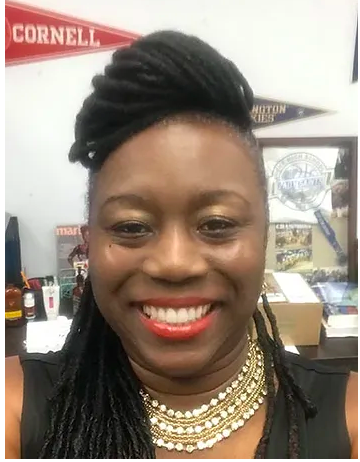
An educator from South Central Los Angeles, Noise received her undergraduate degree  in urban and regional studies from Cornell University, a master’s degree in clinical psychology from Pepperdine University, and her doctor of education degree in educational leadership from Azusa Pacific University.  She also has a master of science in teaching students with disabilities from Pace University.

Noise is the daughter of a teenage mother who says she learned first-hand the value of an education. Although born into poverty and growing up in neighborhoods with gangs and drug abuse all around, school became not just a way for Noise to make her mother proud: it became an adventure and eventually an escape to a new life. Noise’s pursuit of education has taken her across continents from North America to Europe – Italy, France, Greece, UK, the Middle East – Israel and Jordan, Egypt and various islands in the Caribbean.

Tune in here live on Thursday at 1 p.m. PDT; 4 p.m. EDT

Show Links

Encore History. Culture. Trauma. podcast with Vernisha Crawford on Intersectionality: The Trauma and Resilience of Girls of Color

Carey Sipp Carey Sipp 10/24/235:16 PM

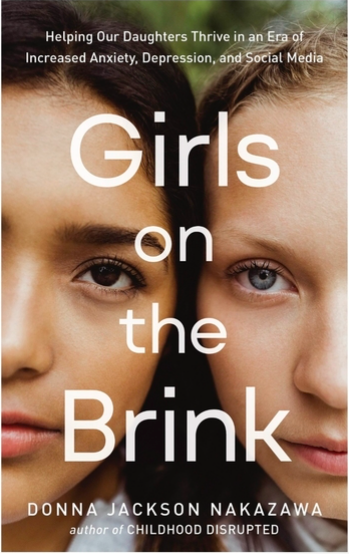
Adolescent girls are experiencing extreme levels of trauma and adversity, especially African American, Hispanic/Latina and Indigenous girls, as we discussed with author Donna Jackson Nakazawa last year when her book “Girls on the Brink—Helping our Daughters Thrive in an Era of Increased Anxiety, Depression and Social Media.” launched.
This week host Ingrid Cockhren, CEO of PACEs Connection, will touch on those topics and more with guest Vernisha Crawford, who  discusses  the lives of girls of color and the intersectionality of racism and sexism in this encore podcast.Screen Shot 2023-09-19 at 4.13.41 PMCrawford is the CEO of Trauma Informed Institute, and has educated 15,000+ working professionals, helped secure and manage over $12 million, and has directly served hundreds of families. Her work has is in demand across many sectors and countries worldwide.Crawford earned her bachelor’s degree in sociology from the University of North Carolina Charlotte and a master’s degree in leadership from Grand Canyon University. She is a certified trauma informed executive coach, a certified health & wellness coach, a master level certified professional life coach, a business coach, and Scrum Master.As she pursues her Ph.D. in General Psychology with a specialization in trauma and disaster relief, Crawford says her most significant learning is being the mother of an elementary school-aged daughter.Crawford is also the Founder of the BYE Foundation, a 501c3 organization which she says offers a unique approach to systems change work by addressing equity gaps in funding, data, research, capacity building, and wellness.A guest facilitator at Davidson College, Belmont, Vanderbilt, and Fisk universities, Crawford has served as a member of the Early Childhood Executive Committee for Mecklenburg County, the North Carolina ACES Task Force Advisory Board, the North Carolina Juvenile Justice Behavioral Health Committee, the Charlotte Lab School Board, and the Charlotte Community Board for The Gathering Spot.In her free time, Crawford works with her passion project @DanceHerSize, a wellness program teaching women and girls about the eight dimensions of wellness through dance and exercise.Tune into the show here at 1 p.m. PT; 4 p.m. ET Thursday, October 26.Show LinksListen in Apple PodcastsListen in Google PodcastsListen on TuneInListen on iHeartRadioListen on SpotifyLike us on FaceBookConnect on LinkedInFollow on TwitterFollow on InstagramBookmark This ShowiTunes FeedGoogle FeedSubscribe to RSS Feed

Attachments

Hide

Images (1)

Screen Shot 2023-09-19 at 4.13.41 PM

Carey Smith Sipp

carey.pacescommunites@gmail.com

Join us for ‘History. Culture. Trauma.’ encore podcast — Thursday 1PM PT with “Girls on the Brink” author Donna Jackson Nakazawa

Carey Sipp Carey Sipp 11/7/233:16 PM

A headline earlier this year said it simply: Social Media is Devastating Teen’s Mental Health.Donna Jackson Nakazawa, an award-winning science journalist and the author of seven books exploring the intersection of neuroscience, immunology, and human emotion, is featured in this week’s encore episode of History  Culture. Trauma.Jackson Nakazawa explains the crisis facing today’s girls as being a biologically -rooted phenomenon, and more, and offers solutions to the crisis that has many parents wondering what they can do.“The earlier onset of puberty mixes badly with the unchecked bloom of social media and cultural misogyny. When this toxic clash occurs during the critical neurodevelopmental window of adolescence, it can alter the female stress-immune response in ways that derail healthy emotional development,” explains Nakazawa.Screen Shot 2023-06-06 at 4.50.27 PMThis week’s episode of History. Culture. Trauma. is an excerpt from a recorded interview of Jackson Nakazawa conducted by PACEs Connection team members Carey Sipp and Natalie Audage in October, 2022, as a part of  the PACEs Connection Connecting Communities One Book at a Time initiative. The initiative featured Jackson Nakazawa’s latest book, Girls on the Brink: Helping Our Daughters Thrive in an Era of Increased Anxiety, Depression, and Social Media. The book was published last October.In the interview, Jackson Nakazawa focuses on the impact of modern society on adolescent girls. “Anyone caring for girls today knows that our daughters, students, and girls next door are more anxious and more prone to depression and self-harming than ever before. The question that no one has yet been able to credibly answer is “Why?”Screen Shot 2023-06-06 at 4.47.40 PMJackson Nakazawa was clear that while she sees much to worry about girls’ mental health today, she also has hope. She offers 15 antidotes or “strategies for raising emotionally healthy girls” in the book and spoke about a several of them during the webinar from which this interview is gleaned. (See below for resources, including a link to the longer webinar interview in which she details the strategies.)Antidotes fall into three categories and include three on “the building blocks of good parent-child connection, and the importance of family connection,” six antidotes for “making her home a safe space,” and six antidotes to “bring in what the wider community can provide.” The longer webinar interview honed in on at least one antidote from each of the three categories, including making it a good experience when your daughter turns to you, the importance of “wonder”, and encouraging a sense of mastery.Jackson Nakazawa has appeared on The Today Show and NPR, and is a regular speaker at universities, including the Harvard Division of Science Library Series, Rutgers University, Johns Hopkins, Learning and the Brain, and the Andrew Weil Center for Integrative Medicine at the University of Arizona. She is also the creator and founder of the narrative writing-to-heal program, which uses a process called Neural Re-Narrating to help participants recognize and override their brain’s old thought patterns and internalized stories.

Listen to “History. Culture. Trauma.” here online on Thursday, or access this, or prior podcasts, at the podcast service of your choice listed below.

Additional resources related to our book study of “Girls on the Brink”

  1. You can still view the recording of the Girls on the Brink October 12 webinar!
  2. Nakazawa and her team created a Book Club Kit for people interested in leading Girls on the Brink book studies.

Sign on now to support the “Decade of the Child” movement led by the National Prevention Science Coalition to Improve Lives (NPSC) and partnering organizations

Carey Sipp Carey Sipp 10/24/244:02 PM

Screen Shot 2024-10-24 at 8.10.50 PMA movement to motivate the incoming administration to proclaim the next 10 years as the DECADE OF THE CHILD is being led and launched by the National Prevention Science Coalition to Improve Lives, (NPSC) with support from PACEs Connection and a growing list of research, public, behavioral, and mental health-oriented organizations, as well as nonprofits supporting child advocacy, policy, and social justice.

Screen Shot 2024-10-24 at 8.12.08 PM“Our nation is failing its children. Despite our economic power, millions of children in the United States face grim realities. We need an unprecedented mobilization—a comprehensive, coordinated strategy to prioritize the health and well-being of every child in America, said Diana Fishbein, PhD, founder, president, and co-director of NPSC, in announcing news of the movement.

“We will seek congressional support for both policy change and dollars to be allocated to the National Institute for Health (NIH) for whole child health and wellbeing research, and are launching the movement to unite people, organizations, and agencies to mobilize an unprecedented national movement. We are working to end the deficiencies and disparities in child health and wellbeing, and  envision future generations of happy, healthy, and productive children and adults” said Fishbein.

A general description of the initiative can be found on the NPSC website. NPSC intends to invoke the same process used to proclaim the Decade of the Brain in the 1990s.

“We would like to be able to document widespread support for creating this movement. Your organizational and individual endorsement could make a critical difference. Our list of supportive organizations, foundations, societies, and individuals is rapidly growing, which is a heartening sign. We would love to see as many of the almost 61,000 individual members of PACEs Connection sign on as possible,” said Fishbein.

“Our hope is that you will indicate  your individual support and possibly also that of your organization for the Decade of the Child on our website. We are not asking for money; we just want to marshal the power of organizations, institutions, foundations, communities, and individuals to spread the word about the value of this initiative, so please repost this PACEs Connection story using the social media icons below the post” Fishbein said.

Screen Shot 2024-10-24 at 8.11.23 PMOrganizations may also customize a request for individual members to endorse the movement by using materials on the NPSC site. They may also send out a more generic request if desired.

“It is past time for the ‘Decade of the Child’ as too many of our children are suffering. We need all people concerned about the health and wellbeing of our nation’s children to be involved in bringing others on board to help,” said Fishbein.

Organizational endorsements will be updated frequently on the NPSC website. They are, as of October 23, 2024

  • Pacific Institute for Research and Evaluation (PIRE)
  • Applied Prevention Science International
  • Integrated Care for Kids/InCK Marks Network
  • HEDCO Institute for Evidence-Based Educational Practice
  • Association for Positive Behavior Support (APBS)
  • itotheN | Intergenerational Impact
  • Positive Childhood Alliance North Carolina
  • Institute for Research and Development “Utrip”
  • Partnership to End Addiction
  • Blueprints for Healthy Youth Development
  • Campaign for Trauma-Informed Policy & Practice
  • Center for Whole Health Learning in K-12
  • Association For Behavior Analysis International
  • Nova Institute for Health
  • Global Alliance for Behavioral Health & Social Justice
  • PACEs Connection
  • Society of Behavioral Medicine

For more information, please visit https://www.npscoalition.org/p…/decade-of-the-child

For Year-end Giving: Please Help Save The PACEs Connection Resource Center with Your Tax-Deductible Gift Today.

Carey Sipp Carey Sipp 12/2/247:11 AM

Please help us save the Resource Center with your tax-deductible gift today, here.

With the December 31, 2024, deadline looming for payment to maintain the PACEs Connection Resource Center, we hope you’ll help protect this invaluable benefit of your free membership and put supporting PACEs Connection at the top of your list.

“There’s not another resource like this,” said Dana Brown, one of two former PACEs Connection employees working as volunteers to keep the site going since it was revitalized in October, after it had been shut down in April 2024, for lack of funding.  Please make your tax-deductible gift today, here.

“The Resource Center represents 13 years of collecting and curating peer-reviewed scientific journal articles and reports, videos, presentations, and more,” said Carey Sipp, the second former PACEs Connection staffer working to secure funding necessary to keep PACEs Connection up and running.

“Several years ago we started including ‘Research Corner’ reports edited by our dear friend and supporter Harise Stein, MD, of Stanford University, who sends a monthly report of the most recent articles on the effects of abuse, as well as summaries of the abstracts and links to research articles that address only adverse childhood experiences (ACEs), positive childhood experiences (PCEs) and the science of positive and adverse childhood experiences (PACEs),” said Sipp.

“Saving, in one place, this information about the lifelong effects of positive and adverse childhood experiences—and ways to promote nurturing conditions for children, families, and communities—is too important to leave to chance,” Sipp added.

With encouragement and support from the National Prevention Science Coalition to Improve Lives (NPSC) and PACEs Connection’s former fiscal sponsor, Third Sector New England (TSNE)—as well as from many individual supporters—Brown and Sipp helped re-home PACEs Connection to NPSC in September 2024. NPSC now serves as the fiscal sponsor and governing body for PACEs Connection.

Thank you to each of you who donated to PACEs Connection and supported the successful payment to our learning management system, Crowdstack, by November 11th! Your financial support was appreciated tremendously as we collectively raised the $ 14,778.81 needed to maintain our social networking site.

We need your help to continue raising awareness.

The Resource Center is built on a separate technology platform from PACEs Connection, but is linked to it. The platform, “LibGuides” touts itself as being “librarian-first platform for a digital-first world” and is used by libraries and learning institutions worldwide. The annual fee for maintaining the PACEs Connection Resource Center is $3500, due December 31, 2024, or the Resource Center goes down.

“Thanks to the brilliance of PACEs Connection founder Jane Stevens, we’ve offered all the resources here at PACEs Connection at no charge for the last 13 years, and have made posting blogs about conferences, workshops, and consulting services free on the site since its inception,” said Brown.

“There are now more than 61,000 members of this social networking site. We hope our members – especially business owner members who’ve benefited from the years of free publicity PACEs Connection has provided—will support us during this season of year-end giving,” she added.

You can support PACEs Connection today by making an online donation here, or mailing a check made out to the National Prevention Science Coalition to Improve Lives – with “PACEs Connection” on the memo line – in care of Dana Brown, 4364 Bonita Road, PMB322, Bonita, CA 91902. To make a wire transfer or other type of gift, please email Carey Sipp at carey.pacescommunities@gmail.com to receive NPSC’s wire transfer or other electronic funds transfer information. No amount is too small!

Carey Smith Sipp

carey.pacescommunites@gmail.com

Full Disclosure: Why I’m Thrilled to Share Writings from Dr. Jean Accius and News from CHC: Creating Healthier Communities

Carey Sipp Carey Sipp 2/18/259:11 PM

Full disclosure: In case there are questions as to why I’m posting this personal post and then subsequent blog posts from an organization called CHC: Creating Healthier Communities (CHC) and its CEO and president, Jean Accius, PhD., please allow me to explain.

IMG_4596(Fellow volunteers Dana Brown, Rafael Maravilla, and me on a recent Zoom call about revitalizing PACEs Connection.)

In addition to my volunteer role with PACEs Connection alongside fellow volunteers Dana Brown and Rafael Maravilla, I recently accepted a full-time role with Creating Healthier Communities (CHCImpact.org) as the director of nonprofit partnerships.

CHC leadership knows of my volunteer role in revitalizing PACEs Connection. I work Monday – Thursday for CHC; Fridays and some weekends and evenings I’m often in meetings or working with Dana and Rafael on PACEs Connection.

Screen Shot 2025-02-18 at 10.15.11 PMCHC, a nearly 70-year-old organization, helps nonprofits achieve their missions by bringing communities, nonprofits, and businesses together, with the goal of improving the health and wellbeing of every person in every community through collaboration for scalable, sustainable solutions that drive real, lasting change.

(Sound familiar? It reminds me of our hopes for the PACEs Connection cross-sector communities when the organization was founded in 2012, and now, as Dana Brown, Rafael Maravilla, and I work to revitalize it. Just sayin’.)

More about CHC: Creating Healthier Communities

CHC helped found the workplace-giving campaign for federal employees — the Combined Federal Campaign (CFC) — in 1961, and since then has helped raise more than $8.6 billion through the CFC.

We also manage workplace giving campaigns for scores of states across the U.S. and for several hundred corporations.

CHC distributes funds and resources to some 5,000 nonprofits each year, and officially partners with 1,400 state, local, and chapter nonprofit organizations to help them maximize the funds they receive from annual workplace giving campaigns. We leverage seasoned support to help many of the world’s leading nonprofits steward donors (when donors allow contact), maximize positive exposure, and take advantage of volunteering, speaking, and tabling opportunities when possible.

Screen Shot 2025-02-18 at 9.18.02 PM

With a focus on health equity, CHC also secures and manages grants for various community-based campaigns such as our Black Birthing Initiative, and another focused on preventing cervical and breast cancer in minorities.

Why does this matter? What’s the connection?

I share this information because it was always a dream at PACEs Connection to help resilient communities secure funds, become sustainable, and grow. We did help some communities achieve those objectives, but we didn’t do it to scale as hoped. The work ground down after layoffs in 2023 and to a halt when PACEs Connection was sunset by its fiscal sponsor in April 2024. Since then, Dana Brown and I have secured a new fiscal sponsor (more on that here, with gratitude to our new fiscal sponsor, National Prevention Science Coalition), and we are committed to moving forward. Supporting PACEs Connection resilient communities is one of our objectives.

Today I am hoping some of you are with resiliency task forces that have grown, have become 501(c)(3) organizations, and would like to know more about how to become a nonprofit partner with CHC, as this could be a way to help some of our communities raise awareness, and raise funds.

If you’re part of a resiliency task force that is a 501(c)(3) organization, I encourage you to explore a partnership with CHC. This could be an easy and low-cost way (there are application fees after the first year; the first year is free) to raise awareness and funds for your community efforts.

Equally as important?

We hope to raise awareness among CHC’s member organizations about the importance of leveraging PACEs science to address overarching challenges, while at the same time creating science-based solutions. PACEs Connection stands ready to continue as a nexus for shared information and opportunities for healthier communities.That has always been a big part of our why.

Screen Shot 2025-02-18 at 9.16.54 PM

Opportunities for nonprofit members of PACEs Connection

Here is a link to the CHC website to begin the application process. (Note: final application happens in the third quarter of each year, just prior to the launch of workplace giving campaigns.)

Organizational requirements for partnership include an IRS 990 designation and form; 501(c)(3) status; and a board-approved non-discrimination policy.

Many states and campaigns require an organization to also have a current audit. Please note: this is a “long-game” strategy, as to be included in the 2026 workplace-giving campaigns for funds likely distributed in 2027, organizations must apply in August and September 2025. So again, this is not a quick fix. But one thing is certain: organizations that don’t apply won’t receive funds. So it is worth the time and the free enrollment the first year to see if your organization and its mission resonate with workplace donors.

Too, when donors choose to share their contact information, nonprofits have the opportunity to grow relationships and steward new donors. Fees are based on the number of state campaigns an organization goes into and on the funds raised. My CHC colleague Shelby Speth and I will be happy to talk with you about this. Please email me at csipp@chcimpact.org to set up an appointment.

Introducing Jean Accius, PhD, President and CEO of CHC

Screen Shot 2025-02-18 at 9.21.00 PMIt is with these thoughts in mind that I share information about the opportunity for working with CHC, and that I will begin sharing blog posts by CHC CEO and president Jean Accius, PhD.

We are all working toward the same objective: creating healthier communities.

Jean is a thought leader on social determinants of health, public health, health equity, aging, and more. He is a frequent speaker at leading health-related think tanks and on podcasts and webinars. I will post his blogs as well as fact-based information pieces from the CHC website. Among recent posts of interest to nonprofit organizations are:

Screen Shot 2025-02-18 at 10.56.17 PM

Coming full circle with CHC — There is a bit of a history!

Again, our hope at PACEs Connection was always to help our cross-sector communities grow — in the number of communities started, the number of members each community engaged, and in the connections that could support the communities in various ways with funding, braided services to prevent and heal trauma, and to promote positive childhood and community experiences, by providing educational opportunities with speakers, webinars, and more.

Our hope endured even as PACEs Connection faced funding challenges and was sunset in 2024. We are here to keep the PACEs science movement alive, and to encourage the growth of our existing interest- and geographic-based communities (more than 450 and counting).

If you have any questions about this, please know my motives are purely to lift up the nonprofit organizations whose members belong to PACEs Connection, and to introduce them to an organization that could help them raise funds through workplace giving, as is the case with many of the nation’s leading nonprofits that work with CHC already, including St. Jude Children’s Research Hospital, The March of Dimes, The Children’s National Hospital Foundation, Doctors Without Borders, and the Alzheimer’s Association.

One quick historical aside: Ironically, several years ago PACEs leadership approached CHC about working together. Apparently, the timing wasn’t right then. My hope is that the stars are aligned now for a terrific partnership with CHC, and with other organizations that can become strategic allies with PACEs Connection. We believe CHC can be a terrific partner as  we help PACEs Connection nonprofit members grow and thrive in our work  to prevent and heal trauma, and to build healthier communities by emphasizing the preventive and protective value of positive childhood, community, and workplace experiences.

Again, to learn more about partnering with CHC to raise funds via workplace giving campaigns, please email me at csipp@chcimpact.org.

For PACEs Connection-related matters, Dana Brown and I are available at

carey.pacescommunities@gmail.com and dana.pacescommunities@gmail.com

Attachments

Hide

Images (8)

IMG_4596: Fellow volunteers Dana Brown, Rafael Maravilla, and me on a recent Zoom call about revitalizing PACEs Connection.
Screen Shot 2025-02-18 at 10.15.11 PM: Creating Healthier Communities is an almost 70-year old nonprofit organization bringing together nonprofits, for profits, and community leaders to help build sustainable solutions for healthier communities.
Screen Shot 2025-02-18 at 9.21.00 PM: Jean Accius, PhD, CHC President and CEO
Screen Shot 2025-02-18 at 9.18.02 PM: Artwork from the CHCImpact.org  Website featuring a post by Jean Accius.
Screen Shot 2025-02-18 at 10.56.17 PM: Artwork from CHCImpact.org website; blog posts on current matters of importance to CHC's nonprofit partners.
Screen Shot 2025-02-18 at 9.17.08 PM: Artwork from the CHCImpact.org website.
Screen Shot 2025-02-18 at 9.16.54 PM: Artwork from the CHCImpact.org website
Screen Shot 2025-02-18 at 9.18.14 PM: Artwork from the CHCImpact.org website

Carey Smith Sipp

carey.pacescommunites@gmail.com

👏 2❤️ 1👍 1